The AI Product Selection Race Nears Its End: What's Next?
 08/20 2026
 343
343

"Everyone talks about AI product selection, but the battlefield has shifted."
Editor | Maomaoxia
Produced by | Jixin Cross-border
On August 12, Alibaba Cloud launched the 'Qianwen AI Arena' platform, officially positioned as a 'challenge and evaluation platform for AI Agents.' In simpler terms, Alibaba has set up a stage where AI developers worldwide can compete to solve real business problems in cross-border e-commerce more effectively.
The first competition focuses on 'fully automated generation of product materials.' Participating Agents need only input raw product information to instantly generate a complete set of listing materials tailored for the U.S., South Korean, and Brazilian markets, including multilingual copy, product images, detail pages, and promotional videos. Evaluation follows a dual-track system of 'machine ranking + expert blind review': machines conduct initial screening through automated quantitative scoring, while an expert panel deeply reviews the top 30 entries, emphasizing usability, stability, and cost-effectiveness in real business scenarios.

(Image source: Internet)
While this appears to be the launch of a technical evaluation platform, its broader industry implications are worth pondering.
1. Workflow Reconstruction
The cross-border industry has accumulated years of practical experience in applying AI technology.
Early AI tools on the market followed a highly similar logic: they scraped public market data, organized metrics like sales volume, competition level, and profitability, and delivered analytical reports to operators. Throughout this process, human judgment remained central, with technology merely compressing information and saving analysis time. AI primarily served as a business advisor, limited to information processing, while key business decisions remained under human control.
The implementation of the Agent paradigm has redefined the responsibility distribution across the entire workflow.
Qianwen AI Arena's core competition focuses on intelligent listing of cross-border products. Given raw product materials, Agents must independently produce multilingual copy, main images, detail pages, and promotional materials tailored to the distinct market demands of the U.S., South Korea, and Brazil. This process requires no continuous step-by-step instructions from operators; instead, Agents autonomously break down goals, coordinate multimodal capabilities, and deliver complete business outcomes in a closed loop.
The industry is witnessing not just linear efficiency gains but a fundamental shift in underlying business logic. Traditional models relied on operations to drive tools for research, product selection, and listing; under the Agent model, Agents handle execution, while humans shift to result review and minor adjustments. AI has moved from backend data processing to frontend business execution, with evaluation criteria evolving accordingly. The tool era emphasized data accuracy and report insights; the Agent era prioritizes task closure capabilities, multimodal collaboration, and adaptation to real commercial environments.
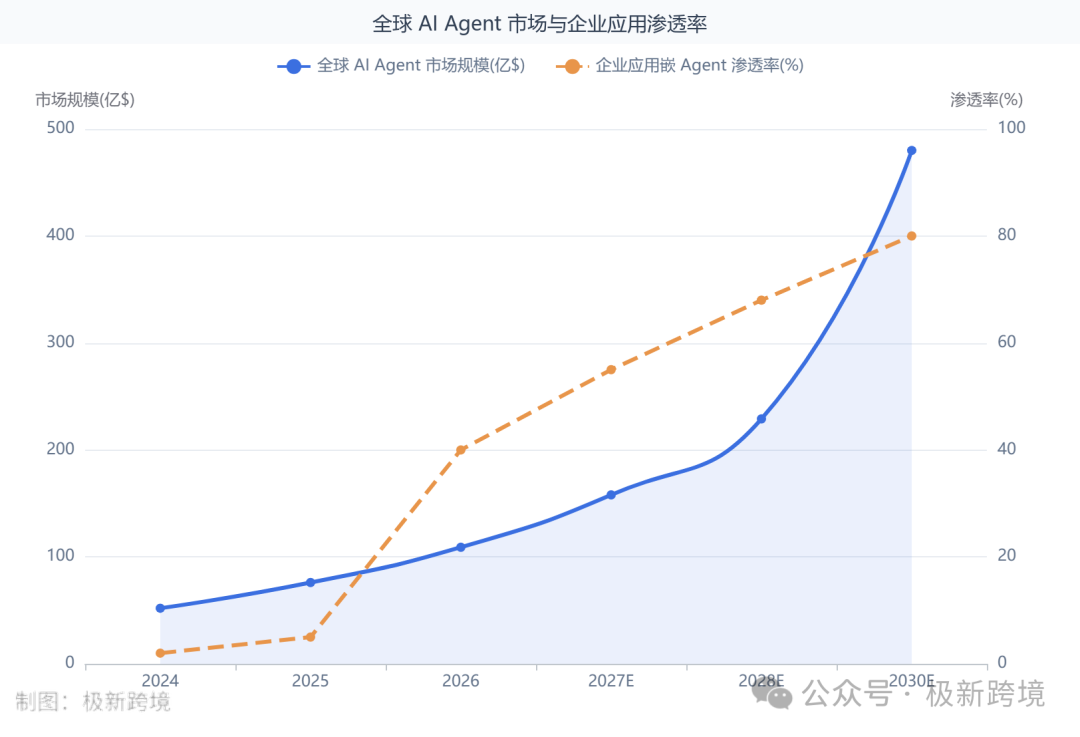
Frontline operators are already experiencing a rise in human efficiency standards. Mature operators previously completed 35 product listings per day; after integrating Agents, the same workforce can now process dozens in batches. As repetitive tasks are taken over by technology, team resources must shift upstream toward product evaluation, supply chain integration, and brand strategy. However, many market participants still evaluate next-generation Agents using outdated criteria, simply equating them with efficiency tools while overlooking their transformative impact on the entire business decision-making chain.
2. Ecosystem Competition
Three types of market players are vying for industry dominance. This competition extends beyond product feature comparisons, fundamentally contesting who gets to define and evaluate the future of cross-border AI.
Alibaba has chosen ecosystem construction as its breakthrough strategy. By screening viable Agent solutions through its arena (which translates to 'arena' or 'competition platform'), it integrates business-validated capabilities into AliExpress and Qianwen Office, using real industrial scenarios to drive technological iteration. The long-term goal is to build the next-generation digital infrastructure for cross-border e-commerce. When a large number of merchants operate on the same AI framework, ecosystem barriers naturally form. Compared to direct revenue from tools, defining industry standards is the core of this strategic layout.
Mainstream e-commerce platforms are focusing on strengthening their data moats. Amazon's Opportunity Explorer and Product Opportunity Explorer package first-party transaction data into freely available services, enhancing ecosystem stickiness. Temu embeds AI capabilities at the core of its supply-demand matching infrastructure, serving internal platform operations without selling standardized products externally. Transaction data represents the platforms' core bargaining chip, with AI amplifying their inherent advantages rather than serving as an independent output. With closed-loop transaction and user behavior data, platforms maintain resource barriers that external models struggle to overcome.
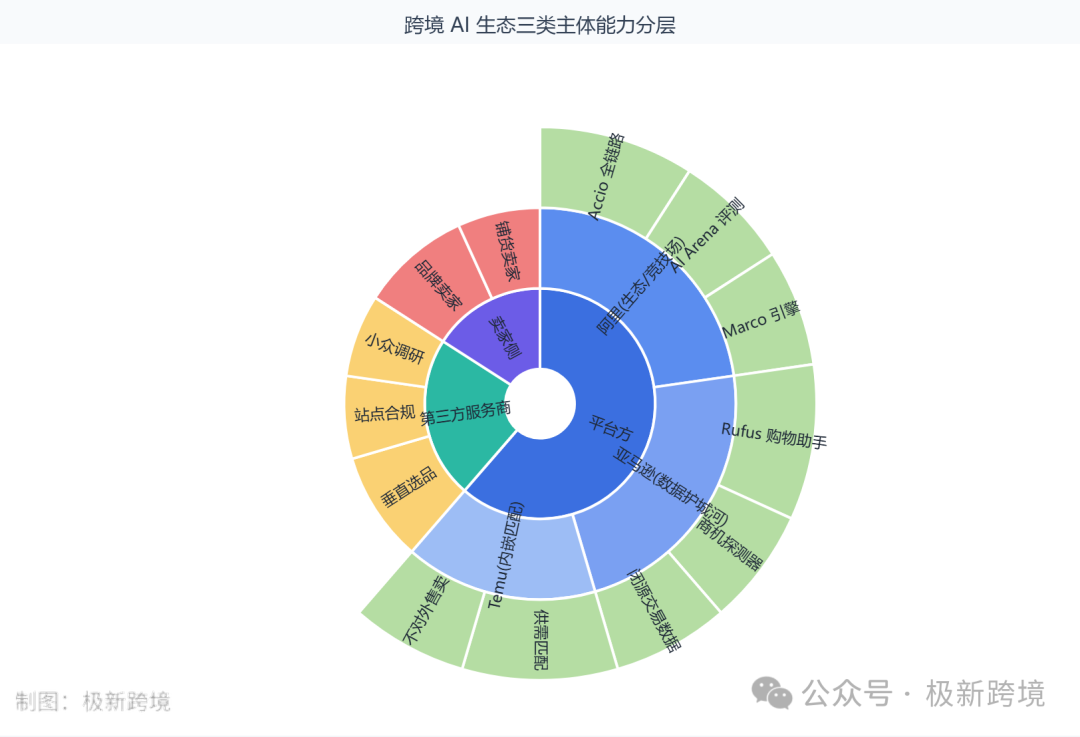
Third-party AI service providers are carving out niches in vertical segments. Most started as data query tools and gradually expanded into automated decision-making capabilities, serving practitioners with refined operational needs. While giant's free tools squeeze the general-purpose market, areas untouched by standardized tools—such as niche category selection, specific site compliance, and Research on niche markets (which translates to 'niche market research')—still offer survival space.
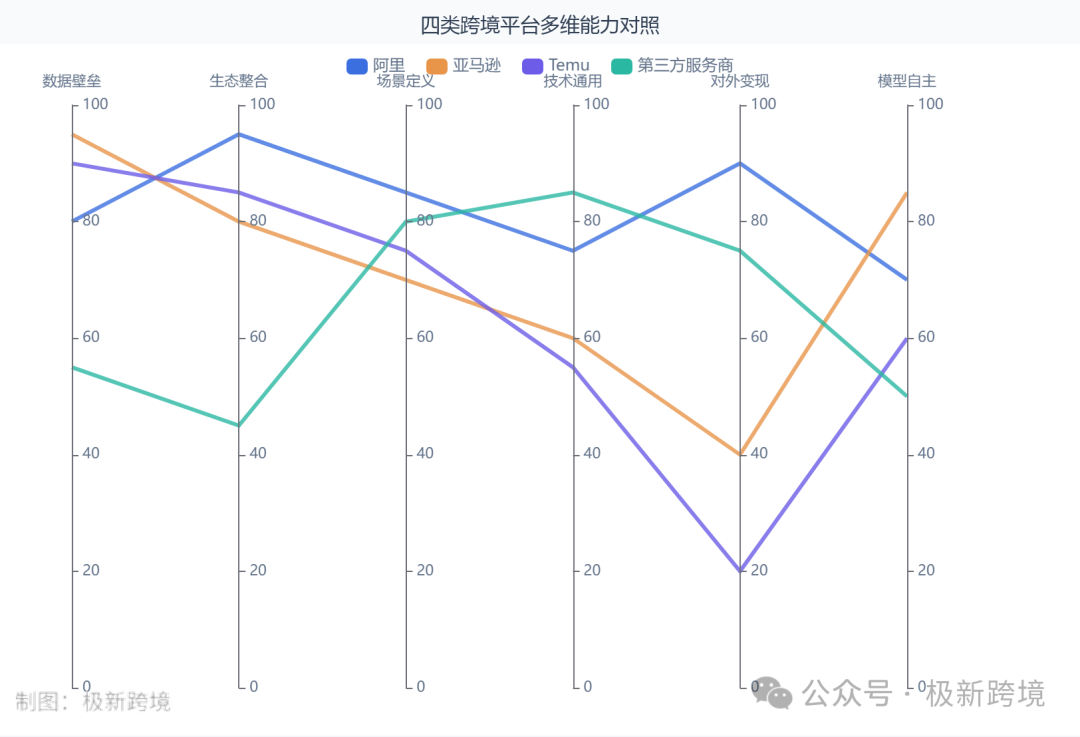
The competition focuses on data acquisition channels and the authority to define business scenarios. Data fuels AI, while real-world scenarios enable technological implementation. Currently, platforms control transaction data, Alibaba wields ecosystem integration capabilities, and third parties specialize in niche scenarios. No single player can dominate the market in the short term.
3. The Cost of Growth
While the industry broadly celebrates AI-driven efficiency gains, the systemic risks accompanying technological implementation remain insufficiently discussed. Beyond productivity improvements, operational hazards lurk beneath the glow of traffic-driven success.
Models inherently possess real-world limitations that create operational risks. AI hallucinations in product selection scenarios can cause tangible losses. Market capacity estimation errors or distorted competitor samples may misguide inventory decisions, creating financial and storage pressures. With less room for error in cross-border operations than domestically, long supply chains and high return/exchange costs amplify every mistake. Cultural differences, regulatory changes across countries, and geopolitical fluctuations—subtle variables difficult for models to fully capture—represent frequent pitfalls in cross-border e-commerce.
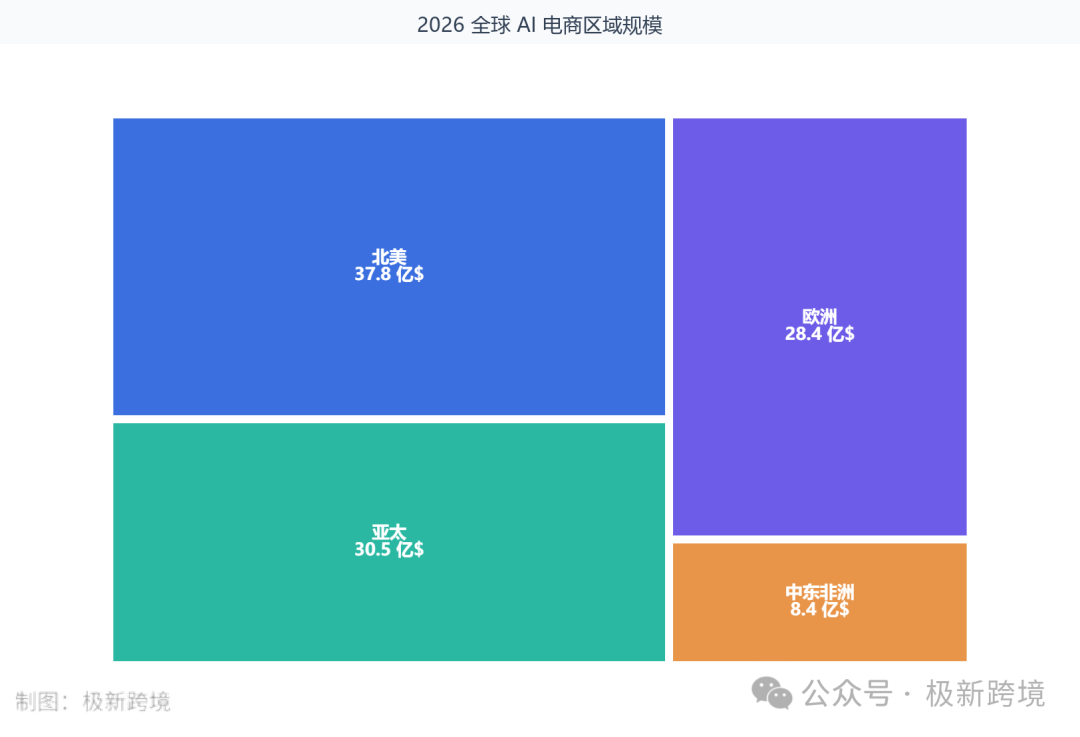
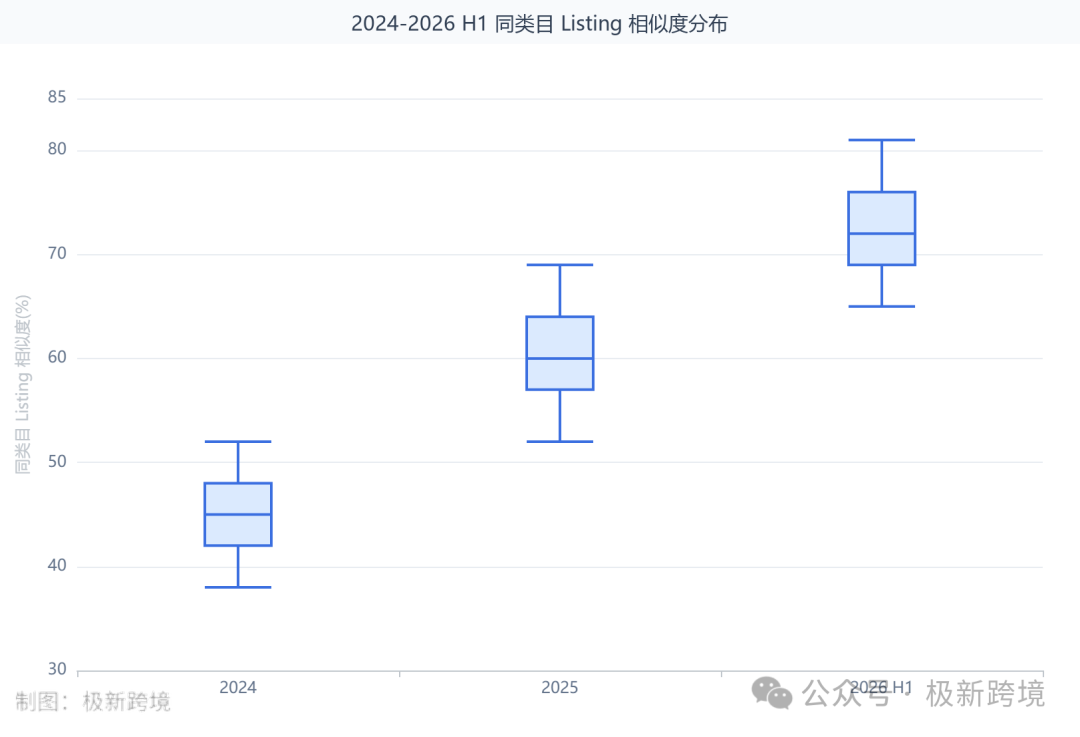
Tool proliferation is altering the dynamics of cutthroat competition. When multiple merchants use similar models for product selection and content generation, supply-side homogenization emerges. Product differentiation diminishes, forcing competition back to price wars and eroding industry-wide profits. By 2026, listing similarities across major platforms will rise significantly, with price wars initiating much faster. When all competitors wield identical tools, the relative advantages from technology vanish, and efficiency gains are quickly neutralized by industry competition.
Platform regulations are tightening, with compliance pressures from AI-generated content escalating. Multiple platforms now require explicit labeling of AI-created materials, with violations triggering traffic restrictions, delistings, or even store closures. AI-generated graphics also face copyright tracing challenges, creating stark contrasts with the promise of "one-click generation." Long-term reliance on standardized outputs erodes teams' native judgment. As operators grow accustomed to accepting model-generated conclusions, their ability to independently identify new opportunities weakens. When external environments mutation (which translates to 'suddenly change'), teams overly dependent on AI often react sluggishly, with such capability degradation typically surfacing during market volatility.
4. Operational Boundaries
Some merchants approach AI at two extremes: either fully delegating tasks to Agents or outright rejecting technological intervention. Rather than imposing complex internal regulations, businesses should embed soft safeguards into workflows to mitigate Agent-related risks.
Workflows must clearly delineate responsibility boundaries between humans and tools. AI excels at execution-oriented tasks like information aggregation and content drafting, while critical business decisions—such as market selection, product positioning, and inventory scale—must remain under human final authority. Relying solely on public datasets exacerbates homogenization; businesses should incorporate their supply chain constraints and target market cultural taboos into model inputs, using proprietary operational data to offset biases from generic training datasets.
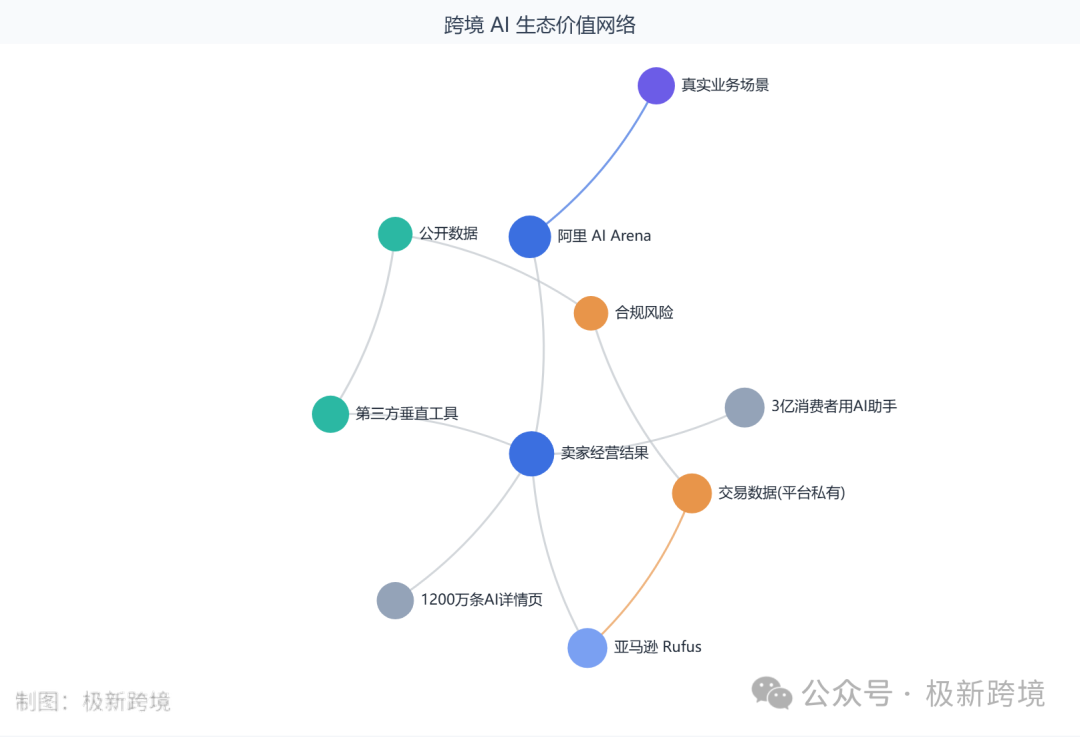
AI outputs should serve only as reference clues for market opportunities, not direct operational orders. Market directions must be cross-verified against local user sentiment and actual supply chain capacities, avoiding procurement decisions based solely on AI reports. Listings and visual materials generated by models should be treated as drafts, requiring localization refinements before deployment to escape the model's inherent template-driven logic.
Compliance risks cannot depend on individual employee discretion. Copyright checks and AI content labeling should be embedded as mandatory steps before material deployment. Simple procedural constraints can preempt account-level risks, avoiding costly post-facto corrections.
Qianwen AI Arena marks a generational divide in cross-border AI. The arena model will drive Agent evaluation toward maturity, with intelligent tools increasingly permeating operational workflows.
Technology enhances execution efficiency but cannot rewrite the fundamental logic of cross-border commerce. Product strength, supply chain resilience, and genuine understanding of overseas users remain the bedrock of competitive barriers.
AI excels at large-scale information processing, while human value lies in market intuition, aesthetic judgment, and risk management. The boundary between the two is being redrawn through practice, and this demarcation itself may shape the future competitive landscape of cross-border e-commerce more profoundly than any single AI tool iteration.
-
![]()
The Moment to Put Geely Auto’s An Conghui to the Test Has Come
-
![]()
The AI Product Selection Race Nears Its End: What's Next?
-
![]()
Equating Li Shufu's Resignation with De-familization is a Major Misstep
-
Did Baidu and Xiaomi Hit Their Pivotal Moments on the Same Day?
-
![]()
The Dual Prospects of New Energy Heavy Trucks
-
Li Shufu Passes the Torch at the Zenith: The Culmination of 'One Geely' Heralds a New Era of Professional Management
-
![]()
Tencent Has Secured Its Ticket for the AI Era
-
Surging Over 269%: Has Yuan Yonggang Made the Right Bet on the 'Mother Machine of Light Creation'?