Equating Li Shufu's Resignation with De-familization is a Major Misstep
 08/20 2026
 457
457
Li Shufu's decision to step down as Chairman of the Board of Directors for Geely's listed company has been widely interpreted by numerous self-media outlets as a tangible sign of Geely's shift away from family control, a move that has been further lauded as a positive stride forward.
Such a perspective is refreshingly novel and far beyond the grasp of the average individual.
Li Shufu's departure from his leadership role at Geely's listed entity bears little resemblance to a move towards de-familization. To truly grasp the situation, one must delve into Geely's equity framework and the very definition of familization.
Regarding Li Shufu's resignation, it might be more fitting to characterize it as a strategic withdrawal at the right moment.
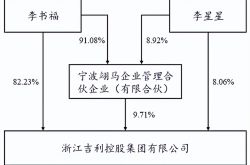
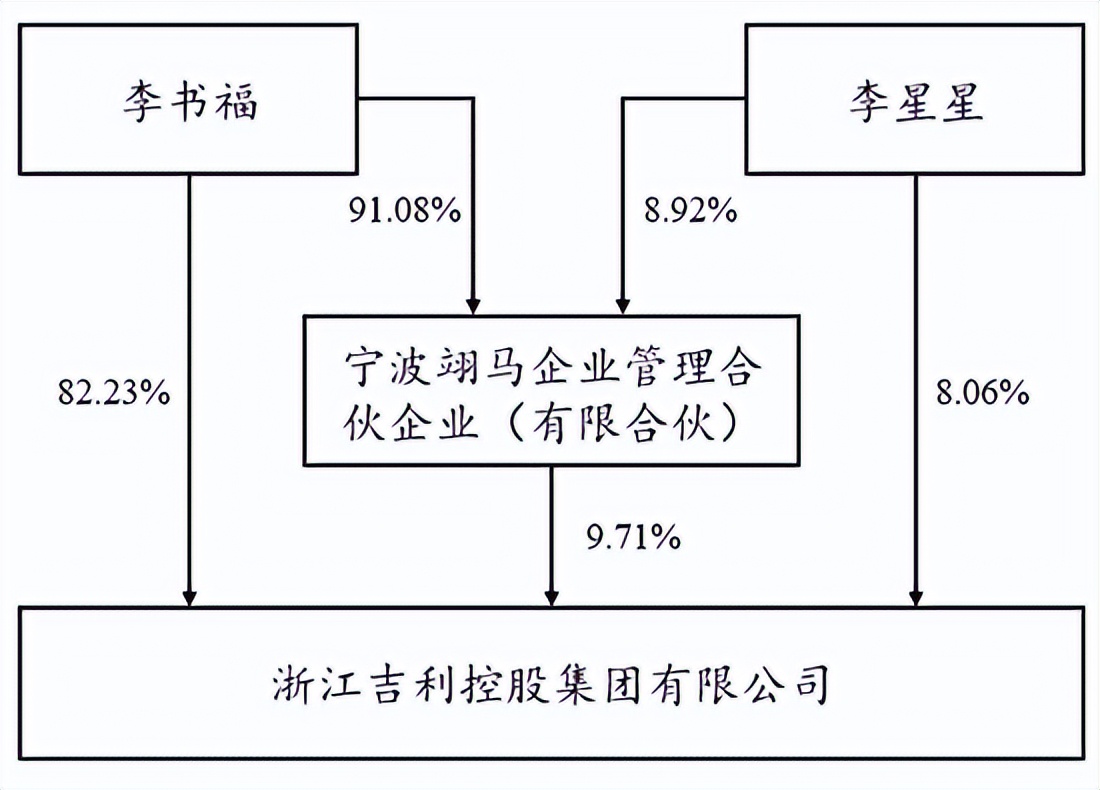
The equity structure within the Geely empire is relatively straightforward, primarily underscoring that the entire Geely system is a resource firmly under the control of Li Shufu's family. This is the underlying purpose (or principle).
Guided by this simple principle, Li Shufu's family, leveraging Zhejiang Geely Holding Group Co., Ltd. as a platform, embarks on a series of investments, resulting in a convoluted equity structure throughout the investment journey.
The complexity of Geely's equity structure primarily arises from three key factors: firstly, the extensive number of mergers and acquisitions; secondly, the global dispersion of acquisition targets, necessitating engagement with diverse legal and regulatory frameworks; and thirdly, the bespoke transaction terms, predominantly involving special agreements regarding consolidation and non-consolidation.
Reverting to the matter at hand, can Li Shufu's resignation as Chairman of the Board of Directors for the listed company serve as evidence of his pursuit of de-familization?
Observers must acknowledge that the listed company represents merely one of numerous investment targets. Li Shufu has only vacated his position within the listed company, not relinquished his overarching control.
As long as Zhejiang Geely Holding Group Co., Ltd., the investment platform, remains in existence, and Li Shufu is willing, he can extend his influence to the very grassroots level of the listed company.
If resigning from the board signifies de-familization, then does the appointment of An Conghui imply a strengthening of An's familial ties?
According to Geely's official announcement, the most precise characterization of Li Shufu's resignation is to "enhance the authorized management mechanism for professional managers," emphasizing that it is a delegation of authority, with the ultimate source of power resting with the controlling shareholder.
The concept of familization primarily manifests in two aspects: ownership and control. As long as these two facets remain unaltered, there is no need to discuss the notion of de-familization.
This holds true for both Geely and Great Wall Motors.
Interestingly, when individuals discuss de-familization, it often reveals a misguided subconscious belief that familization is inherently detrimental.
The influence of Western economic thought runs deep.
In reality, family-owned enterprises frequently exhibit greater stability and longevity compared to those managed by professional managers in numerous instances.
Volkswagen in Germany stands as a prime example of a family-owned enterprise, firmly under the control of the Porsche and Piech families through a mechanism that separates equity from voting rights.
Toyota in Japan is equally unequivocal in its family-owned status. Although the Toyota family holds a minimal direct stake in the listed entity "Toyota Motor," they maintain a firm grip on the entire Toyota Group through intricate cross-shareholdings, group structures, and a series of recent capital maneuvers.
Both of these family-owned enterprises reign supreme in the automotive industry.
Honda, in contrast, operates as a non-family enterprise and is currently experiencing a downturn.
There is also a stark illustration of de-familization leading to corporate losses due to management control issues: the erstwhile real estate behemoth Vanke. This real estate company, under the long-standing control of Wang Shi and Yu Liang, was once celebrated as a paragon of professional manager management until the Shenzhen state-owned assets assumed control, unveiling a multitude of corruption issues.
Therefore, one should refrain from attempting to vilify familization or employing de-familization as a means to polish one's image.
Returning to the true motive behind Li Shufu's resignation, perhaps only Li Shufu himself holds the answer.
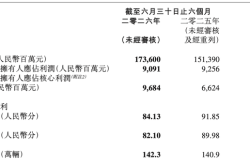
From an operational data standpoint, concerning the listed entity, Geely Automobile Holdings' performance is laudable. Li Shufu's resignation can be viewed as a strategic withdrawal at the opportune moment.
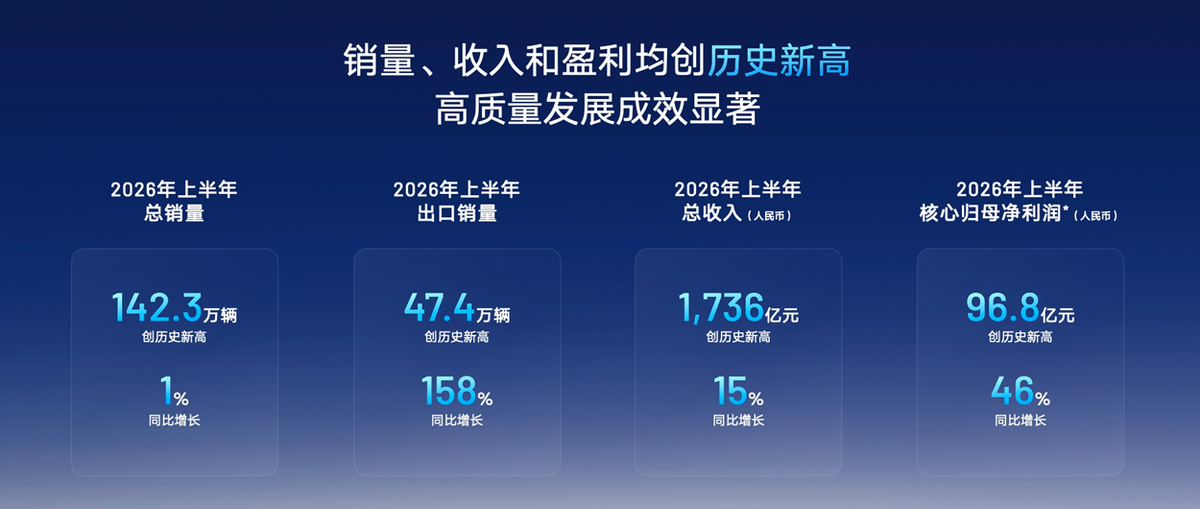
Amidst such positive momentum, Li Shufu passes on the "baton." Should the successor fail to sustain the development trajectory, they will be held accountable. Hence, for the successor, it represents both an opportunity and, more crucially, a period of adjustment. Especially as the automotive industry enters a phase of intense reshuffling, the pressure on the successor is palpable.
Furthermore, beyond the listed entity, the Geely system encompasses other investment targets and platforms. According to the financial report data, the listed entity achieved a profit of 16.6 billion yuan in 2025, yet the consolidated profit of the parent company, serving as an investment platform, amounted to only 3 billion yuan. In other words, other investment projects have significantly eroded the listed company's profits, indicating that many of these projects are incurring losses.
Shifting focus away from the listed entity to oversee other projects on the investment platform may also constitute one of Li Shufu's considerations.
-
![]()
The Moment to Put Geely Auto’s An Conghui to the Test Has Come
-
![]()
The AI Product Selection Race Nears Its End: What's Next?
-
![]()
Equating Li Shufu's Resignation with De-familization is a Major Misstep
-
Did Baidu and Xiaomi Hit Their Pivotal Moments on the Same Day?
-
![]()
The Dual Prospects of New Energy Heavy Trucks
-
Li Shufu Passes the Torch at the Zenith: The Culmination of 'One Geely' Heralds a New Era of Professional Management
-
![]()
Tencent Has Secured Its Ticket for the AI Era
-
Surging Over 269%: Has Yuan Yonggang Made the Right Bet on the 'Mother Machine of Light Creation'?