The Dual Prospects of New Energy Heavy Trucks
 08/20 2026
 561
561
If you were to travel across China in the summer of 2026, you would witness a starkly divided scene.
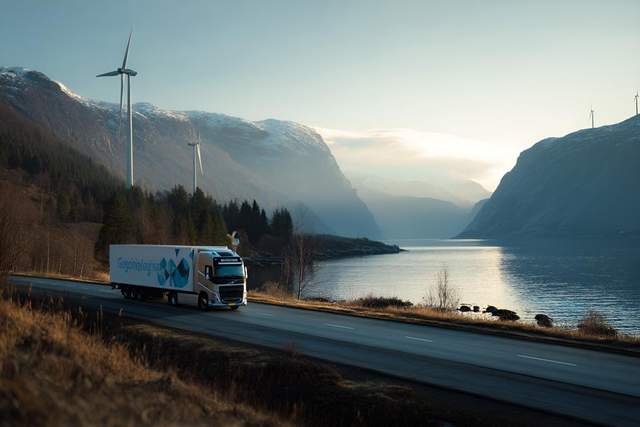
At coastal deep-water ports, rows of pure white electric heavy trucks quietly tow containers in an orderly fashion, free from black smoke and the roar of diesel engines—only the rustling of tires on the road can be heard. Driver Lao Zhao rolls down his window and points to the newly built battery swap station nearby, saying, “The fleet handles the swaps uniformly. I don’t have to pay a dime, and charging is more than half cheaper than diesel.”
However, if you turn around and head onto national and provincial highways, a different world unfolds. Service areas are filled with red and blue diesel heavy trucks bearing license plates from various regions. Driver Lao Li is squatting in the shadow of his truck, eating instant noodles. “Switch to electric? My truck has only run 400,000 kilometers; it’s still in its prime. I’m not considering an electric vehicle,” he says.
The same wave of the times, when it hits different people, stirs entirely different ripples. Official data shows that cumulative sales of new energy heavy trucks have reached approximately 140,000 units, a year-on-year increase of 78.6%, suggesting the arrival of a new era. However, behind this growth curve, individual self-employed drivers—who account for over 90% of China’s road freight—remain firmly at the wheel, hesitant to embrace the change.
In today’s era of electrification and intelligence, why are heavy truck drivers reluctant to switch to new energy vehicles? On one hand, ports and mining areas are seeing large-scale adoption, with industrial capital flooding in and policy documents piling on support. On the other hand, millions of individual freight operators are hesitating, preferring to stick with diesel trucks.
Why are electric heavy trucks struggling to gain traction among individual operators? Why has new energy technology, as a representative of innovation, met with such polarizing fates?
The Hidden Forces Behind the 'Green Electricity' Surge
Before understanding Lao Zhao’s contentment and Lao Li’s anxiety, it’s essential to first grasp where this 'green electricity' surge comes from and why it’s happening so rapidly.
Looking back five years, new energy heavy trucks were nearly negligible in the million-unit-scale heavy truck market. In 2018, annual sales of new energy heavy trucks nationwide were less than 1,000 units. At industry exhibitions back then, the most common question asked about electric heavy trucks was, “Can this thing actually haul cargo?”
The turning point came in 2021. After the formal proposal of the 'dual carbon' goals, key industries began prioritizing clean transportation. Coupled with companies like CATL and BYD overcoming technical barriers for commercial vehicle battery cells, annual sales of new energy heavy trucks surpassed 10,000 units for the first time, nearly tripling year-on-year. That year was dubbed the ' the first year of commercialization' by the industry.
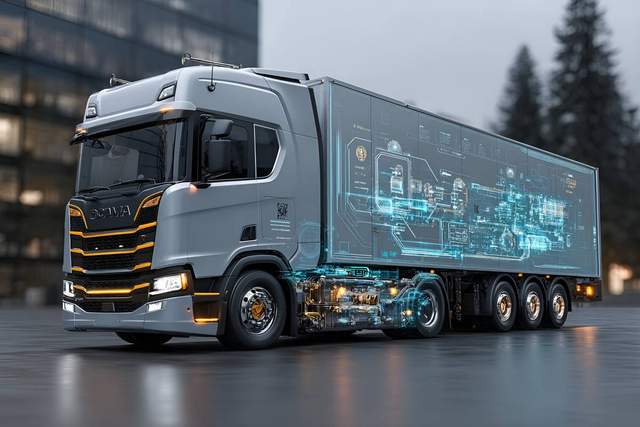
Every subsequent year has set new records. By 2025, cumulative annual sales of new energy heavy trucks reached 231,100 units, an 182% year-on-year increase. In 2026, the momentum continued unabated, with cumulative sales of new energy heavy trucks reaching 43,908 units in the first quarter alone. By certain months, the monthly penetration rate exceeded 40%.
This means that in the current incremental market for heavy trucks, diesel vehicles are rapidly taking a backseat. For every ten new heavy trucks added, four now bear green license plates. However, how did new energy heavy trucks achieve this comeback? And why are individual self-employed drivers missing from this resurgence?
To understand the polarized prospects of new energy heavy trucks, one must first step beyond the narrow question of 'whether the vehicle is good' and consider 'where it operates and who operates it.'
The first layer of the answer lies in transportation scenarios. The short-haul port transportation sector, where Lao Zhao works, is a golden scenario tailored for new energy heavy trucks and a core driver of the industry’s electrification data. As a major logistics hub, deep-water ports operate with highly fixed freight patterns. Vehicles shuttle daily between the port area, storage yards, and logistics parks, with transportation radii typically locked within a few dozen kilometers, eliminating long-haul range anxiety. In such closed and fixed scenarios, all the advantages of electric heavy trucks are maximized.
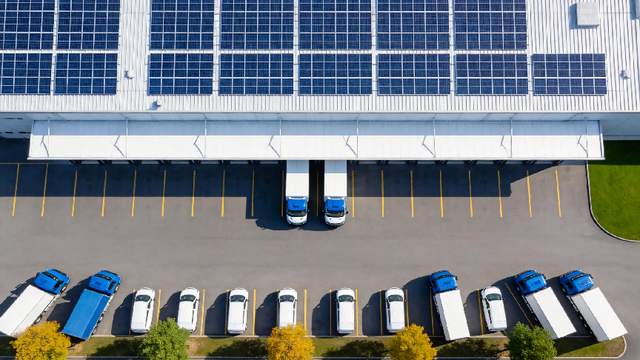
Meanwhile, such large-scale fleets, backed by corporate resources, have established a complete ecosystem of electrification support. Battery swap stations and charging piles are densely distributed within port areas, enabling five-minute rapid battery swaps that rival the refueling efficiency of diesel trucks, without compromising freight timeliness. Fleets negotiate directly with power authorities to secure exclusive low electricity tariffs, further reducing operational costs.
Additionally, companies enjoy multiple policy incentives, including new energy industry subsidies, tax breaks, and priority dispatch for transport capacity, resulting in far lower comprehensive operational costs than individual operators. Their strong cash flow allows them to absorb risks such as vehicle depreciation, battery degradation, and market fluctuations, leveraging high-frequency, high-turnover operational models.
For professional drivers like Lao Zhao employed by corporate fleets, electric heavy trucks offer only the benefits of quietness, cost savings, and hassle-free operation. They bear no vehicle purchase costs, worry little about energy replenishment, see significantly reduced daily operational expenses, and enjoy steady salary increases. Embracing new energy vehicles becomes an obvious choice.
The Unaffordable Economics for Individual Operators
However, while the spotlight shines on corporate clients, the vast majority of individual self-employed drivers in road freight remain in the shadows. For these 'mom-and-pop' truck owners, new energy heavy trucks represent significant uncertainty.
When shifting focus from coastal enclosed port areas to the vast national long-haul freight market, the shortcomings of new energy heavy trucks become glaring. Individual operators lack fixed routes, exclusive facilities, or resource support. Their cargo sources span the entire country—one day they traverse mountainous national highways, the next they speed along interprovincial expressways, covering transportation distances often exceeding a thousand kilometers. Road conditions and energy replenishment options are highly uncertain, leaving them entirely reliant on market-driven public infrastructure.
As of 2026, China’s dedicated energy replenishment network for heavy trucks still suffers from massive regional gaps. The vast majority of high-power charging piles and battery swap stations are concentrated in enclosed scenarios like ports, mining areas, steel plants, and logistics parks. Heavy truck energy replenishment points along national highways and remote national roads are sparsely distributed and highly uneven. Coastal hub cities in the east have relatively complete infrastructure, while coverage remains low on central and western trunk routes and mountainous segments. Moreover, industry-wide battery swap standards are not fully unified, with batteries from different brands being incompatible, often leading to awkward situations where trucks arrive at stations but cannot swap batteries or charge.

For individual drivers, timeliness is their lifeline. Detouring dozens of kilometers to find a compatible energy replenishment site or waiting in line for one to two hours during peak periods directly reduces daily transportation trips. In the fiercely competitive freight market, delaying a shipment not only means losing freight fees but also risking long-term cooperation with cargo owners. The advantage of diesel heavy trucks lies precisely in their universal adaptability—they can quickly replenish fuel at any service area or gas station nationwide, ensuring uninterrupted travel.
If energy replenishment anxiety is the first hurdle for individual operators, purchase costs and operational burdens form a second, nearly insurmountable barrier.
Currently, the market price for mainstream 49-ton heavy-duty diesel trucks hovers around 300,000 to 400,000 yuan. These models are mature, transparently priced, and widely available, making subsequent maintenance and replacement highly convenient. In contrast, pure electric heavy trucks of the same specification generally cost 600,000 to 700,000 yuan, exceeding diesel trucks by 200,000 to 300,000 yuan. Even with the widespread adoption of battery-as-a-service models to lower upfront purchase barriers, individual operators still face monthly battery leasing fees in the thousands of yuan.
Since maintenance and servicing of new energy heavy trucks are highly dependent on manufacturer-authorized service stations, spare part prices and labor costs are far higher than traditional repair systems. Additionally, insurance premiums surge due to the high value of batteries, with annual premiums for electric heavy trucks often exceeding those of diesel trucks by thousands or even tens of thousands of yuan. These hidden costs collectively blur the 'cost-saving' label in individual operators’ ledgers.
Furthermore, China’s maximum gross vehicle weight limit for heavy trucks is 49 tons. The lighter the vehicle’s tare weight, the more cargo it can legally carry. Typically, diesel heavy trucks have a tare weight of around eight tons, while new energy heavy trucks, burdened by heavy battery packs, generally exceed ten tons. This means that for the same trip, electric heavy trucks can carry two tons less cargo than diesel trucks.
Some drivers have calculated the math: transporting two tons of cargo from Henan to Shanghai generates a freight fee difference of over 500 yuan. Over a year, this amounts to tens of thousands of yuan in lost earnings. Over a three-year cycle, this single factor results in losses exceeding 360,000 yuan. This invisible cost from 'underloading' further increases the financial burden of switching vehicles.

In short, current new energy heavy trucks are products designed for specific scenarios, while individual operators need versatile vehicles capable of handling ever-changing conditions. There exists a fundamental mismatch in product philosophy between the two.
Corporations leverage scale, resources, and policy support to steadily reap the benefits of electrification, while individual operators rely on solo efforts and self-financed operations, bearing all unknown risks alone. These two vastly unequal survival equations have made new energy benefits a clear preference for large enterprises and left grassroots (grassroots) drivers’ hesitance well-founded.
How Can Electrification Break Free from Localized Exuberance?
After dissecting the underlying logic, it becomes clear that the industry’s polarized situation—'booming data but lukewarm individual adoption'—stems not from drivers’ conservatism or resistance to innovation but from the fact that the current electrification transformation has centered around large enterprises and scaling (scaled) scenarios, never truly addressing the pain points of millions of individual operators.
Today’s rosy data on heavy truck electrification represents merely a localized exuberance confined to enclosed scenarios and corporate groups. The industry’s so-called rapid growth has not covered the vast, foundational long-haul freight market, nor has it met the survival needs of millions of individual operators. The journey of pure electric heavy trucks is far from over. For this transformation to truly break out of its niche, at least three barriers must be dismantled:
First, the energy replenishment network must expand from scattered points to comprehensive coverage.
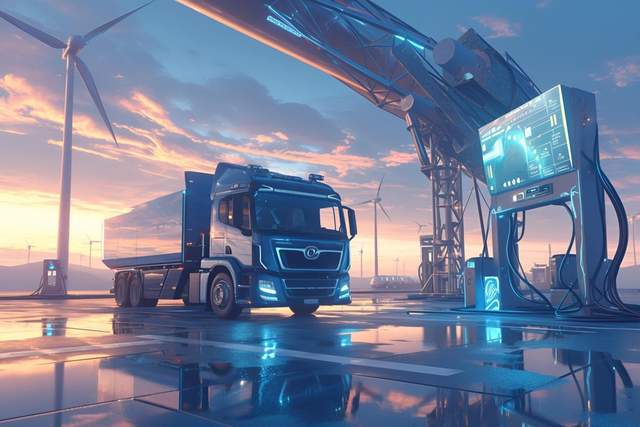
No matter how dense battery swap stations are at ports and mines, they mean nothing to drivers on national highways. The industry must break down brand-specific barriers, standardize battery swap interfaces and charging protocols, enabling electric heavy trucks to freely choose swap stations from Shandong to Guangdong, just like refueling. Simultaneously, the electricity pricing system must be optimized to eliminate peak-hour price surges and inflated rates in remote areas, allowing individual drivers to replenish energy anytime, anywhere, at low cost, and without range or timeliness anxiety.
Second, business models must shift from heavy to light.
Individual operators cannot afford electric trucks costing hundreds of thousands of yuan, nor can they withstand the residual value plunge caused by battery degradation. Electric heavy truck manufacturers need to introduce lighter, lower-risk purchase and usage schemes, optimizing battery leasing and lease-to-own models. They must also establish comprehensive battery inspection, maintenance, and circulation systems, offering routine battery care and replacement services to extend battery lifespan and reduce operational costs.
Third, the vehicles themselves must evolve from specialized performers to all-rounders.
Automakers cannot focus solely on short-haul port operations and mining freight; they must truly build vehicles for long-haul trunk routes. Batteries must be lighter, ranges must be realistic, and durability must withstand northern cold and southern heat. Automakers should develop lightweight, high-range, temperature-resistant heavy-duty models tailored for long-haul freight, reducing battery tare weight and increasing cargo capacity within regulatory limits to offset individual operators’ income gaps. They must also expand nationwide after-sales repair networks to cover remote areas, improving fault rescue and maintenance efficiency to ensure vehicle uptime stability, enabling electric heavy trucks to adapt to complex road conditions and long-distance transportation across all scenarios.
Only then can the heavy truck electrification transformation truly escape the 'localized exuberance' of specific regions and march toward its vast, open future.
-
![]()
Can Tencent Still 'Buy a Ticket' Onboard with an Extra 20 Billion?
-
![]()
The Moment to Put Geely Auto’s An Conghui to the Test Has Come
-
![]()
The AI Product Selection Race Nears Its End: What's Next?
-
![]()
Equating Li Shufu's Resignation with De-familization is a Major Misstep
-
Did Baidu and Xiaomi Hit Their Pivotal Moments on the Same Day?
-
![]()
The Dual Prospects of New Energy Heavy Trucks
-
Li Shufu Passes the Torch at the Zenith: The Culmination of 'One Geely' Heralds a New Era of Professional Management
-
![]()
Tencent Has Secured Its Ticket for the AI Era