Employment Shifts in the AI Era: Jobs Vanish, Yet Opportunities Abound
 08/24 2026
 528
528

“The wise adapt to the times; the intelligent respond to circumstances.”
Author|Liuguo
Produced by|Jixin
In mid-August, a report titled Youth Employment Research in the AI Era, released by a third-party organization, garnered widespread attention. The report highlighted that with the widespread adoption of AI tools, demand for entry-level roles in fields such as copywriting, basic coding, junior administration, and junior design has seen a significant decline. This trend has quietly raised the entry bar for fresh graduates entering the job market.
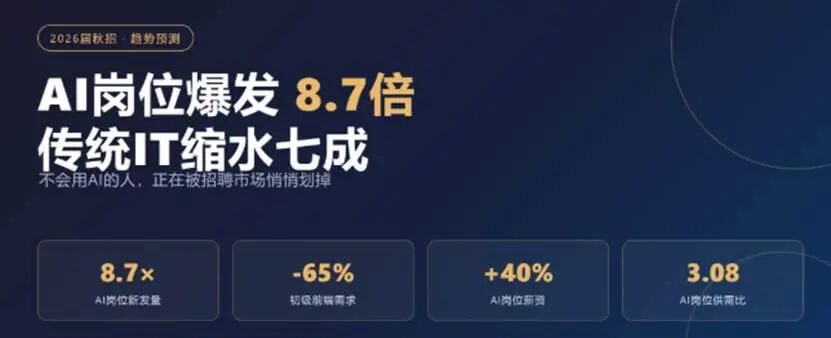
Concurrently, another set of contrasting data is equally noteworthy: From January to April 2026, domestic demand for AI-related positions surged by 8.7 times year-on-year, with their share of overall new economy jobs skyrocketing from 2.78% to 22.03%. While traditional jobs are disappearing, new opportunities are rapidly emerging—AI is reshaping the employment landscape.
1. Which Jobs Are Being “Replaced” by AI?
AI does not impact all jobs uniformly; affected positions tend to share distinct characteristics. The most vulnerable are often routine jobs with fixed workflows and replicable content.
Copywriting and content creation are at the forefront of this transformation. AI can generate news articles, marketing copy, and SEO content in bulk, operating at efficiency levels dozens of times higher than humans. Entry-level positions that once relied on producing large volumes of content have now been largely eliminated by AI. Many companies no longer require large teams dedicated solely to basic writing; instead, they prioritize talent who can plan, review, and refine AI-generated content.
Basic coding roles are also undergoing structural changes. AI code assistants, such as Copilot, can automatically complete large volumes of repetitive code. Tasks that would take a junior programmer hours can now be handled by AI in seconds. Consequently, demand for junior front-end developers and testers has noticeably decreased, while senior engineers skilled in technical architecture design and troubleshooting complex issues are increasingly sought after.
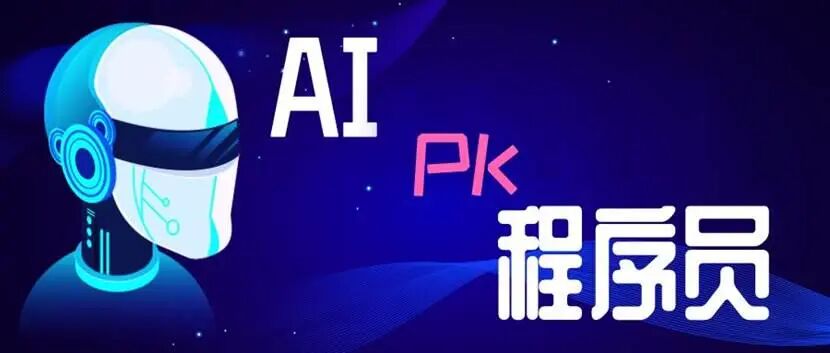
The design and creative industries are experiencing similar shifts. AI art tools can generate dozens of design concepts within minutes, significantly increasing the workload for roles like basic graphic designers and e-commerce main image creators. For the same salary, designers who once produced three design sets per week must now deliver over a dozen. The value of designers is shifting from “creating outputs” to “knowing what to select and why.”
More critically, these changes represent not just a reduction in job numbers but also a narrowing of entry pathways. Previously, many fresh graduates could start in foundational roles to gain experience and grow. Now, with AI handling much of the basic work, newcomers lack opportunities for on-the-job learning, progressively narrowing their career trajectories.
2. AI Is Also Creating New Opportunities
The other side of the employment market is equally dynamic. While AI eliminates certain jobs, it is also creating entirely new fields.
Demand for AI-related positions is exploding. Data shows an 8.7-fold year-on-year surge in domestic AI job openings during the first four months of 2026. New professions such as AI algorithm engineers, large language model trainers, prompt engineers, AI product managers, and industry intelligence solution specialists are emerging in large numbers. Some of these roles require strong technical foundations, while many welcome candidates from cross-disciplinary backgrounds. Take prompt engineering, for example—success depends not on coding ability but on asking the right questions and understanding business needs.
Meanwhile, traditional roles are being “upgraded” by AI rather than simply replaced. Marketers now use AI for market analysis and content generation, shifting their focus from writing to strategic planning. Financial analysts leverage AI to extract insights from data, concentrating on risk assessment and high-level decision-making. In healthcare, education, manufacturing, and other sectors, AI is driving the emergence of numerous new work formats.
3. How Should Fresh Graduates Respond?
Faced with AI-driven changes, action trumps anxiety. Survey data from China Youth Daily reveals that 91.1% of fresh graduate respondents have proactively adjusted their job-hunting strategies—61.4% analyze AI job requirements to tailor their resumes and interview preparations, while 56.6% choose to actively learn AI skills.

In practice, fresh graduates need to develop several key competencies:
First, turn AI into an amplifier of your capabilities. Basic proficiency with AI tools is just the starting point; the real differentiator lies in your ability to communicate work requirements to AI and evaluate the reliability of its outputs. One corporate interviewer noted that modern interviews now focus less on “whether candidates can use AI” and more on “whether they can properly assess AI-generated results.”
Second, cultivate skills that AI cannot replicate. Abilities such as independent thinking, cross-team communication, and creative judgment remain beyond AI’s current capabilities—and these are precisely where fresh graduates can build competitive advantages. For humanities students, skills in textual comprehension, cultural literacy, and empathy become even more valuable in the AI era.
Third, gain practical experience using AI to solve real-world problems. A generic resume claim of “I can use ChatGPT” pales in comparison to demonstrating concrete AI applications. Through internships, project work, or personal exploration, fresh graduates can enhance their capabilities through hands-on AI experience.
4. What Changes Are Happening in Corporate Recruitment?
Shifts in corporate hiring standards are even more direct. By 2026, “proficient in AI tools preferred” has spread from technical roles to nearly all positions, including product management, operations, marketing, and administration.
More significantly, interview formats are evolving. Some companies now administer three-hour AI proficiency tests with screen recording to observe how candidates complete assigned tasks using AI tools. Another startup requires real-time screen sharing during interviews to demonstrate the process of generating operational plans with AI. Corporate evaluations of AI skills have shifted from “Can you use it?” to “How effectively can you use it?”
Seasoned professionals observe that for the same job title, requirements have transformed: A 2023 listing might specify “familiarity with automated testing frameworks,” while by 2026 this becomes “familiarity with end-to-end engineering of large language model applications (Agent frameworks/vector databases, etc.).” The fundamental hiring philosophy has changed: Companies no longer seek mere task executors but professionals who can articulate complex work requirements to AI and leverage it efficiently.
AI will not eliminate humans, but those who can effectively use AI are replacing those who cannot. This judgment has been repeatedly validated in the job market.
For fresh graduates, the real challenge lies not in AI “taking jobs” but in upgrading from “tool users” to “value creators.” Technological evolution may eliminate certain roles, but it will never eliminate those capable of continuous learning and proactive adaptation. By embracing the times and seizing opportunities, they can shape their futures.
-
![]()
Registered Capital Slashed to 372 Million Yuan! Yutong Optical Finalizes Industrial and Commercial Change Registration
-
![]()
Zhuque-3 Successfully Lands, and 'Time Traveler' Secures Another ¥100 Million in Funding: China's Commercial Space Industry Experiences a 'Dynamic August'
-
![]()
Autohome Faces a Shrinking Window of Opportunity
-
![]()
Even a Titan Like Musk Has Faced Setbacks in Fulfilling Promises
-
![]()
AI Office: The End of the Racing Era, Context Becomes the Key to Success
-
![]()
Domestic Vehicle Chassis Revolution ②: The Steering Wheel Remains, But Mechanical Connections in the Steering System Are Decreasing
-
![]()
Exploring MiniMax Design: Can Video Editing Be as Simple as Speaking?
-
![]()
Why Can SenseTime Achieve Profitability While CloudWalk Still Faces Challenges, Despite Both Adopting Large Models?