Embodied AI World Chronicles (Part 2): Who Took the Smartest Money?
 08/24 2026
 379
379
In the previous article, we analyzed the technological origins of embodied AI companies. To gauge their future development, business planning, and commercial potential, what clues should we look for? Money is the most reliable indicator.
From algorithms and data to mass production and market launch, every step in the advancement of embodied AI requires substantial financial investment. This process often spans five to ten years. So, where does the money come from? Whose money is being used? These questions essentially determine the fate of an embodied AI company.
Unlike the more academic-oriented approaches, some embodied AI companies secure the smartest money and must navigate the harsh realities of the commercial world. These are the companies backed by industrial capital.
Industrial capital refers to funds from real economy enterprises (entity enterprises) engaged in equity investments. While government funds focus on strategy and financial capital adopts a scattergun approach betting on IPOs, industrial capital not only provides funding but also offers business support to its invested companies.
In the current wave of enthusiasm for embodied AI, if a company secures investments from internet giants, automakers, or home appliance leaders, it not only signifies strong financial backing but also direct access to resources and extensive deployment scenarios. This increases the likelihood of successful commercialization in the later stages.
By tracking the flow of industrial capital, we can see through the surface and identify which embodied AI companies are favored by the smartest money.

Companies whose existing operations highly overlap with physical AI are the most logical sources of industrial capital for investing in embodied AI.
By further extending their core businesses and repurposing existing R&D experience, algorithms, and data into the embodied AI field, these companies can enhance marginal benefits, reduce R&D costs, and improve their parent company’s financial performance.
Notable examples include Dreame (a robotic vacuum cleaner manufacturer), Tesla, XPeng, and Chery in the automotive sector.
In 2024, Magic Atom was established and secured 150 million yuan in angel round financing in December. The lead investor, Chuang Venture Capital, is Dreame’s robotics industry venture fund (CETA). Through its proprietary investment platform, Dreame quickly assembled an embodied AI team. Founder Wu Changzheng previously led the development of Xiaomi’s first-generation robotic dog, “CyberDog.”
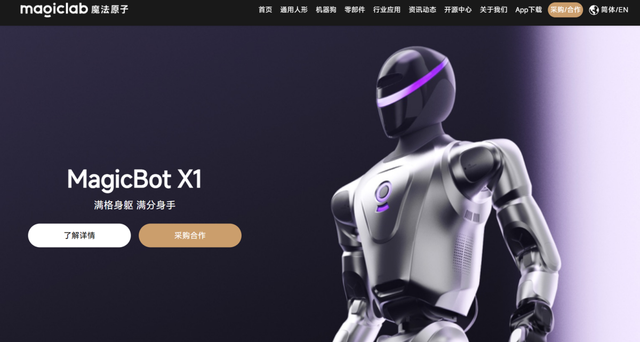
Such directly incubated embodied AI companies are born with supply chain and mass production experience, along with ready-made deployment scenarios. In November 2024, Magic Atom’s humanoid robot, “Xiaomai,” was deployed in Dreame’s own factories for tasks like loading/unloading high-speed digital motors and dispensing adhesive. This self-producing and self-consuming model benefits both sides financially.
However, the downside of autonomous incubation is that the core team rarely has full control. The parent company holds the steering wheel, dictating operations like factory assembly line tasks or public demonstrations, leaving little room for autonomy. Since innovation relies heavily on independent exploration, this creates tension between the embodied AI company and its industrial capital backers. If not managed well, it can lead to disintegration.
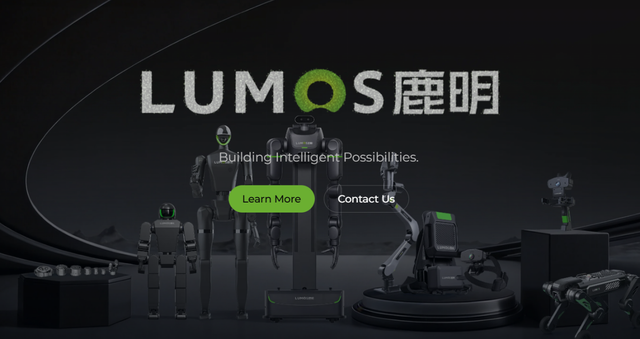
In September 2024, Yu Chao, former head of Dreame’s humanoid business, left to found Luming Robotics. Meanwhile, Magic Atom gained fame as a strategic partner for intelligent robots at the 2026 CCTV Spring Festival Gala. Just as the company was preparing for an IPO, Wu Changzheng announced his resignation and departure to start his own venture on March 5. According to insiders, the trigger was disagreements with shareholders over the company’s development philosophy.
Regardless, the tension over control rights exists to varying degrees in many internally incubated embodied AI projects.
Automakers incubating embodied AI companies have become a trend in recent years. The logic is straightforward: intelligent vehicles and robots share many technologies, making vertical expansion into embodied AI a nearly frictionless strategic move for automakers. However, tensions still arise in practice.
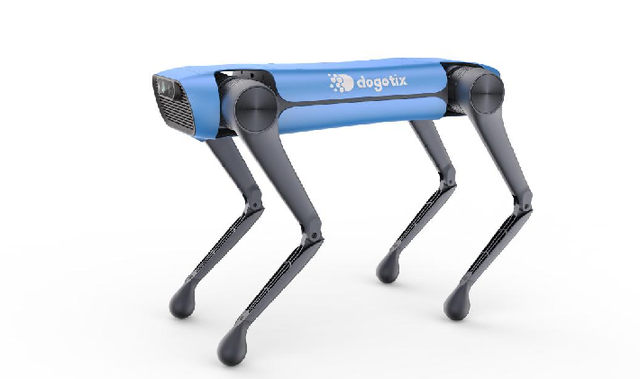
In 2020, Dogotix was acquired by XPeng Motors. Founder Zhao Tongyang co-founded Pengxing Intelligence with He Xiaopeng to focus on humanoid robot R&D. In October 2023, Zhao left Pengxing Intelligence to establish Zhongqing Robotics, which continues to specialize in bipedal humanoids.
Having navigated the commercial landscape, Zhongqing Robotics differs from academic or small startups by possessing strong industrial DNA, evident in its rapid mass production and commercialization. Within a year of its establishment, it launched SA01, the world’s first full-sized general-purpose humanoid robot with a human-like straight-knee gait.
In December 2025, the T800 was released. A viral video showing Zhao Tongyang being kicked over by the robot highlighted that humanoid robots now outperform 90% of adult males in physical performance. At CES 2026, its hardcore demo video went viral on overseas social media. In May, its Shenzhen Honghualing base became operational, producing one humanoid robot every 15 minutes, reaching a capacity of 10,000 units annually. Recent robot fighting events even prompted Elon Musk to repost the video, calling it “fascinating.”
Both Magic Atom and Zhongqing Robotics exhibit strong industrial DNA. From these companies, we observe that embodied AI firms deeply involved with industrial capital or talent tend to be more sensitive to engineering implementation, balancing cutting-edge R&D with mass production and commercialization.
This trait further attracts capital markets during the window when humanoid robot commercialization begins to materialize.

Is there a type of company that can leverage resources from investors without being as tightly bound as internally incubated projects? Yes—those backed by internet giants.
Internet giants typically avoid building robots themselves but cannot afford to lose the strategic entry point of physical AI. Through equity ties, they can align their core business and upstream/downstream partners into a shared ecosystem, enabling resource sharing: invested embodied AI companies gain reliable supply chains, while other ecosystem firms secure orders.
For embodied AI companies, being chosen by giant industrial capital is a highly valuable endorsement. It brings not just money but also the first batch of real-world deployment scenarios and sustained business feedback.
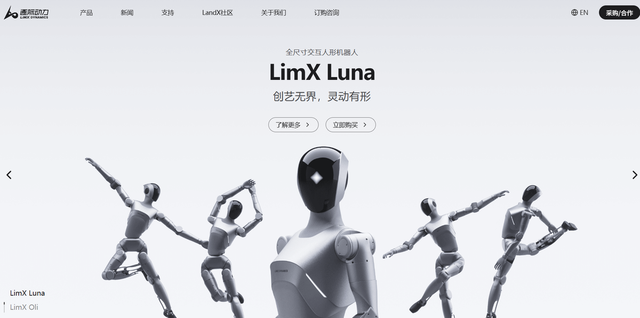
Take LimX Dynamics, founded by Professor Zhang Wei of the Southern University of Science and Technology, as an example. Its shareholder list includes capital from giants with ready-made deployment scenarios. In July 2025, JD.com led a new funding round for LimX Dynamics, deepening collaboration in retail, logistics, and services, and entering China’s largest logistics Scene (scenario).
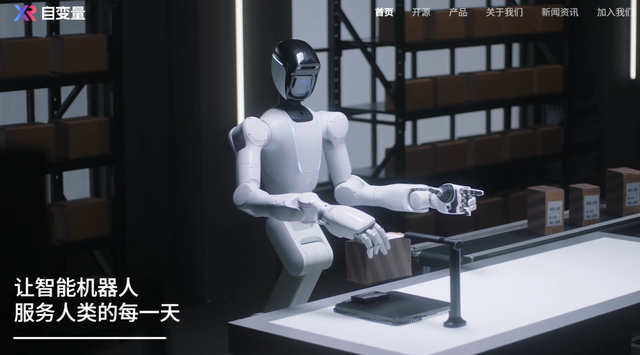
Zibianliang Robotics follows a similar model, securing investments from four internet giants: Meituan, Alibaba, ByteDance, and Xiaomi. Meituan led the Series A round, Alibaba the Series A+ round, ByteDance the Series A++ round with 1 billion yuan, and Xiaomi the Series B round with nearly 2 billion yuan. By late June 2026, after multiple closings, the company’s valuation exceeded 20 billion yuan.
The four giants provided far more than just money—they offered real-world scenarios, data, and orders, the most scarce resources in the embodied AI industry. In January 2026, backed by Alibaba Cloud and ByteDance, Zibianliang’s Quantum 1 completed autonomous last-mile delivery in open environments using its proprietary WALL-A model. Xiaomi’s smart home ecosystem and household entry points align perfectly with Zibianliang’s commercialization roadmap for household robots.
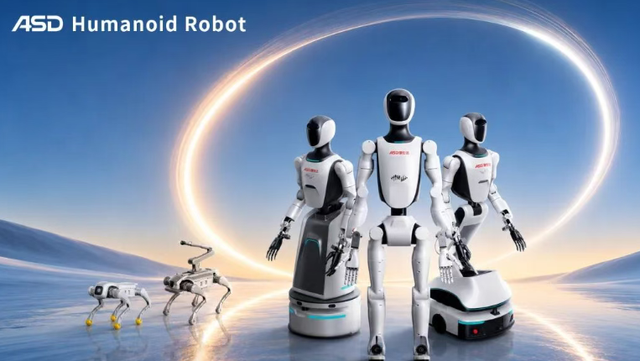
Looking broader, nearly all major embodied AI brands—such as LimX Dynamics, Unitree Robotics, Yuanli Lingji, Zhiyuan Robotics, and Leju Robotics—are backed by one or more tech and internet giants.
You might ask: What’s the difference between these companies and those internally incubated by industrial capital? Don’t both provide resources and scenarios? The answer lies in autonomy. Internally incubated projects are like “prodigal sons,” while giant-backed companies are young talents favored by a patriarch. Giants cast a wide net, investing in multiple companies simultaneously, avoiding the issue of restricted autonomy for core teams. However, this also means no unconditional favoritism—success depends on product strength to win ecosystem resource allocation.
For example, JD.com made six consecutive investments in the embodied AI sector in 2025, continuously taking stakes in Zhiyuan Robotics, Qianxun Intelligence, LimX Dynamics, Zhongqing Robotics, Pacini, and RoboScience. It later doubled down, investing in Cloud Chaser Technology, Shouxing Technology, and Wujie Dynamics. Currently, JD Logistics has pledged to procure 3 million robots, 1 million autonomous vehicles, and 100,000 drones over the next five years. Which company will emerge victorious in this ecosystem? Only time will tell.

If smart terminal manufacturers incubating embodied AI companies tap into their own potential, and partnering with giants grafts them onto a vast tech ecosystem, then another type of industrial capital—manufacturing firms—enters the embodied AI arena to build new growth trajectories.
These firms possess mass production experience in mechanical manufacturing and face stagnating traditional businesses. Internal innovation has become increasingly difficult, necessitating new growth engines, especially in industries unrelated to their core business, to hedge against cyclical fluctuations. Incubating or investing in an embodied AI company grants them entry into this emerging sector.
For instance, Aishida, a leading cookware manufacturer, established Zhejiang Aishida Humanoid Robotics Co., Ltd., in Wenling, Taizhou, in April 2024. The subsidiary covers humanoid, quadruped, and household service robots and is wholly owned by Shanghai Aishida Artificial Intelligence Technology Co., Ltd. Meanwhile, in March 2024, Aishida strategically invested in a leading embodied AI company, becoming one of Magic Atom’s key investors.
Aishida is not alone. Many traditional manufacturing leaders are doing the same.
Midea launched the industry’s first six-armed wheeled-foot humanoid robot, “Meiluo U,” starting pilot operations in its washing machine factory and announcing plans to invest over 60 billion yuan in AI and embodied AI over three years. Haier unveiled three home robots—humanoid, laundry, and companion models—at AWE 2026. Gree followed suit in April 2026, announcing full R&D capabilities for humanoid robots, with all core components self-developed and manufactured. Its GR-1 prototype focuses on industrial scenarios.
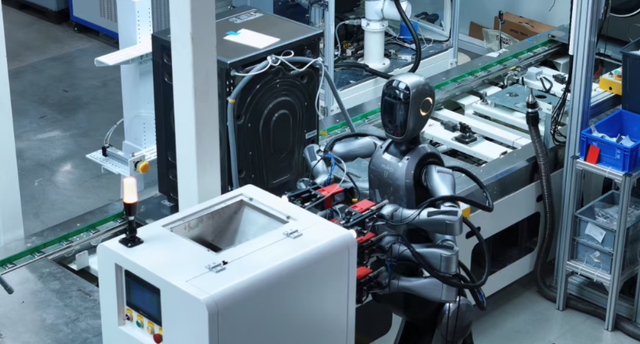
It’s clear that traditional manufacturing strengths remain valid in the embodied AI era.
These firms possess engineering capabilities in complete machine optimization and assembly, along with years of experience refining products for household scenarios and mature sales channels. Once embodied AI categories mature, they can quickly scale products from prototypes to consumer endpoints.
However, limited by resources and talent attraction, their self-developed AI capabilities lag behind academic and giant-backed firms. Thus, building robots in-house while investing in external forces has become their mainstream strategy for creating a second growth curve.
Currently, these embodied AI firms may not stand out in marathons or Spring Festival Gala performances, but they might be the first to enter millions of households, warranting attention.

The flow of money reveals subtle yet telling clues about an industry—often the most authentic truth.
Pursuing arbitrage through financing alone is a financial capital game. Industrial capital, however, demands deterministic returns, whether business-related, ecological, or strategic. Achieving any of these requires a certain capability threshold.
Imagine a poorly performing robot unable to assemble parts for Chery or deliver packages for JD. Similarly, an embodied AI company with insufficient R&D and slow iteration cannot drive cloud or infrastructure usage, failing to incentivize ecosystem partners to share the pie.
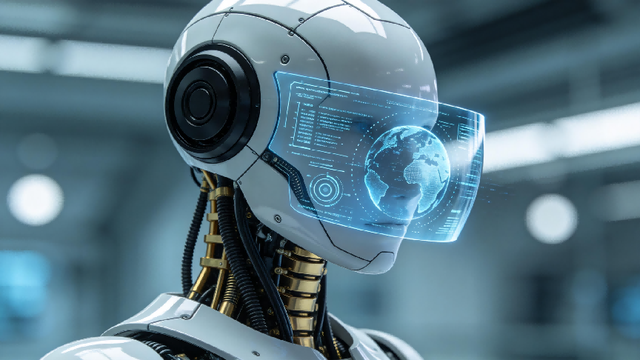
Thus, industrial capital—the smartest money—has already screened scenarios and resources on behalf of readers. Companies backed by industrial capital often come with more reliable resources and deterministic returns, making them key players worth watching in this landscape.
-
![]()
Registered Capital Slashed to 372 Million Yuan! Yutong Optical Finalizes Industrial and Commercial Change Registration
-
![]()
Zhuque-3 Successfully Lands, and 'Time Traveler' Secures Another ¥100 Million in Funding: China's Commercial Space Industry Experiences a 'Dynamic August'
-
![]()
Autohome Faces a Shrinking Window of Opportunity
-
![]()
Even a Titan Like Musk Has Faced Setbacks in Fulfilling Promises
-
![]()
AI Office: The End of the Racing Era, Context Becomes the Key to Success
-
![]()
Domestic Vehicle Chassis Revolution ②: The Steering Wheel Remains, But Mechanical Connections in the Steering System Are Decreasing
-
![]()
Exploring MiniMax Design: Can Video Editing Be as Simple as Speaking?
-
![]()
Why Can SenseTime Achieve Profitability While CloudWalk Still Faces Challenges, Despite Both Adopting Large Models?