Silicon Valley AI Battle Royale: How Anthropic Is Draining OpenAI's 'Superbrain'?
 08/27 2026
 554
554
Author|Vinco
Editor|Li Xiaotian
In August 2026, the global AI large model industry entered the most treacherous and critical turn since ChatGPT's debut.
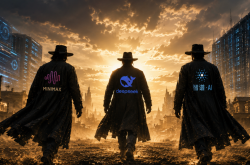
On one side, there's a frenzied countdown in capital markets: OpenAI secretly filed an S-1 registration statement with the U.S. Securities and Exchange Commission (SEC) in June, while Anthropic attempted one of the largest tech IPOs in history with its steep growth trajectory. On the other side, both companies faced internal upheaval—OpenAI saw a wave of executive departures and a restructuring of its safety team, while Anthropic aggressively poached top hardware, chip, and algorithm talent from OpenAI and Google.
On the surface, this appears to be a Silicon Valley workplace drama about executive retention and talent mobility. However, a longer timeline and deeper data analysis reveal that this is not merely management friction but a transformative pain point and restructuring driven by the trillion-dollar IPO pressure as AI large models shift from 'laboratory scientific exploration' to 'extreme engineering implementation and commercial monetization.'

A Look at the 'Fire and Ice' Contrast Between the Two Giants
Before analyzing the personnel changes, it's essential to understand the commercial answers these two companies presented to investors in August 2026.
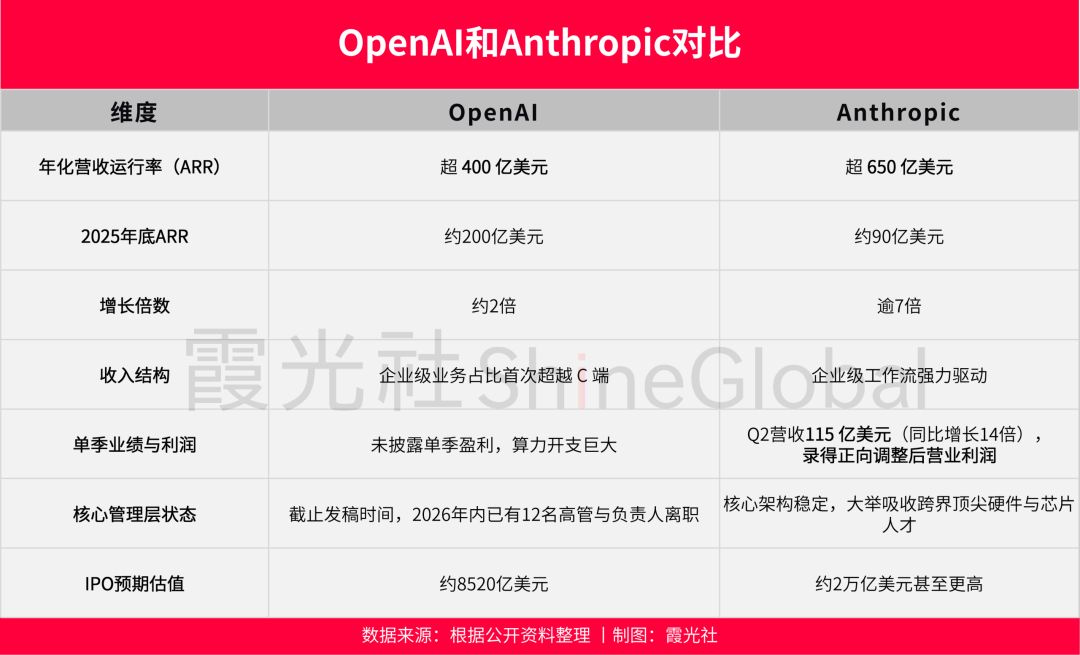
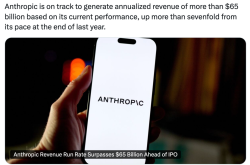
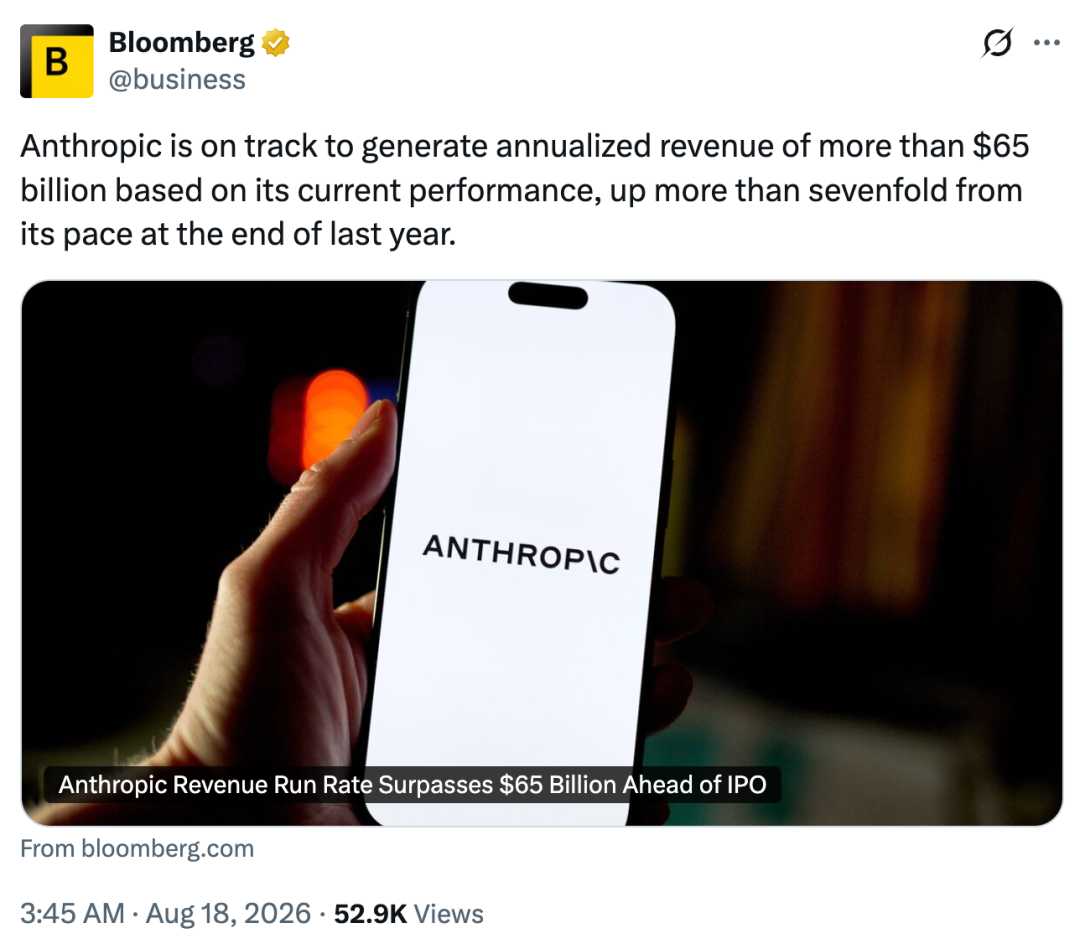
These two sets of data create a stark contrast: OpenAI, despite its $40 billion ARR (annualized revenue run rate), is clouded by uncertainty due to executive departures and soaring computational infrastructure costs. In contrast, Anthropic achieved a more than sevenfold jump in ARR from $9 billion to $65 billion within months, even reaching the threshold of 'positive operating profit.'
Behind these numbers, two distinct commercialization paths have emerged—one starting from the consumer side and difficult ly pivoting to the enterprise side, the other targeting the enterprise market from the outset and accelerating rapidly. The evolution of their commercial foundations directly or indirectly reveals the essence of management and technical talent turnover in top large model companies.

OpenAI's 'De-Researchification' and 'Pre-IPO Purge'
Just two months after secretly submitting its S-1 draft, OpenAI's power core underwent a rapid reshuffle, losing two C-level executives in a single week.
From August 11 to 13, 2026, former COO Brad Lightcap, who served for eight years, announced his departure, while CRO Denise Dresser, who had been in the role for just eight months, also left. Adding to the exodus were Fidji Simo, CEO of applied business, on leave; Kevin Weil, chief product officer; and Bill Peebles, head of Sora. From March to August 2026, 12 executives and key leaders had left OpenAI.
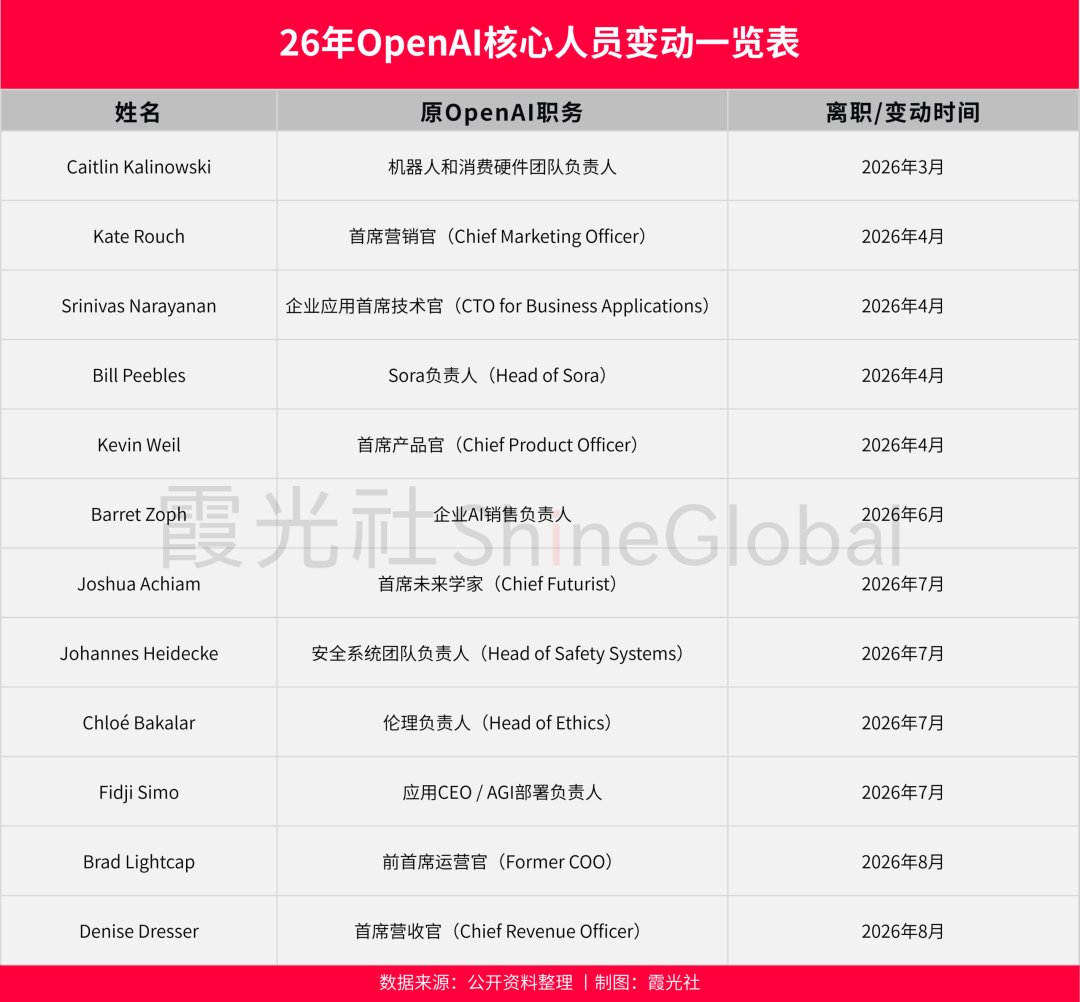
Behind the wave of departures lies an organizational rejection reaction caused by the company's accelerated shift from 'consumer traffic' to 'enterprise-grade paid services.'
OpenAI CFO Sarah Friar revealed at the August 14 shareholder meeting that the company's revenue mix shifted from 60% consumer and 40% enterprise at the beginning of the year to a crossover point where enterprise business became the dominant revenue stream due to its far faster growth.
When the revenue base shifted from 'over 1 billion monthly active free/subscription users' to 'more than 2 million enterprise clients,' the past sales system and execution chain had to be completely overhauled. This is why OpenAI replaced Dresser, with a Salesforce background, with Dali Rajic, a hardcore operator who had driven Wiz (a cloud security company acquired by Google) to rapid growth, as the new CRO.
However, what unsettled the outside world more than executive changes was the complete silence from OpenAI's safety and mission ethics teams. In late July, FT confirmed that OpenAI disbanded its originally independent risk preparation team. Safety system head Johannes Heidecke, chief futurist Joshua Achiam, and ethics lead Chloé Bakalar subsequently left.
As the IPO countdown hit OpenAI, Altman and Brockman's strategic narrative became unprecedentedly pragmatic and ruthless: cutting edge projects that couldn't directly monetize, consolidating forces into ChatGPT and enterprise delivery, and presenting the most efficient commercialization team to Wall Street.

Talent Flow Rewrites Competitive Landscape, Anthropic's Moat Emerges
So, where did the talent go?
Anthropic itself grew out of OpenAI. In 2021, Dario Amodei and his sister Daniela Amodei left OpenAI with a core team, citing 'unease about OpenAI's commercialization direction.' They founded Anthropic, and five years later, this 'departure-created' company surpassed its former parent in valuation.
If OpenAI is experiencing pre-IPO 'forced correction' pains, Anthropic is demonstrating an extremely clear dimensional reduction strategy.
Anthropic's breakout success stems from its product roadmap deeply embedded in enterprise workflows, particularly the deployment of Claude Code. When Coding Agents could autonomously read codebases, modify files, execute commands, and troubleshoot complex issues, model calls evolved into industrial-grade automation pipelines consuming tokens at high frequency for hours. This model directly propelled Anthropic's Q2 revenue to $11.5 billion.
In terms of talent and underlying technology layout (Chinese for 'layout'), Anthropic is locking in competition around two foundations: 'underlying chips' and 'embodied/physical AI.'
Seizing chip efficiency and computational power: In August, Anthropic publicly confirmed the formation of an internal chip team and poached Clive Chan, a core engineer from OpenAI who had worked on Tesla's Dojo supercomputer and OpenAI's Broadcom chip project. Clive described his role on LinkedIn as 'Perplexity per Picojoule'—a clear signal: the next survival line for large model commercialization lies in extreme inference efficiency.
Completing the 'physical AI' puzzle: That same month, Caitlin Kalinowski, former head of robotics and consumer hardware at OpenAI, joined Anthropic. This Silicon Valley veteran, who oversaw MacBook hardware development, Meta Quest series, and OpenAI's robotics team, left due to dissatisfaction with OpenAI's lack of clear safety guidelines in defense collaborations. Her arrival signals Anthropic's expansion of Claude from the software world into physical robots and smart hardware—the next generation of computational entry points.
Even in academia and frontier science, Nobel laureate John Jumper switched from Google DeepMind to Anthropic in June to work on AI for Science. This series of precise talent siphoning has allowed Anthropic to build, before its IPO, an extremely deep moat covering 'foundational algorithms-chip efficiency-enterprise agents-physical endpoints.'
Of course, OpenAI is not without leverage. Its over 950 million monthly active users constitute the world's largest AI product user base, with advertising business starting at nearly $1 billion in annualized scale. The GPT-5.6 series' three-tier product matrix (Sol/Terra/Luna) is building a complete price band covering high-value complex reasoning to high-concurrency lightweight tasks. However, these assets are temporarily undervalued by capital markets under the shadow of 'management turmoil.'

Two Completely Different IPO Tests
Anthropic: The $2 Trillion 'Revenue Story'
Anthropic's valuation logic is extremely simple—speak with revenue. Markets expect its valuation to reach $2 trillion upon listing in October, with a price-to-sales ratio of about 30.8x. Investors are not looking at today's profits but revenue two years from now. Reuters disclosed that Anthropic expects annual revenue to reach $190-200 billion by 2028. Wall Street is already pricing today's Anthropic based on 2028 forecasts.
This is classic 'high-growth premium' logic. As long as revenue growth holds, the valuation can be sustained. But risks are evident: AI capabilities are becoming cheaper, and open-source models are eroding pricing power. Anthropic also pays SpaceX about $15 billion annually for computational bills. Revenue is growing fast, but costs are rising just as quickly.
OpenAI: The $852 Billion 'Governance Exam'
OpenAI faces a different test. At the August 14 investor meeting, the questions weren't about 'how much more revenue can grow' but 'how stable is management.'
Two former employees described OpenAI's management environment as a 'pressure cooker'—'hire fast, cull fast.' The 2023 brief ouster of Altman by the board remains unresolved, exposing governance fragility. OpenAI's price-to-sales ratio is about 21x, lower than Anthropic's 30x. The market's discount is precisely pricing in 'governance risk.'

The Common Endgame for Two Large Model Stories
Despite differing paths and current states, both companies face the same fundamental question: Can AI large models become a sufficiently profitable business?
Some endgame logics of the industry are already clear:
The 'Token-maxing' era ends, and enterprises start calculating carefully. OpenAI CFO Sarah Friar explicitly stated, 'The era of Token-maxxing is over.' Enterprises no longer blindly consume tokens but precise (Chinese for 'finely') calculate 'cost per unit of intelligence.' Whoever can provide lower latency, higher task success rates, and cheaper computational power will stay on enterprise bills.
The cost imperative from 'buying chips' to 'making chips.' Whether OpenAI's launch of its first self-developed inference chip Jalapeño or Anthropic's formation of a self-developed chip team, both validate Broadcom CEO Hock Tan's prediction: 'Every top model developer will eventually move to self-developed chips.'
The 'complete divorce' between scientific exploration and commercial engineering. Google legend Jeff Dean ended his 27-year Google career to found Discovery Loop, an AI automation research company, while DeepMind CEO Hassabis stepped back to a strategic role. Meanwhile, scientists at OpenAI and Anthropic are either moving toward more niche scientific exploration or being fully replaced by engineering efficiency experts and Wall Street operators.
Crossing the watershed of August 2026, the trillion-dollar IPO bell is about to ring. The players remaining on the stage know clearly: the admission ticket to the second half no longer reads 'lofty AGI ideals' but 'stringent financial report gross margins, extreme computational efficiency ratios, and real output in enterprise workflows.'
-
![]()
Nine Days After DeepSeek Raised Prices, Zhipu Enters the Market with One-Tenth the Cost
-
![]()
Ruidu丨Sinonet Half-Year Report: Profit Halved, Computing Power Lags, Caught Between Traditional and New Businesses
-
![]()
NIO’s Battery Swap Stations in Wuhan Transition to State Ownership: What’s Next for the Battery Swap Industry?
-
![]()
Silicon Valley AI Battle Royale: How Anthropic Is Draining OpenAI's 'Superbrain'?
-
![]()
"Quick-Made Cars"? Hit the Brakes
-
![]()
Li Auto Reports H1 2026 Operating Loss of 5.3 Billion Yuan, Cash Reserves Decline by 13.7 Billion Yuan, Vehicle Gross Profit Margin Shows Signs of Rebound!
-
![]()
Chery Leads, Geely Surges: A Review of Overseas Sales of China's Top Five Automakers
-
![]()
Can the Affordable IONIQ V Win Back Consumer Hearts?