Chery Leads, Geely Surges: A Review of Overseas Sales of China's Top Five Automakers
 08/27 2026
 381
381
Recently, Chery Automobile disclosed its semi-annual performance for 2026. Data shows that in the first half of 2026, Chery's revenue reached RMB 143.28 billion, up 1.2% year-on-year, with net profit attributable to the parent company at RMB 8.567 billion, down 11.7% year-on-year. Among this, revenue from overseas markets reached RMB 98.968 billion, up 51% year-on-year, accounting for 69.1% of total revenue. Overseas markets have become Chery's most important source of growth.
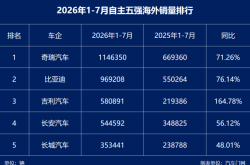
Chery's performance also reflects the overall trend of Chinese independent brands accelerating their global expansion. From January to July 2026, China's total automobile exports reached 6.14 million units, up 66.8% year-on-year. Among the top five independent automakers, Chery sold 1.1464 million units overseas, up 71.26% year-on-year, continuing to lead China's automobile export market; BYD followed with 969,200 units, up 76.14% year-on-year. Notably, although Geely Automobile sold 580,900 units overseas, its sales surged by 164.78% year-on-year, the highest growth rate among the five automakers; Changan Automobile and Great Wall Motors sold 544,600 and 353,400 units overseas, up 56.12% and 48.01% year-on-year, respectively. It is clear that overseas markets are becoming an increasingly important source of sales for Chinese independent brands.
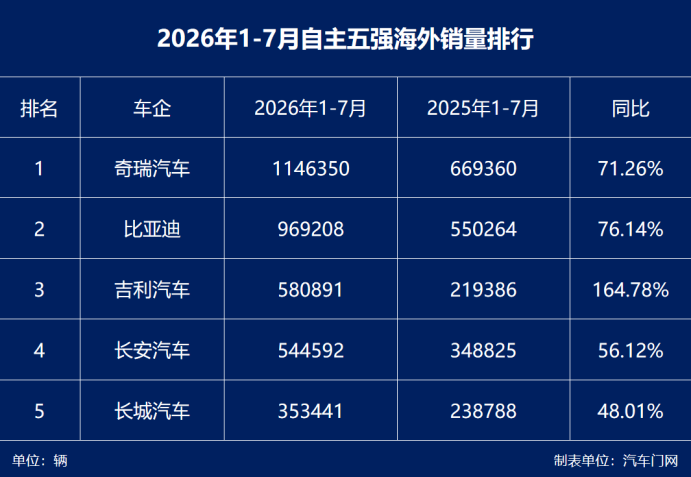
1st Place: Chery Automobile - 1,146,350 Units
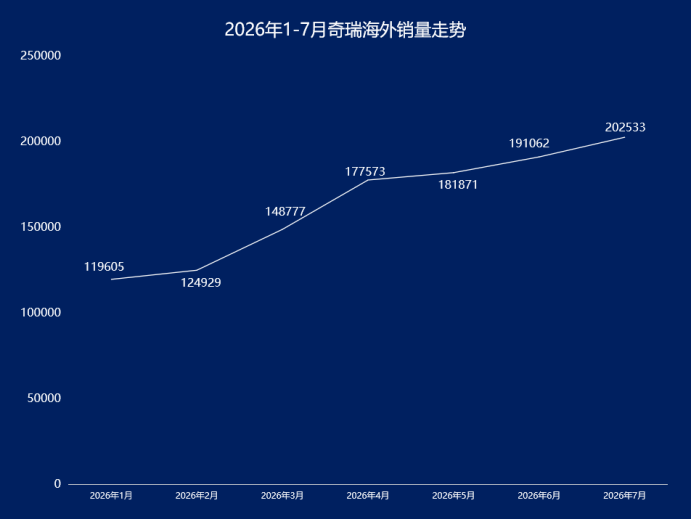
From January to July 2026, Chery's overseas sales reached 1.1464 million units, up 71.26% year-on-year, accounting for over 70% of its total sales. Overseas markets have become the main source of Chery's sales growth. In terms of trend, Chery's overseas sales have been consistently rising, with exports reaching a record high of 202,000 units in July, surpassing 200,000 units for the first time. Chery, which established an early presence in overseas markets, is now entering a period of rapid growth.
Chery's strong overseas performance is not the result of a "sudden acceleration" but the cumulative effect of years of overseas layout (layout). By continuously promoting overseas factory construction, local R&D, and channel development, Chery has steadily improved its localized operation system, laying the foundation for sustained growth in overseas sales. With a continuously improve (constantly improving) SUV product lineup and the rapid addition of new energy technologies such as hybrid systems, Chery's competitiveness in markets like the Middle East, Latin America, Southeast Asia, and Europe is also rising, leading to faster growth in overseas sales.
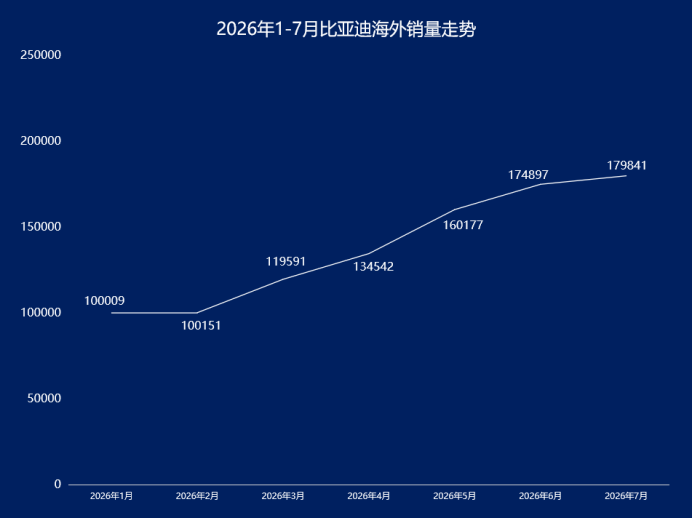
2nd Place: BYD - 969,208 Units
From January to July 2026, BYD's overseas sales reached 969,200 units, up 76.14% year-on-year, accounting for 43.5% of its total sales during the same period. This achievement is not surprising. In 2025, BYD's overseas sales already exceeded 1 million units, up 145% year-on-year, and in the first half of this year, its overseas sales surpassed 780,000 units, maintaining rapid growth in overseas markets.
Behind this growth lies a combination of technology, product, and localization strategies. Technologies such as Blade Battery and DM hybrid systems continue to improve, with pure electric and hybrid models meeting diverse market demands. Meanwhile, BYD is advancing local production and channel development in Brazil, Thailand, and other regions, further expanding its overseas market coverage. Currently, its new energy vehicles have entered over 120 countries and regions.
It is evident that while maintaining a solid position in the domestic market, BYD's overseas sales are also growing rapidly. As overseas markets continue to expand, BYD's future growth potential will further extend to the global market.
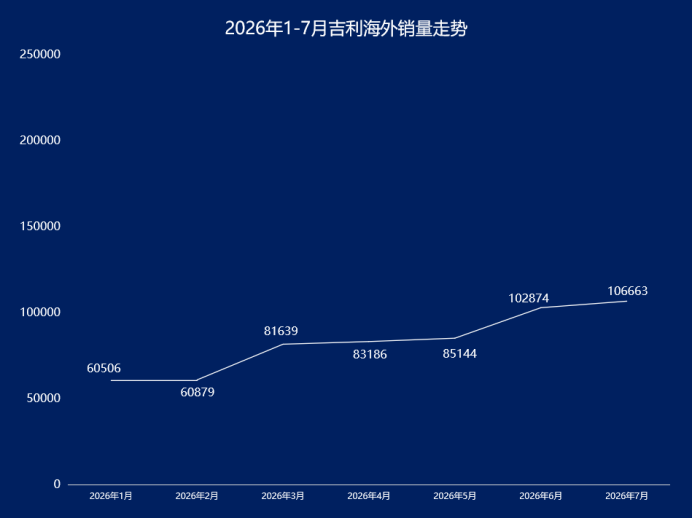
3rd Place: Geely Automobile - 580,891 Units
From January to July this year, Geely's overseas sales reached 581,000 units, up 164.78% year-on-year. In June and July, its monthly overseas sales exceeded 100,000 units for two consecutive months, with overseas markets transitioning from an "incremental supplement" to a new growth engine for Geely.
Alongside growth in overseas sales, Geely's overall performance is also improving. In the first half of the year, revenue reached RMB 173.6 billion, up 15% year-on-year, with core net profit attributable to the parent company at RMB 9.684 billion, up 46% year-on-year. Profit growth significantly outpaced revenue growth, indicating further improvement in profitability.
With rapid growth in overseas markets, Geely has raised its full-year overseas sales target from 640,000 units to 920,000 units, aiming to reach 1 million units. To support this goal, Geely is accelerating its localized overseas layout (layout), enhancing local production and sales capabilities through overseas factory construction and sales network expansion. Currently, Geely operates 12 manufacturing plants overseas, with annual production capacity exceeding 650,000 units, and a sales network of over 2,000 outlets covering 114 markets.
Going forward, Geely aims not only to expand overseas sales but also to enhance profitability in overseas markets through localized production, R&D, and sales, creating more stable revenue and profit streams.
4th Place: Changan Automobile - 544,592 Units
From January to July this year, Changan Automobile's overseas sales reached 545,000 units, up 56.12% year-on-year. Alongside rapid sales growth, Changan is accelerating the implementation of its "Global Reach" Plan 2.0, shifting from simply selling cars overseas to exporting industrial systems.
Specifically, Changan is bringing core technologies such as Blue Whale Super Hybrid and Tianshu Intelligence overseas, forming a unified technological foundation. At the same time, it tailors products to meet the demands of different countries, rather than using a one-size-fits-all approach. For example, the Qiyuan Q05 was introduced to Uzbekistan, and the fourth-generation CS55PLUS was launched in Saudi Arabia, both representing product adjustments for local markets.
Meanwhile, Changan Automobile continues to enhance its overseas manufacturing bases in Thailand, Brazil, and other regions, while simultaneously developing local talent and sales systems. The simultaneous expansion of production, talent, and channels provides a solid foundation for sustained overseas growth.
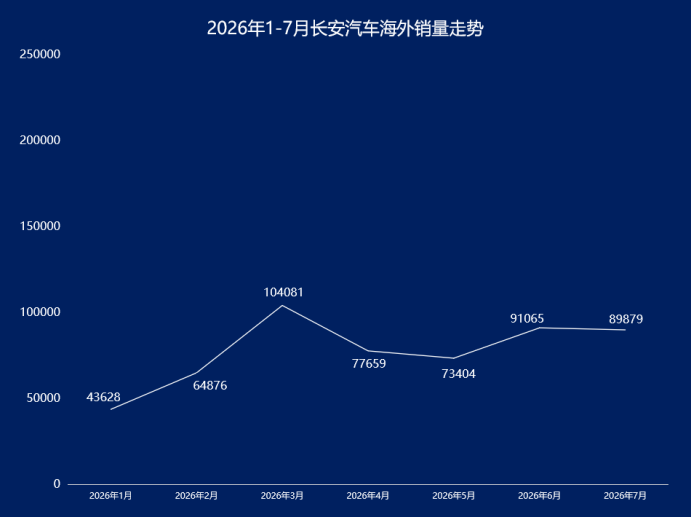
5th Place: Great Wall Motors - 353,441 Units
From January to July this year, Great Wall Motors' overseas sales reached 353,400 units, up 48.01% year-on-year, with overseas markets showing significant growth and contributing more to the company's overall performance.
This achievement is attributed to Great Wall's continuous promotion of localized overseas operations. The company adheres to a "one market, one strategy, ecological win-win" approach, adjusting products and operational strategies for different markets. Currently, Great Wall has established vehicle production bases in Thailand and Brazil, with assembly plants in multiple countries and an overseas sales network exceeding 1,600 outlets. This gradually improves local production, sales, and service systems. Compared to simple exports, this localized model better supports Great Wall's long-term presence in overseas markets.
With expanding overseas markets, Great Wall is refocusing on the European market and plans to increase overseas sales to 1 million units by the end of 2030, with large-scale overseas expansion remaining a key focus in the next phase.
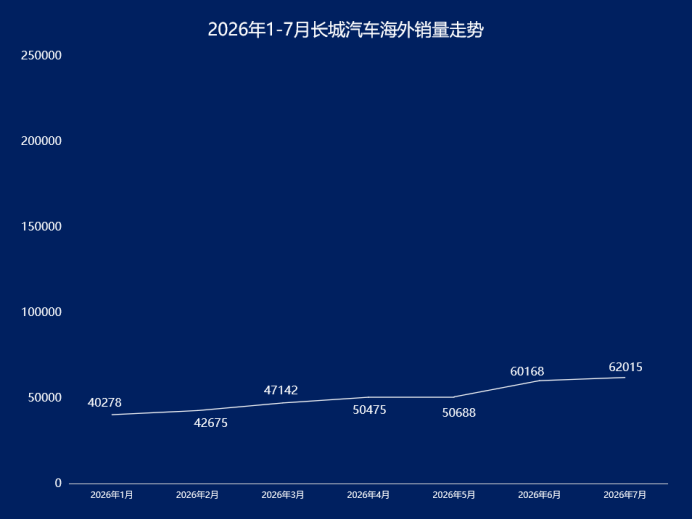
In Conclusion:
Overall, Chery continues to lead Chinese independent brands in overseas sales, followed closely by BYD, while Geely, Changan, and Great Wall also maintain rapid growth in overseas markets. As leading independent brands accelerate their overseas layout (layout), overseas markets are gradually becoming new growth spaces for Chinese automakers.
The collective acceleration of automakers' global expansion is driven by two factors: on one hand, the domestic automobile market is experiencing slowing growth and intensified price competition, making it increasingly difficult to rely solely on the domestic market for growth. On the other hand, after years of technological accumulation, Chinese automakers have strengthened their advantages in new energy, intelligence, and supply chains, enhancing product competitiveness and providing stronger support for further overseas expansion.
Nowadays, going global for automakers means more than just exporting cars; it involves building factories, establishing sales channels, and improving localized services to further expand local markets. Moving forward, the true test for automakers will be their ability to sustain growth in overseas markets and ultimately achieve stable profitability.
(Images sourced from the internet; Infringement deletion (Infringement will result in removal))
-
![]()
Nine Days After DeepSeek Raised Prices, Zhipu Enters the Market with One-Tenth the Cost
-
![]()
Ruidu丨Sinonet Half-Year Report: Profit Halved, Computing Power Lags, Caught Between Traditional and New Businesses
-
![]()
NIO’s Battery Swap Stations in Wuhan Transition to State Ownership: What’s Next for the Battery Swap Industry?
-
![]()
Silicon Valley AI Battle Royale: How Anthropic Is Draining OpenAI's 'Superbrain'?
-
![]()
"Quick-Made Cars"? Hit the Brakes
-
![]()
Li Auto Reports H1 2026 Operating Loss of 5.3 Billion Yuan, Cash Reserves Decline by 13.7 Billion Yuan, Vehicle Gross Profit Margin Shows Signs of Rebound!
-
![]()
Chery Leads, Geely Surges: A Review of Overseas Sales of China's Top Five Automakers
-
![]()
Can the Affordable IONIQ V Win Back Consumer Hearts?