Can the Affordable IONIQ V Win Back Consumer Hearts?
 08/27 2026
 502
502
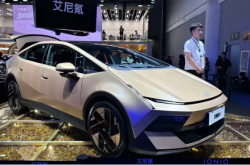
Four months following its launch, the Beijing Hyundai IONIQ V officially commenced pre-sales at the Chengdu Auto Show. With a pre-sale price range of RMB 119,900 to RMB 139,900, this uniquely designed all-electric vehicle has managed to regain some consumer interest.
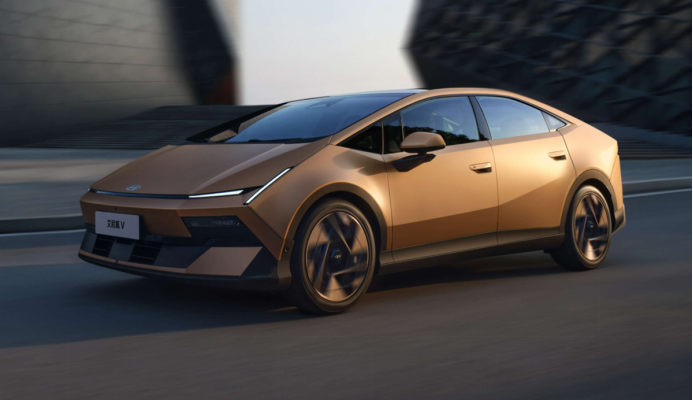
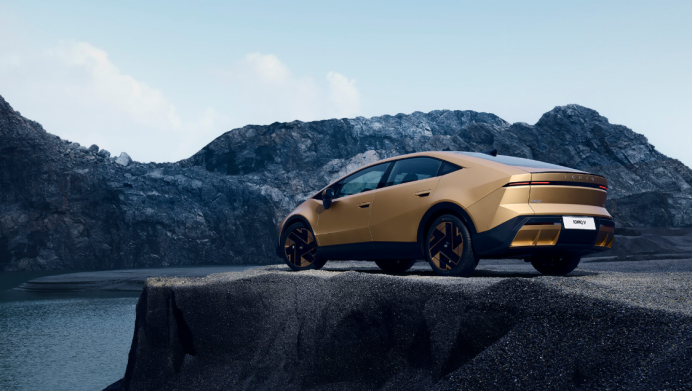
Previously, the IONIQ V's unconventional design had been the primary focus of attention. Although it is vaguely identifiable as an all-electric sedan, its overall design is highly innovative, with front, rear, and side profiles that significantly differ from mainstream sedans. Undoubtedly, the IONIQ V's design is highly original and forward-looking. However, its somewhat unconventional appearance also pushes aesthetic boundaries, making it difficult to categorize as simply attractive or unattractive.
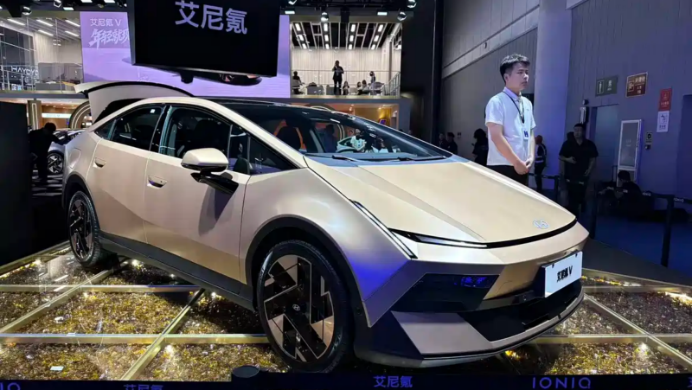
As a result, various doubts have arisen. Public feedback indicates that many find the IONIQ V's actual appearance unappealing. Some influential figures have even bluntly stated that Beijing Hyundai, already facing mounting challenges, has released a questionable new model.
It is worth noting that the IONIQ V is Beijing Hyundai's second all-electric vehicle after the Hyundai EO, and it is also the first domestically produced model under the Hyundai IONIQ brand. For such a significant new model, presenting itself in this manner adds another layer of uncertainty to its already unclear future.
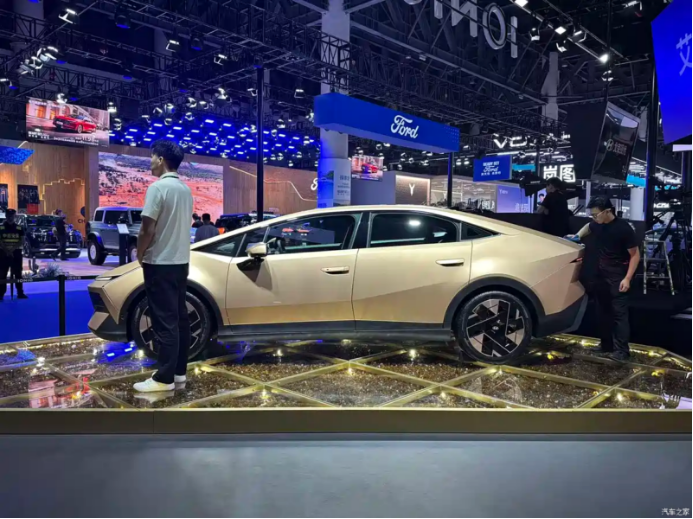
After the pre-sale price was announced, some observers believe that the IONIQ V's pricing strategy is relatively genuine.
The pre-sale price range of RMB 119,900 to RMB 139,900 is generally on par with that of local mid-size all-electric sedans of the same class and specifications. Considering that the official price is likely to be lower, the actual price of the IONIQ V may even undercut many domestically produced all-electric sedans in the same class. Consequently, many people feel that the "IONIQ V has shed its joint venture pretensions," "the IONIQ V has shaken things up," and "this time, they're really going for it."
However, in the eyes of others, the IONIQ V's sincerity falls short.
While the IONIQ V is affordably priced and features dual AI models from Volcano Engine (Doubao) and Baidu, supported by the Qualcomm Snapdragon 8295P flagship chip for computing power, and is equipped with the Momenta-powered Xingdong Zhixing L2+ advanced driving assistance system, a side-by-side comparison reveals that many of its configuration parameters are not particularly outstanding, casting doubt on its overall competitiveness.
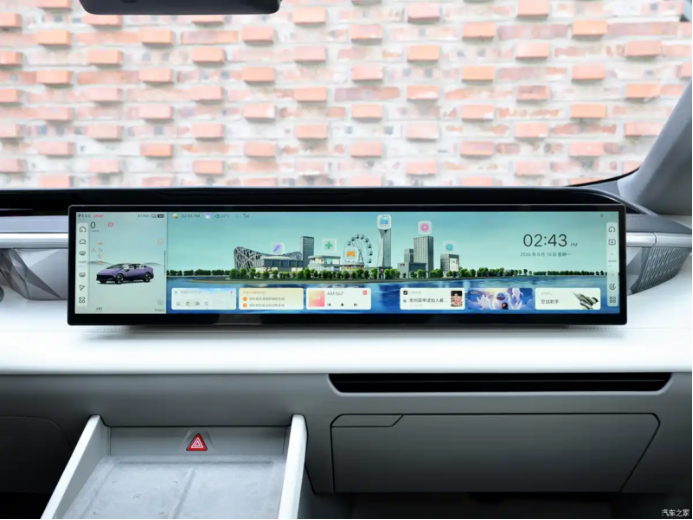
For instance, the IONIQ V is equipped with a front single motor across all trims, with the top-trim model's motor power reaching only 168 kW. In contrast, many domestically produced models in the same price range, such as the Qin Max/Seal 06 and XPENG MONA M03, offer over 200 kW rear-wheel drive, with 0-100 km/h acceleration times typically in the 5-6 second range. Compared to these, the IONIQ V's power seems somewhat inadequate.
Moreover, facing many domestically produced competitors in the same price range that utilize multi-link rear suspensions, the IONIQ V's torsion beam rear suspension has also become a point of contention.
It is worth mentioning that the IONIQ V adopts a pure vision-based intelligent driving solution, with urban NOA (Navigate on Autopilot) only available in versions priced above RMB 129,900. In contrast, the Shenlan L07 in the same price range comes standard with LiDAR, while the high-end versions of the Qin Max and Seal 06 also offer LiDAR options. From this perspective, the IONIQ V's intelligent driving capabilities do not offer a clear advantage.
From an industry perspective, the IONIQ V's biggest drawback lies in its brand.
Currently, the Chinese auto market is characterized by a plethora of brands, a wide variety of models, rapid product iteration, and highly competitive pricing. Features such as 800V high-voltage fast charging, advanced intelligent driving, and large-screen smart cockpits have already become mainstream standards, offering exceptional value for money. As a result, domestic brands have become the dominant force in the market.
In contrast, joint venture electric models have low visibility and have long been stereotyped by consumers as "off-brand." Even though some joint venture brands have subsequently launched models based on new all-electric platforms, this ingrained perception has not been entirely dispelled, ultimately leading to sluggish sales for several new joint venture electric vehicles built on new platforms. New-generation electric products localized by automakers such as Buick, Kia, Honda, and Nissan based on new platforms have generally performed mediocrely in the market, with few standout successes.
For this reason, many joint venture all-electric new models at this year's Chengdu Auto Show have adopted uniformly low pricing strategies to reduce marketing difficulties by making them more appealing to consumers.
Compared to a host of local automakers and new forces, Beijing Hyundai, which has been observing the market for many years, has become a latecomer, with slightly inferior electric technology, product reputation, and market enthusiasm. The Hyundai EO, which arrived late to the market, has only achieved three-digit sales figures in the first three months since its launch 10 months ago, with monthly sales remaining in the two-digit range thereafter. In July this year, only 53 EOs were sold.
Therefore, whether the Beijing Hyundai IONIQ V can truly attract Chinese consumers remains to be seen over time. Of course, this assumes that consumers do not reject the IONIQ V's design.
(Image sources: Internet. Images will be removed if infringement is found.)
-
![]()
Can the Affordable IONIQ V Win Back Consumer Hearts?
-
![]()
【Xauto Intelligent Driving Rankings】Li Auto L9 Livis OTA9.1.0 Urban Evaluation Report
-
![]()
SAIC Audi Executives Claim Four-Ring Logo No Longer Holds Much Sway—Is That Accurate?
-
![]()
What Are the Odds of China's Battery-Swapping Heavy Trucks Making Inroads into Europe?
-
![]()
Vision: Has Li Auto's Extended-Range Ace 'Misfired,' Turning Guidance into a 'Pipe Dream?'
-
![]()
Too Pessimistic! MiniMax Isn't Doing That Badly
-
![]()
The 150,000-Yuan SUV Market: A Tempting yet Elusive Prize
-
![]()
The Endgame for New Car-Making Forces Is Set: Only a Three-Year Window Remains, Who Will Be Completely Eliminated?