ByteDance's Leap into Smartphones: Echoing Huawei's Auto Strategy, Taking Aim at Alibaba and Tencent?
 12/01 2025
 761
761
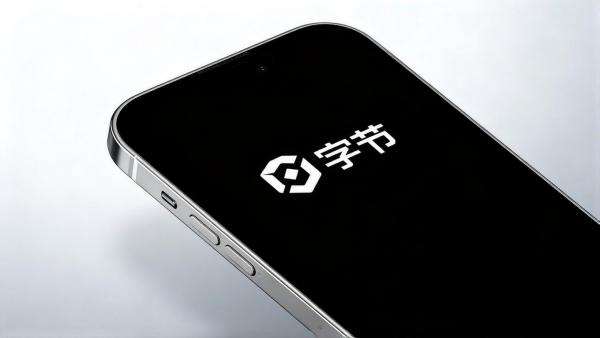
ByteDance Steps into Smartphone Realm: Is Doubao Its Launchpad?
Significant reports indicate that ByteDance and ZTE are poised to launch an AI-driven smartphone. ByteDance is at the forefront, integrating the Doubao large language model and AI interaction features, while ZTE takes charge of hardware design, product development, and manufacturing.
The smartphone's standout feature is its high-privilege AI Agent capabilities. The system incorporates an AI Agent with elevated system permissions, enabling it to execute commands across apps and handle complex tasks—a notable advancement over the current "smartphone + large model/AI app" setup.
This move is seen as ByteDance's latest counter to Alibaba's Qianwen and Tencent's WeChat Agent, while also challenging hardware giants like Honor, Huawei, and OPPO.
So, who are the key contenders in the AI Agent market? How are they deploying AI Agents, and what obstacles have they encountered?
01
ByteDance's Smartphone Gambit: Echoing HarmonyOS Intelligent Vehicle's Strategy?
Speculation about ByteDance entering the smartphone arena surfaced multiple times in 2025, only to be consistently refuted by the company.
In its latest denial, ByteDance stated: "The claim (about developing our own smartphones) is untrue. We currently have no intentions to launch our own smartphone products. However, we are persistently exploring ways to extend our AI capabilities to various hardware manufacturers, including smartphones. Throughout this process, we will collaborate with partners to craft comprehensive solutions, but all collaborations explicitly exclude the development and launch of our own smartphone products."
Yet, the smartphone co-developed with Nubia clearly transcends the bounds of a "standard partnership."
Its key innovation lies not merely in pre-installing Doubao but in deeply embedding ByteDance's AI capabilities into the OS core, granting it system-level access for cross-app resource scheduling, background autonomy, and direct operation of other apps' core functions.
In essence, ByteDance is utilizing partners to seamlessly integrate its AI into hardware, forging an "intelligent hub."
This is precisely what unsettle traditional smartphone makers: ByteDance doesn't need to manufacture phones itself; embedding AI into partner hardware suffices. This tactic mirrors HarmonyOS Intelligent Vehicle's approach.
According to 36Kr, in October 2020, Huawei announced it would not build entire vehicles but assist companies in crafting superior cars.
By 2025, HarmonyOS Intelligent Vehicle had forged partnerships with Seres, Chery, BAIC, JAC, and SAIC to introduce AITO, Luxeed, Enjoy, Maestro, and Shangjie models. Incorporating HI and HI Plus modes, its "ecosystem" now encompasses most major automakers.
By "empowering" partners, HarmonyOS Intelligent Vehicle leverages its strengths in ICT and intelligent technologies without delving deeply into capital-intensive areas like vehicle manufacturing, production line operations, inventory management, and complex after-sales systems. This asset-light model facilitates efficient resource allocation and core technology R&D.
Should a partner model falter, HarmonyOS Intelligent Vehicle's impact remains contained as a technical collaborator.
Moreover, its business model hinges not on vehicle sales profit/loss but on technology adoption.
As long as partner automakers utilize Huawei's intelligent cockpit, ADS advanced driving system, Harmony OS, or related solutions, they pay technology licensing, software service, or module integration fees as per the agreement. This technology-based fee structure ensures predictability, stability, and scalable growth with rising partner vehicle sales.
ByteDance, having previously acquired Hammer Tech's smartphone business, clearly grasps this rationale.
In early 2019, ByteDance acquired a portion of Luo Yonghao's Hammer Tech assets, integrating its smartphone team into ByteDance and establishing New Stone Lab. Market consensus anticipated ByteDance to transition from software to integrated hardware-software solutions, controlling terminal access and constructing its hardware ecosystem beyond content and algorithms.
After all, with the Mobile Internet dividend nearing its peak, securing user touchpoints and closed-loop experiences emerged as a common strategic objective for leading platforms.
However, aspirations clashed with reality. The Smartisan Pro 3 and R2 models launched by Hammer Tech's team under ByteDance underperformed in sales. By early 2021, New Stone Lab merged into ByteDance's educational hardware team, halting the development of Smartisan phones and TNT displays.
This experience likely influenced ByteDance's decision to partner with Nubia.
More intriguingly, amid tightening regulations, "not building hardware" became ByteDance's natural compliance buffer. It can infiltrate terminal scenarios while asserting to be merely a technology provider—maintaining ecosystem control without being labeled "monopolistic" or "closed-loop."
From this vantage point, ByteDance's "non-smartphone strategy" may pose a greater threat than building phones. It redefines AI smartphone standards for the new era without directly vying for market share.
This spells trouble for Honor, Huawei, OPPO, and other hardware makers. Previously on roughly equal footing (if not identical starting lines), they now confront a player armed with immense computational power and data resources. A dimensional strike seems inevitable.
The scenario mirrors how Ideal ONE was nearly crippled overnight by AITO M7—likely to replay in the smartphone sector.
02
Alibaba and Tencent's AI Agent Ambitions: Can ByteDance Outmaneuver Them?
AI Agent isn't solely a battleground for smartphone hardware makers. Internet titans like Tencent and Alibaba are harnessing their vast software ecosystems and large model capabilities to redefine "intelligence" and "productivity" boundaries above the OS level and within user interactions.
In March, whispers emerged about WeChat launching an Agent, with management designating it as WeChat's top priority for the year.
During Tencent's Q3 earnings call, executives disclosed the Agent would leverage the Mini Program ecosystem, creating an "intelligent agent" with autonomous perception, task decomposition, and cross-Mini Program execution capabilities.
Unlike traditional voice assistants' reactive responses, it's rumored to proactively intervene in daily scenarios: e.g., after detecting "next week's business trip" in a chat, it automatically generates an itinerary in Tencent Docs, books flights/hotels via WeChat Pay, syncs calendar reminders, and pushes weather/traffic advice before departure—all within WeChat without app-switching.
Tasks requiring cross-app, multi-step user actions could also be accomplished via "single-sentence commands" in WeChat.
If realized, WeChat would further solidify user loyalty, transforming its already robust "social empire" into a super-portal integrating communication, services, transactions, and intelligent execution. Users would no longer just "use WeChat" but "live in WeChat."
Alibaba unveiled its Agent strategy on November 17, announcing the "Qianwen" project to fully enter the AI-to-Consumer market.
Alibaba stated Qianwen App aims to be a "personal AI assistant that chats and gets things done," integrating deeply with e-commerce, maps, local services, and other business ecosystems to enhance its Agentic capabilities—enabling AI to not just comprehend and generate content but also coordinate across scenarios and complete tasks directly.
Notably, Qianwen App deeply integrates with Alibaba ecosystem products like Taobao, Gaode Maps, and DingTalk, breaking app barriers to create a closed-loop service from "asking" to "thinking" to "doing."
Future users could plan weekend family trips, book tickets/hotels, and pay via Yu'e Bao using voice commands without switching apps—steadily advancing toward the strategic goal of becoming a "future AI lifestyle portal."
However, WeChat and Alibaba's AI Agent visions encounter a structural bottleneck: the boundaries of their ecosystem closures also act as capability ceilings.
Whether WeChat's "super-app inner loop" built on Mini Programs and social chains or Alibaba's "lifestyle services loop" supported by Taobao, Gaode, and DingTalk, their Agent capabilities hinge heavily on data interoperability and permission openness within their ecosystems.
When involving third-party apps—e.g., ordering meals via Meituan, checking flights on Ctrip, or accessing bank account info from banking apps—the intelligent workflow abruptly halts.
The reason is straightforward: no independent developer or rival platform willingly relinquishes core user behavior data, sensitive information, or interaction control to "gatekeepers" like WeChat or Alibaba. Such "ecosystem moats" were advantages in the traffic era but may become constraints in the Agentic AI era.
True Agents must navigate freely across services like humans to complete end-to-end tasks. WeChat Agent and Qianwen Agent's "cross-app" capabilities are essentially confined to their controlled sub-ecosystems, failing to breach OS permission barriers. Non-Alibaba/non-Tencent apps have neither incentive nor trust to grant these platforms system-level interfaces.
Thus, ByteDance's strategy proves particularly potent—it bypasses the "convince all apps to join me" dilemma by striking from the hardware layer.
The tables have turned: what was once perceived as a "heavy asset trap" (hardware partnerships) now offers ByteDance a Huawei-inspired solution. This may be the sole path to breaking ecosystem silos and achieving true cross-app intelligence.
Will Alibaba and Tencent, now cognizant of this approach, follow ByteDance's lead? Or will they stubbornly launch "Alibaba Phones" and "Penguin Phones" instead?
-
![]()
Hardware is the skeleton, AI is the soul, and data integrates the two
-
![]()
China’s AI Industry: A Unified Pivot Towards Monetization?
-
![]()
New Progress! Infineon Completes Acquisition of ams OSRAM's Non-Optical Sensor Business
-
![]()
35 Million Bet on an Optical Future! Tengjing Technology Makes a Move in AR
-
![]()
Why World Models Get Stuck on Construction Roads in Autonomous Driving Applications
-
Alibaba Initiates Cultural Transformation: Is Jack Ma Making a Strategic Comeback?
-
Tianfeng Heads to Hong Kong for IPO with RMB 3.8 Billion in Funds: Xingyu's Cross-Border Foray into Embodied AI Faces Uncertain Future
-
![]()
Mengshi Auto’s High-End Aspirations Dashed: Huawei Partnership Fails to Revive Sales, New Model’s Entry Price Dips Below 300,000 Yuan