December's Smartphone Market Faces Final Showdown: High-End Segment Competes on Differentiation, Mid-Range on Specifications
 12/01 2025
 601
601
The Year-End 'Ultimate Showdown' Arrives.
December is approaching, and 2025 is drawing to a close. This year's smartphone market has seen numerous dark horses emerge, with nearly every surviving manufacturer delivering impressive results.
In the final month, smartphone makers are still giving it their all, determined to close out 2025 on a high note. This year-end 'ultimate showdown' not only determines manufacturers' annual performance but also offers a glimpse into the industry's new development trends for 2026.
Annual Flagships Arrive Early: Is a Storm Brewing in the Smartphone Market?
1. Xiaomi 17 Ultra: Xiaomi's Annual Flagship Leading Imaging Trends?
Perhaps anticipating the fierce competition in the 2026 smartphone market, Xiaomi has once again moved up the release date of its Ultra series. Digital blogger @Digital Chat Station recently confirmed that the Xiaomi 17 Ultra series has received network approval. It supports 100W flash charging and UWB across all models. The standard version (2512BPNDAC) does not support satellite communication, while the high-end version (25128PNA1C) supports TianTong satellite calls and Beidou satellite messaging. This marks the first ultra-premium flagship of the year to feature the fifth-generation Snapdragon 8 Supreme Edition processor.
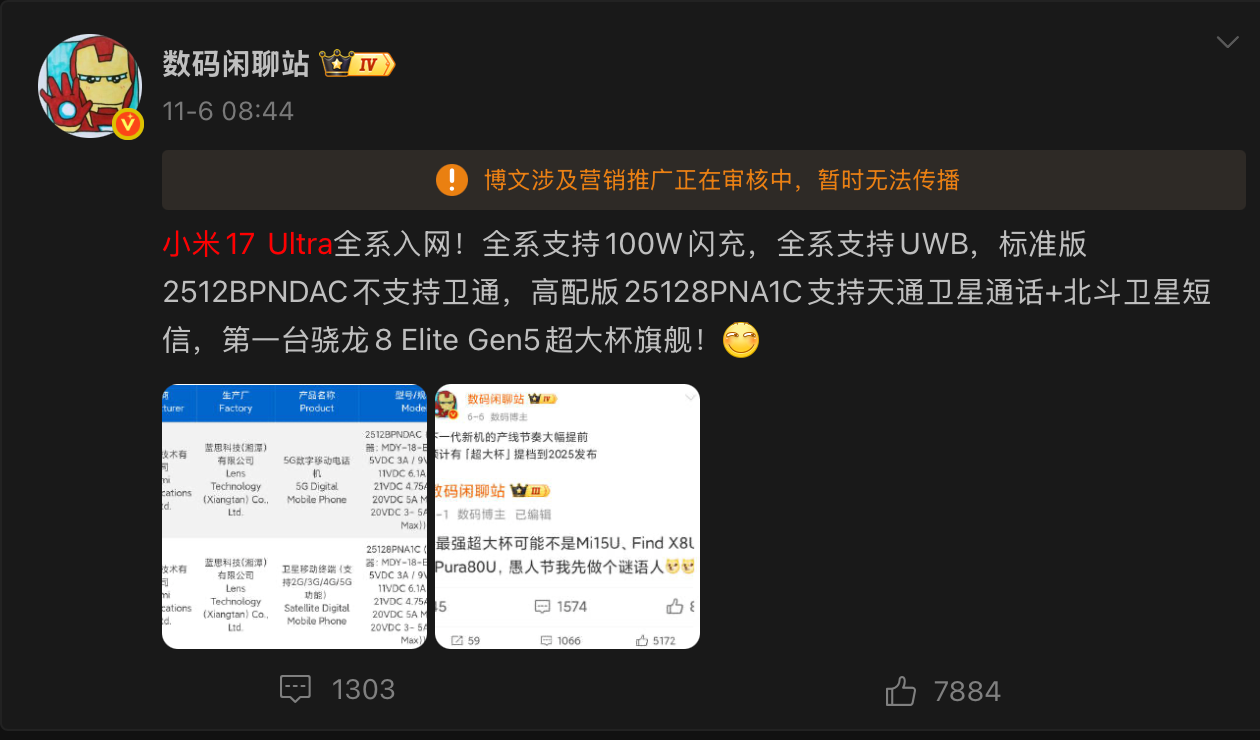
(Image Source: @Digital Chat Station)
Of course, everyone's primary concern is the Xiaomi 17 Ultra's imaging capabilities. First, it features a new 1-inch 50-megapixel ultra-large sensor main camera with advanced ISZ technology. Simply put, ISZ allows the Xiaomi 17 Ultra to seamlessly transition between different focal lengths without any loss in image quality when zooming from 1x to 5x.
Second, it includes a 200-megapixel periscope telephoto lens. According to leaks, this sensor is the same as those used in the vivo X300 Pro and OPPO Find X9 Pro, but it supports the latest 4×4 RMSC technology. This essentially uses denser pixel sampling to enhance telephoto resolution and enables macro photography.
In other words, you can capture distant subjects while also getting detailed shots of flowers, pets, and watches up close. This combination ensures true 'full-focal-length high-pixel coverage,' providing a balanced and consistent experience from ultra-wide to high-magnification telephoto. Clearly, Xiaomi aims to bring professional camera-like 'shooting experiences' to smartphone photography.
With its new technology-enhanced 1-inch main camera and 200-megapixel periscope telephoto lens, the Xiaomi 17 Ultra's biggest challenge may not be imaging performance but balancing feel (hand feel), cooling, and battery life.
Regarding other specifications, here's a quick overview: the screen, processor, speakers, haptic motor, and fingerprint sensor will all follow the Xiaomi 17 Pro Max's specifications. The design will continue the Ultra series' traditional 'round cake' aesthetic. Additionally, the Xiaomi 17 Ultra will likely come in two versions: the standard version mentioned earlier and a 'Pro' version with exclusive physical zoom capabilities. Whether this is true will only be confirmed at launch.
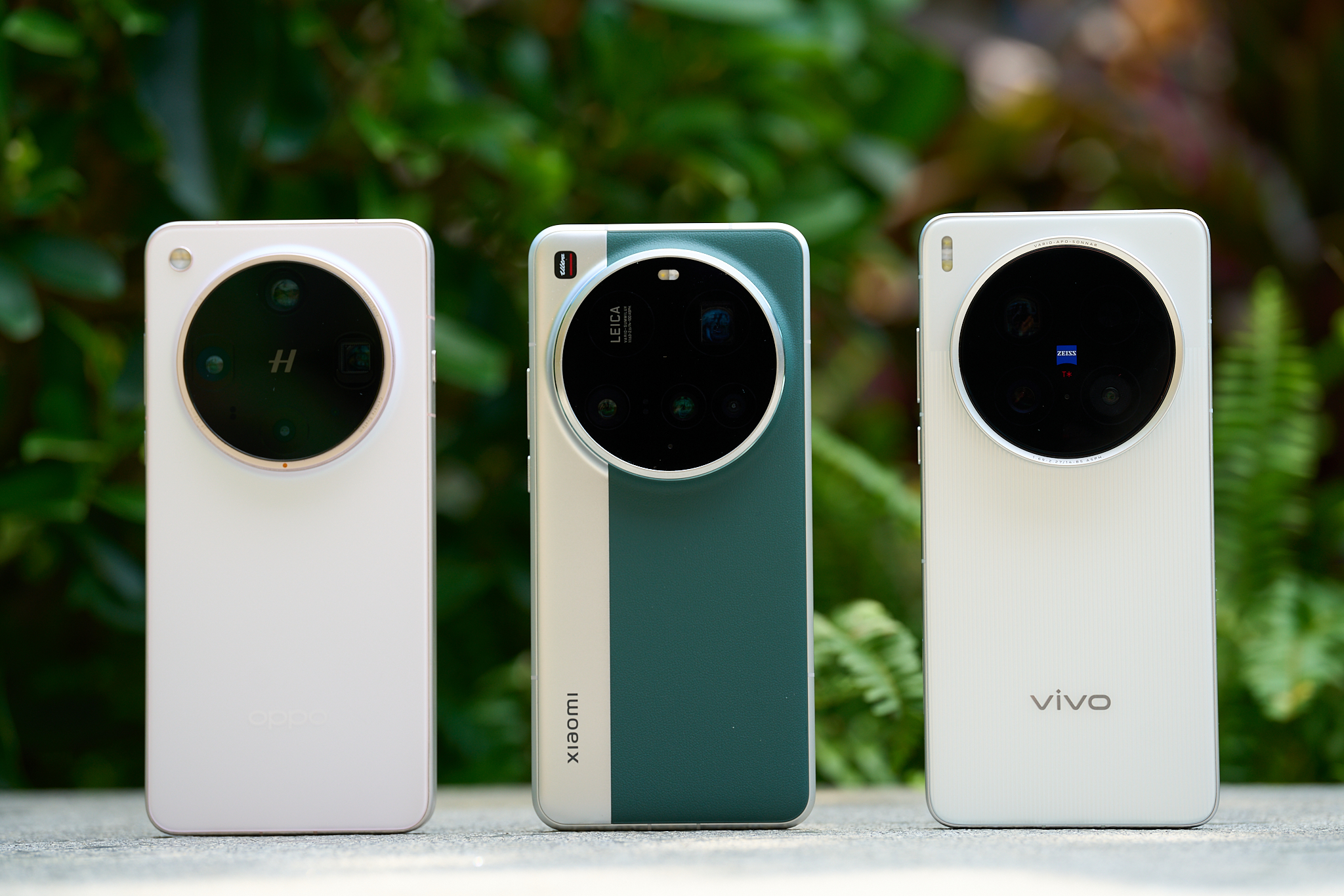
(Image Source: Leitech)
In short, the Xiaomi 17 Ultra's evolutionary direction and product positioning are clear. It abandons the previous approach of simply stacking specs, ensuring that flagship imaging isn't just about pixel count but truly addressing pain points in the photography process. If Xiaomi can harmonize its algorithms, hardware, and cooling, this device's imaging experience could elevate the Android ecosystem to new heights.
2. Samsung Galaxy Z TriFold: Not Just a Follower in Triple-Fold Smartphones.
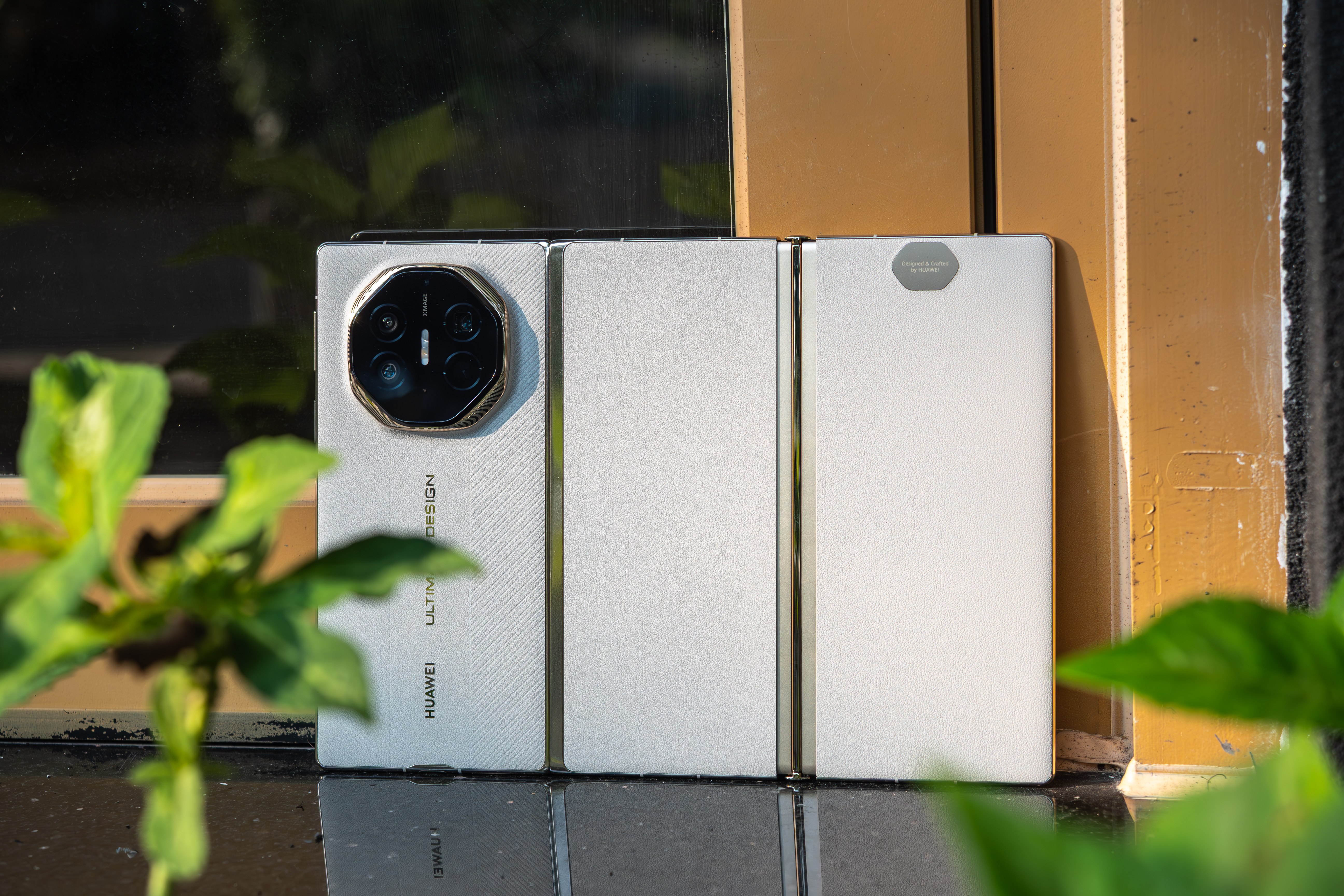
When triple-fold smartphones are mentioned, Huawei inevitably comes to mind. As a manufacturer that has released two successful generations of triple-fold devices, Huawei has become synonymous with this category. However, Samsung, another folding smartphone pioneer, is set to release its first triple-fold model, the Galaxy Z TriFold, with a confirmed early December launch.
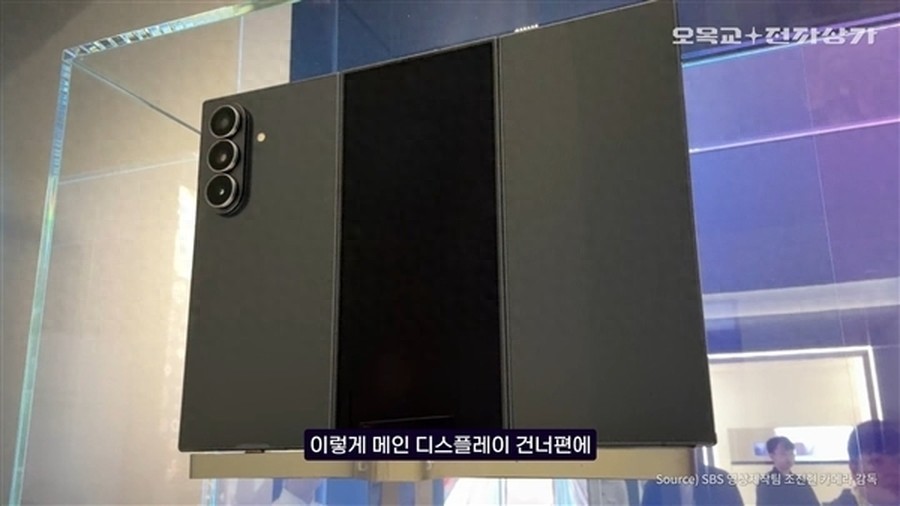
Unlike Huawei's triple-fold smartphones, Samsung's folding logic is more conservative. It features two hinges, one with a tighter radius that allows the inward-folding screens to stack on top of each other, creating a 'triple-layer' structure. This design offers better screen protection and overall reliability than Huawei's approach but at the cost of increased thickness and weight.
(Image Source: Online Community)
To address power consumption issues in triple-fold smartphones, the Samsung Galaxy Z TriFold innovatively incorporates three separate batteries, one in each folding section. This places greater demands on the manufacturer's internal stacking design capabilities.
According to foreign media leaks, the Samsung Galaxy Z TriFold has a 6.5-inch external screen in folded mode and expands into a 10-inch 'tablet' when fully unfolded. Combined with its new CPI+UTG composite cover solution, its hardware foundations justify its positioning as a high-end flagship.
In terms of software, Samsung has deeply adapted One UI for this new form factor, including optimizations like multi-tasking triple-screen layouts, seamless content synchronization between the cover and inner screens, and multi-window parallel operations. For specifications, it features the Snapdragon 8 Supreme Edition processor, a 20-megapixel under-display camera, S Pen support, and DeX desktop mode.
Regarding pricing, supply chain sources indicate that the Samsung Galaxy Z TriFold will likely start between $2,500 and $3,000 (approximately ¥17,696 to ¥21,235), with an initial production run of only 50,000 to 100,000 units. It remains a luxury item for the wealthy.
(Image Source: Leitech)
While Samsung's cautious approach to triple-fold smartphones is evident from the initial production volume, it also signifies that the folding smartphone market has fully entered the 'era of differentiation.' Traditional dual-fold devices no longer offer much novelty, and triple-fold designs may become the new focal point for flagship folding smartphones.
Mid-Range Market Intensifies: Who Will Come Out on Top?
Compared to the high-end segment, the mid-range market is far more competitive than expected. Features previously reserved for flagship models are now making their way to mid-range devices. The upcoming mid-range models in December may once again redefine our perceptions of this category.
1. vivo S50 Series: The Next-Generation 'Fighting Angel'?
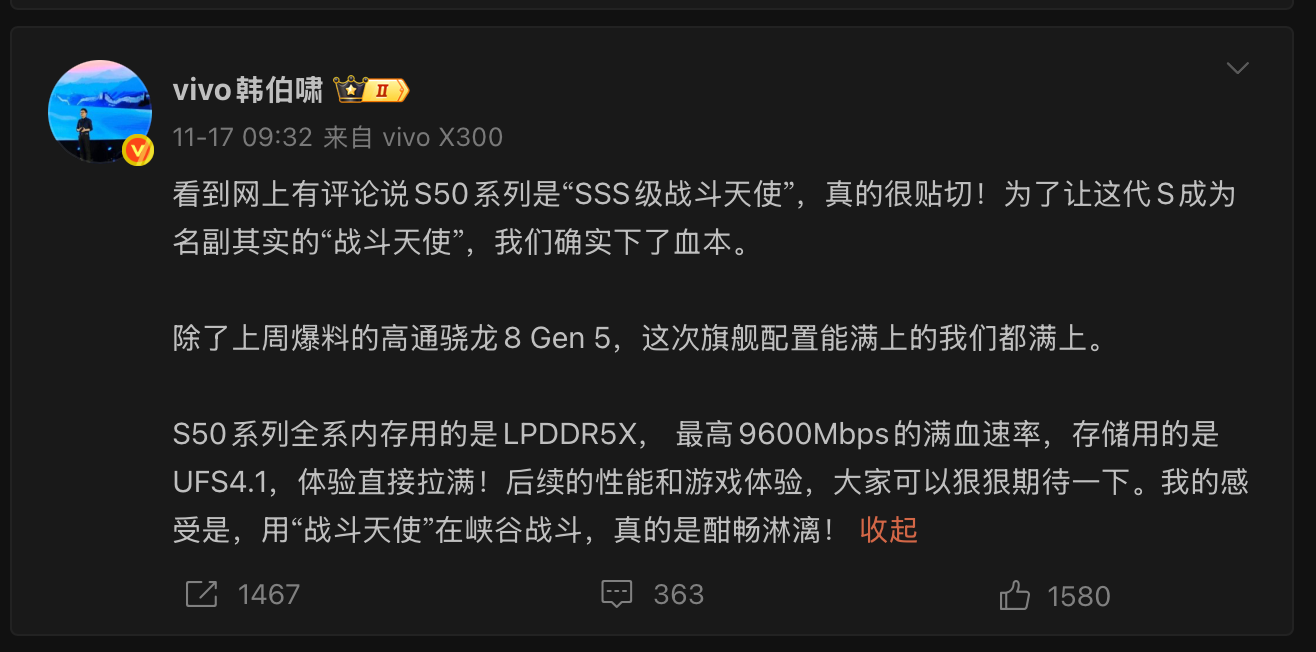
vivo Product Manager Han Boxiao once described the vivo S50 series as an 'SSS-grade fighting angel' on Weibo. From this slightly cringe-worthy nickname, it's clear that vivo has invested significant effort into this model.
(Image Source: @Han Boxiao)
According to leaks, the S50 series continues the product layout of the S30 series, offering only two versions: the S50 and S50 Pro mini (standard and compact Pro versions, respectively). Both will feature Qualcomm's newly released Snapdragon 8 Gen 5 processor, making it the industry's first compact phone with this chip.
Here's a quick introduction to the processor: manufactured using TSMC's N3P process, it features the Oryon CPU architecture with two 3.8GHz super cores and six 3.32GHz large cores, paired with the Adreno 840 GPU. It scores over 3.3 million points in AnTuTu benchmarks, roughly on par with last year's Snapdragon 8 Supreme Edition processor.
Additionally, the vivo S50 series comes standard with 9600Mbps full-spec LPDDR5X memory and UFS 4.1 storage, fully competing with flagship models.
Beyond performance 'leaps,' the vivo S50 series also includes standard periscope telephoto lenses and the S series' traditionally excellent portrait photography capabilities. More interestingly, it will debut two new features: 'Highlight Slow Motion' and 'Zoom Cinematography.' The former slows down highlight moments in live photos to emphasize the subject, while the latter stitches together multiple zoom shots into a video, creating a unique vlog.

(Image Source: vivo Official)
Of course, both features support foolproof operation, requiring no user learning curve—just point and shoot for impressive results.
Other specifications include 6.59-inch and 6.31-inch 1.5K resolution flat screens, both supporting 4320Hz high-frequency PWM dimming and 5000nit peak brightness. The design continues the previous minimalist, lightweight, and dopamine-inspired color scheme, with support for 90W wired fast charging.
As a side note, the last model dubbed a 'fighting angel' was the 2019 Xiaomi 9, which performed average. Will the SSS-grade fighting angel vivo S50 series break this curse?
2. REDMI vs. OnePlus: Who Dominates the Cost-Effectiveness Segment?
REDMI and OnePlus have long been fierce competitors in the cost-effectiveness market, with highly overlapping product positioning, planning, pricing, and user demographics. Shortly after REDMI announced the upcoming Turbo 5 Pro, OnePlus revealed its new Turbo product line, suggesting another direct confrontation.
First, REDMI: according to @Digital Chat Station, the REDMI Turbo 5 Pro will feature a massive 10,000+mAh battery. For context, current 8000mAh phones offer around 8 hours of battery life, so the Turbo 5 Pro should last at least 9-10 hours, making it viable for heavy users with a single daily charge.

(Image Source: Xiaomi Official)
The REDMI Turbo 5 Pro also supports next-gen 100W wired flash charging, capable of charging from 1% to 80% in 40 minutes.
For core specifications, the REDMI Turbo 5 Pro will feature a MediaTek Dimensity 9 series flagship processor, up to 16GB+1TB storage, a 1.5K LTPS large R-corner flat screen, metal frame with glass back, 3D ultrasonic fingerprint sensor, a 50MP main camera + 8MP ultra-wide lens combination, and IP68 dust/water resistance.
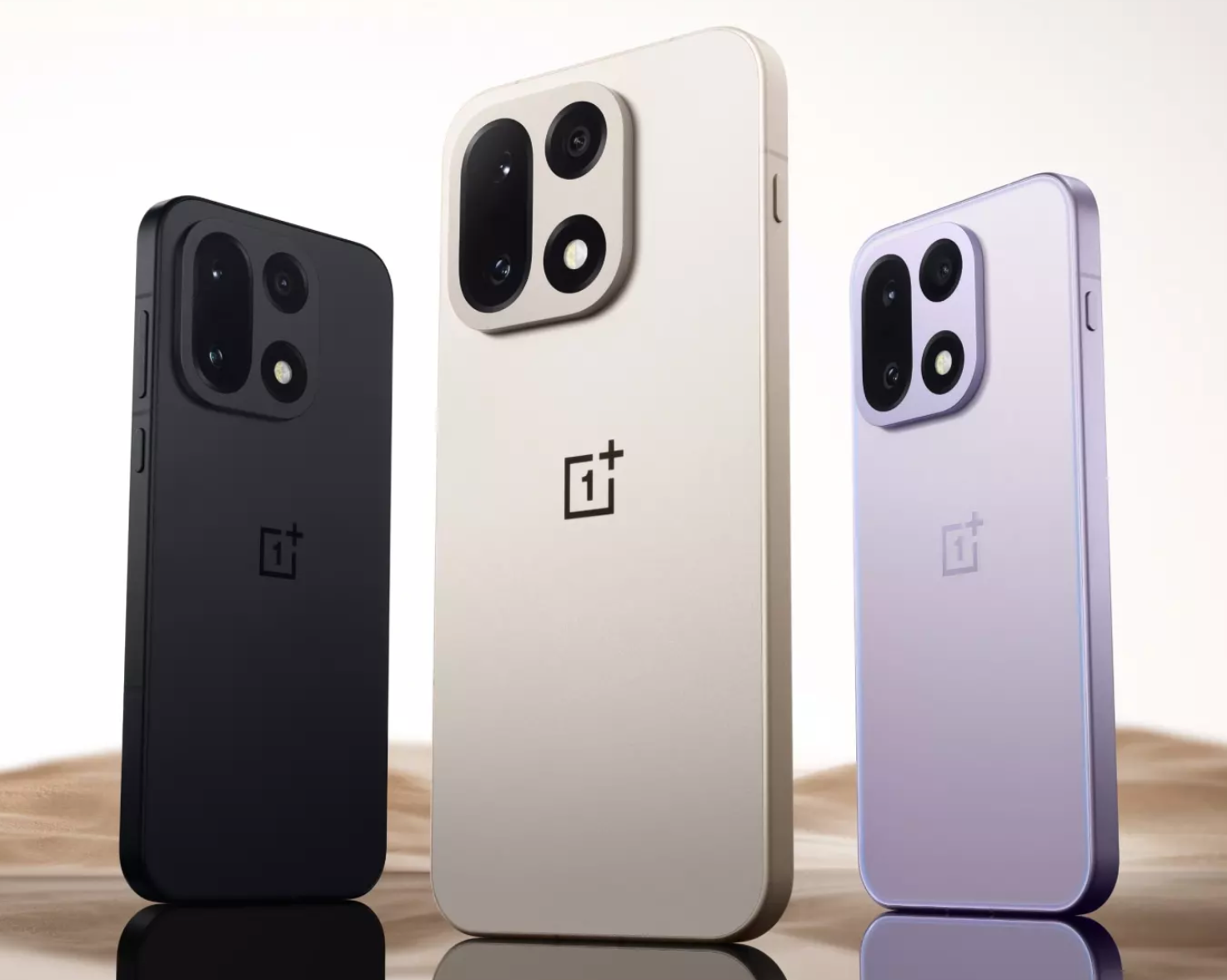
OnePlus's Turbo 6 offers similar specifications, starting with a 9000mAh battery—smaller than REDMI's but still a 'beast' in battery capacity. It features the Qualcomm Snapdragon 8s Gen 4 processor, known for its exceptional energy efficiency, potentially matching the REDMI Turbo 5 Pro's battery life.
(Image Source: Leitech)
The screen is a 6.78-inch 1.5K LTPS flat display, likely with a 165Hz refresh rate, placing it above average among cost-effective models.
Other features include a metal frame, 3D ultrasonic fingerprint sensor, and a 50MP main camera + 8MP ultra-wide lens combination, with a possible 32MP front camera.
Regarding pricing, based on the REDMI Turbo 4 Pro's pricing and OnePlus's competitive nature, Leitech estimates both will start between ¥2,200 and ¥2,400. These two models are poised to become the most well-rounded options in the ¥2,000 price range.
Conclusion: High-End Market Competes on Differentiation, Mid-Range on Specifications
After reviewing these upcoming models, one cannot help but marvel at the fierce competition in today's smartphone market. Even after major shopping events like 618 and Double 11, manufacturers continue to vie for dominance.
In the high-end segment, the Xiaomi 17 Ultra breaks free from the spec-stacking trend with imaging innovations, the Samsung Galaxy Z TriFold explores differentiation through triple-fold designs, and Huawei's recently released Mate 80 series carries the hope of brand revival, collectively propelling the high-end market into a new era. In the mid-range arena, Redmi, OPPO, vivo, and Honor's 'leaps' in specifications have made flagship features standard in mid-range devices, turning 'mid-range premiumization' from a slogan into reality.
This year-round competition brings tangible benefits to users—higher specifications, better experiences, and more reasonable prices. For the industry, it serves as a core driving force behind technological advancements and ecosystem maturation.
The wave of new phone releases in December represents not only the final act of 2025 but also the prologue to 2026. Looking ahead, as foldable screen technology matures further, imaging and performance technologies continue to break new ground, and the boundaries between mid-range and high-end devices blur, market competition is likely to intensify even more.
Xiaomi, Samsung, Redmi, OnePlus, vivo
Source: Leikeji
The images in this article are sourced from: 123RF Licensed Image Library
-
![]()
Hardware is the skeleton, AI is the soul, and data integrates the two
-
![]()
China’s AI Industry: A Unified Pivot Towards Monetization?
-
![]()
New Progress! Infineon Completes Acquisition of ams OSRAM's Non-Optical Sensor Business
-
![]()
35 Million Bet on an Optical Future! Tengjing Technology Makes a Move in AR
-
![]()
Why World Models Get Stuck on Construction Roads in Autonomous Driving Applications
-
Alibaba Initiates Cultural Transformation: Is Jack Ma Making a Strategic Comeback?
-
Tianfeng Heads to Hong Kong for IPO with RMB 3.8 Billion in Funds: Xingyu's Cross-Border Foray into Embodied AI Faces Uncertain Future
-
![]()
Mengshi Auto’s High-End Aspirations Dashed: Huawei Partnership Fails to Revive Sales, New Model’s Entry Price Dips Below 300,000 Yuan