ZTE Hitches a Ride on Doubao's 'Hitchhike'
 12/05 2025
 722
722
By Dou Wenxue
Edited by Ziye
On December 1, ZTE Corporation's stock price opened high and continued to rise, eventually hitting the daily limit and closing at RMB 46.3 per share.
On the same day, ZTE's Hong Kong-listed shares also saw a significant increase, closing at HK$35.8 per share, up 13.94%.
Judging from ZTE's stock price trend, such substantial fluctuations have been rare in the past. The main reason for this capital influx is ZTE's collaboration with Doubao.
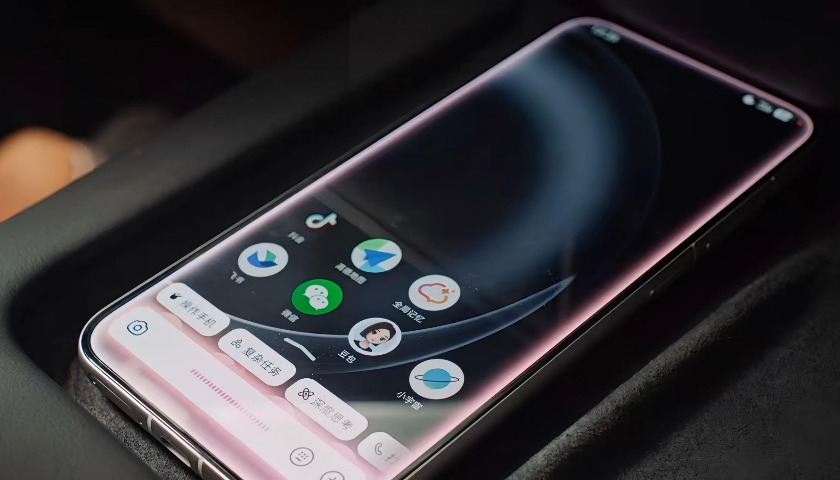
On the same day, ByteDance's Doubao team released a technical preview version of the Doubao Mobile Assistant, which was integrated into the engineering prototype nubia M153 developed in collaboration with ZTE.
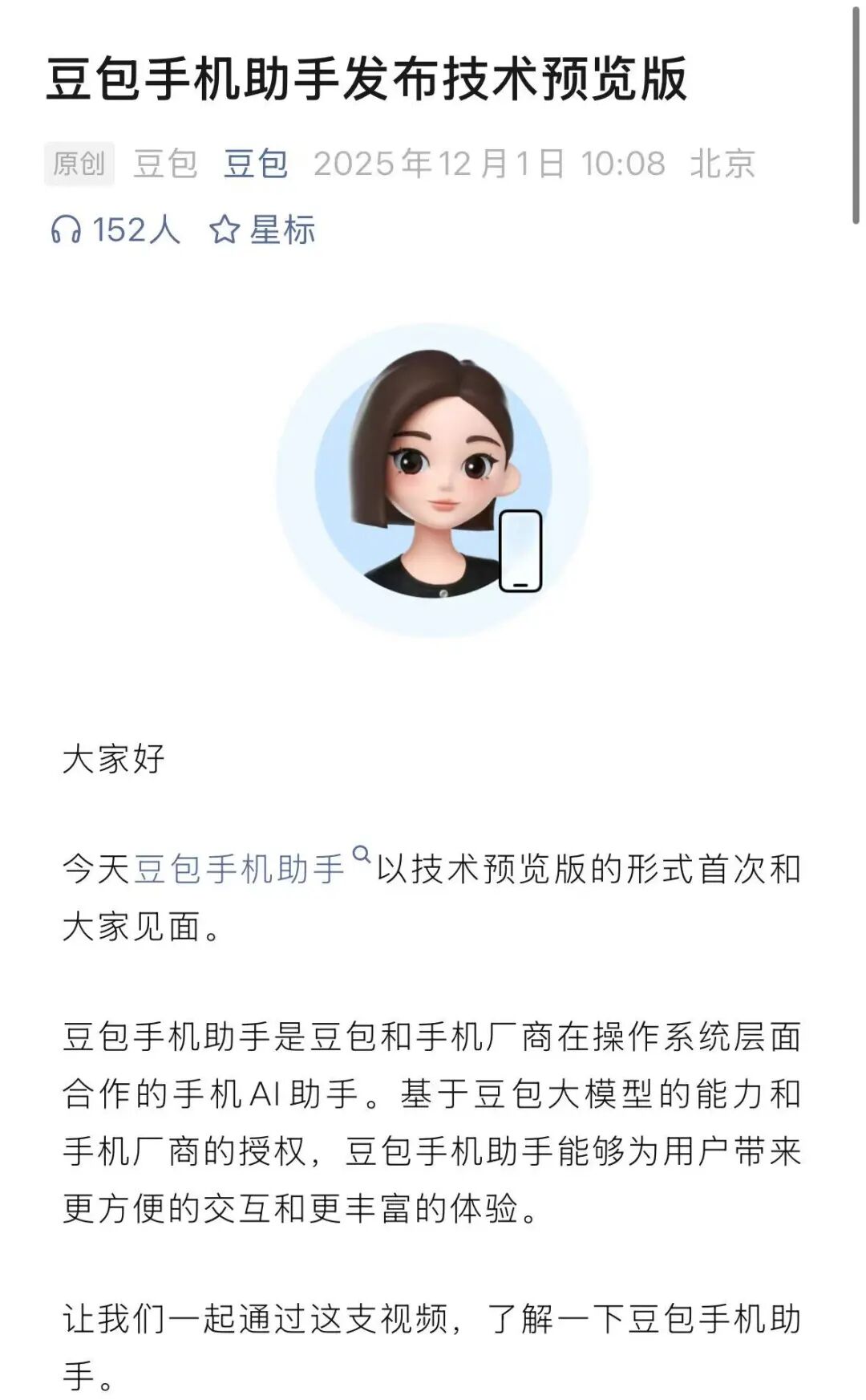
Image source: Doubao's official WeChat public account
The market's high expectations for this phone stem from the fact that ZTE's collaboration with Doubao goes beyond surface-level. The two companies are not just jointly developing a standalone mobile product; instead, they are collaborating at the mobile operating system level, leveraging Doubao's technological capabilities.
In recent years, whether AI technology can drive incremental growth for mobile phone manufacturers has become a widely debated topic.
However, many AI mobile assistants on the market often face criticism from users. The question of when a truly useful, smooth, and hands-free AI mobile assistant will emerge remains unanswered.
According to market reviews, the AI features of the Doubao phone perform impressively. Users can simply issue instructions to the phone, which can then autonomously execute operations that previously required multiple taps and screen switches, such as comparing prices, placing orders, searching for strategies, and sending screenshots.
This phone quickly gained popularity. On December 2, ZTE Mall showed that the first "Doubao Assistant" phone was "sold out." On second-hand trading platforms, the phone's price has also surged.
Both users and investors are willing to pay for this product. With real sales boosting ZTE's stock price, this mobile brand, often absent from the competitive landscape, has returned to the center of market attention.
Doubao has also provided the market with a new collaboration model. Customized large model machines could potentially become a new win-win opportunity for large model providers and mobile phone manufacturers.
However, neither ZTE nor Doubao can declare victory yet, as both will face numerous challenges.
1. What Makes the "Doubao Phone" Different?
Users may be familiar with the Doubao APP, a product that consistently ranks among the top two in monthly active users for AI-native apps, offering a wide range of features—but only within the APP.
The Doubao Mobile Assistant, however, differs in that the phone itself serves as an entry point to a large model. Users can experience AI features without opening the Doubao APP. Activating AI functions is simple: users press the AI button on the side of the phone and can use voice commands to drive the system to complete various tasks like a human.
For example, the photo editing feature in the Doubao APP has been well-received by many users. In the APP, users can upload a photo and specify their editing needs, and the AI will assist with the editing.
However, with the Doubao Mobile Assistant, users can simply state their photo editing needs while viewing a photo in the phone's gallery, and the assistant will complete the editing as requested.
In the Doubao phone, not only do system software like gallery and video apps integrate with Doubao, but barriers between different applications are also broken down.
For instance, when chatting on social media apps, users may sometimes struggle with how to respond. In such cases, many users might open the Doubao APP, copy and paste their query, and input their needs to receive recommended responses from Doubao.
However, with the Doubao Mobile Assistant, users can press the side button, and Doubao will automatically read the current chat context and generate a response. Users no longer need to copy and paste; they can simply confirm and send the response directly to their friend.
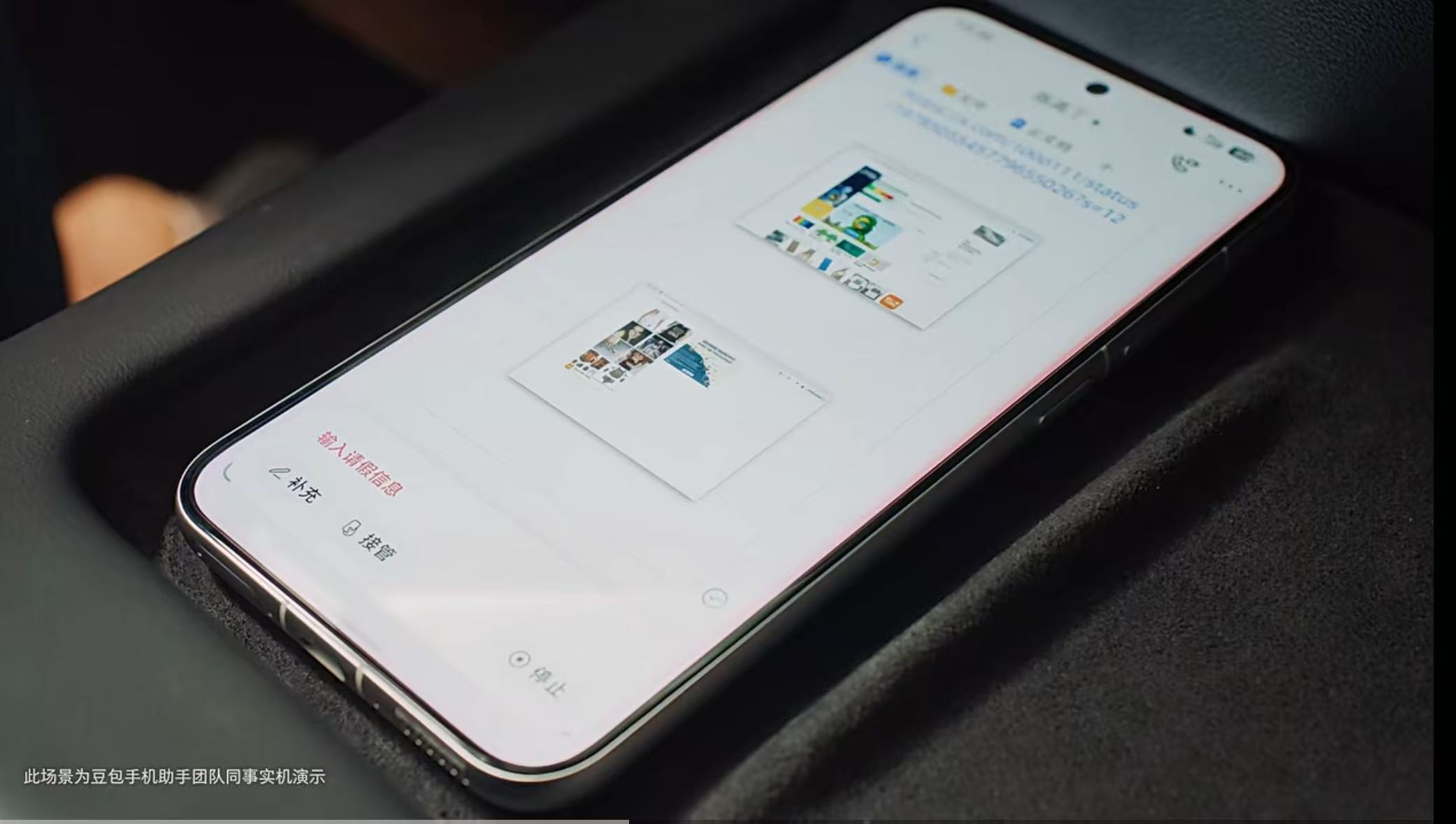
Image source: Doubao's official WeChat video account
By extension, many of Doubao's features are fully integrated into the phone. For example, users can press the side button twice to activate Doubao's voice companionship or image recognition features.
Of course, operations that are related to existing Doubao APP features and require only one step are not the biggest highlights of the Doubao Mobile Assistant. The assistant can also operate multiple apps on the phone like a human, something the Doubao APP cannot do.
Currently, some mobile products on the market already have AI assistants that can help users order coffee or book hotels. The Doubao Mobile Assistant goes a step further by enabling multi-platform price comparisons.
For example, if a user wants to order a cup of coffee but needs to compare prices across three different apps due to varying discount mechanisms, they would typically need to switch between apps multiple times to find the lowest price and place an order.
This action may sound simple, but it requires at least three app switches and over ten screen taps. Users would need to open a food delivery app, search for the desired product, view and remember the price, then switch to another app and repeat the process.
The Doubao Mobile Assistant can handle these operations for the user. Users simply need to press the side button and say, "Help me check which platform—Taobao Flash Sale, Meituan Food Delivery, or JD Express—offers the cheapest price for a certain product."
Since Doubao can automatically open apps to query information, users do not need to provide excessive details for Doubao to complete complex operations.
For example, Doubao can help set a preparatory alarm for going out and heading to the train station without the user disclosing the specific train number. Users can say, "Help me check my train information for tomorrow morning, calculate the approximate departure time, set an alarm for leaving home, and ensure I arrive at the station about XX minutes early." Doubao will then proceed with the operations.
According to market reviews, Doubao's operations are highly human-like. It will first open 12306 to search for train ticket information, then open a map app to check the travel time to the station. It may pause to ask the user how they plan to get to the station and finally set an alarm based on this information.
Of course, while these operations are logically clear, they are still slower than human execution.
According to a test published by Dianping, using the Doubao Mobile Assistant to automatically sign in and collect rewards on JD took about half a minute, whereas a human could complete the task in just a few seconds.

Image source: Doubao's official WeChat video account
However, another selling point of the Doubao phone is that AI tasks are executed in the background, without disrupting normal phone use. Users can also set specific times for tasks to be completed, such as having Doubao organize daily bills or collect energy in Ant Forest at midnight each night—tasks that are not time-sensitive.
Overall, according to reviews from some market testers, the Doubao Mobile Assistant's capabilities have significantly advanced beyond simply answering user questions or performing basic one-step operations, marking substantial progress compared to other products on the market.
2. ZTE Hitches a Ride, Boosting Sales and Stock Price
As the first brand to integrate the Doubao Mobile Assistant, ZTE, despite its relatively low technological profile, has reaped the benefits.
In addition to the significant stock price increase mentioned earlier, the limited-edition phone has also been well-received.
Although the phone is currently only available in a white 16GB+512GB version and lacks other standout features, ZTE's official website warns, "This product is intended for industry professionals seeking to experience the Doubao Mobile Assistant and does not guarantee the functional completeness of a mature product. Ordinary consumers should exercise caution." Nevertheless, market enthusiasm remains high.
The phone is now sold out on ZTE Mall. On the second-hand platform Xianyu, the nubia M153 is being resold for RMB 4,200 to RMB 4,999, RMB 700 to RMB 1,500 higher than the official price.
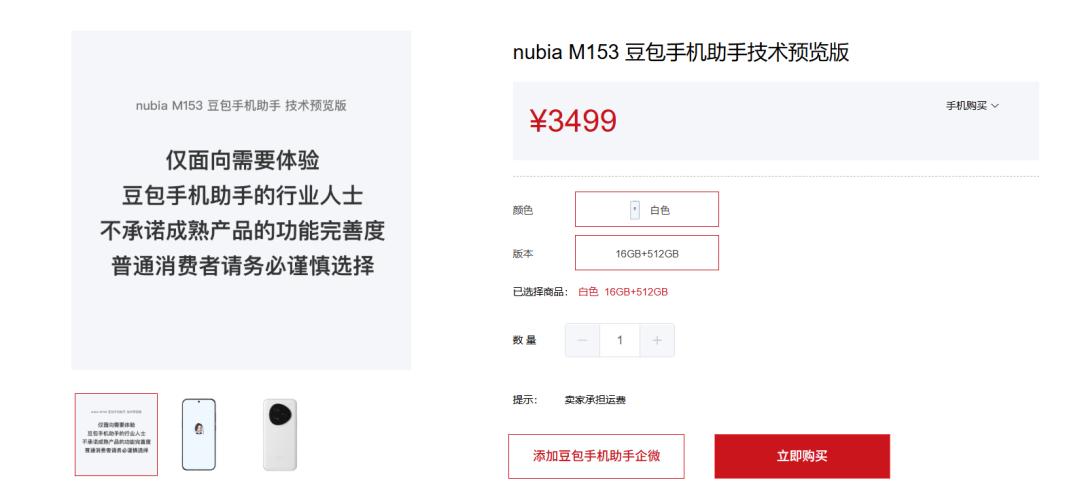
Image source: ZTE's official website
ZTE also offers a more formal acquisition channel. According to the sold-out notice on ZTE's official website, users can add the Doubao Mobile Assistant enterprise WeChat, fill in reservation information, and apply for an F code. After obtaining the F code, they can follow the prompts to make a purchase.
On second-hand platforms, F codes for the Doubao phone are also being priced, mostly between RMB 100 and RMB 300.
From a market perspective, serving merely as a hardware prototype for the Doubao Mobile Assistant technology suits ZTE well at present.
As one of the early brands in the industry, ZTE's heyday was during the PHS and CDMA eras. According to a research report by Western Securities, in 2004, ZTE's revenue reached RMB 22.7 billion, with a profit of RMB 1 billion, a fivefold increase in revenue compared to 2000.
During that time, the domestic mobile phone market was dominated by international giants like Nokia and Motorola. Domestic brands such as ZTE, Bird, and Gionee, despite facing challenges, managed to secure a significant market share.
The turning point came around 2008. ZTE saw international opportunities and accelerated its strategic expansion, with overseas revenue accounting for over 60% that year.
In 2012, ZTE achieved global shipments of 67 million units, ranking fourth worldwide after Samsung, Nokia, and Apple. However, it also reported a loss for the first time.
Subsequently, while ZTE capitalized on the market opportunities of the 4G era in China, it faced crises in 2016 and 2018 due to international environmental factors.
In 2018, ZTE reported a loss of RMB 6.98 billion, largely attributable to fines and provisions recorded in that year's financial results.
Meanwhile, the Chinese smartphone market had already taken shape. According to IDC data at the time, in the fourth quarter of 2018, the top five vendors by shipment volume were Huawei, OPPO, Vivo, Apple, and Xiaomi. ZTE, an earlier player, failed to keep pace.
Today, ZTE is rarely seen in domestic mobile phone shipment rankings, and recent shipment data for ZTE phones is hard to find in the market.
ZTE's mobile phone business is no longer its primary revenue source. According to ZTE's first-half 2025 financial report, the operator network business accounts for a higher proportion of revenue, with consumer business contributing only 24.09% of revenue, or RMB 17.23 billion.
If router and other terminal revenues are excluded and the consumer business is entirely attributed to mobile phones, assuming an average phone price of RMB 2,000, ZTE's mobile phone shipments in the first half of the year may not have reached ten million units.
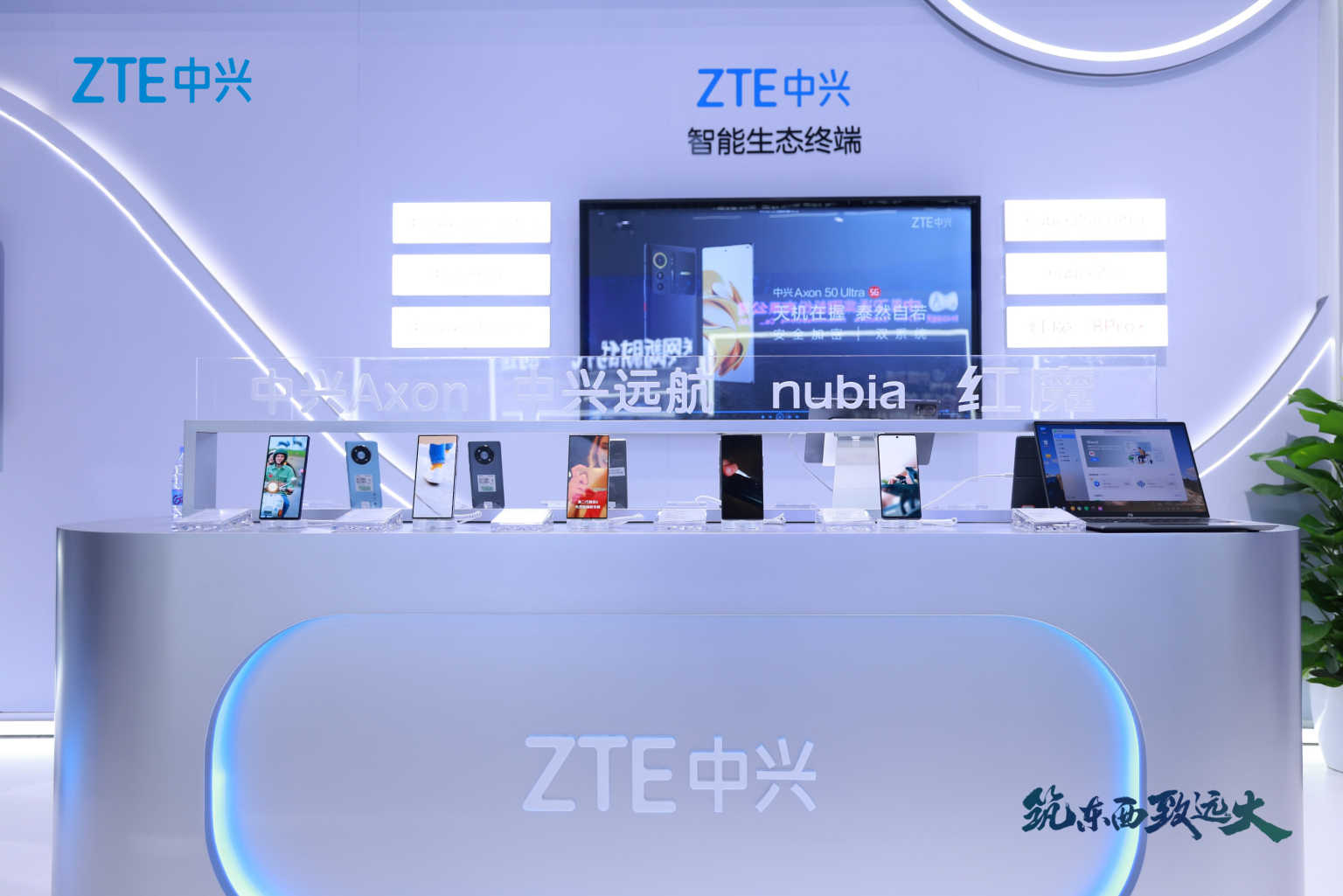
Image source: ZTE's official website
Whether for sales volume or brand influence, ZTE desperately needs a new story and cannot afford to fall behind. Thus, it is more accurate to say that ZTE needed Doubao rather than the other way around.
However, while ZTE has hitched a ride, it must remain vigilant. The sold-out status and price hikes of the nubia M153 on second-hand platforms are partly due to its limited release volume and user curiosity.
Once user novelty wears off, stricter product requirements will follow. ZTE and Doubao have opened new possibilities for the industry but also inspired competitors. Intense competition will ensue as more players enter the market.
Whether Doubao can sustain ZTE's growth remains uncertain.
3. Can Customized Large Model Machines Be a New Business Opportunity for Mobile Phone and Large Model Vendors?
Some market observers believe that ZTE is poised to become the Seres of the mobile phone industry, while Doubao resembles Huawei in the mobile sector.
Doubao has explicitly stated that it has "no plans to develop its own mobile phones" and instead aims to integrate the Doubao Mobile Assistant into different brand models through "ecosystem collaboration."
This means Doubao will not limit itself to partnering with ZTE alone. Without control over core technology, ZTE remains in a passive position.
The essence of the Doubao Mobile Assistant is adding AI Agent functionality to the operating system, an approach not unique to the industry.
For example, Stepfun previously launched the Stepfun AI Desktop Companion, which connects to the local operating system and can collect key information via browsers, organize and analyze it to generate practical documents, track e-commerce bestsellers, and organize invoice reimbursement images on the computer desktop.
Thus, when the customized large model machine model proves viable and drives real sales, many mobile phone manufacturers will likely be tempted.
Currently, the mobile phone market is highly competitive, with major brands having reached a bottleneck in feature development. AI technology is widely recognized as a breakthrough for differentiated competition.
However, many mobile phone manufacturers have struggled to tell compelling AI stories. Social media platforms are filled with user complaints about AI features being unintelligent and disrupting normal phone use, leading many users to disable AI functions.
Additionally, when developing proprietary AI mobile assistants, many mobile brands face limitations due to app permission barriers, making it difficult to perform complex operations across multiple apps.
Therefore, collaborating with large model vendors to customize AI mobile phones may be a model that mobile phone manufacturers are willing to explore.
However, challenges have already emerged.
The Doubao Mobile Assistant can perform certain operations like a human by using screen recognition to bypass many app ecosystem limitations. However, not all apps will allow Doubao to "peek" into their data.
On December 3, a user who had just received the nubia M153 engineering prototype reported to the media that they were unable to log in to WeChat while testing the phone.
The report also mentioned that the user successfully logged in after switching accounts but was passively logged out again while transferring chat records.
Additionally, the Doubao Mobile Assistant may fail to operate normally if the task involves an app's functional limitations, prompting a "task failed" message.
From this case, it can be inferred that other app developers may also be reluctant to grant Doubao full permission.
Permission issues are not the only concern. Many users have expressed worries on social media: if a mobile assistant can fully control the phone and learn user habits, user privacy may be compromised.
In response to users' concerns, Doubao also responded in the comment section of social media platforms, stating that the company would adopt strict data protection strategies to safeguard user privacy and security.

Overall, there is currently a demand among users for a smart AI mobile phone assistant. For large model manufacturers, this direction is worth exploring.
For mobile phone manufacturers like ZTE that urgently need a boost, if Doubao mobile phones achieve success, replicating this model could perhaps become a key move to revitalize brand awareness and boost sales.
After all, in a stage where industry competition has reached a fever pitch, it's becoming increasingly difficult to find the momentum that enables mobile phone manufacturers to achieve a breakthrough.
(The header image of this article is sourced from Doubao's official video account.)
-
![]()
Hardware is the skeleton, AI is the soul, and data integrates the two
-
![]()
China’s AI Industry: A Unified Pivot Towards Monetization?
-
![]()
New Progress! Infineon Completes Acquisition of ams OSRAM's Non-Optical Sensor Business
-
![]()
35 Million Bet on an Optical Future! Tengjing Technology Makes a Move in AR
-
![]()
Why World Models Get Stuck on Construction Roads in Autonomous Driving Applications
-
Alibaba Initiates Cultural Transformation: Is Jack Ma Making a Strategic Comeback?
-
Tianfeng Heads to Hong Kong for IPO with RMB 3.8 Billion in Funds: Xingyu's Cross-Border Foray into Embodied AI Faces Uncertain Future
-
![]()
Mengshi Auto’s High-End Aspirations Dashed: Huawei Partnership Fails to Revive Sales, New Model’s Entry Price Dips Below 300,000 Yuan