"Doubao's 'Customized Phone' on Douyin Makes Its Debut: Priced at 3,499 Yuan, Will It Catch Your Eye?
 12/05 2025
 639
639
Following the sensational success of OpenAI's ChatGPT, not only did it propel large-scale AI model products like Wenxin, Doubao, Tongyi, and Yuanbao into the limelight, but it also inspired smartphone giants such as Huawei, Xiaomi, OnePlus, Vivo, OPPO, and Apple to delve into the realm of 'AI-powered phones.' However, after two to three years of navigating the market, both general-purpose AI large models and 'AI phones' have hit a snag in their journey. AI large models are currently hamstrung by terminal limitations, capable of addressing only a narrow range of user issues. Meanwhile, the AI functionalities touted by phone manufacturers often remain more conceptual than practical. Both sectors are in dire need of breakthroughs.
Doubao on Douyin is charting a new course.
Recently, Doubao officially unveiled the 'Doubao Mobile Assistant' in a technical preview phase. Despite its name, it bears no resemblance to traditional mobile app stores like Wandoujia, App Treasure, or Baidu Mobile Assistant.

According to the introduction, the Doubao Mobile Assistant represents a mobile AI assistant developed through a collaborative effort between Doubao and phone manufacturers at the operating system level. Nubia has stepped forward as the inaugural partner for this venture, with the nubia M153 being the flagship phone model. In terms of hardware, the nubia M153 is entirely developed, designed, and manufactured by Nubia.
Here are the hardware specifications of the nubia M153: a 6.78-inch LTPO screen, a Qualcomm Snapdragon 8 Supreme processor, 16GB of RAM paired with 512GB of storage; triple rear cameras (50MP main, ultrawide, and telephoto), along with a 50MP front camera; a robust 6000mAh battery supporting 90W wired fast charging and 15W wireless charging. The phone measures 8.52mm in thickness, weighs approximately 212 grams, supports dual SIM dual standby, and is exclusively available in white.
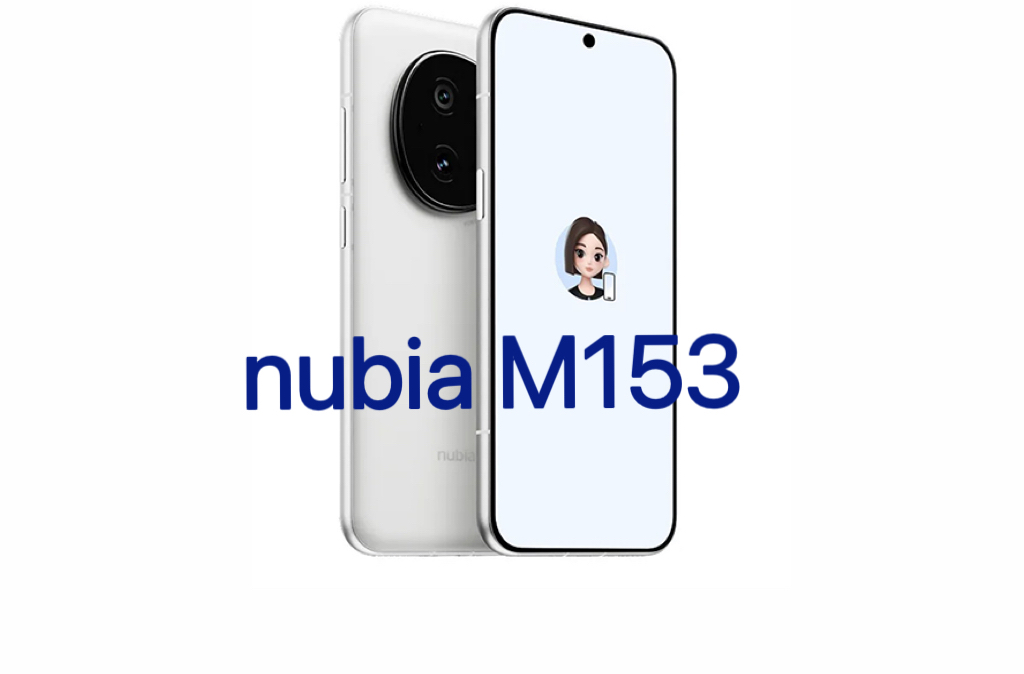
Priced at 3,499 Yuan, the nubia M153 is currently exclusively available for purchase on ZTE Mall. The purchase page explicitly states: This offering is tailored for industry professionals seeking to experience the Doubao Mobile Assistant and does not guarantee the functionality of a fully matured product. Ordinary consumers are advised to exercise caution.
Judging from media reviews of the prototype and the usage scenarios outlined by Doubao, the nubia M153 appears to be more akin to Doubao's previous 'customized phone.' Its user-centric features include: identifying detailed information of photos in the user's phone gallery; facilitating direct video or voice calls with Doubao, such as assisting users in reading bilingual picture books; enabling voice interaction to directly edit photos in the gallery; aiding users in comparing prices across platforms like Taobao, JD.com, and Pinduoduo; assisting users in opening podcasts and adding favorites to their playlist; facilitating food delivery orders; processing work content in Feishu; phone memory functions; and providing more detailed and comprehensive travel guides.
The Doubao Mobile Assistant has successfully bridged the gap between AI large models and smartphone terminals. Through deeper integration and collaboration, AI large models can now perform a wider array of operations, significantly expanding and enhancing the capabilities of AI assistants. In simpler terms, AI assistants are becoming more practical rather than just churning out a plethora of irrelevant content.
The Doubao Mobile Assistant paints a utopian vision of an AI-driven world for users. Doubao acts as a virtual assistant, understanding user needs through voice interaction and then directly harnessing AI capabilities on the user's phone to ultimately help the user achieve their goals. Users simply need to provide voice input, authorization, wait, and confirm.
However, reality is often harsh, and the Doubao Mobile Assistant faces a myriad of challenges.
Firstly, user privacy concerns loom large. The phone can be considered the ultimate repository of user secrets. Although the Doubao Mobile Assistant is merely a virtual AI tool, for users, granting it direct access to their Taobao, JD.com, Pinduoduo, and other shopping platforms for browsing, analyzing, and comparing prices may evoke a sense of 'exposure.' Sensitive information such as purchase history and browsing preferences could potentially be visible.
The Doubao Mobile Assistant's privacy policy states its adherence to the principles of authorization consent, minimal necessity, and user controllability. While this may offer some reassurance to users, completely dispelling privacy concerns remains a daunting task.
Secondly, the effectiveness of the Doubao Mobile Assistant is constrained by the limited number of terminals. Despite its promising features, the Doubao Mobile Assistant is currently exclusive to the nubia M153, meaning a vast user base from manufacturers like Apple, Huawei, OnePlus, Honor, and Xiaomi cannot utilize it.
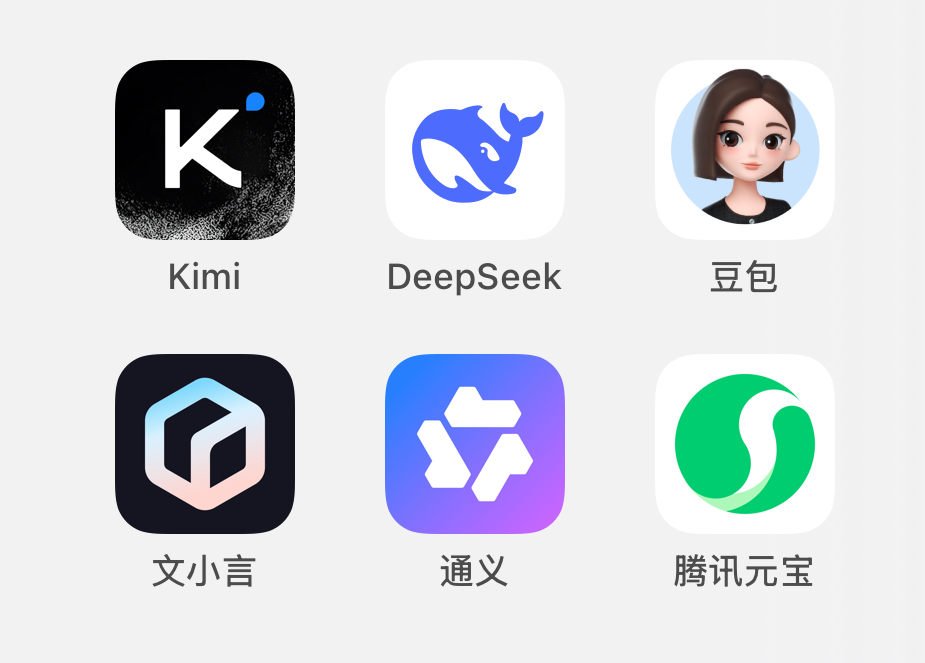
Thirdly, if phone manufacturers can 'customize' with Doubao, why not with other large models like Wenxin, Tongyi, and Yuanbao? As a large model itself, Doubao is not a rare commodity. Currently, 306 generative AI applications or features have been registered in the market. Besides Doubao, there is a plethora of large model products like Wenxin, Tongyi, Yuanbao, DeepSeek, and Kimi, offering phone manufacturers a wealth of choices.
Fourthly, from a product standpoint, the nubia M153 is rather average. The Doubao Mobile Assistant is marketed as 'exclusive for industry professionals seeking to experience it.' However, as a phone, it inevitably faces comparison with the entire smartphone industry. Priced at 3,499 Yuan, it is not exactly budget-friendly. Moreover, in terms of relevant features, manufacturers like Apple, Huawei, OnePlus, Honor, and Xiaomi all boast impressive flagship models. Unless driven by sheer curiosity, users have a plethora of options to choose from.
Fifthly, actual effectiveness is paramount. Doubao's promotion remains cautious, avoiding fine print or exaggerated claims, instead reminding 'ordinary consumers to exercise caution.' However, as the ultimate purchasers, users will inevitably focus on the actual usage effectiveness. Among the features touted by the Doubao Mobile Assistant, users will put them to the test. This raises two key points:
Can the relevant features be replicated?
What is the ultimate effectiveness? For instance, having the Doubao Mobile Assistant compare prices on Taobao, JD.com, and Pinduoduo—does it truly offer better deals? User demands in online shopping are multifaceted, encompassing not just price but also product authenticity, service, after-sales, logistics, and more. 'Price' is merely one facet that users consider. Even users themselves require a considerable amount of time to make informed choices. Can the Doubao Mobile Assistant truly assist users in completing the task?
Many users may be enticed by curiosity to explore new products and technologies. However, if these offerings fail to 'impress,' users can quickly become disillusioned and develop a negative perception. Therefore, the initial reputation of the nubia M153 phone is of utmost importance.
Sixthly, efficiency issues come to the fore. When dealing with non-urgent matters, users may not prioritize processing speed. However, for urgent issues, users demand swift and efficient solutions. For example, when ordering food delivery, a hungry user may complete the purchase in about 30 seconds, whereas the phone assistant may take longer due to continuous calls to the food delivery app, analysis, and comparison. Such delays will undoubtedly frustrate users.
Additionally, the current domestic mobile internet industry is plagued by a plethora of pop-up windows and redirects among apps. Sometimes it's app splash screen ads, and other times it's app coupons. In such scenarios, AI needs to sift through the clutter, wasting valuable time. AI assistants encounter a barrage of information interference, and it's uncertain whether they can effectively navigate this issue. Ultimately, for users, this translates to low efficiency, constant need for user confirmation/denial, and slower performance compared to manual operation.
Seventhly, commercialization poses a significant challenge. As a 'customized phone,' how does the AI assistant generate revenue? If it charges phone manufacturers, it will inevitably drive up phone prices since manufacturers cannot shoulder the cost alone, ultimately passing it on to users. If it charges users directly, can't users simply opt for other free AI large model products? If it's completely free, who will bear the cost of the functions provided by the AI assistant for users? Supporting just a few tens of thousands of products may be feasible, but offering free services to cater to the demand of 294 million smartphones would be prohibitively expensive.
Eighthly, the willingness of phone manufacturers to cooperate is crucial. Doubao claims to be collaborating with multiple phone manufacturers to implement mobile assistant cooperation plans, but the extent of their willingness to open up remains a major hurdle.
Reflecting on the history of the domestic internet industry, major players like Tencent, Alibaba, and Baidu have all ventured into the phone business, only to meet with failure. The hardware path for internet giants has never been a smooth sail. Whether Doubao on Douyin can break the mold remains to be seen.
Overall, the collaboration between Doubao and Nubia has opened up new avenues for cooperation between AI large models and phone manufacturers. However, its ultimate success hinges on whether more manufacturers will follow suit with similar collaborations and whether it can gain widespread user adoption. Personally, I am more intrigued by how the Doubao Mobile Assistant will monetize its offerings in the future and whether AI will truly be a helpful assistant or lead users astray.
By Guo Jing, WeChat Public Account: Guo Jing's Internet Circle
-
![]()
Hardware is the skeleton, AI is the soul, and data integrates the two
-
![]()
China’s AI Industry: A Unified Pivot Towards Monetization?
-
![]()
New Progress! Infineon Completes Acquisition of ams OSRAM's Non-Optical Sensor Business
-
![]()
35 Million Bet on an Optical Future! Tengjing Technology Makes a Move in AR
-
![]()
Why World Models Get Stuck on Construction Roads in Autonomous Driving Applications
-
Alibaba Initiates Cultural Transformation: Is Jack Ma Making a Strategic Comeback?
-
Tianfeng Heads to Hong Kong for IPO with RMB 3.8 Billion in Funds: Xingyu's Cross-Border Foray into Embodied AI Faces Uncertain Future
-
![]()
Mengshi Auto’s High-End Aspirations Dashed: Huawei Partnership Fails to Revive Sales, New Model’s Entry Price Dips Below 300,000 Yuan