Doubao Phone Faces Backlash Right from Launch: Whose Market Share Is It Eroding?
 12/08 2025
 846
846
The Doubao phone is rewriting the rules of the entire app ecosystem.
Since its debut on December 1st, the Doubao phone has sparked widespread debate. While some laud its AI interaction capabilities, others raise concerns over privacy permission issues. Clearly, this device has struck a chord within the tech industry.
Today, Xiaolei stumbled upon a Weibo post from the CEO, sharing his personal experience with the device. He found it quite impressive but pointed out that WeChat and apps backed by Alibaba have certain limitations.
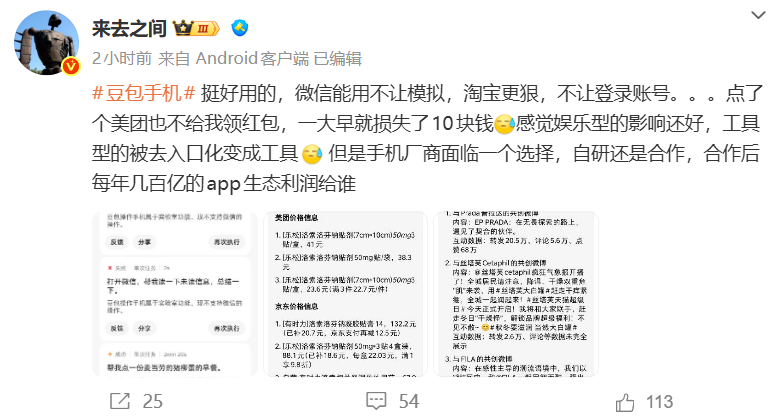
Image Source: Weibo
Xiaolei observed that several apps supported by Alibaba currently restrict logins from the Doubao phone, including Taobao, Taobao Flash Sale, Xianyu, and Damai.
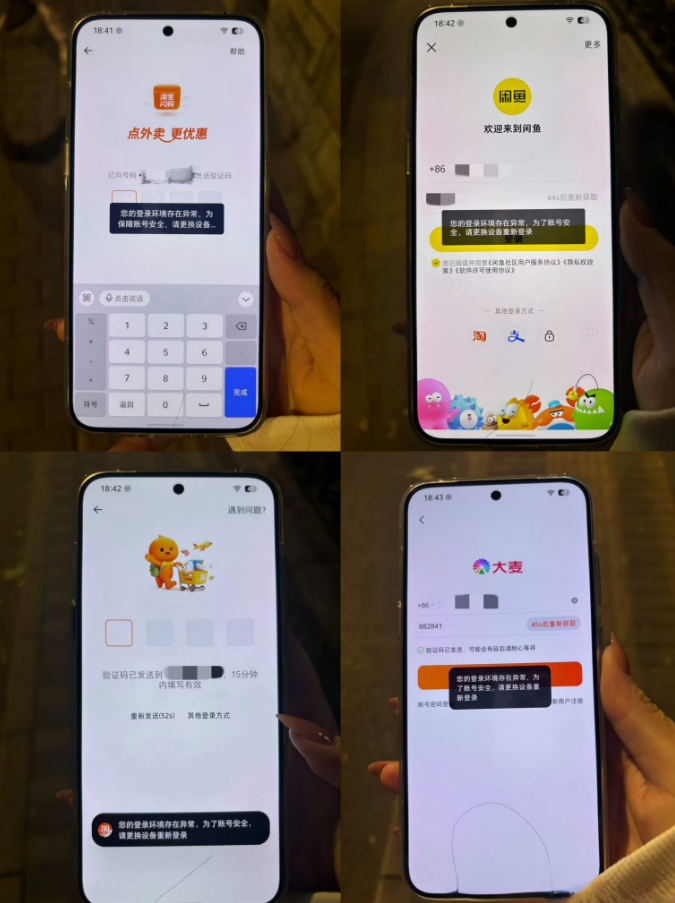
Image Source: Weibo
Why is this occurring? According to Xiaolei, it primarily stems from the overly aggressive permissions granted to the Doubao phone's AI assistant.
As the Weibo CEO aptly put it, utility apps are being reduced to mere tools.
The Doubao assistant boasts Android system-level permissions, enabling it to execute a wide range of complex tasks across different apps. Essentially, it consolidates all the apps on your phone into a single 'Doubao assistant' app, allowing you to perform nearly any task through this one interface.
This means that utility apps like mapping and ride-hailing services won't need to be opened manually anymore. Users can simply instruct the AI with their needs, and it will handle everything from queries to operations seamlessly.
Eventually, users may bypass the splash screen ads of the original apps, rendering memberships obsolete. Without a steady revenue stream, the future of these utility apps may appear bleak.
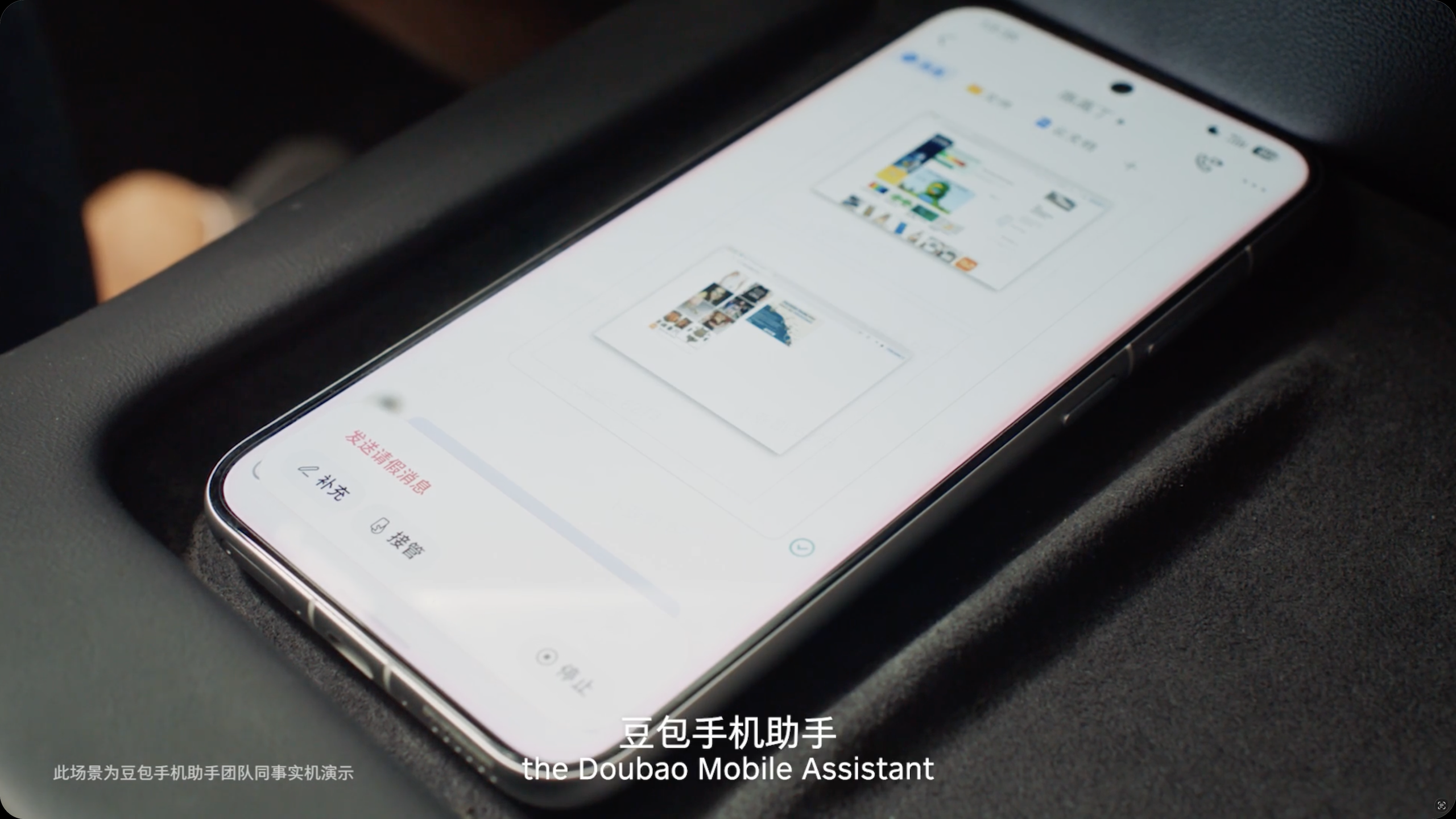
Image Source: Doubao Phone Assistant
Xiaolei watched a phone review by 'Difan' and was impressed by the Doubao phone's capabilities. With a bit of imagination, it could almost serve as your personal assistant.
Buying tickets, checking flight information, ordering food delivery – these are just the basic functions.
For instance, when ordering food delivery, the Doubao phone can even compare prices between Meituan and Taobao Flash Sale to determine which is cheaper, as it can access and check the prices within the apps itself.
For more intricate tasks, it can plan based on your itinerary, gathering all the necessary information and completing tasks efficiently.
Most importantly, the Doubao phone handles all these tasks in the background without disrupting your phone usage.
Furthermore, the current Doubao phone assistant supports scheduled tasks, such as collecting energy from Ant Forest at 8 AM every morning or compiling revenue and expenditure records (financial transaction records) from WeChat, Alipay, and other platforms at 10 PM to track your daily spending.
Speaking of which, Xiaolei suddenly grasps what Luo Yonghao meant: A technological revolution is inevitable, and AI assistants will become ubiquitous.
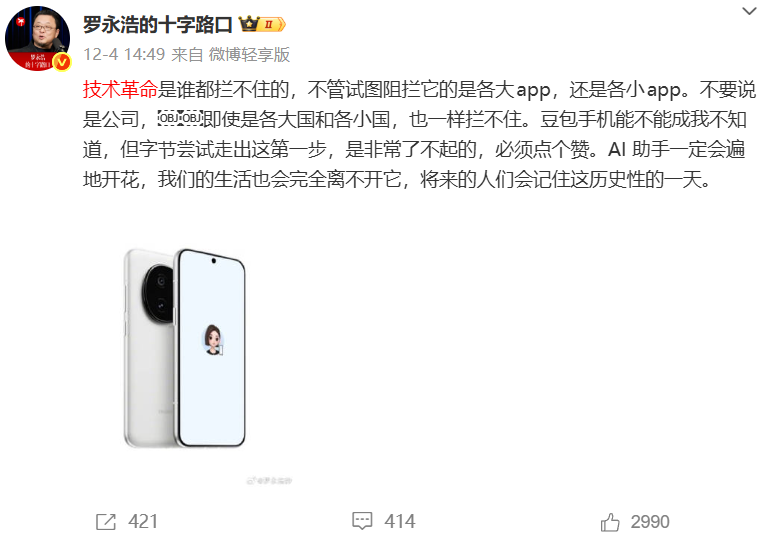
Image Source: Weibo
Indeed, AI has already woven itself into the fabric of our daily lives. Xiaolei frequently turns to AI for assistance with various tasks, such as setting alarms, navigating with maps, or playing specific songs. These simple tasks can be accomplished by almost any smartphone.
However, when it comes to an AI with system-level permissions, even Xiaolei, who has witnessed numerous technological advancements, is taken aback by the surprises it brings.
Nevertheless, referring to it as a 'ban' simply because some apps restrict AI phone logins, as mentioned online, might be an exaggeration. In Xiaolei's opinion, for instance, if games could be operated by AI, wouldn't that be akin to cheating?
Moreover, as 'Difan' highlighted, AI can gather your payment records for the day, potentially revealing your spending habits and bank balance. Privacy and security risks are inherently significant concerns. It's only natural for app giants with a vast user base to take these risks seriously and implement login restrictions, which Xiaolei deems reasonable.
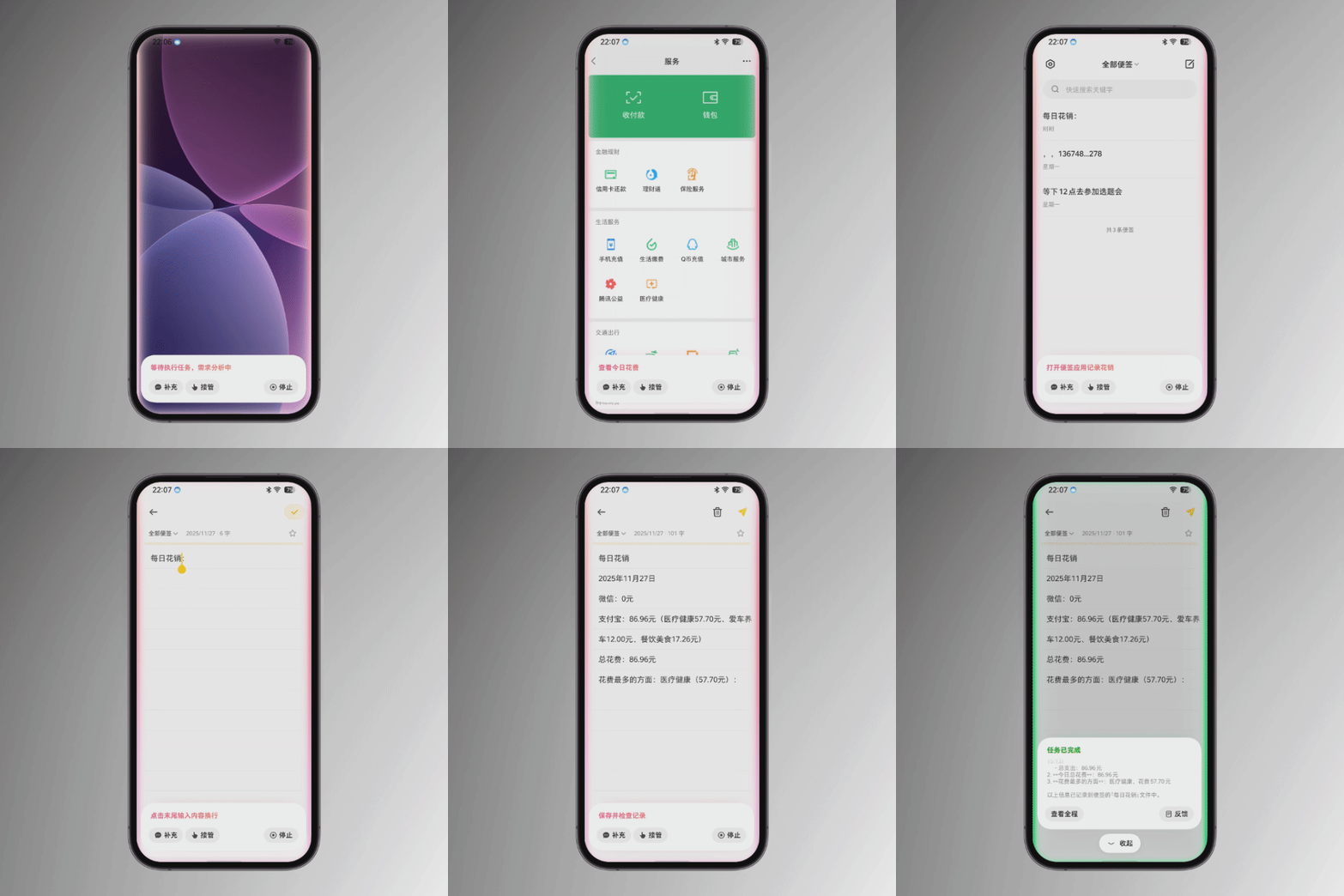
Image Source: Difan
Overall,
Xiaolei concurs with Luo Yonghao's perspective that AI assistants are indeed a major trend, and the blocking by various super apps will only be a temporary setback.
Currently, Alibaba is focusing on AI glasses, and Meituan has invested in AI and robotics, even launching an AI glasses product recently. Traditional internet giants are essentially all venturing into the AI hardware sector.
As Xiaolei mentioned earlier, an AI phone is essentially a super app. Take WeChat, for example, which integrates social media, short videos, shopping, travel, and more. Various apps are embedded as mini-programs within it, transforming WeChat into an all-in-one portal.
In the future, if WeChat, Alibaba, and others decide to manufacture phones, they could certainly do so independently. Many netizens speculate that we might even witness phones developed by Alibaba, Tencent, and ByteDance, each preloaded with their own AI and apps. Then, besides traditional phone brands like Huawei, Xiaomi, Oppo, and Vivo, consumers might also have the option to choose from these three new contenders.
It may sound a bit abstract, but this is Xiaolei's personal viewpoint. What are your thoughts? Let's discuss in the comments section.
Source: Leitech
All images in this article are sourced from the 123RF Authentic Library (123RF royalty-free image library).
-
![]()
Hardware is the skeleton, AI is the soul, and data integrates the two
-
![]()
China’s AI Industry: A Unified Pivot Towards Monetization?
-
![]()
New Progress! Infineon Completes Acquisition of ams OSRAM's Non-Optical Sensor Business
-
![]()
35 Million Bet on an Optical Future! Tengjing Technology Makes a Move in AR
-
![]()
Why World Models Get Stuck on Construction Roads in Autonomous Driving Applications
-
Alibaba Initiates Cultural Transformation: Is Jack Ma Making a Strategic Comeback?
-
Tianfeng Heads to Hong Kong for IPO with RMB 3.8 Billion in Funds: Xingyu's Cross-Border Foray into Embodied AI Faces Uncertain Future
-
![]()
Mengshi Auto’s High-End Aspirations Dashed: Huawei Partnership Fails to Revive Sales, New Model’s Entry Price Dips Below 300,000 Yuan