ByteDance, Non-Phone Maker Collaborating with Vivo and Lenovo, Aims to Be the 'Hongmeng Intelligent Connectivity' Equivalent for Mobile Phones
 12/22 2025
 604
604
Crafting a 'Hongmeng Intelligent Connectivity' for AI-Powered Smartphones.
On December 19, 2025, Jiemian News broke the news exclusively that ByteDance is forging ahead with AI smartphone collaborations alongside hardware giants like vivo, Lenovo, and Transsion. This involves pre-installing AIGC plugins on their devices to gain access to users. Several employees from vivo confirmed to Jiemian News that both parties have finalized the cooperation and are now ironing out the specifics. Leitech also reached out to ByteDance for verification, to which ByteDance responded, "You may refer to Jiemian's report; no additional information will be shared at this juncture."
Historically, partnerships between 'internet firms and smartphone manufacturers' are not new. However, the realization, scale, and whether they culminate in tangible product offerings often remain in question. Yet, when viewed through the lens of ByteDance's recent AI endeavors, this move seems less like an isolated effort and more part of a well-defined, long-term strategy.
The question looms: Why is ByteDance, a company not involved in smartphone manufacturing, so tenaciously pursuing AI smartphone collaborations?
What core issue is ByteDance genuinely aiming to resolve through these partnerships with mobile phone brands?
If ByteDance's collaboration with mobile phone makers is interpreted solely through the prism of keywords like 'access,' 'traffic,' and 'pre-installation,' it's easy to overlook the urgency behind this move.
From a timing standpoint, this collaboration comes on the heels of permission controversies surrounding the Doubao mobile assistant. Recently, Doubao unveiled a technical preview phone, the Doubao AI Phone M513, but numerous users reported issues with banking and other financial service apps. This prompted the Doubao team to issue a series of announcements restricting proxy operation capabilities in financial apps and competitive gaming scenarios, while repeatedly stressing 'user authorization' and 'the ability to interrupt at any time.'
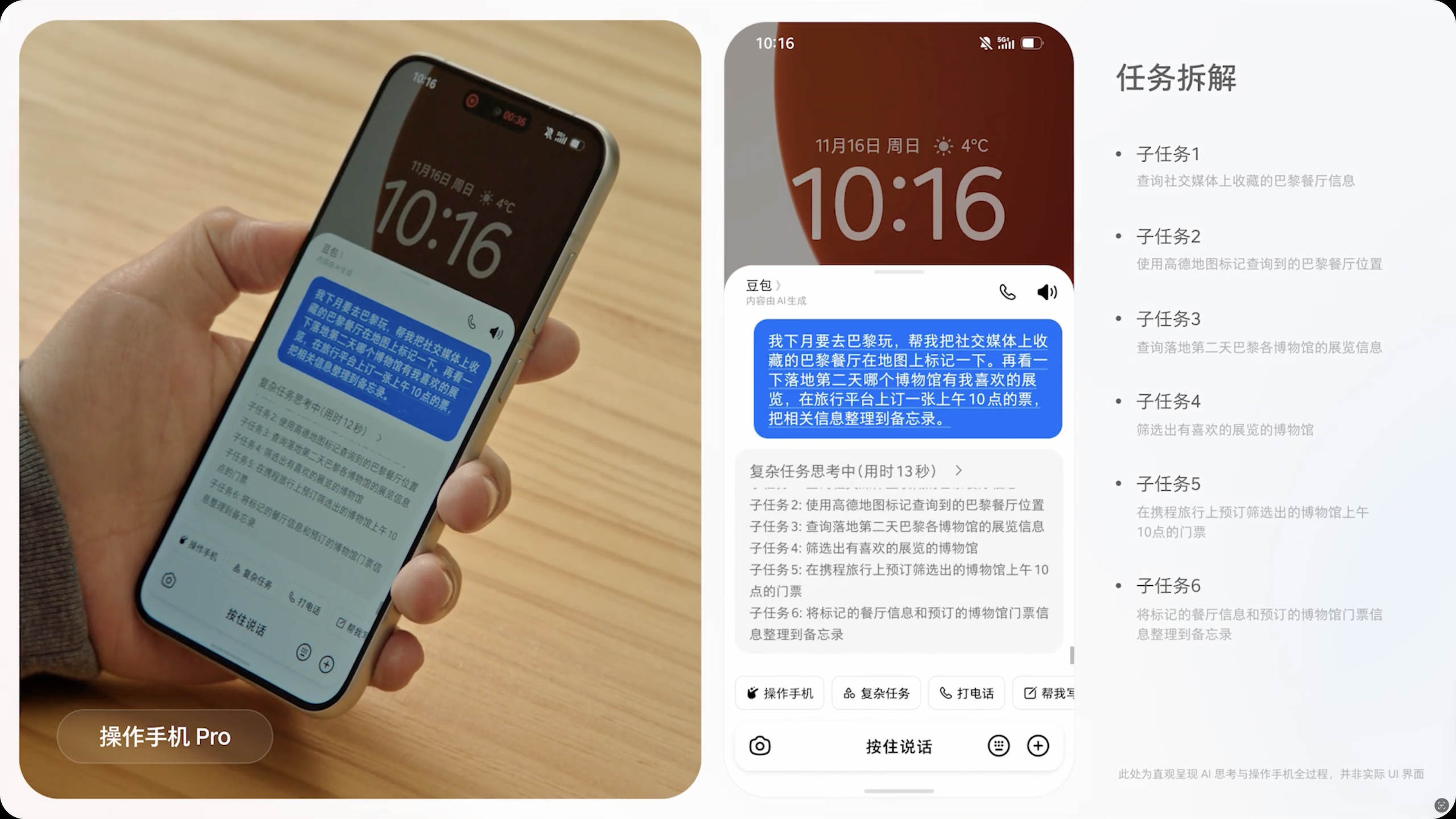
Image Source: Doubao Mobile Assistant
In essence, as long as the Doubao mobile assistant remains a 'third-party application,' it will always inhabit a gray zone within the Android permission framework.
Technically speaking, for a GUI-Agent to genuinely execute cross-app operations on behalf of users, it inevitably needs to tap into system-level capabilities like accessibility, screen capture, and event injection. However, within the current mobile internet risk control framework, such actions are inherently viewed as high-risk—the risk control system doesn't differentiate between 'AI or human' but simply flags 'abnormal operations.'
This explains why, even if Doubao's permission invocations are logically sound, they still frequently trigger risk controls in real-world ecosystems.
Moreover, this challenge cannot be overcome through a few announcements alone.
From Leitech's vantage point, ByteDance's primary objective in collaborating with mobile phone manufacturers isn't merely to expand AI access points but to secure a compliant, stable, and sustainable system identity for its AI Agents. In simpler terms, ByteDance aims to 'register' its AI Agents through partnerships with mobile brands. Only when AI assistants are integrated as system components, native services, or deeply customized modules will their permission sources, responsible entities, and operational boundaries be redefined.
In other words, ByteDance isn't seeking to sidestep regulations but to integrate seamlessly into the regulatory framework.
Why is 'scaling first, then advancing' a more pragmatic approach for ByteDance?
According to information disclosed by Jiemian News, ByteDance didn't initially set out to create a 'high-end AI phone.' Instead, it opted to begin with mid-range models priced above 2,000 yuan, planning to broaden its reach to more models via OTA updates. After achieving a scale of 150–200 million units, it intends to vie with other internet companies.
This strategy embodies what could be termed the 'ByteDance way.'
AI Agent users understand that their value lies not in the hardware specifications behind the AI but in their frequency of use and effective coverage of real-world scenarios. Unlike tangible and quantifiable experiences such as imaging quality, performance, or fast-charging capabilities, AI assistants resemble a 'habitual skill' that must be continuously used, refined, and optimized within a sufficiently large user base. The vast user base of mid-range phones provides fertile ground for the Doubao mobile assistant to acquire skills and enhance its capabilities.
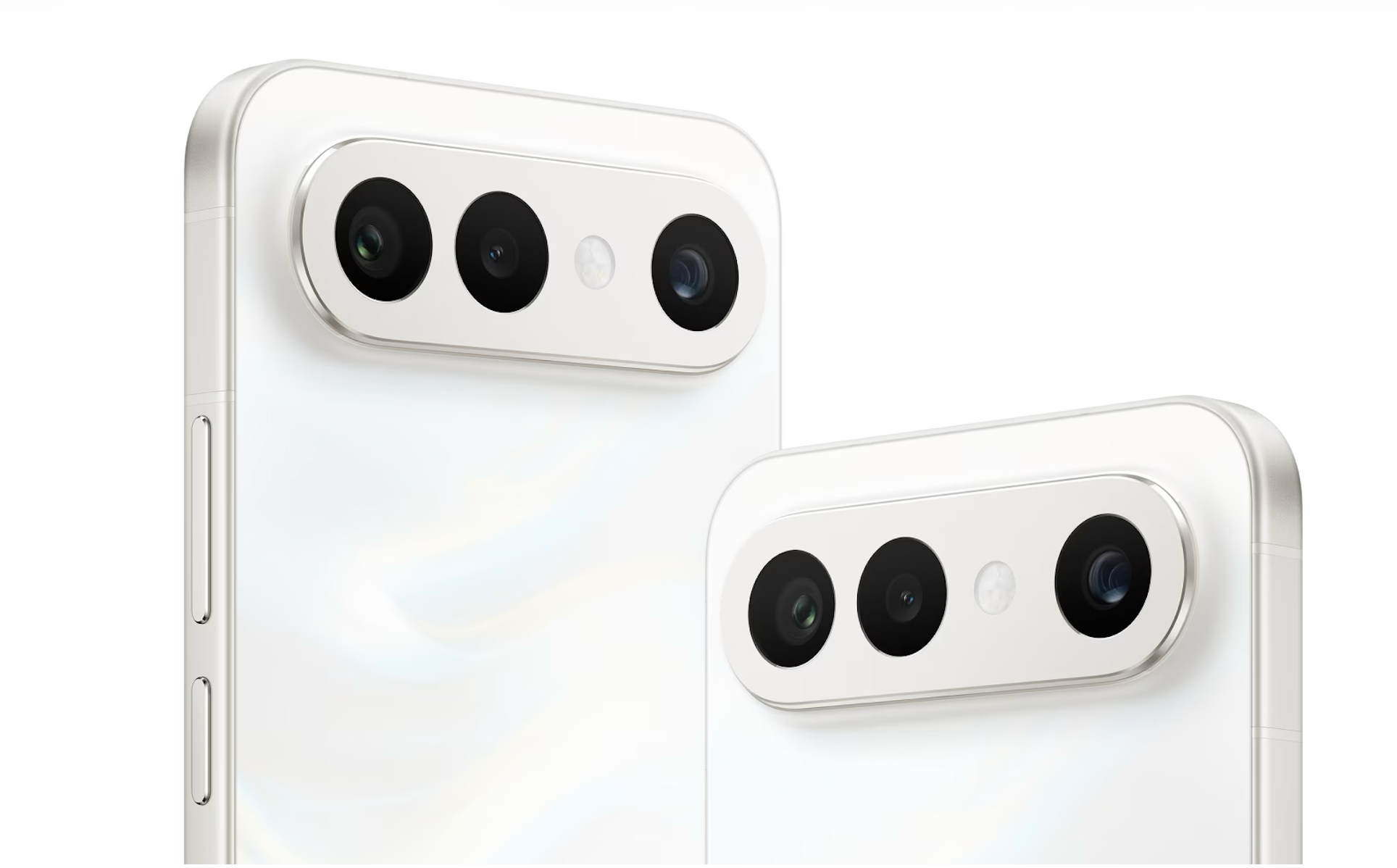
Image Source: vivo
Secondly, mid-range models are generally more receptive to system functionalities. Users of these devices are less finicky about 'pre-installed AI capabilities' or 'system-level assistants' compared to core users of high-end models and are more inclined to experiment with new features. This lays a practical foundation for scaling AI Agents.
More crucially, once a system-level collaboration is established, the cost of replication plummets. For ByteDance, the truly expensive aspect isn't a single collaboration but the engineering, risk control, and permission coordination costs required to make AI Agents system-level viable. Once this framework is up and running, the marginal cost of subsequent expansions will decline rapidly.
From this perspective, 'scaling first, then advancing' isn't a conservative approach but the most logical choice aligned with AI product development patterns.
Can ByteDance, a non-phone maker, influence the AI phone ecosystem?
However, one might ponder: Since ByteDance already boasts a massive user base and China has a mature mobile phone supply chain that enables anyone with an idea to launch their own phone brand, why doesn't ByteDance simply dive into phone manufacturing?
The reasons are straightforward and somewhat mirror Huawei's 'no car manufacturing' philosophy.
From Leitech's perspective, what ByteDance truly seeks isn't hardware profits from phone sales or leveraging multiple product lines to build its own 'human-vehicle-home' ecosystem. Instead, it aims to control the 'default access point status' of AI Agents at the system level.
Take Huawei's 'no car manufacturing' stance as a case in point: Huawei has repeatedly emphasized that it doesn't manufacture cars. However, in the automotive sector, Huawei has gained control over core capabilities such as intelligent cockpits, intelligent driving, and ecological interfaces through Hongmeng Intelligent Connectivity, becoming the architect of the entire system. Indeed, while you won't spot a 'Huawei-branded car' on the market, 'Huawei-influenced cars' are a common sight on the roads.
For ByteDance's mobile AI business, the emergence of the mobile AI Agent track presents the perfect opportunity to craft a 'Hongmeng Intelligent Connectivity for phones.'
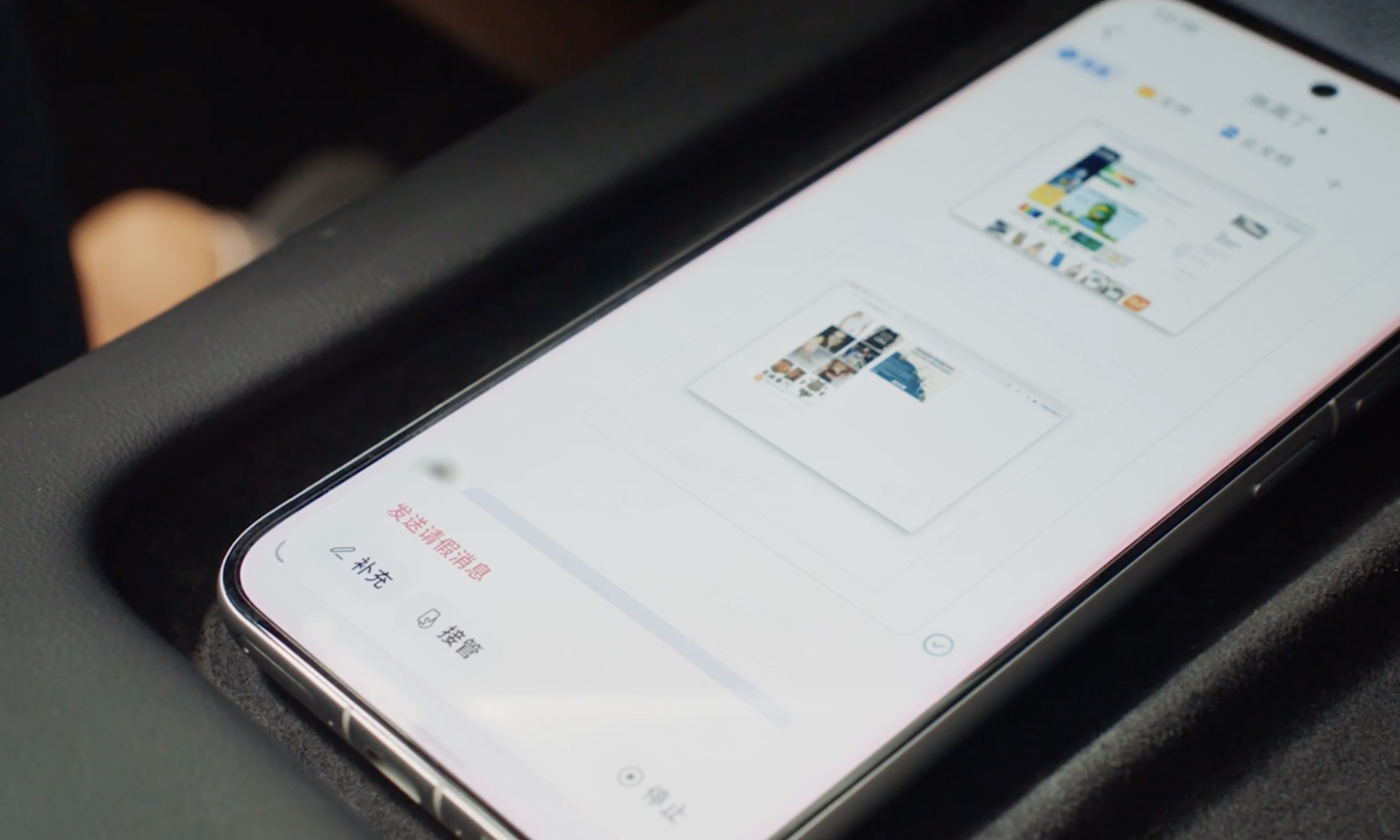
Image Source: Doubao Mobile Assistant
After all, as previously mentioned, in the era of AI Agents, what mobile phone brands truly crave isn't a 'more powerful model' but a mature, deployable, and deeply system-integrated intelligent agent solution. The recently launched Nubia M153 serves as a prime example of ByteDance's prowess.
Of course, from a practical standpoint, ByteDance still has significant gaps to bridge compared to a 'mobile version of Hongmeng Intelligent Connectivity'—it doesn't own the operating system itself nor can it define standards from scratch like Huawei. However, this also means ByteDance's path is more open-ended:
Instead of tying itself to a single brand or hardware, it aspires to become a 'universal capability layer' across multiple systems through its AI Agents. This aligns seamlessly with ByteDance's AI business philosophy of 'scaling first.'
The competitive battle for AI phones is just venturing into deeper waters.
Revisiting this collaboration, in Leitech's view, ByteDance's engagement with manufacturers like vivo, Lenovo, and Transsion represents not just a commercial venture but a milestone in the transition of AI phones from 'demonstrable capabilities' to 'sustainable existence.'
The challenges faced by the M153 have made the industry realize that once AI Agents truly begin performing tasks on behalf of users, issues of permissions, risk control, and responsibility boundaries can no longer be sidestepped. This time, ByteDance has chosen to tackle these constraints head-on through system-level collaborations.
What is certain is that the AI phone competition in 2026 will not hinge solely on models, algorithms, and use cases but will also mark a 'land grab' for the future mobile AI ecosystem. Users yearn for more efficient tools, phone manufacturers seek new system value propositions, and internet companies must transition from 'access competition' to 'capability collaboration.' Whoever can simultaneously meet these three demands will emerge as the leading brand in the AI Phone 2.0 era.
While other brands hesitate, ByteDance has already taken the plunge.
ByteDance Doubao AI Phone
Source: Leitech
Image credits: 123RF Royalty-Free Image Library
-
![]()
Hardware is the skeleton, AI is the soul, and data integrates the two
-
![]()
China’s AI Industry: A Unified Pivot Towards Monetization?
-
![]()
New Progress! Infineon Completes Acquisition of ams OSRAM's Non-Optical Sensor Business
-
![]()
35 Million Bet on an Optical Future! Tengjing Technology Makes a Move in AR
-
![]()
Why World Models Get Stuck on Construction Roads in Autonomous Driving Applications
-
Alibaba Initiates Cultural Transformation: Is Jack Ma Making a Strategic Comeback?
-
Tianfeng Heads to Hong Kong for IPO with RMB 3.8 Billion in Funds: Xingyu's Cross-Border Foray into Embodied AI Faces Uncertain Future
-
![]()
Mengshi Auto’s High-End Aspirations Dashed: Huawei Partnership Fails to Revive Sales, New Model’s Entry Price Dips Below 300,000 Yuan