VITURE Pro Banned in Germany: Chinese Enterprises Embrace Global Competition in a Legal Arena
 12/23 2025
 584
584
By Daoge
Source: Node AI View
Media reports indicate that the Chinese AR brand VITURE Pro has been prohibited from sale in Germany due to alleged infringement of XREAL's European patents. This marks the first core patent infringement ban in the XR industry.
Currently, a search for 'VITURE Pro' on Amazon Germany yields no relevant AR glasses product listings. However, its Amazon flagship store remains operational, continuing to offer products from the VITURE Luma series. VITURE has yet to issue a response regarding this matter.
According to media reports, the entity that requested the ban against VITURE was another Chinese AR brand, XREAL. Like VITURE, XREAL has achieved remarkable overseas sales, with both brands ranking among the top five globally.
In September of this year, XREAL asserted that VITURE's product, VITURE Pro, infringed upon its European patents related to an augmented reality device and its optical system. Subsequently, XREAL filed a temporary injunction request with the Munich I Regional Court in Germany against Viture Inc. and Eden Future HK Limited (VITURE's Hong Kong entity and the operator of VITURE's Amazon Europe store), urging the court to halt the sale of the infringing products.
This unexpected development has not only sent ripples through the XR industry but also signifies a qualitative shift in the globalization journey of Chinese tech firms: transitioning from the 'scale competition' of 'product expansion overseas' to the 'legal strategic play' of 'rule expansion overseas.'
01 Pressure Test
The ramifications of the German ban extend beyond mere market disruption; it shatters a long-held 'tacit understanding' in overseas expansion. Traditionally, competition among Chinese tech firms in foreign markets centered on supply chain efficiency, cost-effectiveness, and marketing tactics. Even when disputes arose, they were typically confined to domestic legal frameworks.
However, XREAL's decision to target its rival in the Munich I Regional Court in Germany—a jurisdiction renowned for its stringent, efficient, and decisive approach to global patent litigation—signals a shift from 'rule adaptation' to 'rule mastery' among Chinese AR companies.
From an industry perspective, this is not merely a commercial clash between two firms but a 'pressure test' for the core technological prowess of the Chinese AR sector.
The patent in question, EP3754409B1, held by XREAL, pertains to the core optical system of AR devices—a technological high ground in AR glasses. Public data reveals that XREAL boasts over 800 patents globally, whereas VITURE's overseas patent portfolio appears relatively modest. This stark contrast in patent reserves directly leads to a 'technological advantage' in international courts.
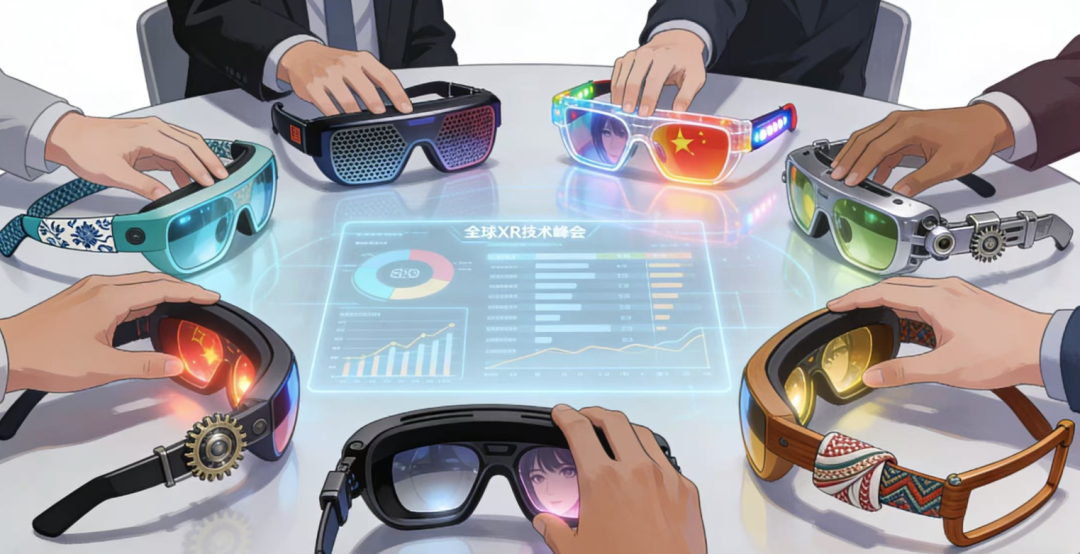
This 'internal conflict' unfolding on the global stage is an inevitable consequence of Chinese tech firms dominating global market shares.
Data from IDC and other institutions indicate that Chinese brands virtually monopolize the top positions in the global AR glasses market. When two or three of the top five global brands hail from China, direct clashes in overseas markets become inevitable.
This also implies that in the high-stakes tech arena, legal patents have evolved from defensive 'shields' to highly offensive 'spears.' Whoever controls the adjudication power over core patents gains a 'veto power' in the globalization jungle.
The Munich Court in Germany emerged as the battleground due to its legal system's acute sensitivity to intellectual property. The issuance of a temporary injunction suggests that the judge, after preliminary review, believes there is a high likelihood of infringement and that such infringement would cause irreparable harm to the rights holder.
For consumer electronics like AR glasses, which undergo rapid iterations and rely heavily on sales during peak seasons like Black Friday and Christmas, being removed from shelves in Germany—or even across Europe—is akin to being sidelined at the most critical moment in a race.
This also marks the definitive end of the 'wild growth era' in the XR industry, ushering in an era where intellectual property serves as the entry ticket and legal compliance as the protective moat.
02 Ultimate Consideration
If globalization 1.0 was characterized by 'trade expansion overseas' (selling products abroad) and 2.0 by 'brand expansion overseas' (building brand recognition abroad), then we are now entering globalization 3.0: 'governance expansion overseas'—
Firms must deeply integrate into the global legal system, technical standards, and intellectual property landscape. In this new phase, success hinges not solely on 'product strength' or 'price strength' but on developing nuanced, layered response strategies.
Firstly, leading firms must transition from 'passive compliance' to 'strategic deployment.' Patents should not be mere byproducts of R&D but strategic assets for market access.

Take XREAL as an example; through early-stage foundational innovation and a dense global patent network, it has gained a legal upper hand in the competition. Leading firms need to cultivate a 'patent pool' mindset, establishing their voice in global supply chains and market allocations through cross-licensing, core technology monopolization, and proactive legal litigation planning.
For small and medium-sized innovative firms or startup brands, the illusion of 'appropriationism' must be abandoned entirely.
In the globalization 3.0 era, the intellectual property radar in overseas markets is far more sensitive than anticipated. Firms should initiate global patent reviews (FTO) during the product definition stage, preemptively mitigating 'electrocution' risks through technical avoidance, patent acquisitions, or legitimate technology authorizations.
The core issue exposed by the VITURE incident is the insufficient reverence for overseas legal environments among some firms during the globalization process. If a brand has zero overseas patent reserves, its globalization journey is akin to navigating blindfolded.
Today, Chinese firms venturing abroad must learn to leverage the 'competitive edge' of international judicial resources. In this new phase of globalization, facing international competition, firms must not only understand technology and markets but also how to navigate diverse legal jurisdictions.
For instance, Germany's robust patent protection can be utilized to combat infringers, while the protracted litigation process in the U.S. market can be strategically employed to delay competitors. Such complex, multidimensional strategies necessitate the establishment of high-level legal teams and global compliance systems.
Today, such rule-based battles are no longer accidental commercial incidents but inevitable clashes as Chinese tech firms delve deeper into globalization.
It is foreseeable that in the coming years, such 'ban wars' rooted in core technologies may frequently erupt across various fields, including smart hardware, biopharmaceuticals, and new energy.
The more intricate second half of Chinese firms' globalization journey has already commenced.
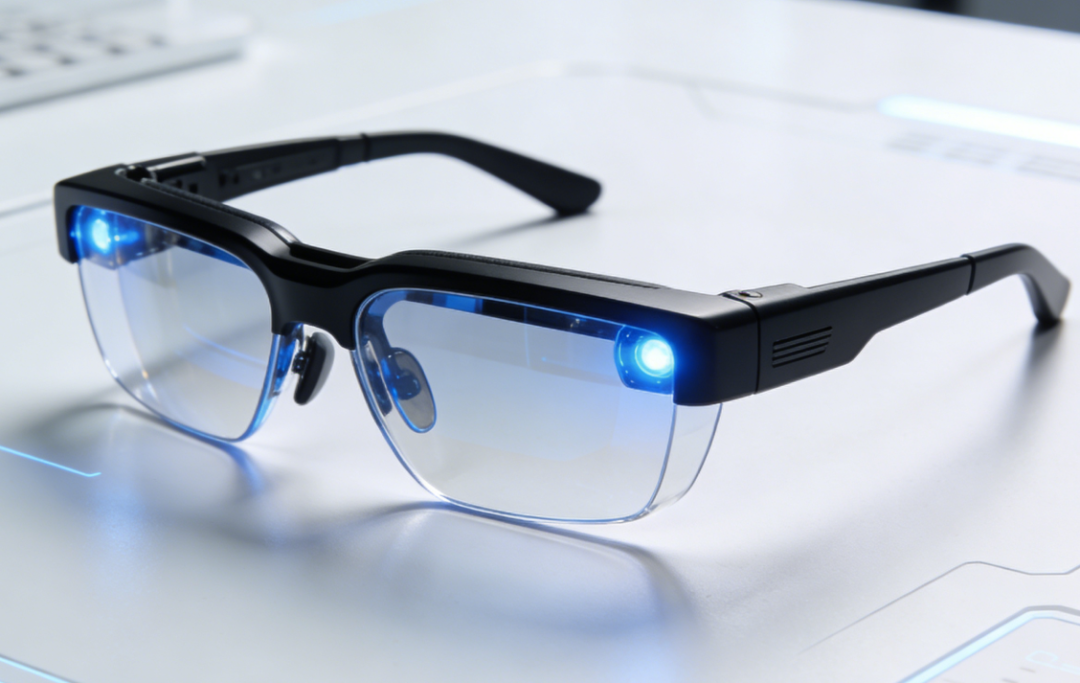
*The featured image is generated by AI.
-
![]()
Hardware is the skeleton, AI is the soul, and data integrates the two
-
![]()
China’s AI Industry: A Unified Pivot Towards Monetization?
-
![]()
New Progress! Infineon Completes Acquisition of ams OSRAM's Non-Optical Sensor Business
-
![]()
35 Million Bet on an Optical Future! Tengjing Technology Makes a Move in AR
-
![]()
Why World Models Get Stuck on Construction Roads in Autonomous Driving Applications
-
Alibaba Initiates Cultural Transformation: Is Jack Ma Making a Strategic Comeback?
-
Tianfeng Heads to Hong Kong for IPO with RMB 3.8 Billion in Funds: Xingyu's Cross-Border Foray into Embodied AI Faces Uncertain Future
-
![]()
Mengshi Auto’s High-End Aspirations Dashed: Huawei Partnership Fails to Revive Sales, New Model’s Entry Price Dips Below 300,000 Yuan