Is the Xiaomi 17 Ultra's Zoom Ring a Fake? Xiaomi Fumes as Original Teardown Blogger Sets the Record Straight Amid Misrepresentations
 01/04 2026
 595
595
The launch of the Xiaomi 17 Ultra has undeniably injected a much-needed dose of innovation into the smartphone market, which has been criticized for its lack of diversity. Despite a notable price hike compared to its predecessor, the device has captured immense public interest. Data reveals that after its release, the Xiaomi 17 Ultra Leica edition exceeded one million pre-orders on the JD.com platform, with all channels selling out within a mere five minutes of pre-sale commencement. The initial inventory of roughly 100,000 units was swiftly depleted.
Meanwhile, this particular model has also commanded a premium on secondary market platforms. Is it a case of "the more criticism, the more popularity"? The Xiaomi 17 Ultra Leica version has been hyped up to prices as high as 30,000 yuan, leaving competitors astounded! However, on the flip side, the Xiaomi 17 Ultra has, as anticipated, found itself embroiled in a public relations crisis. For instance, a few days ago, the internet was abuzz with mockery over the loose and noisy zoom ring on this device. 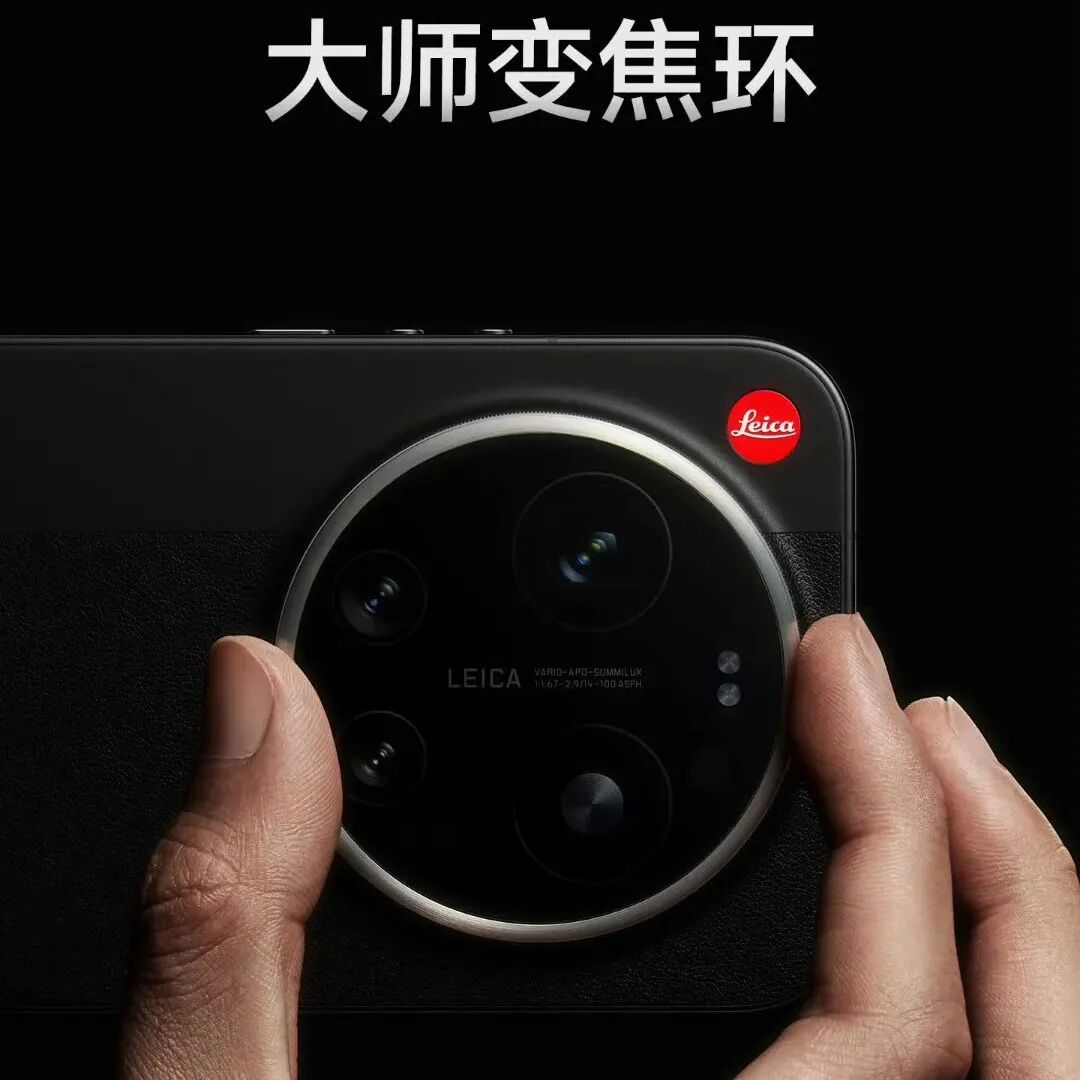
Shortly thereafter, during the New Year holiday, blogger Yang Changshun's teardown video went viral, drawing significant attention. During the disassembly, Yang highlighted the substantial size of the phone's rear camera module and explained that the zoom ring achieves its functionality by converting mechanical rotation into electrical signals.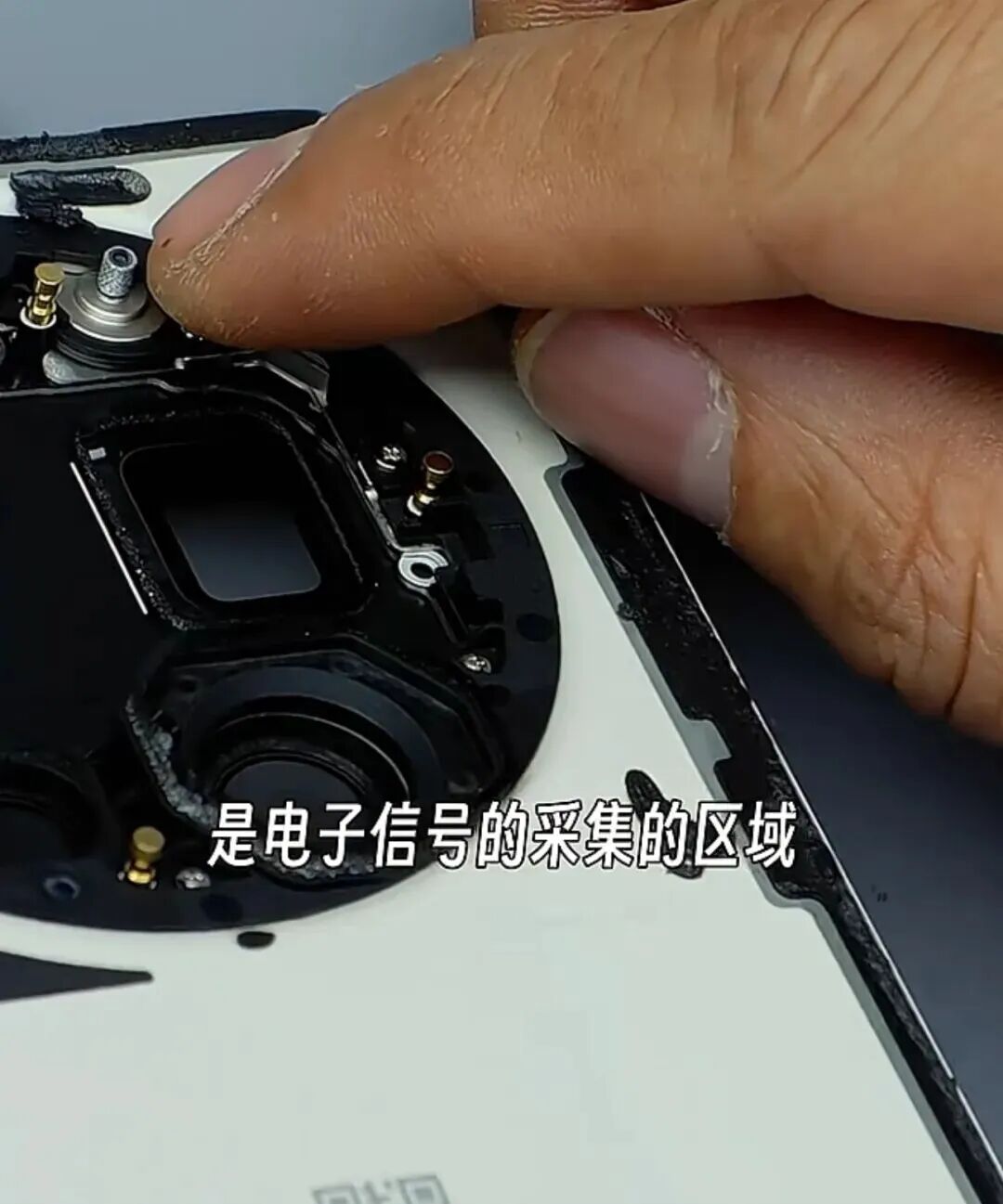
Subsequently, the video clip began circulating widely across the internet, and the topic shifted to "Is the Xiaomi 17 Ultra's zoom ring a fake?" Questions about mechanical zoom being replaced by software zoom started spreading rapidly.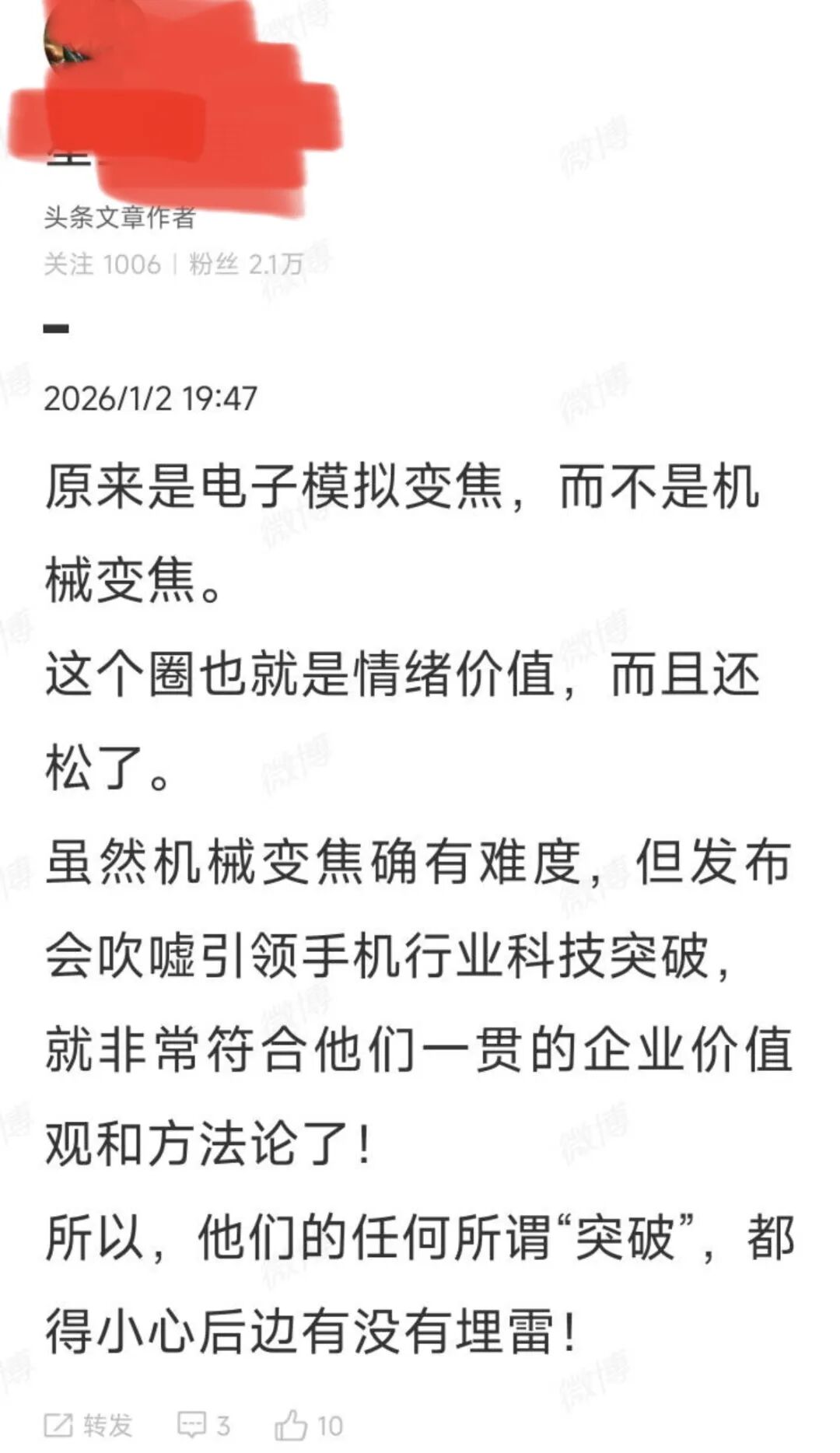
Following that, numerous bloggers posted content with nearly identical scripts, using this video clip to claim that Xiaomi's zoom ring lacks a mechanical structure, is purely software-simulated, and is deceiving consumers. In the comment sections, another wave of harsh criticism against Xiaomi ensued, with some remarks being particularly unpleasant.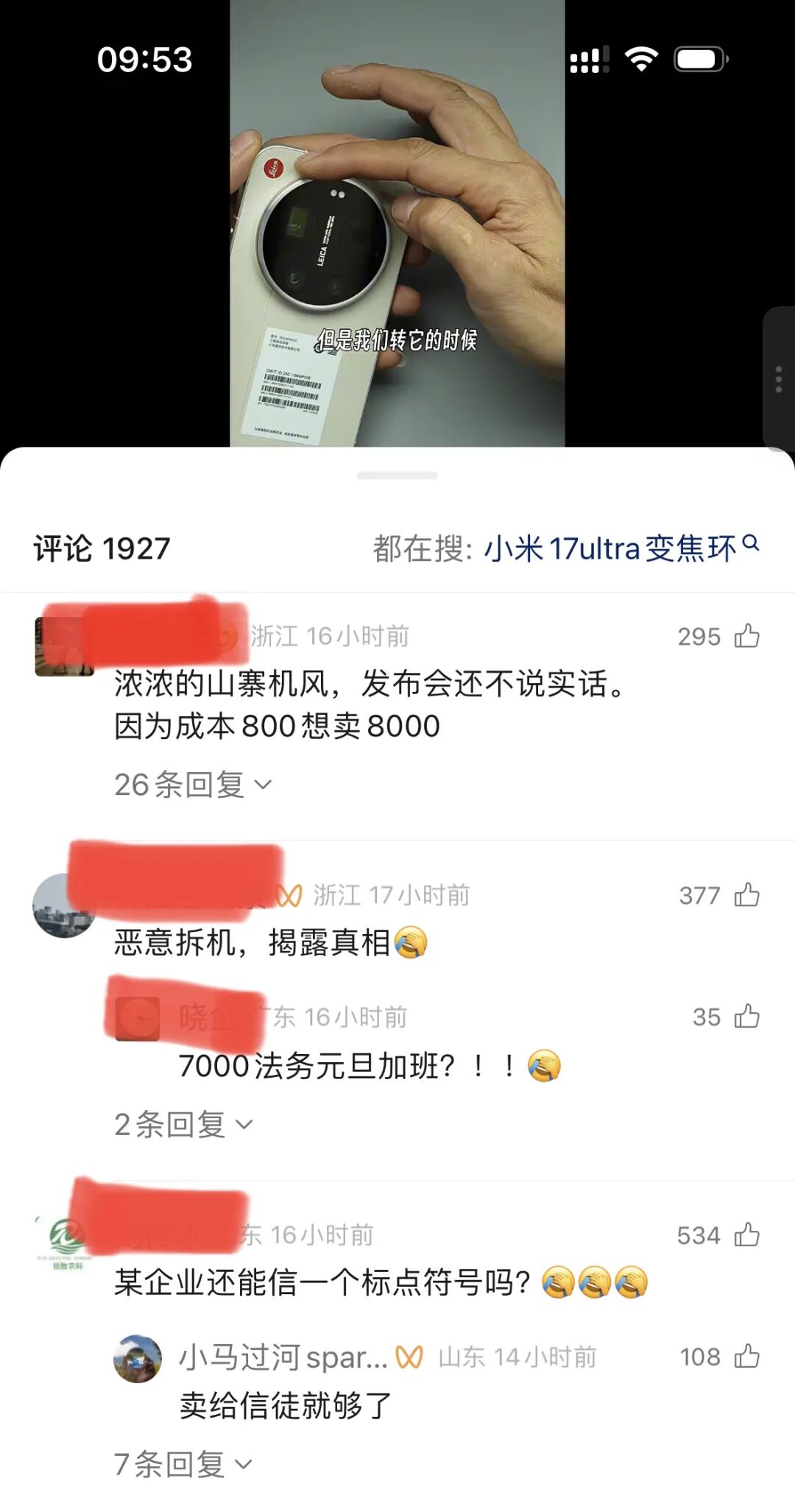
Faced with a deluge of negative comments, Yang Changshun, the teardown blogger, was the first to take action. Late at night yesterday, he urgently released a video to clarify the situation.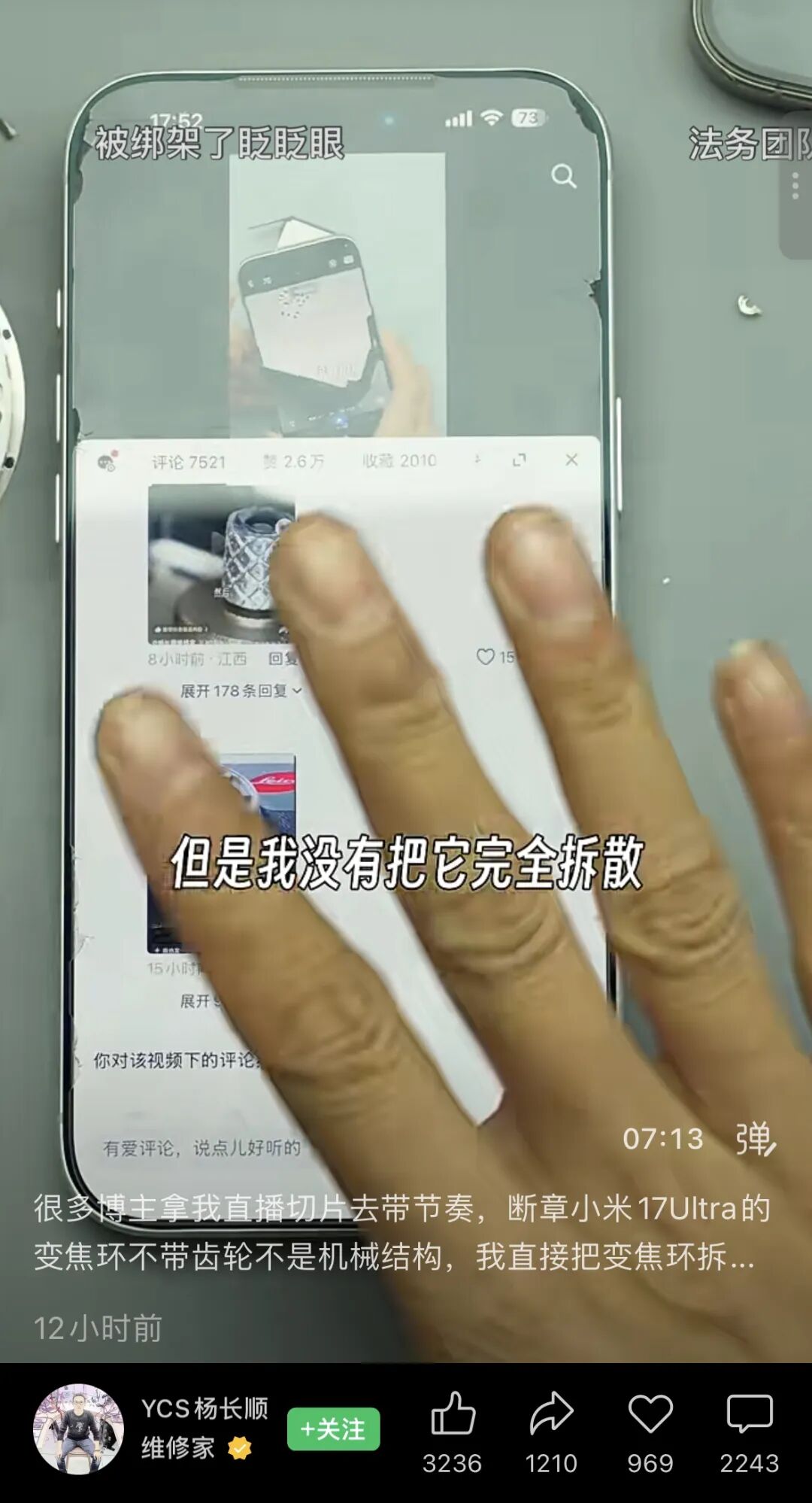
He stated that his video had been misrepresented. He had purchased the phone with his own money and did not want to disassemble it completely because doing so would require destroying the entire device's structure, and he still intended to reassemble it.
He explained that due to the partial disassembly, many people took the incomplete video and misrepresented it, claiming that there were no official gears inside when actually disassembled. To prove the existence of the gears advertised by the official, Yang eventually disassembled the machine completely.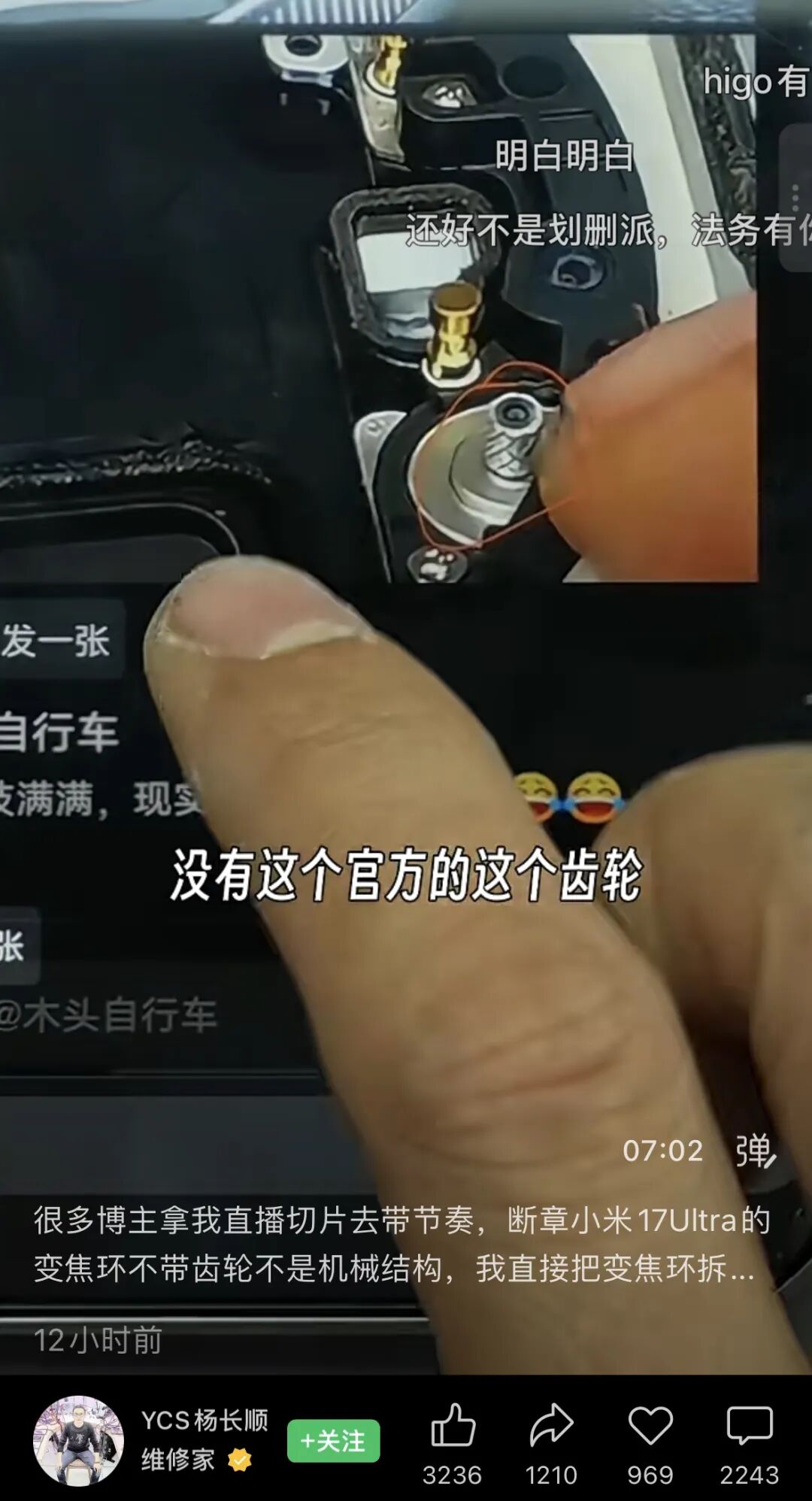
Through the new teardown video, we can observe that the gears are located on the back of the module, consistent with the promotional images.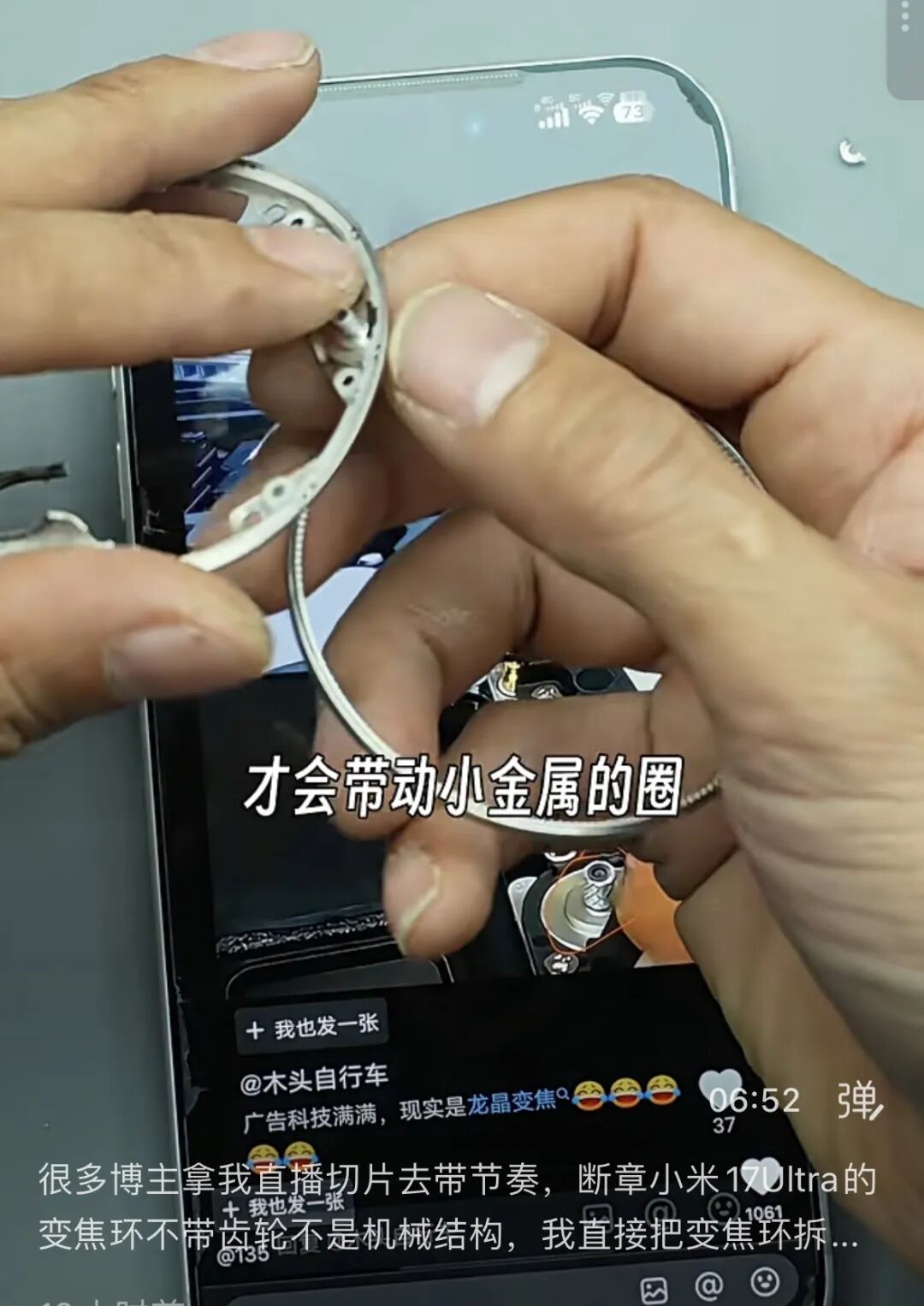
Yang Changshun mentioned that many people were misusing his video. He was aware of the internal structure but hadn't mentioned it at the time. He didn't anticipate that many bloggers would misunderstand either, prompting him to disassemble the structure completely.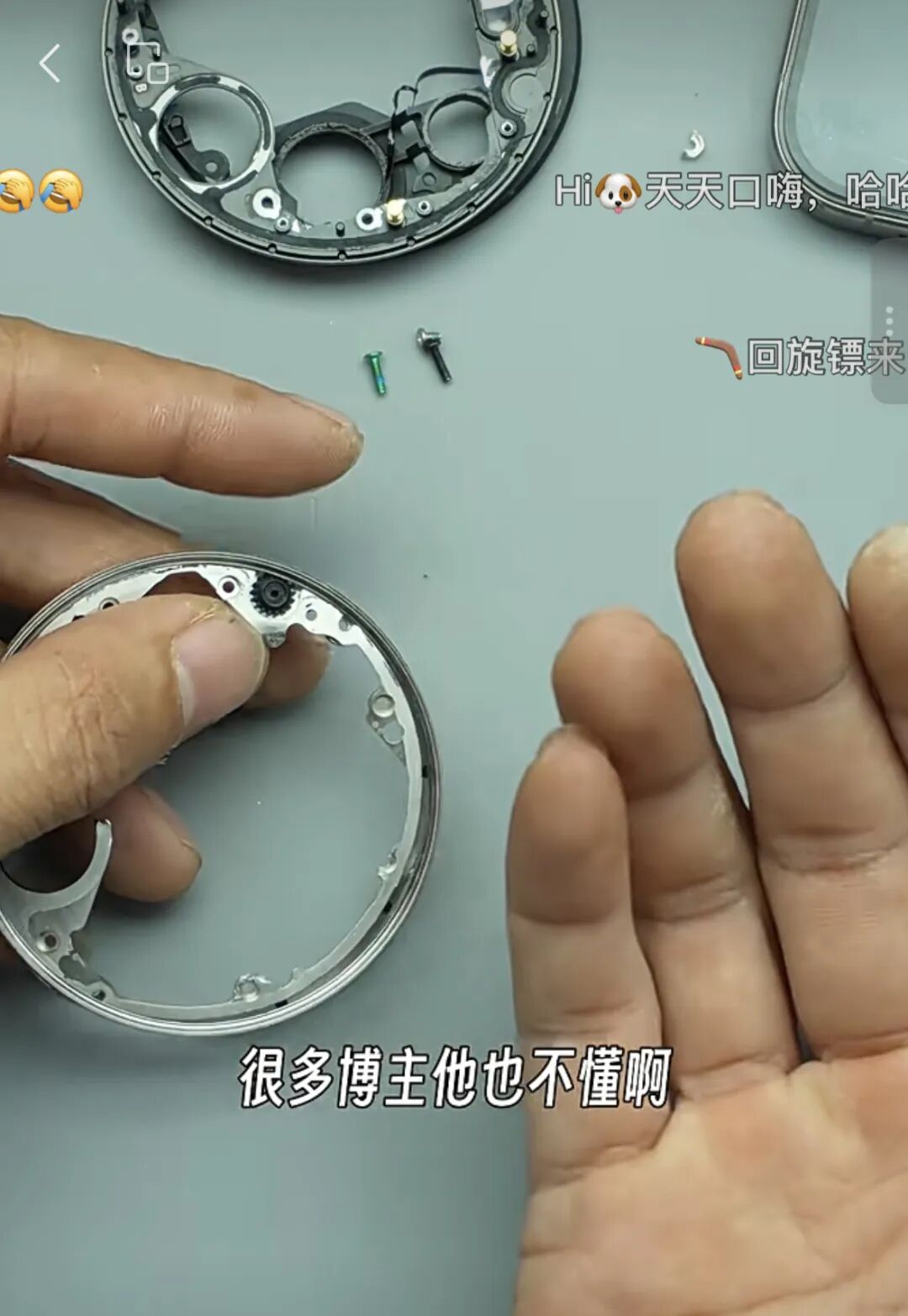
According to the complete teardown video released by the original blogger, the zoom ring features an external gear linkage and internal drive shaft design. It converts physical rotation angles into electrical signals through an optical displacement sensor to achieve zoom control.
In Yang Changshun's subsequent teardown video, the back is clearly shown to have a full set of toothed gears, ceramic ball bearings, and a drive shaft structure, which is entirely consistent with the official schematic.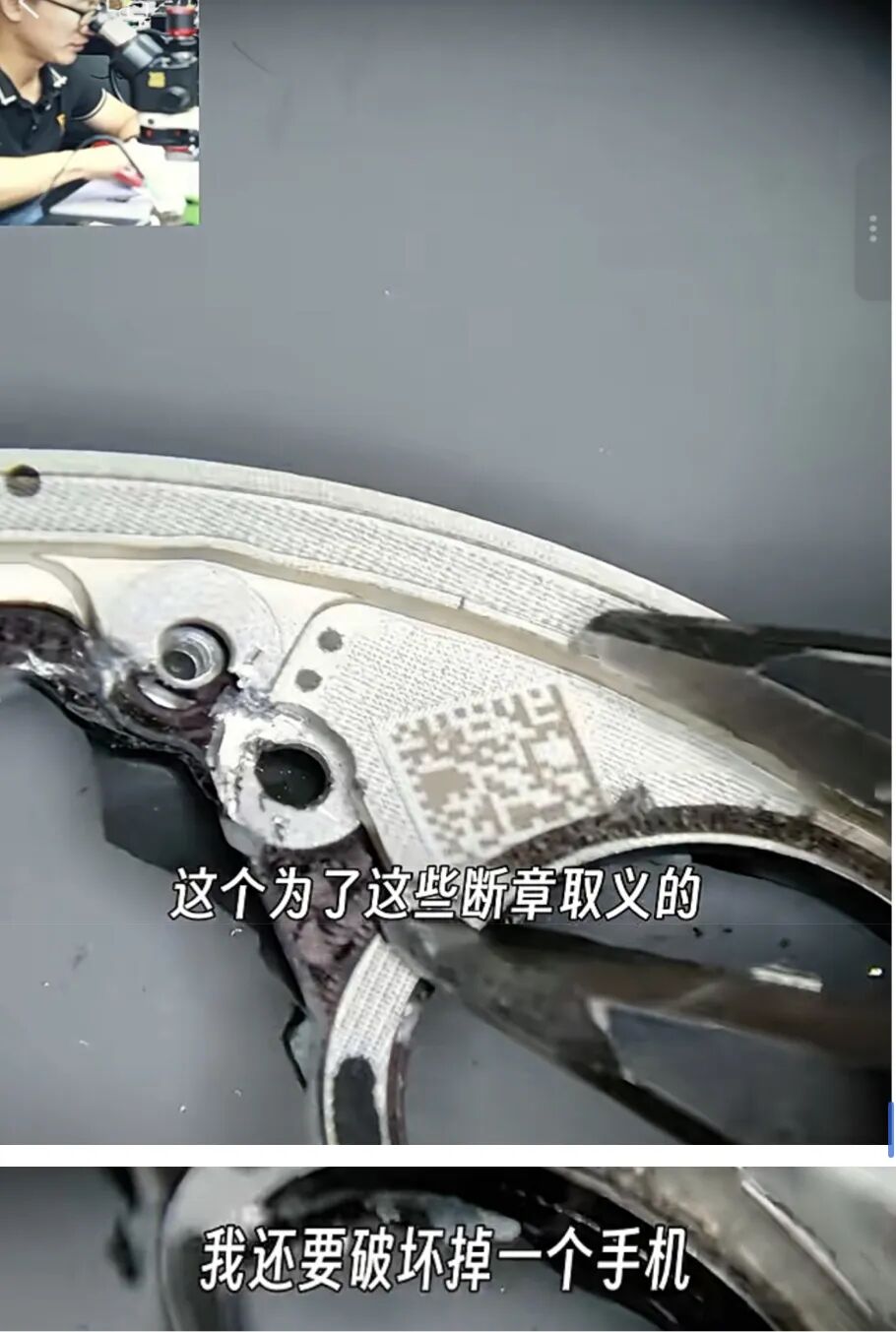
It can be said that Yang Changshun was also caught up in a wave of negative public opinion. A perfectly good phone was reduced to a pile of scrap. It can only be said that the public opinion Xiaomi is facing now is truly as harsh as being under a magnifying glass.
Xiaomi also responded to the incident, stating that recently, a large number of social media accounts have posted videos that misrepresent and distort the content of a certain teardown blogger's video on the Xiaomi 17 Ultra Leica version, claiming that the "zoom ring is fake and controlled by software." This claim is seriously inconsistent with the facts. In response to the malicious distortions and misleading disseminations, the original teardown blogger has already released clarification content.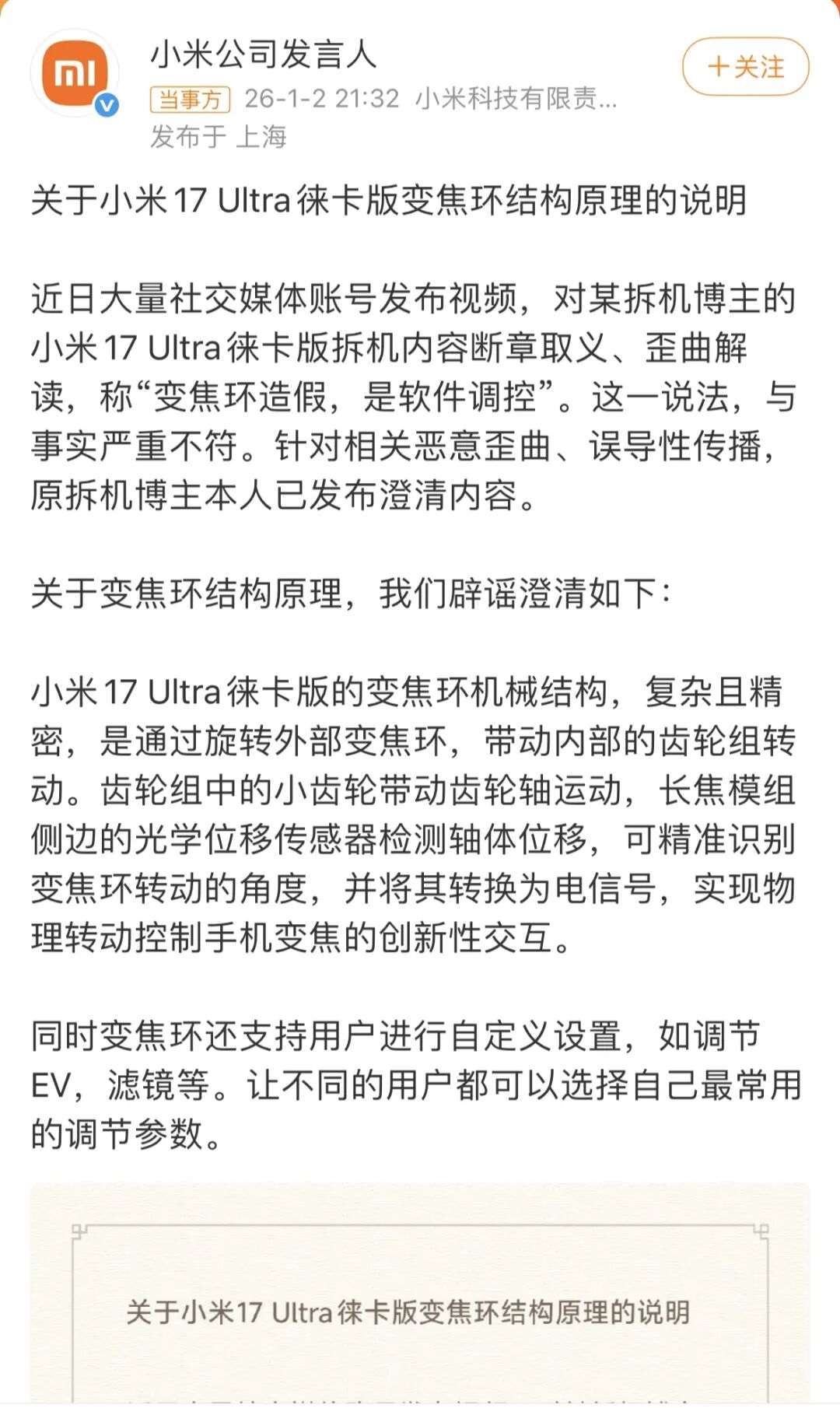
Regarding the structural principle of the zoom ring, Xiaomi explained that the mechanical structure of the zoom ring on the Xiaomi 17 Ultra Leica version is complex and precise. It works by rotating the external zoom ring, which drives the internal gear set to rotate. The small gear in the gear set drives the gear shaft to move. The optical displacement sensor on the side of the telephoto module detects the shaft displacement, accurately identifies the rotation angle of the zoom ring, and converts it into an electrical signal to achieve an innovative interaction of physical rotation controlling phone zoom.
Simultaneously, the zoom ring also supports user customization, such as adjusting EV, filters, etc., allowing different users to choose their most commonly used adjustment parameters.
It is worth noting that due to the space constraints of the phone, the zoom ring cannot be directly connected to the lens group. Therefore, the Xiaomi 17 Ultra adopts a more complex structure, which is essentially an interactive closed loop of "physical rotation → gear transmission → displacement detection → electrical signal control," driving a zoom effect that combines multi-camera switching and digital cropping.
Regarding the negative public opinion triggered by this incident, industry insiders stated that upon close observation, it is not difficult to see that the negative public opinion has exploited the concept of "electronic signals → software fraud," ignoring the empirical evidence from the teardown, and guiding users to attack Xiaomi. The traces of a black PR organization are evident.
For instance, some bloggers mentioned that initially, when they heard about the loose Leica zoom ring, they thought it was just some consumers complaining. They knew that as a new wave of ultra-premium phones released months ahead of schedule, it would face severe criticism, but they didn't expect it to be this bad.
"Moreover, there are even new rumors claiming that the zoom ring is not a mechanical structure but purely software-based. I'm stunned. Has the information bubble reached this point? There are tons of teardown videos and pictures online, yet many people don't even bother to look at them before jumping on the rumor bandwagon. Xiaomi's PR is indeed tough. The angles of the rumors are getting more and more cunning. What can they do?" 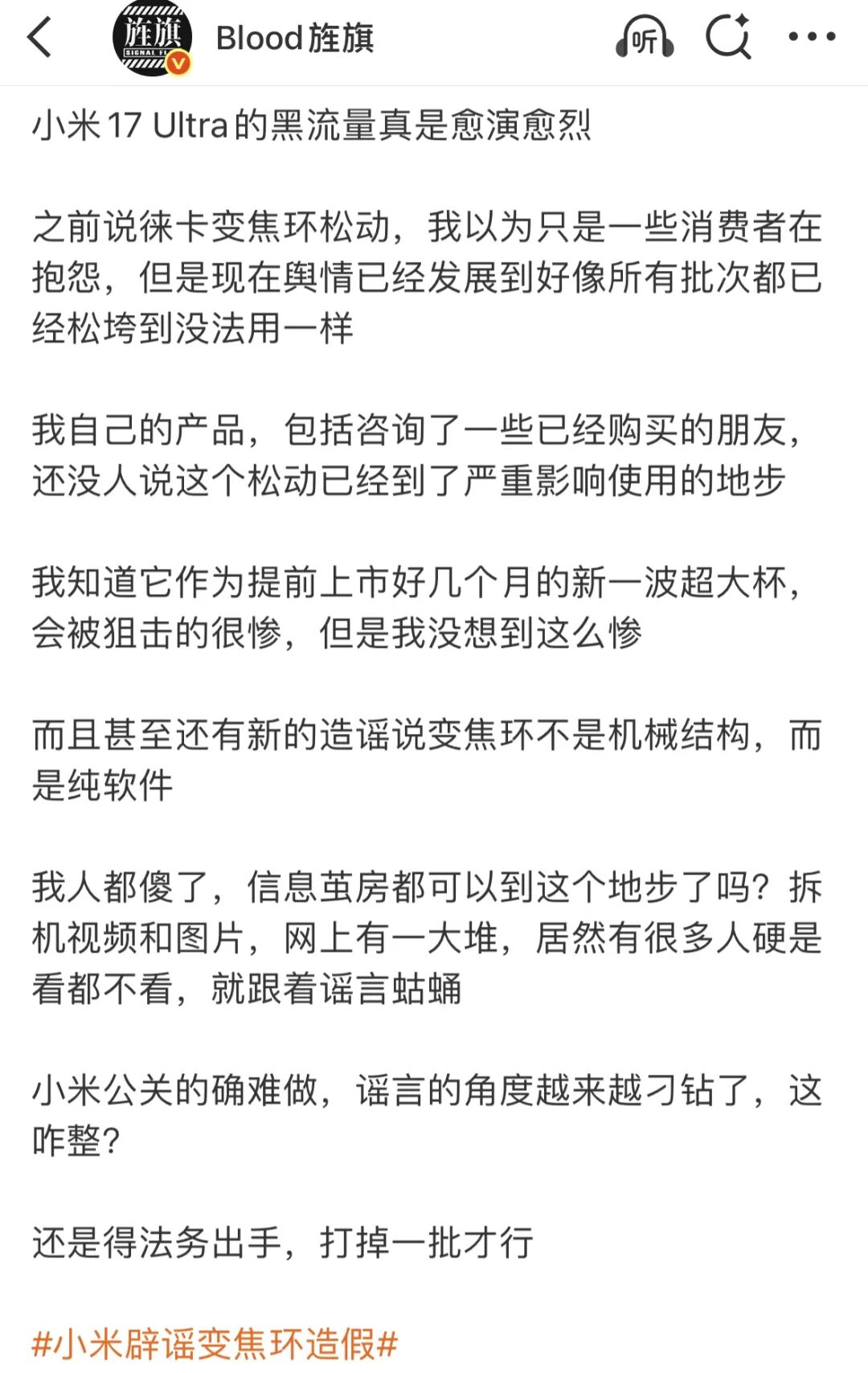
Other bloggers suggested that the alleged fake zoom ring accusation is probably an escalated publicity stunt by black PR over the "loose zoom ring" issue. What Xiaochai wants to say is, why is the current public opinion environment so terrible and intellectually degrading? Use your brain and think about it. How could a company as large as Xiaomi engage in such fraud? Especially for a consumer product that anyone could disassemble and inspect. As long as there's one person who does the teardown, the scam would be exposed. Would Xiaomi take such a risk? However, for such public opinion to arise naturally, Xiaochai doesn't believe it.
-
![]()
Hardware is the skeleton, AI is the soul, and data integrates the two
-
![]()
China’s AI Industry: A Unified Pivot Towards Monetization?
-
![]()
New Progress! Infineon Completes Acquisition of ams OSRAM's Non-Optical Sensor Business
-
![]()
35 Million Bet on an Optical Future! Tengjing Technology Makes a Move in AR
-
![]()
Why World Models Get Stuck on Construction Roads in Autonomous Driving Applications
-
Alibaba Initiates Cultural Transformation: Is Jack Ma Making a Strategic Comeback?
-
Tianfeng Heads to Hong Kong for IPO with RMB 3.8 Billion in Funds: Xingyu's Cross-Border Foray into Embodied AI Faces Uncertain Future
-
![]()
Mengshi Auto’s High-End Aspirations Dashed: Huawei Partnership Fails to Revive Sales, New Model’s Entry Price Dips Below 300,000 Yuan