From Professional Use to Universal Creation: Action Cameras Usher in the Era of All-Purpose Imaging
 01/05 2026
 782
782
In recent years, the explosive growth of short videos and live - streaming has propelled action cameras from niche sports gear to a “content - creation essential” for Vloggers, travel bloggers, store - exploration bloggers, and even everyday users.
With their lightweight and portable design, first - person perspective immersion, and outstanding stabilization performance, action cameras showcase remarkable adaptability in various scenarios, including outdoor adventures, daily recording, and live - streaming interactions.
From ski slopes to city streets, from polar expeditions to family gatherings, the lenses of action cameras capture a wide array of life scenarios. This has sparked a new trend of universal creative expression, making them one of the iconic tools in the mobile imaging era. According to online monitoring data from Aoweiyun (AVC), from January to October 2025, the online retail volume of household action cameras in China reached 2.86 million units, marking a year - on - year increase of 206%. Retail sales amounted to 6 billion yuan, up 203% year on year. Both the volume and value growth rates surpassed 200%. The rapid growth of action cameras is not due to a single factor but is the combined result of technological breakthroughs, scene expansion, affordability, and social attributes. Once exclusive to extreme sports, action cameras have now become a “life - recording essential,” truly fulfilling the vision of “enabling everyone to easily capture wonderful moments.”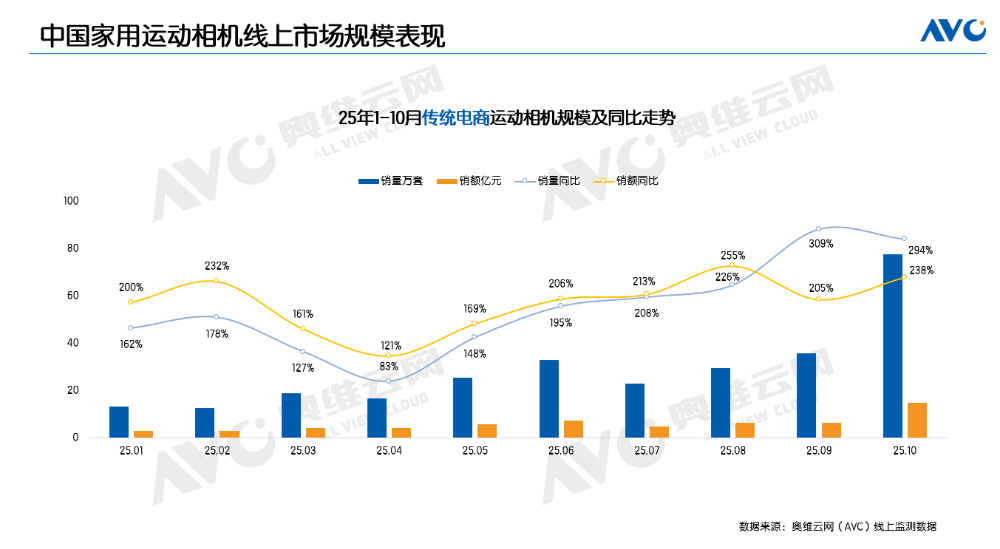
Opportunities and Challenges: Market Expansion and Intensifying Competition Go Hand in Hand
The thriving development of outdoor sports is driving sustained growth in the industry. The large community of Vloggers and outdoor sports enthusiasts offers a vast market space for action cameras.
The continuous expansion of user groups presents an even greater opportunity. With the rise of short - video social platforms, the main force of imaging creation has expanded to hundreds of millions of ordinary consumers. Action cameras, with their lightweight design, stabilization, and excellent image quality, have become a top choice for many Vloggers.
The application scenarios of action cameras are continuously expanding, moving from traditional sports recording into professional fields such as live - streaming e - commerce, real - estate displays, and educational training.
Technological innovation is also injecting new vitality into the industry. The integration of AI, 5G, and IoT technologies is driving action cameras to evolve from “recording tools” to “smart terminals.” AI algorithms enable image stabilization, scene recognition, and intelligent editing, significantly lowering the barrier for user creation.
Meanwhile, as the industry develops at a rapid pace, it will gradually face some challenges:
Intensified price competition: Numerous small and medium - sized brands are imitating the functions of leading products and adopting low - price strategies to seize market share. This has led to severe product homogenization and an escalating price war.
Diversified demands: The needs of different user groups vary significantly. Extreme sports enthusiasts focus on extreme performance features like waterproofing and stabilization. Vloggers prioritize image quality, portability, and intelligent editing functions. Family users, on the other hand, place greater emphasis on cost - effectiveness and ease of use. How to precisely meet the needs of different user groups and achieve product differentiation has become a common challenge for industry enterprises.
Leading Brands: The Competition of Technological Paths and Ecological Strategies
GoPro: Once the epitome of action cameras, GoPro still enjoys high loyalty among professional players due to its technological accumulation in extreme scenarios and strong brand reputation. Its HyperSmooth 6.0 stabilization technology remains at the forefront. However, facing the impact of Chinese brands, GoPro's market share continues to decline, as it faces dual pressures of insufficient innovation and differentiated competition from challengers.
DJI: Leveraging its long - standing technological advantages, DJI has emerged as a new leader in the action camera market. DJI's core strength lies in its imaging technology and ecological integration capabilities. Its Osmo Action series quickly gained market recognition with breakthroughs in stabilization technology and low - light shooting. More importantly, DJI has built an imaging ecosystem consisting of “action cameras + drones + stabilizers.” Through a unified app, it has achieved ecological synergy among devices, enhancing users' content - creation efficiency.
Insta360: Insta360 has carved out a unique competitive niche in the action camera market by using panoramic camera technology as a starting point and through innovative product forms and software experiences. Its One X series meets users' demands for creative content through “immersive shooting” and was the first to apply AI algorithms to panoramic image processing (such as automatic stitching and spatial audio capture). The “shoot first, frame later” function and AI intelligent editing significantly lower the barrier to creation.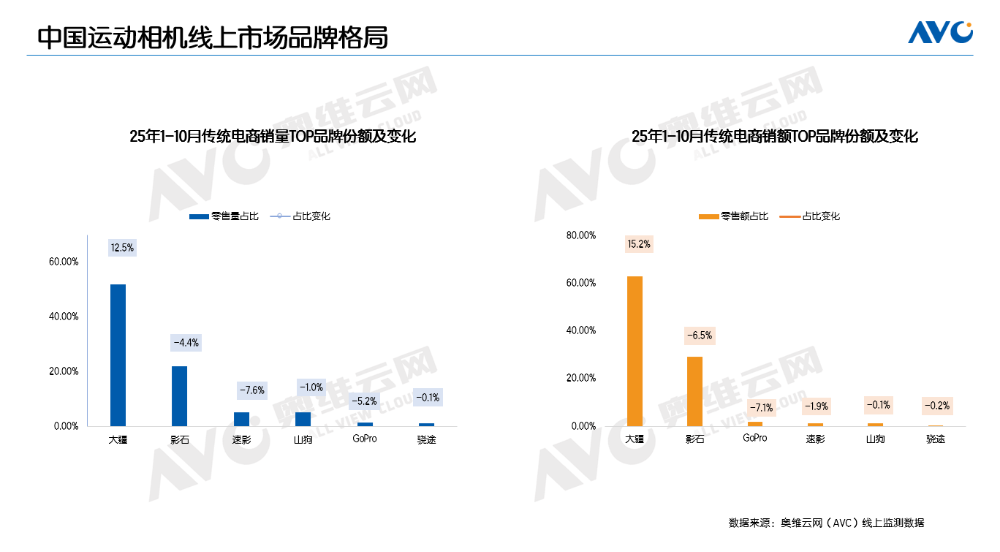
In addition, companies like Suying, EZVIZ, Shandog, and Xiaotu have precisely targeted vertical scene demands in the smart imaging market and innovated their products. These enterprises focus on different niche scenarios, driving the industry toward diversification.
Future Trends: AI - Driven, Ecological Competition, and Scene Expansion
AI technology will become a core competitive factor: In the future, action cameras will not only compete on image quality and stabilization but also emphasize AI - driven intelligent experiences. AI algorithms will enable more precise scene recognition, automatic editing, and content recommendations, significantly lowering the barrier for user creation.
Continuous breakthroughs in core technologies will overcome performance bottlenecks: Core technologies such as waterproofing, stabilization, and battery life will undergo a new round of upgrades to fully meet users' differentiated needs. Additionally, image quality will continue to improve toward higher resolutions, with 8K recording becoming standard in high - end products. Product forms will also become more diverse, catering to even more niche scenarios.
Ecological competition will replace single - product competition: Action cameras will no longer be isolated recording devices but essential components of a full - scene imaging ecosystem. On the one hand, cross - device collaboration will become more seamless, with tighter linkage between action cameras and drones, stabilizers, smartphones, smartwatches, and other devices. Through a unified ecosystem, functions such as data sharing, remote control, and multi - device collaborative shooting will be realized, meeting the diverse needs of professional creators. On the other hand, cross - scenario applications will continue to expand, with action cameras further penetrating into professional fields such as vehicle monitoring, smart security, medical imaging, and industrial inspection, extending from the consumer market to the industrial market and opening up new growth spaces.
From niche sports recording tools to intelligent devices for universal creation, the rapid development of the action camera industry is the result of the mutual drive between technological innovation and user needs. In the future, with the deep integration of AI technology, continuous breakthroughs in core performance, and expanding application scenarios, the action camera industry will embrace even broader development prospects.
Original content from Aoweiyun. Any organization or individual is strictly prohibited from reproducing or using this content without authorization for purposes such as training AI large models.
-
![]()
Hardware is the skeleton, AI is the soul, and data integrates the two
-
![]()
China’s AI Industry: A Unified Pivot Towards Monetization?
-
![]()
New Progress! Infineon Completes Acquisition of ams OSRAM's Non-Optical Sensor Business
-
![]()
35 Million Bet on an Optical Future! Tengjing Technology Makes a Move in AR
-
![]()
Why World Models Get Stuck on Construction Roads in Autonomous Driving Applications
-
Alibaba Initiates Cultural Transformation: Is Jack Ma Making a Strategic Comeback?
-
Tianfeng Heads to Hong Kong for IPO with RMB 3.8 Billion in Funds: Xingyu's Cross-Border Foray into Embodied AI Faces Uncertain Future
-
![]()
Mengshi Auto’s High-End Aspirations Dashed: Huawei Partnership Fails to Revive Sales, New Model’s Entry Price Dips Below 300,000 Yuan