CES 2026 Insights | AI Pushes Boundaries: Action Cameras Enter a Groundbreaking New Era
 01/13 2026
 538
538
On January 6, 2026, the International Consumer Electronics Show (CES 2026)—a key indicator of trends in the global consumer electronics sector—opened its doors at the Las Vegas Convention Center. Jensen Huang, the founder and CEO of NVIDIA, declared in his keynote speech, "The ChatGPT moment for embodied AI has arrived—machines are now starting to comprehend, reason, and act in the real world." This remark aptly captures the prevailing trend of artificial intelligence shifting from abstract concepts to real-world applications. This transformation is particularly noticeable in the realm of action cameras. AI is no longer a mere marketing ploy; it is now seamlessly woven into every stage of the shooting process—before, during, and after—truly acting as users' "intelligent creative partners." Brands are no longer just vying based on image quality but are engaging in a holistic competition centered around AI capabilities, form innovation, and ecosystem integration. The action camera category is now undergoing this profound shift with unprecedented depth and breadth. 
Amidst the relatively subdued moves by international brands, Chinese companies like Insta360 and Photon Leap have taken center stage as the most dynamic forces in the CES motion imaging exhibition area, showcasing the most advanced concepts and products.
Insta360
As a leading Chinese smart imaging brand, Insta360 displayed a comprehensive product lineup, spanning from consumer-grade to professional-grade offerings. The panoramic camera X5 boasts a 1/1.28-inch sensor and AI triple-chip technology, delivering stunning 8K ultra-high-definition image quality. Its "Dynamic Tracking 2.0" feature enables users to pre-lock a subject or perspective, directly outputting planar video while preserving panoramic footage, and intelligently pre-composing shots during post-production. The Ace Pro 2, the industry's first AI dual-chip action camera, leverages AI intelligent noise reduction to produce crisp 4K videos even in low-light conditions. Its "AI Highlight Assistant" automatically identifies exciting moments and swiftly generates video highlights. Insta360 streamlines the creative process with a lightweight AI workflow, enabling users to go from "shooting to finished product" in one seamless step. 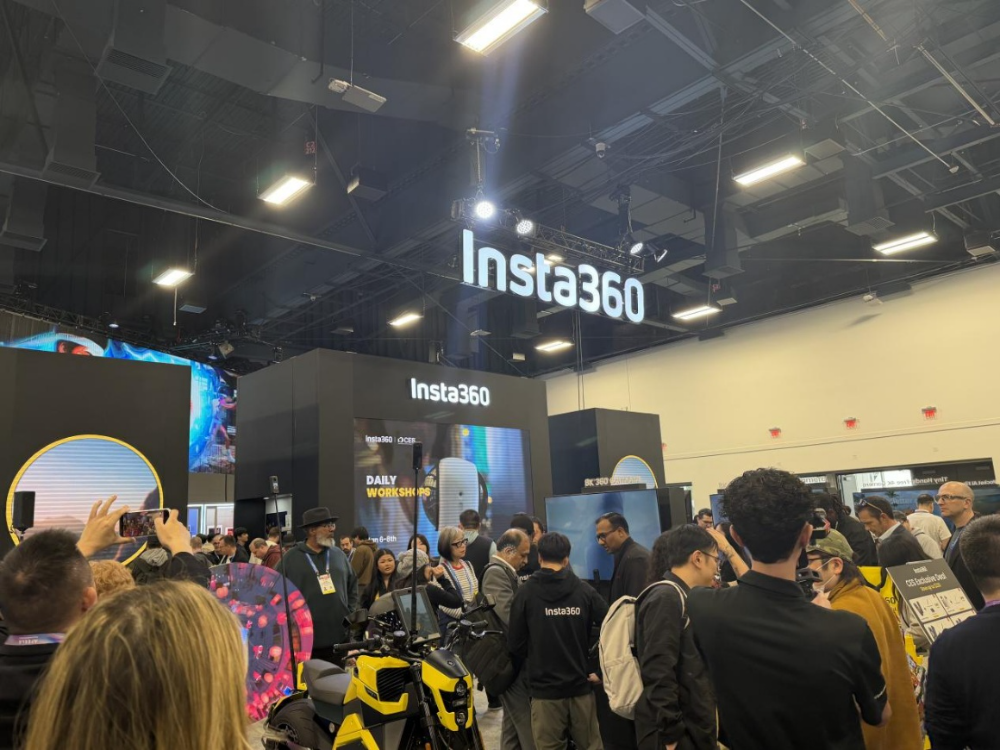
Photon Leap
Photon Leap, a newcomer in the smart imaging arena, has unveiled the world's first 8K AI thumb-sized action camera. This innovative product allows for seamless switching between Vlog and sports scenarios through a reversible magnetic attachment of the main unit and dock. It features a groundbreaking "dual-screen independent architecture" for interaction: the upper quick-access screen supports customizable high-frequency operations, while the lower main screen focuses on framing and playback without any interference. Full-link AI technology permeates every stage, from pre-shooting scene prediction and in-shooting intelligent tracking to post-shooting automatic editing. 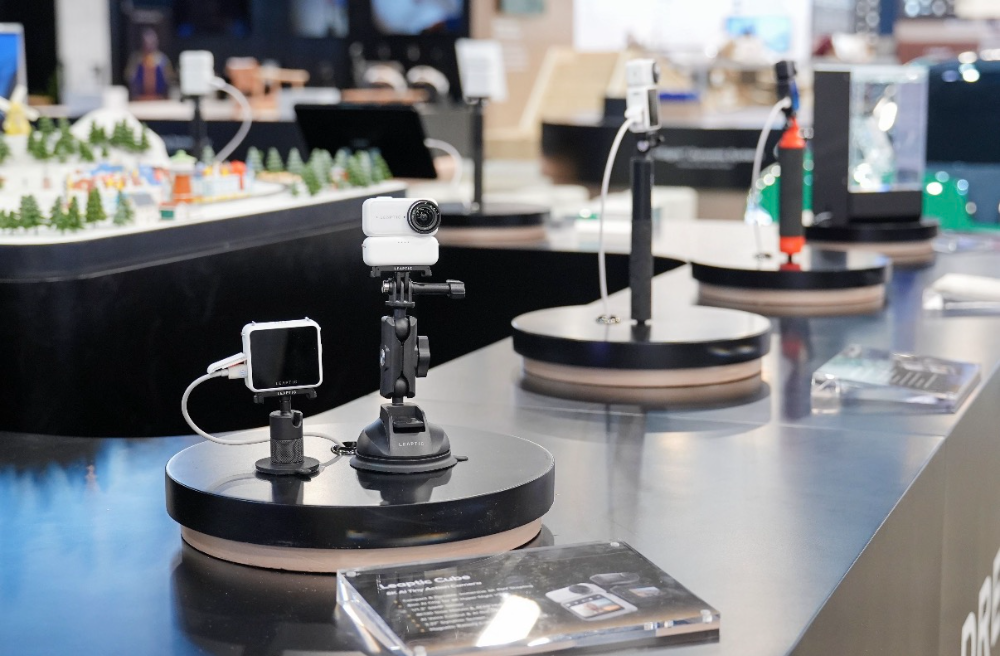
CES 2026 clearly highlights several key trends shaping the future of the action camera industry:
AI Bridges the Gap Between 'Shooting' and 'Creation': User pain points have evolved from "how to capture" to "how to produce." Built-in AI engines can now interpret scenes, rhythms, and emotions, enabling "shoot-and-go" finishing, which is fast becoming a standard feature of high-end products. Brands are developing comprehensive AI workflows that span from scene prediction and intelligent shooting to automatic editing. Action cameras are transitioning from mere recording devices to intelligent creative partners that understand user intentions.
Evolution from Standalone Devices to a Collaborative Ecosystem: Action cameras are no longer isolated information islands. Through low-power connectivity with AI watches, smart glasses, and drones, they are evolving into personal smart imaging hubs capable of accommodating a wider range of creative scenarios.
Deep Integration of Hardware Form and AI Core: Product innovation is no longer content with being "smaller and more robust"; it now strives for "smarter and more ingenious." The emergence of new action camera forms is fundamentally aimed at more seamlessly and conveniently integrating AI visual capabilities.
With the rising trend of outdoor sports becoming a lifestyle and social media videos gaining widespread popularity, action cameras have made a complete transition from extreme sports gear to "creative productivity tools" for the general public. The industry continues to experience robust growth. This year's CES sends a clear message: the action camera industry has entered a new phase of "ecosystem competition," where AI technology and scenario-based adaptation have become core competencies. Hardware performance is now a prerequisite, while AI-driven intelligence levels, software algorithm experiences, and ecosystem capabilities built through collaboration with other devices will define true competitive advantages. The boundaries between devices are becoming increasingly blurred. An intelligent imaging terminal that can effortlessly switch forms, integrate into ecosystems, and handle the entire process from shooting to finished product may well be the ultimate solution.
Chinese brands are steadily expanding their global influence through technological innovation and ecosystem布局 (strategic planning). With continuous refinement of core algorithms and expansion of overseas channels, Chinese brands are poised to achieve even greater breakthroughs in the global motion imaging sector, ushering in a new era of intelligent creation.
Original article by AVC Cloud. Without explicit authorization, no institution or individual is permitted to scrape this content for purposes such as training AI large models.
-
![]()
Hardware is the skeleton, AI is the soul, and data integrates the two
-
![]()
China’s AI Industry: A Unified Pivot Towards Monetization?
-
![]()
New Progress! Infineon Completes Acquisition of ams OSRAM's Non-Optical Sensor Business
-
![]()
35 Million Bet on an Optical Future! Tengjing Technology Makes a Move in AR
-
![]()
Why World Models Get Stuck on Construction Roads in Autonomous Driving Applications
-
Alibaba Initiates Cultural Transformation: Is Jack Ma Making a Strategic Comeback?
-
Tianfeng Heads to Hong Kong for IPO with RMB 3.8 Billion in Funds: Xingyu's Cross-Border Foray into Embodied AI Faces Uncertain Future
-
![]()
Mengshi Auto’s High-End Aspirations Dashed: Huawei Partnership Fails to Revive Sales, New Model’s Entry Price Dips Below 300,000 Yuan