2026: Are Domestic Mobile Phone Manufacturers Headed Back to a Warring States Period?
 01/21 2026
 639
639
Author: Chen Hai
Source: Node Finance
Will 2026 usher in a new reigning champion in the fiercely competitive mobile phone market?
Reflecting on the recently concluded 2025, the smartphone industry underwent a brutal selection process amidst a 'super cycle' of escalating costs.
The mid-to-low-end market, with profit margins pushed to the brink, stagnated in growth, even experiencing a 'vacuum zone' where brands exited in droves. At the summit of the high-end spectrum, the competitive landscape underwent profound transformations.
Huawei, capitalizing on a fully localized supply chain alternative, not only established a premium technical edge but also solidified its brand perception. Honor, in contrast, ventured into the extremes of lightweight design for end-side AI and foldable displays, striving to decouple from traditional foundations at the system level and carve out an independent ecological niche in the high-end arena.
Apple, leveraging its dominant position in the global supply chain, preserved its profit margins through intricate cost management strategies. Meanwhile, Xiaomi balanced its aspirations for the high-end market with globalization, utilizing the premium space afforded by economies of scale to attempt a 'structural magic trick' to counterbalance the decline in hardware gross margins.
The mobile phone market in 2025 was undeniably a high-stakes arena. Data on 5G smartphone shipments offers a significant window into observing high-end models.
According to data from the China Academy of Information and Communications Technology, from January to November 2025, 474 new mobile phone models were launched domestically, marking a year-on-year increase of 14.5%. Among these, 223 were 5G models, unchanged from the same period last year, accounting for 47.0% of all new models launched during that time.
But is this truly the whole story? The apparent high-stakes competition seems more like the calm before the storm.
Node Finance's assessment is that as hardware innovation enters a 'micrometer-level' incremental phase and consumer enthusiasm for specifications gradually diminishes, the once-formidable competitive advantages are losing their potency.
At this critical juncture, the mobile phone industry is not merely vending devices but competing for a stake in the next generation of computing paradigms. When the replacement cycle, the threat of new entrants, and the depth of ecosystem reconstruction all reach pivotal points simultaneously, the Chinese mobile phone market in 2026 is poised for a genuine transformation.
Major Reshuffle: Valuation Reshaping Amidst Intense Competition
Entering 2026, the reality that mobile phone manufacturers are most reluctant to confront yet must face head-on is that consumers' replacement logic has fundamentally shifted.
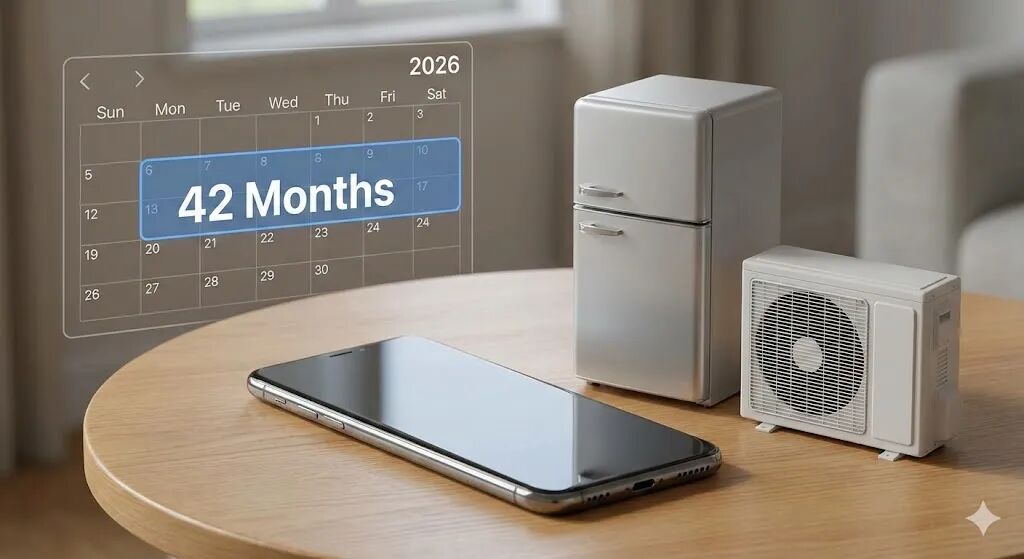
The latest industry statistics reveal that the average replacement cycle in the Chinese market has historically exceeded the 42-month mark. This signifies that smartphones have officially transitioned from 'fast-moving consumer electronics' to 'durable consumer goods,' akin to appliances like air conditioners and refrigerators.
This qualitative transformation essentially dismantles the underlying drivers that have fueled the industry's rapid growth over the past two decades.
Assuming a four-year lifecycle, past marketing strategies of 'annual upgrades with minor parameter tweaks' not only fail to resonate with consumers but have also become a liability, overextending brand credibility.
The cost-driven price hikes in 2025 were the final straw, effectively terminating the mass market's blind trust in models priced around the 3,000-yuan mark. In this segment, which once contributed the largest revenue stream to the industry, consumers have exhibited unprecedented rationality and indifference.
This is because consumers are beginning to realize that high-performance flagships purchased three years ago still perform admirably in handling daily applications, social interactions, and even most mainstream games.
Meanwhile, the AI-powered post-production removal, real-time call translation, or higher-magnification optical zoom touted by new models struggle to translate into purchase impulses strong enough to justify thousands of yuan in premiums, lacking support from high-frequency usage scenarios.
This supply-demand mismatch has triggered a reshaping of the industry's internal valuation system.
The reshuffling blade first targets 'mediocre' brands, those unable to ascend to the high end in terms of brand strength or descend to the bottom in cost control. Within the 'Big Five' camp, centered around Huawei, Apple, Xiaomi, OPPO, and Vivo, the polarization of growth momentum becomes increasingly pronounced.
To hedge against the decline in overall shipments, leading brands have unanimously opted for a 'saturated attack' on the 5,000-yuan and even 10,000-yuan market segments. However, the customer base in the pinnacle market is finite. When existing users are no longer willing to pay a premium for marginal experiences, this so-called 'high-end transformation' risks becoming a closed-loop game.
Meanwhile, the restructuring of power dynamics at the supply chain level has intensified the reshuffling turbulence.
As the domestic semiconductor supply chain enters a full harvest period in 2026, the bargaining power for core mobile phone components begins to shift from international giants to local behemoths with autonomous control capabilities.
From Node Finance's perspective, manufacturers lacking participation in underlying architecture and overly reliant on external off-the-shelf solutions have lost their last vestige of 'information gap' advantages in this reshaping.
Invaders: The Major Players Are Here
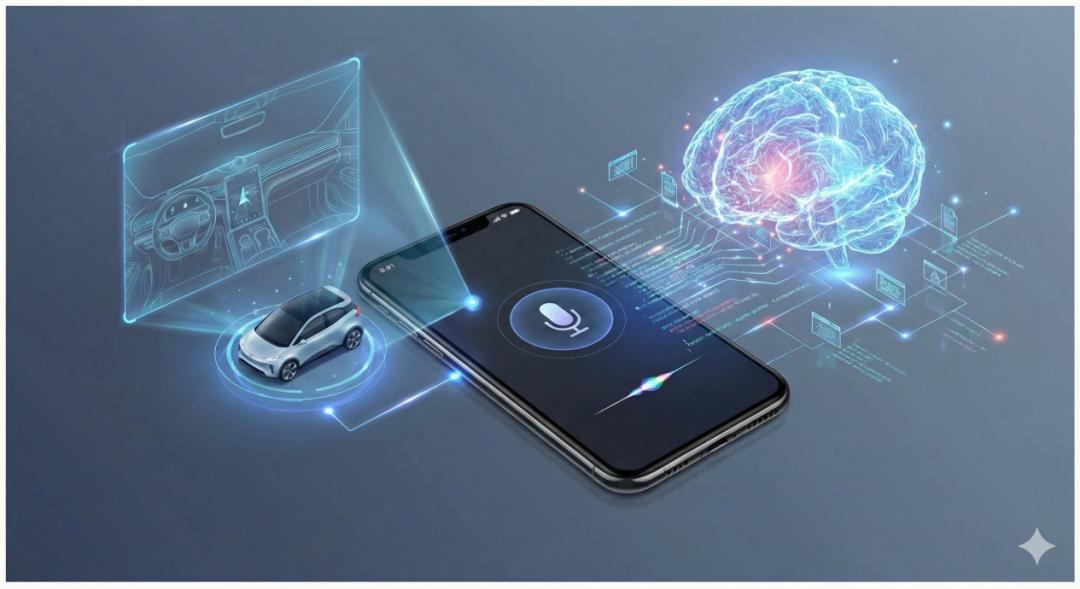
The ruthlessness of the 2026 reshuffling lies not merely in screening for shipment volumes but in identifying who can endure the prolonged replacement winter on this increasingly narrow track through ultimate asset turnover and supply chain control.
However, a more daunting issue arises when traditional manufacturers clash in the red ocean of intense competition: a cohort of 'invaders' with entirely new DNA are attempting to breach the previously closed market gaps by reconstructing interaction logic.
These invaders can be broadly categorized into two groups: large model giants centered around software and algorithms, and specialized forces deeply entrenched in specific interaction scenarios.
AI-native forces, represented by 'Doubao,' are the most formidable variables in the 2026 market. Internet giants like ByteDance are no longer content with merely being an APP running on Android or iOS; instead, they directly intervene in terminal manufacturing by deeply investing in hardware factories and customizing self-developed AI chips.
The core logic of these 'Doubao phones' or 'AI-native terminals' is entirely App-free. On these devices, traditional UI interfaces are replaced by an intent recognition layer (Agent) covering all times and scenarios.
Users no longer need to search for APP icons; all needs are directly translated into AI instructions through voice or gestures. What's even more disruptive is their business model: these invaders do not rely on hardware premiums for survival; hardware serves merely as a touchpoint to capture high-quality interaction data and distribute value-added services.
This low-margin or even zero-margin approach constitutes a dimensional reduction attack on traditional manufacturers still reliant on hardware price differentials. When user interaction habits shift from 'tapping' to 'conversing,' traditional mobile phone system barriers will be circumvented like the Maginot Line.
The reverse penetration from the automotive industry constitutes the third wave of invasion.
NIO, Zeekr, and Huawei's Smart Selection Vehicle lineup have achieved deep integration between mobile phones and cabin protocols by 2026. For these automakers, mobile phones have evolved into extended computational nodes for intelligent cabins.
When the underlying protocols between mobile phones and cars are fully interconnected, mobile phones cease to be standalone digital products and become an inseparable part of users' mobile travel experiences. This hardware bundling centered around specific high-value scenarios is eroding the once-vaunted user loyalty of traditional brands from the outside.
When consumers switch mobile phone brands for a more ultimate intelligent driving synergy experience, the traditional boundaries of mobile phone market competition vanish entirely.
Reconstruction Game: The Evolution of Business Logic
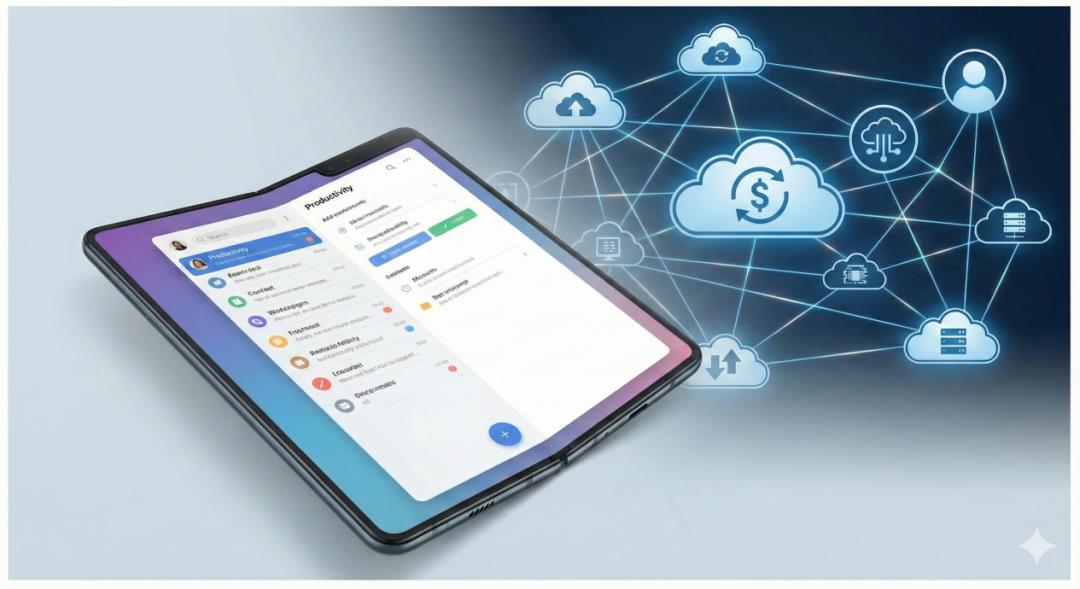
Standing at the dawn of 2026, it is evident that this year's mobile phone industry is undergoing an ultimate reconstruction from 'centralized single terminals' to 'distributed smart nodes.'
This reconstruction not only reshapes the physical form of products but also thoroughly overturns the commercial value distribution system that has persisted for two decades.
First and foremost, the evolution of hardware form factors is breaking free from the physical inertia of the past decade. In 2026, the breakthrough in yield rates and cost reductions for triple-folding screen technology transforms 'pocket-sized productivity tools' from a slogan into reality.
However, this is merely transitional; a deeper reconstruction lies in the 'decentralization' of terminals. With the maturation of high-bandwidth, low-power communication technologies, smartphones' screens are regressing from the sole interaction window to a 'computational hub' in the background.
Future core interactions may entirely take place on a lightweight pair of AR glasses, a smart ring, or even an AI assistant integrated into a hearing aid.
In this context, competition among mobile phone brands will shift from 'screen quality' game theory to vying for 'interaction protocol' discourse power. Whose AI Agent protocol can seamlessly integrate with more wearable devices, and who can define cross-device flow standards, will become the de facto industry ruler.
This also implies that mobile phone manufacturers' business models may need to transform.
Over the past two decades, manufacturers' revenue curves have been tightly linked to new device sales curves, supplemented by app store revenue sharing and minimal system advertising.
However, in 2026, this model is approaching exhaustion. As AI Agents take over traffic entry points, traditional app distribution models are collapsing, replaced by AI subscription services and on-demand cloud computational power revenue sharing.
Today's mobile phone manufacturers are undergoing an arduous transition from 'hardware manufacturers' to 'intelligent service operators.' Node Finance believes that typical profit models have transformed into—
Perceiving users' precise needs through terminals, utilizing AI assistants to save users time or optimize consumption decisions, and extracting value-based revenue sharing from these processes. This not only requires manufacturers to possess top-tier hardware design capabilities but also tests their comprehensive depth in cloud computational power scheduling, multimodal large model iteration, and user privacy security computing.
Furthermore, the ecological landscape's strategic alliances and rivalries have entered an unprecedentedly complex stage.
Huawei's fully self-reliant HarmonyOS system equips it with the capability to construct a digital ecosystem independent of global mainstream standards. This self-sufficiency is attracting a vast number of developers seeking security and autonomy. Meanwhile, Xiaomi has established a logically closed loop within living spaces through the physical coupling of its 'human-vehicle-home full ecosystem,' making it difficult for outsiders to infiltrate.
For the remaining participants, the era of solitary competition has completely ended. The future industry landscape will be composed of several large AI ecological closed loops. Brands unable to integrate into mainstream protocol stacks or secure unique positions in the ecological division of labor will be rapidly marginalized.
The halo of hardware specifications is gradually fading, while AI-driven intelligent perception is just beginning. Domestic manufacturers reentering this chaos not only bid farewell to the inertial growth of the past decade but also probe the power landscape of the next.
From this perspective, the 2026 mobile phone market is far from a simple 'Three Kingdoms Showdown'; it is more likely a return to the 'Warring States Era.'
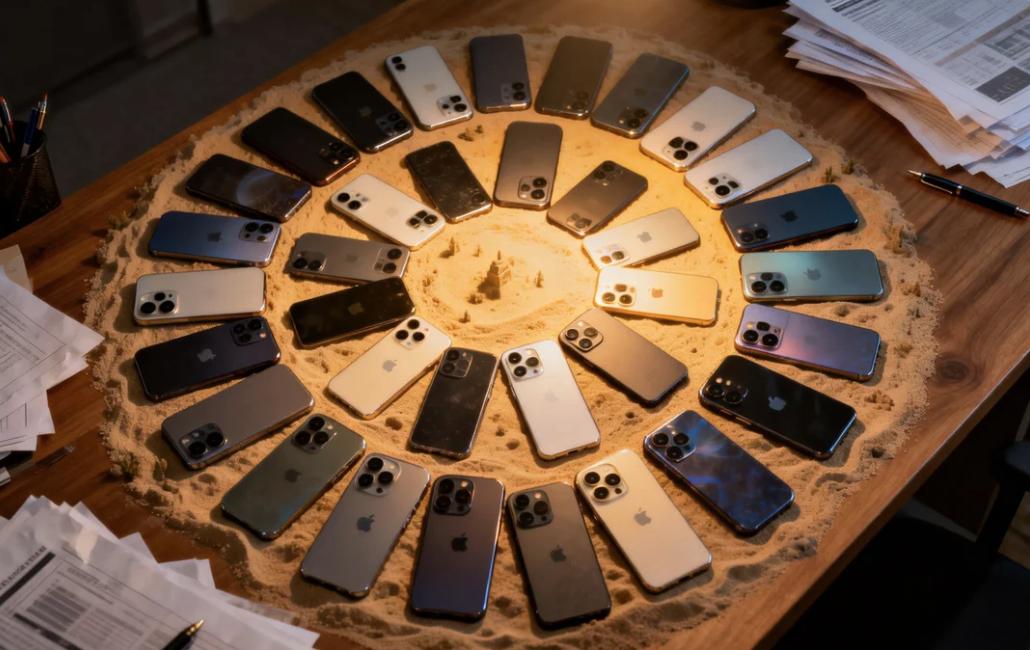
*The title image is generated by AI
-
![]()
Hardware is the skeleton, AI is the soul, and data integrates the two
-
![]()
China’s AI Industry: A Unified Pivot Towards Monetization?
-
![]()
New Progress! Infineon Completes Acquisition of ams OSRAM's Non-Optical Sensor Business
-
![]()
35 Million Bet on an Optical Future! Tengjing Technology Makes a Move in AR
-
![]()
Why World Models Get Stuck on Construction Roads in Autonomous Driving Applications
-
Alibaba Initiates Cultural Transformation: Is Jack Ma Making a Strategic Comeback?
-
Tianfeng Heads to Hong Kong for IPO with RMB 3.8 Billion in Funds: Xingyu's Cross-Border Foray into Embodied AI Faces Uncertain Future
-
![]()
Mengshi Auto’s High-End Aspirations Dashed: Huawei Partnership Fails to Revive Sales, New Model’s Entry Price Dips Below 300,000 Yuan