Honor and Meizu: Navigating Similar Waters
 01/21 2026
 490
490
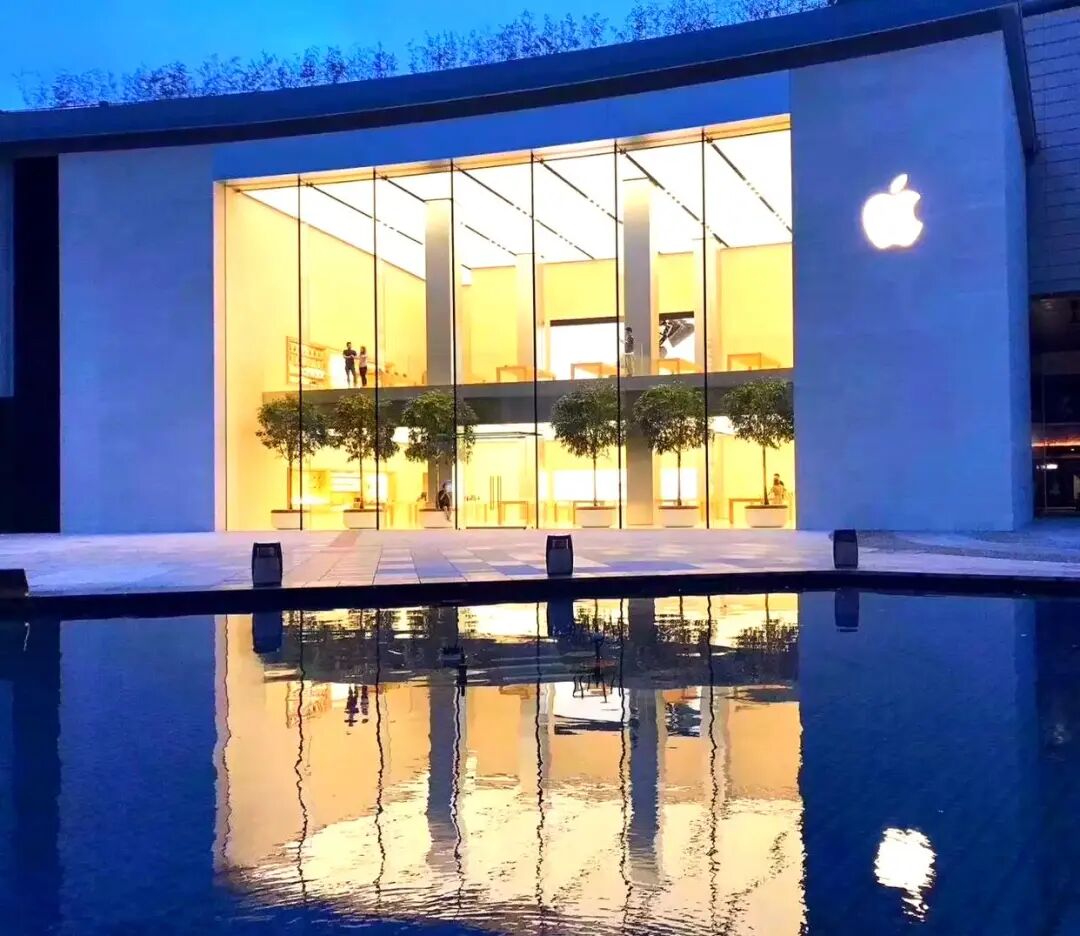
Chinese smartphone manufacturers are each charting their own unique courses, with their individual successes and struggles known only to themselves.
Multiple year-end data reports on the Chinese smartphone market indicate a shift in dynamics: Huawei has reclaimed the top spot after five years, while Apple, Xiaomi, OPPO, Vivo, and other top-tier players have experienced fluctuations in market share. Meanwhile, Honor and Meizu, once prominent players in the industry, are gradually being marginalized and falling into the “Others” category.
Amidst this backdrop, Honor hosted its first new product launch of the year on January 19, introducing the lightweight Magic8 Pro Air smartphone and the Magic8 RSR Porsche Design Edition.
A notable aspect of the event was the absence of Honor CEO Li Jian. Instead, Honor's product line president, Fang Fei, led the proceedings, with young product managers taking center stage. Coupled with collaborations like the one with Pop Mart, Honor's intentions are clear: to attract young consumers and capture the youth market.
Similar Challenges
While these two developments may seem unrelated, they highlight that five years after its spin-off from Huawei, Honor is still searching for its brand identity, striving for differentiation and a premium positioning to shed the “Huawei alternative” label and achieve independent survival.
This is also a pressing issue for Meizu. Over a decade ago, Meizu was a benchmark in the domestic smartphone market for its design aesthetics, Flyme system, and user experience, amassing a loyal fan base known as “Meiyou” (a homophone for “Meizu fans”).
However, Meizu has undergone multiple upheavals, especially after being acquired by Geely, leading to an identity crisis. Its smartphone business now seems like a mere complement to the in-car system, with a diminished market presence. Many long-time fans even question, “Is Meizu still making phones?”
Honor and Meizu are both navigating similar challenges: fluctuating brand positioning, mismatched high-low strategies, insufficient core technology accumulation, weak barriers to entry, and difficulties in forming synergistic ecosystems. AI, seen as a potential “lifesaver,” is still in the exploratory stage and has not yet become a “game-changing” capability that significantly influences consumer purchasing decisions.
Repeated Calibration of Brand Positioning
Firstly, the repeated recalibration of brand positioning is a common issue for both companies. When Meizu was thriving, it aggressively targeted the lower-end market with a focus on cost-effectiveness, only to retreat to the mid-to-high end during downturns to retain core fans. This back-and-forth strategy has left it empty-handed.
After Geely's acquisition, Meizu's strategy shifted again, emphasizing synergy with in-car systems. However, its product strength has waned. For instance, the Meizu 22, after multiple delays, still lacks the configuration to support a premium positioning, while its in-car system story lacks underlying technological support, leading to an awkward predicament.
Honor's positioning is a historical issue as well. Initially, it focused on “tech flagships,” capturing many Huawei mid-to-high-end users and briefly ranking among the top three. However, the “Huawei alternative” label posed challenges for its independent development.
With Huawei's strong return, Honor was forced to move downmarket, leading to a decline in average selling price (ASP) and dilution of brand value. It now faces the dilemma of “being unable to ascend to the premium segment or compete effectively in the lower end.” Its recent youth-oriented transformation and collaboration with Pop Mart seem like a tentative exploration amidst positioning ambiguity.
Channel and Supply Chain Weaknesses
Secondly, channel and supply chain weaknesses are a shared pressure. After downsizing its offline stores, Meizu primarily relies on online channels. However, its relatively niche sales volume limits its competitiveness online and significantly weakens its bargaining power in the supply chain.
For example, in early 2026, Meizu canceled the launch of the Meizu 22 Air due to rising memory and component costs, while the update pace of other products also slowed.
Although Honor has a solid channel foundation from its past, its relationship with Huawei remains ambiguous. After Huawei's return, channel resources shifted back to Huawei, forcing Honor to rely more on online channels. Recent news indicates that Honor has forged a significant partnership with JD.com to establish multiple overseas warehouses in the Middle East.
Moreover, the price war in the lower-end market has increased supply chain cost pressures for Honor. The inability to translate upstream component costs into brand premium has squeezed its profit margins.
Lack of Core Technologies and Shallow Brand Moats
Thirdly, both companies lack core technologies and have shallow brand moats. Meizu capitalized on the smartphone boom but has long relied on external chips and components. Its Flyme system's reputation is built on optimizing Android versions. Its in-car system synergy is more about UI adaptation, lacking hardcore technologies like autonomous driving and chips, leading to a continuous weakening of its core competitiveness.
Honor has some technological accumulation, with its R&D heritage from Huawei. It has introduced radio frequency enhancement chips and Qinghai Lake batteries and has laid out plans in AI image optimization. However, these efforts fall short of creating a significant gap with leading competitors. When turning to AI for a breakthrough, its lack of core algorithm support for AI technologies ultimately fails to establish a true competitive moat.
Ecological Layout Challenges
Fourthly, both companies have made significant moves in ecological layout but have yet to achieve effective breakthroughs. During the Huang Zhang era, Meizu's ecological layout resembled Xiaomi's, expanding from smartphones and IoT products around them. However, limited by its brand reach, it failed to generate substantial revenue or achieve self-sufficiency.
After entering the Geely ecosystem, Meizu's most valuable asset, Flyme, was divided into three parts, corresponding to smartphones, AR and other smart devices, and in-car systems. However, this is essentially a patchwork of the original system. Flyme Auto, for instance, lacks deep involvement in autonomous driving or in-vehicle chips, leaving it in an awkward role. It may ultimately become a supporting tool in the automotive ecosystem.
Honor has ambitious plans. In traditional mobile intelligent terminals, it uses the MagicOS operating system as a link to cover smartphones, tablets, and computers, aiming to compete with Huawei, Apple, and Xiaomi's mobile ecosystems.
In the AI era, its four-layer AI strategic architecture is forward-looking. However, in terms of ecological implementation, its user conversion and retention capabilities are weak, and it still has a long way to go to achieve a “one-core, multi-terminal” ecological closed loop.
AI as a “Lifesaver” for Transformation
With traditional smart terminal routes proving unviable, both Honor and Meizu see AI as key to breaking through and have taken two different transformation paths: Honor aims to expand its framework, following an “AI + youth + full-scenario” approach, hoping to achieve breakthroughs through scale. Meizu, on the other hand, aligns with Geely's automotive ecosystem, revising its path to “AI + in-car systems + niche boutique.”
This is determined by the cards each brand holds. Honor hopes to regain mainstream status, with its “Alpha AI” strategy representing a transformation into an AI terminal ecosystem company. For example, the Magic8 Pro Air, a small-screen flagship, focuses on AI image optimization for smartphones and cross-device AI collaborative scheduling, attempting to differentiate itself through technological highlights.
However, Honor's weaknesses are also evident. While it can quickly implement AI functions on smartphones, its R&D conversion efficiency is insufficient, and it lacks self-developed core algorithm barriers. There is still a gap with leading brands in terms of underlying AI integration between software and hardware. Most of the time, its AI function promotions seem more like marketing gimmicks.
Meizu's logic is simpler: it needs to prove its value within the Geely ecosystem. AI represents an opportunity for Meizu's brand renewal, and success could potentially make it the next industry giant. However, Meizu lacks the resources to support a “game” as large as Honor's. It can only create differentiated functions in limited areas like in-car systems and AR to maintain its core fan base. 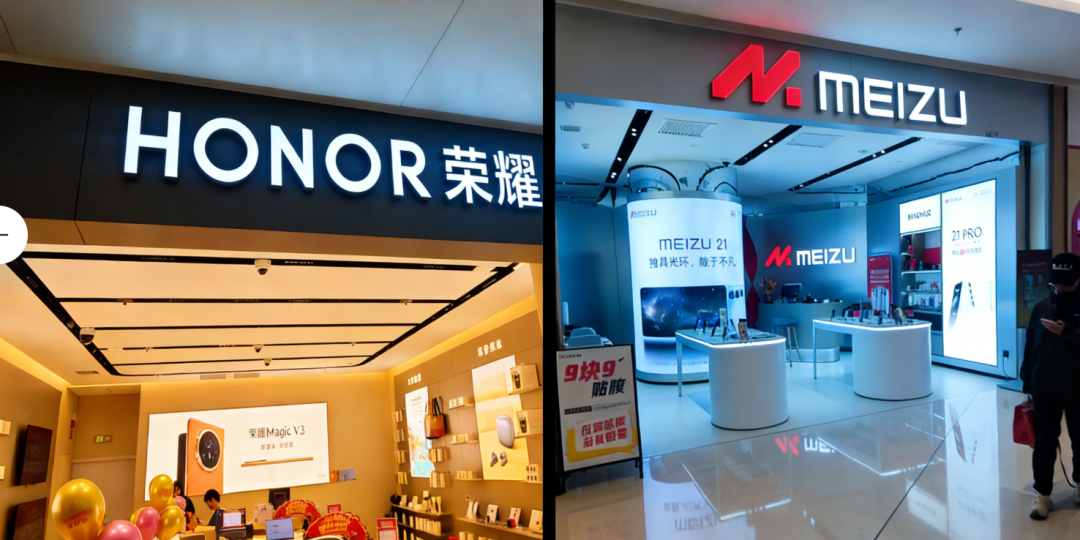
Caption: Network source image
Against this backdrop, Honor and Meizu's AI layouts exhibit characteristics of “proactive strategy” and “reactive response.” Honor can aggressively leverage AI to empower its products, clearly positioning itself as transitioning from a “hardware chaser” to an explorer in the AI terminal ecosystem.
Meizu's “reactive response” is essentially about providing supporting services for Geely's in-car systems rather than leading AI technology R&D. It may ultimately find itself “relying on in-car AI for survival but lacking autonomous decision-making power.”
Transformation Paths and Future Prospects
Specifically, Honor's transformation path centers on leveraging AI to amplify its strengths, including product, technology, and strategic elements. If it can solve the challenges of implementing AI in specific scenarios and break down algorithmic and experiential barriers, Honor has a strong chance of regaining mainstream status and becoming an AI terminal company. More importantly, it can shed the “shadow of Huawei.”
Meizu's path centers on “AI as ecological bargaining power,” both within Geely's automotive ecosystem and in niche markets. If Meizu can leverage Flyme's strengths to find the core value of in-car systems and create a closed-loop business model similar to Xiaomi's “human-car-home” ecosystem, it will gain a prominent position within Geely. Notably, Xiaomi has benefited significantly from this story in its premiumization journey.
The differences in their paths also dictate that Honor's AI puzzle is phased, with strategic fluctuations but greater fault tolerance and room for trial and error compared to Meizu. This makes Honor's AI layout more offensive. Meizu, confined to a narrow space, has limited room for maneuver and faces greater challenges in breaking through.
In reality, neither path is inherently superior, but they reflect the destiny of these two smartphone brands. The industry can also draw two insights:
Firstly, strategic resilience and core brand value are the foundations for smartphone manufacturers to survive.
Secondly, AI is not a panacea. It can solve some tactical issues, but long-term strategy still relies on product strength, technological prowess, and brand power.
The current smartphone industry is exhibiting a significant “Matthew effect”: leading brands like Apple and Huawei are growing stronger, while smaller brands like Honor and Meizu are seeing their survival space shrink.
For the latter, only by upholding core values, precise positioning, differentiation, and seizing AI opportunities through innovation can they find a foothold in the market.
Honor and Meizu step into the same river but with different cards and paths. Whether they can swim to different shores in the future will be the most intriguing aspect they leave for the industry.
-
![]()
Hardware is the skeleton, AI is the soul, and data integrates the two
-
![]()
China’s AI Industry: A Unified Pivot Towards Monetization?
-
![]()
New Progress! Infineon Completes Acquisition of ams OSRAM's Non-Optical Sensor Business
-
![]()
35 Million Bet on an Optical Future! Tengjing Technology Makes a Move in AR
-
![]()
Why World Models Get Stuck on Construction Roads in Autonomous Driving Applications
-
Alibaba Initiates Cultural Transformation: Is Jack Ma Making a Strategic Comeback?
-
Tianfeng Heads to Hong Kong for IPO with RMB 3.8 Billion in Funds: Xingyu's Cross-Border Foray into Embodied AI Faces Uncertain Future
-
![]()
Mengshi Auto’s High-End Aspirations Dashed: Huawei Partnership Fails to Revive Sales, New Model’s Entry Price Dips Below 300,000 Yuan