Is the Meizu Smartphone Era Drawing to a Close?
 02/28 2026
 560
560
Written by Dou Wenxue
Edited by Ziye
On January 9, 2007, a figure clad in black took the stage in San Francisco to passionately unveil a groundbreaking smartphone—the iPhone. This all-touchscreen marvel made a splash, delivering a seismic shock to feature phone manufacturers worldwide.
Fast forward two years to 2009, and a visionary from Guangdong province launched China’s inaugural smartphone, outpacing nearly all established players at the time by selling 100,000 units within just two months.
The masterminds behind these two pivotal moments were none other than Apple co-founder Steve Jobs and Meizu founder Huang Zhang. Meizu, which once soared to industry prominence akin to Apple, is now reportedly poised to completely halt its mobile phone operations.
Recently, social media platforms have been abuzz with leaks purportedly from Meizu’s internal staff, mentioning tidbits such as “no more smartphones, full layoffs,” “departments not involved in winding down operations will all leave by March,” and “those with stock options should negotiate with HR.”
While this isn’t the first instance of negative news regarding Meizu’s internal reshuffling, the current situation appears markedly more dire.
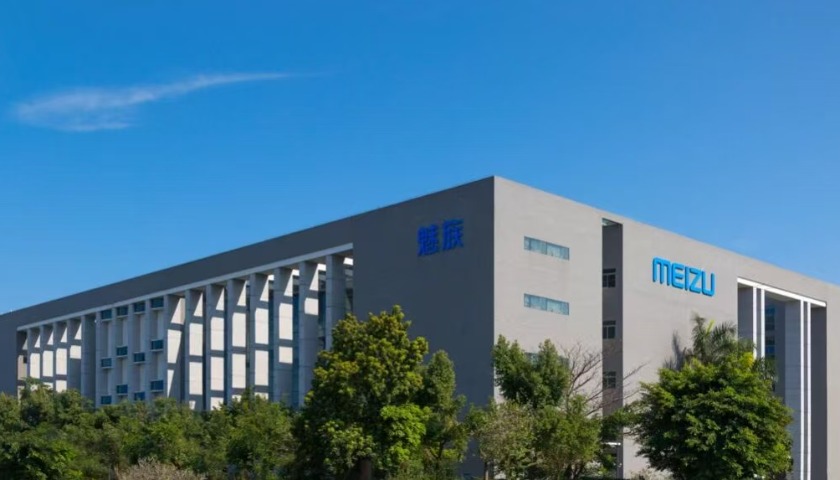
Image Source: Meizu Mobile's Official WeChat Public Account
Despite market speculation that Meizu, an independent smartphone brand, might eventually fade away following its acquisition by Geely in 2022,
Meizu persisted in exploring new avenues through high-end positioning, overseas expansion, and AI strategies in the three years post-acquisition, keeping some fans’ hopes alive.
However, the current domestic smartphone market is grappling with challenges such as technological breakthrough hurdles, severe product homogenization, and escalating raw material costs. The survival space for smaller players like Meizu is increasingly constrained, and Geely’s backing has struggled to provide Meizu with significant market assistance.
From a corporate group perspective, it may have become imperative to divest businesses with poor sales and low influence.
1. Has Meizu Smartphone Become a Relic of Its Time?
“Is Meizu Smartphone on the verge of extinction?” This question has loomed over Meizu in recent years.
Since the beginning of the year, there have been frequent reports of Meizu’s internal restructuring, with several pieces of information directly pointing to significant internal upheaval within the company.
According to a Leikeji report, earlier this year, a user revealed in a QQ channel that Meizu was disbanding its outsourced teams, and its existing workforce would struggle to sustain the development of the Meizu 23 project post-outsourcing withdrawal.
In February, social media posts from purported Meizu employees leaked that the company had announced an unprecedented 15-day extended holiday, suspected of coercing employees to exhaust their annual leave, sparking a flurry of online speculation.
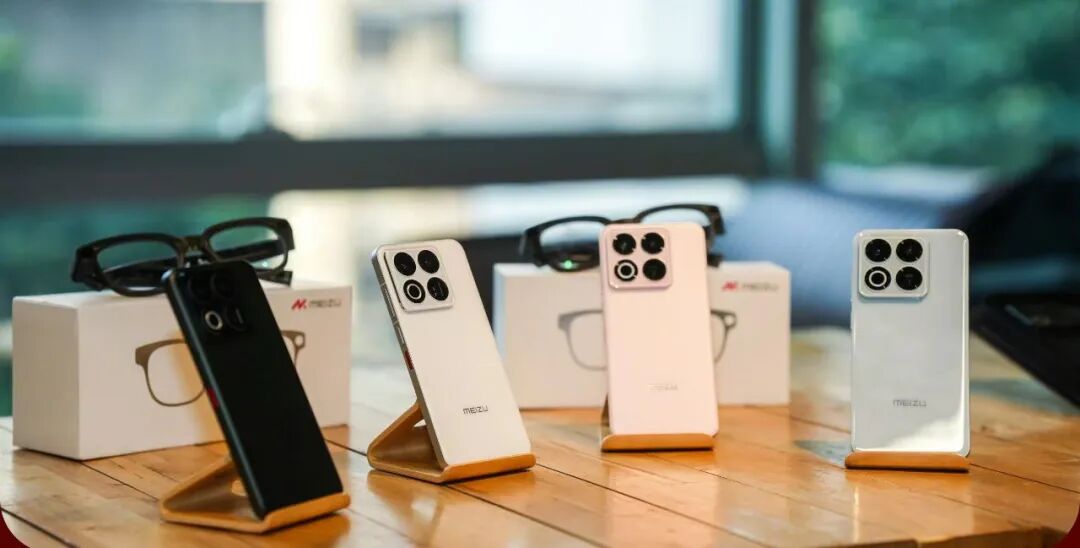
Image Source: Meizu Technology's Official Weibo
Amidst the swirl of internal turmoil reports at Meizu Mobile, the smartphone industry as a whole is facing a more daunting market landscape.
In January, Counterpoint Research released a report stating that smartphone sales in the Chinese market plummeted by 23% year-on-year, setting a somber tone for the entire year in the Chinese smartphone market.
Behind this sharp sales decline lies not only a drop in market demand but also mounting pressure on manufacturers from increased supply chain costs.
Since 2025, the surge in demand for AI servers has compelled storage giants to prioritize shifting production capacity towards AI-specific memory with higher profit margins, leading to a significant hike in storage prices. Counterpoint Research predicts that storage prices will surge by 40%-50% quarter-on-quarter in the first quarter of 2026 and by about 20% in the second quarter.
These escalating supply chain costs have squeezed profit margins for some smartphone brands lacking high-end capabilities, rendering them more passive in pricing. In mid-January, several media outlets reported that brands such as Xiaomi, OPPO, Vivo, and Tecno had slashed their orders for complete devices in 2026 by margins ranging from 10%-20%.
Coincidentally, at this juncture, leaks suspected to be from Meizu’s internal employees resurfaced in the market, reigniting discussions about Meizu’s smartphone business.
Currently, a widely circulated screenshot of a leak suspected to be from a Meizu insider has emerged. According to a Lei Feng Network report, the employee disclosed five key pieces of information regarding the company’s business adjustments:
1. The smartphone business will be completely terminated, with related teams facing layoffs. The highly anticipated Meizu 23 series has also come to a substantial standstill;
2. The Flyme Auto in-vehicle system business will operate independently, with a person surnamed Peng taking over and deeply integrating into Geely’s smart car ecosystem;
3. Leaks about specific adjustment plans mention that large-scale personnel optimizations are imminent. Departments not involved in winding down smartphone operations are expected to complete adjustments by March, with compensation at N+1. Some employees may be transferred internally;
Employees holding company equity will need to separately discuss subsequent handling plans with HR;
Additionally, although the smartphone business will be completely terminated, the Meizu brand will not disappear and will continue to be retained within the Geely ecosystem, with other Geely subsidiaries taking over related businesses in the future.
These five leaks all point to Meizu making significant cuts to its smartphone business, which it has operated for nearly two decades. Combined with previous market rumors, if these leaks are true, it means this 'small but beautiful' smartphone brand is heading towards an end in 2026.
Currently, StarRiver Meizu has not officially responded to these rumors. According to a Lei Feng Network report, Meizu’s customer service responded, “No relevant notice has been received.”
Lianxian Insight also attempted to inquire with users claiming to be Meizu’s internal employees, who revealed some information.
Among them, a former Meizu employee who was once active online told us, “Everything that can be said has been said. Wait for an official notice from Meizu.” Another user who had previously posted about Meizu’s extended holiday posted after the rumors surfaced, saying, “Do not spread rumors. Meizu is still on holiday and has not announced a suspension of its smartphone business.”
The user also revealed in the post that Meizu would not resume work until February 26, and the current rumors about the suspension of the smartphone business cannot be verified. He also said, “However, last week on New Year’s Eve, it was the first time Meizu’s internal executives did not send red envelopes in the Feishu group (before the acquisition, it was in the DingTalk group), and the group has been muted.”
“Wait a few more days, and things will probably become clear,” he said in the post.
In addition to Meizu’s employees, some Meizu fans are also eagerly awaiting official news. They are more concerned about whether the news that “the Meizu 23 series has come to a substantial standstill” is true. “I’m currently using a Meizu 20 and was waiting for the 23 this year...” a consumer claiming to be a Meizu user commented on social media.
Public information shows that Huang Zhipan, CEO of StarRiver Meizu Group, replied to a netizen’s comment in a Weibo post in September 2025, saying, “The Meizu 23 project has been established and will be launched in mid-2026.”
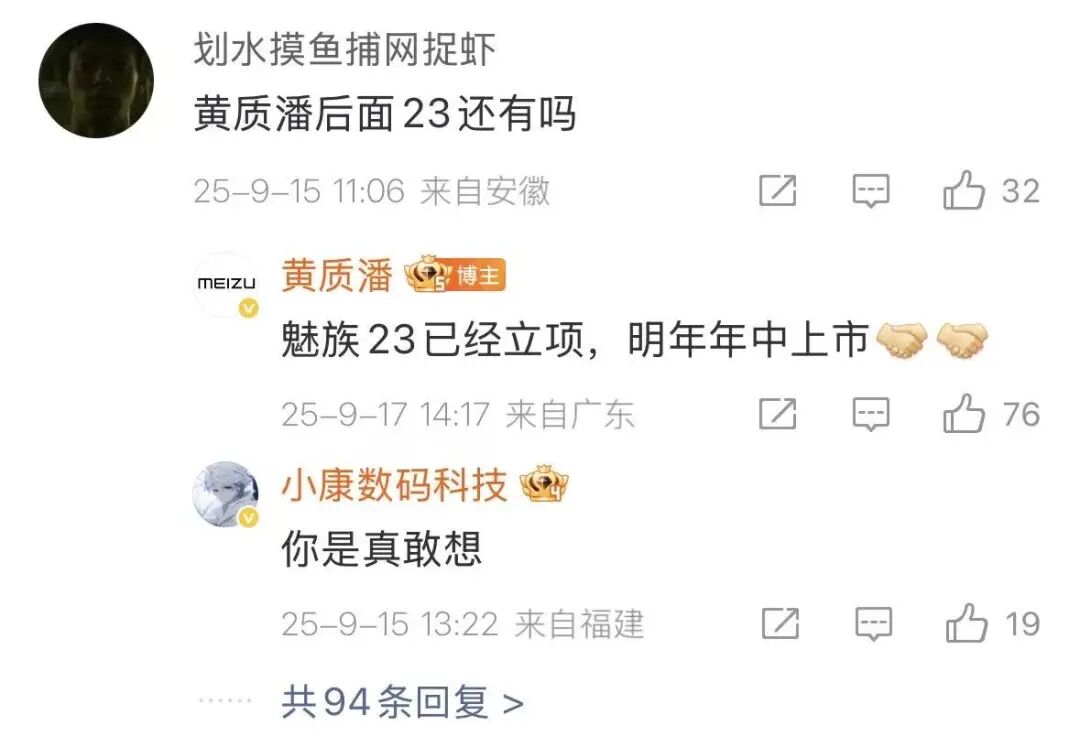
Image Source: Huang Zhipan's Personal Weibo
Nowadays, the CEO’s Weibo activity has ceased at that point, and his prolonged silence has made Meizu’s current situation even more ambiguous.
2. Since Being Acquired by Geely, Meizu Smartphone Has Been Struggling to Survive
Many attribute the onset of Meizu Smartphone’s “decline” to its acquisition by Geely, but in reality, Meizu’s smartphone business had already shown signs of weakness before the acquisition.
Looking back at Geely’s acquisition of Meizu Technology in July 2022, Geely was seen as Meizu’s savior. The combination was also interpreted as a strategic move for Geely to deeply integrate smartphones and smart cockpits.
Since being acquired by Geely, Meizu has made numerous attempts in recent years, exploring new paths almost annually.
Geely had planned to “test the waters” in the high-end smartphone market as early as 2021, and Meizu followed suit by launching its first breakthrough after the acquisition—the flagship Meizu 20 series, priced between 2999 yuan and 8499 yuan, targeting the mid-to-high-end market.
At that time, Meizu harbored high aspirations and made significant investments.
Huang Zhipan, then-president of Meizu’s smartphone division, revealed in an interview, “In the next three years, Meizu will only focus on mid-to-high-end smartphones.” He also explained that the materials, craftsmanship, and software requirements for the new phones were the highest ever, and Meizu offered a 36-month warranty, two months longer than the average smartphone replacement cycle in China at the time.
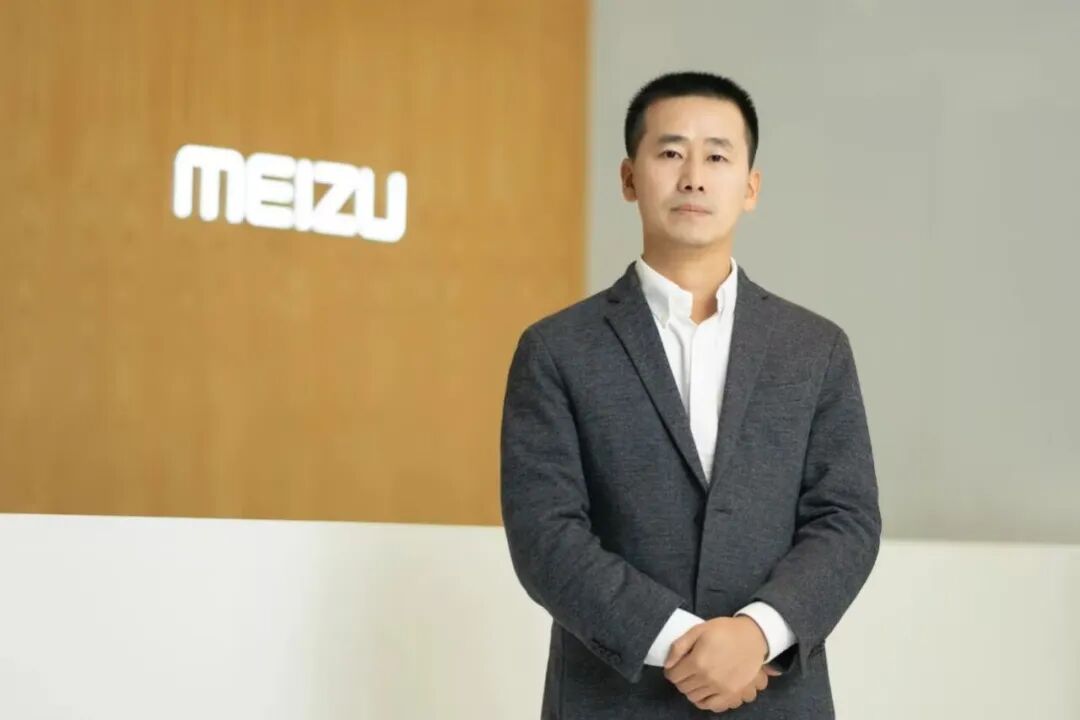
Huang Zhipan, CEO of StarRiver Meizu Group. Image Source: Meizu Mobile's Official WeChat Public Account
As guessed by the industry at the time of the acquisition, Meizu planned a “car-phone interaction” experience layout for its offline channels.
Huang Zhipan stated that 400 offline service centers would be established in 2023, including 90 to 120 experience stores. For example, the upcoming flagship store in Wuhan would cover 800 square meters and include product displays for in-vehicle systems, cars, smartphones, XR, and other products. He mentioned that 1,000 similar stores would be built over the next three years.
However, given Meizu’s position in the smartphone market at the time, it was challenging to support Geely’s ambitions.
Around 2022, although different survey agencies reported varying market share figures for manufacturers, major domestic players like Vivo, Honor, Apple, OPPO, and Xiaomi all held market shares exceeding 10%, while data from TechInsights showed that Meizu’s shipment share in the domestic market was less than 1% in 2022.
With a market size that needed expansion, offline channels that required improvement, and brand influence that needed enhancement, Meizu lacked the foundation for high-end products. Although many long-time Meizu fans recognized the feel and system of the Meizu 20 and believed that having Geely as a backer was advantageous, the performance of the Meizu 20 series was still unsatisfactory.
According to the domestic Top 20 smartphone brand sales ranking for the third quarter of 2023 released by Smartphone Electronics, Meizu ranked twelfth, with sales of 205,000 units in the third quarter of that year, accounting for only 0.4% of the market share.
The lukewarm reception of the new models almost declared the failure of Meizu’s first collaboration with Geely, and in 2024, new challenges arose for Meizu. First, overall industry shipments contracted again. According to IDC, smartphone shipments in the Chinese market were about 271 million units in 2023, a year-on-year decrease of 5.0%, marking the lowest shipment volume in nearly a decade.
Amid the AI trend, AI phones became a breakthrough target for major domestic smartphone manufacturers in 2024. Competitors like Vivo, OPPO, and Honor launched their self-developed AI large models and accelerated their implementation in their products.
Meizu also followed the trend, announcing a strategic adjustment in February 2024 to halt the development of new traditional “smartphone” projects and invest in the development of next-generation AI devices.
Once renowned for the high-quality performance of its Flyme system, Meizu launched the Meizu 21PRO, positioned as the “first open AI terminal,” in February 2024. With the AI capabilities of the FlymeOS operating system, the Meizu 21PRO featured AI functions including AI Smart Key, AI Auxiliary Input, AI Gallery, and AI Voice.
However, these AI functions in input, imaging, and voice were not essential applications for smartphone users, and to this day, many users still post on social media seeking help to disable the AI functions on Meizu phones.
Neither high-end positioning nor AI brought significant sales breakthroughs for Meizu Smartphone. Media reports generally indicate that Meizu’s smartphone sales in 2025 were less than one million units, and Meizu has never appeared on the lists of the top five market share holders compiled by major agencies.
On the other hand, after joining the Geely ecosystem, Meizu also had to divert part of its energy to tell the story of “car-phone interaction.”
Since late 2023, Meizu has announced the development of the Flyme Auto system, including the Flyme Auto in-vehicle system, Flyme Auto Core, and an open platform.
On the surface, Meizu made faster progress in the automotive sector than in smartphones. It announced in December last year that the number of new ecosystem users for Flyme Auto had surpassed 200,000 for the first time in November 2025, with cumulative sales of partnered models exceeding 2.11 million units. It was reported that Flyme Auto took six months to reach its second million users, ranking first in ecosystem user growth.
However, these impressive achievements were highly dependent on Geely, as seen in Meizu’s battle reports. Whether it was Flyme Auto, Flyme Auto Inside, or Flyme Link, the partnered models were all brands or related models under Geely.
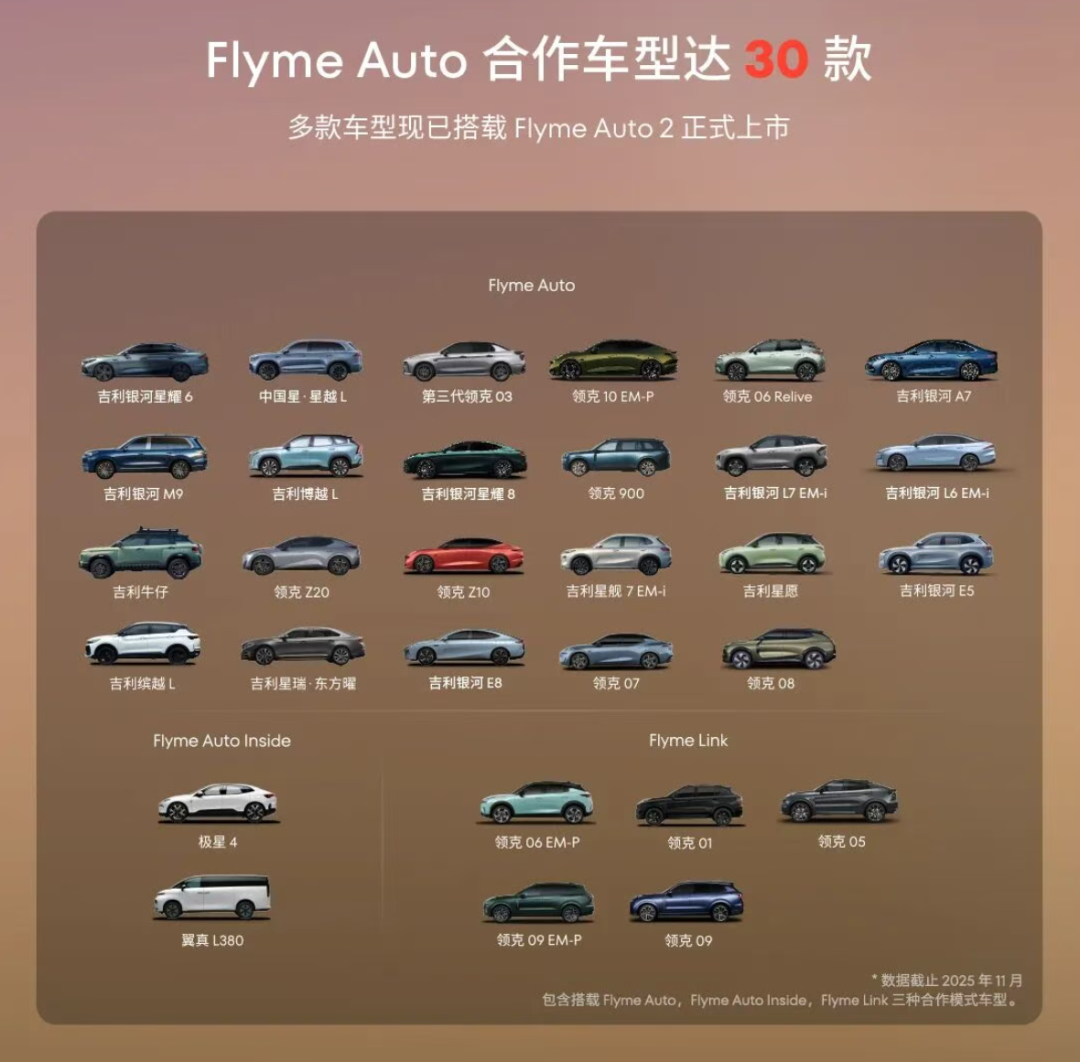
Meizu Flyme Auto Battle Report. Image Source: Meizu Mobile's Official WeChat Public Account
As a developer of intelligent cockpit systems, Meizu has yet to break free from its comfort zone. This means that the vision of 'car-phone interaction' that both sides had when Geely acquired Meizu remains a challenging narrative to weave.
3. How Many Still Recall Meizu's Heyday?
Meizu enthusiasts often fondly recall the 'Huang Zhang era'.
Looking back at Meizu's most illustrious period, the founder's stringent product standards and bold strategies indeed paved the way for Meizu to secure a foothold in the domestic smartphone market.
In February 2009, Meizu unveiled the M8, China's inaugural smartphone, marking its official transition from an MP3 brand to a smartphone brand.
This milestone occurred just two years after Steve Jobs introduced the first iPhone, and even a month before the Meizu M8's release, the Ministry of Industry and Information Technology had only just issued 3G licenses to China's three major carriers—China Mobile, China Unicom, and China Telecom.
During this period, domestic smartphone competitors had yet to enter the fray. For instance, Xiaomi and OPPO both debuted their first smartphone products in 2011.
Thus, the pioneering Meizu M8 ventured into uncharted territory, boasting cutting-edge technology and design, and achieved sales exceeding 500 million yuan within five months of its launch.

Huang Zhang, the founder, chairman, and CEO of Meizu Technology. Image source: Meizu Mobile's official WeChat public account.
Despite experiencing partial touchscreen failures after a period of use due to manufacturing process flaws, Meizu still offered free replacement services for M8 users. This gesture did not tarnish the brand's reputation in consumers' eyes.
Two years later, on January 1, 2011, Meizu launched the M9, which continued to enjoy immense popularity. Coupled with the transition of its operating system from Mymobile, based on Windows CE 6.0, to the more robust Android system, enabling the downloading and use of a wider array of apps, the new phone sparked scenes of thousands of people queuing up to purchase it in Beijing, Shanghai, Guangzhou, and Shenzhen on the day of its release. Due to the high volume of pre-orders for the M9 nationwide, normal supply levels were not achieved until April 1, 2011. The Meizu M9 was once hailed by many fans as a product whose popularity could rival that of the iPhone 4.
In an era when Apple set the standard overseas, while the domestic mobile phone market was inundated with counterfeit and assembled devices, Meizu, to a certain extent, embodied the spirit of domestic manufacturers daring to innovate and take risks. It was during this time that it garnered a loyal fan base who referred to themselves as 'Meizu Fans,' and Huang Zhang was once dubbed the 'Chinese Steve Jobs.'
However, in a rapidly evolving market, being the first mover does not always guarantee sustained dominance. As competitors entered the fray, Meizu's early lead quickly dissipated.
While Xiaomi, Honor, OPPO, and Vivo were capturing market share both online and offline with ample capital and funding, Huang Zhang chose to step back into the shadows, causing Meizu to miss its most crucial growth phase.
Neglected by its leader, Meizu experienced a significant exodus of key R&D personnel to competitors in 2014. It was only then that the reclusive Huang Zhang resurfaced, leading Meizu to seek investments, adopt employee stock and option incentive systems, and launch a 'machine-sea' tactic after securing a $590 million strategic investment from Alibaba in 2015, aiming to capture more market share.
However, the three years Meizu fell behind were nearly the fastest-growing years for the domestic smartphone market. Even though Huang Zhang recognized that the 'small and beautiful' approach was no longer viable in the current market environment, it was challenging to swiftly catch up with the pace set by competitors.
IDC data reveals that throughout 2016, OPPO, Huawei, Vivo, and Xiaomi ranked as the top four domestic smartphone shippers, with 78.4 million, 76.6 million, 69.2 million, and 41.5 million units shipped, respectively. In contrast, Meizu only shipped 22 million units in 2016, lagging far behind its competitors.
Feeling overwhelmed, Huang Zhang announced his retirement again just months after the aforementioned Alibaba investment. Despite making a second comeback in 2017, the subsequent releases of the Meizu M15 and M16 series received tepid responses, and fewer and fewer people were willing to pay a premium for Meizu products.
Thus, Meizu's sale in 2022 already signaled that Huang Zhang was unable to reverse the company's fortunes. Even though many lamented its decline, they could not deny that Geely provided Huang Zhang with an exit strategy, and Meizu's fate had been entrusted to Geely at that juncture.
Image source: Meizu Technology's official Weibo
Nowadays, the news of Meizu discontinuing its mobile phone business is probably not shocking to the 'Meizu Fans' who have always cherished the brand.
They simply occasionally reminisce about the 'narrow bezel' design and the pure, uncluttered Flyme system that Meizu once offered...
But they must also acknowledge that the 'Meizu technologies' that once made them proud are no longer groundbreaking.
(The header image of this article is sourced from Meizu Mobile's official WeChat public account.)
-
![]()
Hardware is the skeleton, AI is the soul, and data integrates the two
-
![]()
China’s AI Industry: A Unified Pivot Towards Monetization?
-
![]()
New Progress! Infineon Completes Acquisition of ams OSRAM's Non-Optical Sensor Business
-
![]()
35 Million Bet on an Optical Future! Tengjing Technology Makes a Move in AR
-
![]()
Why World Models Get Stuck on Construction Roads in Autonomous Driving Applications
-
Alibaba Initiates Cultural Transformation: Is Jack Ma Making a Strategic Comeback?
-
Tianfeng Heads to Hong Kong for IPO with RMB 3.8 Billion in Funds: Xingyu's Cross-Border Foray into Embodied AI Faces Uncertain Future
-
![]()
Mengshi Auto’s High-End Aspirations Dashed: Huawei Partnership Fails to Revive Sales, New Model’s Entry Price Dips Below 300,000 Yuan