Google Joins Forces with Gucci for Smart Glasses Venture: Sidestepping Meta, the Tech Behemoth Secretly Teams Up with Local Eyewear Firms
 04/24 2026
 434
434
In April 2026, yet another tech titan has thrown its hat into the smart glasses ring.
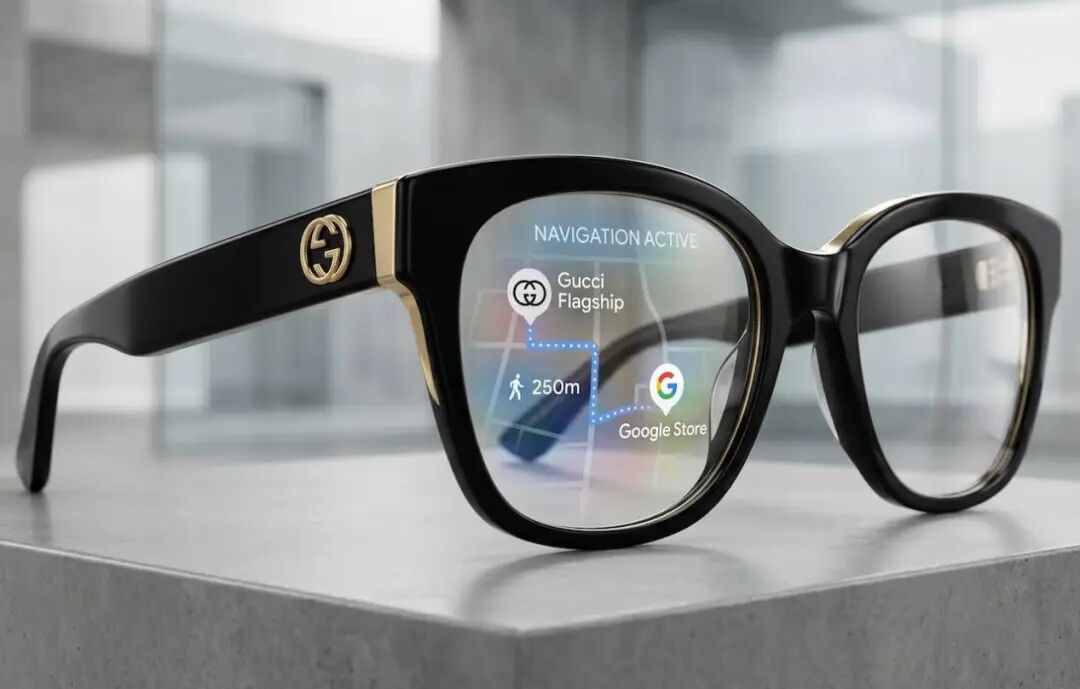
According to Reuters, Gucci, a premier luxury brand under the Kering Group, is gearing up to unveil a smart glasses product next year through a deep collaboration with global internet powerhouse Google. Leveraging Google's 'Project Astra' visual interaction platform, which features the Gemini large model and was showcased at the I/O conference, the software and hardware synergy of these glasses is now largely transparent.
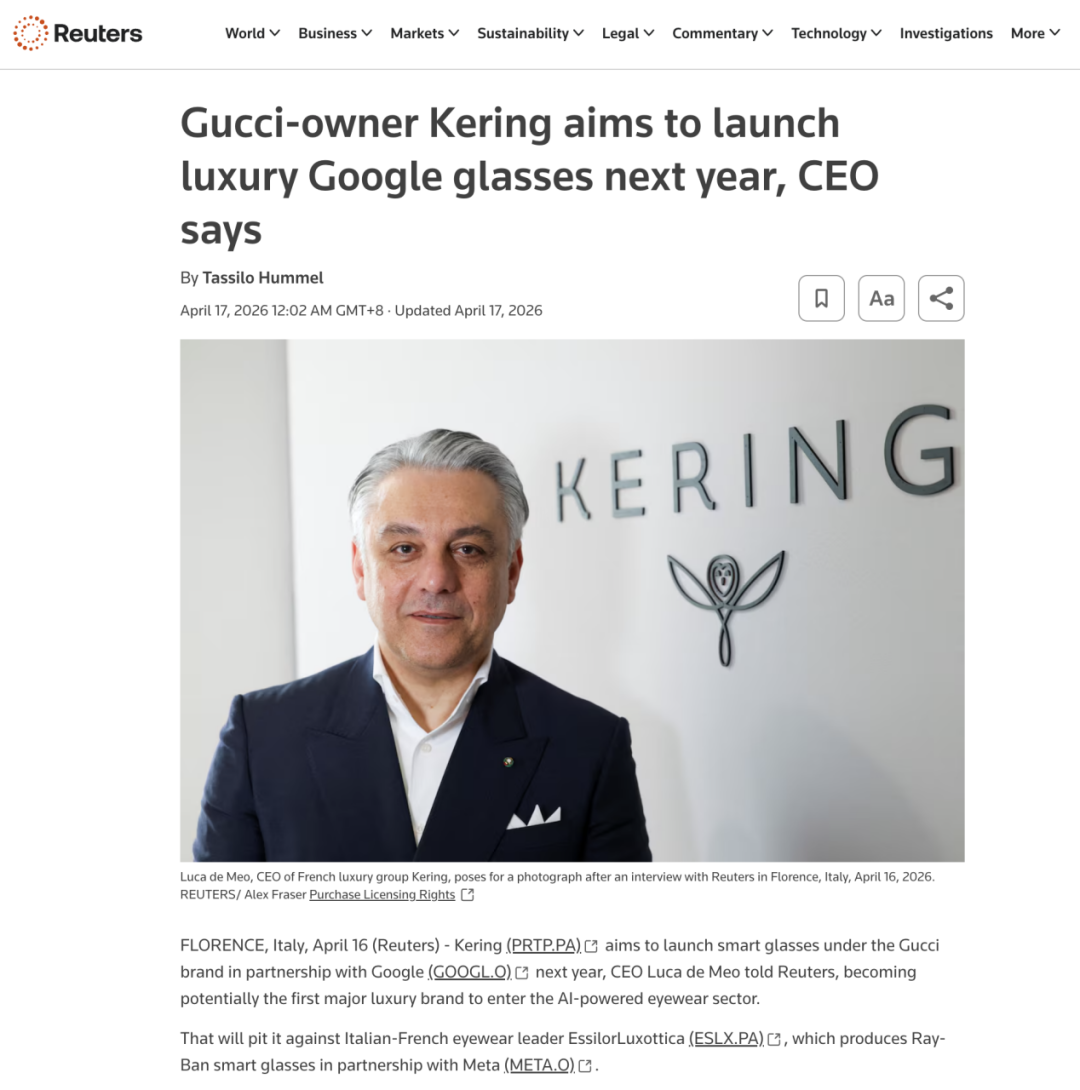
Over the past two years in the XR industry narrative, Meta has dominated the mass market with its Ray-Ban series, a collaboration with EssilorLuxottica, priced at $299, capturing over 80% of the global AI glasses shipment market.
Faced with Meta's entrenched position of million-unit sales, Google has opted for a different strategy this time. The failure of Google Glass 1.0 in the consumer market a decade ago has provided executives in Mountain View with a fresh industry perspective.
From an outsider's viewpoint, Google's move to partner with Gucci appears to be an attempt to execute a 'reverse breakthrough' strategy: in the retail market, leveraging luxury premiums to offset the high costs of AI hardware, thereby avoiding price wars in the lower-end market; in the midstream industry, by introducing the Android XR operating system, it aims to attract small and medium-sized smart glasses manufacturers with hardware capabilities but lacking a foundational ecosystem.
From a media perspective, this is not merely a brand collaboration but also Google's bid to use a combination of 'dual-BOM costs' and 'system empowerment' to regain a foothold in the next-generation computing terminal market.
Today, we will delve into the true rationale behind this collaboration between the giants, drawing on as much public information and supply chain feedback as possible.
In-Depth Dissection 1: Dual-BOM Costs and Production Line Misconceptions
The most immediate impact of this clash between a tech giant and a traditional luxury brand is reflected in the Bill of Materials (BOM) for smart glasses.
If you're not an industry insider, you might mistakenly assume that Google's collaboration with Gucci means offloading the entire manufacturing process to Gucci's supply chain. However, this would be a grave error. There exists an insurmountable technological gap between traditional high-end eyewear factories and precision electronics contract manufacturers.
In reality, while Kering's factories in Italy excel in top-tier board materials and polishing techniques, they lack Surface Mount Technology (SMT) production lines and are incapable of completing high-density stacking of millimeter-scale printed circuit boards or calibrating the active focusing of micro-cameras. Therefore, the birth of these glasses necessitates an extremely complex 'dual-track BOM' and an efficient cross-border supply chain integration.
01 External Structure BOM (Led by Kering System): Exceptional Texture
The shell of these glasses bears the core responsibility of absorbing brand premiums. In terms of material selection, Google may follow Apple's lead, eschewing the commonly used injection-molded PC (polycarbonate) or TR90 plastics in other smart glasses and instead opting for top-tier cellulose acetate sheets or high-purity titanium alloys.
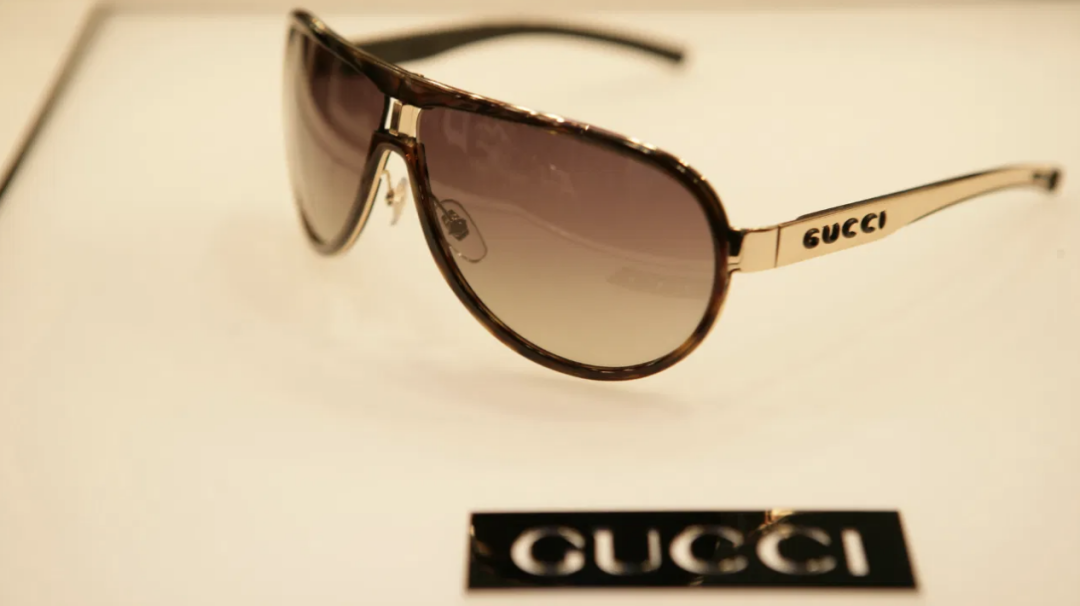
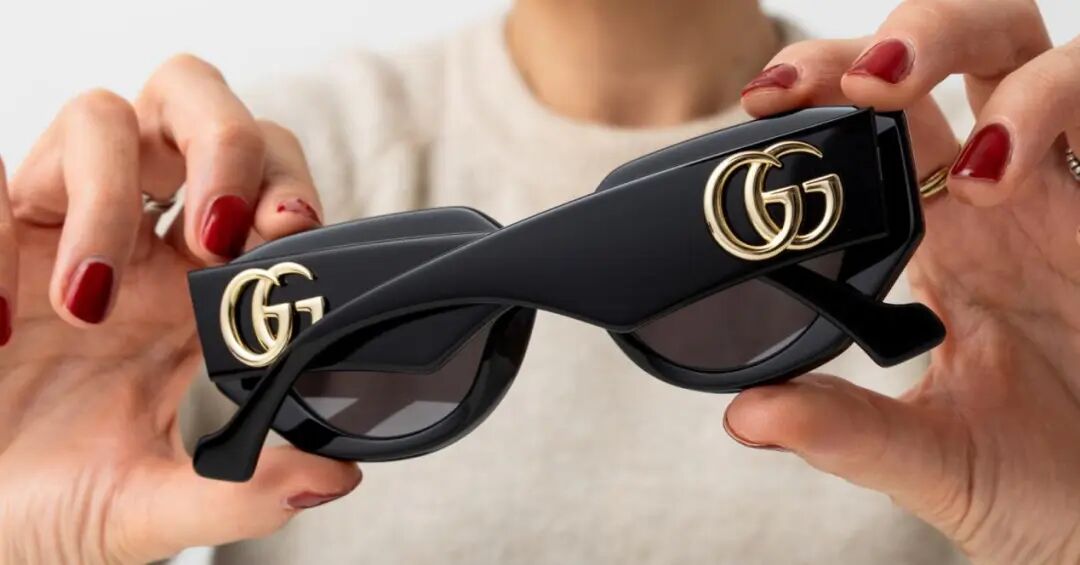
Specifically, after hundreds of hours of barrel polishing, this material exudes a unique 'warm feel' and develops a deep patina after prolonged contact with human skin. Paired with Gucci's classic double-G metal logo and custom alloy hinges, the effect of this shell BOM is unmistakable: consumers will instantly recognize it as a luxury item priced at $1,500 or more, rather than a tech company's digital product.
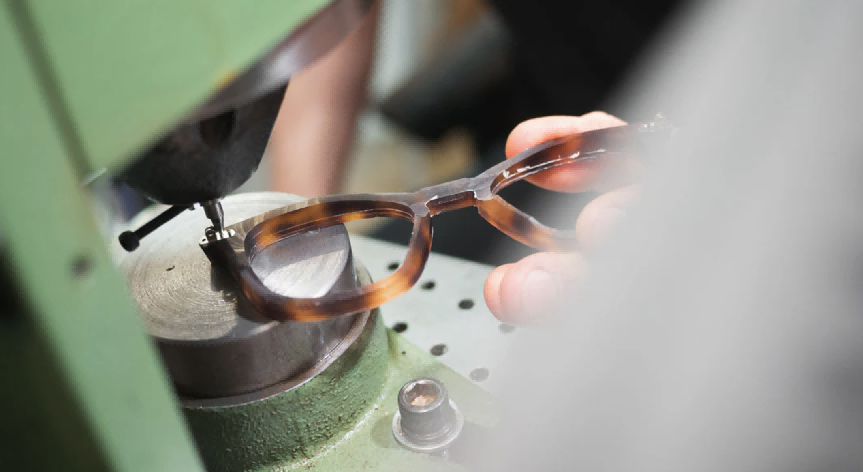
From a physical perception standpoint, the high-end sheets from Italy's Mazzucchelli level boast a higher density, providing a ballast-like gravity distribution, making them highly likely to be chosen. However, if this path is chosen, Google may find itself competing with Apple for production capacity.
02 Core Electronics BOM (Led by Google System): Computing Power and Optics
Beneath the luxurious exterior lies Google's formidable computing power system. To enable multimodal real-time interaction for Project Astra, the underlying chips must perform flawlessly.
For the System on Chip (SoC), Google may utilize Qualcomm's AR series chips or opt for a custom version of the Tensor microchip based on TSMC's advanced process, paired with LPDDR5-level high-frequency memory to meet the demands of large model inference on the device side.
At the optical perception layer, to match the glasses' environmental recognition needs, in addition to conventional high-resolution RGB main cameras, Google will incorporate a micro depth sensor, such as dToF. This requires the underlying CIS image sensor to capture high dynamic range physical photons with extremely low power consumption.
03 Final Assembly (EMS) Negotiation: Who Will Be the 'Stitcher'?
When Italy's top-tier sheets meet high-density silicon-based motherboards, the assembly process (NPI) faces daunting challenges. Even now, we can anticipate two major issues:
1. While the sheets exude a high-end feel, their heat dissipation capabilities are mediocre. How can the transient heat generated by the SoC when running the Gemini large model at full load be evenly dispersed into the sheet temple through an ultra-thin graphene thermal film, preventing users from feeling warmth or discomfort?
2. How can dozens of coaxial cables as thin as hair strands be threaded through narrow metal hinges to connect the front frame's camera to the rear battery while withstanding tens of thousands of opening and closing cycles at the luxury level of mechanical fatigue testing?
We consulted some domestic industry chain insiders, who believe that Kering Group cannot handle these challenges, nor can Google's own hardware team. It is speculated that Google and Gucci will likely need a top-tier precision contract manufacturer from mainland China (such as Luxshare Precision or Goertek) to act as the 'stitcher'.
From a selection standpoint, only contract manufacturing giants rooted in the Yangtze River Delta and Pearl River Delta, serving top tech companies year-round, with thousands of skilled workers in clean rooms, can pass repeated Engineering Verification (EVT) and Design Verification (DVT) to forcibly combine these two originally incompatible industrial standards into industrial products with a yield rate exceeding 98%.
In-Depth Dissection 2: Google May Launch a 'High-End Blockade' at the Consumer End
Having clarified the logic of the BOM table, let's deduce the business model Google will adopt this time.
As the current leader (perhaps only temporarily), Meta's approach is straightforward: relying on its social ecosystem and massive shipments to amortize R&D costs. The Ray-Ban Meta sells for $299, with hardware gross margins extremely low and heavily dependent on offline digital stores and traditional eyewear channels for volume.
However, the combination of Google and Gucci directly elevates the battlefield by several dimensions. At the current technological node, the procurement costs of micro high-computing chips, miniaturized camera modules, and high-density irregular batteries remain high. If forced to make affordable products, it would inevitably lead to massive losses.
In this context, Google's approach seems somewhat audacious: since hardware BOM costs are high, why not simply cover them with high brand premiums? Hence, it chose to ally with a top luxury brand.
When these glasses bear the Gucci logo, their pricing can easily exceed $1,500 or even $2,000. At this price point, the proportion of hardware BOM costs can be significantly diluted. The high luxury premium is sufficient to offset the trial, R&D, and promotional costs of the initial products.

Additionally, the sales scenario for these glasses may no longer be mass-market stores like Best Buy but rather Gucci boutiques with carefully considered lighting and plush carpets. Customers who buy them may not even care about the megapixel count of the camera or the milliampere-hour rating of the battery; what they are purchasing is the social currency attribute of cutting-edge technology superimposed with top-tier luxury.
Through this high-ground sniping, Google can not only avoid a direct confrontation with Meta at the $299 price point but also popularize Project Astra and the Gemini large model ecosystem among high-net-worth individuals. Essentially, this is using the channel dividends of luxury goods to conduct a 'free' market education for its own AI ecosystem.
In-Depth Dissection 3: Vigilance Against Android XR, the Sense of Crisis for Domestic Eyewear Companies
If the collaboration with Gucci is merely Google's high-end showcase, then the popularization of the Android XR system foreshadows the tech giant's efficient penetration of the entire XR hardware manufacturing industry. At this point, it is necessary to mention the current state of China's AI/AR glasses industry.
In the eyes of media and analysts, whether it is established AR hardware giants relentlessly pursuing diffractive waveguide and Birdbath optical displays or leading AI glasses startups recently achieving remarkable success in overseas markets, they all share a common trump card: China's unique and extremely mature supply chain system.
Currently, domestic eyewear companies can reduce the weight of smart glasses to under 40 grams while minimizing BOM costs and rolling out highly cost-effective hardware parameters. However, in our view, they also share a common weakness: a lack of a dominant underlying operating system and a native built-in AI large model.

Over the past year, we have seen multiple domestic smart glasses manufacturers frequently engage with Google, even rumors emerging that they will fully integrate Google's operating system into subsequent products.
From the perspective of domestic manufacturers, this is an inevitable decision for overseas expansion. When hardware parameters reach their limits, the product's core competitiveness inevitably returns to the AI interaction experience. And in overseas markets, who can provide the most native real-time multilingual translation and the most accurate physical space environmental recognition? Google's Gemini and Project Astra systems are excellent choices.
To make their smart glasses sell well overseas, Chinese eyewear companies must learn to hold their noses and accept Google. However, at this point, they are also highly likely to fall into Google's signature 'Android narrative trap'.
Once, Google used its free and open-source Android system to swiftly enlist HTC, Samsung, and a host of domestic phone manufacturers. The latter worked tirelessly to squeeze BOM costs, bear the risk of inventory overhang, and struggle with meager gross margins; meanwhile, Google sat comfortably, taking application store revenue shares, search traffic, and the most critical user behavior data through its control of GMS core interfaces, cutting away the largest piece of the pie.

Now, in the AI glasses race, this scenario may repeat itself.
This time, Google hopes to use Android XR and the Gemini large model to once again set standards and rules for the XR hardware industry. For domestic eyewear companies that currently lack or have even abandoned self-developed systems, danger may be quietly approaching.
As a sensational news story in the overseas tech circle, Google's collaboration with Gucci to create a high-end benchmark is sending a strong signal to the entire industry: look, our Android XR is the choice of top luxury brands. Do you want to use it for your Chinese-made XR hardware? No problem! Then let's sit down and talk.
A Battle for Supremacy: BOM Control + Underlying Operating System
After the giants have all entered and completed their layouts, and a new chapter in the industry begins, hardware parameters such as Field of View (FOV) size, battery capacity, and overall weight are no longer the only indicators. Competition for BOM control (with Google, Meta, and Apple as the top three contenders) and underlying operating systems will inevitably dominate the C-end popularization timeline of the smart glasses industry.
Overall, Meta is forcefully educating the mass market with massive shipments and achieving remarkable results; Apple is using an absolutely closed supply chain loop to attempt to monopolize high hardware and ecosystem profits.
Google, on the other hand, has chosen a modified 'Android-like' approach: upwards, it allies with traditional luxury giants to absorb hardware trial costs while attracting high-net-worth individuals; downwards, it uses the Android XR operating system to embed itself in third-party hardware manufacturers, reaping data and traffic dividends.
As industry giants steadily finalize their ecosystem strategies, going so far as to create closed-loop systems, smaller and medium-sized eyewear companies that persist in focusing solely on enhancing entry-level product differentiation or heavily rely on cost efficiencies to engage in price competition might encounter the peril of relinquishing control over the foundational operating systems and essential interaction interfaces.
Therefore, even as they secure a prominent standing in global hardware shipments, the challenge for domestic brands is to sidestep the destiny of becoming mere high-end "contractors" for these industry behemoths. For domestic XR hardware firms, the warning signal has already sounded. This serves as the fundamental impetus behind our composition of this article. We encourage its widespread dissemination among industry professionals!
Written by / R Star
(All images used, unless otherwise specified in the text, are sourced from the internet.)
-
![]()
Has UBTECH Embarked on a Path of 'Harsh Delight'?
-
Three Parts Storytelling, Seven Parts Strategy: Trillion-Yuan Zhipu and Its Strategic Gambit
-
![]()
990,000 Yuan for Emotional Value? UBTECH Debuts Bionic Robots in Consumer Market, Accelerating Divergence in Embodied AI Race
-
![]()
Hardware is the skeleton, AI is the soul, and data integrates the two
-
![]()
China’s AI Industry: A Unified Pivot Towards Monetization?
-
![]()
New Progress! Infineon Completes Acquisition of ams OSRAM's Non-Optical Sensor Business
-
![]()
35 Million Bet on an Optical Future! Tengjing Technology Makes a Move in AR
-
![]()
Why World Models Get Stuck on Construction Roads in Autonomous Driving Applications