Fierce AI Dramas: The 'Prefabricated Dishes' of Film and Television Are Here
 03/05 2026
 708
708

Author | Xia Xia
Disclaimer | The featured image is sourced from the internet. This original article by Jingzhe Research Institute may not be reproduced without prior consent and application for white-list approval.
Standardized production, rapid supply, and leveraging economies of scale to quickly occupy the market and drive industrial innovation... In recent years, the prefabricated dish industry has achieved rapid development through this competitive logic. Now, the AI-empowered content industry is beginning to demonstrate disruptive capabilities comparable to 'prefabricated dishes.'
During the Spring Festival of 2026, AI comic dramas and AI simulated human short dramas took center stage on short drama platforms. AI dramas featuring post-apocalyptic, mystery, and ancient themes became the new 'digital comfort food,' served up to video users' 'dining tables.' Prior to this, AI comic dramas had just emerged as a rising star in the short drama industry.
The rapid iteration from AI comic dramas to AI simulated human short dramas highlights the growing influence of AI on the content industry. Could AI dramas reshape the content consumption landscape like 'prefabricated dishes'?
Short dramas as 'prefabricated dishes' are now served
In November of last year, Jingzhe Research Institute discussed the rise of AI comic dramas in its article 'AI Comic Dramas Go Viral: Content Innovation or IP Ephemerality?' Today, with rapid advancements in generative AI technology, AI short dramas—represented by AI simulated human short dramas and AI comic dramas—have become the market mainstream.
According to Wen Wei Po, 37 AI simulated human short dramas reached tens of millions of views in 2025, while 22 AI comic dramas surpassed 35 million views. On Douyin, AI short dramas like 'The Empress Dowager's Palace Intrigues: The Milk Baby' and 'The Nine-Tailed Fox Demon Falls in Love with Me' each exceeded 200 million views.
On more niche short drama platforms, blockbuster AI short dramas have taken the spotlight, validating their traffic potential with rapidly growing view counts. For example, 'Zhanxiantai AI Live-Action Version,' released in December 2025, topped the Hongguo Comic Drama Hot List in just two days and surpassed 100 million views in six days. The AI simulated human short drama 'The Eldest Daughter Sheds Blood, Her Mother Overthrows the Imperial Family,' released in February this year, had accumulated 230 million views by February 28 and claimed the top spot on DataEye's 'Live-Action AI List.'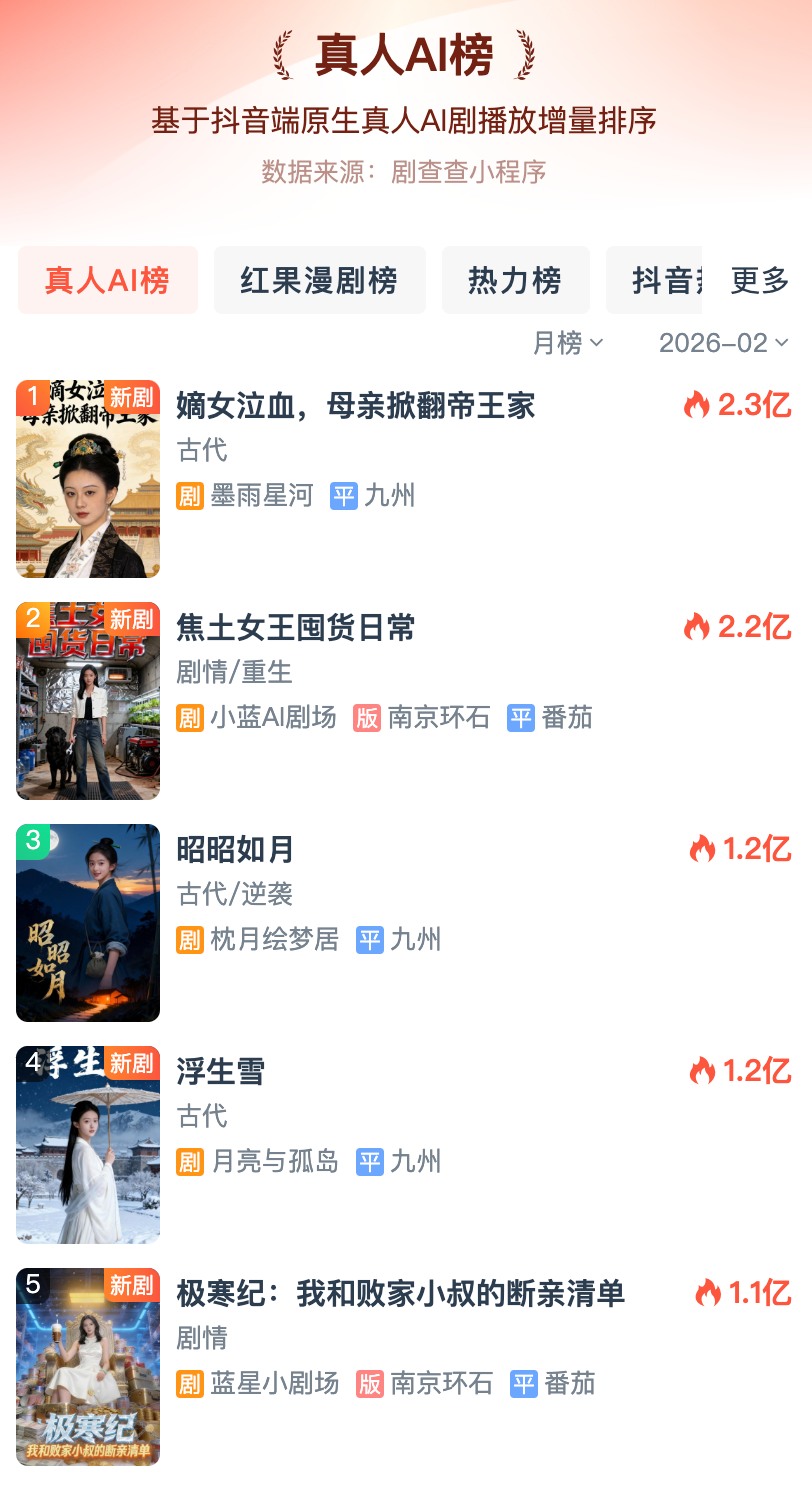
DataEye and Ju Chacha jointly estimate that the market size for AI live-action short dramas reached over 12 billion yuan in 2025, surging more than 300% year-on-year, with supply volume exploding 50-fold from the beginning of last year. This rapid increase in supply capacity fuels imagination about future market scale, driven by sudden breakthroughs in AI technology.
As early as February 2025, 'Mysteries of Xing'anling,' produced by Hangzhou Juhe Intelligent Technology Co., briefly drew outside attention to AI short dramas. Created by five AIGC artists over three months, 90% of the short film's scenes were AI-generated. It surpassed 10 million views in under 21 hours and 40 million views in nine days. Public reports indicate it generated over 300,000 yuan in revenue through a pay-per-view model of 5.9 yuan for 11 episodes.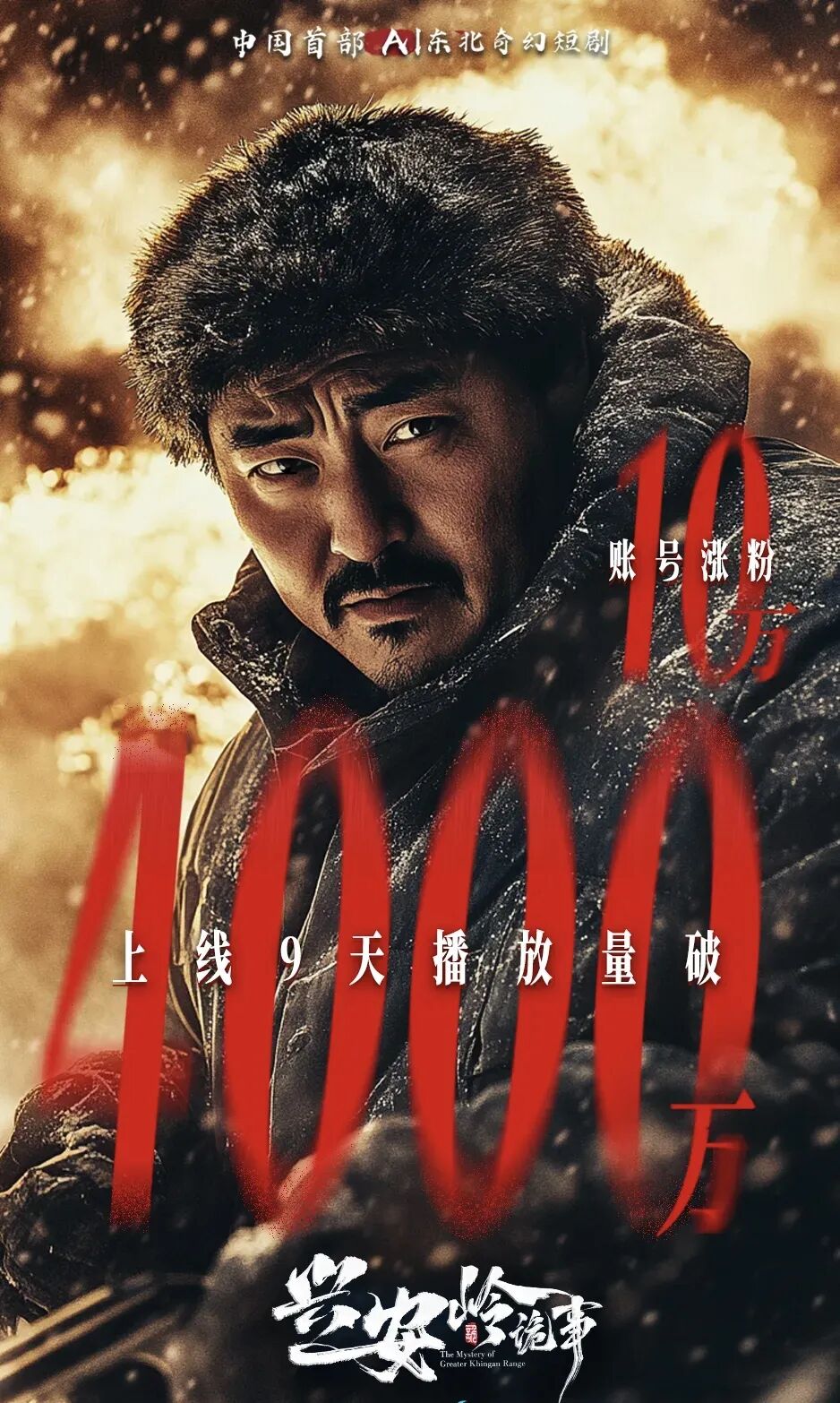
However, alongside its popularity, 'Mysteries of Xing'anling' revealed notable flaws. For instance, facial expressions appeared forced, characters often faced directly toward or away from the audience, creating a 'breaking the fourth wall' effect. During group scenes, characters lacked interaction, making it hard for viewers to stay immersed. Additionally, the film relied heavily on jump cuts, resulting in disjointed transitions that gave it a 'trailer-like' feel.
Just a year later, AI video generation technology has improved dramatically. In February 2026, ByteDance's Jimeng AI officially launched Seedance 2.0, with official and third-party tests showing its video generation usability rate exceeding 90%.
Usability rate, simply put, refers to the proportion of AI-generated video content that can be practically used. Previously, AI video models struggled with maintaining shot continuity, syncing audio and visuals, and generating dynamic camera movements comparable to live-action footage. While earlier models could handle 15-second clips, they fell short for minute-long dramas with complete narratives due to limited framing and character blocking.
The latest AI models demonstrate greater scene- and character relationship-based thinking in shot composition. For example, in 'Zhanxiantai AI Live-Action Version,' when two different characters appear in consecutive shots and the plot revolves around them, the camera angle adjusts based on their virtual positioning, creating a sense of 'immersion.'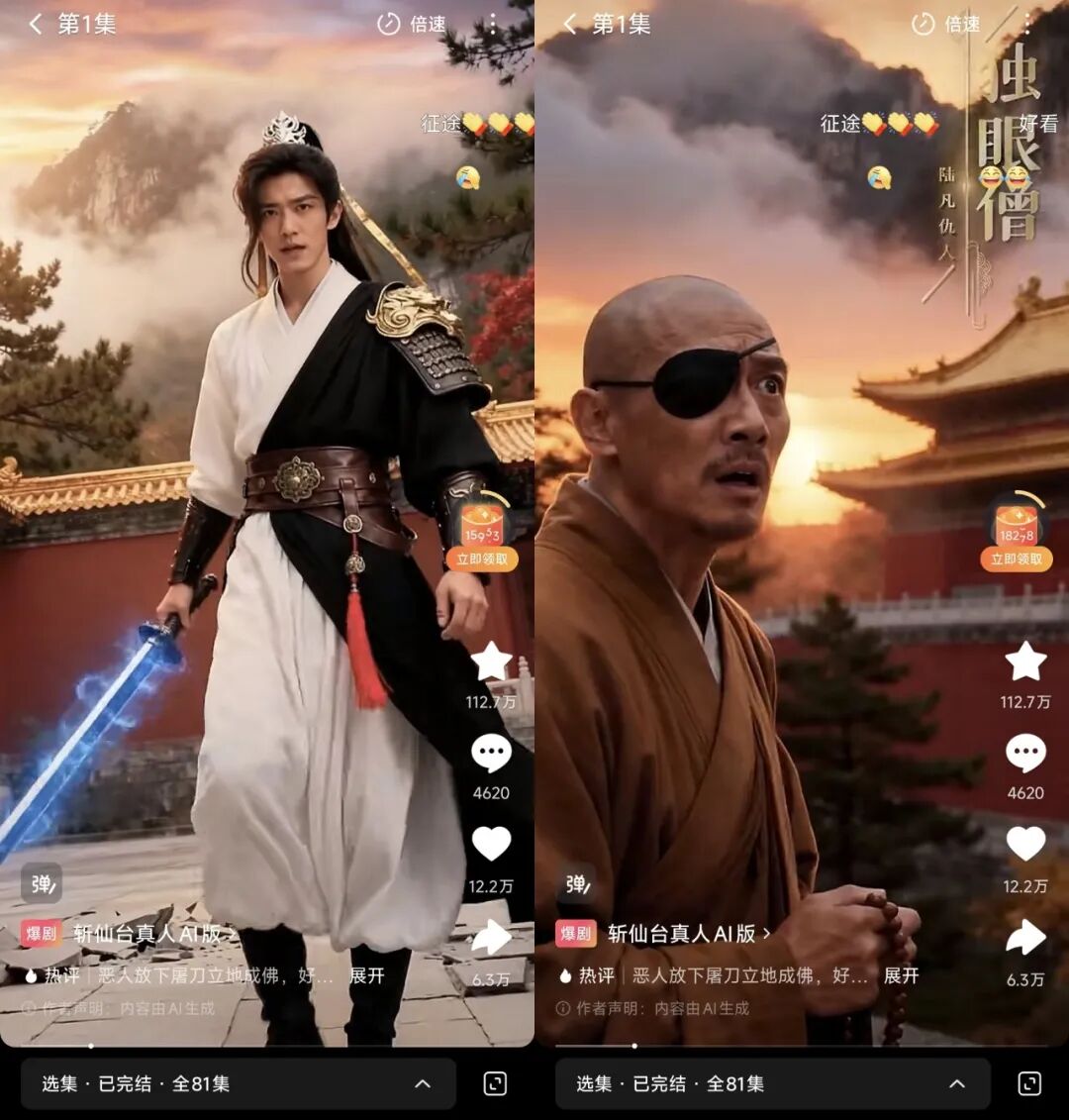
*Still from the short drama 'Zhanxiantai AI Live-Action Version'
In a video analyzing Seedance 2.0, Bilibili creator 'Film Hurricane' noted that each shot transition in AI-generated content now feels director-driven, with constant camera position changes (shot angles, framing) enhancing viewer understanding of key content. This quality improvement addresses the final bottleneck for scalable AI short drama production.
AI becomes the 'central kitchen,' enabling short dramas to reap 'mass production dividends'
For the short drama industry, advancements in AI video generation technology are merely a prerequisite for scalable development. The compelling reason for more teams to adopt AI short dramas lies in cost reduction.
According to a special report by Everbright Securities on the short and comic drama markets, domestic short drama production accelerated in the past two years, with 34,600 new titles in 2024 and 39,600 in the first half of 2025. This surge reflects increased competition and a push for 'high-quality' content.
A glance at top-ranked short dramas reveals that while some retain ' wish-fulfillment fiction ' (escapist fiction) tropes in character design and plot, production quality has improved markedly. Elaborate costumes, makeup, wirework, horseback stunts, and drone shots are now common.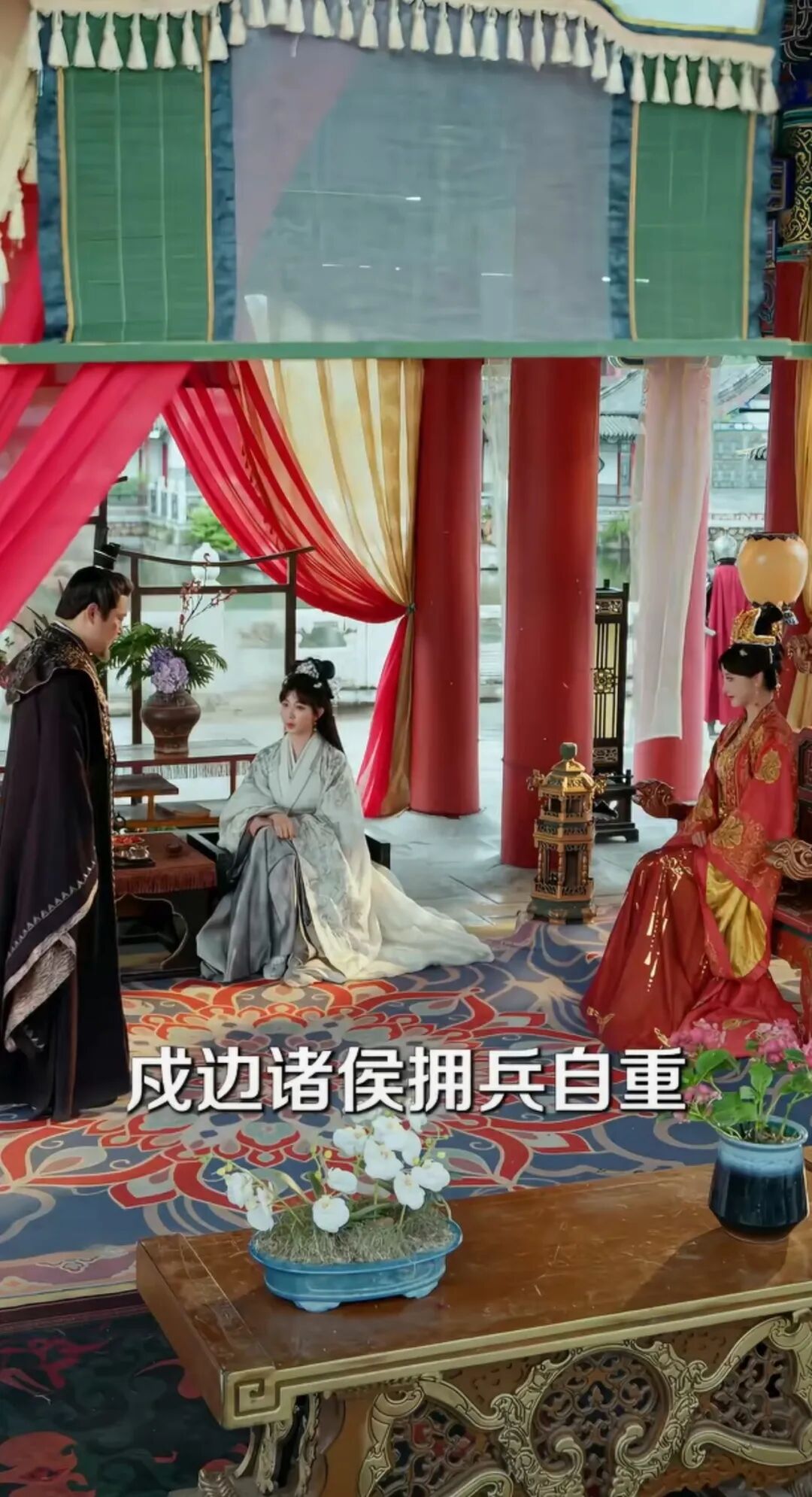
*Still from the short drama 'The Crown Prince is Unrivaled'
Short dramas now rival long-form series in production value but face significant cost pressures. Industry reports indicate average production costs range from 400,000 to 700,000 yuan for standard titles, while S-tier productions cost 1.5–3 million yuan. Under this pressure, many small-to-medium teams turn to AI as a cost-saving solution.
Unlike live-action shorts requiring on-site shooting, AI comic and simulated human dramas can be produced entirely online, slashing labor and material costs. According to Zhejiang Daily's Tidings News, AI live-action dramas cost just thousands of yuan per minute, while standard AI comic dramas range from 1,000 to 2,500 yuan per minute.
Based on a 2-minute episode format with 60 episodes, a typical AI short drama costs 120,000–300,000 yuan—at least 50% cheaper than conventional shorts (400,000–700,000 yuan). Douyin's latest incentive policy offers up to 3.6 million yuan in guaranteed revenue for top-tier live-action AI shorts, suggesting potential returns exceeding 300% on sub-million-yuan production costs.
However, platform incentives target only 'S-tier' and 'top-tier' works. Ultimately, the short drama race hinges on producing hits. By reducing costs, AI short dramas also control time expenses, amplifying their 'efficiency advantage' over conventional live-action shorts.
Traditional live-action shorts typically take three months to produce, longer if coordinating top actors or complex post-production. In contrast, AI shorts compress timelines from 'months' to 'days.'
Blue Whale News reports that 'Zhanxiantai AI Live-Action Version' was created by a 12-person team in 30 days for 100,000 yuan in computing costs—a process that would traditionally take months.
When financial and efficiency advantages combine, AI short dramas unlock scalable 'mass production dividends.'
Compared to live-action shorts, AI dramas cut costs by 50% and reduce time by one-third. Without considering content revenue, AI dramas clearly outproduce live-action counterparts. As AI titles flood the market, they will divert traffic from live-action shorts, capturing its value.
Meanwhile, in the 'hit-driven' short drama landscape, the real competition lies in producing hits at reasonable costs. While AI doesn’t significantly boost 'hit rates,' it enables faster, cheaper content creation, increasing trial-and-error opportunities for producers.
Interestingly, on March 3, the hashtag 'Hongguo suspended many projects' trended on Weibo. Though Hongguo Short Drama has not officially responded, media reports cite market sources claiming the platform paused numerous live-action projects and revised partnership policies, targeting pain points like high costs, homogenized content, and declining profitability. The platform now prioritizes high-quality and AI-driven content, collaborating with top producers while reducing partnerships with smaller vendors, triggering industry reshuffling.
This reflects how AI short dramas, like prefabricated dish companies' 'central kitchens,' achieve scalability through standardized production. Platforms increasingly favor AI dramas to control costs, marking not just an efficiency upgrade but a paradigm shift in content industry competition.
From efficiency competition to content revolution
AI-driven efficient content production is reshaping the market. First, more shorts will adopt AI for cost savings, shrinking the market share of pure live-action dramas. Second, under the trend of 'high-quality' shorts, AI dramas will accelerate market polarization.
Consider the 'prefabricated dish' analogy. After entering the catering industry, prefabricated dishes boosted operational efficiency for offline restaurants through cost control and speed. However, consumers still perceive them as 'low-end,' choosing them for convenience rather than gourmet experiences.
The same applies to content consumption. If viewers watch AI shorts merely to pass time, they’re unlikely to pay for them, opting for free content instead. Some users even 'listen' to shorts while multitasking, caring little about visual quality.
In this context, mass-produced AI shorts can meet market demand through scale alone, without relying on premium visuals or narratives. Meanwhile, discerning viewers will provide feedback to refine AI models, pushing the industry to optimize AI scriptwriting, storyboarding, and video generation.
For instance, 'Zhanxiantai AI Live-Action Version' addressed common AI issues like shot continuity and audio-visual sync but suffered from repetitive AI-generated special effects, causing aesthetic fatigue.
Beyond technical iteration, AI shorts need a 'human-AI collaboration' model, using genuine viewer feedback to refine plots and visuals. While current algorithms may discern popular content, they struggle to grasp human emotions like love, friendship, and the charm of everyday life.
From an industrial perspective, AI shorts reflect a broader upgrade in China’s content sector. Historically, domestic films struggled due to weak industrial foundations and uneven talent/technology development. AI shorts demonstrate how China’s video industry can leverage AI to bridge gaps with traditional content production, potentially achieving a 'technological leap' through scalable output.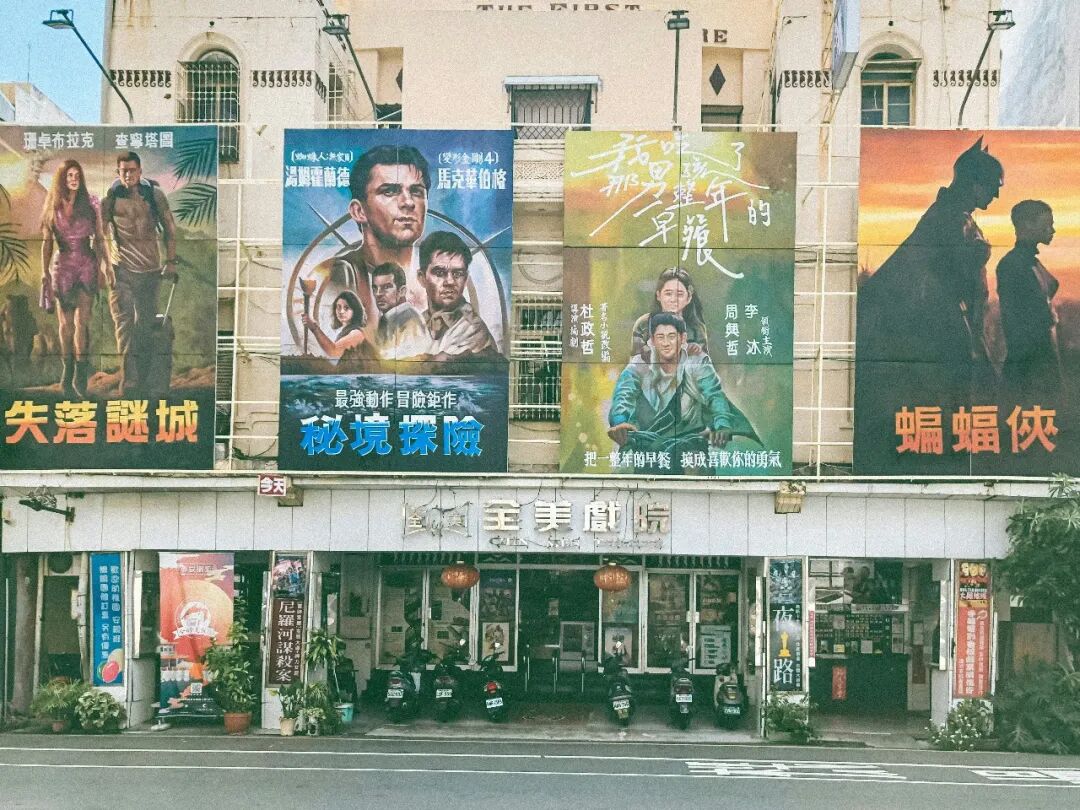
Looking back at the development process of AI short dramas in 2025, AI comic dramas gradually became the mainstream in the market, and then, based on AI comic dramas, AI live-action dramas gradually gained popularity this year. The transition from AI comic dramas to AI live-action dramas is not merely an innovation in theme but represents the realization of an industrial closed loop from online literature to short dramas, finding a fast track from IP to the content market.
Just imagine, if it only takes one month (and even less time in the future) and a cost of just over a hundred thousand yuan to complete a film and television work. The profit-driven content industry might produce a large number of repetitive, low-quality AI short dramas as a result, but it could also allocate more budget to the source of content, stimulate innovation in original IPs, and generate more good stories and scripts.
From the perspective of short dramas going overseas, if China's content industry forms a new content production 'industrial system' collaboratively built by different industries such as online literature, short videos, and AI, it might also, like TikTok sweeping across the globe, influence the content consumption habits of internet users worldwide with Chinese short dramas. And this might be the core value of AI short dramas that should be most recognized.
-
![]()
Hardware is the skeleton, AI is the soul, and data integrates the two
-
![]()
China’s AI Industry: A Unified Pivot Towards Monetization?
-
![]()
New Progress! Infineon Completes Acquisition of ams OSRAM's Non-Optical Sensor Business
-
![]()
35 Million Bet on an Optical Future! Tengjing Technology Makes a Move in AR
-
![]()
Why World Models Get Stuck on Construction Roads in Autonomous Driving Applications
-
Alibaba Initiates Cultural Transformation: Is Jack Ma Making a Strategic Comeback?
-
Tianfeng Heads to Hong Kong for IPO with RMB 3.8 Billion in Funds: Xingyu's Cross-Border Foray into Embodied AI Faces Uncertain Future
-
![]()
Mengshi Auto’s High-End Aspirations Dashed: Huawei Partnership Fails to Revive Sales, New Model’s Entry Price Dips Below 300,000 Yuan