The Dichotomy of Anime Games: Top 10 Upcoming Titles Revolutionizing the Genre
 03/05 2026
 661
661
Author|Pang Ruijin
Editor|Hu Zhanjia
Operations|Chen Jiahui
Produced by|LingTai LT (ID: LingTai_LT)
Header Image|Publicly sourced online
Over the past year or two, the anime game market has been stuck in a persistent slump. With few major releases, the industry lacked fresh blood. However, the arrival of 2026 brought a glimmer of hope with Hypergryph's Arknights: Endfield injecting new vitality into the market. Yet, this revival has been accompanied by growing polarization.

Divergence Between Industry Leaders and Small-to-Medium Developers
In 2025, established anime game giants such as miHoYo (Genshin Impact, Honkai: Star Rail) and Hypergryph (Arknights) continued to dominate the market. Strong newcomers like Kuro Games' Wuthering Waves and miHoYo's Zenless Zone Zero also emerged, but they, too, hailed from major studios. In stark contrast, nearly all anime games developed by small-to-medium startups struggled to survive. According to Tianyancha media reports, Shanghai Niao Ming Jiuji's Nuo culture-inspired game Golden Four Eyes shut down just five months after launch, while Guangzhou Mingzhou Technology's Black Beacon ceased operations after seven months.
The arrival of 2026 brought a turning point, with Hypergryph's Arknights: Endfield finally breaking the anime game market's cold streak. According to Shanghai Xuhui’s official account, the game generated over RMB 1.2 billion in global revenue across all platforms within two weeks of launch. More notably, its revenue from PC and PS platforms surpassed that from mobile, breaking the traditional "mobile dependency" of anime games and signaling the potential for higher profit margins and longer lifecycles.
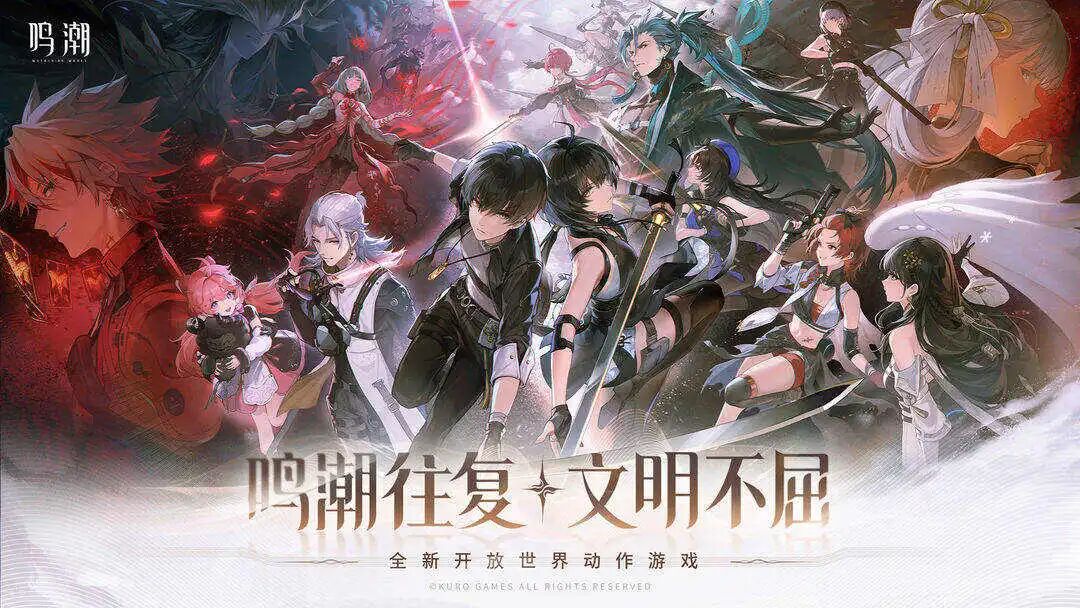
Meanwhile, two other leading anime game developers also reported success on January 26. Kuro Games' Wuthering Waves received praise from Tencent President Martin Lau at Tencent’s annual conference, earning a spot on Tencent’s "evergreen games" list.
Tencent’s criteria for evergreen games are stringent: mobile games must average 5 million daily active users (DAUs) per quarter with annual revenue exceeding RMB 4 billion, while PC games require 2 million quarterly average DAUs and over RMB 4 billion in annual revenue. Wuthering Waves met both revenue and user engagement benchmarks, securing its place among Tencent’s elite. Producer Li Songlun shared an internal memo stating that Wuthering Waves’ Version 3.1 surpassed Version 2.4, achieving record-breaking performance.
According to Tianyancha media reports, on the same day (January 26), miHoYo—after winning the "14th Five-Year Plan" Outstanding Contribution Award in Shanghai’s Xuhui District—revealed via co-founder Liu Wei’s social media post that the company had generated RMB 15 billion in cumulative taxes during the 14th Five-Year Plan period (2021–2025). Based on tax rate calculations, miHoYo’s total revenue over the past five years likely fell between RMB 120 billion and RMB 180 billion.
In stark contrast to the success of leading anime game developers, small-to-medium teams faced existential crises. On January 14, Tencent divested its 15% stake in Guangzhou Mingzhou Technology, whose founder is a former Tencent investment manager. The studio’s anime game Black Beacon shut down just eight months after its 2025 launch.
On January 31, Shanghai Yuelongyin, developer of Fire Ring, was reported to have delayed employee salaries and social insurance payments for at least four months, merely two months after the game’s November 28, 2025, full-platform launch. Additionally, Suhe Maoan, developer of the 2024-released ancient-style anime game Poetic Wind, faced persistent rumors of unpaid wages. Its affiliated company was recently listed as a defaulting party for owing approximately RMB 2.9 million in advertising fees.

▲ Figure: Dialogue from Fire Ring ironically mirrors its real-world wage delays.
The contrast is stark: while miHoYo, Hypergryph, and Kuro Games celebrate a string of successes, small-to-medium teams face dire struggles. This underscores the maturity of China’s anime game market, characterized by oligopolistic trends where top developers monopolize the market with high-budget titles, leaving less-resourced teams increasingly marginalized.

Only the Top-Tier Survive: A Roundup of 10 High-Potential New Titles from Major Studios
Late last year, DianDian Data released the 2025 Q4 Anime Mobile Game Experience Evaluation Report, noting that while the anime game market peaked in 2021–2023 with titles like Genshin Impact, recent newcomers have struggled with outdated gameplay. Only the most elite products survive.
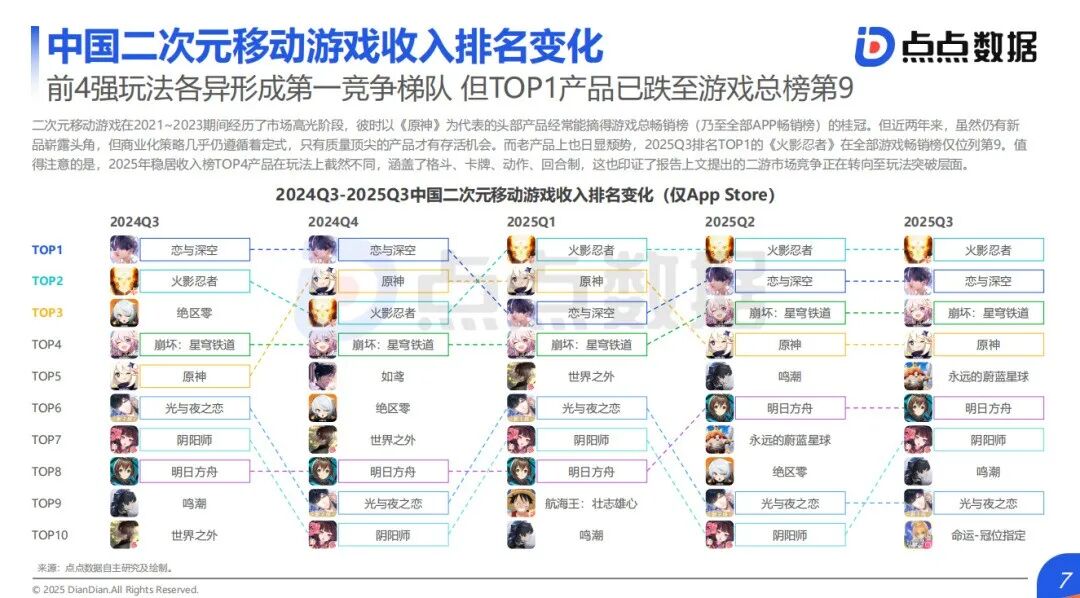
For the foreseeable future, miHoYo, Hypergryph, and Kuro Games will likely dominate the anime game market. However, with major studios heavily investing in the genre, more market-disrupting challengers are expected. Below are 10 highly anticipated upcoming anime games from established developers:
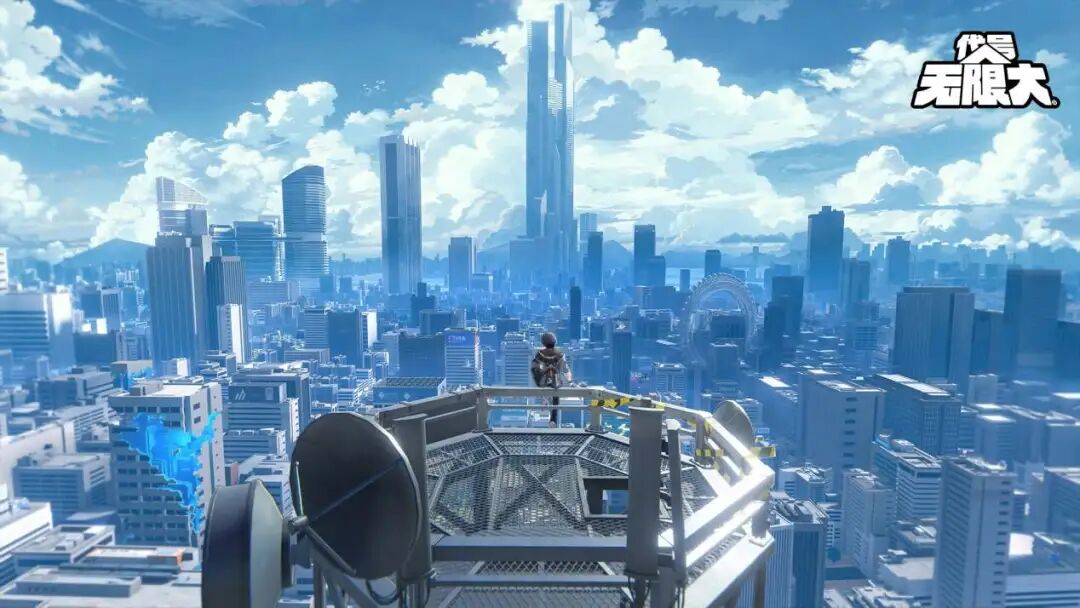
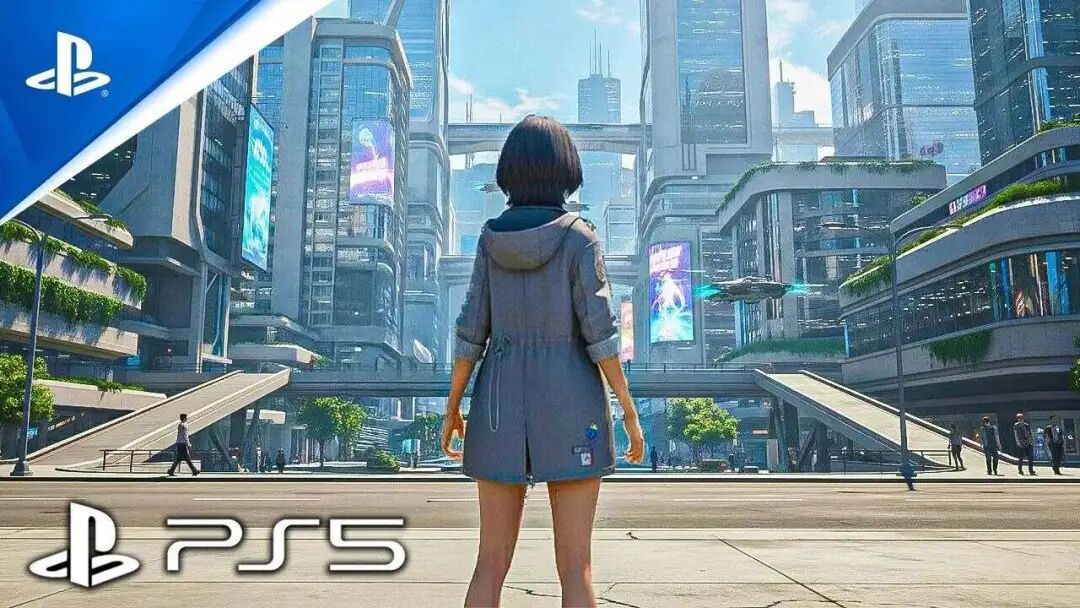
1. NetEase’s Infinite World
NetEase’s Infinite World is an urban open-world RPG set in the blended virtual-real "Xinqi City." Players freely navigate ground, aerial, and underground layers, engaging in parkour, vehicle driving, and real-time multi-character switching. The game abolishes gacha mechanics, offering all characters for free, and emphasizes social interaction, exploration, and dynamic storytelling. Combining anime aesthetics with high freedom, it creates a "breathing" urban ecosystem.
According to Tianyancha media reports, Infinite World’s promotional videos sparked widespread discussion at TGS and on overseas social media. Both NetEase and players highly anticipate the project, with the company addressing inquiries about it during earnings calls. CEO Ding Lei pledged full support for development. The game supports PC, consoles, and mobile, with technical testing underway and a planned 2026 launch.
2. Perfect World’s Phantom Ring
Phantom Ring, developed by Perfect World’s Hotta Studio, is a supernatural urban open-world RPG built with Unreal Engine 5. Set in the fictional "Hetero City," players assume the role of "Phenomenon Hunters" investigating mysterious events. The game blends free exploration, vehicle driving, property acquisition, and simulation management. Combat revolves around "Psychic Ring Synergy" and character-switching strategies, with a stylish, magical visual tone emphasizing high freedom and immersion.
Perfect World, facing significant revenue declines, underwent several rounds of layoffs. However, Phantom Ring—as the first urban open-world RPG with a competitive edge—is seen as a potential stock-price savior by investors, aiming to surpass Genshin Impact’s legacy.
Tianyancha media reports indicate that Phantom Ring’s third beta test in February received enthusiastic feedback, leading to a confirmed April 23, 2026, full-platform launch.
3. Shiyue Network’s Moon Gazer
Moon Gazer, developed by Shiyue Network’s Xingchen Studio, is an urban open-world RPG modeled after Guangzhou in the anomalous "Tianyue City." Players act as "City Heroes," exploring a fusion of modern life and fantasy elements through driving, hacking, combat, and management gameplay. The game introduces an innovative "Moon Spirit Symbiosis" system, emphasizing high-freedom interaction and social ecology simulation, with a visual style blending Chinese aesthetics and futuristic tech.
Like Infinite World and Phantom Ring, Moon Gazer is an urban open-world RPG, but its main city, "Tianyue City," is inspired by modern Guangzhou, featuring landmarks like Liede Bridge and Canton Tower. This sparked player interest. The first test launched in early 2025, but the team overhauled the game based on feedback, expanding to a 600-member team with a multi-billion-yuan investment. Consequently, the launch date has been repeatedly delayed.
4. miHoYo’s Varsapura
miHoYo’s Varsapura is an urban open-world ARPG built with Unreal Engine 5, led by Cai Haoyu. Set in an Asian-inspired city blending Shanghai and Singapore’s landscapes, the game depicts a "swampified" disaster world under rain and fog. Players assume the role of "Hollow Ones" in the SEAL Control Bureau, exploring a Jungian psychology-driven suspense narrative through character switching, stealth takedowns, and vehicle driving, with AI-integrated branching storylines and immersive performances.
Whether Cai Haoyu can replicate Genshin Impact’s success with Varsapura is highly anticipated by both industry and players.
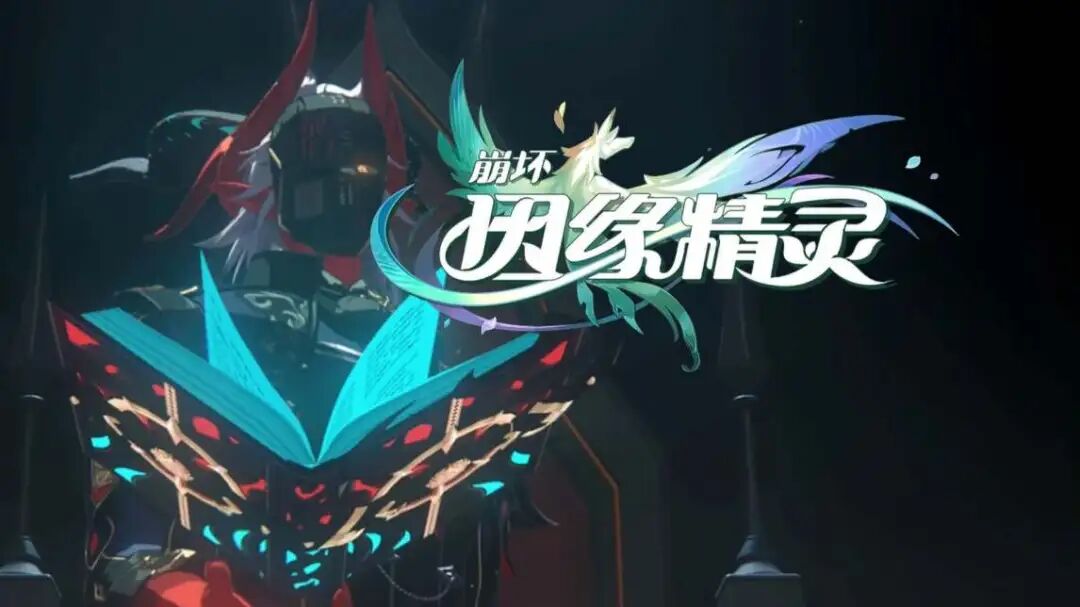
5. miHoYo’s Honkai: Fatebound Spirits
Honkai: Fatebound Spirits is miHoYo’s latest "Honkai" IP title, a spirit-raising adventure strategy RPG combining spirit collection, open-world exploration, and auto-chess tactics. Players act as "Fatebinders," capturing spirits in fractured dimensions, forming teams through affinity cultivation and bonding, and engaging in auto-battles. The game emphasizes exploration and puzzles, with spirit abilities deeply tied to map interactions. Its visual style is fresh and healing, blending Jungian psychology with philosophical themes.
As miHoYo’s foundational IP, the "Honkai" series remains a priority. The company’s long-term vision includes creating a "Honkai Realm" for one billion users. While Varsapura aligns with this goal, Honkai: Fatebound Spirits represents a more modest experiment in blending auto-chess, anime, and pet-raising elements. The game began "Fatebinding Tests" in September 2025, with no confirmed launch date yet.
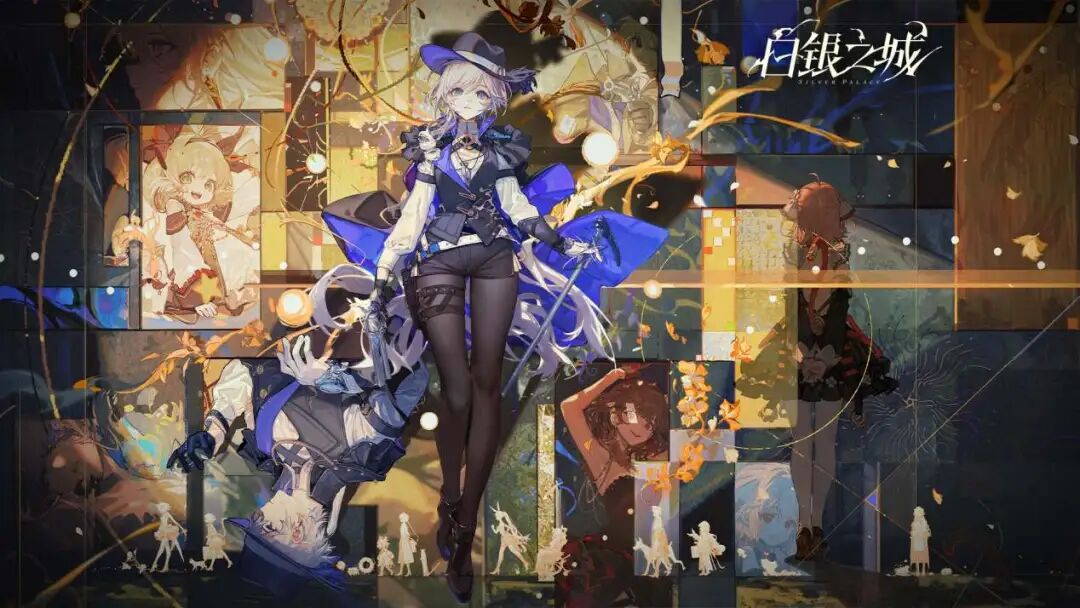
6. Happy Elements’ Silver City
Silver City, developed by Happy Elements’ Shanghai-based Silver Studio, is an anime open-world action RPG featuring a Victorian × steampunk fictional city. Players assume the role of detectives, combining clue deduction and real-time combat to uncover a conspiracy behind "Liquid Silver." The game supports 3D exploration, multi-character team battles, and emphasizes narrative branching and player choices for high immersion.
Happy Elements is best known for the casual hit Happy Elimination, leading many to assume it specializes solely in casual games. However, its Japanese subsidiary’s Ensemble Stars series performs exceptionally well in Japan, establishing Happy Elements as a strong anime game exporter. Expanding into mid-core genres, Silver City represents a major foray into open-world narrative action, targeting mobile, PC, and console platforms.
7. Manjiu Network’s Blue Starfield: Traveler’s Ballad
Blue Starfield: Traveler’s Ballad, developed by Manjiu Network, is an anime open-world RPG featuring star pet capture, free exploration, and role-playing. Set in the fantasy continent "Promilia," players become "Star Descenders" adventuring alongside Chibo creatures. The game boasts a fresh, healing art style and fluid combat, supporting cross-platform play. It marks the Azur Lane team’s breakthrough into open-world gaming.
As the original developer of Bilibili-published Azur Lane, Manjiu Network is well-known among anime fans. Nearly nine years after Azur Lane’s launch, the studio seeks to prove its enduring relevance with this new title. Blue Starfield has entered online testing, with a planned 2026 launch on PC, PS5, and mobile.
8. Tencent's Circle Back
Circle Back is a secondary open-world CRPG developed by Tencent's Saros Studio. It is the first game to deeply integrate the D20 dice mechanism into non-linear storytelling, enabling dynamic world evolution where "choices determine causality." Built with Unreal Engine 5, the game supports seamless exploration across all regions and high-frame-rate combat. It introduces innovative gameplay elements such as time loops, human-spirit co-op battles, and hovercraft vehicles, creating an immersive adventure experience with high freedom and multi-branch storylines.
Saros Studio was actually acquired by Tencent's Lightspeed & Quantum Studios Group from ByteDance's gaming brand
As a prominent contender in the 'battle royale' game subgenre, Tencent boasts unparalleled strengths in both development and operation. 'Fate Trigger' has already completed its testing phase, and Tencent has unveiled a global trailer aimed at the international market. The game features cross-platform compatibility and is slated for an official release in 2026.
10. Tencent's 'Virtual Ring'
'Virtual Ring' is a virtual idol strategy-raising game crafted by Tencent's CDD Studio. In this game, players assume the role of managers, guiding real-life V-circle streamers to transform into combat idols within a parallel universe. The game seamlessly blends idol cultivation, attribute-based turn-based combat, and immersive stage performances. Leveraging the Unity engine, it delivers a high-quality audio-visual experience and supports both mobile and PC platforms.
This game marks Tencent's groundbreaking foray into this niche, as no comparable subgenre products have existed previously. Regardless of its ultimate success or failure, it is poised to leave a lasting imprint on the industry. As a virtual idol-raising game, players take on the roles of managers and commanders, training real V-circle virtual streamers such as Xing Tong and Nanami7mi. Through schedule management and interactions, players elevate affinity levels, unlocking exclusive storylines and appearances. The game's inaugural beta test is anticipated to commence in March 2026.

In Conclusion
Among the ten highly anticipated subgenre projects highlighted above, with the exception of miHoYo, a longstanding titan in the subgenre game arena, Manjuu, the developer behind Bilibili's enduring subgenre hit 'Azur Lane,' and Perfect World's Tower of Fantasy Studio, which created the subgenre open-world MMO 'Tower of Fantasy,' the remaining titles are crafted by newly established subgenre game studios or freshly assembled teams. For instance, Tencent was previously mocked by the industry for its perceived lack of understanding of the subgenre, owing to its absence of original IP-based subgenre blockbusters. Although NetEase has produced several subgenre games like 'Onmyoji,' 'Infinite' represents the first subgenre game from its Leihuo Business Group. While Happy Elements boasts subgenre offerings like the 'Ensemble Stars' series, 'City of Silver' marks its inaugural high-cost open-world subgenre blockbuster, developed by a newly formed team.
Of course, beyond these ten revealed subgenre games in development, several unannounced new projects also harbor significant market potential. For instance, the open-world subgenre game based on the 'Onmyoji' IP, spearheaded by Jin Tao, the former president of NetEase's Onmyoji Business Division, could potentially be the unapproved project 'Code: Yuntu' from his tenure at NetEase. Its origins can even be traced back to NetEase's 2019 announcement of the 'Onmyoji' IP open-world game 'Code World.' Additionally, there's Kuro Game's yet-to-be-officially-unveiled 'NAMI' project.
It is clear that the future landscape of the subgenre game market may undergo substantial transformations, yet the trend toward 'oligopoly' will largely persist, still dominated by powerful developers, leaving only a narrow window of opportunity for startup game companies helmed by award-winning producers.
End
-
![]()
Hardware is the skeleton, AI is the soul, and data integrates the two
-
![]()
China’s AI Industry: A Unified Pivot Towards Monetization?
-
![]()
New Progress! Infineon Completes Acquisition of ams OSRAM's Non-Optical Sensor Business
-
![]()
35 Million Bet on an Optical Future! Tengjing Technology Makes a Move in AR
-
![]()
Why World Models Get Stuck on Construction Roads in Autonomous Driving Applications
-
Alibaba Initiates Cultural Transformation: Is Jack Ma Making a Strategic Comeback?
-
Tianfeng Heads to Hong Kong for IPO with RMB 3.8 Billion in Funds: Xingyu's Cross-Border Foray into Embodied AI Faces Uncertain Future
-
![]()
Mengshi Auto’s High-End Aspirations Dashed: Huawei Partnership Fails to Revive Sales, New Model’s Entry Price Dips Below 300,000 Yuan