Flyme Lives On! The First Third-Party Hardware Launch Is Imminent—Is Meizu Phone Making a Comeback in a New Body?
 03/06 2026
 582
582
Unencumbered, Flyme is destined to go further than Meizu phones ever could.
The era of Meizu's in-house hardware development has ended, but the story of Flyme continues.
On February 27, 2026, StarVivo Meizu announced that Meizu would pause its in-house hardware development for new domestic smartphone products and actively engage with third-party hardware partners. In other words, the Meizu 22 is likely to be the 'finale' of the Meizu series for the next few years.
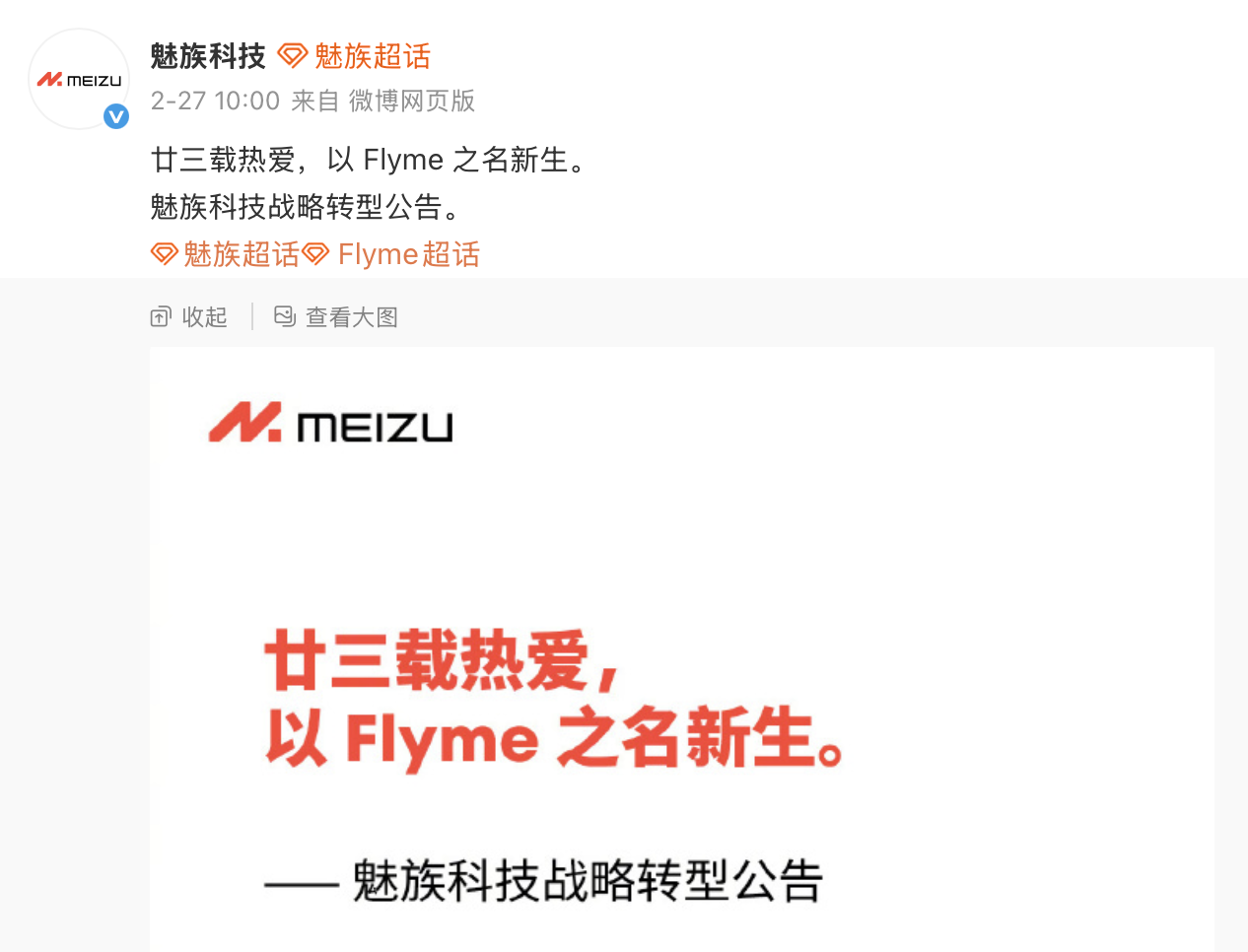
Image Source: Weibo
However, as mentioned in the announcement, Meizu's cessation of in-house smartphone development does not mean the end of familiar names like Meizu and Flyme in the consumer electronics industry. As the first step toward 'lightening the load,' Meizu is collaborating with third-party brands to build its own 'Flyme Universe' centered around Flyme AIOS:
Just one day after Meizu's announcement, Cubie, a well-known domestic tablet brand, revealed that its collaboration with Meizu Flyme AIOS for system adaptation is underway. Internal users even shared screenshots of the settings, confirming that Flyme AIOS's arrival on Cubie tablets is all but certain.
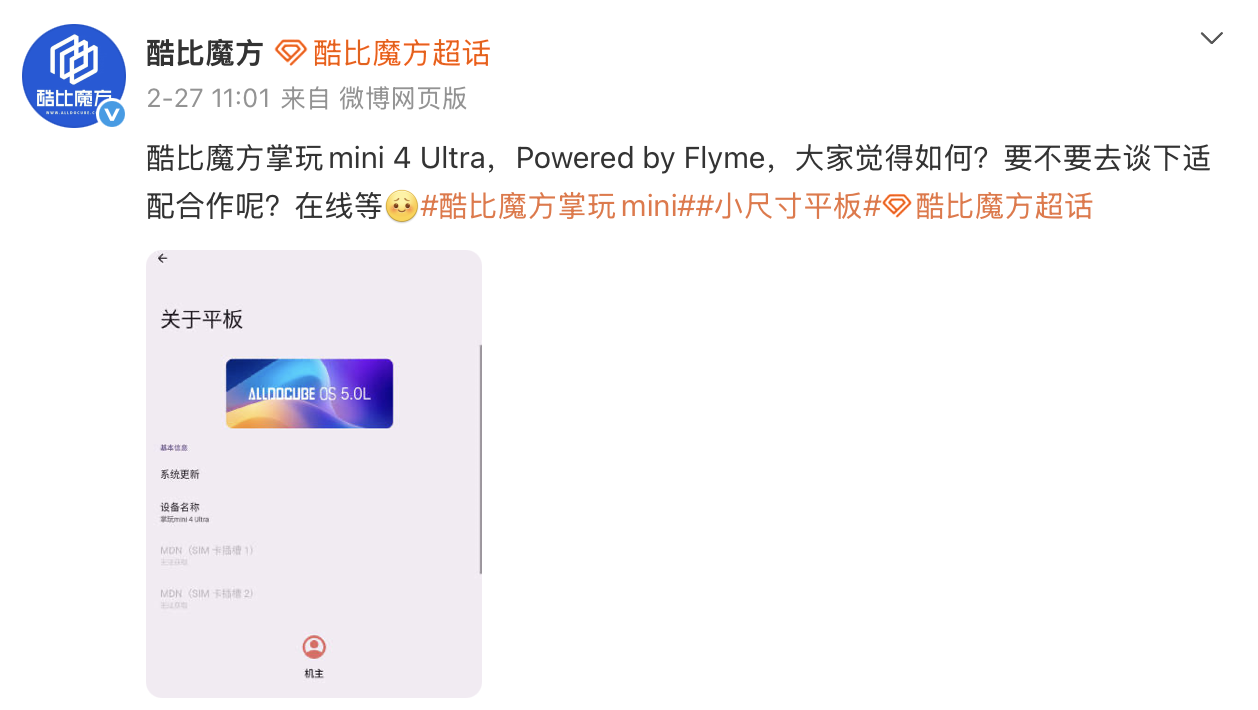
Image Source: Weibo
But the question remains: Can Meizu's strategy of abandoning smartphones and focusing on Flyme AIOS truly succeed?
This Isn't Flyme's First 'Independence'
For those new to smartphones and digital devices in recent years, here's something you might not know: This collaboration with Cubie is not Flyme AIOS's first 'solo flight.' Even Meizu's approach to systems has never been confined to its own hardware.
In 2012, Meizu released Flyme 1.0, a customized Android version based on Android 4.0.3. Back in the days when iPhones were 'jailbroken' immediately after purchase and Android devices were routinely flashed with custom ROMs, Meizu, like Xiaomi, released Flyme and MIUI firmware packages (ROMs) for third-party smartphones.
To promote its Flyme services, Meizu formed an in-house adaptation team to provide official firmware for popular flagship Android devices like the Nexus 5, Galaxy S4, HTC One, and Xiaomi 3 as a ' regular army ' (legitimate force). In an era when Android systems were generally crude and UI aesthetics were chaotic, Flyme stood out with its minimalist wabi-sabi aesthetics and advanced interaction logic like the Smart Bar dynamic navigation bar, becoming a 'white moonlight' in the hearts of countless enthusiasts.
From today's perspective, Flyme was already experimenting with surviving independently of hardware back then, validating the possibility of 'software premium.' It wasn't until 2015, when smartphone brands began tightening Bootloader restrictions, that MIUI and Flyme stopped providing updates for third-party phones.
However, Flyme's discontinuation of third-party phone support wasn't solely due to external restrictions. There were internal considerations as well: In 2015, Meizu received investment from Alibaba, and the Flyme system briefly switched to Alibaba's self-developed YunOS base. Note that YunOS at the time was different from today's 'Ziyan OS':
With stronger development capabilities, YunOS abandoned Android's standard Dalvik virtual machine in favor of its own virtual machine and instruction set, achieving higher system efficiency. Later, YunOS even aimed to 'bypass Android' alongside overseas brands, building its own ecosystem. This approach clearly threatened Google, which began issuing warnings to smartphone brands attempting to adopt YunOS.
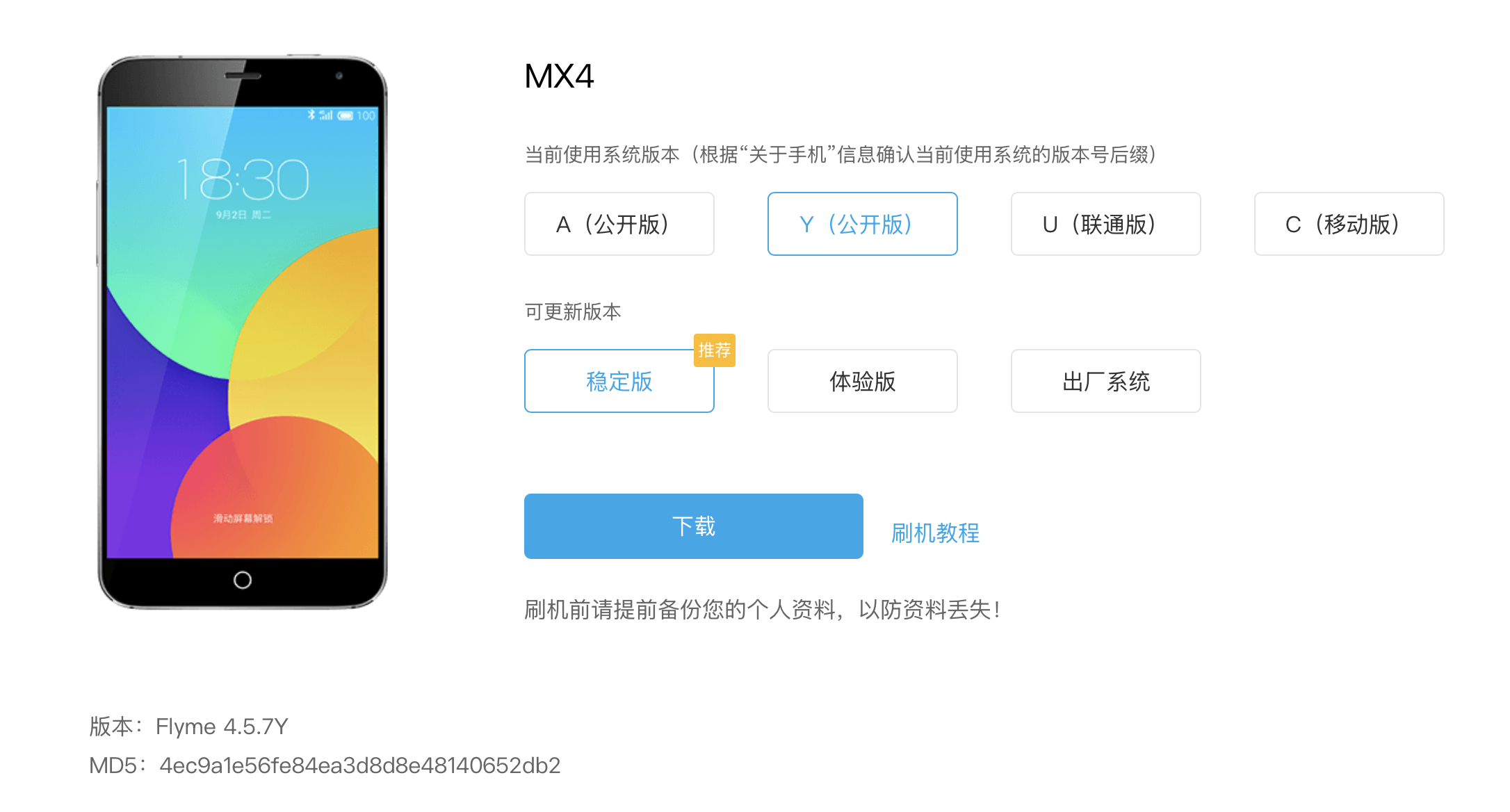
Image Source: Flyme
Under Google's full-scale blockade, Flyme ROMs for third-party phones developed on YunOS naturally became obsolete, and Flyme became Meizu's exclusive system.
Fast forward to 2021, when Sony's Xperia phones were taking their last breaths in the domestic market. From a hardware perspective, Sony's Xperia phones were quite forward-thinking. However, due to poor hardware optimization, unrealistic product pricing, and nearly nonexistent local system optimization, Xperia lagged far behind domestic brands in both experience and sales.
To compensate for its system shortcomings, Sony Xperia began collaborating with Flyme. Unlike a direct system ROM adaptation, Sony only entrusted part of its system components for the Chinese market to Flyme OS (which had by then been renamed from Flyme).
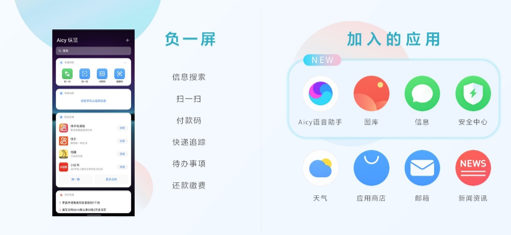
Image Source: Sony China
While these Flyme-derived system components addressed the issue of localization for Xperia users, the reality was that even if Xperia had fully adopted Flyme OS, Sony couldn't compete with domestic brands. In 2023, Sony released its last 'Chinese Xperia'; by 2025, Sony Mobile China had 'deleted its account,' and Flyme OS's 'modular collaboration' attempt came to an end.
If Flyme AIOS's external collaborations have 'failed repeatedly,' why is Cubie partnering with it in 2026?
From Smartphone Brand to System Brand: What Advantages Does Flyme AIOS Offer?
In Leitech's view, Cubie's collaboration with Flyme AIOS likely stems from three key advantages: interaction, AI, and universal connectivity.
Let's start with interaction. While Meizu's smartphone hardware performance hasn't been industry-leading, Flyme AIOS (including its predecessors Flyme OS and Flyme) excels in interaction design.
For years, second-tier domestic tablets have been derided as 'MP4s with screens' due to their simplistic software systems, where many so-called OS offerings merely replace the stock Android launcher and icon pack. Flyme AIOS, however, brings Meizu's decade-plus refined interaction system:
Universally praised features like Mini Window Mode, Message Bubbles, mBack, and full-gesture controls are invaluable assets honed by Meizu since its inception. For users, spending a little over a thousand yuan to get 'Meizu-like' smooth interactions offers significant psychological value.
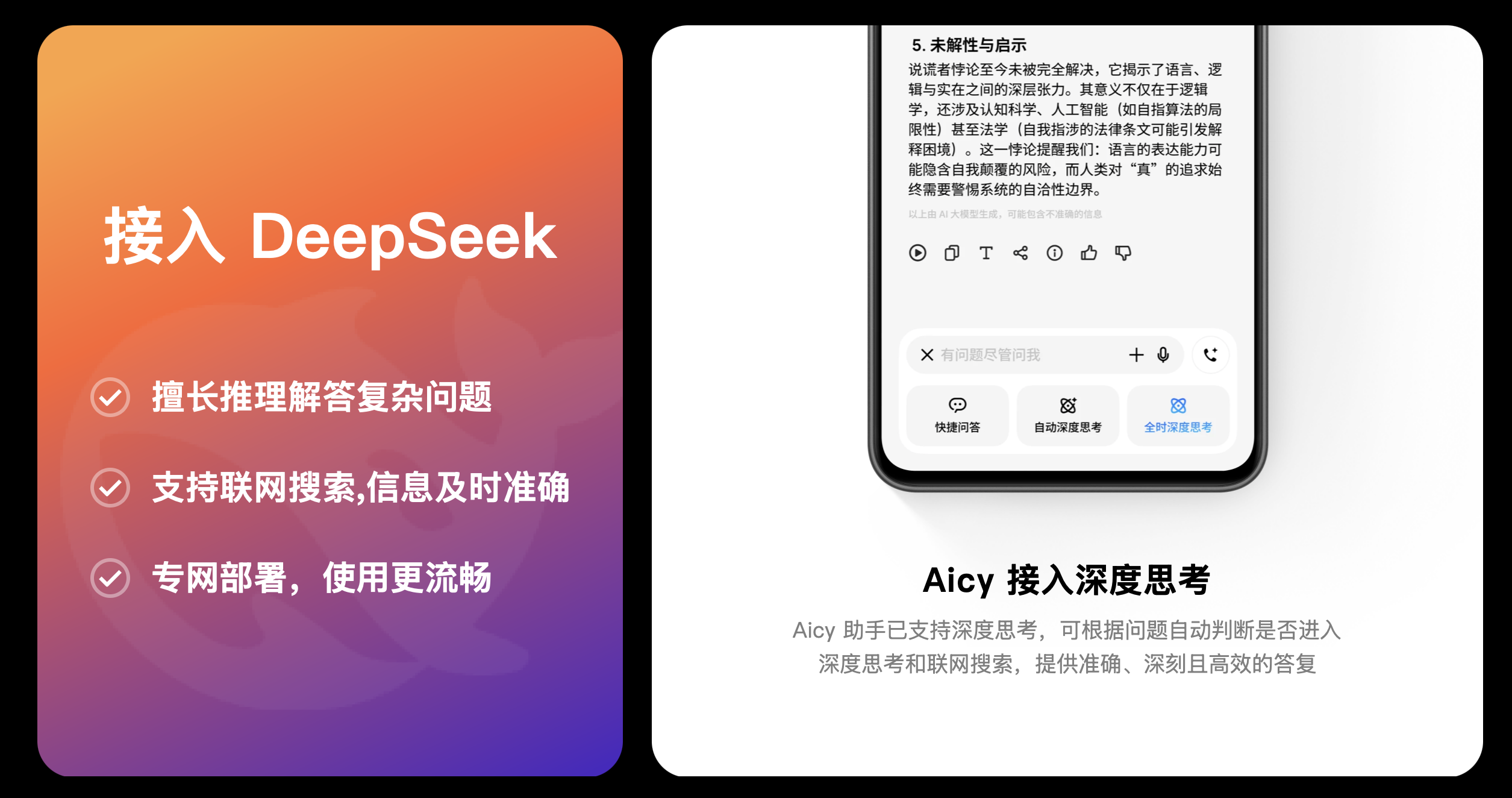
Image Source: Flyme
Next is AI. As one of the early adopters of comprehensive AI integration in China, Flyme AIOS offers system-level AI support. One-tap screen recognition, cross-app workflows, deep thinking, and multimodal interactions—all mainstream AI capabilities essential for modern devices are provided one-stop (one-stop) by Flyme AIOS.
According to IDC data, China's tablet market shipments and year-over-year growth began slowing in 2025, with market segmentation emerging into categories like small-screen gaming tablets and large-screen 'productivity' tablets.
In a slowing, increasingly competitive tablet market, there's little room for second-tier domestic brands to compete on price alone. They must enhance their overall competitiveness without significantly increasing costs—and embracing Flyme AIOS offers the most convenient and rapid solution.
Moreover, in universal connectivity, Flyme AIOS is no less competitive than HyperOS or HarmonyOS. According to StarVivo Meizu, FlymeAuto installations surpassed 2.26 million units by 2025, making it China's market-leading smart cockpit system; by 2026, installations are expected to exceed 3 million units.
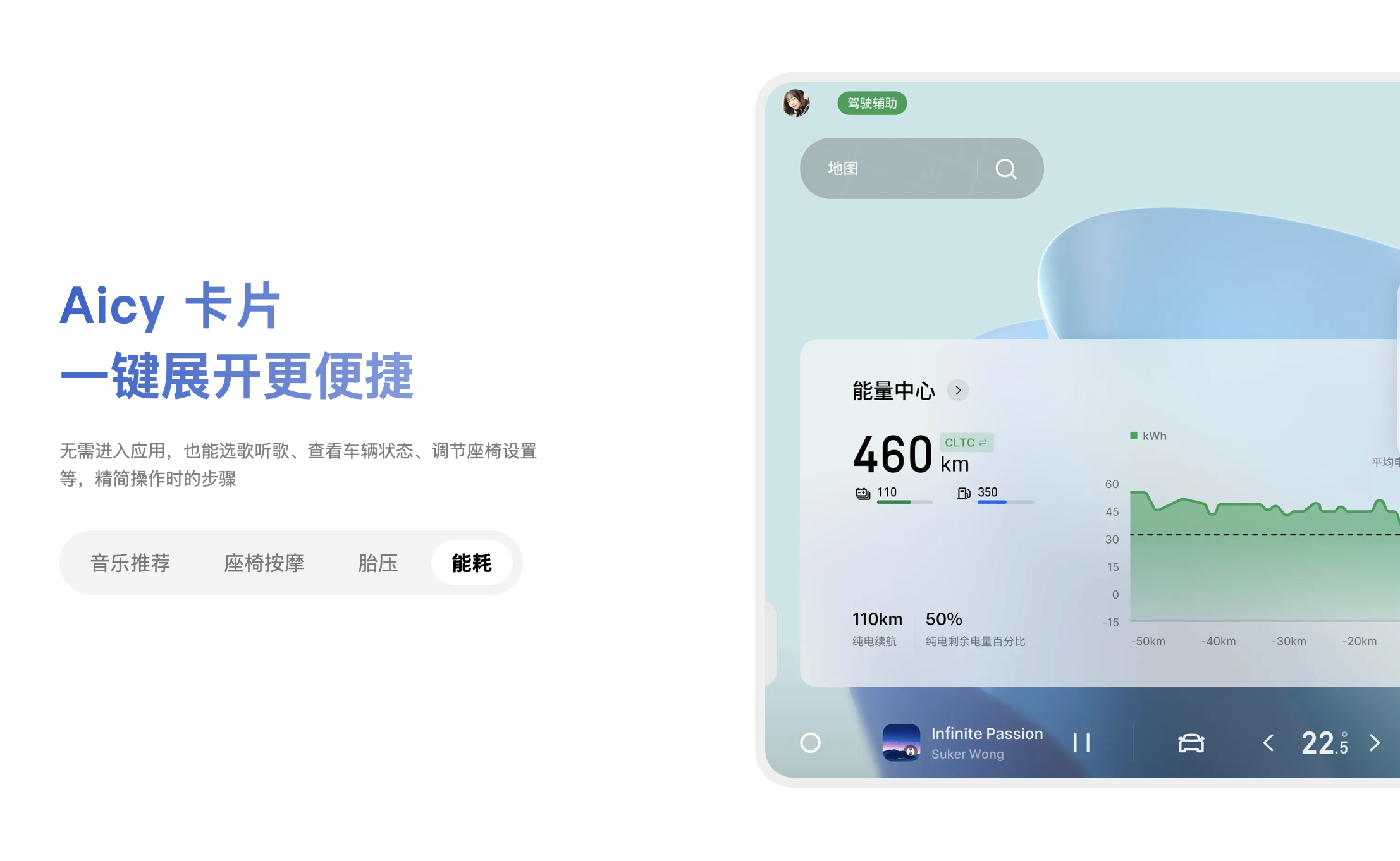
Image Source: Flyme
In the wearables sector, StarVivo Meizu spans earphones, smart glasses, smart rings, and more. Adopting Flyme AIOS allows brands to seamlessly integrate into a 'human-vehicle-home' ecosystem comparable to Xiaomi's or Huawei's—a massive draw for second-tier smartphone and tablet brands unable to build their own interconnected ecosystems.
AI Hardware: The Key to Flyme's Ecosystem Regaining Its Glory
In Leitech's view, the interconnected capabilities across smartphones, tablets, wearables, AI hardware, and smart cars represent Flyme AIOS's most valuable asset today—and the key to its 'comeback' in the AI era.
Traditional smartphone vendors building ecosystems inevitably center around phones. However, after Meizu's transition, Flyme became a truly 'decentralized' system. In 2026, when memory prices soar, suspending in-house smartphone development frees up more resources for Flyme AIOS development and enables a more open approach to device adaptation.
For instance, Flyme Auto's resounding success demonstrates Meizu's cross-industry software development prowess. Once users grow accustomed to FlymeAuto in their cars, they'll naturally gravitate toward AI glasses or third-party tablets (or even phones) running Flyme AI OS when making purchases.
Today, only three domestic brands achieve such ecological synergy, but two of them must prioritize optimal experiences for their own smartphones. Only Flyme operates 'lightly' and equally for all.
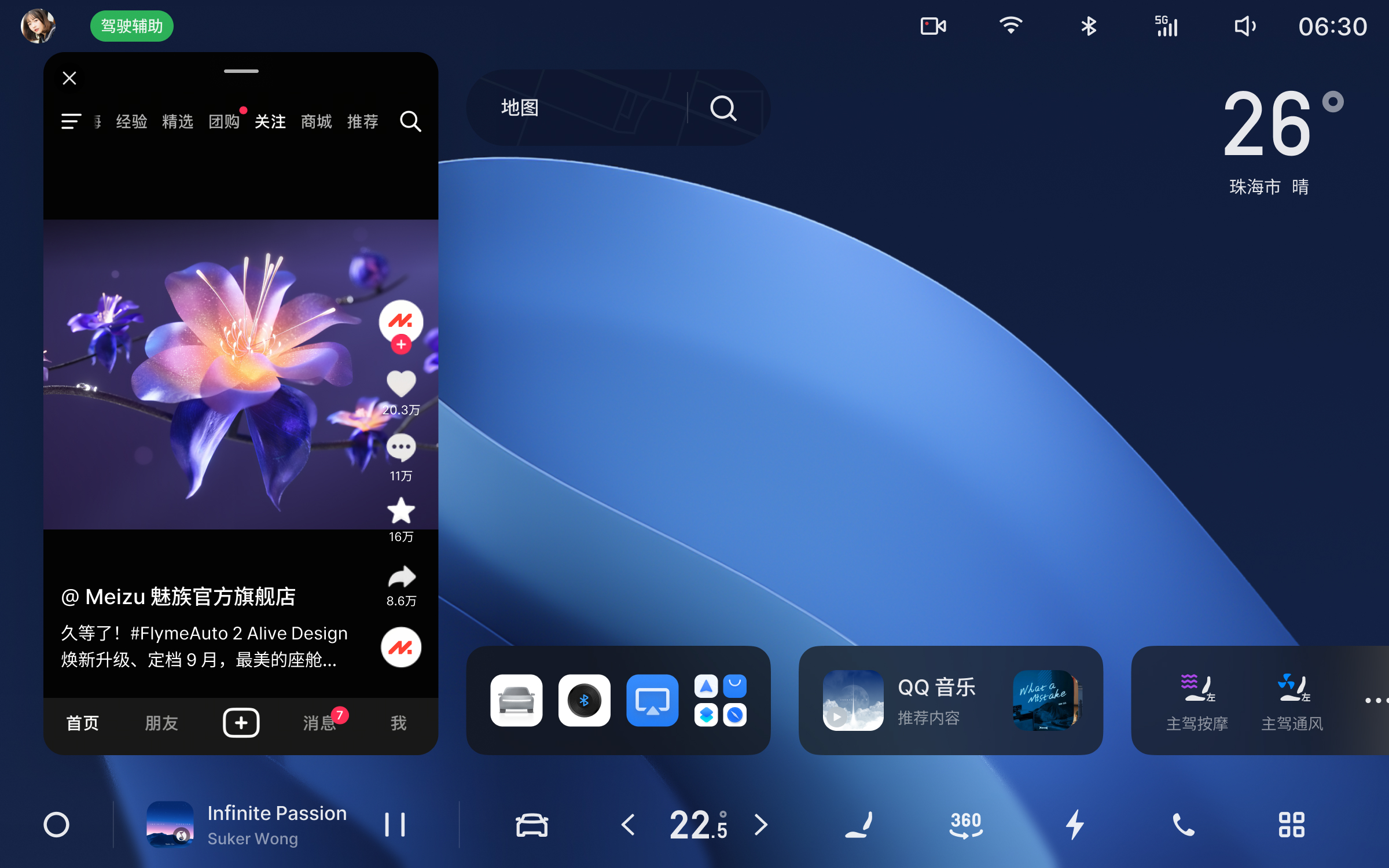
Image Source: Flyme
Of course, when Leitech refers to a 'comeback,' we don't mean Meizu reentering the smartphone market or reclaiming top-five sales rankings. As a longtime 'Meizu fan,' I acknowledge that Meizu's hardware capabilities can't support such ambitions. However, beyond the big five smartphone brands, Flyme AIOS faces no real limits. If most non-leading AI hardware runs Flyme AIOS and joins the Flyme AI ecosystem, the 'top-five' smartphone title will become irrelevant to Meizu.
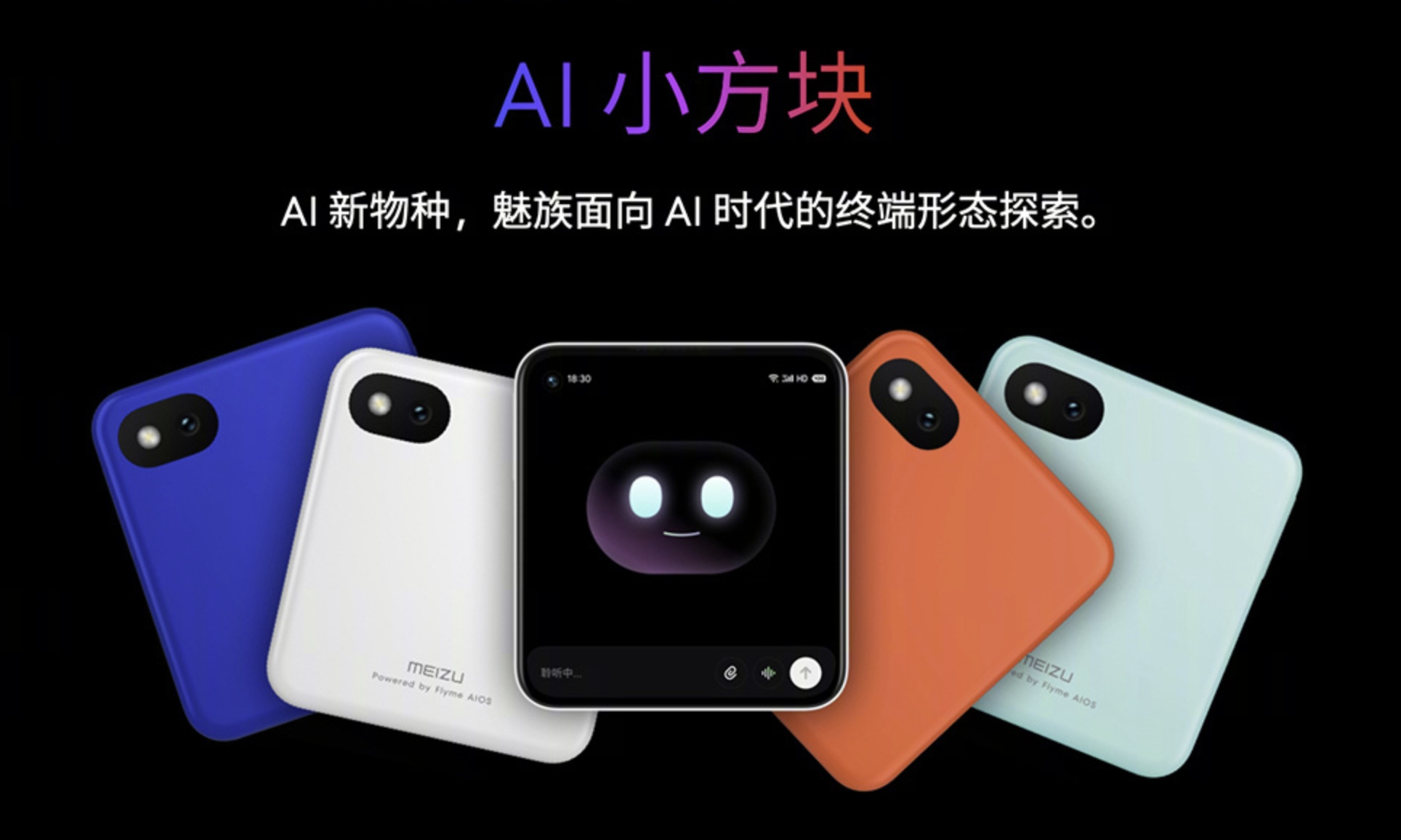
Image Source: StarVivo Meizu
Ultimately, Flyme AIOS's 'independence' reflects Meizu's strategy of platformizing and ecologizing its core strengths. From early custom ROMs to semi-independent collaborations with Sony, and now deep partnerships with brands like Cubie, Flyme has always pursued a unique technological path.
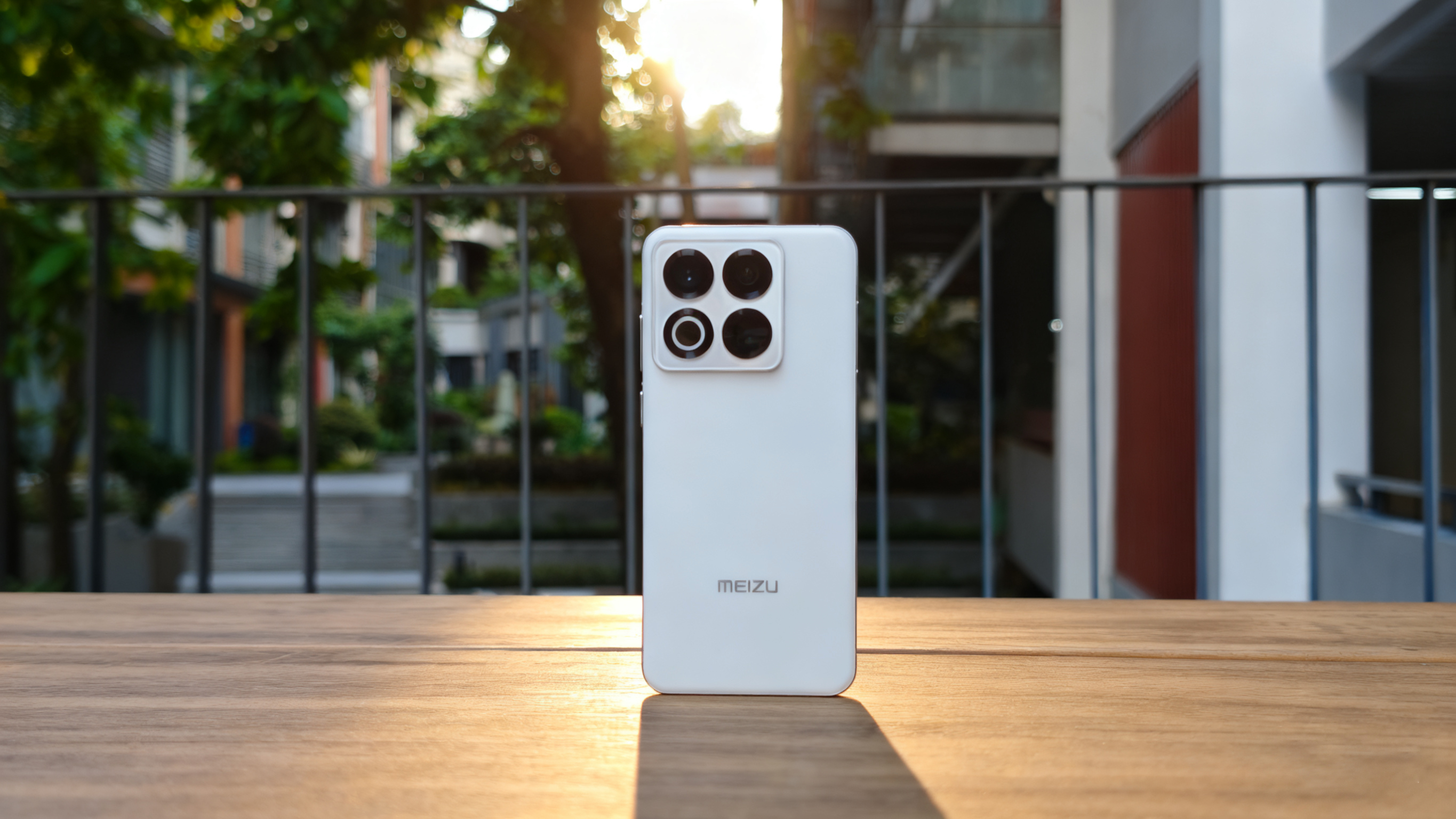
Image Source: Leitech
Pessimistically, the Meizu 22 in my hands might be the last flagship in the Meizu series. But as long as Flyme endures, Meizu's story isn't over. We once said, 'No Meizu fans, no Meizu.' In 2026, it's time to update that slogan:
As long as Flyme lives, Meizu lives.
Meizu Flyme
Source: Leitech
Images in this article come from: 123RF Royalty-Free Image Library
-
![]()
Hardware is the skeleton, AI is the soul, and data integrates the two
-
![]()
China’s AI Industry: A Unified Pivot Towards Monetization?
-
![]()
New Progress! Infineon Completes Acquisition of ams OSRAM's Non-Optical Sensor Business
-
![]()
35 Million Bet on an Optical Future! Tengjing Technology Makes a Move in AR
-
![]()
Why World Models Get Stuck on Construction Roads in Autonomous Driving Applications
-
Alibaba Initiates Cultural Transformation: Is Jack Ma Making a Strategic Comeback?
-
Tianfeng Heads to Hong Kong for IPO with RMB 3.8 Billion in Funds: Xingyu's Cross-Border Foray into Embodied AI Faces Uncertain Future
-
![]()
Mengshi Auto’s High-End Aspirations Dashed: Huawei Partnership Fails to Revive Sales, New Model’s Entry Price Dips Below 300,000 Yuan