Memory Price Hike: A 'Revealing Mirror' for Smartphone Premiumization
 03/06 2026
 632
632
The news of smartphone price hikes has been trending these past two days.
The cause is the soaring demand from AI firms for memory procurement, prompting memory manufacturers like Samsung and SK Hynix to ramp up HBM production capacity while cutting supply and raising prices.
Now, memory prices have been rising for over half a year, with even Apple facing higher costs for procurement, while small and medium-sized clients struggle to obtain memory chips.
For domestic smartphone brands, this means sustained pressure on BOM costs. Consequently, there is widespread industry expectation that smartphone price hikes will be unavoidable in the next two quarters.
Indeed, the focus has never truly been on prices themselves.
The issue of price hikes will eventually be absorbed by the market, but the ensuing 'structural' reshuffling in the smartphone industry is quietly brewing.
Perhaps the post-reshuffle landscape will determine the brand hierarchy in the smartphone industry for the next era.
Opportunities for Apple and Huawei, Challenges for Xiaomi, Honor, OV
After the news of smartphone price hikes trended, Sina Technology posted a news item on Weibo. It mentioned that Samsung's starting quote for supplying memory for the iPhone 17 to Apple has directly doubled.
And guess what? Apple readily accepted it.
You see, the ferocity of this price hike trend is such that even Apple, with its strong supply chain bargaining power, has had to compromise.
Ultimately, the production capacity of the memory chip industry is fixed. Compared to supplying smartphone manufacturers, suppliers prefer the more profitable HBM market.
This leads to a problem: The smartphone price hikes resulting from this round of memory price increases are not coincidental but structural.
What does that mean?
Storage suppliers like Samsung, Hynix, and Micron are allocating capacity to AI servers. Consequently, the structural shortage of memory supply may persist for a relatively long period.
Some institutions predict that this round of price hikes may extend until 2028 at the latest.
This implies that over the next two years, amid an industry-wide trend of rising BOM costs, those with stronger bargaining power over memory manufacturers may gain more cost advantages.
This could bring about three significant changes in the smartphone market over the next two years:
First: In the mid-to-high-end market, Apple and Huawei's premium products will offer better value.
Giants like Apple and Huawei have long inventory cycles for memory chips, so price hikes may not hit them as early, and the impact of BOM costs on terminal prices may manifest later.
Simply put, in the next one or two quarters, Apple and Huawei may have a relative price advantage.
For Huawei, the advantage derived from its bargaining power in the memory supply chain will be further amplified, and the preference of domestic memory suppliers supplying Huawei will become more pronounced.
For Apple, its 'time-honored 8GB' memory may indeed become a 'core advantage,' given its lower memory procurement costs, making its standard products more cost-effective.
The question then arises for brands like Honor, Vivo, Xiaomi, and OPPO: Securing more market share in the premium segment will likely become even more challenging.
Second: For mid-to-high-end brands, the choice between market share and profit margins becomes a crucial strategic decision after this round of price hikes.
According to IDC data, after this round of price hikes, memory costs will account for over 20% of smartphone costs in the mid-to-low-end market. In other words, brands primarily selling in the 2,000 to 4,000 yuan range may first feel the pressure on profit growth due to memory price hikes.
This market segment is precisely where Xiaomi, Honor, OPPO, and Vivo focus on volume sales.
Public data shows that in the mid-range market of 2,100 to 3,500 yuan in China, Xiaomi, OPPO, and Vivo each hold around 20% market share, Huawei holds about 6%, and Honor holds about 4%.
In the mid-to-high-end market segment of around 3,500 to 4,000 yuan, competition hinges on hardware configurations, primarily memory, emphasizing quantity over quality.
Currently, the main volume-selling product versions from each brand are mostly 16+512GB or 12+256GB models. For example, Honor's WIN, Xiaomi 17 standard edition, OPPO Find 9X, Vivo X300 series, etc.
If these main volume-selling products choose to raise prices next, there may be a short-term sales boost before the official price hike, but it could further prolong the smartphone replacement cycle.
If manufacturers opt for minor price hikes or no hikes at all, it will inevitably impact the profit margins of their main volume-selling products.
The choice between market share and profit margins becomes quite significant.
This leads to the third change.
Third: The variables and challenges brought by Huawei and Apple's downward breakthroughs.
While memory prices are rising, Huawei and Apple have both chosen to 'break through downward' to varying degrees recently.
Recently, both Huawei and Apple have taken steps to 'reduce prices' to some extent.
For instance, during the previous Spring Festival promotion, the Huawei Mate 70 Pro+ saw a maximum price reduction of up to 2,700 yuan. Now, with government subsidies, the Huawei Mate 80's price has dropped to around 4,700 yuan.
Across the way, the Apple iPhone Air also saw a price reduction of 2,000 yuan, and the iPhone 17 standard edition's price, after government subsidies, has come down to 5,499 yuan. With additional trade-in subsidies in some regions and platform discounts, the lowest price can reach 4,700 yuan.
Apple has even introduced a 'low-priced iPhone' to capture the market. The iPhone 17e's price, after government subsidies, has dropped to around 3,999 yuan. This price range may also entice some Android users to switch to Apple, driving overall market share growth for Apple.
A series of moves seem to indicate that both Huawei and Apple intend to focus downward and enhance their market share in the high-end segment priced between 4,000 and 6,000 yuan.
And the industry-wide price hikes present a rare opportunity.
Indeed, with Huawei and Apple's efforts, the overall market share landscape has already undergone new changes in the past two years.
According to statistics from Canalys, IDC, and Omdia, the top five Chinese smartphone market shares have been changing from 2024 to 2025.
In 2024, Vivo ranked first with a 17% market share, Huawei second with 16%, and Apple, OPPO, and Honor tied for third.
In 2025, Huawei ranked first with a 17% market share, Apple and Vivo tied for second with 16%, Xiaomi fourth, and OPPO fifth.
Vivo's market share ranking has slightly declined, and OPPO, Honor, and Xiaomi also face competitive pressure on market share from Huawei and Apple.
Next, under the pressure of price hikes, can Vivo, Honor, and OPPO maintain their advantages in the price band around 4,000 to 6,000 yuan?
This is probably the realistic challenge that each brand needs to face during this round of memory price hike cycles.
The Real Opportunity for Premiumization May Lie Beyond Smartphones
Huawei and Apple's current downward push is essentially a stage that Xiaomi, OV, and Honor must go through.
Over the past few years, Xiaomi, OPPO, Vivo, and Honor have all been striving for brand premiumization.
On the one hand, they have expanded into categories like foldable screens to sell smartphone products priced above 6,000 yuan, enhancing brand influence.
On the other hand, they have focused on volume sales in the 3,500 to 4,500 yuan price range to further boost product profits.
This strategy cannot be considered unsuccessful.
However, for Xiaomi, OV, and Honor, this industry-wide memory price hike tide also starkly reveals a reality: Even if they capture the price band around 4,000 yuan, their brands are not yet premium enough.
Indeed, this industry-wide memory supply price hike may make more smartphone manufacturers realize that true premiumization does not lie in selling products at a certain price but in, like Apple and Huawei, still being able to secure advantageous supply chain resources during special periods.
In the smartphone industry, premium brands often rely on large memory capacities to sell at a premium.
Take Huawei and Apple, for example.
For the Mate 70 series, the price difference between the 256GB and 512GB versions is 500 yuan, and between the 512GB and 1TB versions is 1,000 yuan. For the iPhone 17 Pro Max, the price difference between the 256GB and 512GB versions, as well as between the 512GB and 1TB versions, is 2,000 yuan, and between the 1TB and 2TB versions is 4,000 yuan.
In contrast, the price difference between different memory versions of entry-level models from Honor and Vivo is around 300 yuan, while for mid-to-high-end series, it is around 1,000 yuan.
Moreover, Huawei and Apple's main volume-selling models are large memory versions. The higher the memory version, the higher the profit, allowing for more budget to procure memory.
In other words, even if memory suppliers raise prices, Apple and Huawei could theoretically further increase the pricing of their volume-selling 1TB versions, while the 256GB versions could theoretically remain unpriced.
This way, they can balance both sales volume and profit, further expanding their market share in the mid-to-high-end segment.
It's not that Honor, OV, and others do not want to use large memory versions to sell at a premium; the reality is that they may not be able to do so at this stage. The difference does not lie in technology, marketing, or pricing but in the essence of premiumization: audience and purchasing power.
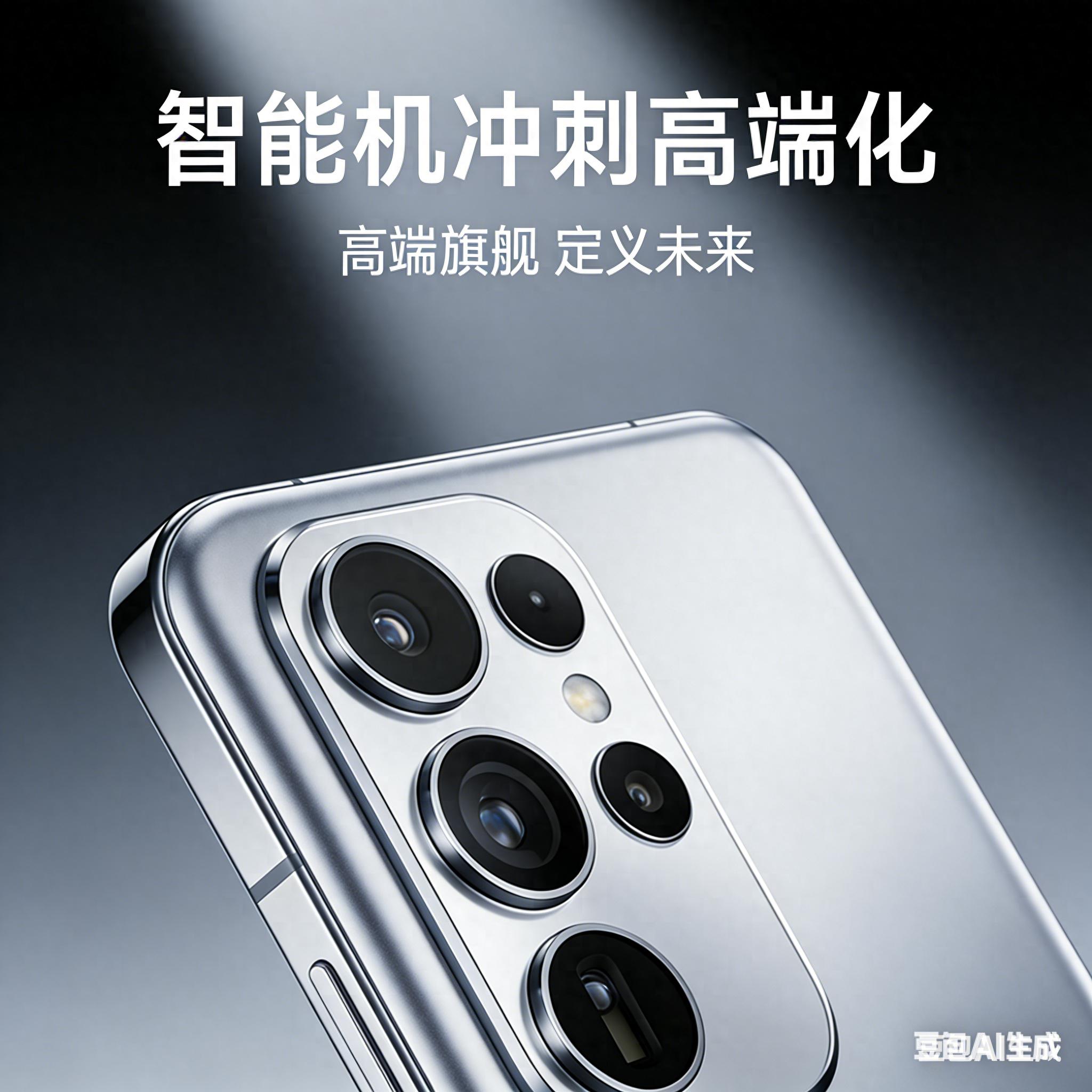
Huawei can sell at a premium due to its brand appeal. In the past, Huawei captured China's most affluent customer base with its self-developed chips and systems, thereby achieving brand premiumization.
So, not just in smartphones, Huawei can also achieve premiumization in the automotive industry.
The same goes for Apple.
Over the years, the iPhone's absolute product strength has not surpassed that of flagship products from Honor, OV, and others. Its strong sales are also due to its brand appeal and its customer base's sufficient purchasing power.
In the past, Xiaomi, OPPO, Vivo, and Honor seemed to have captured the high-end market but failed to secure a sufficient number of truly affluent customers.
Xiaomi's brand value has further increased with growth in the automotive industry, but even so, the purchasing power of Xiaomi's core user base still differs from that of Apple's.
From the perspective of premiumization, this memory price increase may also present an opportunity, indicating that the future path to premiumization has truly reached a 'critical stage.'
Indeed, for Honor, OV, and others to capture the high-end audience, merely competing on product strength is far from enough.
In the past, everyone competed on hardware parameters and user experience, counting the number of innovations at the system level and breakthroughs in AI capabilities at each product launch. From a competitive standpoint, this is not wrong; these may all be necessary 'differentiated' cards to play.
However, just like this memory price hike, improvements in these capabilities will eventually reach an unexpected endpoint one day.
What comes next? No one has a clear answer in mind.
From the perspective of the internet industry, premiumization in the smartphone industry has always extended beyond smartphone products themselves.
Indeed, Apple's premium brand image is not defined by its smartphones. Apple's success extends far beyond the smartphone category. Before making smartphones, Apple had already achieved tremendous success in the high-end PC market and the content services market during the MP3 era.
Similarly, before making smartphones, Huawei had also achieved remarkable success in the telecommunications field.
From this logic, the future opportunities for brand premiumization for OPPO, Vivo, and Honor may not necessarily lie in the smartphone sector.
The currently booming AI and robotics sectors both present possibilities. How hot is the robotics industry? Tianyancha APP shows that over 30,000 robotics-related companies have been established in the past year, indicating unprecedented industry enthusiasm.
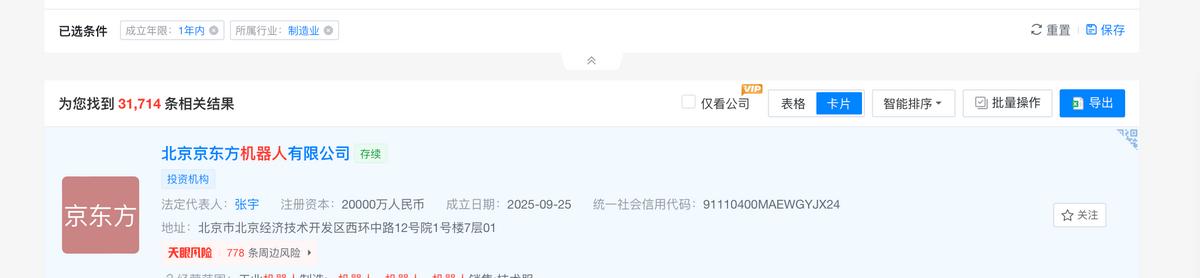
More importantly, the brands in these fields still have the potential to be defined.
In the future, whether smartphone manufacturers can achieve success in these fields, capture the most affluent user base, and subsequently feed back into the premiumization of their smartphone businesses will be quite intriguing to watch.
Indeed, premiumization in the smartphone industry has never been a sprint to explore higher prices but a marathon concerning supply chain resilience and user value.
This marathon does not require running in a straight line from start to finish. It may also require industry players to slow down at times and rethink the path to becoming a 'premium brand.'
Chips are one path, automobiles are another, and could robotics also be a path to brand premiumization?
The major trends in the tech industry are crystal clear. In this new era, who can defend their current stronghold without losing sight of the distant horizon, and who can seize the opportunity to take a bold leap?
Time will tell.
-
![]()
Hardware is the skeleton, AI is the soul, and data integrates the two
-
![]()
China’s AI Industry: A Unified Pivot Towards Monetization?
-
![]()
New Progress! Infineon Completes Acquisition of ams OSRAM's Non-Optical Sensor Business
-
![]()
35 Million Bet on an Optical Future! Tengjing Technology Makes a Move in AR
-
![]()
Why World Models Get Stuck on Construction Roads in Autonomous Driving Applications
-
Alibaba Initiates Cultural Transformation: Is Jack Ma Making a Strategic Comeback?
-
Tianfeng Heads to Hong Kong for IPO with RMB 3.8 Billion in Funds: Xingyu's Cross-Border Foray into Embodied AI Faces Uncertain Future
-
![]()
Mengshi Auto’s High-End Aspirations Dashed: Huawei Partnership Fails to Revive Sales, New Model’s Entry Price Dips Below 300,000 Yuan