Can Konka Make a Resurgence?
 03/06 2026
 562
562

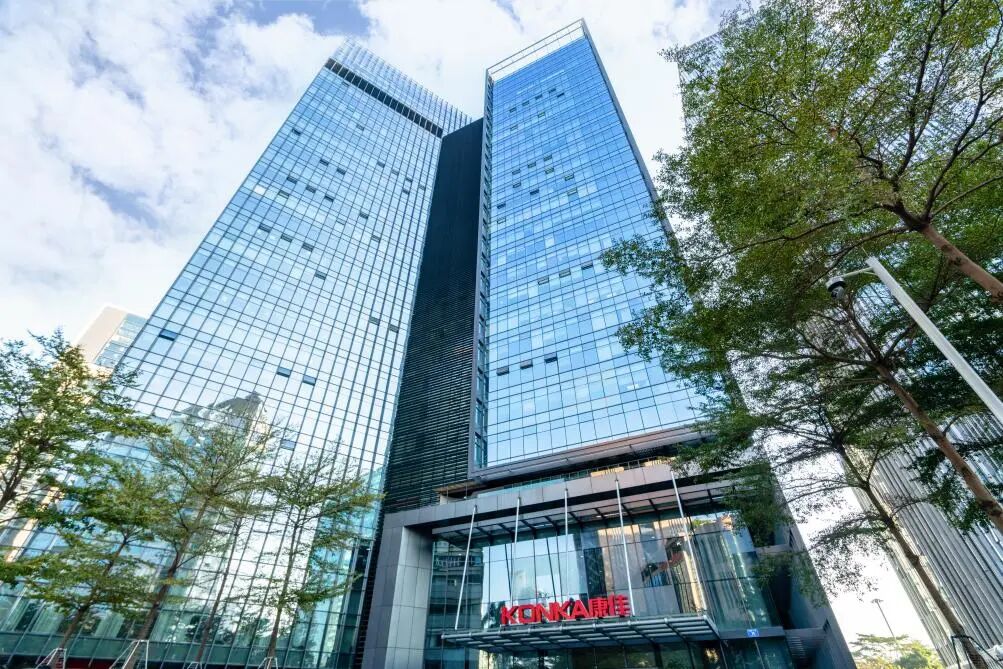
Preface by Xiaoxiao:
If you were in the market for a color TV today, would Konka still be on your radar? Ask around, and you'll likely find that nine out of ten people would shake their heads. After all, with brands like Hisense, TCL, Sony, and Xiaomi dominating the scene, why would anyone choose Konka?
Yet, just three decades ago, Konka was the undisputed king of the home appliance realm.
Listed in 1992 with the prestigious title of China's 'first color TV stock,' Konka soared to the pinnacle of the market by 1998, sharing the podium with Changhong and TCL as the 'Big Three of Color TVs.' Back then, a large Konka color TV in a newlywed's home was a sight to behold, drawing envy and admiration from neighbors.
But times have changed. In 2024, Konka's revenue dwindled to a mere 11.1 billion yuan, accompanied by a staggering net loss of 3.2 billion yuan. The first three quarters of 2025 saw no respite, with losses continuing at 980 million yuan and an asset-liability ratio skyrocketing to 96.78%. This once-mighty brand has now found itself on the brink, reduced to an 'ST (Special Treatment) reserve' (a pre-ST status indicating financial distress).
The question on everyone's mind is: With China Resources stepping in as the new owner in 2025, providing much-needed funds, replacing key personnel, and rallying the troops with motivational slogans, can Konka still turn its fortunes around?

How Did Konka Fall Behind?
In a nutshell, Konka aimed too high and took a wrong turn.
The year 2017 marked a turning point. Konka embarked on a 'Great Leap Forward,' venturing into diverse sectors such as mobile phones, supply chains, environmental protection, industrial parks, and semiconductors. Eager to dominate every emerging trend, they left no stone unturned. In 2018, they set an ambitious '100 billion yuan target' and acquired Xinfei Refrigerator, launching dual brands for black and white goods with much fanfare.
But what was the outcome? The 100 billion yuan target faded into oblivion. Revenue shrank to 17.8 billion yuan in 2023 and plummeted further to 11.1 billion yuan in 2024.
What went wrong? Resources were scattered, and so were the minds of the management.
Diversification isn't inherently flawed. TCL expanded into panels, and Midea ventured into robots, but they did so after solidifying their core businesses. Konka, however, rushed into diversification without first strengthening its mainstay. R&D investment in color TVs lagged, causing its picture quality technology to fall behind. After acquiring Xinfei for white goods, it lacked the patience to deepen its market presence.
Caught between being outmaneuvered by Hisense and TCL and being overshadowed by Xiaomi and Honor, Konka found itself in a no-man's-land.
To make matters worse, internal turmoil didn't help. Konka's major shareholder, OCT Group, was primarily involved in the real estate business, often clashing with the home appliance team. Management changes were frequent, strategies shifted overnight, and grassroots salespeople were left in the dark, unsure of which products to promote the next day.
A company often fails first due to a lack of focus.

Can China Resources Save It?
In July 2025, OCT Group fully exited, and China Resources officially took over.
China Resources was generous with its support. Upon arrival, it provided 3.97 billion yuan in low-interest loans at just 3% annualized interest, helping Konka repay debts to its former parent and freeing up 1.8 billion yuan for working capital. It then overhauled the leadership: Wu Jianjun (from China Resources) became chairman, Dong Gang (a veteran legal expert from China Resources) was appointed vice president, while former president Cao Shiping and vice president Yang Bo exited.
These moves sent two clear signals:
First, China Resources wasn't here to speculate—it meant business.
Second, Konka's old 'bad habits' needed a complete overhaul.
How? China Resources' approach was clear: contract, focus, and stop the bleeding.
Environmental protection, industrial trade, and industrial parks—cut what could be cut, exit what could be exited. The core was narrowed to three areas: consumer electronics (color TVs + white goods), PCB circuit boards, and semiconductors.
Is this the right direction? Yes. But is it easy? No.

Three Tough Businesses
Let's start with color TVs, Konka's foundational business and now its biggest 'bleeder.'
In the first half of 2025, the gross margin for Konka's color TV business was a paltry 0.39%. What does that mean? Selling a 2,000-yuan TV yielded less than 8 yuan in gross profit—after deducting shipping and labor costs, it might even operate at a loss.
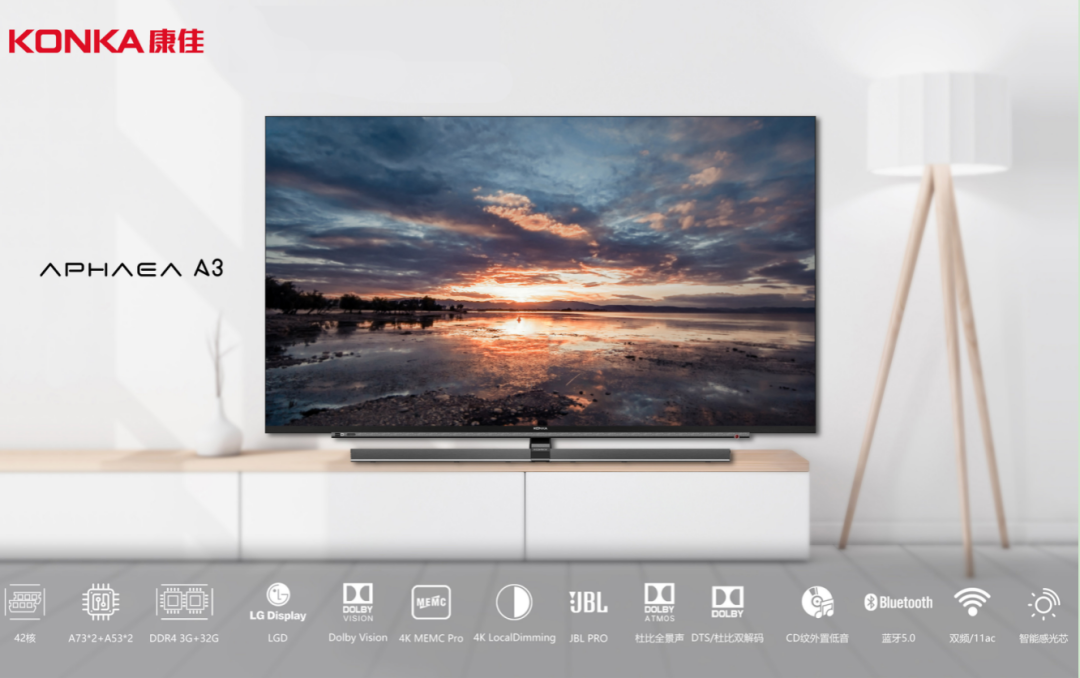
Why so dire? The products lagged behind the competition. When government subsidies arrived, competitors launched new energy-efficient models, while Konka was still clearing old inventory. Mini LED became mainstream, but Konka clung to outdated technology. R&D spending plummeted from 680 million yuan in 2020 to 410 million yuan in 2024, with R&D personnel holding a master's degree or higher dwindling to just 7%. With such investment, how could it compete with Hisense and TCL?
Not to mention the shrinking market—in 2025, national color TV retail volume hit a decade-low. With the overall market declining and no standout features, turning things around seemed impossible.
Next, white goods. After acquiring Xinfei in 2018, Konka aimed to make a big splash, setting a '10 billion yuan revenue target for white goods.' Seven years later, in 2024, white goods revenue hovered around 3 billion yuan, far from the 10 billion mark.
It's not for lack of effort. Konka launched the 'Just Right Family' series for refrigerators, acquired Beko's Changzhou factory for washing machines, and built its own air conditioner production base. The product lineup was complete, but competitors were too strong. Haier, Midea, and Gree loomed large, while Xiaomi, Aux, and Hualing snatched market share. Konka's white goods business remained unprofitable.
Finally, semiconductors—Konka's most heavily bet-on yet most loss-making business.
In 2024, semiconductor revenue collapsed from 3.397 billion yuan to just 170 million yuan, a 95% drop. Once boasting about 'becoming a global leader in 5-10 years,' Konka now seemed to have paid a steep tuition fee. Micro LED was promising, but it was a track dominated by Samsung and Apple—far beyond Konka's financial reach. Surviving this long was already a stretch.
Three businesses: color TVs bleeding, white goods stuck in a stalemate, semiconductors burning cash. No matter how rich China Resources was, it couldn't plug three holes simultaneously.

Can Konka Still Turn It Around?
To be blunt, the chances of Konka reclaiming its former glory are slim.
But that doesn't mean Konka is doomed. It still has a few aces up its sleeve.
First, China Resources as a powerful backer. With China Resources Vanguard and Mixc mall chains nationwide—thousands of stores—if channel resources were opened to Konka, its offline reach would transform overnight. Konka's participation in China Resources' tech achievement expo already signaled collaboration.
Second, the PCB business held steady. Konka never abandoned circuit boards, focusing on new energy and automotive electronics with stable clients and profits—a rare 'cash cow' in today's market.
Third, the brand still holds value. The Konka and Xinfei trademarks remain recognizable to those born in the 60s and 70s. Such intangible assets, if not squandered, still have monetization potential.
So Konka's future isn't about 'reclaiming the throne' but 'surviving and stabilizing.'
What China Resources is doing—cutting non-core businesses, focusing on the mainstay, and stopping the bleeding—is all about 'reining in' Konka. By consolidating its operations and narrowing its focus, even if it excels only in color TVs and white goods or holds just a few core regions, it could still become a small but solid company.
The fear is that old habits die hard.
Konka is a classic 'injured prodigy' case in China's home appliance industry.
It doesn't lack technical foundation, brand recognition, or policy support. What it lacks is resolve. It was too impatient chasing trends and too indecisive in tough times. In 2026, China Resources has laid its cards on the table—funds provided, leadership changed, direction set. Now, there are no excuses—only execution.
For Konka, this year isn't about aggressive expansion but paying off debts—debts from a decade of strategic missteps, missed technological windows, and chased trends.
Whether it can climb out of the hole depends not on how much China Resources gives but on whether Konka can humbly return to being a normal, focused company. We don't expect it to reclaim the top spot in color TVs—we just hope it stops floundering itself into oblivion.
After all, who among those from that era hasn't used a Konka TV at home?
Source: Home Appliance Trends
Images sourced from: 123RF Licensed Image Library
-
![]()
Hardware is the skeleton, AI is the soul, and data integrates the two
-
![]()
China’s AI Industry: A Unified Pivot Towards Monetization?
-
![]()
New Progress! Infineon Completes Acquisition of ams OSRAM's Non-Optical Sensor Business
-
![]()
35 Million Bet on an Optical Future! Tengjing Technology Makes a Move in AR
-
![]()
Why World Models Get Stuck on Construction Roads in Autonomous Driving Applications
-
Alibaba Initiates Cultural Transformation: Is Jack Ma Making a Strategic Comeback?
-
Tianfeng Heads to Hong Kong for IPO with RMB 3.8 Billion in Funds: Xingyu's Cross-Border Foray into Embodied AI Faces Uncertain Future
-
![]()
Mengshi Auto’s High-End Aspirations Dashed: Huawei Partnership Fails to Revive Sales, New Model’s Entry Price Dips Below 300,000 Yuan