Liu Jingkang’s Strategic Misstep: Insta360 Struggles to Close the Gap with DJI’s Market Leadership
 03/06 2026
 505
505
Source: YuanSight
After Six Months of Resistance, DJI Exposes Insta360’s Core Vulnerabilities
Recently, Luotu Technology released its China Action Camera Online Retail Market Weekly Tracking report, revealing that during the Spring Festival period, online sales of China’s action cameras (including panoramic and wearable models) reached 96,000 units, with total sales exceeding 230 million yuan and an average selling price of 2,401 yuan. DJI captured 62.9% of the market, while Insta360 secured 28.6%.
Notably, in the panoramic camera segment, DJI’s Osmo 360, launched in July 2025, outperformed Insta360’s entire X5, X4, and X4 Air lineup, signaling DJI’s complete takeover of Insta360’s former dominance.
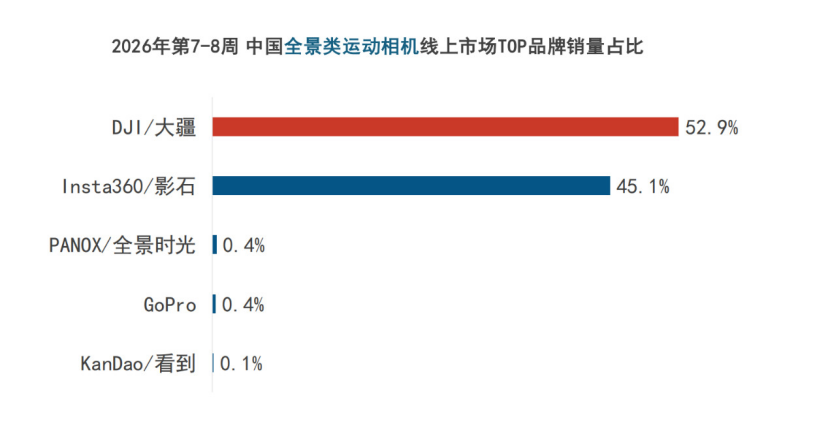
Figure: Luotu Technology (RUNTO) Online Data | Unit: %
For years, Insta360 dominated the panoramic camera niche, holding over 85% market share and earning its reputation as the undisputed category leader.
Facing DJI’s aggressive expansion, Insta360 CEO Liu Jingkang admitted in a June 2025 interview with LatePost that direct competition with DJI in panoramic cameras could lead to short-term declines in key business metrics.
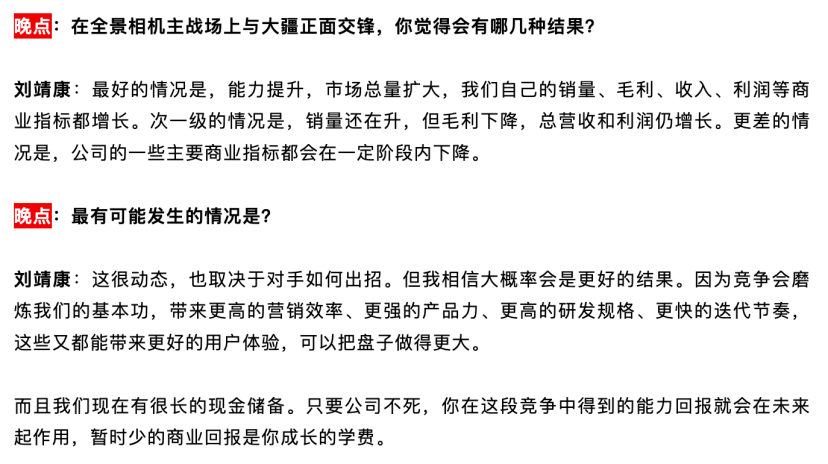
Figure: LatePost Interview – “Insta360’s Liu Jingkang: DJI is a Formidable Rival, But I Don’t Want to Become Another DJI”
Unfortunately for Insta360, events have unfolded largely as predicted.
The company’s 2025 preliminary earnings report showed revenue of 9.858 billion yuan (+76.85% YoY), but operating profit and net profit declined by 16.49% and 3.08%, respectively, trapping the company in a cycle of revenue growth without corresponding profitability.
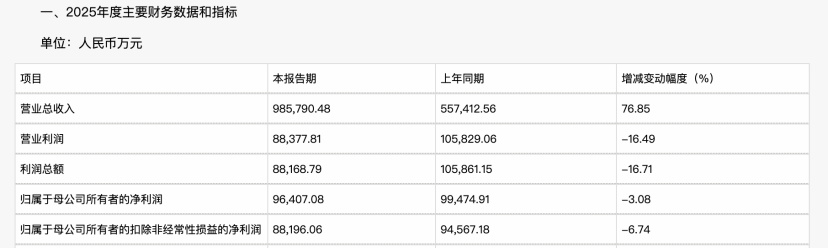
Figure: Insta360 Innovation 2025 Preliminary Earnings Report
Beyond profitability pressures, Insta360’s heavily invested panoramic drone, the Antigravity A1, has struggled in the market.
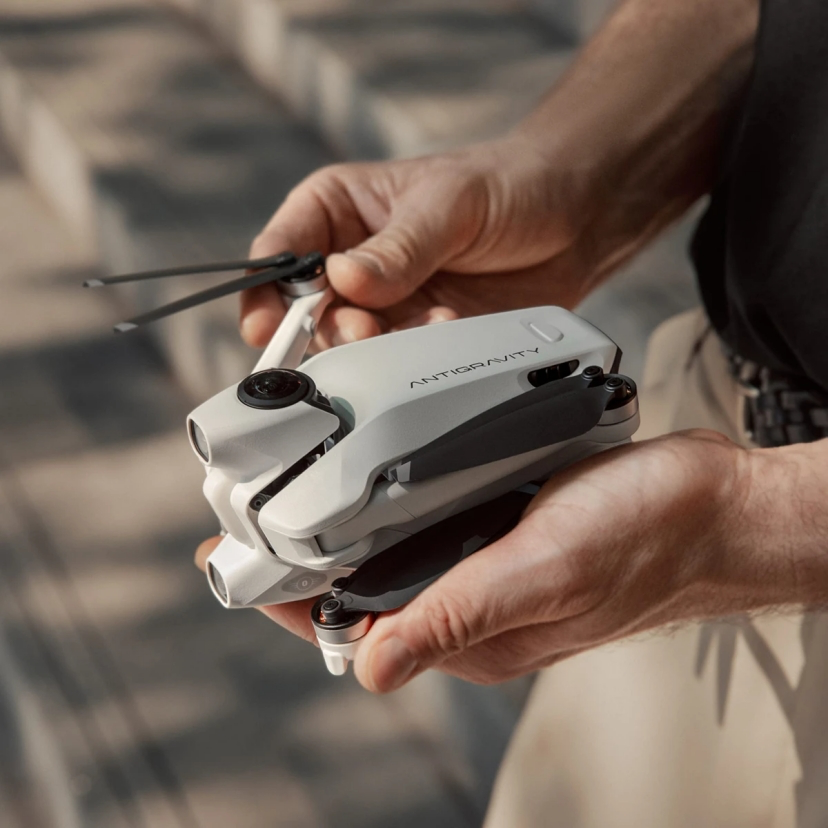
Figure: Panoramic Drone Antigravity A1
After early reports of sluggish sales, Insta360 announced 30,000 global shipments within one month of launch. However, the product’s standard kit, originally priced at 7,999 yuan, now sells for 5,999 yuan amid aggressive discounting.
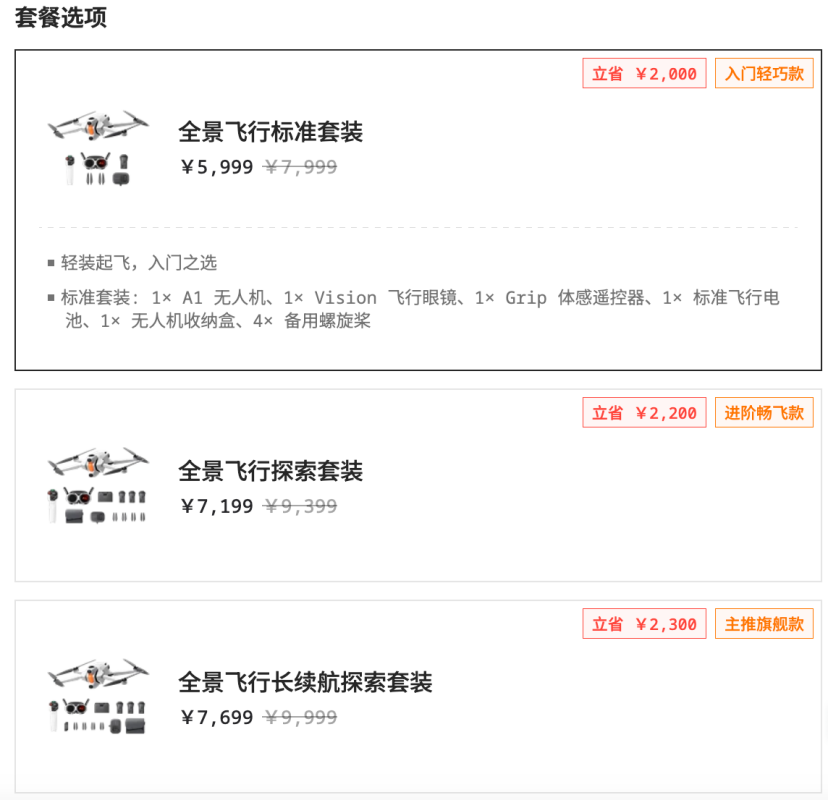
Figure: Antigravity A1 Price Reduction | Source: Insta360 Store
Despite these setbacks, Liu Jingkang’s decisive leadership has kept Insta360 competitive.
In 2026, Insta360 hosted an extravagant annual gala featuring cars and apartments as prizes, accelerated its entry into the handheld gimbal and M43 mirrorless camera markets, and regained public attention after winning a $10 million patent lawsuit against GoPro.
Facing DJI’s expanding product ecosystem, Insta360—as both challenger and incumbent—has no choice but to counterattack.
01
Core Vulnerability Exposed
Panoramic cameras remain Insta360’s most critical product line, driving both brand recognition and revenue.
In 2016, just one year after its founding, Insta360 launched the Insta360 Nano, the first consumer-grade panoramic camera compatible with smartphones via Lightning. Its innovative “shoot first, frame later” algorithm revolutionized panoramic imaging.
The Insta360 Nano, offering unlimited camera angles, gained popularity in motorcycling, cycling, water sports, skiing, and fishing. By transforming professional imaging tools into accessible devices for everyday users, the product propelled Insta360 to fame.
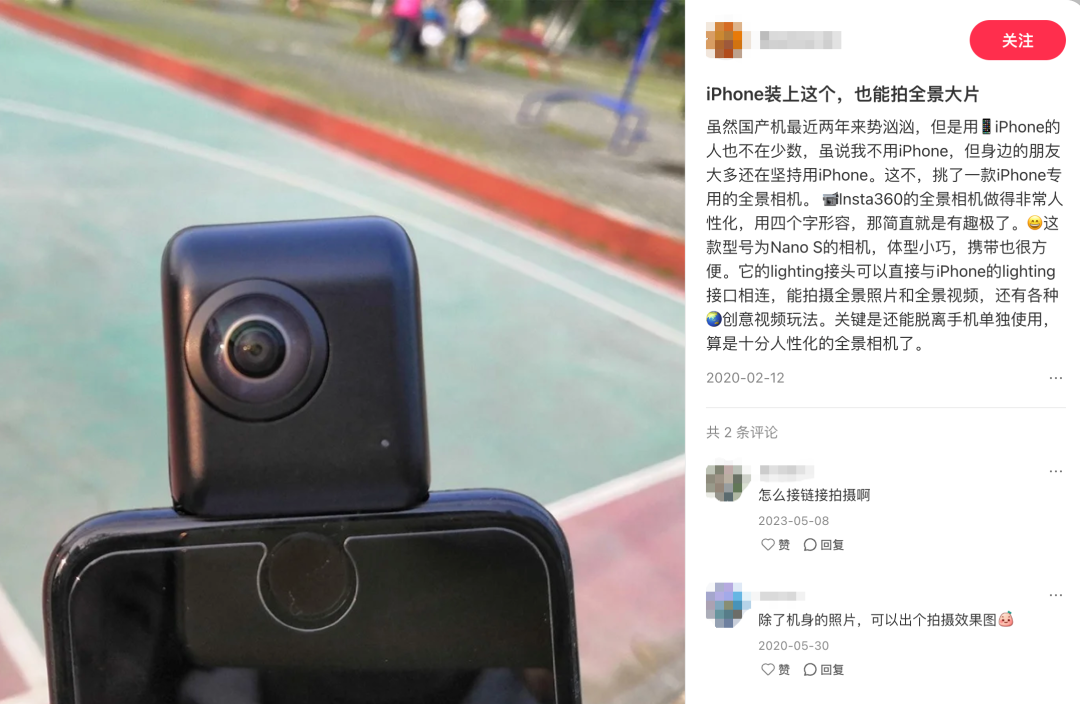
Figure: Insta360 Product Demo | Source: Xiaohongshu
Over the next decade, Insta360 continuously upgraded its panoramic camera lineup, evolving from a startup into a publicly traded company valued at over 80 billion yuan.
Before DJI’s entry, Insta360 dominated the panoramic camera market. Despite competition from GoPro and Ricoh, it maintained leadership through rapid technological iteration and competitive pricing. At its peak, Insta360 held over 85% market share in panoramic cameras.
This dominance was reflected in its financials: while diversifying, panoramic cameras remained its core revenue driver. In 2024, the X-series accounted for 52.74% of total revenue, compared to just 16.30% and 10.44% for the Go and Ace series wide-angle cameras.
Thus, when DJI launched the Osmo 360 in July 2025, few anticipated such rapid market disruption.
DJI came prepared.
The Osmo 360 features a 1-inch equivalent sensor, native 8K video recording, 120MP panoramic photography, 100-minute battery life, and D-Log M support—all priced at 2,999 yuan.
Its magnetic quick-release ecosystem is compatible with DJI Osmo Action accessories, reducing user costs.
Combining top-tier performance, a complete ecosystem, and brand strength, the Osmo 360 sold over 290,000 units in three months.
The showdown peaked during the 2026 Spring Festival, when DJI’s Osmo 360 captured 52.9% of unit sales, while Insta360’s three main models combined for just 45.1%. DJI dethroned Insta360 with a single product.
Worse, DJI’s brand premium and supply chain advantages threaten to erode Insta360’s market share and profitability further. The 2025 revenue surge masked declining profits from its panoramic camera business.
Once a strength, panoramic cameras now represent Insta360’s greatest vulnerability.
02
Failed Market Disruption
Ironically, DJI’s panoramic camera entry stemmed from Insta360 and Liu Jingkang’s aggressive expansion.
When Insta360 unveiled its drone brand “Antigravity” in July 2025, Liu acknowledged anticipating DJI’s retaliatory panoramic camera launch but proceeded anyway.
The anticipated trade-off never materialized.
As Insta360’s first drone, the Antigravity A1 continued its signature “shoot first, frame later” logic, enabling professional-grade panoramic aerial photography without complex piloting skills. This technological edge gave Insta360 confidence to challenge DJI.
The A1 also featured AI stabilization, intelligent tracking, and portability, targeting consumer-grade panoramic aerial markets to differentiate from DJI while synergizing with its panoramic camera business.
Insta360 reported 30,000 global shipments and 30 million yuan in sales within 48 hours of launch. However, subsequent steep discounts reveal underlying weaknesses.
Root causes include:
1. Technological Gap: Compared to DJI’s decades of drone expertise, the A1 lags in flight stability, battery life, and transmission technology, according to early users.
2. Ecosystem Fragmentation: Insta360’s drones lack seamless integration with its panoramic and action cameras, unlike DJI’s unified ecosystem spanning cameras, gimbals, and drones.
3. Brand Perception: DJI commands over 70% global drone market share, creating strong consumer loyalty that Insta360 struggles to overcome.
Critically, Insta360’s drone foray provoked DJI, which responded by expanding its action camera lineup with the Osmo Nano thumb camera and Osmo 360, complementing its existing Action and Pocket series. DJI now offers a full imaging ecosystem covering panoramic, action, portable, and aerial photography—trapping Insta360 in its comfort zone.
Meanwhile, Insta360’s costly drone R&D exacerbated profit pressures. Its 2025 R&D investment doubled to 1.649 billion yuan, accounting for 17.4% of revenue.
High R&D spending failed to translate into market advantages, contributing to its 2024 profit decline amid revenue growth.
Insta360 now faces a dilemma: defending its panoramic camera turf against DJI squeezes profits, while expanding into drones and action cameras requires overcoming technological, ecological, and brand barriers with sustained massive investment and uncertain returns.
Liu Jingkang’s aggression has forced Insta360 into a defensive crouch.
03
No Retreat
Despite challenges, Liu Jingkang pushes forward with Insta360’s imaging empire vision.
In handheld gimbals, Insta360 accelerates Luna series development to challenge DJI’s Osmo Pocket. At its 2026 annual gala, Liu declared Luna “no ordinary Pocket” but an innovative product.
Leaks suggest Luna features a dual-camera modular design with a wide-angle main lens, independent telephoto, three-axis gimbal, variable aperture, wireless microphone support, and an AI editing ecosystem. Targeting DJI’s bestselling Vlog tool, the Pocket 3, Luna aims to launch in H1 2026.
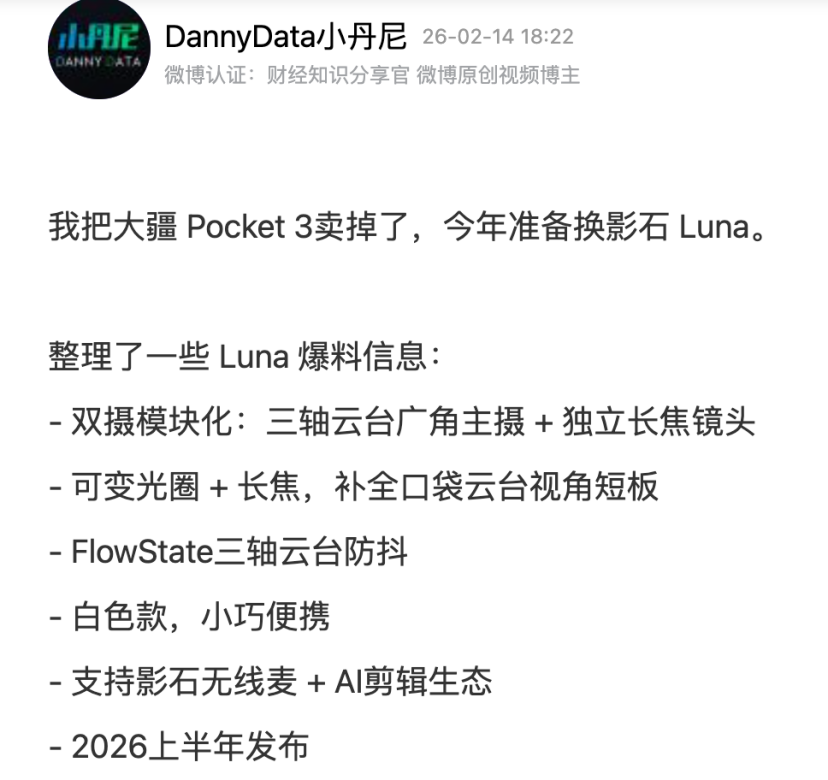
Figure: Leaked Luna Details | Source: Weibo
In professional imaging, Insta360 appears to enter the M43 mirrorless market, leveraging Liu’s social media teasers of sample shots. This move could elevate brand prestige while adding superior stabilization, autofocus, cooling, and media management to new products.
However, Insta360’s breakout hinges on aligning with global action camera market shifts.
By 2026, action cameras are transforming from “extreme sports tools” to “mass recording devices,” with the global market projected to hit 50 billion yuan, led by China. During the 2026 Spring Festival, China’s online action camera sales exceeded 230 million yuan, with mid-to-high-end models accounting for over 60%. Consumer demand now prioritizes quality and usability across scenarios like family recording and travel, beyond extreme sports.
This shift lets Insta360 cover more use cases through multi-category expansion but intensifies competition from DJI, GoPro, Ricoh, and smartphone makers encroaching on its turf.
The global action camera market retains immense growth potential, driven by short video ecosystems, AI applications, and consumption upgrades. Lightweight, intelligent, multi-scenario devices will dominate.
For Insta360, success requires confronting challenges head-on, addressing weaknesses, and seizing opportunities to break through DJI’s encirclement and reclaim its former glory.
Some images sourced from the internet. Please notify us for removal if infringement occurs.
-
![]()
Hardware is the skeleton, AI is the soul, and data integrates the two
-
![]()
China’s AI Industry: A Unified Pivot Towards Monetization?
-
![]()
New Progress! Infineon Completes Acquisition of ams OSRAM's Non-Optical Sensor Business
-
![]()
35 Million Bet on an Optical Future! Tengjing Technology Makes a Move in AR
-
![]()
Why World Models Get Stuck on Construction Roads in Autonomous Driving Applications
-
Alibaba Initiates Cultural Transformation: Is Jack Ma Making a Strategic Comeback?
-
Tianfeng Heads to Hong Kong for IPO with RMB 3.8 Billion in Funds: Xingyu's Cross-Border Foray into Embodied AI Faces Uncertain Future
-
![]()
Mengshi Auto’s High-End Aspirations Dashed: Huawei Partnership Fails to Revive Sales, New Model’s Entry Price Dips Below 300,000 Yuan