Can TVs Grow Mechanical Arms, Be as Thin as Wallpaper, and Even Go Invisible? AWE2026 Showcases Stunning Innovations
 03/13 2026
 648
648
It's that time of year again for the Appliance & Electronics World Expo (AWE).
On March 12th, AWE2026 opened its doors grandly in Shanghai, gathering over 1,200 domestic and international companies. The event was brimming with an impressive array of new products and technologies. Leitech dispatched a reporting team, led by Editor-in-Chief Luo Chao, to provide on-the-ground coverage.
AWE2026 once again served as a showcase for cutting-edge technology. As a major sector within home appliances, the TV industry's new technologies and products were equally captivating.
Through the on-site experiences of the Leitech reporting team, we've identified three emerging trends in the TV industry: technological democratization, AI-driven scenarios, and brand matrix strategies. Now, let's capture our on-site impressions in words and images and take a closer look together.
Dreame: The TV That Can 'Morph' Is Here
Dreame, which quickly rose to prominence with its robotic vacuums, is now expanding its ecosystem. Last year, Dreame unveiled its first TV, the V3000 Aura, filling a gap in its hardware ecosystem.
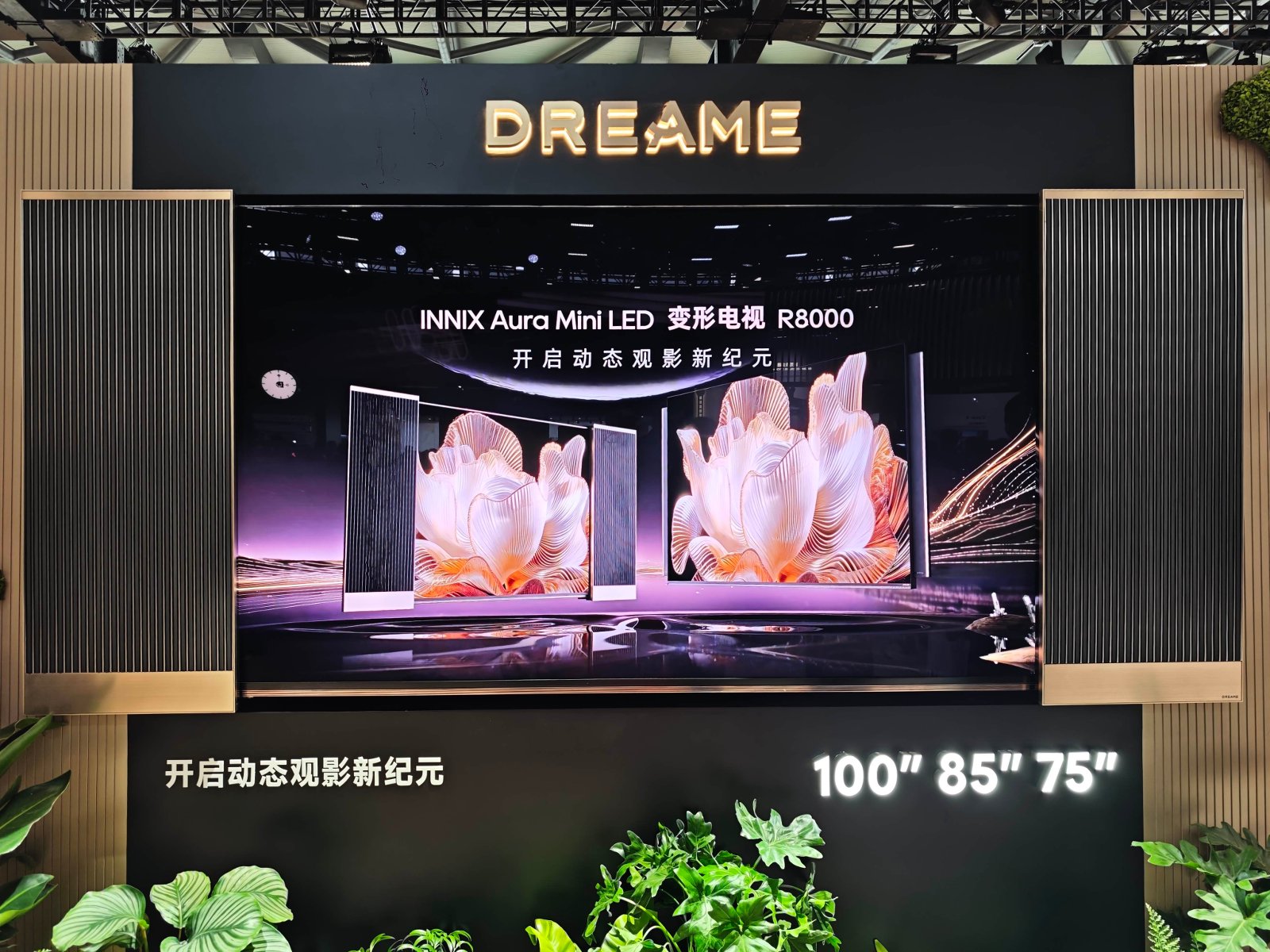
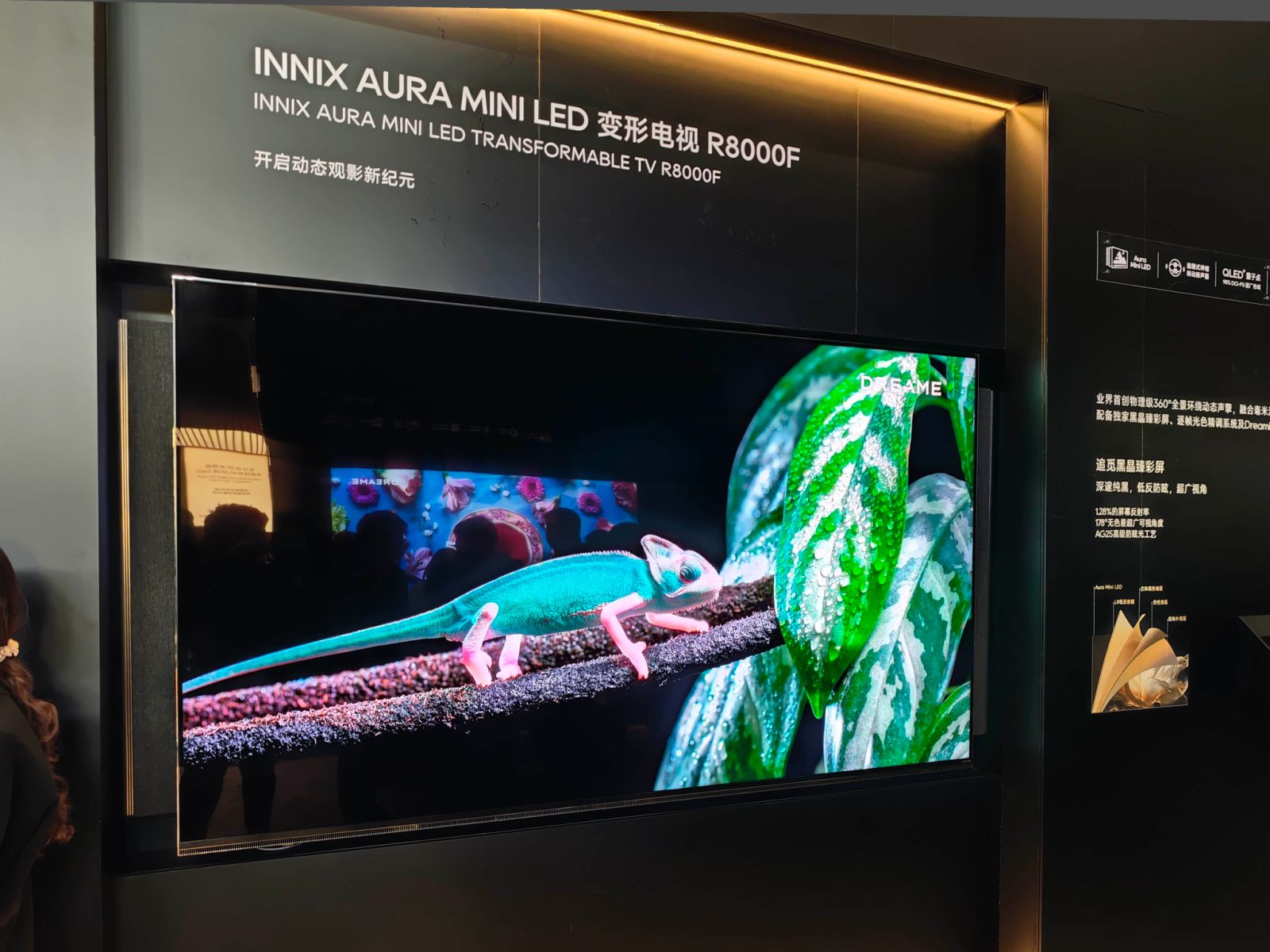
This year at AWE, Dreame took over the entire E7 hall, presenting the 'Dreame Universe' to the public. The company showcased multiple TV products, with the most attention-grabbing being the R8000 series 'Morphing TV.'
(Image source: On-site photography by Leitech)
Specifically, the R8000 series integrates the TV's acoustic structure with its mechanical framework. This innovative design allows the TV to dynamically adjust its sound field through morphological changes, synchronizing the sound emission position with the user's location for an ultimate immersive experience, whether watching movies or playing games.
(Image source: On-site photography by Leitech)
Installing mechanical structures on a TV is a wildly imaginative design that breaks free from the constraints of traditional TV forms, offering a novel approach to problem-solving. Of course, this is related to Dreame's years of deep involvement in the robotic vacuum sector. Previously, Dreame released a robotic vacuum with mechanical arms capable of climbing stairs. Now, incorporating mechanical devices into TVs follows a similar logic.
Hisense & Toshiba: Combining Ultra-Large Sizes with RGB Technology
Upon arriving at the W5 hall where Hisense and Toshiba are located, Xiaolei immediately noticed the abundance of 'behemoths,' with many TVs exceeding 100 inches. The 163UX Pro caught Xiaolei's eye—it's the world's first Micro LED TV, boasting an astonishing 163-inch size. Thus, a more accurate term for it might be 'giant screen.'
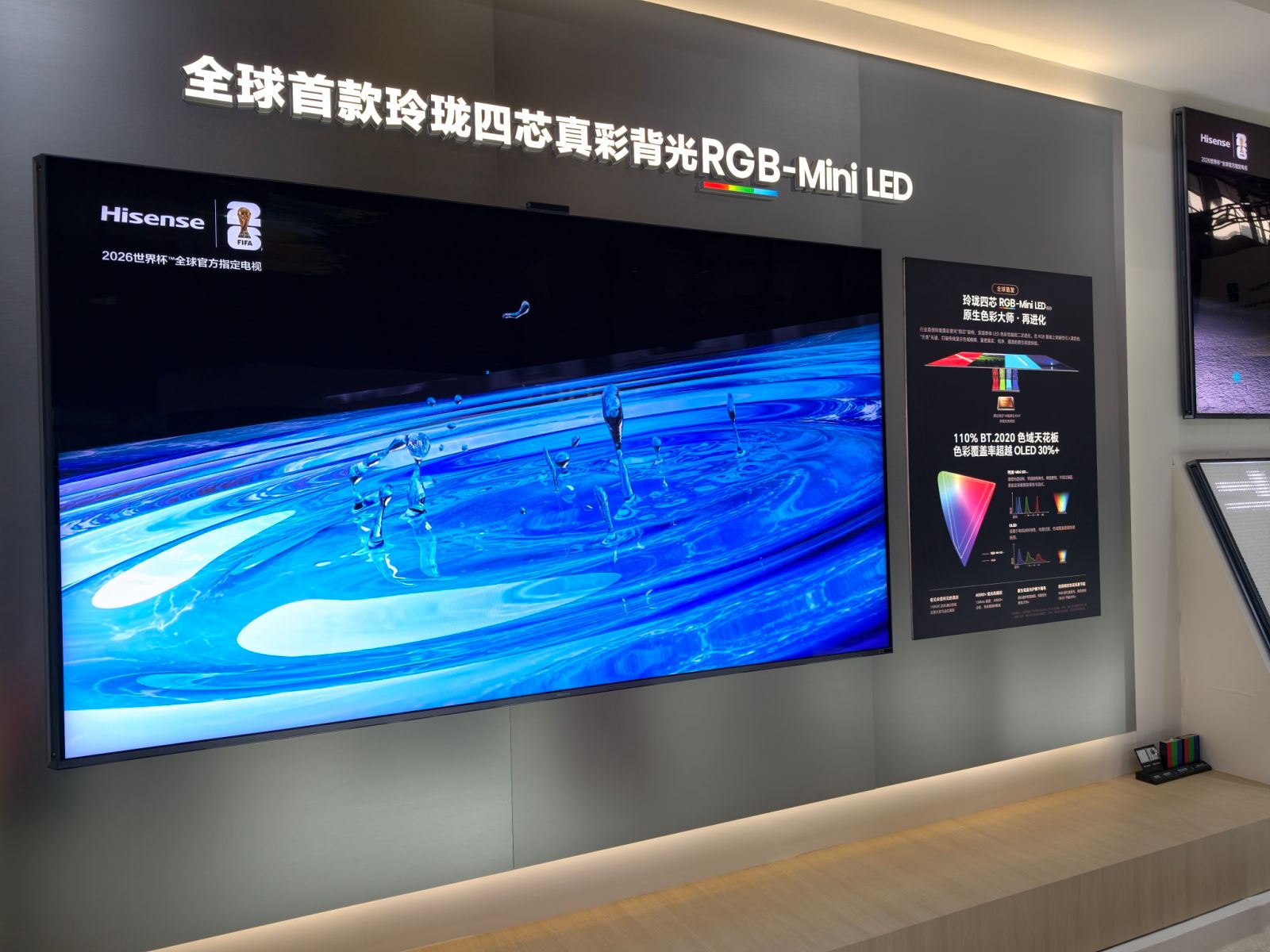
The 163UX Pro is a highly futuristic product, but Hisense's core consumer-market product remains the RGB-Mini LED TV. Building on RGB-Mini LED technology, Hisense introduced a breakthrough by adding a fourth color to the traditional three-color basis and launched the 'Quad-Core Control' Xincin AI Picture Quality Chip H7 Pro. Watching its displayed images on-site makes one imagine how incredible it would be to watch the 2026 World Cup on it.
(Image source: On-site photography by Leitech)
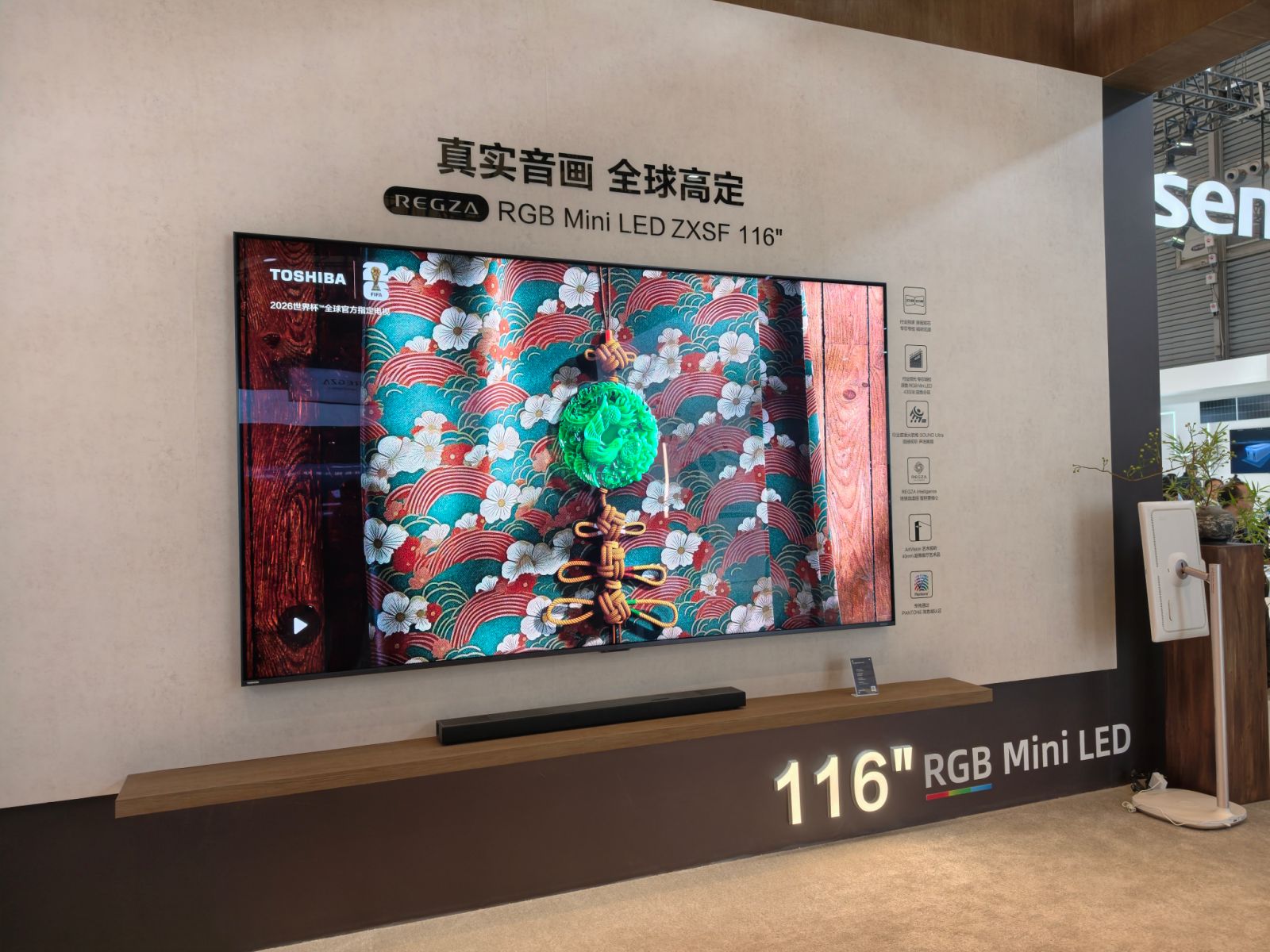
Additionally, although Toshiba's TV business was acquired by Hisense a few years ago, it continues to operate as an independent brand. Toshiba's REGZA series, targeting the high-end market, also features RGB Mini LED technology as its core selling point. Most Toshiba TVs seen on-site exceed 100 inches in size and boast impressive aesthetics.
(Image source: On-site photography by Leitech)
Toshiba TVs also offer AI-related solutions, primarily applied in practical scenarios such as automated screen and audio adjustments, child eye protection, and intelligent screen-off energy saving.
Skyworth: Wallpaper TVs Compete on Picture Quality, Thickness, and Design
At this year's AWE, Skyworth made a significant investment, with an exhibition area exceeding 1,000 square meters, showcasing its diverse range of home appliances. Of course, Skyworth's TV products remained the centerpiece. Skyworth has deeply cultivated the art TV sector for years and is the sales leader in this category. On-site, we saw multiple Skyworth wallpaper TVs, each with distinct design styles.
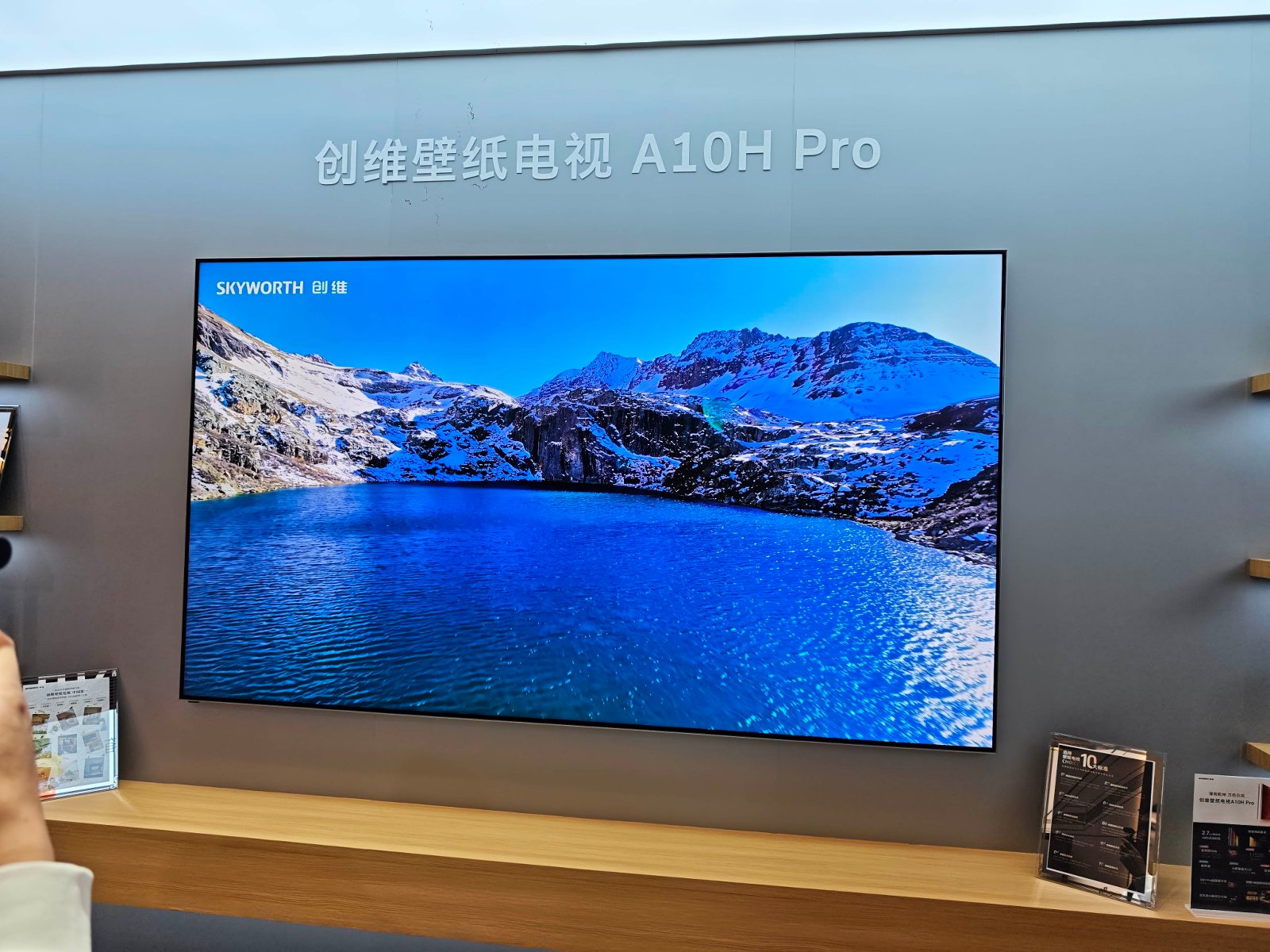
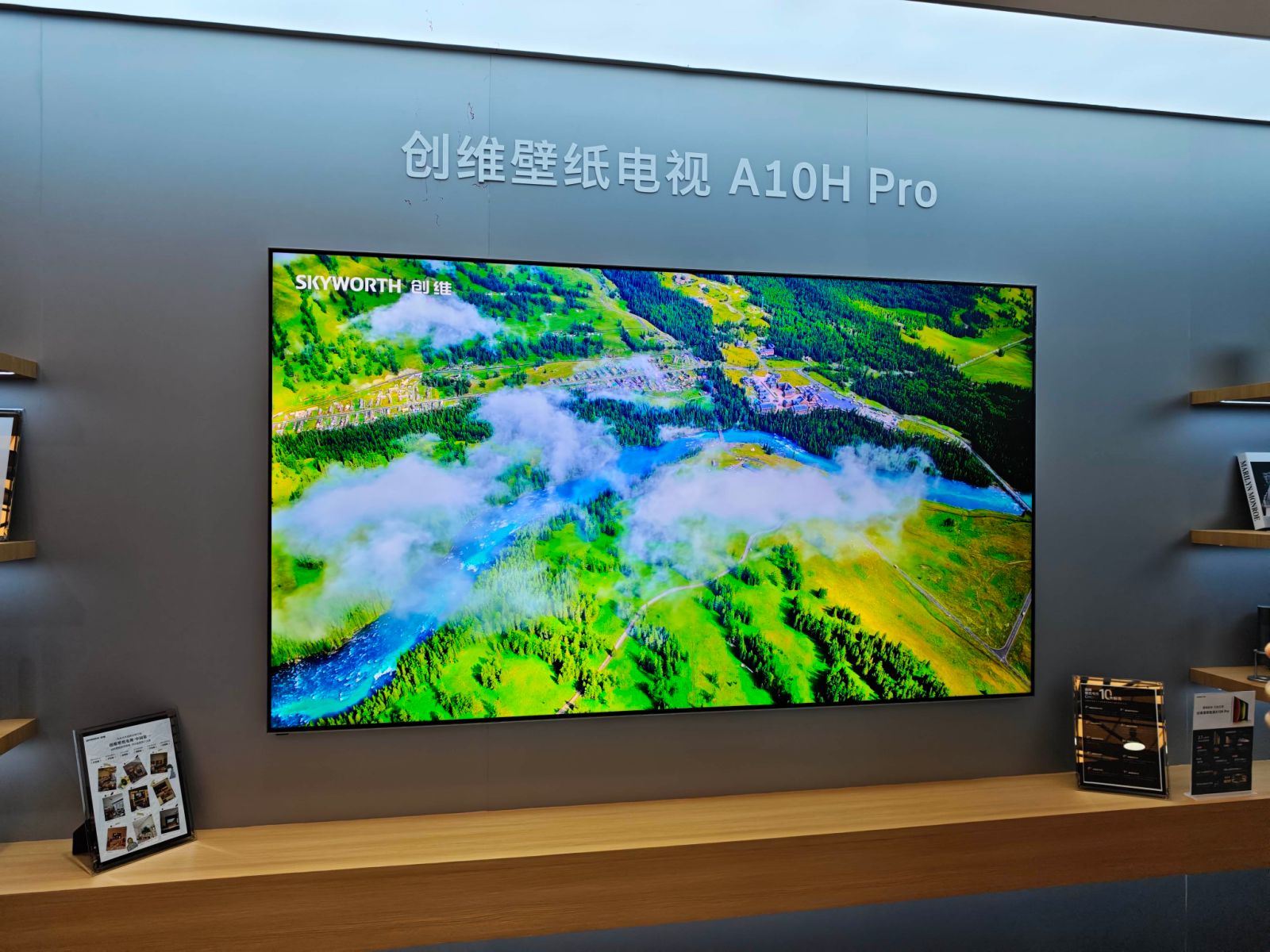
Compared to ordinary TVs, the most prominent feature of wallpaper TVs is their thinness, allowing seamless integration with home furnishings and delivering a tremendous visual impact while maintaining excellent design aesthetics. Skyworth's core product on display this time is the A10H Pro, positioned as a super flagship model. The first impression upon seeing this product on-site was awe-inspiring.
(Image source: On-site photography by Leitech)
This impression stems from several aspects. Firstly, its size is enormous—100 inches, comparable to a small cinema, with extremely narrow bezels. Secondly, its thickness is only 2.7mm, incredibly slim, truly resembling a wallpaper stuck on the wall, living up to its name as a 'wallpaper TV.' Additionally, it employs SQD Mini LED technology with 11,520 zones, delivering impressive picture quality and brightness.
(Image source: On-site photography by Leitech)
Skyworth's wallpaper TVs are typical design-driven products with a clear aesthetic advantage. Simultaneously, they incorporate advanced display technologies, ensuring outstanding picture quality. These wallpaper TVs, which compete on both picture quality and design while maintaining slim profiles, represent Skyworth's exploration of a unique path in industry competition, forming a differentiated advantage.
TCL & Thunderbird: Display Technology as Their Forte
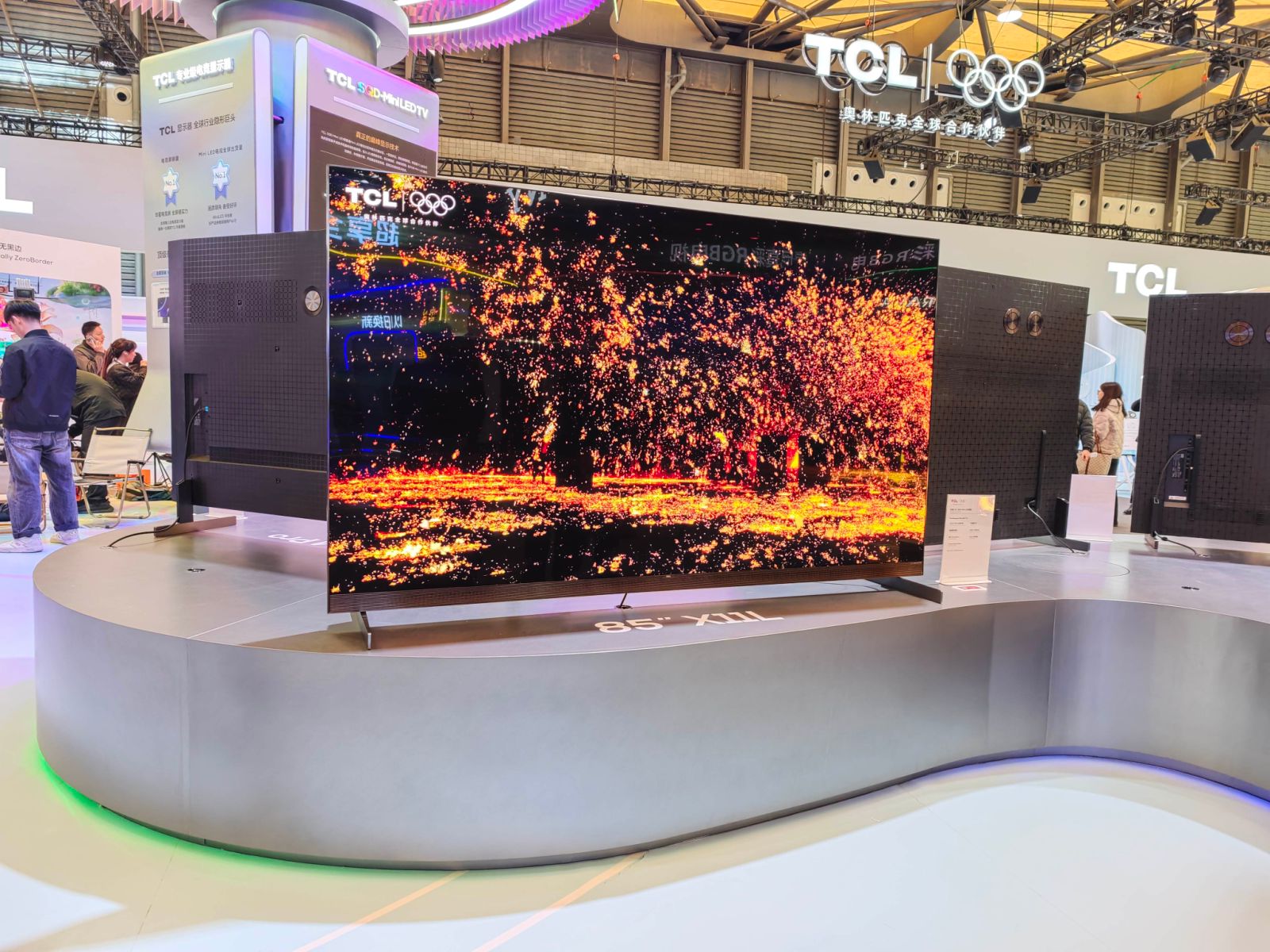
At TCL's booth, we saw the previously released X11L SQD Mini LED TV. According to official statements, TCL was the first brand to launch SQD Mini LED. In recent years, Mini LED technology has seen widespread adoption in TV products, evolving into subdivided technical routes such as QD Mini LED, SQD Mini LED, and RGB Mini LED.
The X11L seen on-site is the 85-inch version, offering a stunning 'borderless' effect at first glance. Moreover, SQD Mini LED technology excites super quantum dots through backlighting to produce trichromatic light, providing advantages in brightness, color, and lifespan over conventional Mini LED and OLED. Our on-site experience confirmed that the X11L's display effect is indeed excellent, with outstanding color and brightness.
(Image source: On-site photography by Leitech)
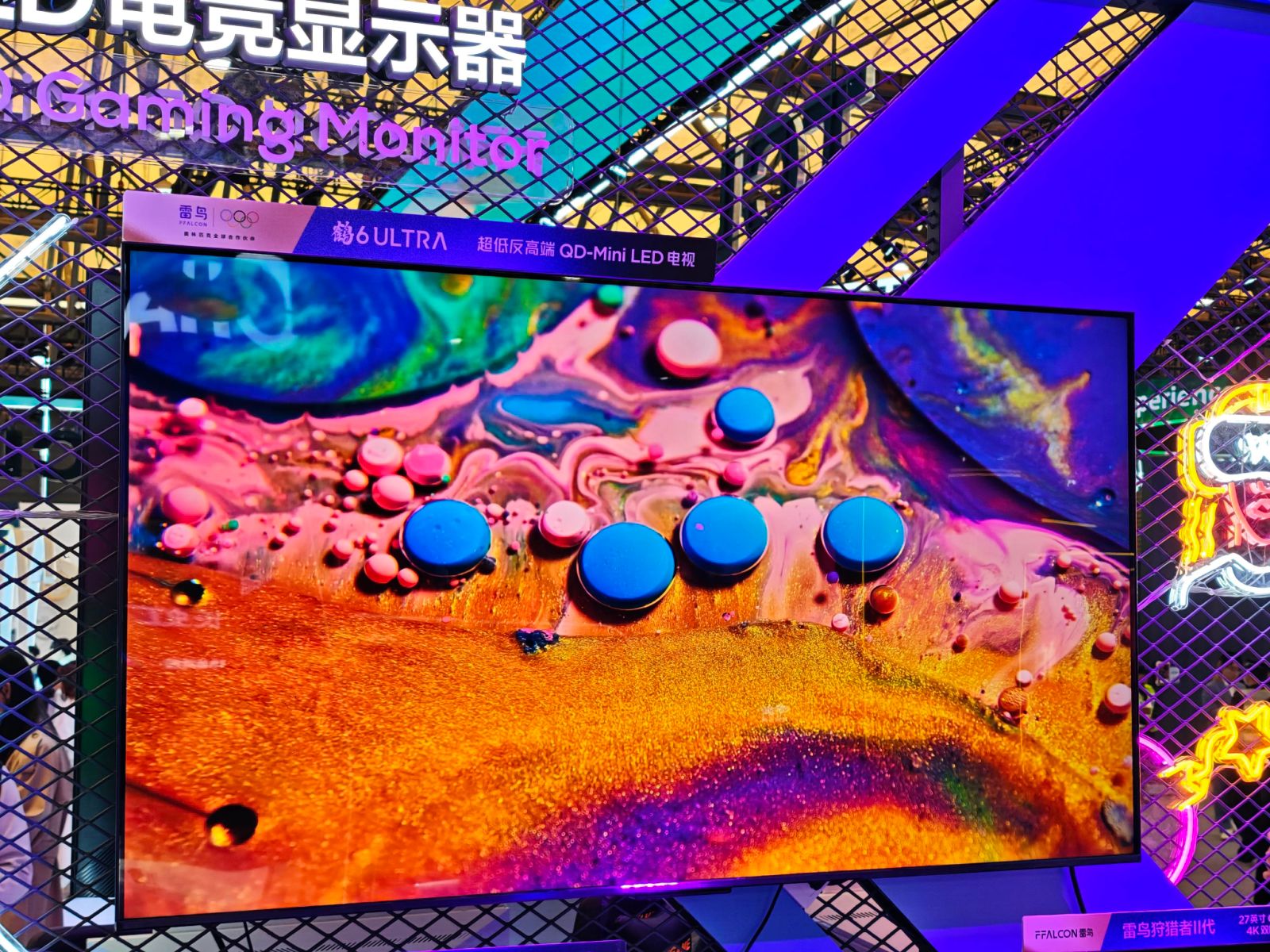
TCL's subsidiary brand, Thunderbird, also showcased TV products. One model that left a deep impression on Xiaolei was the Crane 6 ULTRA QD-Mini LED TV.
(Image source: On-site photography by Leitech)
Its main selling point is 'ultra-low reflection,' achieved through CSOT's self-developed low-reflection film technology, which reduces reflectivity and significantly suppresses screen glare. Simultaneously, its display effect remains as clear as a mirror screen, with unaffected color display and brightness. This TV also supports a maximum refresh rate of 144Hz, making it highly suitable for gaming scenarios.
Benefiting from CSOT's panel technology support, TCL TVs maintain a long-term lead in display technology, possessing multiple technical routes and the ability to adjust according to different application scenarios and target demographics.
Regarding AI, TCL proposed the concept of 'AI for Practicality,' advocating for integrating TVs and other home appliances and smart hardware products into a whole-house smart ecosystem to enhance users' actual experiences.
Changhong: TVs with Ambient Lighting
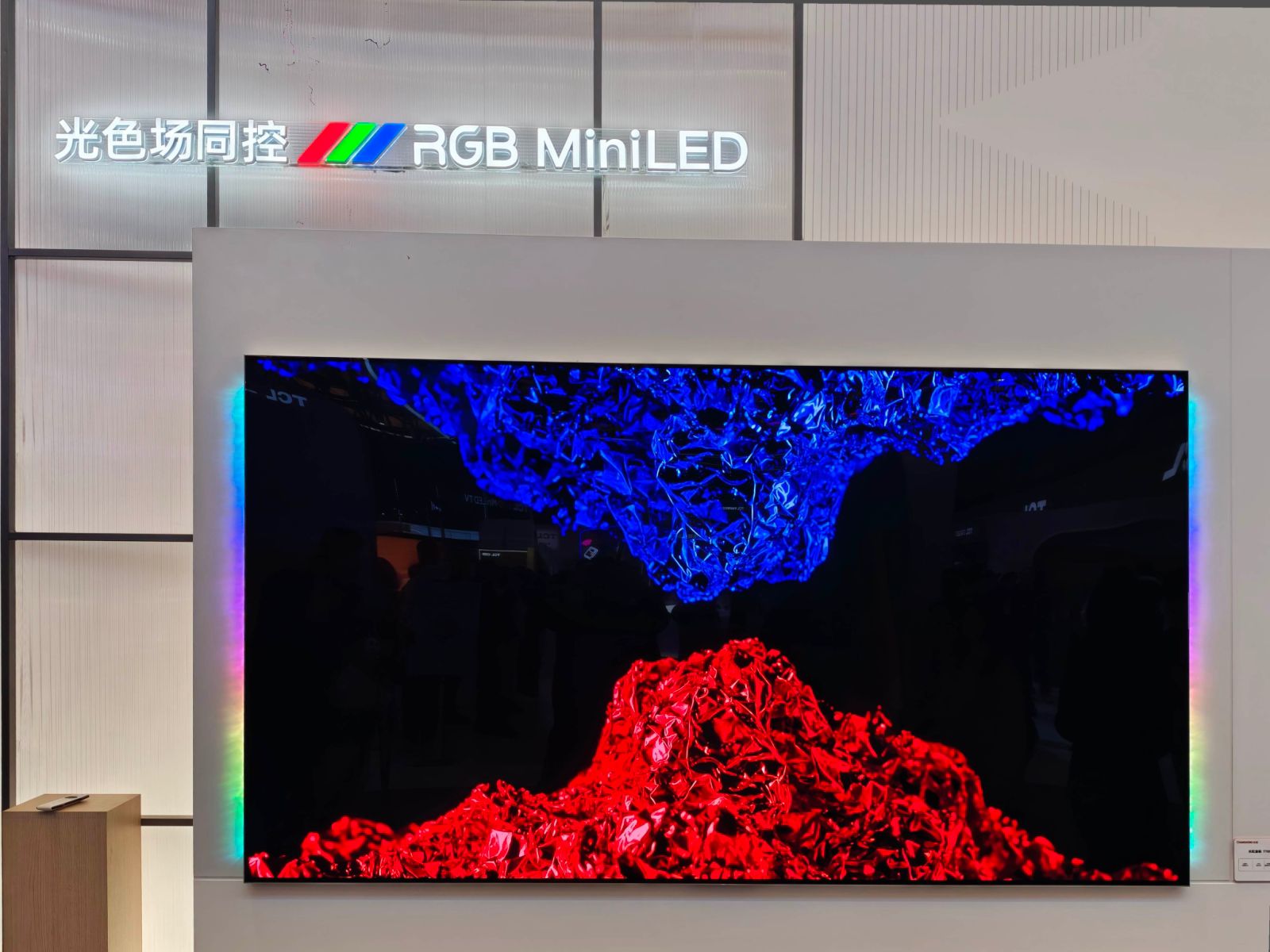
RGB is undoubtedly a hot technology in current TV products, and Changhong also made it a core selling point at AWE. This time, Changhong introduced its first 'Light, Color, and Field Synchronized Control' RGB Mini LED TV, paired with the new Hongtu V8 AI Picture Quality Chip, ensuring accurate color display in every frame without interference among red, blue, and green.
(Image source: On-site photography by Leitech)
Interestingly, most TVs displayed by Changhong on-site were equipped with RGB ambient lights capable of generating different lighting effects and presenting various light displays based on content and environmental changes.
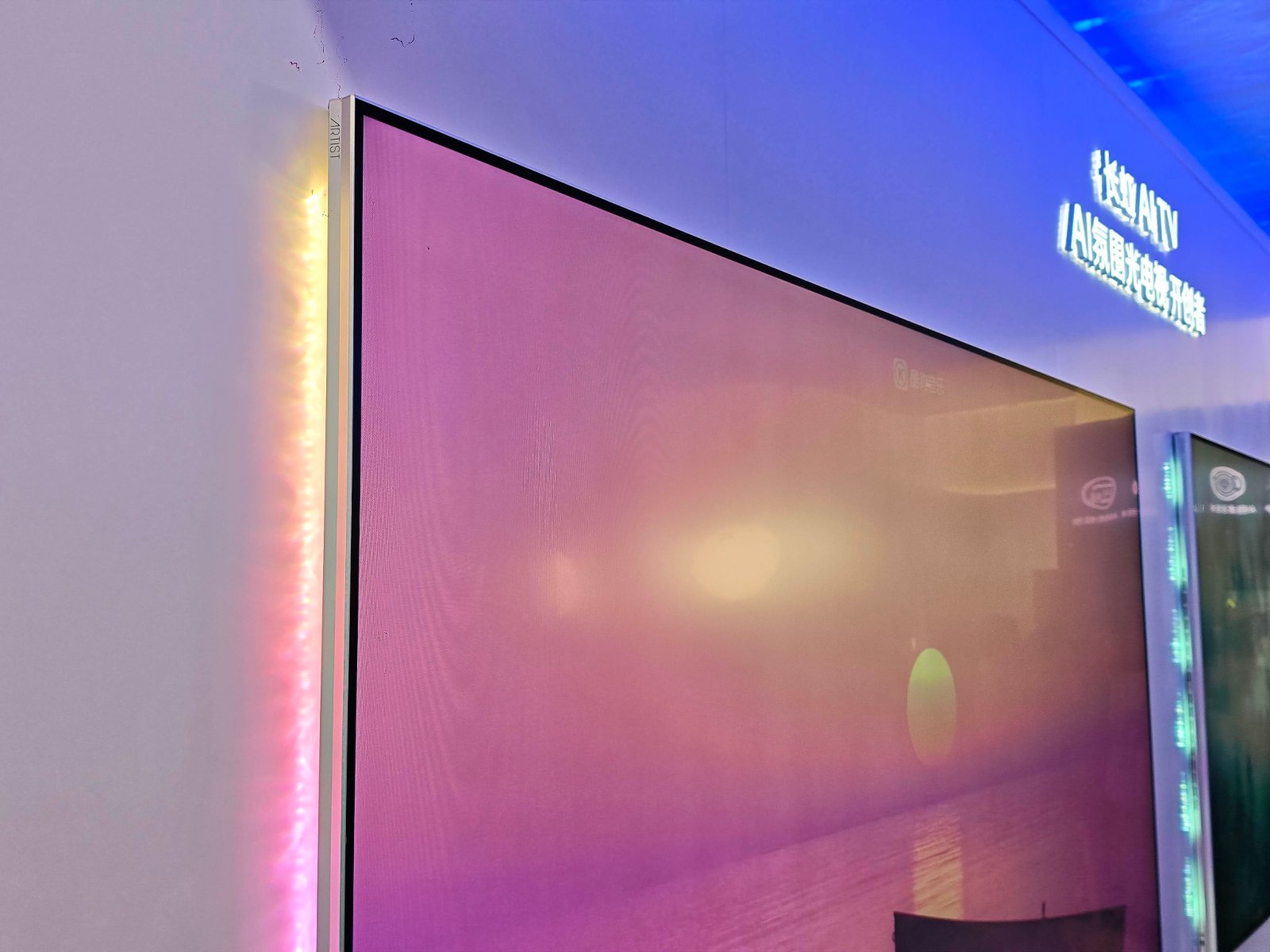
(Image source: On-site photography by Leitech)
Xiaolei speculates that this design inspiration comes from RGB ambient lights in the DIY sector, but Changhong's TV RGB lights are enhanced with AI technology, making them smarter and more diverse in form.
LG: Embracing Cutting-Edge Technology
Unlike most TV brands, LG has long adhered to the OLED technology route. At this AWE booth, the vast majority of LG TVs on display adopted OLED solutions, with the LG OLED evo W6, LG OLED evo G6, and LG SIGNATURE OLED T making their first appearances on Chinese show floors.
LG has pushed OLED's ultra-thin characteristics to the extreme, introducing the concept of wallpaper TVs. Even more impressively, LG's wallpaper TVs employ wireless connection technology, further freeing them from cable constraints.
Additionally, LG showcased a highly futuristic Micro LED giant screen TV and a transparent TV. Micro LED is seen as the future evolutionary direction of Mini LED technology, featuring smaller light beads and finer zonal light control, delivering powerful display effects, albeit currently with high costs and manufacturing difficulties.
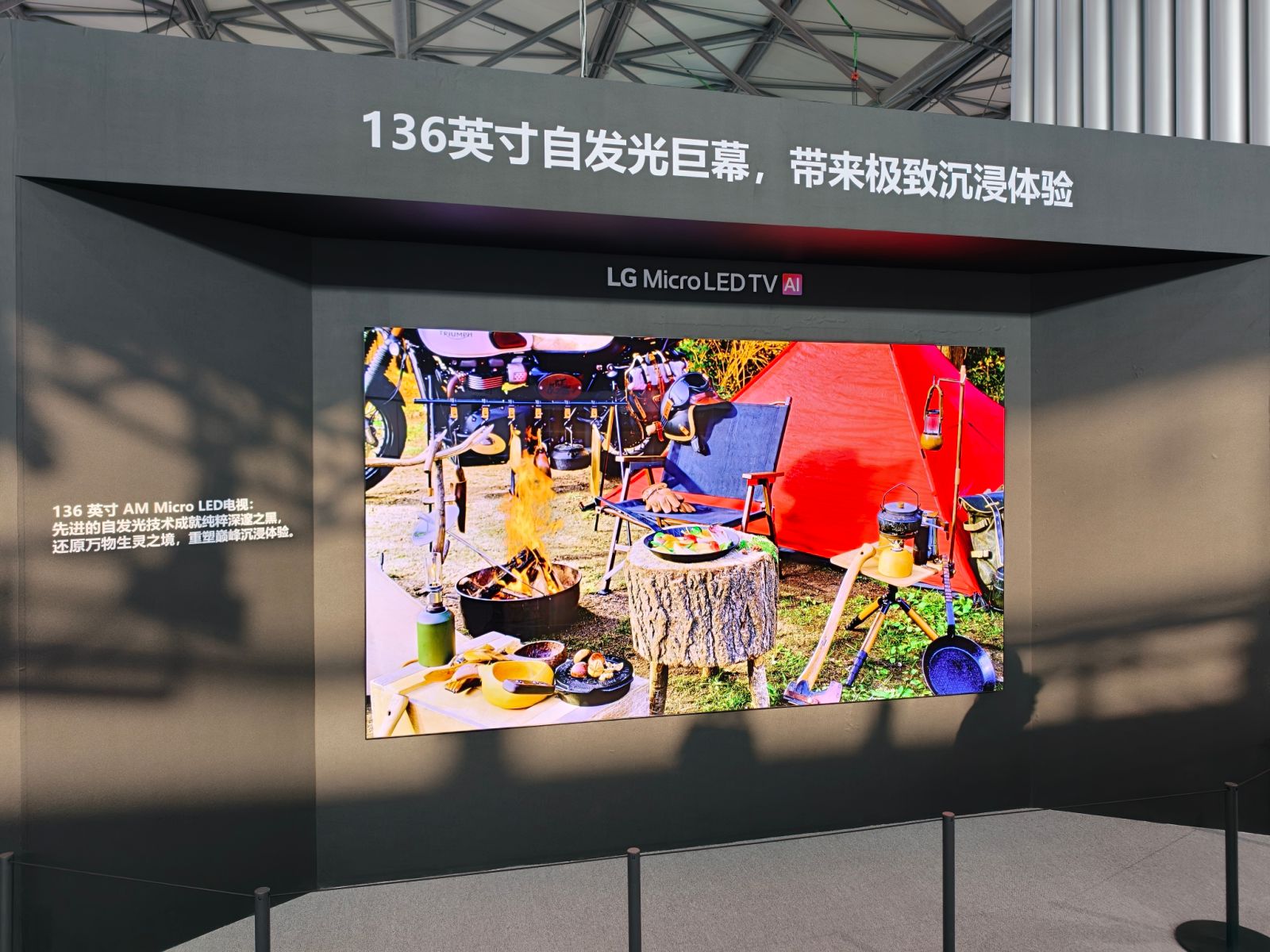
(Image source: On-site photography by Leitech)
The transparent TV, on the other hand, is an even cooler piece of cutting-edge technology. At the venue, LG intentionally displayed the transparent TV's image as a fish tank. At first glance, Xiaolei thought it was a real fish tank and even doubted it was a so-called smart fish tank.
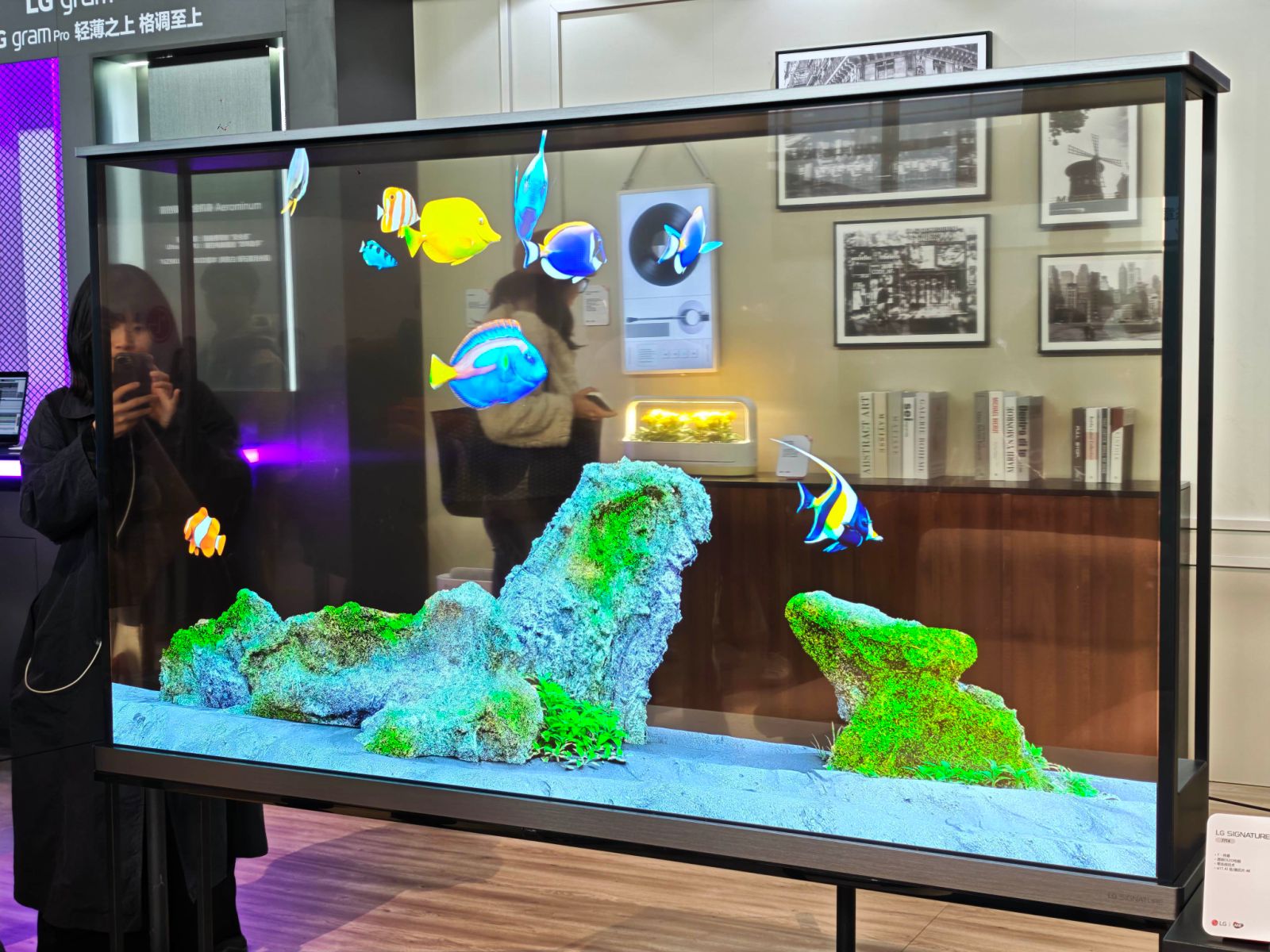
(Image source: On-site photography by Leitech)
From Xiaolei's observations, many viewers, like him, were deceived, stopping in front of the TV with puzzled expressions. LG's transparent TV achieves state switching between displaying content and maintaining transparency by controlling pixel illumination.
As a major panel manufacturer, LG also possesses its technological and brand advantages in the TV sector. However, to carve out a niche in the domestic TV market dominated by Chinese giants, LG faces fierce competition. After all, no player remaining in the TV race is a weakling.
Sony: True-Color RGB TVs Make Their Debut
As a veteran TV giant, Sony is also a regular at AWE. This year, Sony primarily promoted its RGB TV products. It's reported that at AWE2026, Sony's true-color RGB TVs completed their first global public picture quality display.
At the exhibition, we saw Sony's RGB TVs in multiple sizes. Regarding RGB LED technology, Sony considers itself a pioneer, having launched its first RGB LED TV as early as 2004.
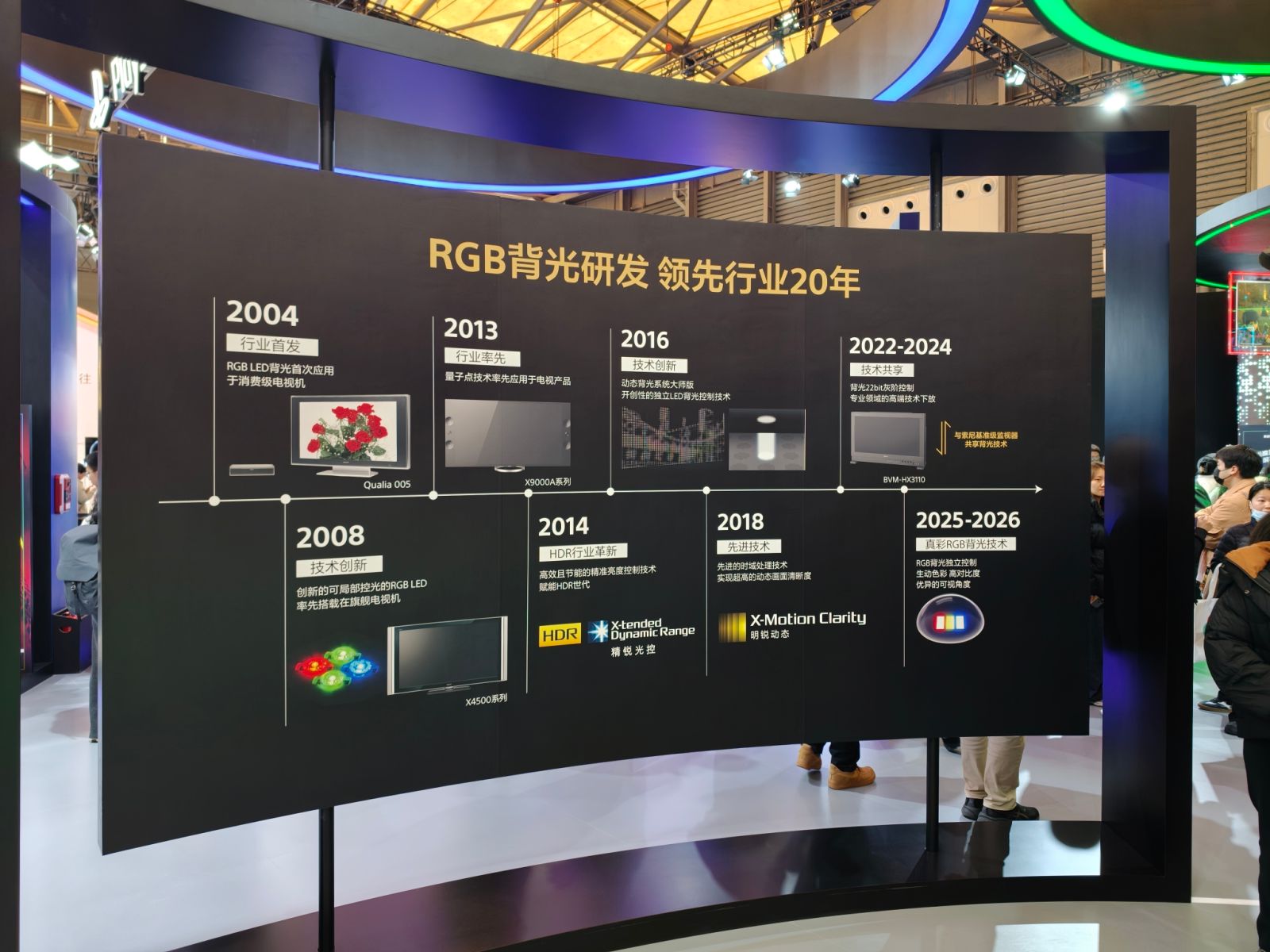
(Image source: On-site photography by Leitech)
After over 20 years of technological upgrades, Sony's true-color RGB has achieved independent precision control of the three primary colors—red (R), green (G), and blue (B)—resulting in significant improvements in color, picture detail, and uniformity. Based on current visual impressions, Sony TVs' color calibration indeed has a unique flavor, evoking a cinematic feel.
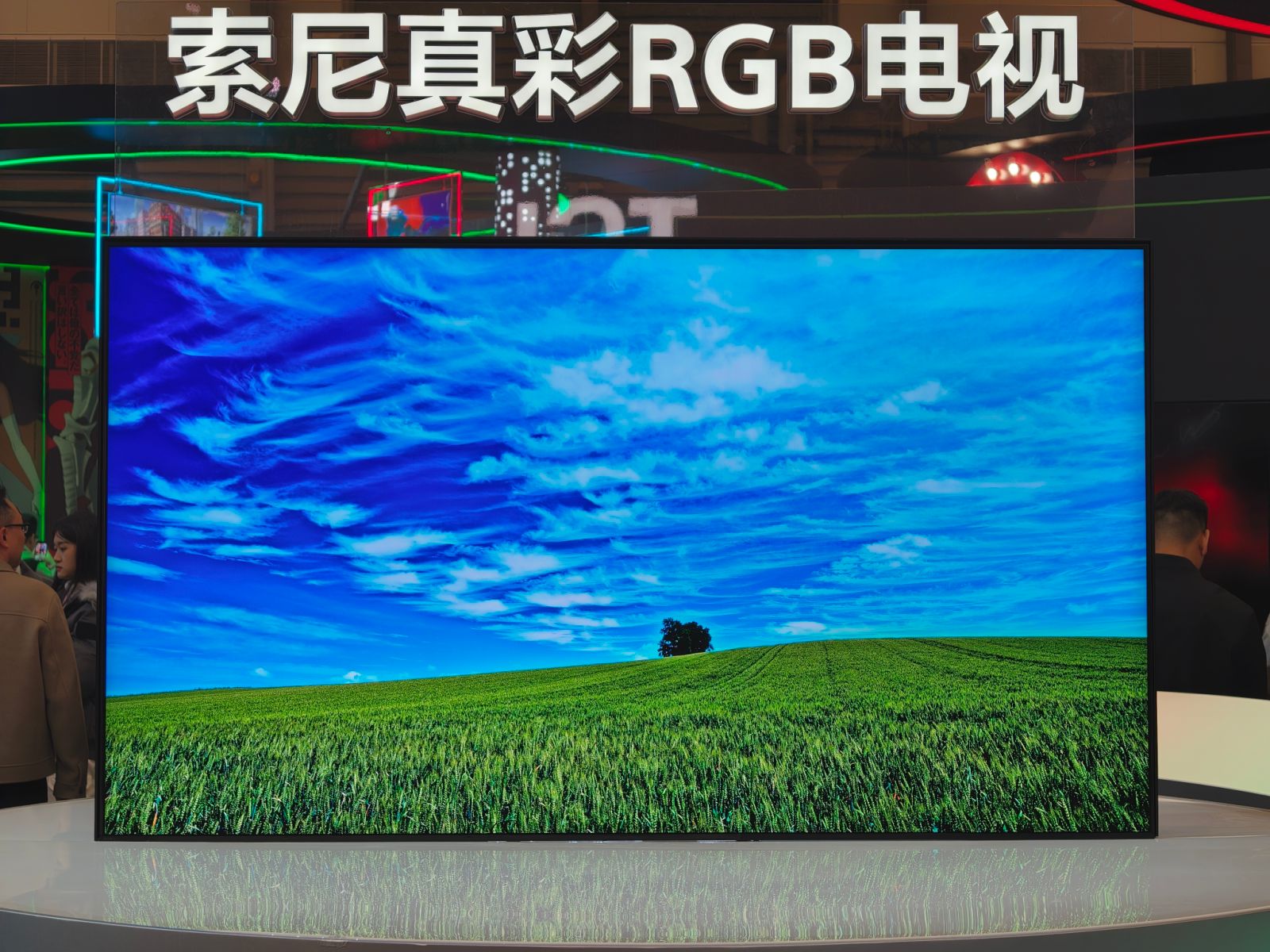
(Image source: On-site photography by Leitech)
Additionally, Sony has another advantage: maintaining full-link color consistency. Specifically, when Sony cameras shoot films, and post-production color grading is done through Sony monitors, and finally viewed on Sony TVs, color transmission remains consistent throughout the process without deviations.
It's worth mentioning that Sony's TV business has been divested and is now managed by a joint venture established by TCL and Sony, with TCL holding a 51% stake and operating Sony's TV business. This represents a strong alliance between Chinese and Japanese TV giants.
Summary: The TV industry competition enters a new phase
Returning to the several new trends in the current TV industry mentioned at the beginning, after visiting the TV booths at AWE, Xiao Lei has summarized some of his own thoughts.
Firstly, it is evident that TV display technology is advancing rapidly, with many past conceptual technologies quickly being integrated into standard product lines.
At this year's AWE, the most popular TV display technology is undoubtedly RGB. To be more specific, it has further evolved based on Mini LED technology. While different brands have distinct implementation plans, the overall direction remains consistent.
Traditional Mini LED, in essence, still relies on LCD technology, utilizing monochromatic light beads passing through a filter to mix colors and produce the RGB primary colors for color display. In contrast, RGB Mini LED starts with the backlight source, which inherently produces RGB colors, resulting in superior color purity and display performance.
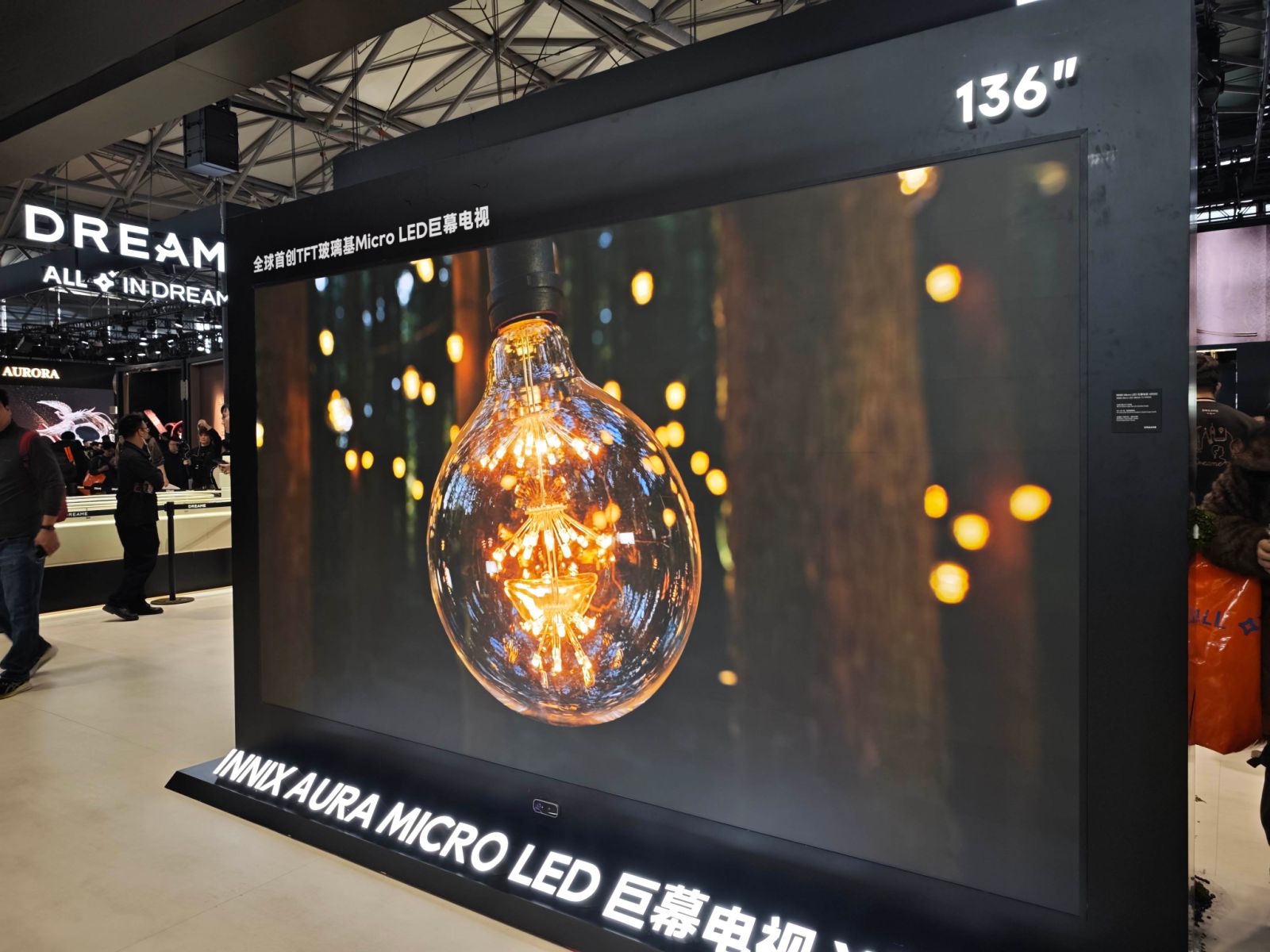
(Image source: On-site photography by
At this year's AWE (Appliance & Electronics World Expo), it's clear that major brands are making significant efforts to promote RGB technology. While Micro LED, Micro OLED, and transparent TVs continue to be cutting-edge technologies that showcase technological innovation, RGB stands out as a mature display technology that ordinary consumers can already enjoy and experience firsthand.
Secondly, AI (Artificial Intelligence) remains a pivotal technology in the TV industry, but brands are adopting a more pragmatic approach, with AI being better implemented in specific scenarios. Over the past few years, the TV industry has also placed considerable emphasis on AI, but it was still in a tentative, exploratory phase. Nowadays, TV brands are carefully selecting suitable niches for AI applications based on the actual conditions and capabilities of their products, which is undeniably beneficial for users.
For instance, Dreame has integrated AI-powered mechanical devices into TVs to enhance sound effects; Changhong has incorporated AI chips and algorithms to improve picture quality; Toshiba TV's AI applications focus on creating immersive audio-visual experiences and addressing user eye health, among other tailored scenarios.
Furthermore, it's noticeable that the leading effect within the industry is becoming more pronounced, with many brands moving towards matrix-style operations. This trend is characterized by strategic collaborations and acquisitions.
For example, TCL and Sony have joined forces in their TV businesses, Skyworth has acquired Panasonic's TV business, and Hisense acquired Toshiba TV several years ago. At this juncture, Chinese TV giants have all completed the integration of industry resources, solidifying their positions in the market.
Simultaneously, targeting the online market and more segmented user groups, many TV brands are operating and nurturing multiple sub-brands, forming a comprehensive brand matrix. This strategy allows them to cover a wider audience and enhance their overall competitiveness in the market.
Overall, through this year's AWE, we can discern that Chinese TV brands are becoming increasingly robust, display technologies are continuously advancing, and AI is being effectively implemented in specific scenarios. The TV industry has unmistakably entered the next phase of its development.
-
![]()
Hardware is the skeleton, AI is the soul, and data integrates the two
-
![]()
China’s AI Industry: A Unified Pivot Towards Monetization?
-
![]()
New Progress! Infineon Completes Acquisition of ams OSRAM's Non-Optical Sensor Business
-
![]()
35 Million Bet on an Optical Future! Tengjing Technology Makes a Move in AR
-
![]()
Why World Models Get Stuck on Construction Roads in Autonomous Driving Applications
-
Alibaba Initiates Cultural Transformation: Is Jack Ma Making a Strategic Comeback?
-
Tianfeng Heads to Hong Kong for IPO with RMB 3.8 Billion in Funds: Xingyu's Cross-Border Foray into Embodied AI Faces Uncertain Future
-
![]()
Mengshi Auto’s High-End Aspirations Dashed: Huawei Partnership Fails to Revive Sales, New Model’s Entry Price Dips Below 300,000 Yuan