Final Verdict: New Energy Vehicles Are Key to Ensuring National Energy Security
 03/13 2026
 556
556
As conflicts in the Middle East continue to escalate, international oil prices have witnessed dramatic fluctuations, with crude oil futures briefly approaching $120 per barrel on March 9. Due to these surging prices, domestic refined oil product prices have risen since midnight on March 9, 2026. Specifically, gasoline and diesel (standard grade) prices have increased by 695 yuan and 670 yuan per ton, respectively, marking a significant 7.7% hike.
This price adjustment represents the fourth increase in 2026 and the largest in nearly four years. Following the adjustment, owners of fuel-powered vehicles will incur an additional 27.5 yuan for a 50-liter tank of 92-octane gasoline.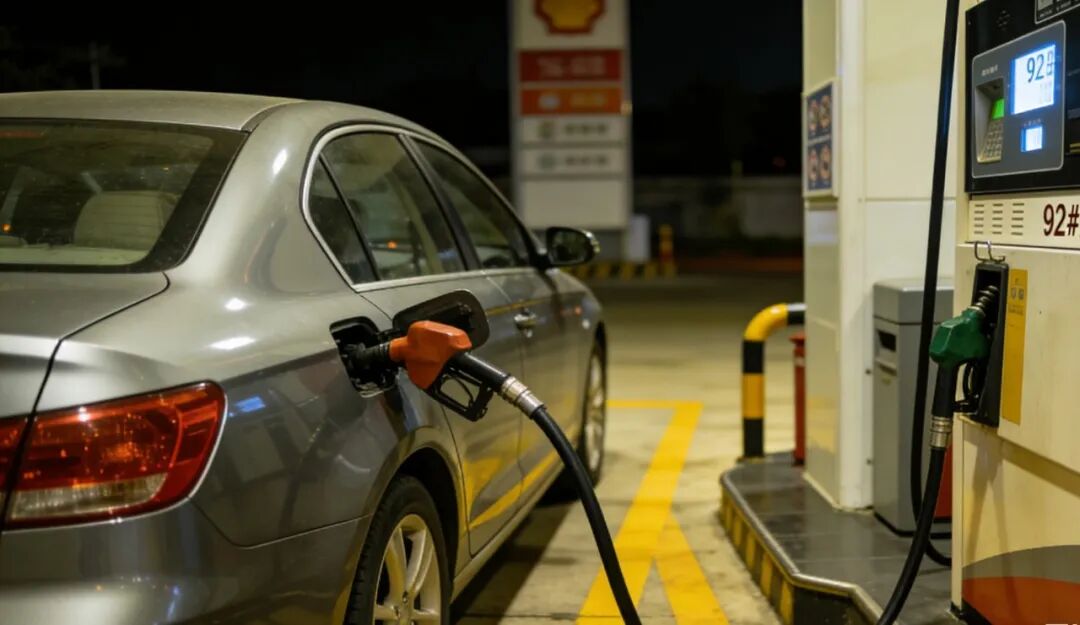
As queues lengthen at gas stations and fuel shortages emerge in some countries, one cannot help but marvel at the wisdom of China's strategic decision to vigorously promote new energy vehicles. As early as 2010, the Chinese government identified new energy vehicles as a strategic emerging industry and provided robust support. This strategic foresight has proven to be highly prescient.
China's National Context: Oil and Gas Shortage
During an interview with BYD's chairman Wang Chuanfu several years ago, he emphasized that while Europe prioritizes environmental protection in developing new energy vehicles, China's primary motivation is national energy security, followed by environmental considerations. China faces a scarcity of oil and gas resources but boasts abundant coal and electricity supplies.
As the world's largest energy consumer, China's reliance on imported oil has remained consistently high, recently surpassing the 70% warning threshold.
According to customs data, China imported 578 million tons of oil in 2025, with an import value of $296.3 billion. The external dependence on oil reached 72.7%. Such massive energy imports not only deplete foreign exchange reserves but also pose a significant threat to China's energy security. Historical precedents, such as the economic fallout from the 2008 international oil price surge to $147 per barrel, serve as stark reminders of the risks involved.
The transportation sector accounts for nearly half of China's total oil consumption, with traditional fuel-powered vehicles being the primary consumers. This heavy reliance on imported energy exposes China's economic development to numerous uncertainties, including international oil price volatility, geopolitical risks, and transportation corridor security.
About a decade ago, Chen Bin, then director of the Industrial Coordination Department at the National Development and Reform Commission, stated at the Tianjin Teda Auto Forum that the country's annual increase of 30 million tons in refining capacity was entirely consumed by new vehicles. Given the rapid growth in China's vehicle ownership, if all newly added vehicles were fuel-powered, it would exert increasing pressure on China's energy security.
China: The World's Largest Electric Power Producer
China leads the world in electricity generation and consumption. In 2025, China's total electricity consumption exceeded 10 trillion kWh, reaching 10.4 trillion kWh. This figure is more than double the annual electricity consumption of the United States and surpasses the combined annual consumption of the EU, Russia, India, and Japan.
China's abundant electricity supply provides a reliable energy source for developing new energy vehicles, primarily electric vehicles (EVs). EVs typically operate during the day and recharge at night, fully utilizing off-peak electricity. Experts estimate that China's daily peak-valley electricity difference is approximately 800 million kWh, sufficient to charge 40 million EVs. This arrangement not only balances the peak-valley electricity difference without increasing generation capacity but also offers a mutually beneficial solution.
In an era of profound global energy transformation, China has elevated the development of new energy vehicles, primarily EVs, to a national strategic level. This decision reflects considerations that extend beyond industrial upgrading. The primary impetus behind China's vigorous promotion of new energy vehicles is to safeguard national energy security. This strategic choice not only shapes the future of the automotive industry but also determines China's capacity for independent development in a complex international environment.
In light of this strategy, arguments claiming that EVs are not environmentally friendly because they rely on "dirty electricity" appear simplistic and unfounded.
Moreover, the core advantage of EVs lies in the diversity of their energy sources. Unlike traditional fuel-powered vehicles, which rely solely on oil, EVs can draw electricity from various sources, including coal, hydropower, nuclear energy, wind, and solar power. China has achieved global leadership in renewable energy, with the proportion of thermal power generation declining annually and renewable energy on the rise. By 2025, renewable energy generation reached approximately 4.0 trillion kWh, with installed capacity accounting for over one-third of the global total.
New Energy Vehicles Reduce Oil Imports
According to calculations by the Chinese Society of Automotive Engineers, every 1 million EVs can replace approximately 1.3 million tons of fuel annually and reduce crude oil imports by about 2 million tons. Currently, new energy vehicles account for 12% of China's total vehicle ownership. As the number of new energy vehicles, primarily EVs, continues to grow rapidly, demand for refined oil products will decline, along with the need for imported oil.
China's power system, characterized by "coal-dominated and diversified development," boasts abundant coal, hydropower, and solar power resources, ensuring strong self-sufficiency. Shifting transportation energy demand from oil to electricity essentially transfers the foundation of energy security from unstable international oil supplies to a domestically controlled energy system. Especially against the backdrop of declining renewable energy generation costs and rapid advances in energy storage technology, the collaborative development of new energy vehicles and the power grid is creating a new energy security model.
Developing new energy vehicles also represents an effective measure for China to honor its commitment to reducing carbon emissions. At the UN General Assembly, China solemnly pledged to achieve "dual carbon" goals: reaching peak carbon emissions before 2030 and carbon neutrality before 2060. The transportation sector accounts for approximately 10% of national carbon emissions. The widespread adoption of new energy vehicles will directly reduce exhaust emissions, improve air quality, decrease reliance on fossil fuels, and achieve the dual objectives of environmental protection and energy security.
China's primary goal in developing new energy vehicles is to ensure energy security. This strategic positioning shapes its policy logic, technological pathways, and market dynamics. From reducing oil dependence to building an independent industrial chain, and from addressing climate change to promoting industrial upgrading, new energy vehicles embody multiple national strategic intentions.
The next decade will be crucial for China's new energy vehicle development and the reconstruction of its energy security system. Amid unprecedented global changes, energy security forms the cornerstone of national security. By achieving a structural replacement of transportation energy through new energy vehicles, China is spearheading a profound energy revolution. This revolution, though silent, is pivotal to the nation's future, with impacts that will resonate far beyond the present. (End)
-
![]()
The Unstoppable Rise of 'Optical Progress and Copper Decline': Sunny Optical’s Strategic Vision for the Next Decade
-
![]()
AI + Going Global in the Second Half: No Intermission for Robot Vacuum Cleaners
-
![]()
The Suffering Endured in E-commerce, Walmart Doesn't Want to Repeat in AI
-
![]()
What Does the Doubling of New Energy Vehicle Exports Mean?
-
![]()
Ghosn: 'Only I Can Save Nissan'
-
![]()
Volkswagen Lays Off 100,000 Employees, The Elephant Sits Down
-
![]()
Expanding Production Capacity! Yutong Optics Acquires Approximately 1.5 Hectares of Industrial Land in Chang'an, Dongguan
-
![]()
Why Is Nokia Making a Comeback in the AI Era?