FAW-Volkswagen’s Personnel Reshuffle: Shareholder Strategies or Transformation Resolve?
 03/13 2026
 672
672
Author / Liu Wei
Produced by / Insight Auto
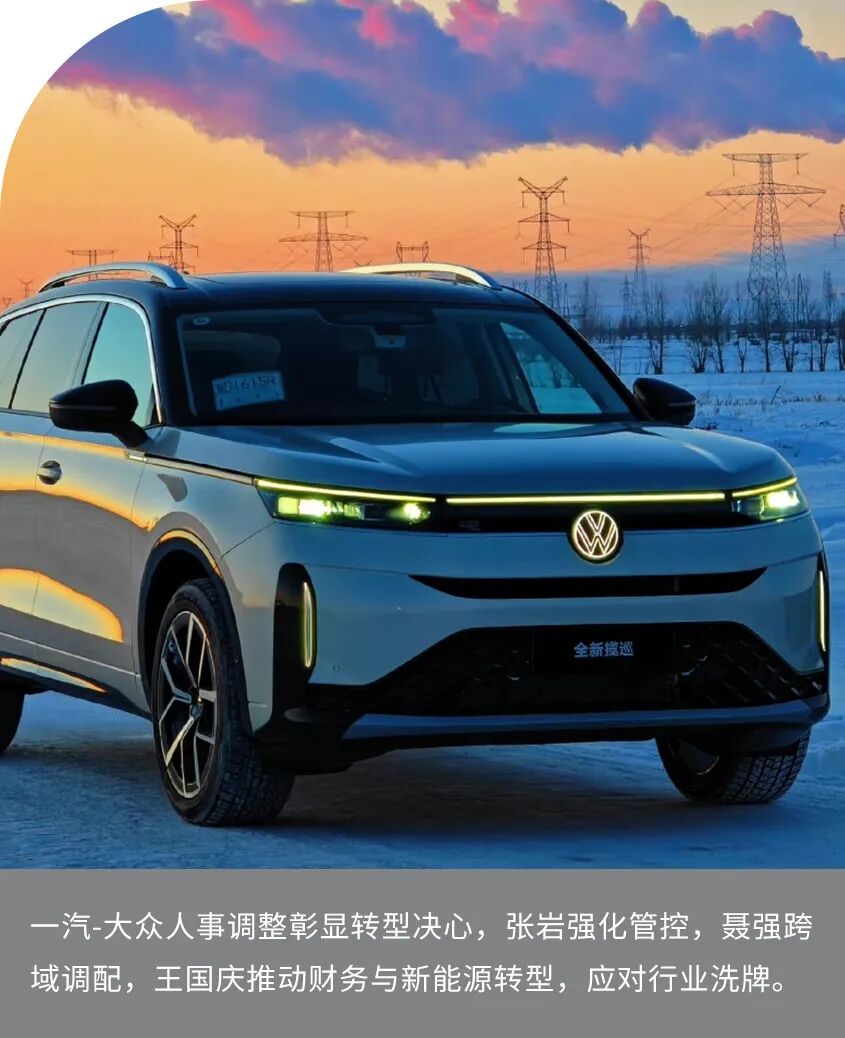
FAW-Volkswagen has recently undergone industrial and commercial changes, with Zhang Yan taking over as director from Nie Qiang and Wang Guoqing assuming the role of financial officer.
Far from being a mere routine change, this personnel shift is a direct reflection of the strategic interplay between China FAW Group and German Volkswagen shareholders. It represents a calculated move by the joint venture giant, which has surpassed 30 million units in production and sales, to navigate industry upheaval and break through the transformation impasse. This reshuffle underscores the survival anxieties and determination to innovate among joint venture automakers amidst the electrification wave.

Precisely Addressing Transformation Challenges
Aligning with Group Synergy Strategies
The core rationale behind this personnel adjustment is to “align with transformation, enhance control, and balance the interplay.” Zhang Yan, the newly appointed director, boasts a resume that perfectly aligns with FAW-Volkswagen’s current development challenges.
A seasoned professional who rose through the ranks of the FAW Group, Zhang Yan has garnered cross-departmental management experience in sales, R&D, and discipline inspection. Early in his career, he collaborated closely with Dong Xiuhui, the current Party Secretary and General Manager of FAW-Volkswagen, serving in various capacities including Deputy Party Secretary of the Sales Company, thus gaining a deep understanding of joint venture operations and the Chinese side’s demands.
His subsequent roles as Discipline Inspection Secretary of the FAW R&D General Institute and Standing Committee Member of the Discipline Inspection Committee of China FAW Group have further honed his rigorous control capabilities and provided him with a global outlook.
In January of this year, Zhang Yan returned to FAW-Volkswagen as Deputy Party Secretary and Head of the Trade Union. Just two months later, he was appointed director, a testament to the Chinese side’s confidence in him. His primary mission is likely to bolster internal control, drive the implementation of the Chinese side’s strategic imperatives within the joint venture, and bridge the sales and R&D systems to facilitate the new energy transition.
Nie Qiang’s reassignment also carries significant implications. This manager, deeply entrenched in the FAW system, joined FAW-Volkswagen in 2019 and successively oversaw core sectors such as the Volkswagen brand network and sales planning. He later served as General Manager of FAW-Volkswagen Sales Company, witnessing the zenith of FAW-Volkswagen’s fuel vehicle era and experiencing the growing pains of the new energy transition.
By the end of 2025, Nie Qiang was transferred to serve as Deputy General Manager of FAW Toyota and Head of the Sales Company. While this may appear to be a lateral move, it is, in fact, a strategic cross-sectoral deployment of key personnel by China FAW Group. FAW Toyota’s strengths in the hybrid field may offer new avenues for Nie Qiang to apply his accumulated sales management experience, while his joint venture management expertise gained at FAW-Volkswagen will also enrich FAW Toyota’s market-oriented布局 (layout).
The newly appointed financial officer, Wang Guoqing, has been deeply involved in the FAW system for years and concurrently serves as a director of FAW-Volkswagen Sales Co., Ltd. His dual roles directly address FAW-Volkswagen’s current core challenges: cost control and profit enhancement.
Public data reveals that Volkswagen’s operating profit plummeted by 53% to 8.87 billion euros in 2025. Although its Chinese joint ventures remain a profit pillar, FAW-Volkswagen faces dual pressures of increased new energy investment and shrinking fuel vehicle profits. In 2025, its annual sales reached 1.587 million units, maintaining its top position in the joint venture rankings but experiencing a year-on-year decline, with sluggish performance in new energy models.
Sales of core models in the ID. series declined by more than 40% year-on-year, with annual sales of the ID.6 CROZZ falling short of 1,000 units.
Wang Guoqing’s primary task is inevitably to optimize the financial structure, tightly control transformation investment costs, balance the conflict between fuel vehicle profits and new energy investments, and bridge the sales and financial ends to enhance capital utilization efficiency. This is also a shared imperative for both joint venture partners under profit pressure.

Personnel Layout Balances Differences
Safeguarding Transformation Strategy Execution
This personnel adjustment cannot be divorced from the broader context of the strategic interplay between Chinese and German shareholders. Currently, the shareholding ratio of FAW-Volkswagen stands at 60% for FAW Group, 30% for German Volkswagen, and 10% for Audi AG. Negotiations on adjusting the shareholding ratio are ongoing, with the potential shift from 60:40 to 51:49. The Chinese side demands that the German side increase its shareholding ratio while providing core technical support for the development of FAW’s autonomous brands.
The German side, however, remains cautious about the valuation of FAW-Volkswagen’s assets and technology sharing. Zhang Yan’s appointment not only strengthens the Chinese side’s voice in the joint venture but also, due to his familiarity with joint venture operations, facilitates the implementation of bilateral negotiations. Wang Guoqing’s financial control can better balance differences in profit distribution and cost investments between the two sides, laying a solid foundation for negotiations on shareholding ratio adjustments.
For FAW-Volkswagen, personnel adjustments are just the first step in breaking the deadlock. In 2026, China FAW Group has set itself ambitious targets of 3.546 million units in sales and 570.04 billion yuan in operating revenue. As the cornerstone of the group, FAW-Volkswagen must maintain its advantages in fuel vehicles and achieve a breakthrough in new energy.
It is reported that the company will launch 13 new models in 2026, including 7 new energy models, covering the three major brands of Volkswagen, Audi, and Jetta, with the goal of achieving a 60% share of new energy sales by 2030.
Whether Zhang Yan and Wang Guoqing can effectively integrate existing strategies, promote internal control and financial optimization upgrades, and break through the dilemma of lagging new energy transformation, and whether Nie Qiang’s cross-sectoral transfer can achieve synergistic empowerment of FAW Group’s joint venture sector, will determine whether FAW-Volkswagen can stand firm in the reshuffling of the joint venture auto market.
END
-
![]()
The Unstoppable Rise of 'Optical Progress and Copper Decline': Sunny Optical’s Strategic Vision for the Next Decade
-
![]()
AI + Going Global in the Second Half: No Intermission for Robot Vacuum Cleaners
-
![]()
The Suffering Endured in E-commerce, Walmart Doesn't Want to Repeat in AI
-
![]()
What Does the Doubling of New Energy Vehicle Exports Mean?
-
![]()
Ghosn: 'Only I Can Save Nissan'
-
![]()
Volkswagen Lays Off 100,000 Employees, The Elephant Sits Down
-
![]()
Expanding Production Capacity! Yutong Optics Acquires Approximately 1.5 Hectares of Industrial Land in Chang'an, Dongguan
-
![]()
Why Is Nokia Making a Comeback in the AI Era?