Samsung's Strategic Shift: Major Retreat from Home Appliance Sector
 04/20 2026
 483
483
The mobile phone division upholds the brand's image, while the memory business generates substantial profits. As for home appliances, a "niche" sector with limited appeal and even more constrained substance, it may be wiser to exit early rather than cling to a declining market.
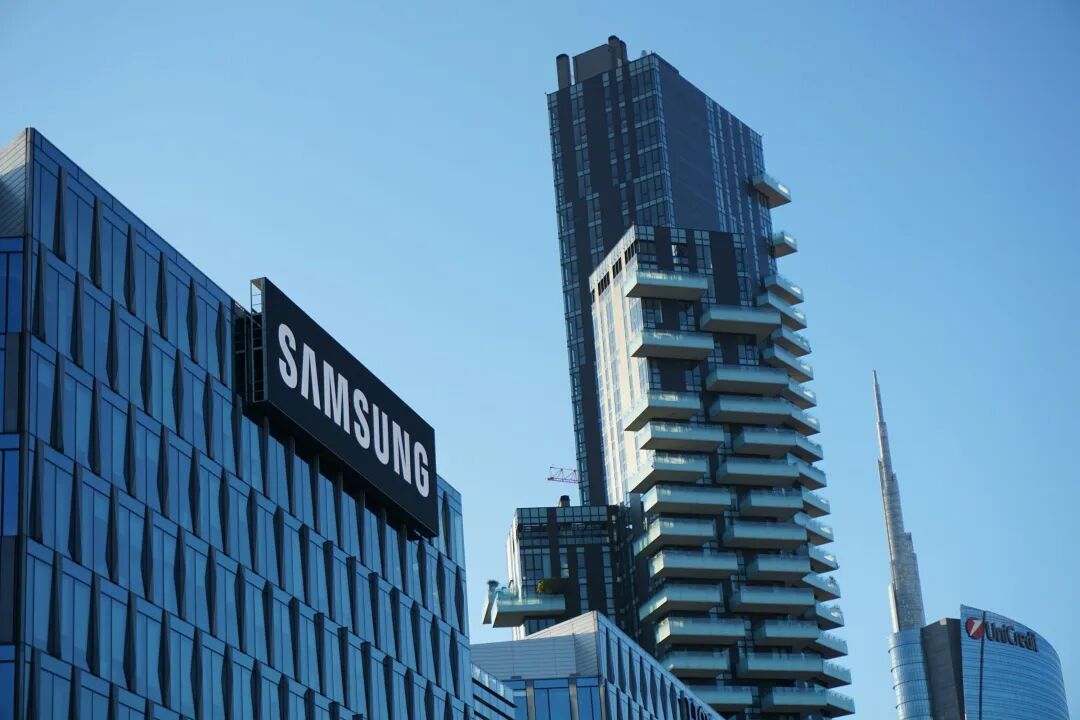
Cover image source: Unsplash
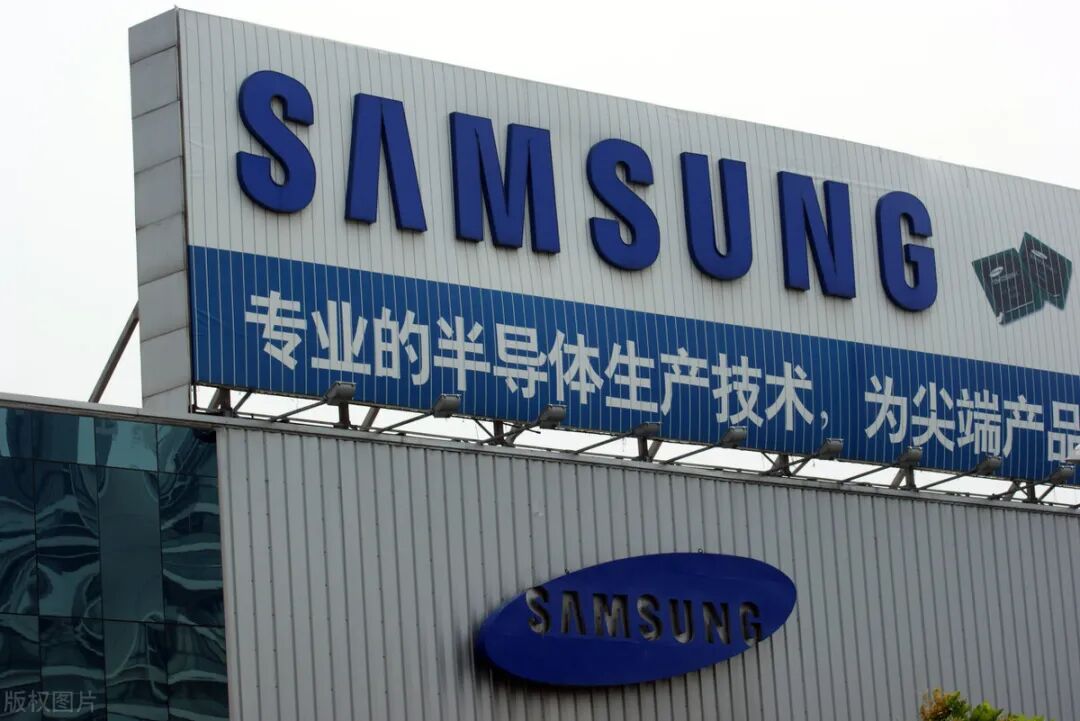
Following the trend of Japanese home appliance brands withdrawing from China, Samsung, a leading Korean home appliance brand, is also poised for a significant downsizing in the Chinese market.
Recently, several media outlets, including The Paper, reported that Samsung China may streamline its organizational structure in the future, retaining only the complete setups for its two core businesses—mobile phones and memory—while integrating or exiting other sectors.
Among these, Samsung's home appliance business in China is expected to undergo a significant overhaul. Samsung Electronics plans to transition its white goods business (refrigerators, washing machines, etc.) in the Chinese market from a direct sales model to an agency model in the second half of this year. Its black goods business (TVs + monitors) may also follow suit, although this news remains unconfirmed.
Additionally, industry sources indicate that Samsung Display's Chinese agents have suspended shipments.
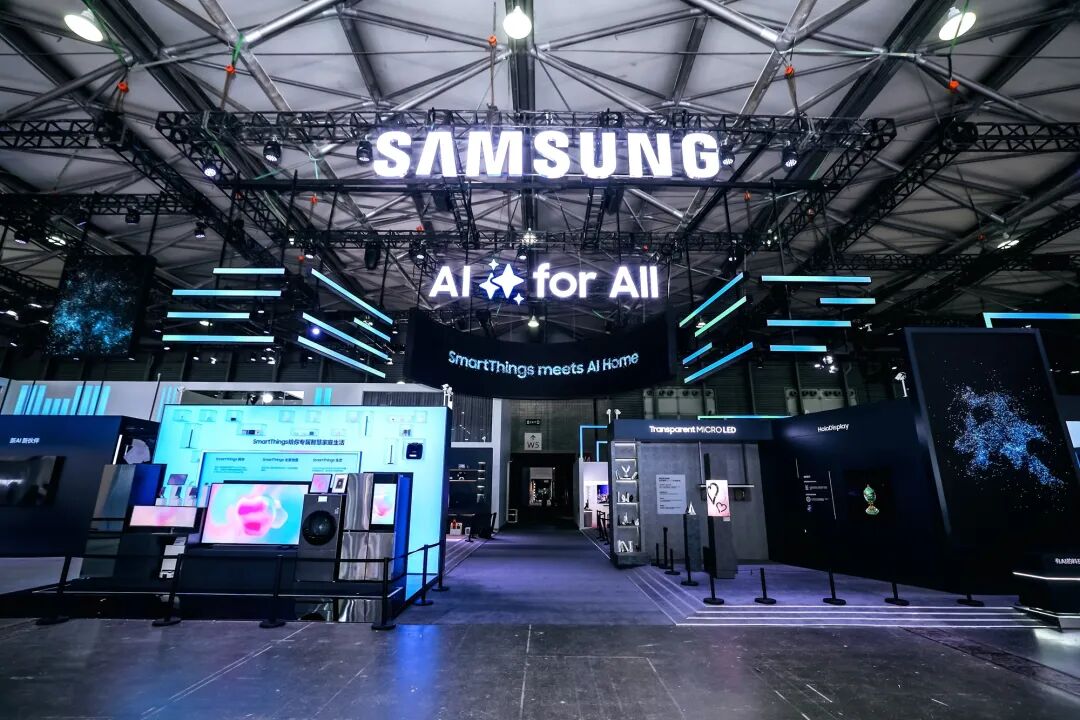
In fact, Samsung's absence at the AWE China Home Appliances and Consumer Electronics Expo held last month sparked speculation. As a key indicator of China's home appliance industry, AWE has always been a fiercely contested platform for manufacturers. Samsung, a global giant in consumer electronics and home appliances, would not have stayed away without compelling reasons.
Moreover, it's worth noting that Samsung possesses global supply chain and scale advantages, along with technological leadership in certain cutting-edge industries. However, in the Chinese market, Samsung's home appliance business has been declining over the past decade, with all product lines struggling to find bright spots. Now, with news of a complete withdrawal, is it really because Samsung can't compete in this market?
1
The Decline of the Home Appliance Business
Compared to the stellar performance of its mobile phone business globally, Samsung's home appliance products seem to garner less attention and market presence. However, a decade ago, Samsung Electronics' consumer home appliance division was thriving. Especially in 2015, Samsung TVs led global sales for nine consecutive years, refrigerators held the top global market share, and washing machines ranked third globally.
Yet, in the Chinese market, Samsung's sales of both white and black goods have been sluggish in recent years. According to data from Aowei Cloud, from the beginning of 2026 until April 5th, Samsung's market share in offline sales of color TVs, refrigerators, and washing machines in China was 3.62%, 0.41%, and 0.38%, respectively, ranking 5th, 14th, and 15th. It has almost faded from the mainstream manufacturer sequence.
Notably, Samsung color TVs, leveraging their self-developed display technology, once established a foothold in China's high-end color TV market, performing well in the segment above RMB 10,000. At their peak, they sold around 1 million TVs annually in China. However, with the rise of Chinese color TV brands like Hisense and Skyworth, coupled with Samsung's abandonment of its liquid crystal (LCD) panel business, Samsung TVs have lost competitiveness in terms of product strength, cost-effectiveness, and market presence.
It's worth mentioning that despite the decline in its color TV business, Samsung's display business still holds a certain market share in China's high-end market. According to data from Runto Technology's online monitoring, in China's online OLED display market in 2025, Samsung remained in the top three, with a sales volume share of 13% and a sales revenue share of nearly 15%. In the market segment above RMB 3,000, Samsung displays still accounted for 11.4% of sales revenue.
If Samsung's black goods business indeed significantly downsizes as rumored, it could present a rare "golden opportunity" for other competitors to seize market share.
Currently, market rumors suggest that Hanlinhui, the national general agent for Samsung displays, has completely halted shipments to partners, frozen channel inventory, and is in a wait-and-see mode pending official confirmation.
Compared to the technological prowess of Samsung's black goods business, its white goods business relies more on the influence of the Samsung brand itself, especially the high-end image consistently cultivated by Samsung mobile phones. However, in the Chinese market, with Samsung mobile phones previously encountering the "explosion scandal" and the "THAAD incident," its brand influence has significantly lagged behind other mobile phone brands, naturally limiting the sales momentum of its white goods products.
On the channel front, since Samsung's white goods business was outsourced to Huitongda and Shenzhen Feide Industrial Group as early as 2021, it has been passive in market expansion. Once the halo of brand effectiveness fades, market sales naturally plummet to freezing point.
2
Cultural Misalignment or Strategic Missteps?
Unlike the failure of Japanese home appliance brands in China, Samsung's loss of ground in the Chinese market has surprised many consumers. Especially in the black goods sector, Samsung lacks neither technological prowess nor brand heritage. Even if it couldn't break into the top tier in the Chinese market, it shouldn't have been relegated to the "Others" category.
In fact, at the AWE 2024 China Home Appliances and Consumer Electronics Expo two years ago, Samsung introduced numerous AI-powered home appliance new products. At the time, Cui Shengzhi, President of Samsung Electronics Greater China, stated that Samsung was integrating AI into interconnected technologies, spanning from mobile devices and display technologies to smart home appliances and smart homes.
Looking back, Samsung's bet on AI at the time actually aligned with industry development trends, and Samsung's own advantages were evident. Not all home appliance enterprises possess the capability to develop large models independently, allowing Samsung to fully leverage its technological prowess.
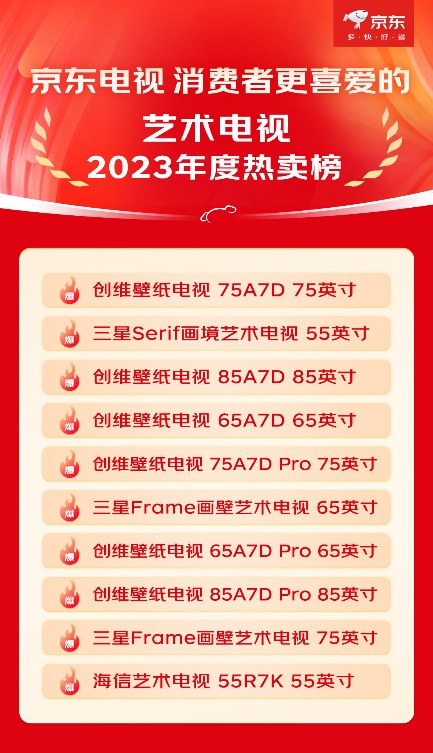
On the channel front, Samsung home appliances were also relatively proactive at the time. Offline, leveraging the opportunity of Samsung mobile phones re-establishing points in first-tier markets, Samsung's refrigerator and washing machine businesses began entering some stores in Beijing, Shanghai, Guangzhou, and Shenzhen. Online, Samsung collaborated with JD.com to develop the art TV category. During the 2023 Double 11 period, three Samsung products ranked among the top 10 on JD.com's art TV bestseller list.
However, just two years later, Samsung's efforts to "save face" have not been fully implemented. In fact, with the improvement in relations between Chinese and South Korean leaders, Korean brands were poised to regain consumer trust. Yet, Samsung seems to have been allowing its presence to continuously weaken until this news of a significant downsizing emerged.
Why has Samsung continuously suffered setbacks in the Chinese market? Apart from increasingly strong competitors, Samsung's internal decision-making chain issues are another crucial reason. As a multinational company, most business directives for Samsung China still come from the South Korean headquarters, seriously slowing down the company's market response speed. In an era when brands need to be increasingly responsive to consumer feedback, domestic manufacturers can respond to consumers with "weekly iterations." By the time companies like Samsung react, they have already lost market opportunities.
Take the "triple-drum washing machine" that became popular in the home appliance circle last year as an example. Domestic manufacturers were able to launch similar products and bring them to market in just a month or two. For Samsung, this "speed is king" market competition represents a shortcoming that cannot be compensated for beyond product strength.
Apart from the lengthy decision-making chain, the departure of numerous Chinese executives has further cast a shadow over Samsung's localization process. According to media reports, several senior executives, including Liu Junguang, the core leader of Samsung Greater China's color TV business, Xu Bin, the overall leader of lifestyle home appliances, and Sun Zhitao, the vice president of the color TV marketing business department, have all left Samsung China in recent years.
3
Samsung's Global Prosperity
Unlike Samsung's continuous setbacks in the Chinese market, globally, Samsung has entered an unprecedented growth cycle.
According to Samsung Electronics' preliminary financial results for the first quarter of 2026, both operating profit and sales reached all-time highs in the first quarter of this year. Operating profit for the quarter reached KRW 57.2 trillion (approximately RMB 261 billion), up 185% sequentially and 755% year-on-year. Sales were KRW 133 trillion (approximately RMB 606.4 billion), up 41.7% sequentially and 68% year-on-year.
Notably, Samsung's single-quarter operating profit in the first quarter even directly surpassed its operating profit for the entire previous year.
According to analysis, this explosive growth in Samsung's performance is mainly attributable to the tight supply and significant price increases in memory chips driven by the surging global demand for artificial intelligence infrastructure. Especially the construction boom in AI servers and data centers has not only driven strong demand for high-performance DRAM and NAND flash memory but also indirectly exacerbated supply constraints for chips in traditional consumer electronics sectors like smartphones and personal computers.
As the world's largest manufacturer of memory chips and the only semiconductor enterprise capable of providing one-stop solutions for logic chips, memory, foundry, and packaging, Samsung has naturally become the biggest winner from the price increases in memory chips.
According to securities firm predictions, the operating profit of Samsung's Device Solutions (DS) division, responsible for its chip business, far exceeded KRW 50 trillion (approximately RMB 232.5 billion) in the first quarter. The operating profit of the Mobile Experience (MX) and Networks divisions, responsible for smartphones and mobile devices, is expected to exceed KRW 2 trillion (approximately RMB 9.3 billion).
Based on these estimates, the memory business contributed nearly 90% of Samsung's operating profit in the first quarter.
In contrast, after incurring a loss of KRW 600 billion (approximately RMB 2.79 billion) in the previous quarter, Samsung's Visual Display (VD) and Digital Appliances (DA) divisions, responsible for its home appliance business, are expected to narrow their losses in the first quarter of this year but may still incur small deficits or minimal profits. However, compared to the strong profitability of the semiconductor business, the financial impact of the home appliance business has become somewhat irrelevant.
According to external reports, in this super upcycle of the semiconductor industry, Samsung's wealth feast may have just begun, and price hike strategies will continue. With DRAM prices already rising 64% sequentially in the first quarter, prices may need to increase by about 30% in the second quarter.
In this light, Samsung's decision to only maintain the complete organizational structures of its two core business units—mobile phones and memory—in China may be the most commercially logical adjustment. The mobile phone business can uphold the brand's image, while the memory business can generate substantial profits. As for home appliances, a "niche" sector with limited appeal and even more constrained substance, it may be wiser to exit early rather than cling to a declining market.
Of course, for Chinese home appliance manufacturers, Samsung's exit is not a cause for celebration. Unlike Japanese home appliance manufacturers that failed in China before, Samsung is not leaving because home appliances are unprofitable but because its other businesses are too profitable. However, when Samsung decides to come back and want a piece of this cake someday, other competitors will still feel threatened and pressured.
-
![]()
Proceed with Caution Before Entering the Indian Auto Market: Even Musk Faced Challenges, What Makes Chery Think It Can Succeed?
-
![]()
EU Intends to Engage in Trade War with China Amid Chinese Cars Nearing 10% of Monthly Sales in Europe
-
![]()
Shenzhen Rolls Out 'Ten Measures' for New Energy Vehicle Insurance: Integrates Innovative Risk Factors and Adopts Battery-Body Separation Model
-
![]()
If You Can’t Drive a Ferrari Yourself, What’s the Point of Owning One?
-
![]()
ByteDance Clarifies: 'No Car Production, No Investment in Saido!' Seres' Stock Price Plummets to New Lows!
-
![]()
New Energy Vehicles Boast Over 60% Penetration Rate: Joint Venture Automakers Must Accelerate Their Efforts
-
![]()
Why Are New Energy Vehicles Becoming Increasingly 'Bulky'?
-
![]()
Over 12 Years, the Average Passenger Vehicle Has Gained Nearly 400 kg, Sparking Netizens' Queries: When Will New Energy Vehicles Revert to Their 'Standard Size'?