From 'National Great Car' to 'Ecological Reconstruction': Unveiling JD Automotive's Non-Manufacturing Strategy
 04/20 2026
 623
623
Yi Yan Business Observer
JD Automotive is embracing a transformative role as an 'industrial router' in the automotive sector.
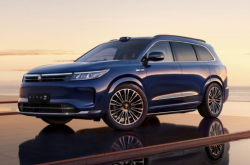
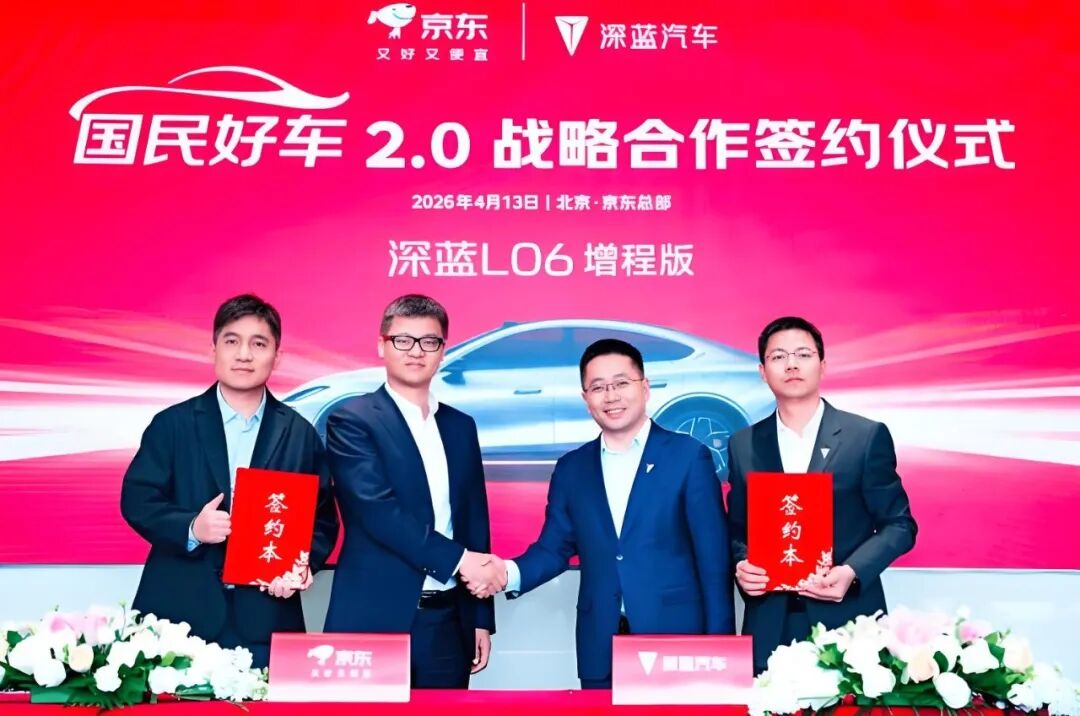
On April 13, 2026, JD Automotive and Seres Automotive inked a strategic cooperation agreement at JD's Beijing headquarters, jointly unveiling the 'National Great Car 2.0'—the Seres L06 extended-range electric vehicle—to be exclusively distributed by JD. This move follows their successful 'Double 11' collaboration with GAC Aion last year, underscoring JD's ambition to transition from a mere online sales conduit to an ecological operator deeply engaged in product definition and the reconfiguration of the entire automotive consumption landscape.
I. JD Automotive's 'Triple Leap': From Traffic Entry to Ecological Synergy
JD's foray into the automotive domain is a calculated, strategic evolution rather than an impromptu decision. With a decade-long involvement, JD's automotive business has transitioned from 'peripheral services' to 'core retail' and now to 'ecological reconstruction.' In the early 2010s, JD ventured into selling automotive supplies, focusing on tires, engine oil, and maintenance accessories. By 2015, the JD Automotive Business Division was established, tapping into the automotive aftermarket through spare parts. In 2017, JD explored new car sales models through online marketing collaborations with new energy brands like Tesla and NIO. In 2020, JD launched 'JD Auto Maintenance,' establishing a nationwide automotive service network and integrating 'product + service' models. By early 2026, JD Auto Maintenance boasted over 1,400 stores nationwide, solidifying its position as one of China's largest chain automotive service platforms.
The pivotal moment arrived during the 2025 'Double 11' when JD Automotive and GAC Aion launched the 'National Great Car 1.0'—the AION UT Super. This entry-level electric vehicle, priced at RMB 49,900 (battery leasing model), achieved an astonishing online decision-making transaction rate exceeding 90%, with 40% of users converting from existing JD Auto Maintenance customers and 20% upgrading from electric bicycle users. This successful experiment demonstrated JD's ability to not only sell cars but also create new market segments. Half a year later, JD's collaboration with Seres Automotive on the 'National Great Car 2.0' transcended simple 'e-commerce car sales,' marking an ecological-level transformation. At the 2026 Smart Electric Vehicle Development High-Level Forum, JD Automotive President Miao Qin emphasized, 'The current core weakness in China's automotive industry lies in user demand insight and full-lifecycle service provision.' JD aims to stimulate market growth and construct a new ecosystem for new energy vehicle services through 'full-chain collaboration and open ecology.'
II. Breakthrough in Cooperation Focus: From 'Selling Cars' to 'Defining Cars'
Unlike traditional e-commerce platforms that merely serve as 'online showrooms' or 'traffic entry points,' JD's collaboration with Seres delves into the forefront of product definition. Deng Chenghao, Vice President of Changan Automobile and Chairman of Seres Automotive, acknowledged, 'Without JD's National Great Car project, the extended-range version of the Seres L06 might not have materialized.' This exemplifies JD Automotive's emphasis on 'incremental demand product development'—leveraging authentic feedback from JD's 700 million active users, particularly the strong demand for extended-range models post-'National Great Car 1.0,' JD proactively engaged Seres to co-create this 'first smart coupe for young people.' For the first time, product definition power partially shifted from engineers to consumers.
JD Automotive's collaboration with Seres signifies a comprehensive upgrade of JD's automotive model, with breakthroughs primarily reflected in the following four aspects:
C2M reverse customization, where users shape products. The Seres L06 extended-range version is not a pre-planned model by Seres but a product developed exclusively based on JD's insights into users' core pain points, such as 'extended-range travel,' 'intelligent driving,' and 'no range anxiety.' Deng Chenghao admitted, 'Without JD's National Great Car project, this extended-range version might not have proceeded.' This signifies a paradigm shift in product definition power from engineers to consumers. JD Automotive's leadership stated that the upgrade from National Great Car 1.0 to 2.0 was driven by substantial 'product upgrade' demands from users, particularly for extended-range models.
Exclusive sales + dual-track delivery, reshaping the 'people-goods-place' dynamic. JD adopts a dual model of 'self-operated + POP third-party stores,' enabling users to choose the nearest delivery channel. Under the self-operated model, JD directly intervenes in delivery and service; the POP model leverages Seres's existing 4S dealership network for conversion. JD plans to establish new National Great Car delivery centers in 100 cities in 2026, forming an efficient network of 'online car selection, offline experience, and nearby delivery' in conjunction with Seres's 700 nationwide stores, addressing the pain points of traditional 4S stores' 'long-distance exploration and slow delivery.'
'Open Departure' deep test drives, revolutionizing the experience. The 'Open Departure' service piloted in Jinan allows users to schedule up to 120 minutes of on-demand deep test drives, breaking free from traditional short-duration, fixed-route test drives and enabling users to experience vehicle performance in real-life scenarios, significantly lowering the decision-making threshold. Lu Huan, JD Automotive's marketing head, stated that if this service receives positive feedback in Jinan, it will be swiftly replicated in more cities.
Full-chain service ecosystem, transitioning from 'transaction' to 'experience.' JD PLUS members enjoy exclusive on-site delivery, with small deposit users receiving RMB 3,000 in subsidies and a one-year PLUS membership, while test drive appointments offer up to RMB 40 in cash rewards. The JD Auto Maintenance network handles delivery and maintenance, providing a one-stop service for 'car buying-using-maintaining.' Data indicates that 30% of users of National Great Car 1.0 chose JD Auto Maintenance for new car delivery and subsequent maintenance, validating the feasibility of the service closed loop.
III. JD Automotive's New Role: The 'Industrial Router'
Compared to traditional car manufacturers, new entrants, and e-commerce platforms, JD Automotive's model exhibits significant differentiation.
Amid the influx of major internet platforms into the automotive sector, JD has charted a distinct path from Tmall and Douyin, a divergence rooted in their respective strengths and advantages. Tmall Automotive's 'platform model' essentially digitizes traditional automotive circulation, connecting OEMs, dealers, and consumers while charging transaction commissions and marketing fees. Its strength lies in massive traffic and a mature e-commerce transaction system. Douyin excels in its content ecosystem and algorithmic recommendations, achieving 'seeding' through short videos and livestreams. However, its transaction conversion still relies on redirecting to third-party platforms or offline stores, creating a situation of 'strong front-end linkage, weak back-end linkage.'
Within the automotive industry's value chain, JD assumes a novel role as an 'industrial router,' neither competing with traditional OEMs nor opposing dealers but connecting all parties through digital capabilities to enhance overall efficiency. Traditional OEMs excel in manufacturing and R&D but lack direct user connection, data insight, and full-cycle services. As an 'ecological partner,' JD provides OEMs with: incremental users, with National Great Car 1.0 data showing that 40% of users converted from existing JD Auto Maintenance customers, an increment difficult for traditional channels to reach; demand insight, helping OEMs precisely define products based on 700 million users' data, reducing R&D trial-and-error costs; a full-channel network, an integrated online-offline sales and service system, particularly with penetration capabilities in lower-tier markets; and user operation, deeply binding the PLUS membership system with the vehicle's full lifecycle of use.
JD's relationships with the 4S dealership system and third-party service providers are not a 'zero-sum game.' Under the 'self-operated + POP' dual-track system, JD's self-operated delivery centers fill network gaps, while the POP model empowers existing 4S dealerships by enhancing their operational efficiency through online traffic, digital tools, and standardized services, achieving 'growing the pie rather than dividing it.' The core strengths of new automotive forces (such as NIO, Li Auto, and Xpeng) lie in product innovation and user operation, but their challenges include high channel construction costs and limited service network coverage. JD's model offers a possibility for asset-light expansion for these new forces: leveraging JD's nationwide delivery and service network to quickly achieve market penetration while focusing on product R&D and brand building.
JD Automotive President Miao Qin clearly stated, 'JD Automotive adheres to the positioning of not manufacturing cars and focusing on services, leveraging technological and supply chain advantages to promote the deep integration of the automotive manufacturing and service industries.'
IV. Challenges and Future: The Hard Battle for Ecological Synergy
Despite the excitement generated by model innovation, JD Automotive still faces four major challenges that will determine whether its ecological model can truly succeed and scale:
The art of balancing channel conflicts. Avoiding 'internal competition' between self-operated delivery centers and Seres 4S dealerships is crucial for the sustainability of the cooperation. Under the 'self-operated + POP' dual-track system, JD needs to establish clear profit distribution mechanisms and regional collaboration rules, transforming 4S dealerships from 'competitors' into 'service partners.' In the short term, conflicts can be resolved through model differentiation and regional division, while a stable collaborative ecosystem must be formed in the long term.
The quality challenge of service standardization. Can 100 delivery centers nationwide achieve service consistency? Can the JD Auto Maintenance network handle large-scale new car deliveries and subsequent maintenance? Automotive services heavily rely on technician skills, equipment conditions, and process standards, and rapid expansion may lead to fluctuations in service quality. JD needs to establish a strict service certification system and training mechanism to ensure consistent user experiences.
The educational cost of cultivating user habits. As a major consumer good, are users willing to make completely online decisions? Although National Great Car 1.0 achieved a 90% online transaction rate, the Seres L06 extended-range version targets the mainstream market at the RMB 150,000 level, where user decisions are more cautious. The conversion rate of deep test drives and the establishment of trust in online car purchases still require large-scale market education. JD needs to accumulate successful cases and leverage word-of-mouth to gradually change user mindsets.
The sustainability validation of the ecological model. JD needs to continuously prove that its C2M model can steadily produce hit models rather than relying on a single cooperation. National Great Car 1.0's Aion UT Super targeted the entry-level market at RMB 50,000, while 2.0's Seres L06 extended-range version ventures into the mainstream market at RMB 150,000, validating the model's scalability. However, to cover a broader price range and user groups in the future, JD needs to build more systematic capabilities in demand insight, product definition, and supply chain collaboration.
V. Future Outlook: From 'National Great Car' to 'Ecological Reconstructor'
If the aforementioned challenges can be effectively addressed, JD Automotive's ecological model will demonstrate immense potential:
Platform-based expansion potential. 'National Great Car' may evolve from a cooperation project into an open platform for incremental new energy vehicles. JD can replicate its cooperation paradigm with Seres, partnering with more OEMs to create a 'National Great Car' matrix covering different price ranges and vehicle types, becoming a 'public infrastructure' for OEMs' incremental channels.
As an 'industrial router,' JD's digital capabilities will accelerate the transformation of the traditional automotive industry. From demand insight to flexible manufacturing, from precision marketing to service optimization, JD provides a replicable digital transformation solution to help OEMs and dealers enhance efficiency, reduce costs, and improve experiences.
In this transformation, JD's role is no longer a simple 'car sales platform' but an 'ecological reconstructor' of the automotive industry. It reshapes automotive consumption with retail logic, replaces sales thinking with service thinking, and substitutes single-point competition with ecological synergy. As Deng Chenghao, Chairman of Seres Automotive, stated, both parties hope to 'provide users with the optimization of full-link services from online awareness to offline attempts, understanding, buying, using, and repairing.'
Deng Chenghao's aspiration may represent the common sentiment of the industry: 'We hope this cooperation will explore a path for value upgrading and user experience iteration across the entire industry.'
END
-
![]()
Jitian Xingzhou: A Pioneer in Optical Payloads Secures Hundreds of Millions in Series B Funding!
-
![]()
Orders Secured Through to the Second Half of the Year! The Rationale Behind the 'Surge' in Demand for This Company’s Optical-Grade Base Films
-
![]()
Beyond Patents: The Retail Rivalry of Insta360 and DJI Unfolds
-
![]()
180 Billion Market Cap Vanished! How Did Seres Fall So Far?
-
![]()
Blockbuster! Domestic storage takes the global double crown for the first time, from an AI company
-
![]()
China Spearheads Formulation! World's Pioneering Global Technical Regulation for Automated Driving Systems Greenlit and Unveiled
-
![]()
Farewell to Pulsed Support Policies: Three Major Auto Policy Directions from Multiple Departments Take Effect on the Same Day
-
![]()
Embercore AI’s Accelerated Funding: The Robot Industry’s Shift Toward ‘Learning Systems’