Two 'Catfish' Trigger Global Automotive Upheaval
 04/20 2026
 533
533
Amidst the Intense Competition, Who Will Be the Next Disruptor?
In early 2026, amid a flurry of sales reports, a significant shift occurred in the global automotive market: BYD overtook Tesla to claim the top spot in global annual electric vehicle (EV) sales.
The global market buzzed with excitement. The Associated Press teased Musk, stating he had 'just lost his claim to being the world's largest electric vehicle manufacturer'.
As BYD secured the top position in EV sales, the era of disruption initiated by Tesla—the 'global EV catfish' that emerged as a game-changer over a decade ago—was being challenged by Chinese automakers that were once playing catch-up.
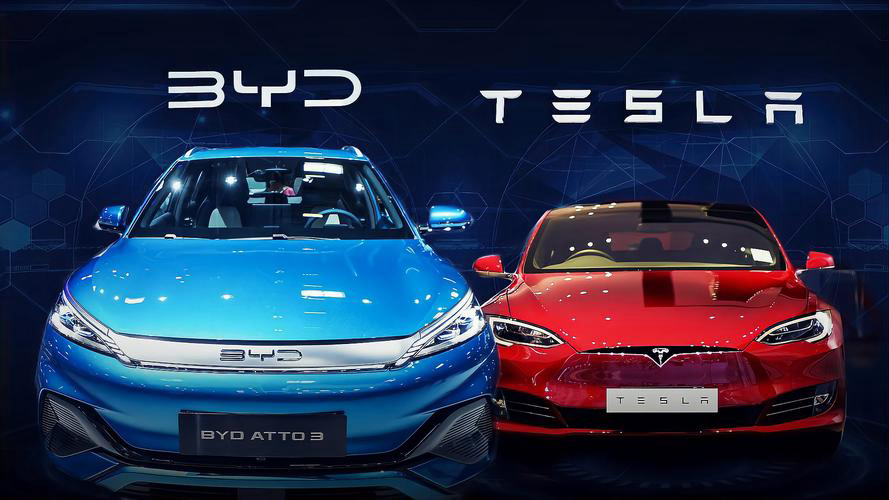
Now, in the European market, as BYD's ATTO 3 goes head-to-head with Tesla's Model Y, the competition transcends technical comparisons, evolving into a comprehensive showdown of industrial models. Two distinct industrial routes and business models converge on the global stage.
The Chinese market remains a crucial battleground. Besides topping global EV sales, BYD, with its vertically integrated technology ecosystem, also claimed the top spot in Chinese auto sales. However, with the release of March sales figures, a seven-month consecutive decline became apparent.
Behind BYD's seven-month sales slide lies a new trend in China's auto market, stirred by BYD's disruptive influence. The market is shifting from a 'cluster of contenders' to a 'battle of the top,' where technological prowess and strategic endurance are key.
As Geely, SAIC, Leapmotor, and others accelerate their pace amid changing times, a 'full-link' competition model drives the struggle in the existing market.
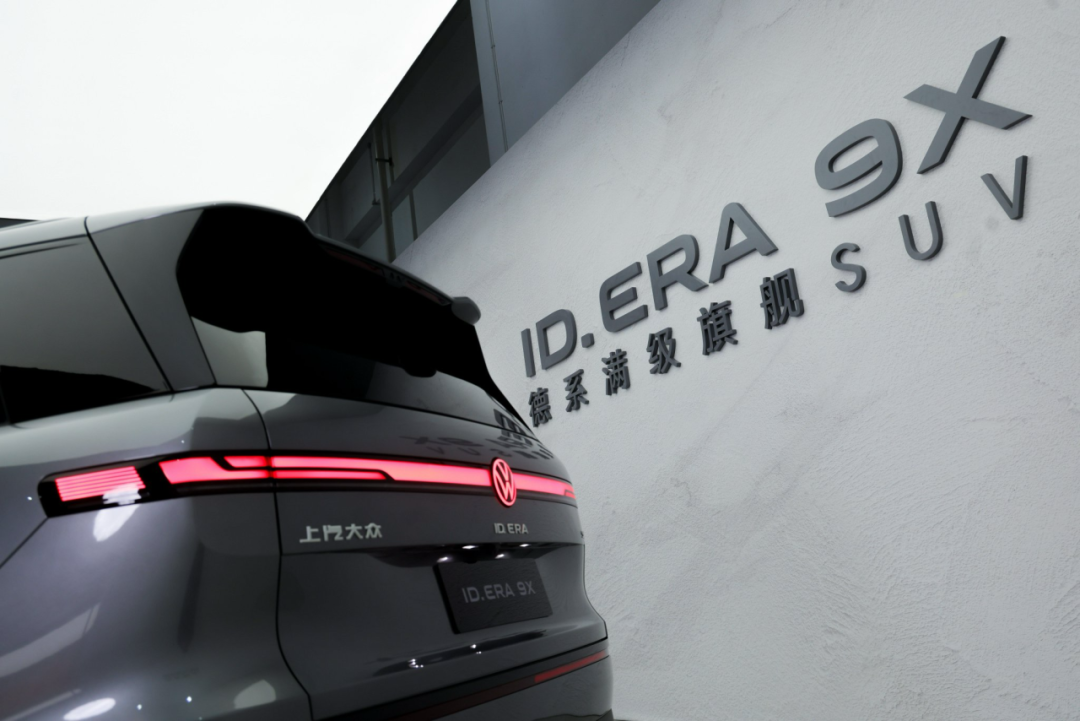
Before April ended, the fervent 'race for bigger models'—characterized by '5.4-meter length, three-meter wheelbase, weighing two to three tons'—unfolded frequently. Heavyweights like Zeekr 9X, SAIC-Volkswagen ID.ERA 9X, Aito M9, and Li Auto L9 gathered, intensifying the 'battle of the 9 series'.
Some ask, 'Is this a technological revolution or mere size anxiety?' The answer lies in the competition. What's certain is that 'niche blue oceans will vanish from China's auto market'.
The A0-class pure electric market, further opened by BYD, validates this conclusion. After Geely's Starry successfully positioned itself against BYD's Seagull, the A0-class pure electric market saw a flurry of new entrants, saturating the market. Selling each vehicle became a fierce scramble in a thorny forest.
The catfish stirs the waters but may face a 'group attack'. Amidst the intense competition, who will be the new disruptor?
Tesla Turns Left, Chinese Cars Ascend
In an article titled 'The Era Writes Off Xu Jiayin,' there's a line: 'Xu Jiayin spent his life interpreting the double-edged sword of 'rules': they were his ladder to climb and the cliff to fall from.' He thought he was writing the era, but in the end, the era wrote him off.
The allure of 'writing the era' is undeniable to anyone.
When Tesla's Model Y surpassed Toyota Corolla in 2023 to become the world's best-selling model, media outlets used similar phrases: 'The bell of a new era has officially rung.'
The Corolla, which dominated the global market for decades as the best-selling model, was replaced by Tesla's Model Y. The story behind this is no longer just a rotation of opponents under the same rules but a revolutionary leap in the industrial logic behind the throne.
From its launch in 2019 to becoming the global best-seller in 2023, what do these four years signify?
In 2000, the Corolla was recorded in the 'Guinness World Records' as the 'best-selling car of all time' with cumulative sales of 25 million. It took Corolla 34 years to reach the top in a single year.
Some have described the Model T as defining the 'mass-scale' of 'Fuel Vehicle 1.0' and the Corolla as defining the 'golden rule' of 'Fuel Vehicle 2.0'. Tesla's Model Y defeating the Corolla is not just an electric vehicle's victory but a paradigm shift in product, business model, and user logic that impacts traditional manufacturing systems.
Global fuel vehicles turn right, Tesla turns left, and Chinese cars decide to 'ascend'.
Since then, surrounding and suppressing Tesla has become a goal for many automakers, with Tesla becoming an unavoidable target in pricing, performance, and configuration benchmarks. Today, brands like Xiaomi, Ledo, and Zeekr form the 'Alliance to Surround Tesla'.
Tesla's proud intelligent halo is diluted. Behind this siege lies the collective confidence of Chinese brands. Today, Tesla is also transforming from a 'disruptor' to a 'mainstream player'.
Undeniably, Tesla created an era, and the era wrote Tesla's story, which remains unfinished. The story's turning point came again in 2025.
An interview from 12 years ago resurfaced to mock: A reporter once asked Musk about 'BYD's attempt to compete with Tesla.' Musk laughed and asked the reporter, 'Have you seen their cars?' Not considering BYD a rival.
Twelve years later, in 2025, BYD surpassed Tesla to become the global best-seller in pure electric vehicle sales. Musk responded under a video, 'That was many years ago; their cars are now highly competitive.'
BYD's victory stems not only from its 'mine-to-vehicle' closed-loop model but also from its 'multi-brand matrix'. It safeguards the mass market with the Dynasty and Ocean series while forming a product matrix covering prices from 100,000 to 500,000 yuan with brands like Denza, Fangchengbao, and Yangwang.
This is a tactic Chinese automakers excel at and what joint ventures once prided themselves on—'seamless product docking with various market segments'. Now, the clash between the 'all-rounder route' and 'extreme focus' puts pressure on Tesla, which focuses on software design and adheres to a 'single hit product' strategy, from product competition to supply chains.
Musk's prophecy that 'if market barriers were lifted, Chinese automakers would eliminate most rivals' is unfolding in Europe. Data from last December shows Chinese automakers' monthly sales in Europe exceeded 100,000 for the first time, up 127% year-on-year, with a market share of 9.5%, compared to 4.5% in the same period in 2024.
Tesla, leveraging two models to leverage the global market, now sees its European stronghold infiltrated by Chinese automakers. Among respondents in Europe's top five auto markets, 38% believe Tesla's novelty has faded, lagging in design, quality, and emotional appeal compared to rivals, mainly Chinese automakers.
This 'offense-defense battle' has no simple winner. It's more like a laboratory testing the viability of different business models and technological routes in the same market.
It's too early to conclude who wins or loses.
There's No Single Answer in the Race
Recently, Musk's mood swung like a roller coaster.
On one side, FSD finally cracked Europe. On April 10, the Dutch Vehicle Authority granted Tesla type approval for FSD Supervised, the first comprehensive regulatory approval within the EU.
Tim Dekrek, a developer in Zutphen, Netherlands, said, 'It felt like stepping into the future, amazing.' He used FSD for the first time to drive his son to school.
On the other side, as Musk prepared to continue breaking through Europe's 'layers of bureaucracy,' NVIDIA, which sells chips to Tesla, delivered a blow.
Recently, NVIDIA officially launched an open-source platform for developing autonomous vehicles. News of this sparked a surge in collaborations with NVIDIA among automakers.
The Japan Economic News, enjoying the spectacle, emphasized, 'NVIDIA competes with Tesla for autonomous driving dominance.' Musk, unhappy on the X platform, admitted, 'This may pressure Tesla's development in five to six years,' while also stressing Tesla's leading edge in autonomous driving technology.
To counter NVIDIA, Tesla plans to produce its next-gen AI5 chip in 2026. Musk claims the AI5 will significantly improve over the current AI4, potentially tenfold better, even superior to NVIDIA's competing chips.
'Tesla isn't aiming to be the next NVIDIA but to ensure it's not constrained,' Musk said. He's adept at 'fixing the plane while flying,' building chips while 'continuing to buy NVIDIA' chips.
Why does Tesla invest eight years in self-developed chips? What's the point of competing with NVIDIA? Because Tesla's future true moat isn't electric range but autonomous driving FSD.
A key prerequisite for FSD: computing power. Previously, NVIDIA's Orin and Tesla's self-developed HW4 couldn't support true autonomous driving. Under Tesla's example, Chinese automakers entered the same river.
NIO's 'Shenji,' Li Auto's 'Mach,' and Leapmotor's 'Lingxin' self-developed smart driving chips entered mass production, accelerating the 'self-developed chip trend' among Chinese automakers. BYD, fond of vertical integration, surpassed Infineon in IGBT chip shipments, claiming the top spot in the domestic market.
Why are leading automakers turning to self-development? 'Technology as the foundation'—these four words carry weight.
On one hand, China's smart driving democratization evolves, lowering the threshold for intelligent driving and driving demand for high-performance automotive chips. On the other hand, echoing He Xiaopeng's view, 'Future top AI companies will choose custom chips, determining each company's AI product performance ceiling.'
In an industry undergoing a shakeout, only those with real capabilities secure a spot in the finals. Both BYD and Tesla validate this.
In 2026, automakers show clear 'tiered evolution' in chip paths. NIO reduces costs with self-developed chips, Li Auto pushes performance limits, and Horizon promotes industry standardization with 'cabin-driving integration'. The question is whether to compete independently or collaborate symbiotically.
Chinese smart driving completed a decade-long journey from 'following' to 'keeping pace,' standing center stage globally. It's not just a full-lifecycle cost reshaping but a transfer of underlying technological sovereignty. However, no single player dominates, nor is there a definitive endgame.
Recently, He Xiaopeng, once a Tesla admirer, engaged in an inconclusive dispute with Huawei: 'Should L3 be skipped or pursued?'
2026 will be the year of autonomous driving decisive battles, undeniable to Tesla, Huawei, or Xpeng. The issue is Huawei insists L3 is necessary, while Xpeng advocates skipping to L4.
The divergence is on the table.
Chinese automotive safety expert Zhu Xichan spoke frankly, 'L3 only allows drivers to take their eyes and hands off but requires constant attention, making it impractical in reality and inherently unworkable.' Due to the 'liability gap,' L3 becomes an awkward stage, unable to fully free hands technically, unclear in legal liability boundaries, and fragmented in user experience commercially.
Xpeng and Zhuoyu Technology insist on 'skipping L3' based on large model technology, 'jumping straight to L4.' Huawei claims L3 is a necessary stage toward full autonomy, emphasizing safety as the foundation, making L3 an essential 'base'.
Whether it's Musk vs. Huang Renxun's autonomous driving dominance battle, the split between 'full-stack control' and 'supply chain integration' in chips, or the debate over whether L3 is redundant, all indicate one thing: large models are reshaping the technological landscape, with computing power and data becoming new production resources.
But there's no single answer in this race.
A New Round of Three-Way Confrontation
From clumsy reversing in fuel vehicles to intelligent driving and three-minute battery swaps. From 'seeking the most expensive' to technology reshaping lifestyles, a new round of 'technological democratization' is rewriting the era's narrative, pushing China's auto market into another 'three-way confrontation'.
First-quarter sales seem to set a new prelude to this confrontation. The established pattern of 'BYD leading, SAIC following, Geely third' was broken, with SAIC and Geely's monthly sales both surpassing BYD.
Industry insiders believe 2026 could be the fiercest year in China's automotive history. The China Association of Automobile Manufacturers predicts 2026 China's total auto sales at around 34.75 million, up about 1% year-on-year, entering a 'micro-growth' phase. Technical reserves, product matrix, and system capabilities become the three core dimensions determining success.
The '2026 championship battle among BYD, SAIC, and Geely' is highly anticipated. All are determined and unwilling to lose. Each has a 'killer move,' like Lin Chong's spear, Wu Song's staff, Li Kui's axe, and Lu Zhishen's Buddhist monk's staff.
Before BYD's rise, SAIC held the top sales spot for 18 consecutive years, its position unshakable despite market fluctuations, acting as a 'defender'. Ultimately, BYD's technological ecosystem and vertical supply chain toppled SAIC from the throne.
And the era's narrative changed.
Two years ago, SAIC admitted, 'We can't keep up with BYD's continuous price cuts because no automaker can match BYD's vertical supply chain integration. If we follow suit, our financials and cash flow would face significant issues.'
Since then, while saying 'SAIC must align with industrial development,' SAIC shed 'two layers of skin,' undergoing a painful transformation.
For an OEM, having the strongest architect is crucial. The team of Wang Xiaoqiu and Jia Jianxu became SAIC's architects in transformation, aiming to build an unshakable vertical supply chain and make technology a moat. Wang Xiaoqiu said in his 2026 New Year's message, 'With a 'can-do attitude and leaping effort,' we'll solidly advance reforms.'
In 2026, SAIC plans to launch multiple models covering all scenarios around electrification and intelligence to reclaim the 'top spot'. In Q1, SAIC's cumulative retail sales exceeded 1.008 million, becoming the only automaker to surpass one million sales this year. With new models like IM LS8, ID. ERA 9X, and Shangjie Z7 launching, SAIC's determination is clear.
Geely, often humorously dubbed as playing “catch-up with BYD,” is equally resolved to make a vigorous push (chōngcì, meaning “sprint”) for the title of “top seller” by 2026.
In 2025, Geely Holding Group achieved a remarkable feat with a total global sales volume of 4.116 million vehicles, marking the first time it surpassed the 4 million milestone. During the announcement of these results, Gui Shengyue, CEO of Geely Automobile Holdings Limited, remarked, “Geely has established a comprehensive strategic layout in both intelligence and new energy sectors. Geely's new energy vehicles boast two distinct characteristics: firstly, their growth rate is exceptionally swift, and secondly, they encompass a broad spectrum of categories.”
In the first quarter of this year, Geely Auto sold 709,400 vehicles, narrowly surpassing BYD to reclaim the top spot among domestic brands for the first time in four years. Industry insiders noted that this overtaking was not coincidental but rather the culmination of a comprehensive technological strategy that is now yielding results, transforming Geely from a follower into a formidable contender.
Looking ahead to 2026, Geely plans to launch 1-2 new products every quarter, spanning multiple brands such as Zeekr, Lynk & Co, and Geely Galaxy. This multi-brand, multi-powertrain strategy stands in contrast to BYD's exclusive reliance on new energy vehicles.
However, amidst their ambitions to claim the “number one” spot, both companies are placing significant emphasis on overseas markets. SAIC Motor aims for 1.5 million overseas sales in 2026, BYD targets 1.3 million vehicles, and Geely sets its sights on 640,000 units.
Among these contenders, BYD is taking the boldest strides, aiming for a growth rate exceeding 50%. This underscores the fact that maintaining its “top sales” position has become a paramount task for BYD, with SAIC and Geely now seen as challengers, while BYD transitions into the role of the defender.
BYD is not willing to concede ground. Chairman Wang Chuanfu confidently declared at the announcement, “No one understands batteries better than us.” Meanwhile, BYD unveiled its second-generation Blade Battery and announced the launch of its “Flash Charge China” strategy, going all-in.
Currently, BYD remains highly confident, boasting independent R&D capabilities across the entire industrial chain, a strong technological advantage with its Blade Battery, an extremely broad product price range, and a global layout that is gradually taking shape.
These three automotive groups, each surpassing 4 million in annual sales, refuse to yield. In this new round of competition, who will emerge victorious?
Note: Some images are sourced from the internet. If there is any infringement, please contact us for removal.
-END-
-
![]()
Jitian Xingzhou: A Pioneer in Optical Payloads Secures Hundreds of Millions in Series B Funding!
-
![]()
Orders Secured Through to the Second Half of the Year! The Rationale Behind the 'Surge' in Demand for This Company’s Optical-Grade Base Films
-
![]()
Beyond Patents: The Retail Rivalry of Insta360 and DJI Unfolds
-
![]()
180 Billion Market Cap Vanished! How Did Seres Fall So Far?
-
![]()
Blockbuster! Domestic storage takes the global double crown for the first time, from an AI company
-
![]()
China Spearheads Formulation! World's Pioneering Global Technical Regulation for Automated Driving Systems Greenlit and Unveiled
-
![]()
Farewell to Pulsed Support Policies: Three Major Auto Policy Directions from Multiple Departments Take Effect on the Same Day
-
![]()
Embercore AI’s Accelerated Funding: The Robot Industry’s Shift Toward ‘Learning Systems’