XR Weekly Highlights: China’s Smart Glasses Market Soars with 211% Sales Growth Projected by 2025; Global Tech Titans Streamline Operations to Pave the Way for AI Glasses
 04/20 2026
 505
505
Over the past week, the XR sector has sustained its robust momentum since the dawn of 2026. On the global stage, Apple’s timeline for designing and launching AI glasses has been unveiled, Snap has forged a long-term chip collaboration pact with Qualcomm, and Meta has introduced a “Conversation Focus” feature to its AI glasses.
Domestically, a fresh report on China’s smart glasses market has surfaced, revealing 1.45 million units sold in 2025, marking a staggering 211% year-on-year surge. With policy subsidies and a slew of new product launches on the horizon for 2026, Huawei has set a date for its AI glasses release, and Qianwen’s AI glasses S1 have topped multiple trending lists...
As the second quarter of 2026 commences, the industry’s fervor continues to escalate, with a wave of new entrants anticipated shortly.
Now, let’s delve into the major events that deserve attention this week.
01 China’s Market Surges Ahead
In 2025, China’s smart glasses market truly took off. According to a Runto report, total smart glasses sales soared to 1.45 million units, a 211% leap from the previous year.
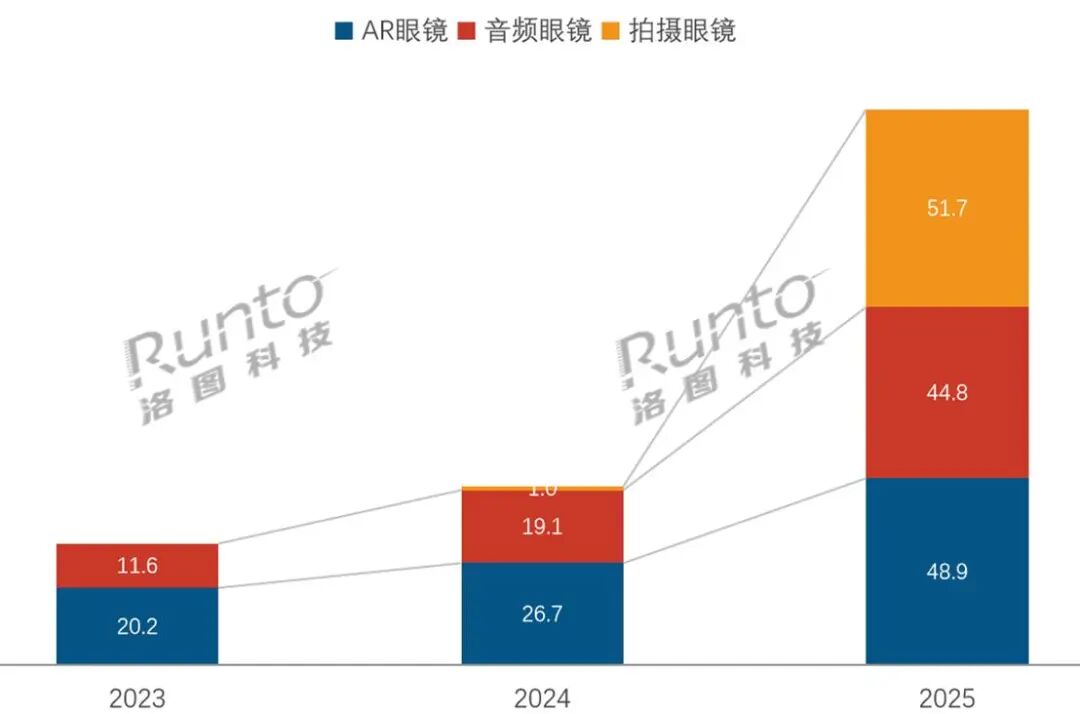
Among these, 517,000 units were camera glasses, essentially starting from scratch; 448,000 were audio glasses, and 489,000 were AR glasses.
By 2026, smart glasses have been included in national subsidies for the first time, offering a 15% discount at purchase, with a maximum subsidy of 500 yuan. Runto forecasts that smart glasses market sales will hit 3.2 million units in 2026, a 120% increase from 2025.
In terms of products, this week, Qianwen’s AI glasses S1 topped sales charts across multiple platforms just 10 hours after launch. They support AI simultaneous translation, near-eye navigation, and feature a hot-swappable dual-battery design for enhanced convenience.
Leqi AI glasses clinched the 2026 Red Dot Design Award, with global orders surpassing 300,000 units.
Notably, on the morning of April 17, during his state visit to China, General Secretary of the Communist Party of Vietnam Central Committee and President Su Lin visited the China-ASEAN Artificial Intelligence Application Cooperation Center in Nanning, Guangxi, and experienced an AI translation teleprompter glasses firsthand. Speculation abounds that the smart device he tried may be of the same ilk as a locally developed AI glasses previously unveiled in Guangxi.
Comment: Chinese manufacturers are no longer merely following in the footsteps of overseas brands but are forging their own unique path by reducing weight, adopting modular designs, focusing on specific usage scenarios, and leveraging policy subsidies.
However, it’s worth noting that the return rate for smart glasses was as high as 20% to 50% in 2025, a stark reminder to the industry that there’s ample room for improvement in functionality and user experience.
02 Non-Display AI Glasses Lead the Charge, While Display-Equipped AR Models Continue Technical Evolution
The current AI glasses market primarily follows two development trajectories. The first is lightweight models sans display functions, primarily geared towards photography, audio, and voice interaction. The second is full-featured AR models boasting display and augmented reality capabilities, though they grapple with greater challenges in power consumption, weight, and cost.
From this week’s news, in the lightweight category, Apple is testing at least four frame styles, including large rectangles, thinner rectangles, large ovals or circles, and smaller, more refined oval or circular versions.
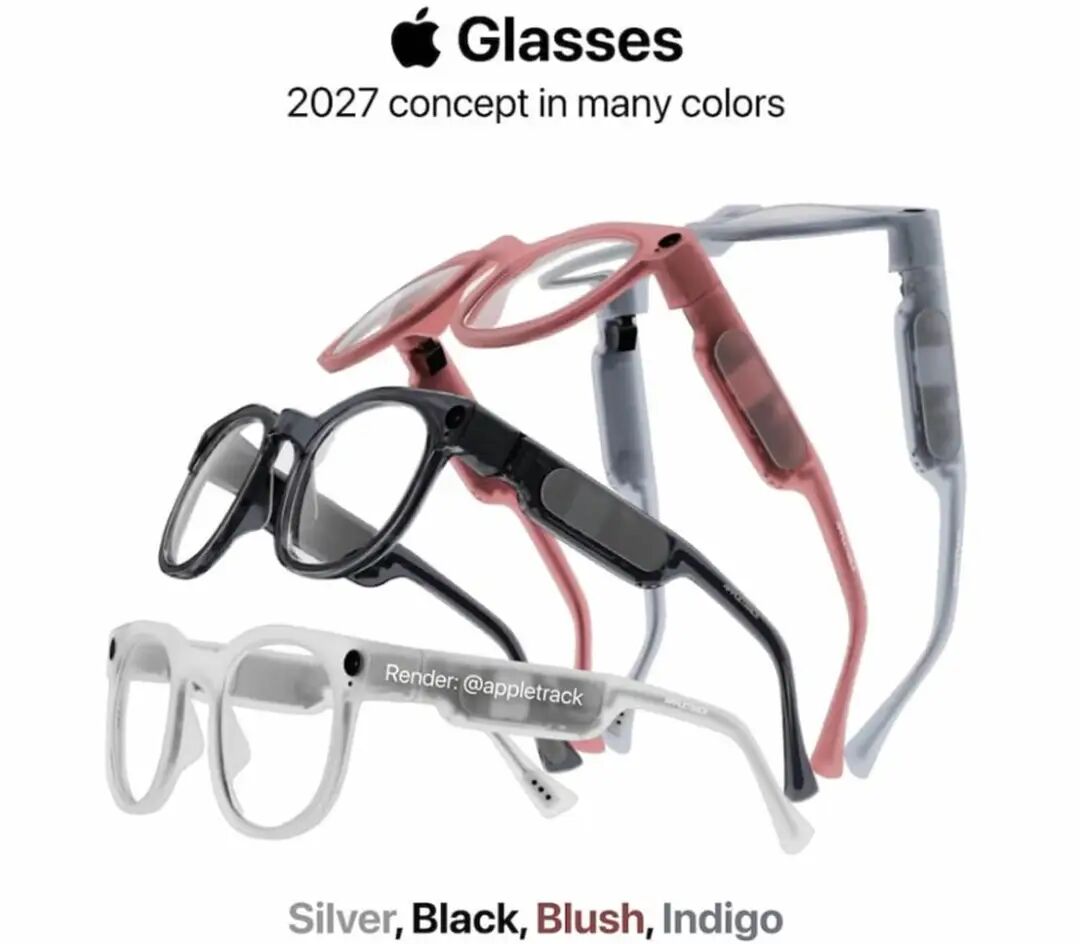
These products come in black, ocean blue, and light brown, with acetate frames and vertically oval-shaped cameras encircled by indicator lights.
Apple’s smart glasses, devoid of AR display, will require iPhone connectivity and are expected to make their debut between late 2026 and early 2027, with sales commencing in spring-summer 2027.
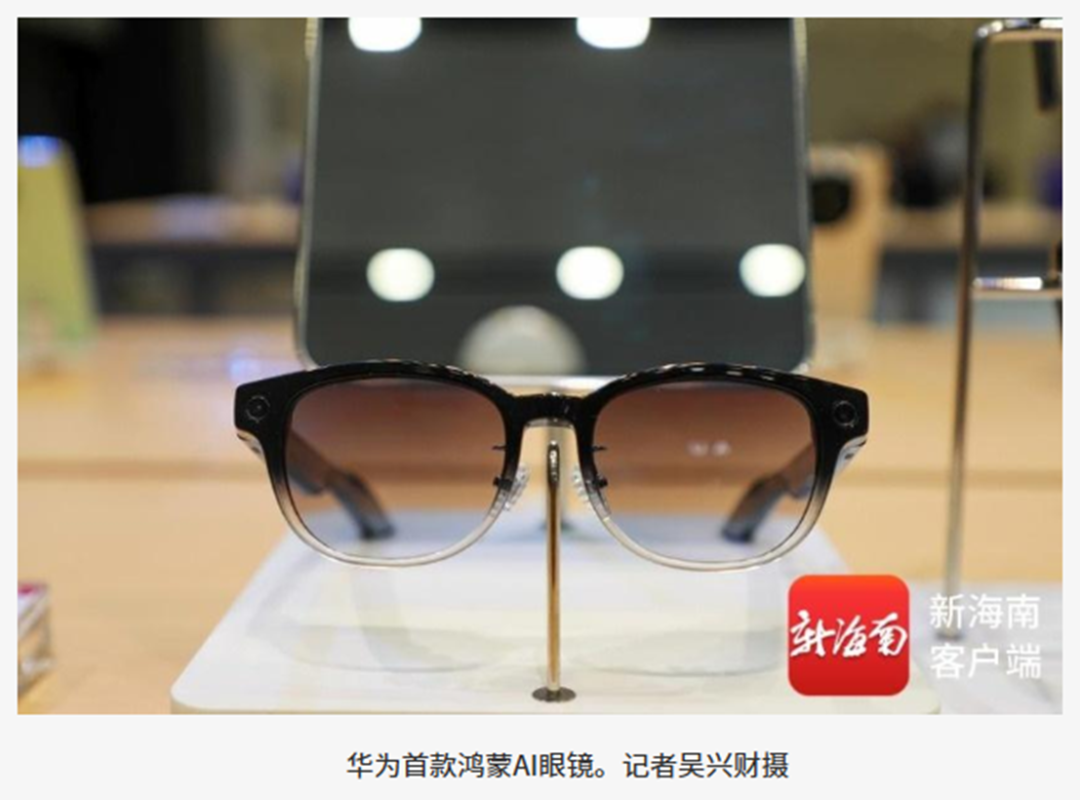
Huawei’s AI glasses recently made their offline debut at the Consumer Expo and will be officially released on April 20. Weighing a mere 35.5 grams, they feature a self-developed low-power HiSilicon chip and support “ultra-clear AI flash photography.”
Additionally, Viture announced it will launch Vonder AI glasses in the fourth quarter, emphasizing an “invisible” appearance and privacy protection. Israeli company Everysight unveiled two Maverick AI glasses models, featuring a free-form off-axis optical design with 20 times higher optical efficiency than waveguide solutions, with the Pro version supporting eye-tracking interaction.
In the full-featured AR realm, Snap’s Specs Inc has entered a multi-year strategic collaboration with Qualcomm, which has pledged to supply Snapdragon chips for future generations of Specs glasses.
It’s understood that the sixth-generation Specs glasses, targeting the consumer market, will be launched “later this year,” featuring a smaller, lighter design with see-through AR optical systems.
Comment: Lightweight AI glasses are more readily embraced by the public due to their resemblance to regular glasses. Full-featured AR glasses offer richer interactions but necessitate further breakthroughs in optics, power consumption, and cost. These two paths will coexist long-term, catering to the diverse needs of “personal assistants” and “spatial computing.”
However, at this juncture, non-display AI glasses are more favored by manufacturers.
03 Cost Pressures and Privacy Controversies Pose Formidable Challenges
As the industry hurtles forward, two pressing issues have emerged. First, escalating supply chain costs are driving up product prices. Second, privacy and security controversies may sway product design directions.
In terms of costs, Meta announced a price hike for Quest 3 and Quest 3S starting April 19. The Quest 3S 128GB version rose from $300 to $350, the 256GB version from $400 to $450, and the Quest 3 512GB version from $500 to $600.
Meta cited significant price increases for key components like storage chips as the rationale. Sony, Microsoft, and Samsung have also recently raised prices for some of their products.
Regarding privacy, The New York Times reported that Meta plans to surreptitiously introduce facial recognition features. Following this revelation, over 70 advocacy groups jointly issued a warning, urging Meta to abandon plans to add facial recognition to AI glasses. These groups fear the feature could be exploited by stalkers or abusers to secretly identify strangers in public.
Some manufacturers actively sidestep privacy issues associated with cameras. International fitness brand Reebok, in collaboration with Lucyd, launched four new smart audio glasses without cameras, priced at $250.
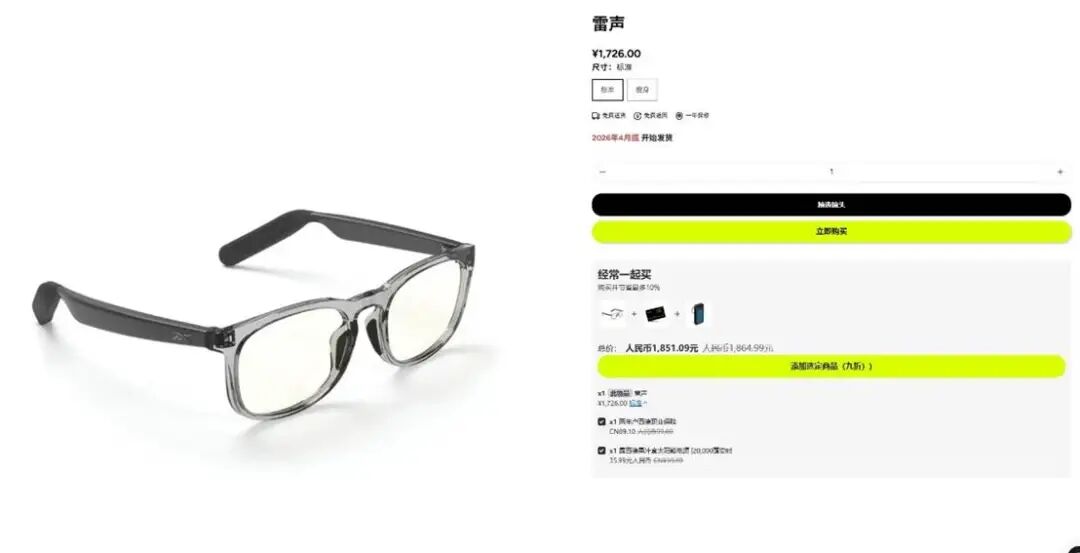
Lucyd stated that this design averts social awkwardness like “are you recording?”
Comment: Rising costs are an industry-wide conundrum that’s difficult to circumvent in the short term. Privacy controversies directly relate to where the functional boundaries of AI glasses should be drawn. Some manufacturers opt to omit cameras to mitigate risks, while others attempt to strike a balance through technical means or transparent design.
However, this contradiction will persist long-term.
04 Chip Giants Forge Alliances with Downstream Brands, Fashion Sense Emerges as Primary Motivation for Wearing
Competition in the industry is no longer confined to individual products but has shifted to ecosystem alliances. Deep partnerships between upstream chip manufacturers and downstream brands, as well as cross-industry collaborations between tech companies and fashion brands, are reshaping the market landscape.
This week’s multi-year strategic collaboration between Qualcomm and Snap’s Specs Inc exemplifies this trend. Qualcomm’s CEO stated that the next generation of computing will be defined by devices that comprehend the user’s environment.
Additionally, Meta recently extended its multi-year platform support agreement with Unity, which will continue to provide content creation support for Meta’s VR devices. Influenced by this news, Unity’s stock price rose by 6.1%.

In terms of brand collaborations, Google is partnering with luxury brand Gucci to create AI smart glasses, set to launch in 2027. This is part of Google’s “Project Aura,” with its first smart glasses featuring the Android XR system expected to be released this year.
The collaboration with Gucci is seen as a pivotal step for Google to compete directly with Meta’s Ray-Ban series. As Snap’s CEO remarked, “People don’t want the ‘Meta’ brand emblazoned on their face.”
Of course, there’s also the previously mentioned sports brand Reebok. Like many cross-industry entrants into the AI glasses market, this international fitness giant joined during the industry’s peak fervor, focusing on incorporating its design expertise in sports equipment for everyday use scenarios.
Comment: AI glasses must first and foremost be something users are willing to don. Now, tech companies are entrusting design aesthetics to fashion and sports brands while concentrating on AI capabilities and chip platforms.
The partnership between Ray-Ban and Meta has validated the efficacy of this division of labor, and such cross-industry collaborations will only intensify in the future.
05 Capital and Strategic Shifts: VR Cools Down as AI Glasses Emerge as New Growth Anchor
Recent news indicates that capital markets and tech behemoths have sent clear signals: the pure VR development approach has cooled, while AI-enabled wearables are becoming the new growth focal point.
Recently, Meta announced a restructuring of its Reality Labs hardware division, splitting foundational teams into product-specific groups to streamline decision-making.
To date, the division has laid off over 1,500 employees, shifting its focus from “building the metaverse” to “creating sellable hardware.”
Snap also confirmed it will lay off about 1,000 employees, or 16% of its workforce, before the release of its next-generation “Specs” AR glasses, though its subsidiary Specs Inc is bolstering staff.
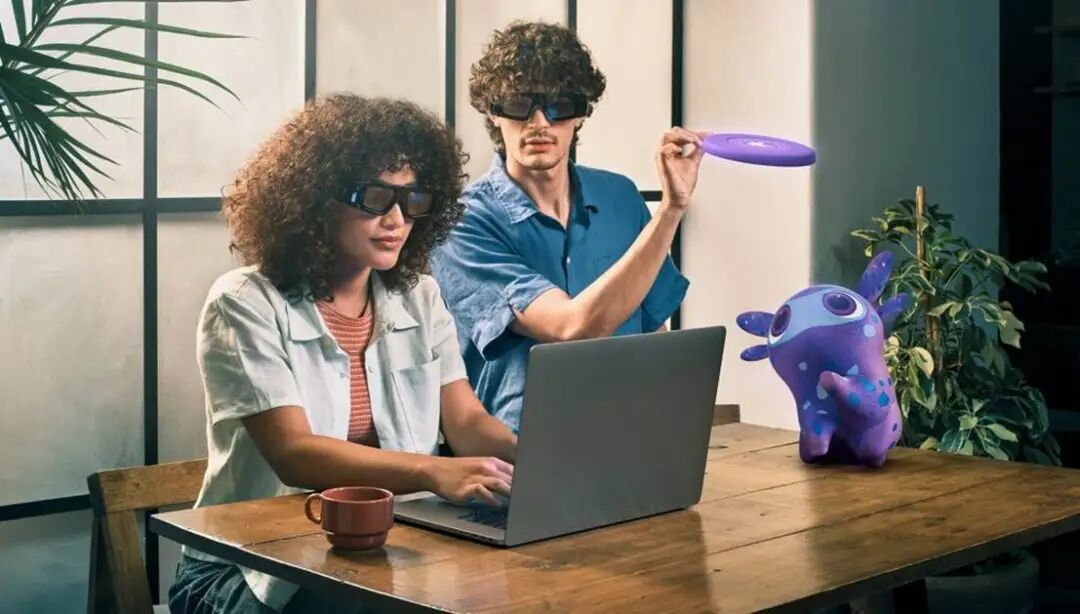
Snap CEO Evan Spiegel stated in a memo that the adjustments aim to achieve “faster, more efficient” operations and pivot toward profitable growth. Through these measures, Snap anticipates reducing annual cost bases by over $500 million by the second half of 2026, paving the way for net profitability.
Comment: VR headsets are indeed facing pressure, such as lower-than-expected consumer adoption and escalating product costs, leading industry resources to gradually shift toward AI glasses. The upstream optics sector and AI content generation remain enticing to capital markets.
Companies across the XR industry are continuously undergoing reevaluation of their value.
Summary
From this week’s developments, AI glasses are transitioning from conceptual exploration to mainstream adoption.
The Chinese market is rapidly expanding due to policy subsidies and product innovation, but high return rates serve as a reminder to the industry that functionality and user experience still require refinement. Lightweight models without display functions are the current focus for most manufacturers due to their wearer-friendliness and cost control, while full-featured AR products are still undergoing technical development.
Rising costs and privacy controversies are real challenges the industry must confront, with some manufacturers even choosing to omit cameras to gain social acceptance.
Meanwhile, cross-industry collaborations have become the mainstream model, with tech companies ceding design to fashion and sports brands while focusing on AI and chip capabilities. VR headset hype has waned, with capital and industry resources shifting toward AI glasses. The entire XR industry is undergoing a value reassessment.
These are the key XR industry events and comments worth noting this week. VRAR planet will continue to bring you the latest hot topics in the industry. Welcome to follow the 【VRAR planet】 official account (WeChat Official Account) and video channel.
-
![]()
Proceed with Caution Before Entering the Indian Auto Market: Even Musk Faced Challenges, What Makes Chery Think It Can Succeed?
-
![]()
EU Intends to Engage in Trade War with China Amid Chinese Cars Nearing 10% of Monthly Sales in Europe
-
![]()
Shenzhen Rolls Out 'Ten Measures' for New Energy Vehicle Insurance: Integrates Innovative Risk Factors and Adopts Battery-Body Separation Model
-
![]()
If You Can’t Drive a Ferrari Yourself, What’s the Point of Owning One?
-
![]()
ByteDance Clarifies: 'No Car Production, No Investment in Saido!' Seres' Stock Price Plummets to New Lows!
-
![]()
New Energy Vehicles Boast Over 60% Penetration Rate: Joint Venture Automakers Must Accelerate Their Efforts
-
![]()
Why Are New Energy Vehicles Becoming Increasingly 'Bulky'?
-
![]()
Over 12 Years, the Average Passenger Vehicle Has Gained Nearly 400 kg, Sparking Netizens' Queries: When Will New Energy Vehicles Revert to Their 'Standard Size'?