TCL Ponders Selling Stake in Indian TV Venture: The Identity of the Buyer Holds Greater Significance
 04/21 2026
 450
450
Indian media outlets have recently reported that TCL is contemplating the sale of a portion of its stake in its Indian TV manufacturing operations to raise approximately $200 million, with local investors emerging as the primary potential buyers.
Although TCL has responded by stating, "There is no relevant information to disclose," industry insiders suggest that such a response often hints at underlying intentions, even though the matter has not yet reached a conclusive stage.
Based on the information currently available, should the equity transfer materialize, it would be considered a standard market transaction rather than an isolated incident.
Over the past few years, the strategy of Chinese home appliance companies in the Indian market has undergone a transformation. Initially, the focus was on "heavy asset investment and local manufacturing," but it has gradually shifted towards "leveraging local capital and reducing asset intensity." This change is not merely a strategic pivot by a single company but a response driven by the broader market environment.
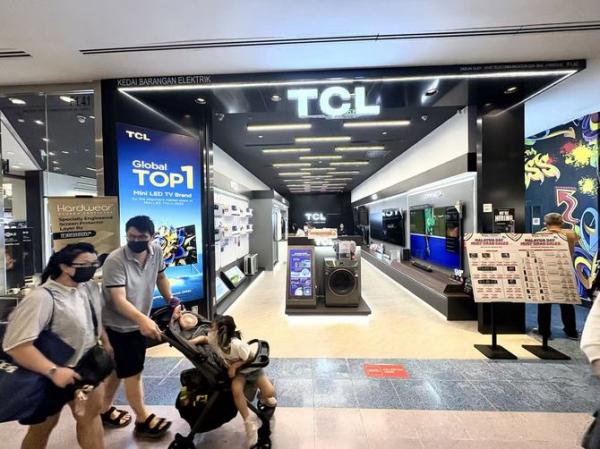
Compared to the question of "whether to sell," the more pivotal issue is "who will acquire the stake." Different types of investors bring distinct operational philosophies, which will directly influence TCL's future positioning in the Indian market.
Indian Market Shows Promise, Yet TCL's Share Remains Static
With a population exceeding 1.5 billion, India is widely regarded as one of the world's most promising emerging consumer markets. From a demographic standpoint, it is still in the early stages of reaping the demographic dividend, offering significant potential for home appliances and consumer electronics—a viewpoint largely shared within the industry. As this demographic dividend continues to unfold, consumer purchasing power is expected to rise gradually rather than experience a sudden surge in the short term.
TCL entered the Indian market relatively early, with its 4G smartphones making their debut in 2016, followed by the gradual expansion of its TV business. In 2019, TCL announced an investment of around $219 million to establish display module manufacturing in India, aiming to construct a local supply chain system.
However, subsequent progress did not fully align with the initial plan. The pandemic from 2020 to 2023 disrupted construction schedules, delayed the integration of the local supply chain, and failed to deliver the anticipated cost advantages. These challenges gradually became evident in the market performance.
According to multiple data sources and public information, TCL TV's overall performance in the Indian market has remained relatively stable since 2020, maintaining a position around fourth or fifth in the industry from 2022 to 2025.
The crux of the issue lies in the fact that while the market is expanding, TCL TV's market share has not witnessed significant growth. In a fiercely price-competitive market, local brands and Japanese-Korean brands exert pressure across various price segments, and TCL TV's cost-effectiveness advantage has not translated into a higher market share. From the results, it appears more as if TCL is "riding the market wave" rather than actively driving growth.
Compared to other TV brands, it is not that TCL TV lacks quality; rather, a combination of external environmental factors and internal challenges has resulted in a slightly slower overall growth trajectory.
'Made in India' Initiative Reshapes Foreign Companies' Participation
Another significant variable is the evolution of India's manufacturing policies.
In recent years, under the ambitious goal of "becoming a global manufacturing hub," India has continuously strengthened localization requirements and increased the proportion of local participation. For foreign companies, the options are narrowing: either further localize operations or introduce local capital. This shift is not merely at the policy level but is gradually manifesting in business operations.
The traditional model of "foreign sole ownership and full-chain control" is being re-evaluated. India's ultimate objective is to bind technology, brands, and local manufacturing systems through local capital participation, seeking a balance between industrial control and risk-sharing. This ensures that India accelerates its manufacturing sector while guaranteeing local companies a voice in the current round of electronics manufacturing dividends.
Within this framework, TCL's potential equity adjustment represents a pragmatic choice to align with Indian market regulations.
However, for TCL TV, the outcome will vary significantly depending on the identity of the buyer.
In reality, potential buyers can be broadly categorized into two groups, with differences extending beyond mere funding sources.
Acquisition by Corporate Behemoths?
The first category comprises Indian industrial giants, such as Tata Group, Reliance Industries, and Dixon Technologies.
These companies share common traits: they possess not only capital but also channel, manufacturing, and policy resources.
Take Reliance Industries as an example. Its strength lies first in retail: it operates a vast nationwide store network (including Reliance Digital) and an after-sales service system while controlling India's largest home appliance distribution network. Combined with its Jio (telecom operator) platform, which boasts over 500 million users, and the JioMart platform, its online-to-offline conversion capabilities hold a clear advantage in the Indian market.
More critically is its financial prowess. Reliance collaborates closely with banks and non-banking financial companies (NBFCs) to offer installment payment plans. In India, over 50% of mid-to-high-end TVs are purchased through installments, and this capability directly influences the upper limit of sales potential to some extent.
Tata Group's strengths lie along a different trajectory. Its manufacturing and high-end retail channel layout position it closer to mid-to-high-end consumer groups. Tata's Croma is one of India's largest specialty electronics chains, emphasizing service and brand trust, which holds stable appeal among middle-class consumers.
Meanwhile, through Tata Neu, Tata is integrating diverse businesses to build its own user ecosystem. This cross-scenario integration capability often proves more resilient in long-term competition.
In contrast, Dixon Technologies represents a more "manufacturing-centric" path. As one of India's largest electronic manufacturing services companies, its strength lies in scalable production and policy coordination. Dixon is a major beneficiary of the "Production-Linked Incentive (PLI) Scheme," giving it advantages in resource acquisition and policy alignment.
At the supply chain level, Dixon has extended from simple assembly to display modules and other components, possessing Mini LED and other high-end TV production capabilities while providing ODM solutions.
Additionally, it provides contract manufacturing services for brands like Xiaomi, Samsung, and Motorola, with procurement advantages from economies of scale that significantly outperform single-brand self-built factories in cost control.
If such companies acquire the stake, TCL may be relinquishing not just equity but also its past operational model.
Acquisition by Financial Investors?
The other category of potential buyers consists of financial investors, including private equity funds, sovereign wealth funds, and industrial investment firms.
These investors prioritize return timelines and typically do not hold assets long-term. Once business performance improves, an exit becomes inevitable.
From this perspective, such investments resemble phased arrangements rather than long-term commitments. For brands hoping to sustain growth in India, this model introduces a degree of uncertainty.
In the Indian market, when foreign brands adjust equity, the buyers are often not purely financial investors but local conglomerates with both industrial and capital attributes. Such entities can meet policy localization requirements while possessing channel and financing capabilities.
Overall, TCL's current equity adjustment appears to be a proactive response to changes in the Indian market environment.
On one hand, by introducing local forces, TCL aims to deeper integrate its supply chain capabilities with local channel systems; on the other hand, it seeks to unlock more market entry points across tiers to create conditions for subsequent market share gains.
If local industrial capital is ultimately introduced, TCL's role in India will also shift—from emphasizing asset control in the past to participating in collaborative operations within the local ecosystem. Whether this transformation can truly translate into market share gains remains to be seen over time.
-
![]()
Xiaomi Auto Reports a Substantial Q1 Loss of 3.1 Billion Yuan, Yet Lei Jun Remains Unperturbed
-
![]()
"3D Vision Pioneer" Grapples with Internal Strife: $120 Million in Share Reductions Offset by $147 Million Private Placement
-
![]()
The domestic auto sales have declined so much that dealers who can't hold on have started closing stores en masse
-
![]()
Five Brands Team Up with Huawei: Will Dongfeng Still Pursue Independent R&D?
-
![]()
The Large Six-Seater SUV Market: Overhyped and Overrated
-
![]()
The Smart Driving Blue Light: Urgent Need for Rectification
-
![]()
Would OpenAI Be Fascinated by Anthropic’s Concepts?
-
![]()
Tencent: Few Great Queries, Yet Possessing the Ultimate One