DJI's Pocket 4 Unveils Dual Strategies
 04/24 2026
 404
404
By Jide
Edited by Ziye
After two and a half years of anticipation, the launch of the DJI Pocket 4 has left the entire handheld camera industry on edge. However, this time, the excitement isn't solely centered around a fully upgraded "standard version."
For a significant period, the Pocket series has demonstrated remarkable restraint in its product lineup. From its debut in 2018 through the Pocket 2 and Pocket 3, DJI has consistently maintained a steady rhythm, releasing one model every two to three years, adhering to the principle of "one generation, one model." This approach involved targeting a single market with one product to cater to all user groups.
Yet, the Pocket 4 series breaks this tradition. Alongside the standard Pocket 4, DJI has unexpectedly announced that a more advanced Pocket 4P will be released later this year. This marks the first instance in the series' eight-year history, spanning three generations, where two models are being introduced within the same generation.
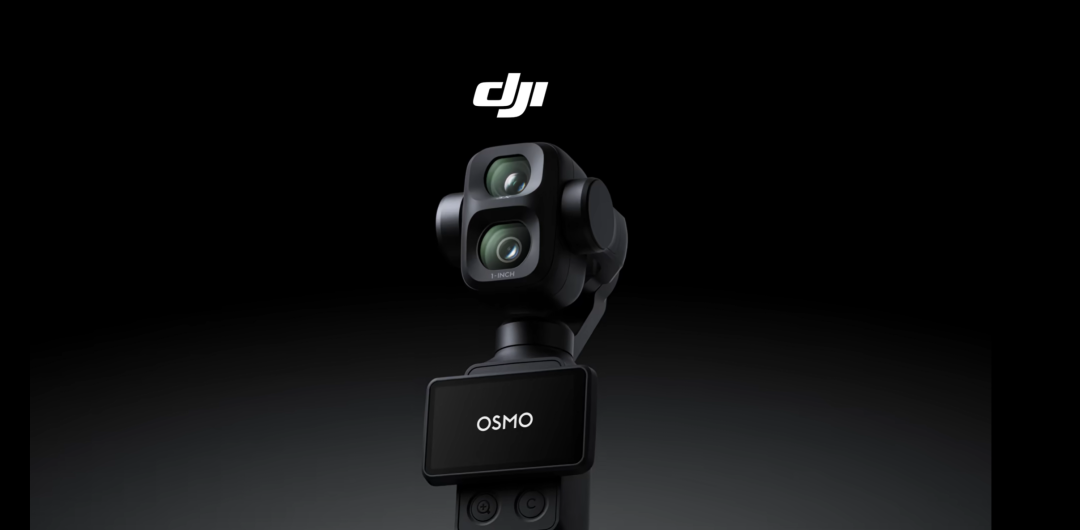
Osmo Pocket 4P, image source: DJI promotional video
This move represents a clear demarcation. On the surface, it may seem like just "adding another version." However, beneath the surface, DJI is fundamentally altering its approach to product definition.
The product logic of the Pocket series, which centers on "starting from user needs," has become increasingly evident. This shift means that the positioning of the fourth-generation products is no longer a "one-size-fits-all" model but a precisely tiered "product matrix," ultimately laying the groundwork for a broader ecosystem.
1. Dual Versions, Precisely Targeted: Pocket 4 Empowers User Choice
The Pocket series has witnessed its user base expand over four generations.
The first two generations solidified the concept of "lightweight stability and effortless shooting," enabling more users to embrace the pocket gimbal camera category. By the time the Pocket 3 arrived, its exceptional product capabilities triggered a surge in demand among both general consumers and professional creators, becoming a "productivity tool" for numerous media outlets and bloggers.
As the user base soared to tens of millions, the audience became more diverse, and demand stratification became increasingly apparent. DJI likely realized that one product couldn't satisfy everyone simultaneously. Two distinct sets of needs should be addressed by two different models.
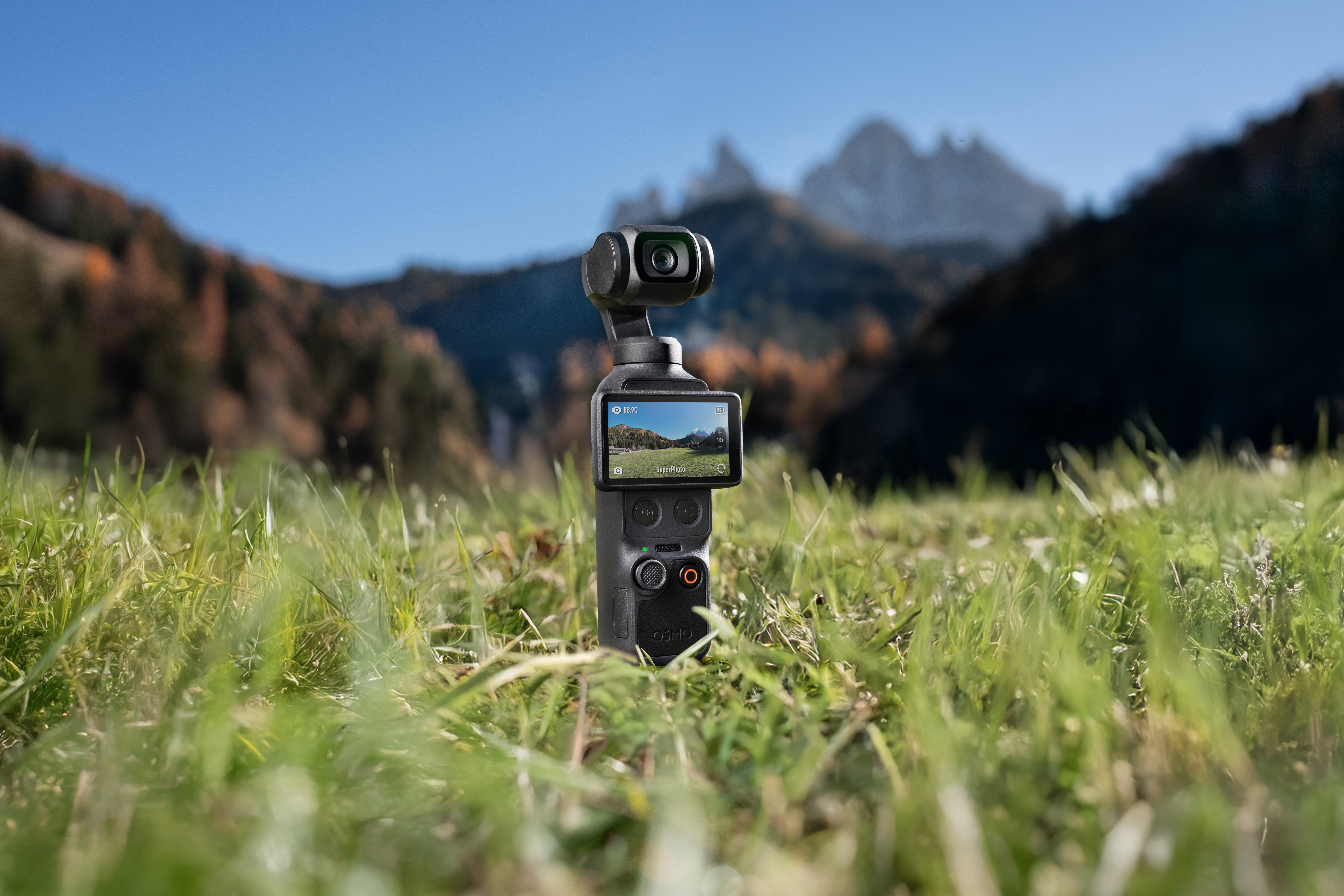
The single-lens Pocket 4, which debuted first, is DJI's response to the general market.
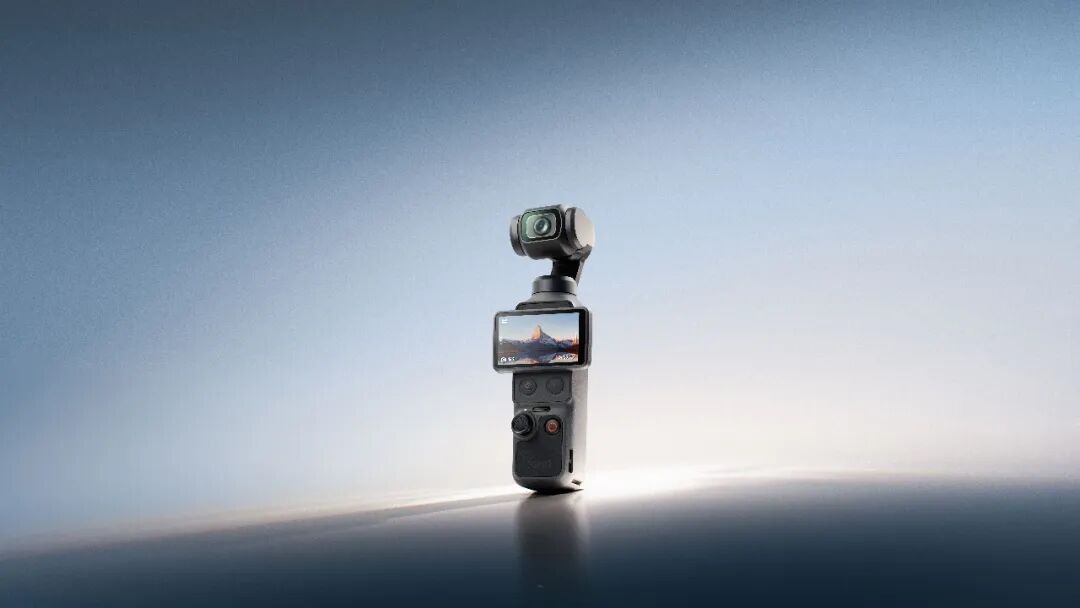
Pocket 4
The precision of the Pocket 4 is evident, with every modification addressing the pain points of general users.
We observe that ordinary users have increasingly high demands for photography, and the Pocket 4 robustly meets these expectations. Its newly upgraded 1-inch sensor offers a 14-stop wide dynamic range, surpassing many mainstream mirrorless cameras on the market. The pixel count has been increased to 37 million, higher than the default 24 million pixels of the iPhone 17 Pro in regular mode.
Paired with the 10-bit D-Log color mode, previously exclusive to professional lines, the Pocket 4's footage is no longer "finalized upon capture." It retains ample post-production flexibility, allowing details to be revived during color grading, thus enabling users to define the final image quality themselves.

The addition of 4K Live Photo means users no longer have to hesitate between taking a photo or recording a video while traveling—the Pocket 4 excels in both.
To offer richer video playback options, the Pocket 4 introduces 4K/240fps slow-motion capabilities, previously found only in devices costing tens of thousands of yuan. It also includes 107GB of built-in high-speed storage, allowing users to shoot up to 3 hours of 4K video continuously.
General users also demand ease of operation. Thus, two physical buttons have been added to the body: the left controls zoom, with a short press for 1x/2x and a long press for 4x; the right is a customizable button, allowing instant gimbal flipping for seamless selfie-to-subject switching. The single-handed experience has been elevated to new heights.
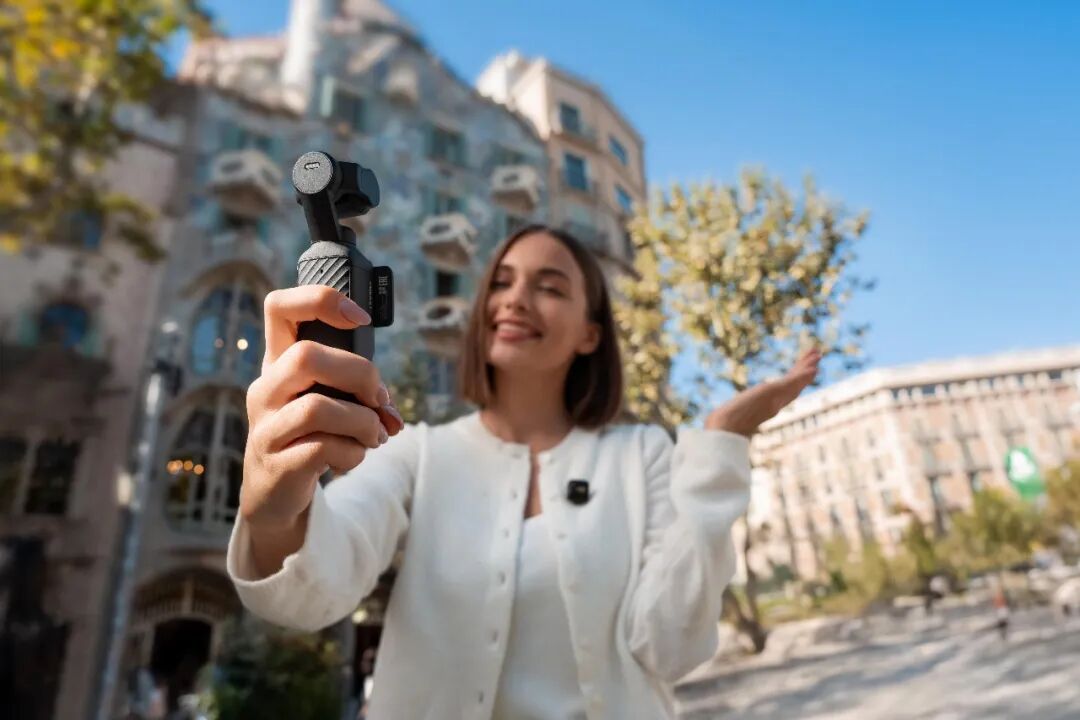
In essence, the Pocket 4 leverages near-maximum cost-effectiveness to draw general users into the Pocket ecosystem as much as possible.
However, catering solely to the general market isn't sufficient. In a rapidly growing sector, relying solely on a "jack-of-all-trades" product inevitably compromises professional capabilities.
If the Pocket 4 represents the "stable foundation," then the briefly glimpsed Pocket 4P in the teaser is DJI's weapon for "excellence."
The 4P's core mission is to elevate the professional ceiling of the category and secure the loyalty of discerning professional creators.
Although the Pocket 4P hasn't been officially released, leaked promotional materials reveal some details.
The slogan "Dual Vision, Extraordinary Foresight," accompanied by a fleeting glimpse of a dual-camera module, points to one fact: this is a "productivity tool" equipped with a 1-inch main camera and a 3x telephoto lens, essentially offering new possibilities for advanced creation within a portable form factor.
Additionally, according to multiple media reports, the Pocket 4P supports remote operation via a control module and will integrate more tightly with DJI's ecosystem products.
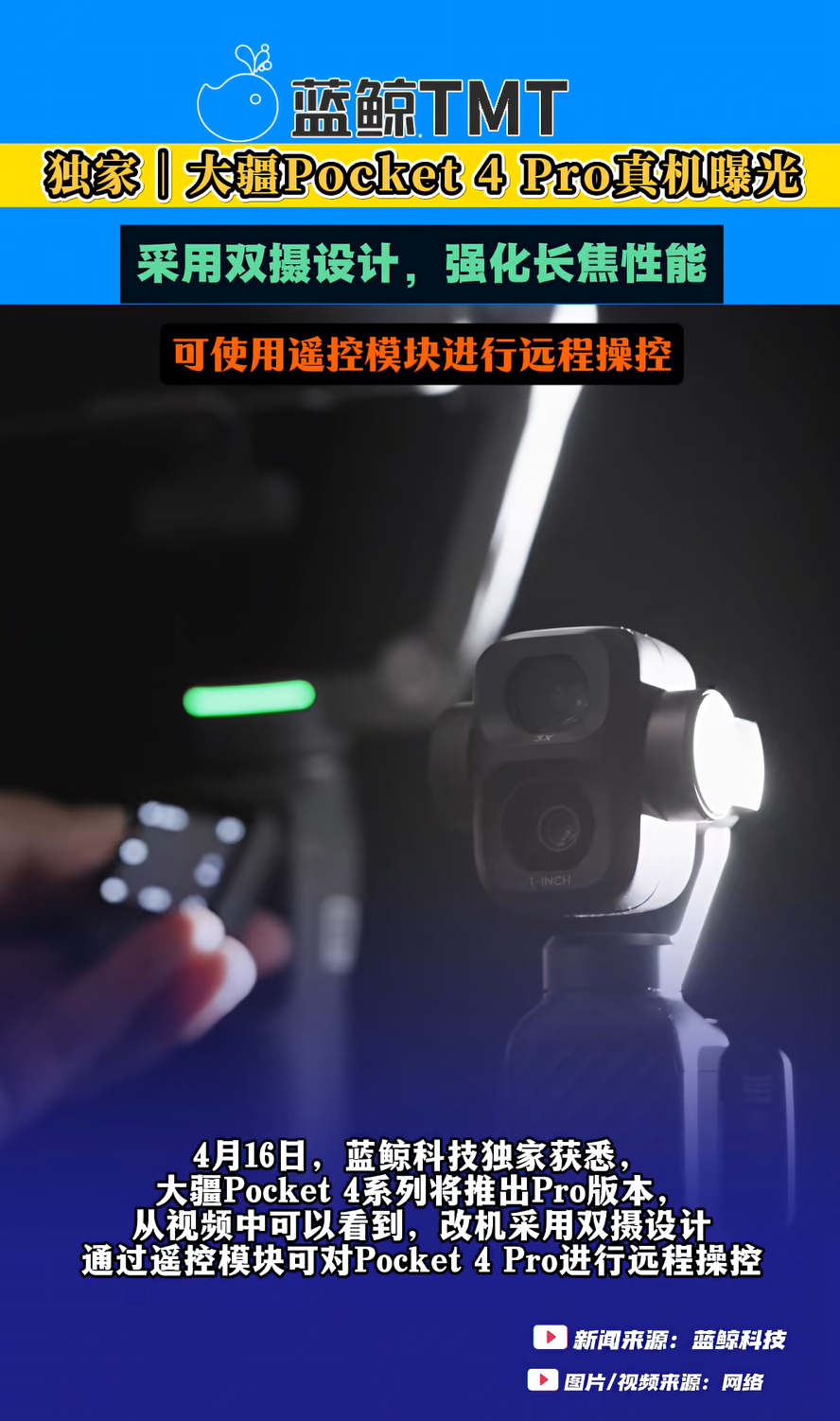
These features reveal the Pocket 4P's positioning as a "productivity tool" that maximizes creative freedom and efficiency for professionals within an ultra-portable design.
In summary, the Pocket 4's dual versions—one "inclusive" to solidify the base, the other "professional" to raise the ceiling—represent DJI's clear strategy. But why now? After eight years of dominating with the "one generation, one model" rule, why has DJI chosen to break it voluntarily?
2. From Category to Matrix: Why Must DJI 'Walk on Two Legs'?
In the consumer electronics industry, determining the optimal number of variants for a single product remains an unsolved dilemma.
Some manufacturers overload a single device with numerous features and thrust it upon users, while others create five or six versions of one product, overwhelming users with choices.
DJI stands at this crossroads, questioning whether the market environment is mature enough to support product tiering and whether it can strike the right balance.
Over the past eight years, the Pocket series has consistently adhered to a "simplicity" approach. From the original Pocket defining the category in 2018 to the Pocket 2 optimizing focal lengths and audio, and then the Pocket 3 achieving an epic iteration in 2023—each generation was a comprehensive evolution of the previous one, but all were positioned as "a camera for everyone."
This approach had historical logic. As the pioneer of pocket gimbal cameras, DJI followed a "technology-first" philosophy, where each iteration's core was "pushing technology to the limit to create a device that can shoot anything, leaving users to adapt to it."
However, the Pocket 3 became an unexpected turning point. Due to its comprehensive performance leap, the Pocket 3 attracted not only a large number of ordinary users seeking image quality but was also "conscripted" by professionals as a productivity tool. Media outlets adopted it as their primary device, documentary filmmakers used it for tracking and supplementary shots, and even top-tier teams like Storm Films included it in their gear.
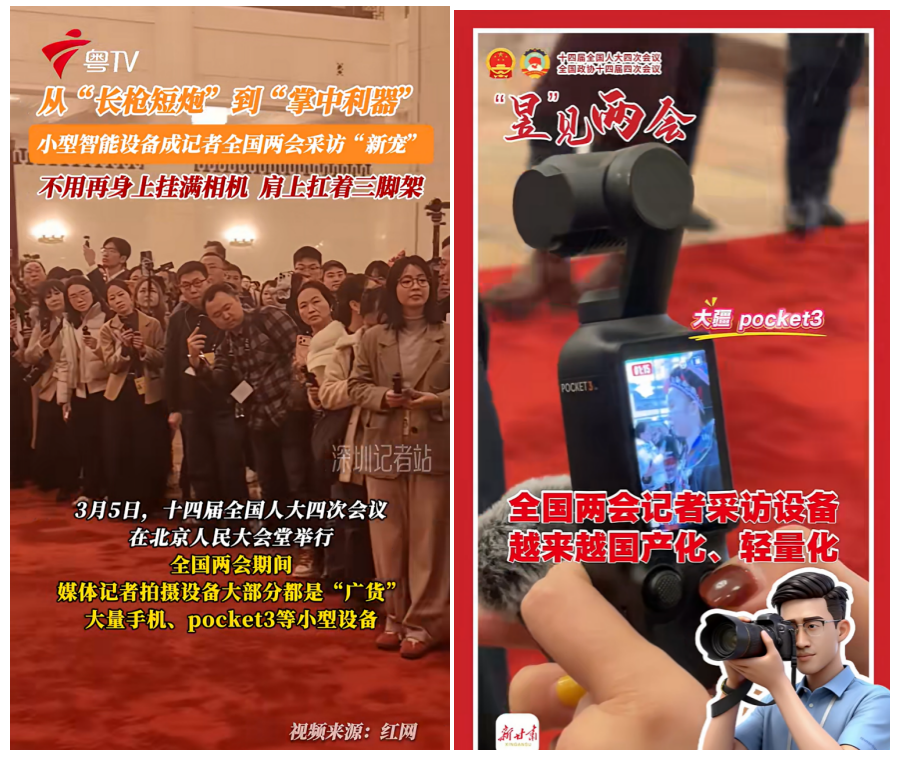
Pocket 3 becomes mainstream equipment for journalists
Over three years, the Pocket 3 generated nearly 20 billion yuan in revenue; by the third quarter of 2025, global cumulative sales exceeded 10 million units.
Meanwhile, the entire handheld smart imaging market it operates in also experienced explosive growth. IDC data shows that global shipments of this category (including gimbal cameras, action cameras, etc.) surged by 83% year-on-year in 2025, with the market size expected to exceed 40 million units by 2030.
This is just the beginning. Building on the Pocket 3's foundation, the Pocket 4 further strengthens its professional attributes, transitioning from being "accidentally adopted" by professional creators to being "actively embraced" by the film industry. Recently, the Pocket 4 became the official partner of the 16th Beijing International Film Festival, with its devices directly used in shooting celebrity portrait stills and red-carpet interactions.
As the Pocket 4 continues to penetrate the cinematic-grade sector, it will not only break through the user-base ceiling of the Pocket series but also become the core engine driving explosive category growth.
When a category grows large enough, user demand dispersion reaches a critical point, making segmentation inevitable.
Ordinary users want "out-of-the-box" convenience and "good enough" performance; they're unwilling to pay extra for features they'll never use.
Advanced users, however, need a complete productivity tool—lossless image quality, multi-focal-length expression, higher shooting efficiency. The performance ceiling of the single-lens version is limiting their creative potential.
Faced with this "impossible to please everyone" challenge, DJI's solution is: the Pocket 4 makes precise "subtractions," while the 4P makes extreme "additions." Two products that understand user pain points each cater to the needs of two core user groups.
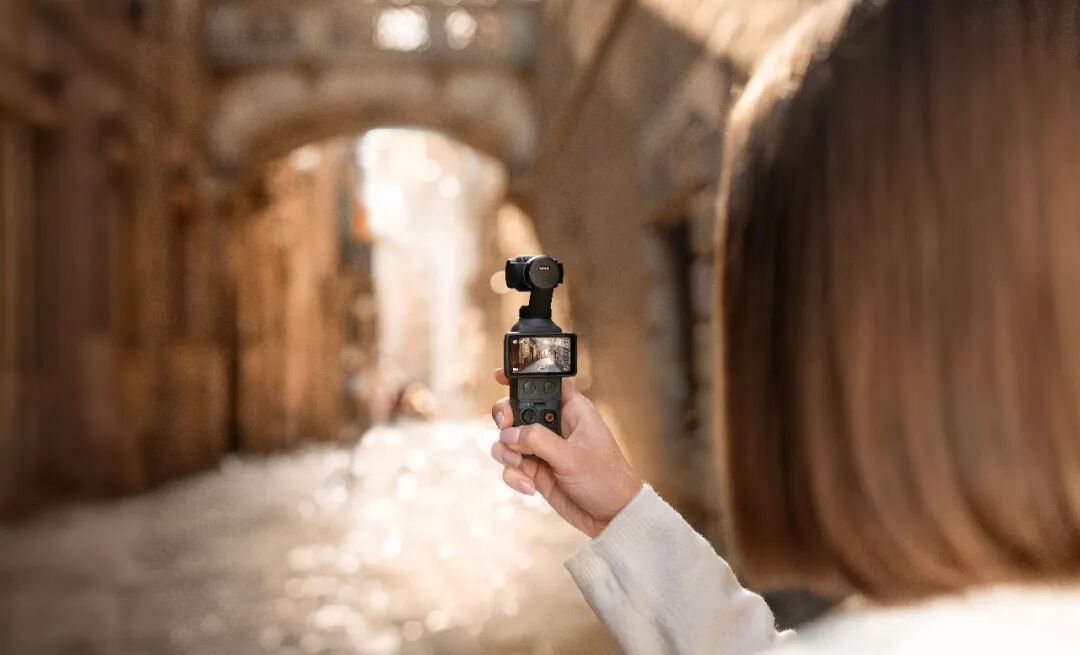
From "seeking comprehensiveness" to "seeking specialization," from "product-centric" to "user-centric," DJI has undergone a profound philosophical shift. It no longer relies solely on "technological dominance" to define the category but instead uses "deep user understanding" to dig moats in the sector.
3. Pocket 4 Is Just the Prologue: DJI Is Playing a Long Game of 'Ecosystem Closure'
The Pocket 4 series is merely DJI's first move in a grand strategy.
In consumer electronics, a tried-and-true pattern exists: a dual-model strategy often marks the first step toward a multi-product-line matrix.
In 2014, Apple transitioned from "one generation, one model" to "one generation, two models" with the iPhone 6 and 6 Plus. Many at the time saw it as merely a screen-size choice, but in hindsight, it was Apple's starting point for product tiering. Subsequently, the SE, base, Pro, and Pro Max series were rolled out, forming a complete matrix from entry-level to flagship.
Whether the Pocket series will eventually segment into entry, standard, pro, and flagship tiers remains to be seen. However, the Pocket 4 series has already signaled: DJI is shifting from "creating hits" to "cultivating categories."
The next chapter won't be about how powerful a single camera can be but about how many possibilities a matrix, an ecosystem, can cover.
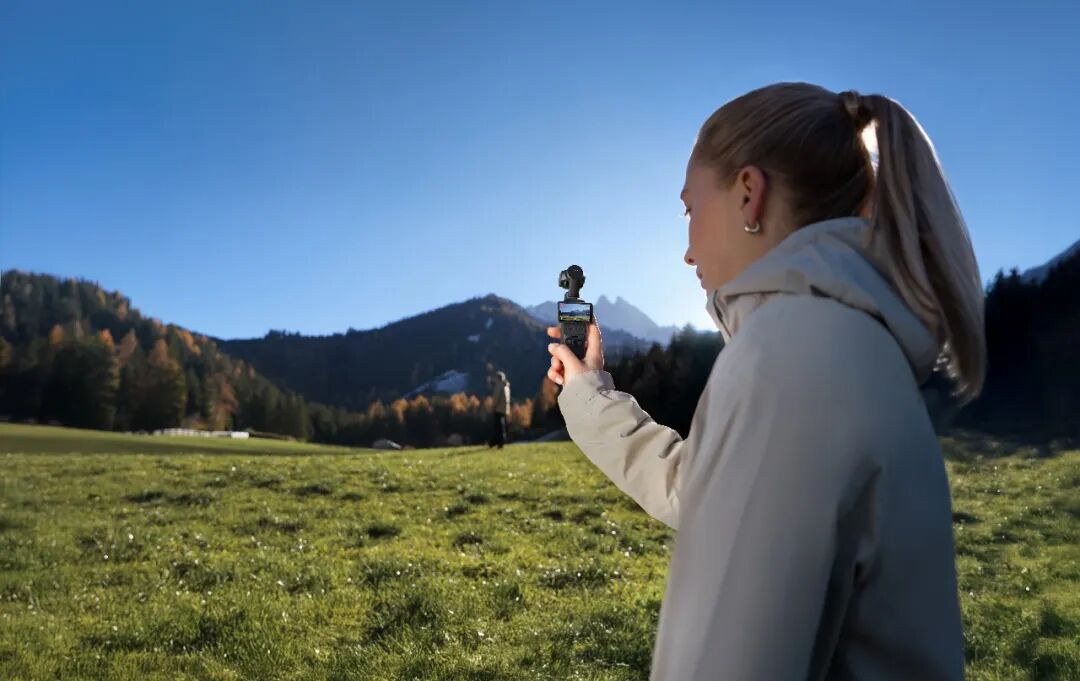
To some extent, this isn't speculation but DJI's inevitable choice.
DJI's current position in the handheld gimbal camera sector perfectly aligns with the conditions necessary for a manufacturer to initiate multi-tier product differentiation.
First, it holds category definition rights and tops the market share—IDC data shows DJI leads the global handheld smart camera market with a 62% share, with the Pocket series as one of its core assets. Second, its technological barriers are solid and difficult for competitors to surpass.
When a player leads the sector by a wide margin, its only true competitor is itself. The task becomes deepening internal cultivation—thickening the category and densifying the ecosystem.
The core value of category and ecosystem building lies not in selling more machines but in exponentially amplifying user lifetime value.
The Pocket 4 represents the entry-level tier, using low barriers to attract massive users, cultivate usage habits, and funnel fresh blood into DJI's ecosystem. Through apps, accessory systems, and habit formation, these users will naturally flow to Pro versions and even DJI's drones, action cameras, and other product lines.
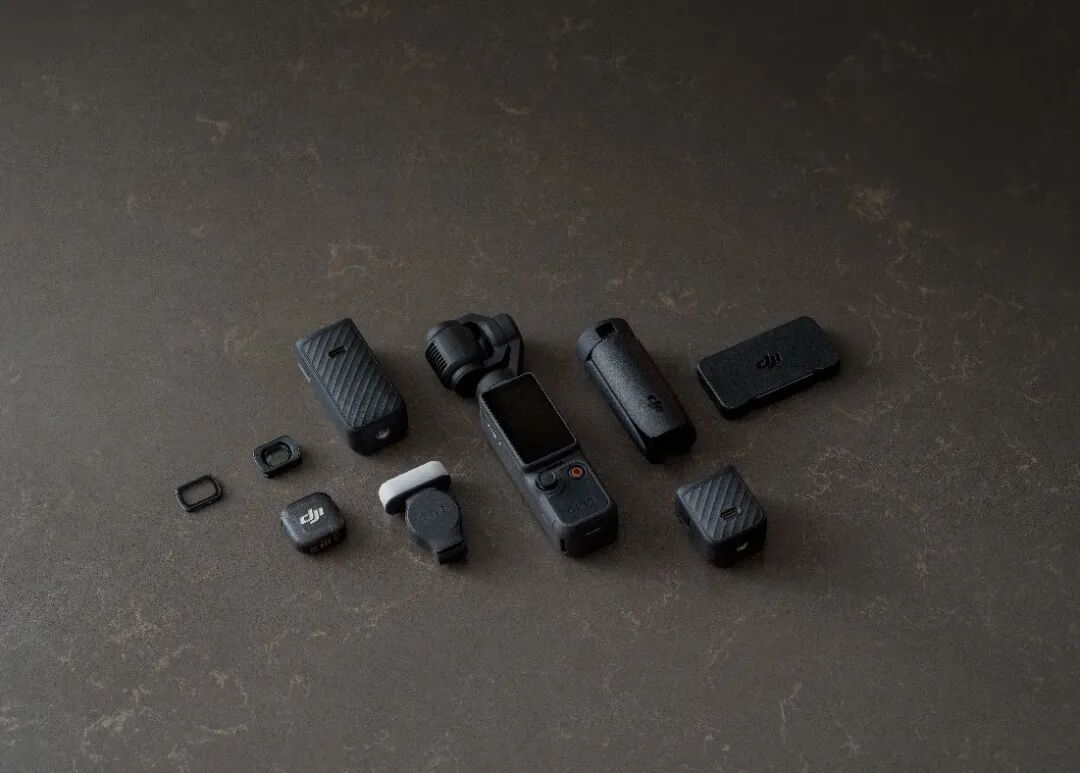
Pocket 4 accessories
The Pocket 4P represents the professional tier, acting as an "anchor" to lock in core creators' loyalty, even fostering "full-product-line" stickiness, deepening brand moats, and reinforcing ecosystem closure.
This is a well-designed "user growth path": from entry to advanced, from single devices to a full product line, every step is pre-planned.
DJI's ability to advance this dual-line strategy at such a measured pace is supported by its platform-based R&D capabilities.
Many worry that dual versions will increase R&D and supply chain costs, but DJI's logic is the opposite: dual versions aren't "reinventing the wheel" but "mounting one wheel on two vehicles."
DJI's core technologies have already been modularized and are highly reusable.
Take the three-axis gimbal, for example. This technology, originating from DJI's drone era, not only won dual recognition from the Oscars and Emmys but also spans DJI's entire product line from professional to consumer grades. In a sense, the stabilization effect of today's Pocket 4 in users' hands shares the same technological lineage as that used by top Hollywood crews.

DJI's Professional Multi-Purpose Three-Axis Stabilization System Ronin 2 and Its R&D Team Win the 2025 Oscar Scientific and Technical Award
The same is true for color science. DJI's experience in color tuning for the professional cinema camera Ronin 4D—its high demands for color consistency, tolerance, and post-adjustment flexibility—was ultimately translated into a more universal consumer-grade experience.
The quest for miniaturization capabilities actually commenced even earlier. Back in the era of the 2017 Spark drone, DJI embarked on a journey to explore lightweight and integrated designs. It persistently honed these designs in the Mini series and eventually applied them to the Pocket series.
When it comes to various aspects such as gimbals, image transmission, imaging, and audio, a breakthrough in core technology can bring benefits to multiple product lines simultaneously. This is in line with the English - speaking world's understanding of how technological advancements can have a ripple effect across different product segments.
The fact that the Pocket 4 series follows the pattern of "two models in one generation" is itself a testament to its technical reserves and R&D efficiency. This is a capability that is extremely difficult for competitors to replicate in the short run, as it requires a long - term accumulation of technology and a well - organized R&D system.
From a broader perspective, the Pocket 4 series is likely to serve as a watershed moment. In Western business and technological contexts, a watershed often represents a significant turning point that divides different eras or competitive landscapes.
DJI has reshaped the competitive landscape, taking the lead in venturing into the complex realm of "1 to N" development. The window of opportunity for competitors is closing rapidly. In the future, with the official release of the dual - version models, the benchmark for industry competition may undergo a transformation. On one hand, there is the old logic of relying solely on a single blockbuster product, which is a common but risky approach in many industries. On the other hand, a new form of competition centered around technology reuse and ecosystem closure is emerging. This reflects the modern trend in the tech industry where companies focus on building comprehensive ecosystems to gain a competitive edge.
Historical experience in the global business and technological arena indicates that single blockbuster products can only bring phased victories. The competition for ecosystem closure, however, is a long - drawn - out battle with no end in sight. This is a well - recognized concept in the international business community, as building a closed and self - sustaining ecosystem requires continuous investment and innovation.
This time around, DJI has once again established a significant generational lead over its competitors.
-
![]()
"3D Vision Pioneer" Grapples with Internal Strife: $120 Million in Share Reductions Offset by $147 Million Private Placement
-
![]()
The domestic auto sales have declined so much that dealers who can't hold on have started closing stores en masse
-
![]()
Five Brands Team Up with Huawei: Will Dongfeng Still Pursue Independent R&D?
-
![]()
The Large Six-Seater SUV Market: Overhyped and Overrated
-
![]()
The Smart Driving Blue Light: Urgent Need for Rectification
-
![]()
Would OpenAI Be Fascinated by Anthropic’s Concepts?
-
![]()
Tencent: Few Great Queries, Yet Possessing the Ultimate One
-
Does DingTalk Need Revolutionaries or Reformers?