When the Boss Becomes a 'Content IP': Is the Company Making Money or Just Gambling for Traffic?
 04/24 2026
 449
449
Baker Street Detective

A Boss's Words Can Make or Break the Company: Some Grow More Valuable, Others More Dangerous
In recent years, netizens following major domestic companies have noticed something interesting: many companies' growth curves increasingly resemble their bosses' 'speech curves.'
For a long time, the default logic of business development was that good products lead to good performance. However, the reality shown by major companies in recent years is that performance can also be 'spoken into existence' by the boss.
In today's booming We-Media era, a single statement from the boss can catapult a brand to fame or cause a company's value to plummet overnight. Some can clarify a trillion-yuan market cap in a few sentences, while others leave users bewildered with 'sophisticated expressions.'
When Lei Jun simplifies complex technology into 'cheaper and better'; when Luo Yonghao ignites a loyal fanbase with emotion; when Yu Minhong transforms live-streaming commerce into poetry and distant horizons, and then Li Xiang's AI remarks leave countless people saying 'I don't get it,' a harsh reality emerges: every time the boss speaks, they're re-pricing the company.
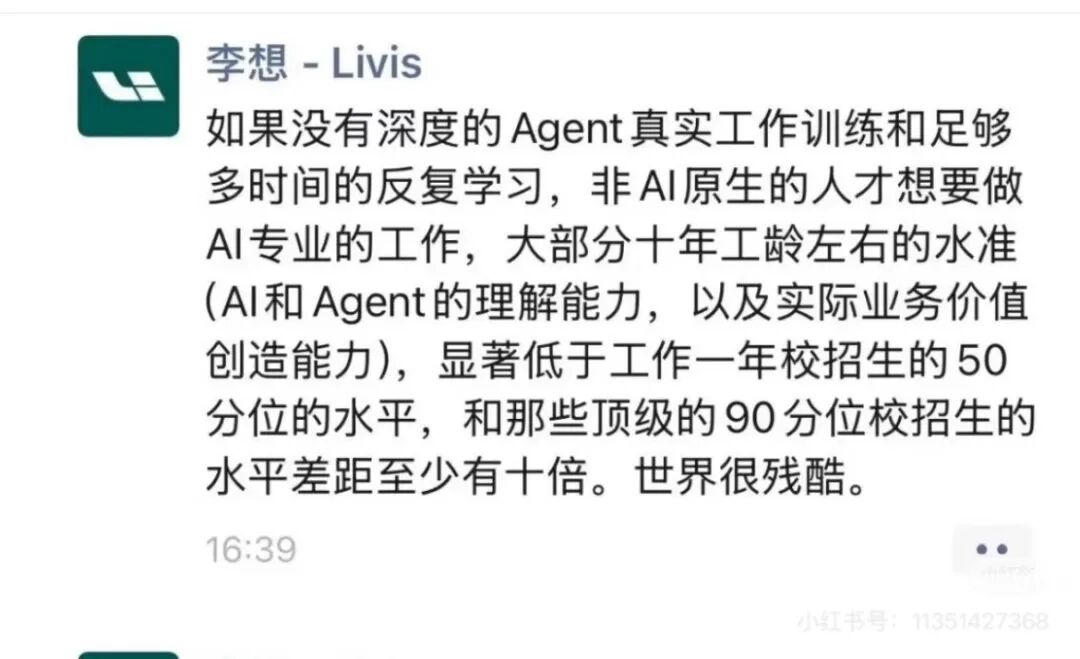
Image Source: Xiaohongshu
In the We-Media era, what a boss says, who hears it, and whether the audience understands it determines whether each public statement helps the company make money or gambles with its traffic.
01 Amplifying Value or Overdrawing the Future?
Those who speak better, dare more, and have a stronger personal style are more likely to be seen, discussed, and remembered. The role of entrepreneurs has quietly shifted from behind-the-scenes decision-makers to front-stage 'super IPs.' But questions arise: when the boss becomes the traffic gateway, is the company amplifying value or overdrawing its future?
Looking at Jia Guolong, Lei Jun, Yu Minhong, Luo Yonghao, and Li Xiang together, a hard-to-ignore pattern emerges: what the boss says determines what users believe; what users believe determines how much money the company makes. More critically, expression is essentially an 'amplifier'—it can magnify a company's strengths but also infinitely exaggerate its problems.
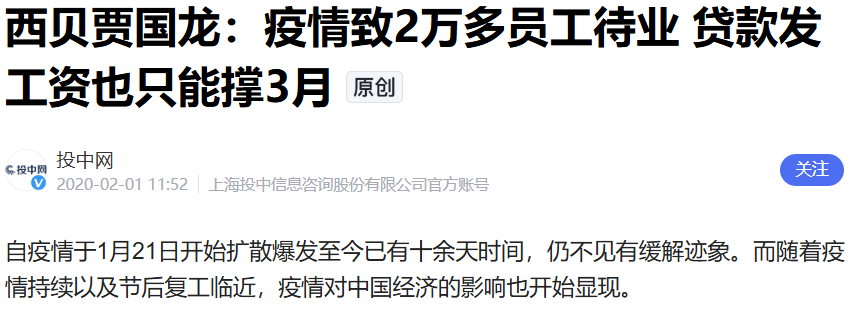
Consider Jia Guolong and Xibei. Early in the pandemic, Jia's statement that 'cash on hand won't last three months' became a era-defining memory. Many were shocked because, in China's business context, few entrepreneurs speak so bluntly about their difficulties. The immediate effect was remarkable: public sympathy, consumer support, and brand goodwill surged in a short time.
At that time, 'sincerity' was Xibei's strongest asset. But the issue lies in expressive inertia. Later, when Xibei faced cost pressures and raised prices, Jia repeatedly emphasized that 'high-quality ingredients justify higher prices.' Over the years, Xibei became strongly associated with this label. Until September 10, 2025, when Luo Yonghao criticized Xibei's dishes as pre-made and overpriced, despite Jia's repeated statements and open kitchen displays, Xibei ultimately faced over a hundred store closures.
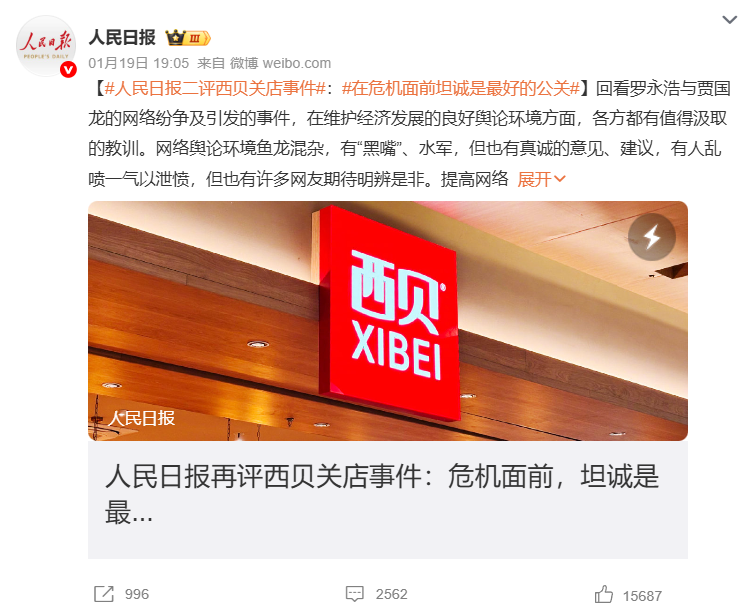
In response, official media commented: 'Honesty is the best PR in a crisis.'
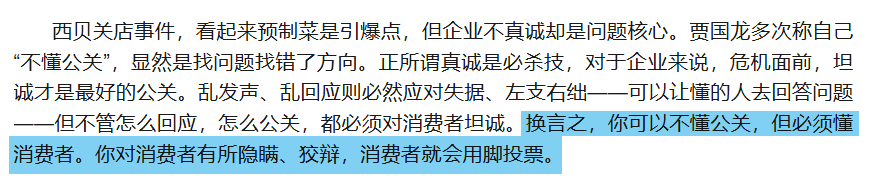
Image Source: Weibo
02 Speaking What Consumers Want to Hear
Now consider Lei Jun and Xiaomi—a nearly opposite style. Lei Jun's strength lies not in emotional appeals but in making things 'understandable.'
From 'For the Feverish' to 'Cost-Effectiveness,' and later to high-end tech and self-research, he consistently does one thing: explaining his actions in user-friendly language. Listeners may not agree with Xiaomi's products, but they rarely say, 'I don't understand what Lei Jun is saying.' This reflects a crucial business capability—reducing cognitive costs.

When users face lower understanding costs, decisions come faster, and conversions rise. Many companies complicate technology, but Lei Jun does the opposite—constantly translating complex issues into simple outcomes: faster, better, cheaper. This expressive style has essentially become part of the product. To some extent, Xiaomi sells not just hardware but also the certainty of 'I get it.'
If Lei Jun represents 'rational expression,' then Yu Minhong and Dongfang Zhenxuan represent another path: turning the company into content. After the 'double reduction' policy nearly pushed New Oriental to the brink, Yu Minhong chose not to confront but to relaunch with a restrained, even literary expression.
He personally went live, transforming product recommendations into a process of 'sharing knowledge, culture, and emotions,' quickly establishing differentiation and sparking Dongfang Zhenxuan's explosion. But the essence of this model is that the company increasingly resembles a content platform—once you rely on content, content will control the enterprise: traffic can surge instantly, but controversy can spiral out of control just as fast. When streamers become core assets and public opinion revolves around individuals, corporate stability declines.
Yu Minhong's expression is gentle, but in a highly emotional content environment, gentleness sometimes means insufficient 'control.' Thus, we see Dongfang Zhenxuan experiencing rapid growth alongside frequent fluctuations. This illustrates that when the boss becomes an IP, the company gains traffic dividends but also volatility risks.
Luo Yonghao's story acts as a magnifying glass, vividly displaying both the 'power of expression' and its 'costs.' During his Smartisan days, Luo's expressions were highly aggressive and infectious—he dared to set flags, criticize peers, and discuss values, quickly attracting an extremely loyal user base. But the issue was that expression kept raising expectations, while products often fell short.
When user expectations were repeatedly raised but unmet, backlash came fiercely. Later, during the 'Jiaogepengyou' phase, Luo changed noticeably—he stopped emphasizing ideals and instead stressed practicality; he stopped frequent value judgments and focused on recommending products. Expression shifted from 'creating topics' to 'facilitating transactions,' and commercial efficiency improved. This reflected a pragmatic adjustment: expression must serve the current stage, not personal style.
03 Li Xiang's Idealized Expression
Now consider Li Xiang and Li Auto—you'll notice an ongoing shift. Li Xiang was once among the most 'down-to-earth' entrepreneurs.
'Fridge, TV, big sofa'—this simple phrase precisely targeted family users' needs. When explaining why he chose extended-range technology, he used straightforward logic that ordinary people could grasp. This expressive ability was a key reason Li Auto quickly established market recognition.
But recently, some of his remarks have changed noticeably. For example, his statement on AI talent used terms like 'Agent,' 'AI-native,' '50th percentile,' '90th percentile,' and 'tenfold gap.' The information seemed dense, but ordinary people struggled to understand it. The issue isn't whether the viewpoint holds but that the expression missed its target—this felt more like an internal technical discussion than a public statement.
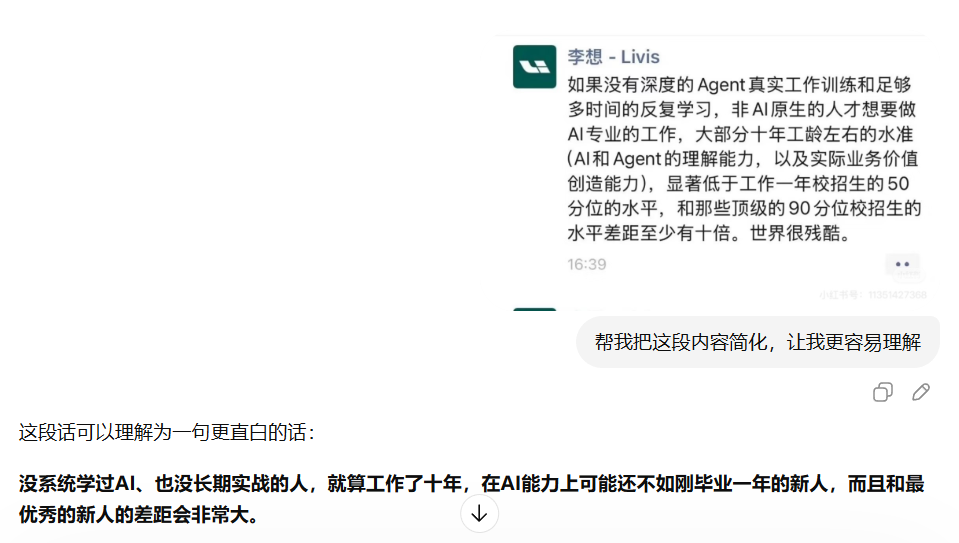
More critically, this expression came at a sensitive stage. Li Auto is transitioning from 'selling cars' to 'talking about AI'—it needs more people to understand its transformation logic, employees to align with the direction, and the market to build confidence. But this statement had the opposite effect: users didn't understand, employees might feel anxious, and outsiders found it harder to grasp the company's actions.
In other words, when the company most needed 'translation skills,' expression became a 'barrier.' This explains why many feel 'it doesn't add up'—not because the content is wrong, but because the speaking style, audience, and context are mismatched.
Comparing these figures, a clear dividing line emerges. Expressions like Lei Jun's continuously reduce understanding costs, bringing more people in; Jia Guolong's use emotion to build identify with (identification) but also amplifies price controversies; Yu Minhong turns the company into content to gain traffic but bears volatility; Luo Yonghao uses conflict to attract attention and then reality to correct his path; Li Xiang is transitioning from 'extremely clear' to 'increasingly complex'—once he crosses a certain point, he may lose his initial advantage.
So the answer is clear: when the boss becomes a 'content IP,' the company might be making money or gambling for traffic. The key isn't whether you speak but how, to whom, and at what stage. If expression helps more people understand you, it amplifies value; if it creates topics but increases understanding difficulty, it likely overdraws the future. A more dangerous scenario is thinking you're doing the first while the market treats you as the second.
The business world is indeed harsh, but one rule rarely changes: users don't reward 'how deep you speak' but 'how much they understand.' When the boss's expression starts detaching from user language, even the strongest technology or grandest strategy may weaken or distort during transmission. Ultimately, a company is in business, not expression itself. Expression is just a tool—but today, it's a tool powerful enough to change outcomes. Used well, it's a lever; used poorly, it's a boomerang.
Epilogue
Ultimately, a boss's expression is never just expression—it's a business action. Speaking clearly reduces understanding costs and expands user boundaries; speaking unclearly creates cognitive barriers and keeps users out. From Lei Jun's 'plain language strategy' to Luo Yonghao's emotional traffic and Li Xiang's shift toward 'technical jargon,' the core question remains: are you helping more people understand you or fewer? The business world doesn't reward 'how deep you speak' but 'how many understand.' When bosses grow accustomed to speaking only a few can understand, the company often moves closer to risk.
© THE END
All materials are from official public sources.
This article does not constitute any investment advice.
Original content by Baker Street Detective. Unauthorized reproduction prohibited.
Images sourced from public materials. Contact us for removal if infringement occurs.
-
![]()
Jitian Xingzhou: A Pioneer in Optical Payloads Secures Hundreds of Millions in Series B Funding!
-
![]()
Orders Secured Through to the Second Half of the Year! The Rationale Behind the 'Surge' in Demand for This Company’s Optical-Grade Base Films
-
![]()
Beyond Patents: The Retail Rivalry of Insta360 and DJI Unfolds
-
![]()
180 Billion Market Cap Vanished! How Did Seres Fall So Far?
-
![]()
Blockbuster! Domestic storage takes the global double crown for the first time, from an AI company
-
![]()
China Spearheads Formulation! World's Pioneering Global Technical Regulation for Automated Driving Systems Greenlit and Unveiled
-
![]()
Farewell to Pulsed Support Policies: Three Major Auto Policy Directions from Multiple Departments Take Effect on the Same Day
-
![]()
Embercore AI’s Accelerated Funding: The Robot Industry’s Shift Toward ‘Learning Systems’