Why Has Samsung Continued to Win, With One Year's Profits Surpassing the Past Forty Years?
 07/16 2026
 347
347
Introduction: From home appliances and mobile phones to panels and memory chips, why does Samsung consistently stay on the most profitable side of the industry with each major shift?
Wang Jian/Author Lishicommercial Review/Producer
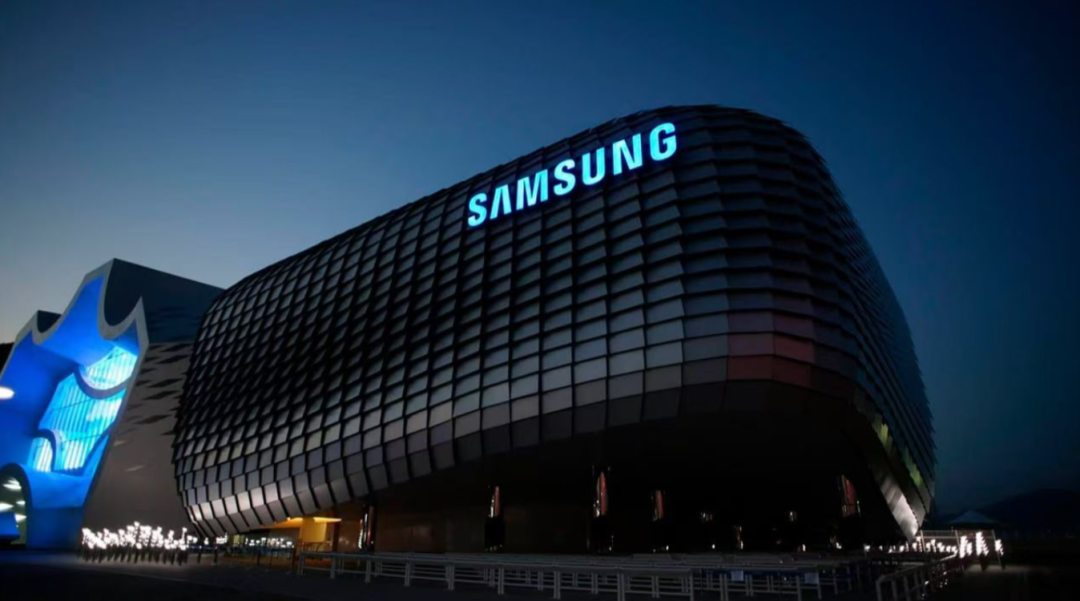
On July 7, 2026, Samsung Electronics released its Q2 earnings forecast, projecting an operating profit of approximately KRW 89.4 trillion (USD 58.4 billion), marking a year-on-year increase of 1,810%.
This figure even surpasses NVIDIA's previous quarter's operating profit of USD 53.536 billion.
According to South Korean media reports, Samsung Semiconductor executives stated in an internal meeting that, based on current profit expectations, the 2026 annual profit is expected to exceed the cumulative total of the previous forty years.
This surge in profits, driven by AI server stockpiling and rising DRAM and NAND prices, is not surprising for Samsung, a semiconductor giant.
What truly piques curiosity is that, from home appliances and mobile phones to panels and memory chips, why does Samsung consistently remain on the most profitable side with each major industry shift?
The answer may not lie in financial reports but in a bold gamble made forty years ago.
1
Lee Byung-chul Places the First Major Bet
Samsung's establishment of semiconductors as a core industry for the group can be traced back to 1983.
That February, Samsung founder Lee Byung-chul announced in Tokyo that Samsung would large-scale (massively) enter the semiconductor industry. This decision was later known as the 'Tokyo Declaration.'
At the time, this move seemed like a risky gamble with slim chances of success.
Samsung had shallow technical accumulation in semiconductors and lacked any competitive edge.
Not only were the design blueprints for research and development purchased from Micron in the United States, but the technical advisors were a group of retired engineers from Toshiba in Japan. The entire team resembled a group of veterans leading novices, groping forward in front of an incomplete puzzle.
During this period, Samsung had, after years of development, become South Korea's largest conglomerate. Its electronic products, such as televisions and refrigerators, were renowned nationwide and overseas, while also venturing into various businesses like food, textiles, and insurance.
However, these advantages provided little substantive help to Samsung's semiconductor business.
On one hand, building a wafer fab for semiconductor research and development required massive investment, and the process technology iterated extremely rapidly. Often, as soon as production capacity was established, the technology became outdated.
On the other hand, Japanese companies like NEC, Toshiba, and Hitachi already dominated the global memory chip market, constructing insurmountable barriers in technology, production capacity, and customer channels.
For Samsung, entering the semiconductor industry was not about competing for market share in an open field but about forcibly carving out a path under existing high walls. With no other choice, it had to start from scratch.
The issue was that Micron's 64K DRAM design license and the external support from Japanese engineers solved the problem of feasibility but could not fill the gap in process experience.
Without existing experience as a reference, Samsung's production line could only maintain operation, far from achieving stable quality. Slight deviations in temperature, materials, or equipment parameters would cause a significant drop in yield.
More fatally, there was a complete disconnect in rhythm. Just as Samsung barely caught up with 64K DRAM, market demand shifted to 256K; and as soon as the production line was finally adjusted, global memory chip prices plummeted.

By around 1986, Samsung's cumulative losses in the semiconductor business had approached USD 300 million, leading most banks to refuse further loans and increasing calls within the group to 'cut losses in time.'
However, Lee Byung-chul did not retreat.
In his view, as long as Samsung remained at the table, losses were merely costs; but withdrawing midway would be a complete failure.
Thus, at the same time Intel in Silicon Valley was forced to exit the memory market and Japanese manufacturers began tightening investments, Samsung, without waiting for 256K DRAM to recover costs, bet all its limited funds on the 1M DRAM still under development.
By 1987, the market finally bottomed out and rebounded.
That year, with the rapid growth in demand for personal computers, the memory chip market began to recover. While competitors were still repairing their production lines, Samsung already had existing production capacity and skilled engineers on standby.
After three consecutive years of losses, Samsung finally secured a foothold in the semiconductor industry with lower costs and more sufficient production capacity.
It can be said that Samsung's courage to expand production counter-cyclically did not rely on technological leadership but on maintaining an unwavering ability to sustain operations after a profound analysis of the memory chip industry.
It was this ability that allowed Samsung to preserve its technological seedlings during market downturns, giving it the capital to continue competing with rivals.
Also in November of that year, 77-year-old Lee Byung-chul passed away, and 45-year-old 'Third Son' Lee Kun-hee succeeded him as chairman.
At that time, although Samsung had established itself in the semiconductor industry, it faced a dilemma: while it exported many products overseas, most relied on low prices for market share, with few products truly winning the favor of consumers in Europe, the United States, and Japan.
This structural contradiction of 'scale without premium' finally surfaced in 1993.
2
Transforming Scale Pursuit into Quality and Technological Innovation
In the 1990s, riding the wave of South Korea's export boom, Samsung's refrigerators and VCRs found their way into stores in Europe, the United States, and Japan.
However, reality was awkward for Samsung. Due to the significant quality gap with first-tier brands, its products were almost relegated to the corners of shelves, surviving only on low prices.
Meanwhile, Samsung's factories blindly pursued shipment volumes, ignoring strong market feedback on quality issues.
In response, Japanese advisor Toshiro Fukuda submitted a thick report to Lee Kun-hee based on his research, systematically outlining deep-seated issues in Samsung's design, research and development, and management.
Lee Kun-hee took it very seriously. To ensure his executives also understood the gravity of the issues, he specially (deliberately) took them to Frankfurt, Germany, for an on-site meeting, wanting everyone to see firsthand what German-style craftsmanship meant.
At the conclusion of the Frankfurt meeting, Lee Kun-hee left a sentence that would later be seen as a turning point for Samsung:
'Everything must change except your wife and children.'
This slogan became widely known, but what truly transformed Samsung's operational logic was a fundamental shift in its accompanying assessment mechanisms.
Previously, Samsung's factories focused solely on output. After the reform, the quality management department was given veto power and could halt production lines at any time.
Samsung also adjusted its course, no longer following the technological paths of Japanese companies but instead concentrating resources on design and core technologies to seize the initiative.
However, transformation was not easy.
In 1995, Samsung discovered quality issues in a batch of mobile phones and fax machines.
Thus, Lee Kun-hee ordered over 100,000 mobile phones and fax machines to be piled up at the factory and publicly smashed and burned.
This destruction cost Samsung KRW 50 billion in direct losses but completely shattered the old order of 'output first.' Shipment volume was no longer the sole metric, and the path of low-price competition was officially closed.
With the rules changed, the subsequent survival strategy had to be rewritten.
While Lee Byung-chul had opened the door to high-tech manufacturing for Samsung, Lee Kun-hee's task was to end the follower strategy and establish Samsung's technological voice.
This reform did not stop at quality inspections. Samsung also scaled back production capacity investments and began concentrating resources on design, core components, and independent research and development.
OLED thus became a crucial step for Samsung to transition from a follower to a technological leader in display technology.
For a long time, LCD had been the mainstream in the display market. This technology relied on fluorescent backlight modules to illuminate the image, but its display performance had obvious limitations.
Even so-called 'LED TVs' on the market were essentially LCDs, merely replacing the backlight source with LEDs while leaving the imaging principle and form factor unchanged.
The real game-changer was OLED, a new technology that did not require a backlight module, with pixels emitting light independently, offering inherent advantages in contrast, thickness, and flexibility.
More importantly, by eliminating the heavy backlight layer, OLED could be paired with flexible substrates to bend or even fold, providing the technical prerequisite for the later emergence of curved and foldable screens.
However, in 2002, OLED was still a typical 'futuristic technology.'
At that time, LCD technology was highly mature, with costs continuously declining, dominating the TV, computer, and mobile phone markets. OLED, on the other hand, was expensive and its return on investment uncertain, leading to widespread skepticism in the industry.
Yet Samsung had already begun laying out AMOLED, establishing a development line that year and a mass production line the next, achieving large-scale production by 2007.
In fact, Samsung's foresight was not purely prescient but was driven by its own terminal business.
At that time, Samsung was simultaneously developing mobile phone terminals and panel capacity projects, and the rigid constraints of the former on thinness, power consumption, and bezel size forced a reconstruction of the upstream technological path.
For Samsung, this was not only an internal pull from its terminal business but also a proactive shift in its screen technology path.
Thus, while maintaining LCD cash flow, Samsung tilted resources toward AMOLED, preemptively securing production capacity for the next generation of mobile phone screens.
Subsequent industry developments confirmed the necessity of this choice.
From 2010 onward, Samsung's Galaxy series rapidly captured the high-end market with AMOLED, prompting Apple to also switch the new iPhone's display to OLED. Leveraging its early accumulations, Samsung Display quickly became Apple's core supplier.

Betting heavily on new tracks while cash cow businesses were still thriving became a watershed for Samsung to break away from the ranks of followers.
From then on, Samsung not only competed head-on with Apple in the terminal market but also reaped benefits from every high-end iPhone sold through panel supply.
This bet was starkly different from the path taken to conquer DRAM earlier.
At that time, Samsung was still a follower, catching up with U.S. and Japanese companies, persisting through counter-cyclical investments until victory. OLED, however, represented a proactive layout toward the next generation of product forms while LCD was still at its profit peak, establishing first-mover advantage in a new field.
The consumer electronics industry never lacks technological visions; what it lacks is the decisiveness to cut off old paths and bet heavily on new tracks while cash cow businesses can still generate revenue.
Samsung acted very decisively in this regard. Once the top leadership made a decision, funds, engineers, and terminal departments fully committed.
Although this highly centralized model has been controversial in South Korean society, and internal governance opacity and excessive power concentration have also exacted a toll on Samsung, in races like OLED, which require massive investment and long-term returns, centralization eliminated prolonged internal debates.
Thus, while competitors were still calculating profit timelines, Samsung had already taken the lead.
However, choosing the right direction was merely an entry ticket. For Samsung, the real test lay in its ability to transform laboratory technology into industrial mass production at a billion-unit scale with highly uniform specifications.
3
Innovation Capability Emerging from the Production Line
Samsung's NAND flash memory soon faced a similar challenge, far more complex than OLED.
For decades, the memory chip industry relied on process shrinks to increase capacity, stacking more memory cells within a fixed wafer area to reduce unit costs.
However, as the process approached the Over ten nanometers (teen-nanometer) node, cell spacing narrowed sharply, causing crosstalk, leakage currents, and reliability issues to erupt. This meant that following the traditional path, marginal benefits would severely decline, with inputs and outputs becoming completely unbalanced.
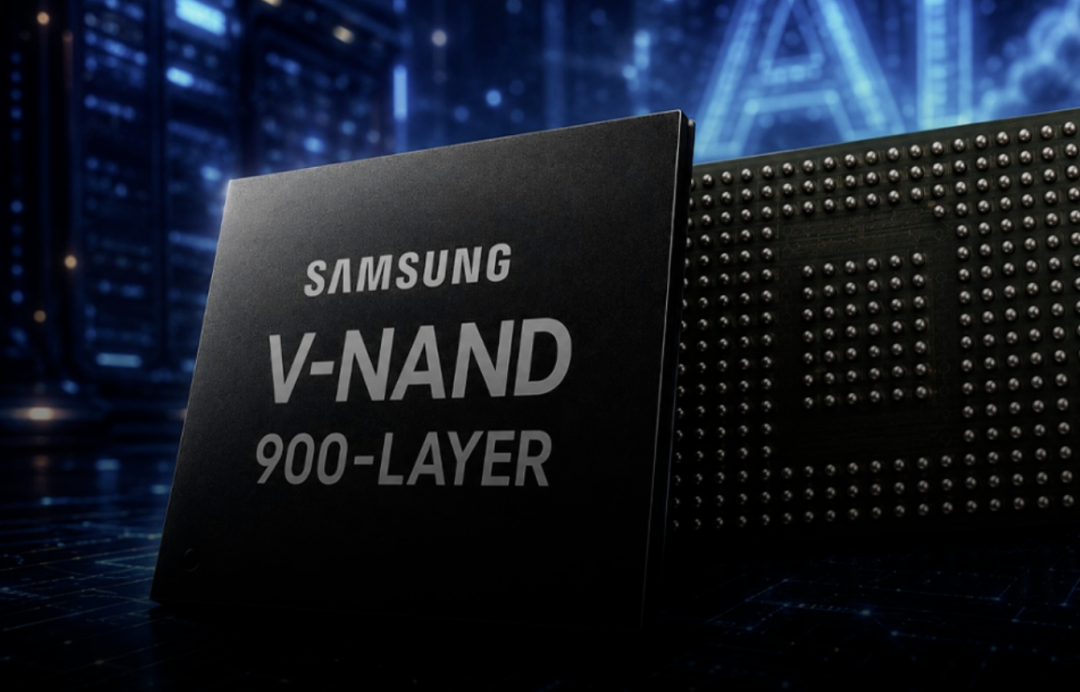
Samsung's solution was to vertically stack memory cells, later known in the industry as V-NAND. This broke the physical lock on storage density imposed by line width, opening up optimization space in three dimensions: capacity, power consumption, and reliability.
The challenge was etching deep, straight channel holes through dozens of stacked layers while ensuring consistent dimensions and electrical performance at each layer.
In terms of production processes, the higher the stack count, the smaller the error tolerance for the production line. Any fluctuation on the line could mean the scrapping of an entire wafer.
This barrier was extremely high but also constructed Samsung's core defense in the storage field. Competitors, even if they saw the path clearly, found it difficult to overcome the dual hurdles of yield and equipment, forcing them to stand back.
Supporting this defense was Samsung's years of technical accumulation in the 3D stacking route. In 2013, Samsung became the first to mass-produce 24-layer V-NAND, establishing a first-mover advantage in process implementation.
By current industry standards, 24 layers are merely an entry threshold, but at the time, it marked Samsung's successful navigation through the technological minefield of 3D stacking, validating the feasibility of this route.
From then on, the focus of competition in the NAND industry shifted from solely pursuing planar line width reductions to who could stably stack more memory cells while controlling yields within profitable ranges.
In Samsung's evaluation system, the core of V-NAND competition lay in manufacturing-side engineering endurance—maintaining mass production stability under extreme processes. Once costs spiraled out of control or yields fell short, no amount of technological sophistication constituted effective commercial innovation.
Samsung's advantage was precisely in institutionalizing these implicit endurance standards and quality thresholds into a full-process system covering research and development to production. And this system did not rely on manpower stacking but on a complete R&D framework.
Samsung's R&D did not occur in an isolated lab. Business departments handled immediate iterations, division research institutes focused on technologies three to five years out, and the comprehensive technology institute explored even more frontier (cutting-edge) areas. When a solution was ready for mass production, design, materials, equipment, and process departments collaborated to advance it.
However, this 'large and comprehensive' structure had inherent flaws, once fostering bureaucratic hierarchies within Samsung and frequent conflicts among departments vying for resources.
Paradoxically, this massive structure, which easily induced internal friction in other business systems, constructed a unique barrier during Samsung's OLED and V-NAND breakthroughs.
Samsung used its mobile phone business to absorb new panels, with production line challenges in materials, packaging, and yields directly fed back to R&D for solutions.
When mobile phones demanded better screens, it pushed panel technology upgrades. When panels couldn't be produced, it in turn drove improvements in materials and manufacturing equipment.
Thus, R&D, factories, and mobile phone departments worked together, not only significantly reducing trial-and-error costs but also forming a self-sufficient internal cycle.
The operation of this cycle naturally required massive R&D funding to sustain, with core support coming from Samsung's cross-cyclical investment patience.
Early on, Samsung used cash flow from insurance and home appliances to nurture semiconductors; later, semiconductor and mobile phone profits fed back into displays, foundries, and next-generation storage.
No matter how tight funds were, Samsung would still retain strategic projects with no short-term return visibility, rarely exiting a locked-in core route due to temporary account deteriorate (deterioration).
In 2023, the global memory chip market hit a deep trough, with Samsung Semiconductor incurring massive losses and cutting memory production. However, R&D and advanced production line investments remained uninterrupted.
Therefore, when the demand for AI servers suddenly surged, Samsung still held a complete set of capabilities in DRAM, NAND, advanced processes, and packaging.
However, this time, Samsung was not the first to reap the benefits of AI.
4
Success Inertia and the Cost of Pivoting a Behemoth
Samsung made the right bet on V-NAND but lagged in another arena.
In 2013, SK Hynix took the lead in mass-producing HBM and subsequently secured a spot in the core supply chain for NVIDIA's AI accelerators.
Before the explosion of AI large models, the bandwidth of ordinary memory could no longer keep pace with chip computing power, leaving computing power idle while waiting for data. HBM met the high-bandwidth demands of GPUs by stacking DRAM dies and connecting them through silicon vias, quickly becoming a standard feature in high-end AI chips.
Although Samsung deployed HBM early on, its focus remained on expanding production capacity and controlling costs for traditional DRAM, causing it to miss this critical strategic window.
By the time ChatGPT spurred a surge in AI computing power investments, SK Hynix had already forged closer product validation relationships with NVIDIA, while Samsung's HBM3 and HBM3E repeatedly encountered hurdles in customer certification.
In 2024, Samsung's HBM3E failed to enter NVIDIA's high-end supply chain as scheduled, sparking industry doubts about its related processes. Despite Samsung's denial, the reality of its lag could not be avoided.
For a company that has long dominated the global memory chip market, possessing advanced processes and packaging capabilities yet ceding the most crucial storage orders in the AI era to its rival cannot be simply attributed to market cycles. Instead, it reflects a fundamental shift in the weighting of competitive advantages.
In the era of standardized DRAM, scale, yield, and cost were key to victory; in the HBM era, customer collaboration, advanced packaging, and co-design have become the new determinants of success.
While Samsung's old capabilities remain robust, they are no longer sufficient to determine the outcome alone.
In 2024, Samsung quietly replaced its semiconductor business head, appointing Jun Yong-hyun, a long-time veteran in the memory business, to take over. It then reintegrated HBM R&D and production resources, incorporating DRAM, foundry, and advanced packaging into a unified product plan.
The missed early orders are hard to recover, and the focus of catching up can only shift to the next-generation HBM4.
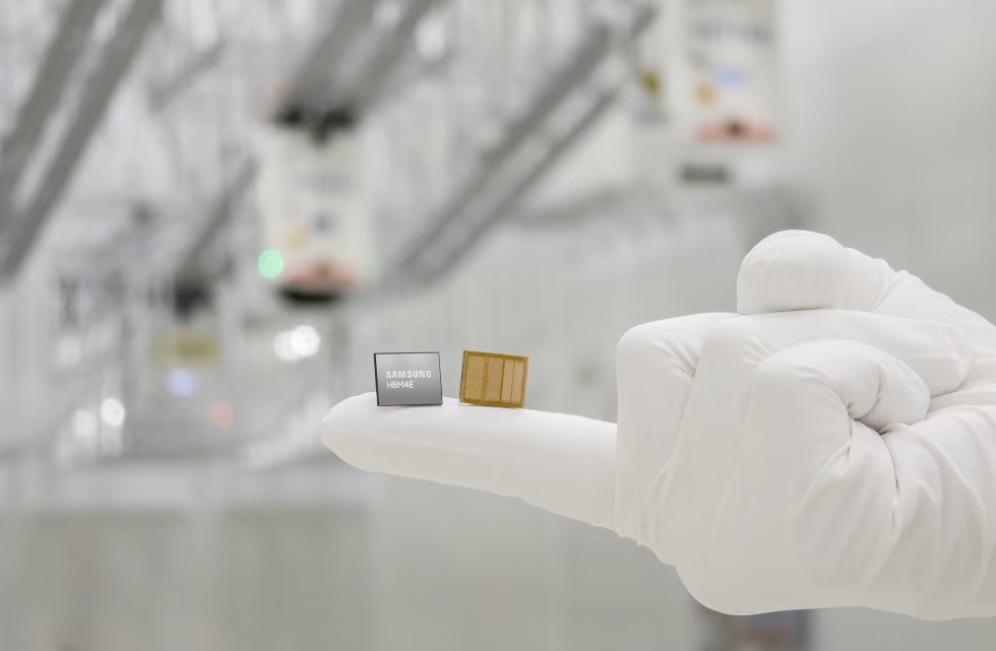
In February 2026, Samsung announced the mass production of HBM4 for NVIDIA's Vera Rubin platform. The official specifications state 11.7 Gbps per pin, with the potential to reach up to 13 Gbps based on customer demand.
However, a single round of shipments is not enough to conclude that Samsung has surpassed SK Hynix. Customer share, yield ramp-up, and long-term supply reliability still require time to verify.
Moreover, even if Samsung achieves 89.4 trillion won in operating profit in the second quarter, it cannot all be attributed to HBM.
Currently, AI data centers are driving demand for high-end storage, occupying a significant portion of advanced production capacity and subsequently driving up prices for ordinary DRAM and NAND. As Samsung holds the world's largest memory production capacity, every price increase directly translates into profit. However, this growth is essentially a cycle-driven boom.
Furthermore, beyond HBM4 lie HBM4E, custom HBM, and even more complex advanced packaging, while AI servers are also redefining the boundaries between memory, storage, and computing.
It can be said that Samsung has just closed some ground, but the next challenge is already upon it.
This also explains why Samsung's stock price fell on the day of its earnings forecast announcement. Investors are concerned not only about the sustainability of AI capital expenditures but also about the risk of current shortages once again turning into oversupply after memory manufacturers resume expansion.
Looking back at the external praise for Samsung's "one year eclipsing forty years," it does not mean that its four decades of technological accumulation can fully offset its past strategic delays.
The success of OLED and V-NAND validated the rewards of early pivots, while the lag in HBM exposed the downside of past successes. It is precisely this victory inertia deeply ingrained in a massive organization that made Samsung pay a high price on the eve of the AI computing power explosion.
Samsung certainly has innovation capabilities, but this is not tied to the wisdom of any single individual, nor is it as simple as a gambler's "dare to bet."
What truly sustains Samsung's continuous innovation is its ability to consistently execute engineering efforts under a given strategy.
Once the direction is confirmed, R&D, manufacturing, and end-user products advance in tandem; even if judgments lag, the group can still leverage its capital thickness and technological reserves to catch up and close gaps after missing a window.
Whether Samsung can continue to sit on the most profitable side in the future depends not on how much it earns in a single instance but on whether it can swiftly switch seats when the next table is set.
-
![]()
Dialogue with Jieyue Yinqi: Making Smartphones is Difficult, Yet It's the Only Way Forward
-
![]()
Why Has Samsung Continued to Win, With One Year's Profits Surpassing the Past Forty Years?
-
Will Listing Transform DeepSeek?
-
![]()
Breaking Through the US Blockade! Huawei Mobile Phones Now Support 5G Overseas
-
Help! The Price Has Crashed So Badly That I Just Want to Close My Account!
-
Investing in 'old established players' rather than 'new upstarts' is more reliable in the current NEV market
-
![]()
StepFun: A Smartphone You Can't Buy Yet, and a Story That Must Be Told
-
![]()
Mid-Game Battle of Chinese Automakers: Collective Overseas Expansion for Growth? | Halftime Whistle ②