Dialogue with Jieyue Yinqi: Making Smartphones is Difficult, Yet It's the Only Way Forward
 07/16 2026
 361
361
Author: Wen Yehao
Editor: Wang Pan
Jieyue Xingchen, which has been relatively quiet over the past three years, chose to reveal its cards on the eve of WAIC.
On the evening of July 13th, Jieyue Xingchen unveiled the world's first intelligent agent-native operating system, Step AOS, personal intelligent agent Jieyue Amoo, and the large model-native AI terminal brand STEPX. The first smartphone, STEPX Neo, was also unveiled.
The initial external reaction was mostly that a large model company venturing into hardware is taking too big a step. However, after watching the entire press conference and the Q&A session, it became clear that Jieyue is actually a company with strong boundaries, having a clear understanding of what to do and what not to do.
Take, for example, its foray into smartphone manufacturing. Behind it lies a simple logic—for intelligent agents to materialize, a native operating system is essential; for the operating system to form a value closed loop (closed loop), a viable terminal is necessary.
In response, Yinqi stated that under the current smartphone ecosystem, it is challenging to fully present models, operating systems, and intelligent agent products. Therefore, Jieyue chose to lead by example and build a complete system first, but with a very open attitude—Step AOS is willing to be open to other hardware OEM manufacturers in the future.
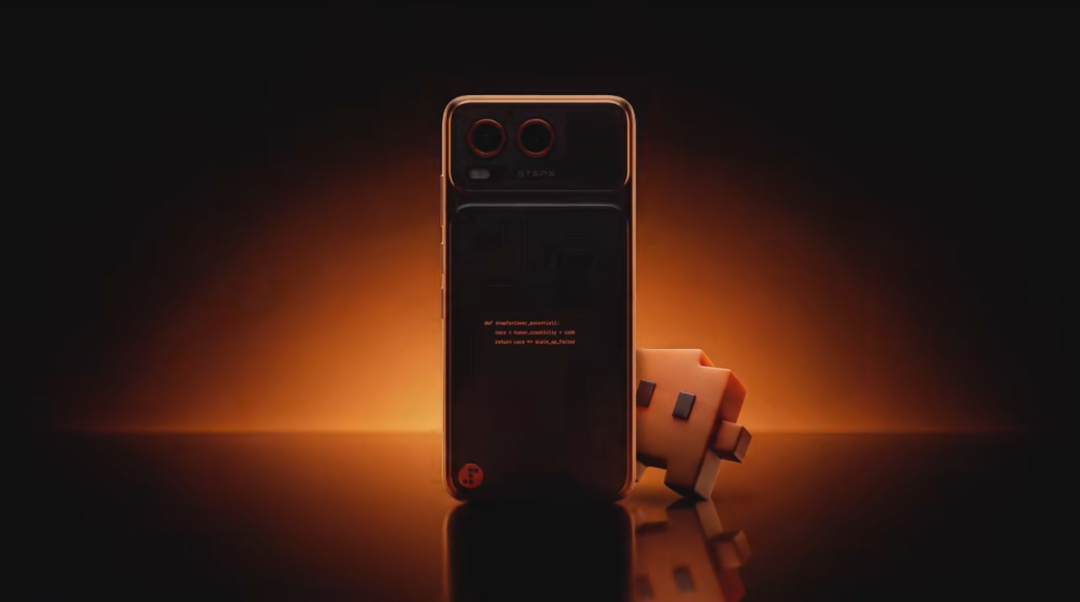
In other words, since the existing smartphone ecosystem cannot accommodate all this, Jieyue decided to build one first, setting an example for the industry.
Is this path difficult? Yinqi himself said "difficult" three times.
"Building large models is difficult, and so is making hardware. In a sense, it's doubly difficult." But he quickly added, "What's even more difficult than being doubly difficult is if we don't believe in other commercial closed-loop paths ourselves. I think that's even harder."
In his view, Chinese large model companies need to forge their own path to commercialization and industrialization.
On the other hand, what reveals a company's judgment more than "what to do" is "what not to do."
In the Q&A, Yinqi drew three clear boundaries.
The first is the boundary on the model side, namely not venturing into video generation models. "That track (track) is naturally a field where large companies excel. We are more focused on foundational models, multimodal perception, and interaction capabilities. This has been our strategy since Day 1."
The second is the boundary of intelligent agents, not making vertical intelligent agents. "We are very focused on doing personal intelligent agents well, specifically the intelligent agent in your phone, serving as your main entrance (entry point) for interaction. All verticals are left to partners for co-creation and symbiosis; we won't compete for the same rice (rice, i.e., market)."
The third is the boundary of terminals, not making non-AI Native ones. "You may see many original phone terminals that, in a sense, are phones + AI, with some AI features added. The intelligent agent terminal we are trying to build is from an AI-native perspective." By this standard, the variety of devices made in the future will be very limited, only those truly strongly related to AI.
With these three boundaries drawn, Jieyue's terminal strategy outline becomes very clear—abandoning the ambitious crossover of doing everything, focusing on the main line of Amoo + Step AOS + STEPX, and embracing an open-source and open ecosystem.
This restraint is not common in the current large model industry. Everyone is expanding horizontally, covering models, applications, plugins, Agents, and on-device solutions, afraid to miss any trend. Jieyue, on the other hand, is subtracting, listing out what not to do one by one.
Yinqi said this reflects a change in mindset from his second entrepreneurial venture: "The first time, we might have been very concerned about what our competitors were doing. This time, I think the most important thing is to focus on users."
Therefore, while a large model company making smartphones does sound radical, if the boundaries are clear, expectations are lowered, and the cooperation path is steady, beneath the radical exterior lies a rather pragmatic approach—how big the step is depends on who you compare it to; how solid the footing is, is the true essence.
And right now, this path has just begun. How will Jieyue proceed, where are the Fork in the road (forks in the road), and how will the ecosystem be built? Yinqi, Chairman of Jieyue Xingchen, and Ni Jiayue, President of Jieyue Terminals, had a Q&A session with the media. Below are the highlights of the dialogue (slightly edited without changing the original meaning):
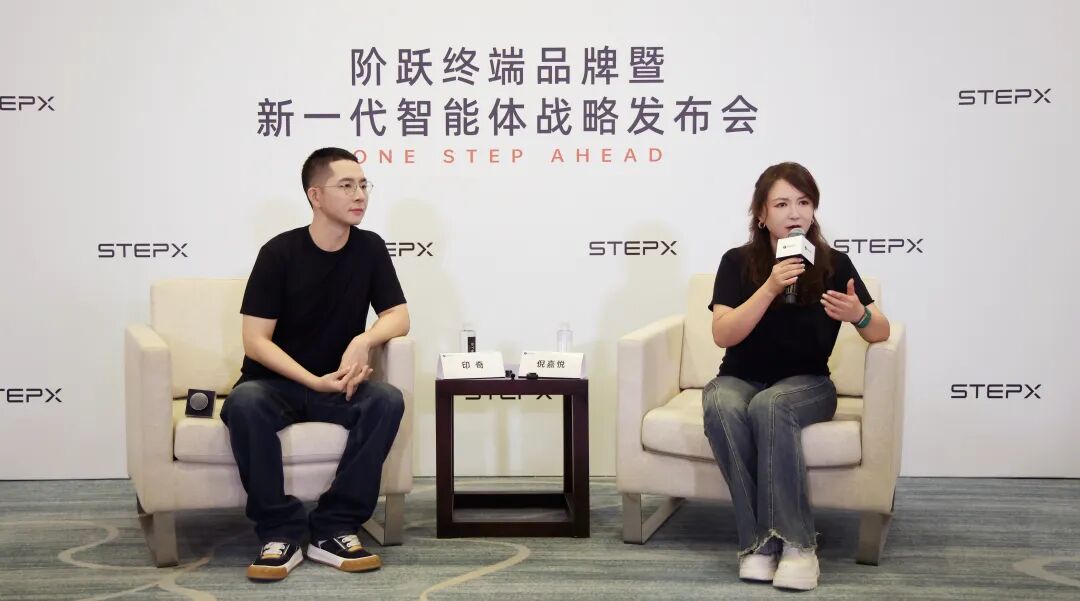
Combining Hardware and Software, and ToC, Have Been Jieyue's Routes Since Day 1
Q: Jieyue has already implemented hardware terminals like in-car systems and smartphones. What is the most essential difference in strategy with the launch of an AI terminal brand this time? Why must a model company take this path?
Yinqi: Previously, we operated in a ToB model, providing comprehensive AI capabilities to OEM manufacturers of smartphones and in-car systems. We will continue this business model. However, in the era of intelligent agents, under the current smartphone ecosystem, it is difficult at this stage to fully present our models, operating systems, and entire intelligent agent products on an existing smartphone terminal. We still hope to lead by example and build such a relatively complete system first. At the same time, we maintain a very open attitude and are willing to open our intelligent agents and operating system to other hardware OEM manufacturers in the future.
Q: How do you determine that AI hardware can achieve a positive commercial cycle? Why was the first terminal designed as a smartphone?
Yinqi: The Jieyue team has over a decade of experience in hardware supply chains. We approach hardware with reverence and caution. Choosing this closed loop ultimately stems from choosing to do what is difficult yet correct. The first step is to develop the operating system. If we cannot be the first to create such an innovative terminal now, it will be difficult for our Step AOS to form a value closed loop. If Step AOS and its ecosystem can grow, we are very willing to empower existing smartphone manufacturers with this set of Step AOS capabilities.
Q: What is the biggest challenge encountered when making hardware currently? How will you avoid it in the future?
Yinqi: Building large models is difficult, and so is making hardware. In a sense, it's doubly difficult. What's even more difficult than being doubly difficult is if we don't believe in other commercial closed-loop paths ourselves. I think that's even harder. I believe that Chinese large model companies need to forge their own path to commercialization and industrialization.
Q: Over the past six months or so, what strategic adjustments or transformations have you pushed forward that are important? What resistance did you encounter, and how did you overcome it?
Yinqi: For a large model startup, it is impossible to catch up from behind. Therefore, we must make choices, sacrifices, and have beliefs from the very beginning.
From Day 1, Jieyue has believed in combining hardware and software, believing that large models need a good hardware carrier to face consumers, being ToC rather than ToB, and ultimately forming our future commercial closed loop.
After I joined, I essentially accelerated the implementation of this strategy. That's why Jieyue hasn't made much noise over the past three years. Now, at this juncture, we feel ready to showcase our entire strategic landscape. Of course, moving forward will still be very difficult, but that's probably the most interesting part of AI entrepreneurship.
Q: Next year, OpenAI is also set to release its own smartphone. Did Jieyue choose to release its smartphone this year inspired by OpenAI?
Yinqi: After graduating, my first entrepreneurial venture was in 2011. Back then, the most talked-about term was "copy to China." I think now, in the AI era, China should have such original capabilities. Of course, we also pay close attention to OpenAI, including Google Gemini and Apple in the terminal space, who have many good thoughts on AI terminals. I think this is a process of mutual learning and borrowing. In terms of hardware-software integration products, China actually has very strong supply chain advantages. Combined with our AI strengths, I think we can create products that will amaze users worldwide.
Q: In terms of track selection, what does Jieyue do, and what doesn't it do? What are the boundaries?
Yinqi: In the model domain, we do not engage in any video generation models because we believe that track (track) is naturally a field where large companies excel. We are more focused on foundational models, multimodal perception, and interaction capabilities. This has been our strategy since Day 1, specifically on the model side.
On the intelligent agent side, we are very focused on doing personal intelligent agents well, specifically the intelligent agent in your phone, serving as your main entrance (entry point) for interaction. I believe that for each vertical, there will be very professional teams excelling in their respective verticals. Therefore, for vertical intelligent agents, we will definitely co-create, co-exist, and collaborate; we won't do them ourselves.
Regarding future devices, as mentioned many times today, the selection criteria for AI Native are very strict. You may see many original phone terminals that, in a sense, are phones + AI, with some AI features added. The intelligent agent terminal we are trying to build is from an AI-native perspective. By this standard, if we were to make devices in the future, I think the variety would also be very limited. We would make devices truly strongly related to AI.
Pursuing "New Species" First, Then Discussing Sales Volume
Q: What stage is this smartphone at now? Is there already a prototype, or is it still in the research and development phase?
Yinqi: There is already one. Whether it can be sold depends on many factors, but we will push for it as soon as possible. In our view, the important point is that when users get the intelligent agent smartphone, they don't need to ask us how it's different from existing phones. For our first batch of early users, we are not pursuing the evaluation of "this is a perfect product." The key is that users truly feel it's a new species.
Q: What is the most important milestone we have set for the next step, or what do we consider a sign of having achieved some success in the first stage?
Yinqi: We hope that the early intelligent agent smartphones can truly be used by AI Native efficiency users and truly form some co-creations. Many Sklls and Agents are still in a rapid development stage.
In the first stage, we will not solely pursue shipment volumes, but we must achieve scale and gradually become a consensus in the industry. Internally, we actually hope to get users to use it as soon as possible within the fastest timeframe.
There's a saying that it takes three generations of hardware to produce a noble. The iPhone 1 wasn't that impressive either; it wasn't until the iPhone 4 that it truly became a large-scale (large-scale) product. I think we have enough patience. We hope to iterate rapidly in the future with our earliest users because this iteration involves the complete iteration of the model, system, and terminal system.
Q: The outside world still lacks cognition (awareness) of the specific functions and actual experience of this smartphone. The press conference also used terms like "co-creation" and "wild imagination." Is the product definition still in a continuous exploration stage, or has the core direction been basically determined? What process will it roughly go through from the current stage to formal finalization?
Ni Jiayue: Making a product is simple. First, determine the target audience and their needs, then define the hardware. Before launch, you might think of a few selling points, add some product features, or fill in any gaps elsewhere. This is the traditional hardware planning approach.
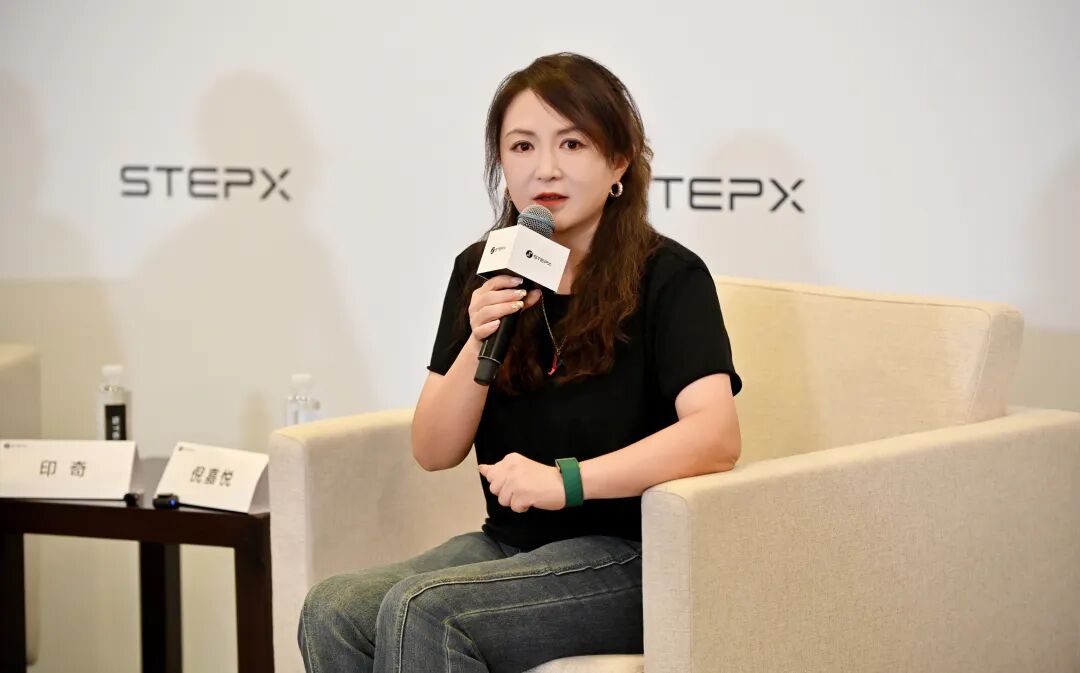
In our view, the first thing is to make an AI Native product. Without AI, the value is zero; this is very important. If current terminals lack AI, you'll feel they only retain hardware characteristics. Hardware characteristics are not the most important aspect in our team's planning. Our so-called co-creation doesn't mean co-creating with consumers; the core is that the intelligent agent truly needs to be brought into the physical world. It really needs to perceive all your contexts, memories, including your Authorization (authorization), before it can serve you.
Yinqi: First, there are two perspectives on truly defining a product. The first perspective is that when a product faces a tipping point, a team may need to rely on its intuition to define such a product. The intelligent agent smartphone in the intelligent agent era may have this characteristic. It's like our team took a bold step forward based on intuition.
I want to say that our product definition is a very serious process from users to needs. We are very certain about many things. But at the same time, we think that essentially, this intelligent agent smartphone is not constituted by one or two selling points; that's a +AI approach. Originally, it was just a smartphone, and you'd still find it's just a smartphone when you use it. In the end, there might be a few AI features in the promotional copy.
Essentially, why did we make Jieyue Amoo the focus of this entire launch? If the personal intelligent agent truly succeeds on the smartphone and user needs can be met through the intelligent agent, then this intelligent product is established. But after building this platform, we still need to listen to user needs. In terms of audience segmentation, at the top are AI Native enthusiasts, and below them are efficiency users.
Embracing a New Ecosystem of Open Source and Openness
Q: Jieyue has had very close cooperation with first-tier smartphone manufacturers in the past. After releasing its own smartphone, how will Jieyue balance its model business cooperation with smartphone manufacturers?
Yinqi: In the era of intelligent agents, I think everyone's mindset will change. You'll find that many of the global tech heroes now are open-source heroes. The ecosystem in the new era may not be about "control" but more about open source and openness, with each team playing an important role in this ecosystem. Moreover, AI has a very strong ability to build new ecosystems. Any old ecosystem that fails to embrace the new one may also be in danger.
Q: Many traditional smartphone manufacturers encounter ecological barriers from application vendors when making AI smartphones. Doubao smartphone encountered this before. How does Jieyue view this issue?
Yinqi: In the era of intelligent agent smartphones, besides changes in hardware and operating systems, more importantly, there are changes in the underlying business logic and ecosystem. This change is the result of co-creation by various roles in the entire ecosystem chain. Therefore, it's impossible to determine its stable state now.
During this entire co-creation process, we actually communicated very well with the first batch of cooperating large manufacturers. Everyone is very willing to embrace the era of intelligent agents. Back then, a batch of internet companies were slow to transition from PC internet to mobile internet and were later eliminated. I think everyone will quickly embrace this era and form some very good standards and protocols.
This time, our collaborations with the manufacturers whose logos were listed at our press conference are all conducted through APIs rather than GUIs. This ensures a robust security mechanism for all parties involved. We believe that industry standards will rapidly emerge in the future, and this is something that requires collective effort from everyone.
Q: Are the capabilities of the Amoo agent exclusive to the STEPX Neo phone, or will they extend across the ecosystem to empower other phone manufacturers?
Ni Jiayue: Our Step AOS is open-source. As long as any manufacturer is willing to collaborate with us, we certainly hope to embrace more partners and jointly bring agents into the physical world.
Business Models for AI Terminals
Q: How is the business model designed for terminal brands? Is it based on one-time hardware sales, or does it combine hardware with subscription services?
Yin Qi: It definitely won't rely on simply selling hardware for profit, nor will it depend on advertising revenue from pre-installing long-tail applications. These two approaches are the main business models in the current terminal ecosystem, but I believe the future won't revolve around them.
Ni Jiayue: I've worked in the terminal sector before, and I know very well that success in terminals depends on defining your unique selling points, incorporating them into the phone, and then setting the price. That was the traditional approach in the mobile internet era. Now that we've truly entered the agent era, it's an era of symbiosis. That's why we mentioned the 'Agent Paradise' at the end of our press conference. We hope that through the process of fulfilling user wishes and fostering collective imagination, we can better understand why users are willing to embrace the agent era. A business model built on user needs will be truly effective.
Q: How will the business model work for co-creating future agent terminals with users? Operators might also be anxious. In the future, if everyone uses agents and phone calls or data traffic decrease, will token operations become a crucial part of agent terminals?
Yin Qi: I believe the transition from paying phone bills to paying for data traffic, and eventually to paying for tokens, is inevitable. There's no need to worry about operators; they will remain the most important providers of infrastructure, and token services will likely still be provided by operators in the future.
Q: Currently, the core business model of mainstream domestic model manufacturers is primarily based on API calls, which can be understood as selling tokens. Will the potential market space change significantly after incorporating AI terminal product forms compared to simply selling tokens? How will the revenue and investment structure of terminal brands change in the next one to three years after their launch?
Yin Qi: I think we should be particularly cautious about repackaging old concepts as new ones. We need to understand what scenarios the tokens enable and in what contexts users will employ them. The birth of our terminals aims to promote development on the model side, opening up more scenarios from work to efficiency to daily life. I want to share this viewpoint: Hardware should be redefined as a container; what users truly utilize is the Agent service. If an Agent service requires hardware, we'll develop the hardware. If it requires a purely cloud-based Agent service, we'll provide that as well. Ultimately, the business model may still revert to the overarching logic of token consumption.

-
![]()
Great Wall and Changan: Both Report Profit Declines in H1, but for Entirely Different Reasons
-
Qujing Technology Secures 1 Billion Yuan in Funding Within Six Months, Positioned to Lead in the “Token Business”
-
Beijing Successfully Hosts Seminar on Perceived Quality of New Energy Vehicles' Three Electric Systems and Group Standard Launch Event
-
![]()
Rejecting AI: A Parallel to Rejecting Cars? Beware the Pitfalls of 'Technological Determinism'
-
![]()
From Stacking Parameters to Balancing the Books: The Commercial Turning Point for AI Draws Near | Business Wave
-
![]()
Dialogue with Jieyue Yinqi: Making Smartphones is Difficult, Yet It's the Only Way Forward
-
![]()
Enflame Technology Gains IPO Green Light: Achieves 81% CAGR in Revenue Over Three Years, With Tencent Contributing Over 80% of Its Income
-
![]()
Why Has Samsung Continued to Win, With One Year's Profits Surpassing the Past Forty Years?