RMB 3 Trillion Changxin Devours OVM
 07/28 2026
 450
450
Star for updates—uncover the hidden tech-business undercurrents. 
OVM's long-term short-sighted strategic vision and lack of basic reverence for their key stakeholders have left them without a safe haven in this industry storm.
—Brother Shui
On July 27, 2026, Changxin Technology debuted on the STAR Market with an IPO price of RMB 8.66, surging to RMB 55.03 intra-day—a 535% spike—and a total market cap exceeding RMB 3.66 trillion, claiming the top spot in A-shares. This "storage leader" expects net profits of RMB 50-57 billion in H1 2026, up over 600% YoY. Its client list includes Xiaomi, OPPO, and vivo. Changxin's feast is eating OVM's lunch.
This is no metaphor but a stark reality of industrial chain profit distribution.
Since 2026, AI data centers' voracious demand for HBM and server DRAM has squeezed consumer-grade storage supply, driving mobile memory costs up nearly 300% YoY. The primary beneficiaries: upstream storage OEMs. Changxin's prospectus shows losses narrowing from RMB 19.2 billion in 2023 and RMB 9 billion in 2024 to a RMB 1.875 billion profit in 2025, with H1 2026 net profits soaring to RMB 50-57 billion. Where does this RMB 50+ billion profit come from? Largely from OVM's cost columns.
Every mid-to-low-end smartphone sold—with storage accounting for 45-60% of BOM costs—sees profits siphoned upstream. Every RMB rise in Changxin's market cap declares: upstream "shovel sellers" are eating downstream "gold miners'" lunch. Storage hike profits flow not to OVM but to the STAR Market's new king.
Granted, Changxin's rise offers OVM a "de-Americanized" supply chain alternative. Long-term, having an extra supplier beats being strangled by Samsung, SK Hynix, and Micron. But for now, this "alternative" comes at a steep price.
As Changxin tops A-shares at RMB 3.66 trillion, a downstream counterattack unfolds. @DigitalChatStation reveals multiple top-6 Chinese smartphone makers have rejected memory suppliers' Q3 2026 price hikes. Jiemian News reports OPPO and vivo formally rejected Samsung's Q3 2026 storage quotes—a ~20% increase, sharply lower than previous 90-95% quarterly hikes, yet still rejected.
OPPO and vivo's boldness stems from diversified supply chains. Beyond Samsung, SK Hynix and Micron remain key suppliers. Critically, domestic storage can now substitute—Changxin Storage, the world's #4 DRAM maker with ~8% market share, has entered vivo and OPPO's supply chains. Yet, domestic substitution (domestic substitution) ≠ concessions. Reports claim Changxin has raised prices for a domestic smartphone maker in recent months, with some products priced higher than Samsung and SK Hynix.
But vivo and OPPO's greater courage may come from having no retreat—further hikes could make their phones unsellable.
Counterpoint's Ivan Lam cuts to the chase: "Once memory prices hit a tipping point, further hikes become meaningless, breaking consumer electronics' value chain and ultimately crushing terminal demand." In this scenario, production cuts, exits, and shutdowns become the only rational choices for weak players. Meizu is just the beginning—exiting is easy, returning is hard. Yicai reports multiple makers have voluntarily adjusted production, slashing low-margin product lines. Yet, Sigmaintell expects global smartphone shipments to fall 16% YoY in H2 2026, while TrendForce sees DRAM shortages persisting until 2027. Upstream profits and terminal pressure won't shift overnight—OPPO and vivo rejected one Samsung order, but Changxin is signing billion-dollar contracts with Tencent and ByteDance. The pricing war intensifies, with OVM struggling to retreat as Changxin tightens the noose.
Q2 2026 delivered a chilling global smartphone market report. IDC data shows shipments fell 6.7% YoY to 277.5 million units, contracting for a second straight quarter.
But not all share the pain. Samsung led with 62.7 million units (22.6% share), up 8.1% YoY. Apple shipped 55.8 million units (20.1% share), surging 15.3%—its best-ever Q2 performance. Meanwhile, Xiaomi, OPPO, and vivo collectively collapsed, with global shipments plunging 22%. Xiaomi suffered the steepest drop (-26.3%) among top-5 makers, with OPPO down 17.5% and vivo 19.4%.
China's domestic market fared no better. IDC ranks Huawei first with 22.6% share (+19.4% YoY), followed by Apple at 18.1% (+24.4% YoY)—the fastest growth among top-5 brands. OVM fared no better domestically: Xiaomi led declines at -21.7%, with OPPO and vivo down -9.7% and -11.4%, respectively.
A cold "kill line" has been drawn.
I. When Smartphones Collide with the "Nano Blade"
*The Three-Body Problem* readers recall the "nano blade"—an invisible thread slicing ships unnoticed.
In 2026, smartphones face such a blade. When a single component exceeds 60% of a device's BOM cost, the model enters the "kill zone."
In Q3 2025, storage accounted for just 22% of a 4GB+128GB budget smartphone's BOM. By Q3 2026, that share soared to 64%. A single component devouring two-thirds of costs is unprecedented. The entire budget segment now lies below the kill line.
Mid-range models (RMB 2,000-3,000) are even more at risk. Storage costs jumped from 15% to 45-50% of BOM, teetering on the brink of unprofitability. Another 10-15% price hike could push them into the kill zone.
Storage price hikes stem from AI data centers' ravenous HBM and server DRAM demand, squeezing out consumer-grade production. Q1 2026 saw NAND flash revenue surge 96% QoQ, with ASPs up 95%. Mobile memory costs skyrocketed nearly 300% YoY.
This is no cyclical fluctuation but a structural market purge.
II. Who Stands Above the Line? Who Falls Below?
Players above the line have moats.
Samsung, the world's #1 smartphone maker and major storage supplier, merely shifts profits from one pocket to another. IDC notes its scale and stable supply relationships let it lock in storage allocations early.
Apple's iPhone ASP exceeds USD 800. IDC argues storage costs represent a far smaller share of premium models' selling price (price) and BOM than entry-level devices, giving Apple more absorption capacity. Apple was the only mainstream OEM not to raise prices in Q2, capturing overflow demand as Android brands hiked prices.
Huawei leveraged early stockpiling and domestic supply chain coordination to price the Mate 80 at RMB 4,699—RMB 800 lower than its predecessor—securing a six-month window. It still grew 19.4% in Q2 2026, topping China's market. But even Huawei isn't immune: the nova 15 series rose RMB 300 in July 2026. It merely delayed the inevitable longer than peers.
What of OVM below the line? The data speaks.
Xiaomi (including Redmi) derives ~74.5% of shipments from mid-to-low-end models (RMB 1,000-3,000). vivo (including iQOO) gets ~81.8% from RMB 1,500-3,500 devices. OPPO's ecosystem (including OnePlus and Realme) sees ~85% from RMB 1,000-3,500 models.
Some 75-85% of their shipments cluster in price bands where storage consumes 45-60% of BOM costs. Countless models now touch or fall below the kill line.
Scale becomes a curse, not an advantage. Higher sales equal deeper losses.
III. Distorted Survival Below the Line
The vivo S60 standard edition launched at RMB 3,599—RMB 600 higher than its predecessor—but downgraded its chip from Snapdragon 8 Gen 5 to Snapdragon 8s Gen 3, reducing performance by ~42%.
The OPPO Reno16 Pro's RMB 800 price hike topped its segment. Its headline "200MP" main camera actually outputs just 12.5MP after 16-in-1 pixel binning in low light.
The logic is clear: pile on visible features like periscope zooms and large batteries while cutting invisible corners like chips and true imaging quality.
Packaging hardware downgrades with marketing spin defines survival below the kill line.
Pre-installed apps and system ads offer another twisted lifeline. Even OVM's RMB 5,000-6,000 flagships bristle with system ads. Xiaomi's HyperOS bombards users with installation screen ads, OPPO's ColorOS forces "shake-to-jump" ad triggers, and vivo's OriginOS recommends vulgar games on its negative screen. These drive frequent user complaints. Even Huawei's HarmonyOS faced backlash over ads but has since slashed system ads in the Mate 80 series via "Pure Mode." OVM's flagships remain ad-infested. Apple's iOS stays nearly ad-free.
Why? Not because hardware margins and software services alone sustain profits, but from strategic restraint and reverence for user experience. OVM must subsidize hardware with ads—a classic symptom of kill line pressure.
When premium users' first act with a new flagship is disabling ads, where does "premium experience" begin?
IV. OPPO's "Unification": Forced Retrenchment
On April 29, 2026, OPPO merged OnePlus and Realme operations.
It formed a "Sub-Brand Division," unifying three OS codebases (ColorOS, OxygenOS, Realme UI) into one.
This isn't strategic upgrade (upgrading) but emergency survival at the kill line's edge.
Multi-brand fixed costs become unsustainable when budget models fall below the kill line. Each additional brand means redundant R&D, marketing, and channel systems bleeding money below the line.
The merger's immediate impetus was internal cannibalization. The OnePlus Ace 5 Pro and Realme GT7 Pro Racing Edition both packed Snapdragon 8 Elite chips, but Realme undercut OnePlus by RMB 300 while offering a larger 6,500mAh battery (vs. 6,100mAh), faster 120W charging (vs. 100W), and superior IP68 water resistance (vs. IP65). Realme's lower-priced, superior specs intensified internal competition in the RMB 2,000-3,000 band more than external rivalry.
The merger slashes costs. Unified codebases reduce R&D duplication, consolidated supply chains improve bargaining power, and shared channels lower per-store operating costs. Every yuan saved aims to pull mainline models back above the kill line.
The post-merger path is clear: OPPO focuses on offline channels and RMB 4,000+ flagships, OnePlus defends the mid-to-high-end performance niche, and Realme targets entry-level value and overseas markets.
But the merger only solves internal conflicts, not root issues. Chip self-reliance, system ecosystems, and brand heritage remain unaddressed.
As long as OPPO assembles flagships from purchased components, it will hover at the kill line's edge. This "unification" is retrenchment—an admission that past strategies were too lavish.
V. Three "Irreversibles": Why OVM Can't Climb Back
Irreversible #1: Cost Shifting
Storage price hikes directly boost OVM's costs with no buffer. The trade-offs are stark: the S60's RMB 600 hike came with a 42% chip downgrade. The Reno16's RMB 800 hike relied on numerical illusions. Above-line players can raise prices without losing users; below-line players lose customers with every hike. This asymmetry defines the kill line's cruelty.
Irreversible #2: Performance Constraints
Reliant on Qualcomm and MediaTek chips, OVM lacks the soft-hard integration for "three-year smoothness"—a basic safety threshold above the kill line.
Irreversible #3: High-End Lock-In
Apple and Huawei command 90% of the RMB 6,000+ market. The issue isn't specs—OVM hardware often surpasses Apple's—but quality, ecosystem, after-sales, and brand. Apple users stay for iOS; Huawei users trust "HarmonyOS + Kirin" autonomy. What narrative does OVM offer? "Great cameras," "fast charging," and "high refresh rates" sell below RMB 4,000 but are mere table stakes above RMB 6,000—no purchase rationale.
These three irreversibles mean OVM isn't "competing" but "being ruled out."
VI. Deeper Malady: Collective Lack of Strategic Fortitude
OPPO: Constant Reboots
The 2018 Find X's Louvre debut dazzled. But in eight years, the Find series shifted positions four times: structural innovation to aesthetics to imaging flagship to "OPhone." Not iteration but Broken generation (generational rupture). Just as consumers associated "Find" with imaging excellence, the next model became an "OPhone." Each reboot partially reset brand equity, crippling premium positioning.
Zeku Technology assembled 3,000 people and invested over RMB 10 billion, with R&D progress once leading Xiaomi's Xuanjie. Its abrupt 2023 dissolution abandoned OPPO's sole chance to escape the kill line.
vivo: Over-Investment in Single Points, Ecosystem Neglect
vivo holds ~16% of the RMB 4,000-6,000 segment, second only to Huawei. But its laser focus on imaging left it unable to compete on other dimensions. Ultra-premium buyers seek Huawei's "autonomous tech + business security" narrative or Apple's "iOS ecosystem + seamless flow" barriers. vivo offers only "great cameras"—insufficient above RMB 6,000. Its tablets, PCs, wearables, and car connectivity are absent or crude, with cross-device synergy generations behind HarmonyOS and iOS.
Xiaomi: Drifting Strategic Focus
Xiaomi has persisted the longest in developing its own chips, from the Surge S1 to the Xuanjie SoC, achieving successful tape-out in 2024, which could have been its biggest bargaining chip. However, entering 2026, Lei Jun and the group's core focus have shifted significantly towards automobile production capacity and delivery, severely draining R&D resources and brand attention from the smartphone business. The results are clear. Q1 smartphone revenue fell 12.5% year-on-year, gross margin dropped to 10.1%, and automotive and AI R&D expenses grew by 33.4%.
Xiaomi must cut inefficient models, yet Redmi happens to be its largest shipment source. IDC views this as 'proactively compressing low-end shipments to secure profits and shifting focus to higher-priced markets,' but this explanation masks an awkward truth: the growth in Xiaomi's high-end smartphones cannot fill the void left by the contraction of its low-end offerings.
HyperOS must not only be compatible with the automotive ecosystem but also cover hundreds of models ranging from the 500-yuan Redmi to the 6,000-yuan Ultra, severely diverting R&D resources. System maintenance for some high-end flagship models from two or three years ago has noticeably slowed, with even basic bug fix cycles being extended. Brand loyalty is being eroded, which is precisely the core competitive moat for players above the cutoff line.
When the group CEO's attention is not on smartphones, Xuanjie's iteration slows, high-end experience maintenance lags, and the time for the smartphone business to climb back above the cutoff line is infinitely prolonged.
VII. Chips and Quality: The Most Painful Wounds
Chips represent the first line of defense where OVM have collectively faltered.
OPPO's Zeku was disbanded overnight, leaving it without any self-developed main SoC capabilities. Xiaomi's Xuanjie has persisted the longest but has been siphoned off by the automotive business, slowing its iteration. Vivo's image co-processor V-series does not address dependence on main SoCs. It is merely an ISP enhancement add-on that cannot independently run an operating system and must rely on the 'charity' of Qualcomm or MediaTek's main SoCs.
In recent years, the Vivo X series has experienced a massive outbreak of 'CPU cold soldering and motherboard burning' crises.
The motherboard space has been compressed to the extreme by imaging hardware, causing high-performance chips to operate at temperatures exceeding 75 degrees Celsius for extended periods. Solder joint thermal fatigue leads to mechanical fractures, resulting in frequent forced restarts and freezes. After-sales services have shifted blame to 'system incompatibility.' The 'beautiful exterior, shoddy interior' shortcoming is depleting the flagship reputation Vivo has painstakingly built through imaging.
The commonality among the three is that their core computing power is entirely at the mercy of Qualcomm and MediaTek. When TSMC's 3nm prices rise and Qualcomm increases licensing fees, OVM have no bargaining power and no alternative solutions. Without self-developed chips, they will forever struggle along the cost lines dictated by upstream suppliers.
Quality is the wound most easily perceived by consumers. The OPPO Find X series experienced a concentrated outbreak of the 'green line gate,' caused by defects in Samsung E4 screens resulting in numerous green lines. Xiaomi's Redmi Turbo 4 Pro, to control costs, used a Novatek touch IC, leading to widespread screen artifacts and touch failures. The commonality of these issues is cost-cutting on invisible components while maximizing visible marketing—a typical behavior pattern of manufacturers below the cutoff line. A single quality control crisis can push a flagship model that has just tentatively climbed above the cutoff line back below it.
Huawei spent a decade developing Kirin and HarmonyOS, while Apple took nearly two decades to build its iOS walled garden. What about OVM? OPPO abandoned Zeku in its fifth year, Vivo never truly entered the ecosystem battlefield, and Xiaomi's Xuanjie, just gaining momentum, was pushed to secondary priority by the automotive business. This is not a question of capability but of resolve.
VIII. The New Landscape of 2026: Winner-Takes-All, Weak Players Exit
According to comprehensive statistics from industry analysts, the landscape for the first half of 2026 is taking shape. Huawei leads with 20.0%, followed by Apple at 17.5%, OPPO at 16.2%, Vivo at 15.8%, Xiaomi at 14.4%, and Honor at 11.8%.
In the ultra-premium segment above 6,000 yuan, Apple and Huawei combined account for over 90%. In the core premium segment between 4,000 and 6,000 yuan, Huawei leads with approximately 31%, followed by Xiaomi at around 18.3%, Vivo at around 16%, Apple at around 14%, and OPPO at around 11.4%.
According to Counterpoint's mid-year forecast, global smartphone shipments are expected to decline by approximately 14% year-on-year in 2026, with storage shortages persisting until 2027. According to IDC, the decline in the Chinese market may widen to 20% in the second half of the year. TrendForce predicts that DRAM supply and demand balance will take two to three years.
The new normal is upstream suppliers reaping huge profits while terminal manufacturers (Note: ' terminal 承压' is translated as 'terminal manufacturers' to convey the pressure on end-product companies) face pressure, with winners taking all and weak players being eliminated. The cutoff line will only continue to rise, not fall.
Conclusion: Does OVM Have Time to Climb Up?
The ruthlessness of the cutoff line lies in the fact that it is not a one-time test but a continuously rising threshold. Every year, this line moves upward.
What OVM need to do is not to 'endure' in place but to climb above this line. There is only one way to climb up: invest a decade in building their own chips, their own ecosystem, and their own irreplaceable brand narrative.
Huawei took a decade, and Apple took nearly two. But OVM face an even crueler problem. A decade ago, when Huawei started, the premium market was not yet locked down. Two decades ago, when Apple started, smartphones had not yet been born. Today, OVM must build their own castles from scratch in a market where Huawei and Apple have already erected walls.
The question is, do OVM have the resolve to climb up? More importantly, in a market characterized by fierce competition and rapid elimination, will there even be time for them to climb up?
-
![]()
SAIC’s Four Key Divisions See Leadership Overhaul: Lu Xiao Moves to Passenger Cars, Xu Ping Takes Charge of GM, Wu Yun Leads Volkswagen
-
![]()
Nearly a Year On, Traffickers Still Reap Tens of Thousands by Selling Zeekr 9X in Russia
-
![]()
Apple’s New Business Model: Pay $39 a Month, But at What Cost to Your Wallet?
-
![]()
Tencent Places Its Bets on WorkBuddy: The Next Frontier in AI-Driven Office Solutions, Vying for the Smart Gateway
-
![]()
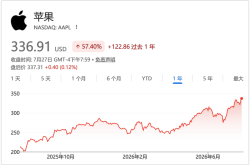
Apple Reclaims Global Market Cap Crown: Is a Strong Device the True Path for AI?
-
![]()
Apple Regains Global Market Cap Leadership: Are Smart Devices the Future of AI?
-
![]()
RMB 3 Trillion Changxin Devours OVM
-
![]()
SpaceX’s 13th Starship Mission Successfully Orbits Satellites, Yet Booster Fails in Ocean Test: Is the Reusability Dream Hitting Another Snag?