SpaceX’s 13th Starship Mission Successfully Orbits Satellites, Yet Booster Fails in Ocean Test: Is the Reusability Dream Hitting Another Snag?
 07/28 2026
 430
430
SpaceX achieved a significant milestone by deploying the first batch of V3 Starlink satellites using the Starship on its 13th test flight. However, the Super Heavy booster once again failed during a simulated landing in the ocean, highlighting that full reusability remains an elusive goal.
On Friday, SpaceX conducted its 13th test flight of the upgraded Starship, successfully launching the inaugural batch of third-generation (V3) Starlink satellites into their designated orbit. This should have marked a pivotal moment—the debut launch of a new satellite generation, bringing SpaceX closer to its vision of revolutionizing space-based internet connectivity with the Starship. Yet, almost simultaneously, the Super Heavy booster, responsible for recovery, faltered once more during a simulated landing over the Gulf of Mexico.
This wasn’t the first time the Starship V3’s booster had underperformed. During its maiden flight in May, the Super Heavy booster malfunctioned during separation from the upper-stage rocket. This time, it traveled farther but failed to ignite all engines required for the landing burn, ultimately crashing into the ocean surface at a much higher speed than anticipated and exploding in a fiery display. For a company that has made complete, rapid, and cost-effective reusability a cornerstone of its mission, such a setback is particularly striking.
Half a Success: The Starship Spacecraft Shines This Time
Shifting focus away from the booster, the first half of Friday’s flight was actually quite remarkable. The upper-stage rocket, known as the Ship by SpaceX, executed its mission flawlessly this time, avoiding the engine failure that occurred during the first V3 flight in May. After deploying the new generation of Starlink satellites, it withstood the intense stresses of atmospheric re-entry and completed a simulated landing in the Indian Ocean about an hour after liftoff. More importantly, unlike previous attempts where it would tip over and explode, the spacecraft managed to float on the ocean surface this time—allowing SpaceX to dispatch drones for a close inspection of its precious heat shield tiles.
This progress in surviving a water landing is more significant than it appears. In the past, nearly every soft ocean landing by the Starship ended in a capsize and explosion, leaving engineers with insufficient debris for analysis. Now that the spacecraft can float and await inspection, it means the next generation of thermal protection design finally has a sample that can be repeatedly verified. For a spacecraft still in the prototype stage, simply surviving a physical examination is no small feat.
Why V3 Starlink Has SpaceX Excited 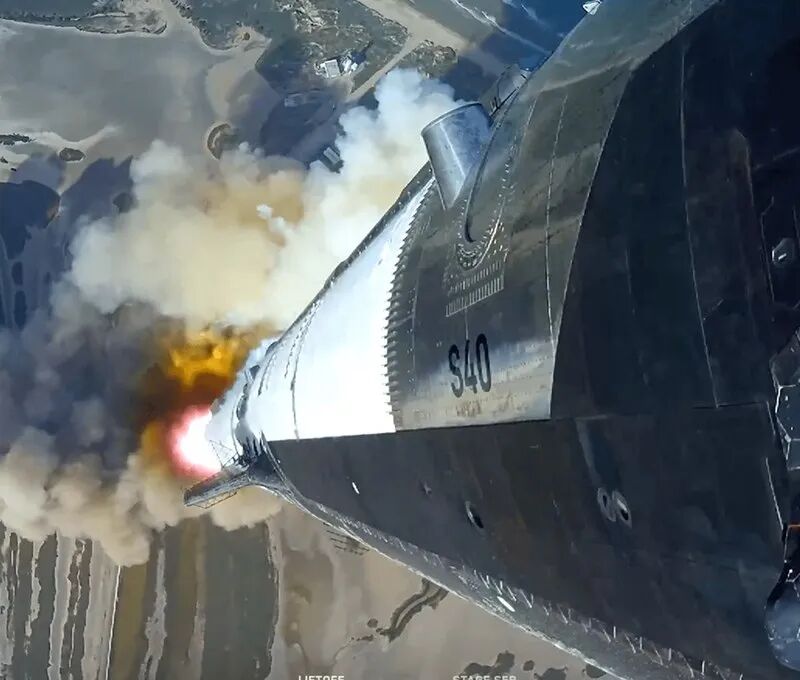
Image source: TechCrunch
What truly drives the company to take such risks with its rockets is the V3 Starlink satellites on board this time. SpaceX has calculated that launching 60 new satellites at once with the Starship could potentially increase downlink capacity twentyfold compared to a single Falcon 9 launch. With Starlink now being the company’s only profitable business, such a massive improvement in economics fully explains why SpaceX is willing to repeatedly stumble with the booster in order to accelerate the Starship’s journey to the launch pad. For the global satellite internet landscape, V3 means lower costs and broader coverage—provided the Starship can truly achieve stable reusability.
However, the flip side is equally concerning: if the Starship consumes a Super Heavy booster with every launch and cannot recover it, the aforementioned attractive cost and capacity benefits could be significantly undermined. The company has also acknowledged that without a fully reusable Starship, the expansion pace and cost of the Starlink network would be slower and higher. In other words, successfully deploying satellites is just the beginning; whether the rocket can be retrieved and reused will determine the ultimate success of the mission.
First Major Test Post-IPO, and Stock Price Takes a Dive
This launch carried additional significance: it was the first Starship flight since SpaceX completed the largest initial public offering (IPO) in history in June this year. The capital markets were unforgiving—after peaking at over $200 per share post-IPO, the stock price has been on a downward trajectory, sliding to $115 by Friday’s close. Following news of the booster explosion, it fell another 2% in after-hours trading. The launch attempt that was aborted at ignition due to multiple engine failures just over a week ago had already pressured the stock price that day, and now the cycle of fly, fail, repair is being faithfully reflected in earnings expectations, with investors voting with their feet.
From a certain perspective, Friday’s scene is a true reflection of the development philosophy that SpaceX has always publicly advocated—fly first, fail next, repair quickly. But as the company transitions from a private rocket workshop into a publicly traded behemoth, every explosion is no longer just a lesson for engineers but is instantly reflected on Wall Street’s quote screens. Whether the Starship can efficiently convert failures into progress will no longer just be about engineers’ glory but will also test the patience of numerous shareholders.
Today’s Insightful Quote
“A reusable rocket is never just a slogan; it’s a promise that SpaceX must fulfill inch by inch with every water landing that doesn’t end in an explosion.”
Follow 【Degaoxing Zhijinglang】 for three minutes a day to understand how aerospace is using one explosion after another to pave a low-cost path to the stars.
-
![]()
SAIC’s Four Key Divisions See Leadership Overhaul: Lu Xiao Moves to Passenger Cars, Xu Ping Takes Charge of GM, Wu Yun Leads Volkswagen
-
![]()
Nearly a Year On, Traffickers Still Reap Tens of Thousands by Selling Zeekr 9X in Russia
-
![]()
Apple’s New Business Model: Pay $39 a Month, But at What Cost to Your Wallet?
-
![]()
Tencent Places Its Bets on WorkBuddy: The Next Frontier in AI-Driven Office Solutions, Vying for the Smart Gateway
-
![]()
Apple Reclaims Global Market Cap Crown: Is a Strong Device the True Path for AI?
-
![]()
Apple Regains Global Market Cap Leadership: Are Smart Devices the Future of AI?
-
![]()
RMB 3 Trillion Changxin Devours OVM
-
![]()
SpaceX’s 13th Starship Mission Successfully Orbits Satellites, Yet Booster Fails in Ocean Test: Is the Reusability Dream Hitting Another Snag?