The Turning Point Has Arrived: What Will Define the Second Half of the Gimbal Camera Market?
 07/30 2026
 348
348

Preface
TrueView
Hardware manufacturers face a critical choice between creating blockbuster single products and pursuing multi-line expansion. Insta360, leveraging its advantages in form factor innovation, attempts to balance short-term sales growth with long-term technological storytelling through product iteration and a full-category layout (product lineup).
However, as resources concentrate on initial selling points and growth pressures shift to the sales terminals, the impressive sales figures conceal underlying issues of friction in user experience and margin pressures.
This article will focus on analyzing:
1. Why does form factor innovation often fall short between concept and execution?
2. Are accessory ecosystem shortcomings due to developmental delays or product definition missteps?
3. What irreversible brand damage can result from distorted sales strategies?
4. How can manufacturers establish long-term competitive barriers in the second half of the gimbal camera market?
Content/Huan Lao
Editing/Yong E
Proofreading/Mang Fu
In the fiercely competitive consumer electronics landscape, gimbal cameras stand out as a rare bright spot, transitioning from niche creator tools to mainstream consumer electronics in just three years.
However, as the market continues to expand, the underlying logic of industry competition is quietly shifting. Early success relied on parameter upgrades and form factor innovations to drive sales surges. Yet, as user novelty fades, the weight of real-world, repeatable user experiences is rapidly rising.
Recent industry research by Qianzhan Consulting, based on focus group interviews and cross-platform social media data extraction from millions of posts, reveals a harsh industry consensus: the second half of gimbal camera competition has arrived, with consumer demands sharply diverging.
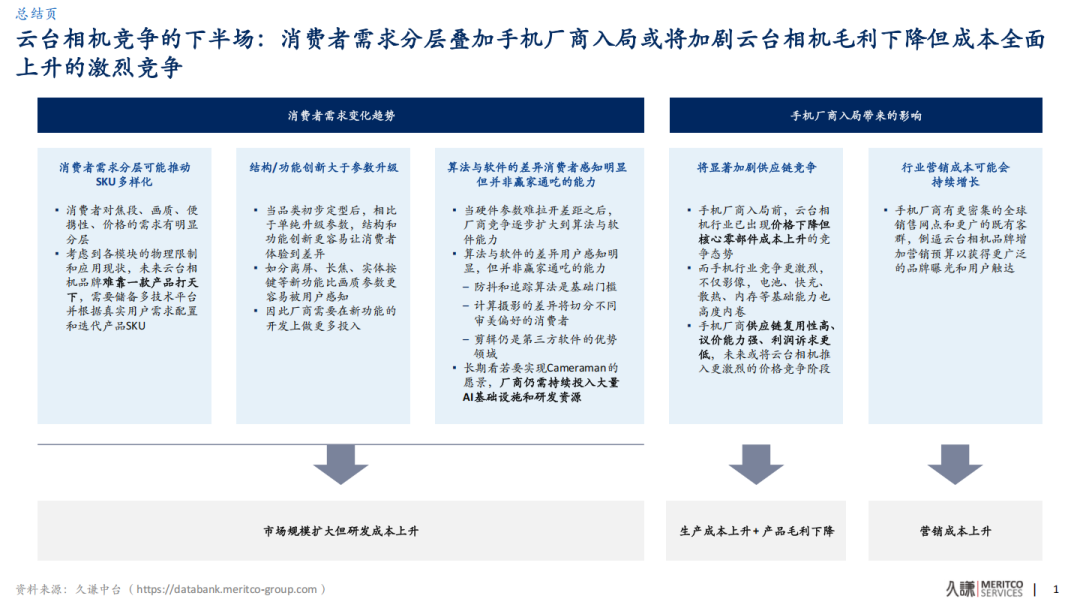
Against a backdrop of increasing hardware parameter homogenization, rising supply chain costs, and the looming threat of cross-industry entry by smartphone giants, the industry's margin for error is rapidly shrinking.
In this transitional phase of industry competition, Insta360, as a core player in the Track (market), serves as a prime example for industry observation through its product logic and commercial actions.
With keen intuition and aggressive form factor innovations, Insta360 has captured a significant market share. Yet, stripped of initial hype and KOL marketing filters, real post-purchase feedback acts as a mirror, revealing numerous hidden risks from its rapid expansion and reflecting common issues behind the industry's current rapid growth.
Part.1
The Gap Between Separated Screen Fantasy and Reality
The Two Sides of Innovation: A-Side vs. B-Side Experience
As hardware parameter iteration reaches bottlenecks, form factor innovation has become the common choice for gimbal camera manufacturers seeking differentiation. Separated interfaces, multi-focal length combinations, and new structural designs represent key exploration directions across the industry.
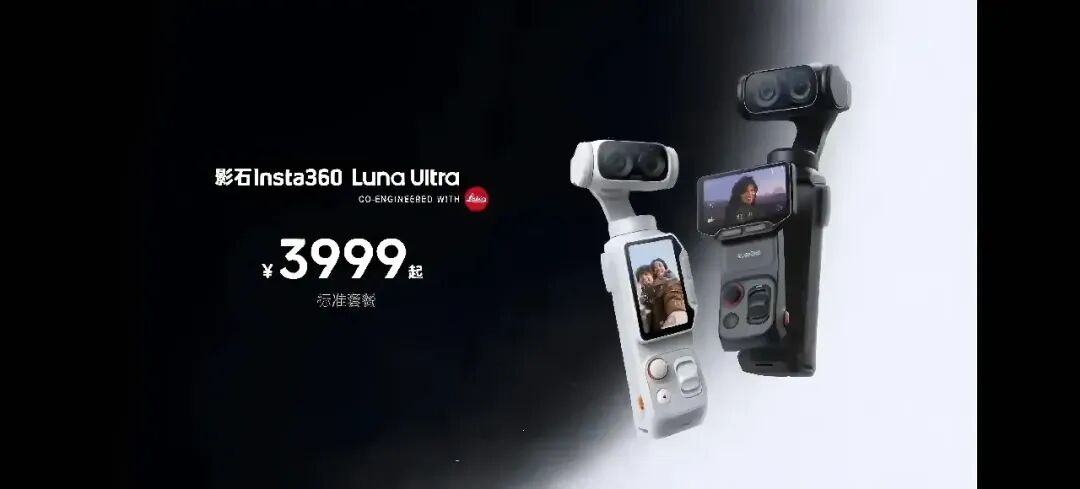
Insta360's separated screen design stands as one of the most representative attempts. The Luna Ultra features a 2-inch OLED touchscreen that can be magnetically detached from the main body, supporting image transmission up to 20 meters.
From a product definition standpoint, this design represents both a risky gamble and a masterstroke, precisely addressing framing and blind-shooting pain points in solo creation scenarios while attempting to redefine gimbal camera interaction paradigms. Such exploration holds reference value for the entire category.
However, as is often the case in consumer electronics, first-generation products with entirely new form factors frequently face the issue of concepts outpacing experience maturity—a pattern Insta360 has not escaped.
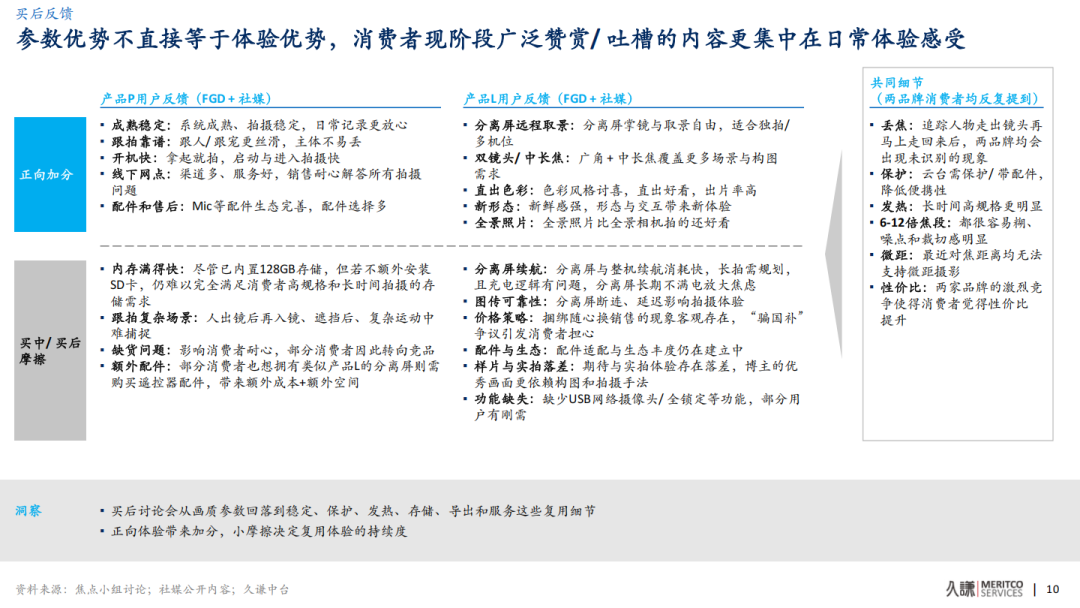
Qianzhan's research reveals that while the separated screen introduces novelty, it also brings undeniable experience degradation. The most direct pain point stems from image transmission reliability, with instances of disconnection and high latency during actual shooting.
More subtle frictions arise from battery life and charging logic. The separated screen's design philosophy aims to eliminate the need for an additional device by integrating smartphone monitoring functions into a detachable screen.
However, in practice, the independent screen's power consumption exceeds user expectations, and charging logic proves unreasonable. Users must now plan battery usage in advance and carry additional charging accessories—contradicting the product's original promise of hassle-free recording.
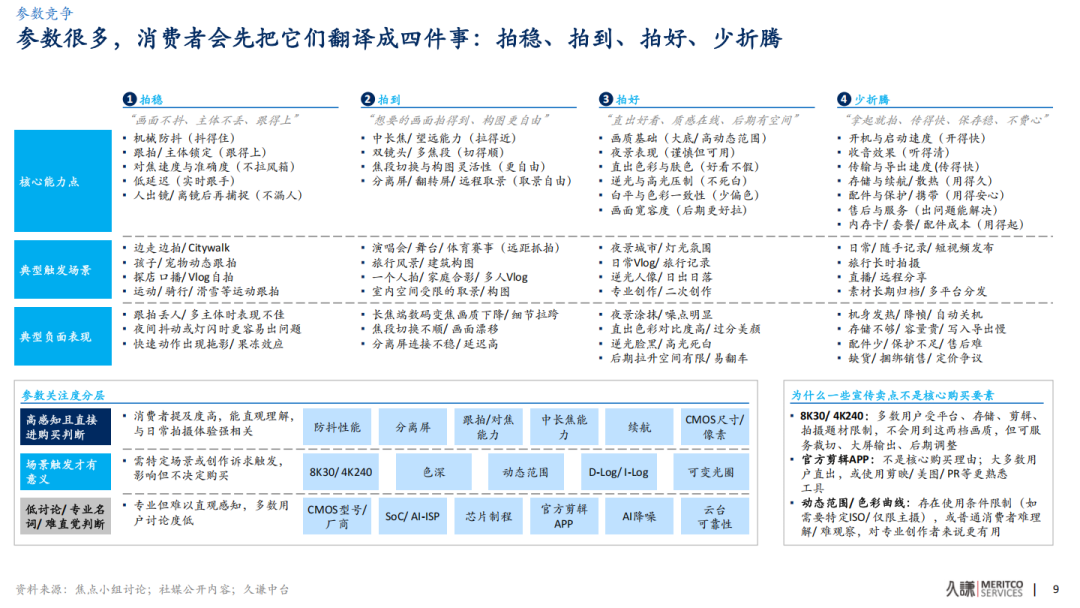
Meanwhile, high expectations from form factor innovation further amplify the gap between promotional samples and actual user footage.
Professional content creators on social media showcase the product's image quality potential through composition, camera movement, and post-production color grading. Ordinary users, often swayed by this potential, struggle to replicate similar quality due to their lack of professional skills.
This expectation-reality gap is causing many impulse buyers, drawn by novelty, to ultimately shelve their devices.
This represents a critical challenge for the entire industry: form factor innovation cannot remain confined to concept-stage presentations at launch events. The ability to translate leading product concepts into stable, reliable, and hassle-free daily experiences determines whether innovation becomes a long-term competitive barrier or merely short-term marketing hype.
Part.2
Repeat Usage Details Become Experience Divide
Underestimated Ecosystems and Arrogant Feature Definitions
Competition in imaging devices extends beyond hardware itself. Accessory ecosystems, feature completeness, and foundational experiences collectively determine product usage boundaries and user retention.
However, during rapid industry expansion, manufacturers universally prioritize R&D and resources toward creating initial selling points, while lagging in investments for foundational experiences and ecosystem development—a widespread shortcoming in today's gimbal camera market.
This issue manifests prominently in user feedback about Insta360. First, the pace of accessory ecosystem development fails to match product iteration speeds. Audio equipment, extension brackets, protective cases, and other accessories represent both core carriers for expanding product scenarios and important high-margin revenue sources for imaging categories.
Yet Insta360's official accessory ecosystem remains under construction, with room for improvement in both variety and compatibility. Advanced creators must turn to third-party accessories, compromising experience consistency while causing the company to miss incremental ecosystem revenue opportunities.
From a commercial perspective, accessories traditionally represent high-margin cash cows for hardware companies. Ecosystem chain disconnections mean voluntarily surrendering significant profit potential while weakening long-term user upgrade loyalty.
More baffling to some hardcore users is the absence of certain essential features. In an era where everything can be live-streamed, the device lacks basic USB webcam mode support. It misses full locking functionality for specific complex camera movements and has restricted minimum focusing distances that prevent macro photography.
While technically implementable, these omissions primarily reflect manufacturer prioritization during product definition.
When chasing extreme frame rates, large-sensor CMOS, and other high-specification parameters that look impressive on promotional materials, some genuinely impactful foundational needs for frequent repeat usage get strategically deprioritized.
Moreover, device overheating during prolonged high-specification video recording looms like a Damocles' Sword over the entire industry.
When a device marketed as portable and ready for spontaneous recording must interrupt shooting or reduce frame rates due to overheating, it completely violates users' core expectation of hassle-free documentation.
In the era where specifications reign supreme in driving online traffic, manufacturers easily fall into the illusion that users will tolerate shortcomings as long as strengths are prominent enough. Yet business reality dictates that what determines whether a device gets frequently taken out isn't its strongest selling point, but its most annoying pain point.
When frustration outweighs enjoyment, consumer enthusiasm rapidly cools.
Part.3
Distorted Moves and Performance Risks
Commercial Anxieties Behind National Subsidy Controversies
The current gimbal camera market exhibits premature price wars before full competition unfolds, with industry average selling prices continuously declining. Combined with market expectations of smartphone manufacturers entering the fray, pressure from Stock competition (existing market competition) is releasing early.
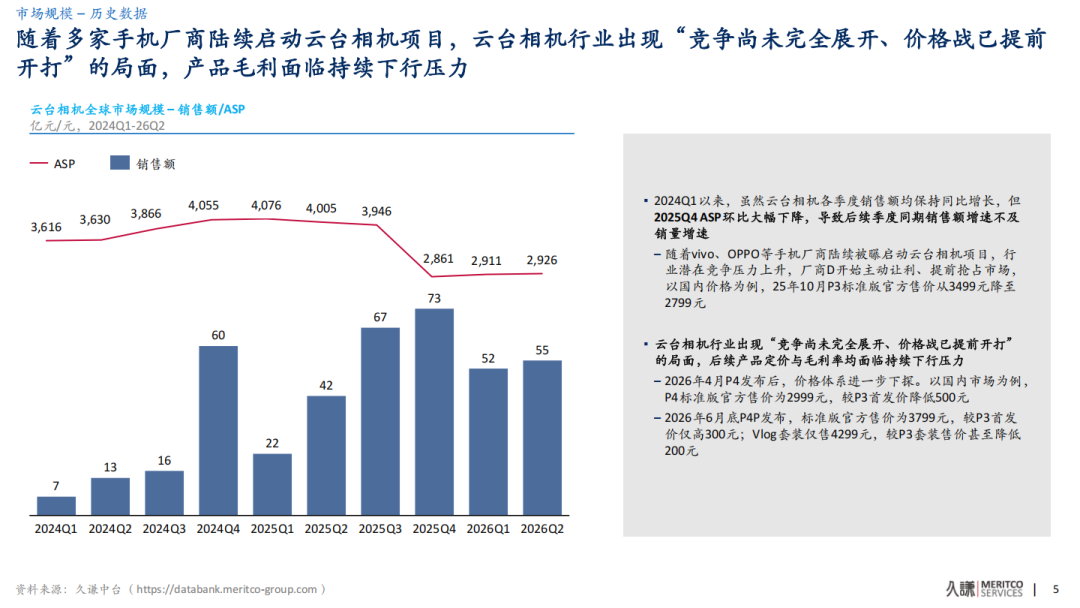
Manufacturers across the industry universally face the dilemma of maintaining growth speed while preserving profit levels, with some already showing strategic distortions at the sales terminals.
As a core market player, Insta360 has maintained rapid revenue growth in recent years, though profit pressures remain significant.
In 2025, Insta360 achieved 9.741 billion yuan in annual revenue (+74.76% YoY) but saw net profit attributable to shareholders decline slightly to 929 million yuan. In Q1 2026, revenue surged 83.11% YoY to 2.481 billion yuan, while net profit plummeted 52.02% YoY.
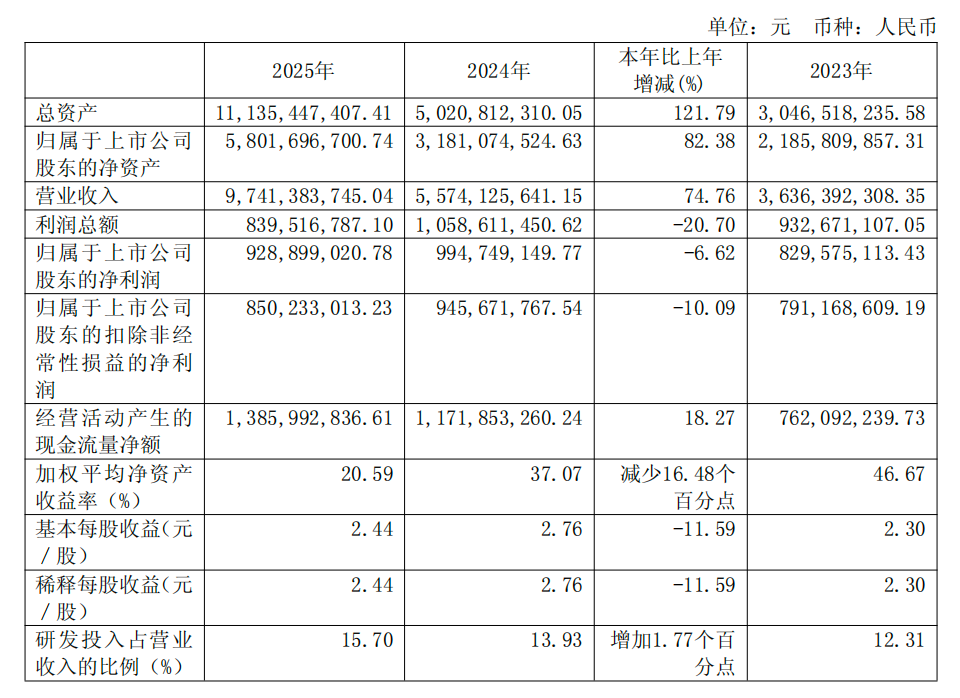
The official explanation cites "high-intensity strategic investments," with R&D expenses reaching 1.530 billion yuan in 2025 (+96.95% YoY, exceeding the previous three years' total) and 465 million yuan in Q1 2026 (+100.59% YoY).
While investing for growth represents standard practice in the tech industry, the dual pressures of growth and profitability amid industry price declines easily transmit to sales terminals, triggering strategic distortions.
The Bundle value-added service sales (bundled value-added service sales) and national subsidy-related controversies revealed in research essentially represent temporary measures to balance terminal pricing and profit levels amid intensifying price competition.
Take the national subsidy controversy as an example: the pricing gap design between listed prices and subsidized prices created consumer perception of exchanging their subsidy eligibility for regular pricing, sparking compliance discussions while directly eroding brand trust.

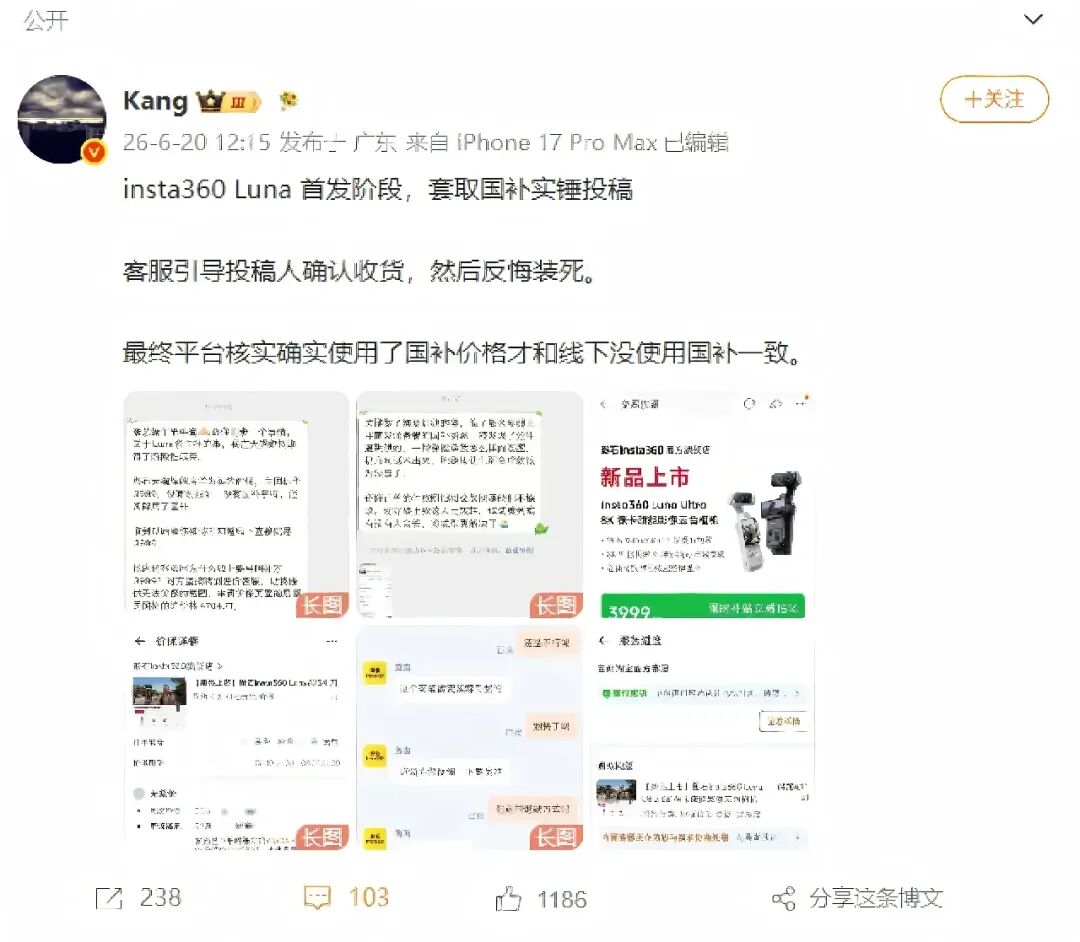
While such short-term tactics may temporarily boost current sales and maintain gross margins, they incur harder-to-repair hidden costs in brand trust erosion over time.
More alarmingly, when product-side experience frictions already exist, sales-side controversies create compounding effects that amplify user dissatisfaction. If users perceive trickery during purchase, then encounter disconnection, overheating, or missing features during use, their negative emotions multiply, directly impacting brand reputation and repurchase intentions.
This represents one of Insta360's current performance risks.
Hardware product business models should not represent one-time transactions. Long-term performance growth depends on user repurchases and organic growth through word-of-mouth.
Especially in an era of diminishing traffic dividends and tighter consumer budgets, when high customer acquisition costs fail to translate into long-term user lifetime value, corporate profit models become extremely fragile.
The first half of the gimbal camera industry relied on category innovation and hardware upgrades for market education and scale expansion. The second half will inevitably return to user experience and long-term value.
The challenges Insta360 currently faces are not isolated cases but inevitable growing pains as the entire industry transitions from rapid growth to high-quality development.
From refining form factor innovations to building complete ecosystems and cultivating long-term brand trust, every link determines how far companies can go.
For all players, shifting focus from launch event spotlights to users' daily usage scenarios, and redirecting some parameter competition energy toward refining repeat usage details, represents the core support for navigating industry cycles.
END
-
![]()
Opinion | Apple's Leasing Move Suggests AI Hardware Should Also Offer Consumers an Exit
-
![]()
The Time Google Missed, Translated into Cash Flow Costs
-
![]()
The Turning Point Has Arrived: What Will Define the Second Half of the Gimbal Camera Market?
-
![]()
The Inflection Point Has Arrived: What Will Determine the Second Half of the Gimbal Camera Market?
-
![]()
The Time Google Missed, Converted into Cash Flow Costs
-
![]()
Honor Reveals IPO Counseling Progress: Phase IV Wrapped Up, Awaiting Acceptance
-
![]()
Tencent Embarks on a Battle for the 'Desktop' Dominance
-
33,473 X9 Vehicles Recalled: Xpeng's Three Major Challenges