33,473 X9 Vehicles Recalled: Xpeng's Three Major Challenges
 07/30 2026
 534
534
The true reliability of a vehicle is not gauged by its performance under the limelight, but rather by how it responds after prolonged exposure to high temperatures.
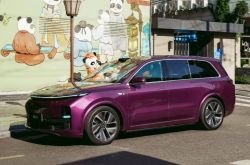
In early July of this year, amidst a spell of continuous scorching weather, the Xpeng X9 encountered multiple 'malfunctions.' Numerous owners reported on social media that after their vehicles had been exposed to the sun for extended periods, they frequently triggered air suspension warnings, accompanied by air leaks and abnormal noises. The vehicle bodies started tilting to one side or even collapsed entirely, with severe cases resulting in the vehicles becoming completely immobilized and undriveable.
In response to the surge in user complaints, Xpeng Motors acted promptly. On July 24, the company submitted a recall plan to the State Administration for Market Regulation, announcing that starting from August 28, it would recall 33,473 X9 vehicles manufactured between August 8, 2023, and August 11, 2025. The affected vehicles would receive free replacements of improved front air spring strut assemblies.
Xpeng's swift transition from after-sales service to regulatory resolution demonstrates the proper attitude of compliance and sense of responsibility that enterprises should adopt when facing product defects.
Profits on the Rise, but Scale Under Pressure: Xpeng Faces Hurdles
Expanding from the X9 incident to the broader corporate context, Xpeng is currently navigating a delicate 'transition phase'.
According to financial reports, in the first quarter of 2026, Xpeng Group's total quarterly revenue reached RMB 13.03 billion, marking a 17.6% decrease year-on-year. Revenue from automotive sales stood at approximately RMB 10.9 billion, down 23.5% year-on-year. The gross margin for the quarter was 20.6%, up 5.0 percentage points from the same period in 2025; the automotive gross margin was 12.1%, an increase of 1.6 percentage points year-on-year.
Specific delivery figures reveal that in the first quarter of 2026, Xpeng delivered a total of 62,700 vehicles, a 33.3% decrease year-on-year. By June, Xpeng had sold 40,000 new vehicles, with second-quarter sales totaling 103,000 units.
These figures convey a clear message: profits have increased, but the scale of operations remains under pressure.
Let's first examine the 'profit growth' trend. The rising proportion of high-end models like the X9 has elevated the average vehicle prices. Additionally, Xpeng is diversifying its revenue streams beyond pure vehicle sales.
Service and other revenues reached RMB 2.03 billion in the first quarter, up 41.2% year-on-year, with a gross margin of 66.5%. This high-margin portfolio has kept Xpeng's overall gross margin above 20%, enabling support for long-term capital-intensive projects like Robotaxi and humanoid robots.
Now, let's consider the 'scale pressure' trend. Xpeng's first-quarter deliveries fell by over 30%, partly due to industry-wide trends and partly due to Xpeng's own product cadence issues.
Xpeng was in a classic 'product gap' phase during the first quarter. Older models were nearing the end of their lifecycle, while the new GX, tasked with driving sales volume, only launched on May 20. External factors included adjustments to NEV (New Energy Vehicle) purchase tax incentives by the end of 2025 and the impact of the Spring Festival holiday, which reduced consumer purchases.
According to data from the China Passenger Car Association, domestic auto retail sales reached 4.225 million units in the first quarter, down 17.4% year-on-year, with NEV sales at 1.908 million units, a 21.1% decline.
Xpeng's current strategic objectives are clear: elevate brand positioning with high-priced models like the GX, expand profit margins through services and other revenues, and establish long-term growth drivers like Robotaxi and humanoid robots. This represents a classic 'profit while investing and ascending' approach.
However, premiumization strategies are most vulnerable to erosion of quality trust. The recent X9 controversy is not merely an issue for one model line but a stress test for Xpeng's entire brand-up strategy. Xpeng must safeguard its financial strength while maintaining high-end product quality standards.
X9 Air Spring Recall: Not an Isolated Incident but an Industry-Wide 'Speed Disease'
Viewing the X9 air spring issue through the lens of the entire NEV industry reveals it as part of a broader, systemic problem.
According to the State Administration for Market Regulation, China conducted 190 vehicle recalls involving 6.846 million units in 2025. NEVs accounted for 105 recalls, totaling 2.652 million vehicles, or 38.7% of all recalls that year. By the end of 2025, China had cumulatively executed 3,265 vehicle recalls affecting 121 million vehicles.
These figures reflect the 'acceleration costs' in the automotive industry, particularly for NEVs. As new model launch cycles shrink from three to five years to just one or two, and software updates shift from monthly to weekly, the time available for hardware system validation dwindles, increasing the likelihood of quality issues.
From a systems perspective, traditional core components like steering systems, engines, and instrumentation/lighting remain primary problem areas, accounting for 71.3% of all recalls. This underscores that despite rapid electrification and intelligence trends, foundational mechanical safety remains critical for overall vehicle safety.
Air springs, a key component of chassis systems, face similar challenges to traditional parts. Accelerated product development timelines may have compromised research into manufacturing consistency and long-term durability.
For Xpeng, this proactive recall marks the beginning of restoring user confidence. As a leading NEV innovator with breakthroughs in autonomous driving and smart cockpits, Xpeng must simultaneously strengthen fundamentals like chassis engineering, materials technology, and supply chain quality control to balance technological advancement with product quality.
For the industry at large, the Xpeng X9 incident serves as a wake-up call. With Chinese NEVs transitioning from 'domestic leadership' to 'global competition'—accelerating overseas expansion, diversifying product lines, and exploring multiple technical routes—all strategies must prioritize safety and quality as foundational elements.
If 'speed' becomes the industry norm, 'deliberation' may emerge as a competitive advantage. As NEV companies accelerate product refresh cycles and globalization strategies, they must ensure safety and quality remain inviolable red lines.
Post-Recall: What Lies Ahead for Xpeng?
For any automaker, recalls are not endpoints but opportunities to transform crises into trust capital. After the recall, Xpeng must address three critical areas:
1. Supply Chain Governance: Ditch 'Fast-Track' Vehicles, Build Quality Foundations
Public data shows that China's auto market launched 542 new models in the first five months of 2026, averaging 3.6 per day. The 2026 industry debate over 'fast-track' vehicles highlights how automakers, rushing to capitalize on sales opportunities, compressed component validation times and supplier standards, leading to batch instability and process inconsistencies. If Xpeng establishes a lifecycle-wide quality traceability system through this recall, it could fundamentally resolve such issues at their source.
2. Product Inspection: Stricter Testing for Premium and Global Markets
The X9 air spring failures primarily occurred in high-temperature, high-humidity environments, raising questions about whether Xpeng's flagship models undergo sufficient durability testing in complex, extreme conditions. As Xpeng prepares to launch new high-end models like the GX and accelerate overseas expansion, it must raise product quality standards. Enhanced durability testing in extreme temperatures and humidity, along with long-distance driving trials, should be completed before vehicles reach consumers.
3. Brand Trust: Transparent Communication for Crisis Value Conversion
Post-recall, simply replacing hardware addresses symptoms but not consumer doubts. If Xpeng openly shares validation data and failure rate tracking for the improved X9 air spring components, it could transform this incident into a 'traceable quality, trustworthy brand' narrative.
The NEV competition has entered its second half. The first half focused on intelligence, range, and delivery speed; the second half will test manufacturing consistency, supply chain management, and global market reputation. While the X9 recall may seem like a conclusion, it more accurately marks Xpeng's starting line for a new phase of internal strengthening.
-
33,473 X9 Vehicles Recalled: Xpeng's Three Major Challenges
-
![]()
Initiation of Control over Access for Intelligent Driving's 'Little Blue Lights'
-
![]()
Is the Intelligent Driving Blue Light, a Source of Pride for Lixiang and AITO Owners, Facing a Ban?
-
![]()
Embarrassing Meta: Promises Made, Money Invested, but No 'Fruits' Yet
-
![]()
BMW Announces Thousands of Job Cuts via 'Voluntary Exit Scheme'
-
![]()
Official Announcement: Intelligent Driving Blue Light Banned Due to Safety Concerns; Automakers React Swiftly | Mirror Pro
-
Each Truck Can Cut Fuel Costs by 200,000 Yuan Annually! Why Are New Energy Vehicles Scarce in the Booming Electric Heavy Truck Market Led by CNHTC, Sany, and Dongfeng?
-
![]()
Kingsoft Office Triples Performance Amidst Trust Controversy