Samsung China Takes Another Step Back
 08/05 2026
 569
569
"
The tides of the era have shifted, but Samsung is undoubtedly fortunate. This giant, with decades of deep involvement in semiconductors, panels, storage, and other fields, holds a substantial reserve of technology and capital, leaving it with room to maneuver in this era of great transformation.
Cover image source: Unsplash"

Samsung Electronics has taken another step back in the Chinese market.
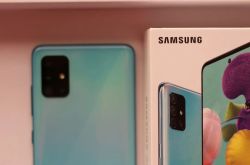
Recently, Sina Technology reported that Samsung phones are scaling back their presence in China. Sources revealed that stores with monthly sales of less than RMB 300,000 will be gradually phased out, with closures already occurring in Shenzhen, Fuzhou, Zhengzhou, Xi'an, and other cities.
However, this comes just three months after Samsung Electronics announced its withdrawal from the Chinese home appliance market. In May of this year, Samsung Electronics announced its exit from the Chinese home appliance market, stating it was to "respond to rapidly changing market conditions."
Yet, Samsung explicitly stated that its semiconductor business (storage), mobile terminals (phones), and medical device operations in the Chinese market would continue as usual. As of now, Samsung remains silent on adjustments to its phone business.
Behind this silence lies a sense of helplessness. Whether in home appliances or phones, Samsung's glory in the Chinese market is no longer what it once was. Samsung is bidding farewell to an era, but at the same time, new brands are restarting another.
For Samsung, the once "golden age" in China now leaves only a shrinking silhouette.
1
Samsung Phones Follow Home Appliances Out of China
Three months ago, when Samsung Home Appliances announced its withdrawal from the Chinese market, outsiders had already given a less optimistic prediction: after home appliances, Samsung phones would likely struggle as well.
This judgment was not without basis. For a brand to establish itself in the market, branding, products, and distribution channels are all indispensable. However, as Samsung Home Appliances gradually exits China, its distribution channels are inevitably shrinking, and Samsung's brand influence is bound to be affected.
Market data also confirms the difficult situation (challenging situation) of Samsung Home Appliances and phones.
In 2025, Samsung Home Appliances held only a 1.5% share in the Chinese market. Samsung phones are in an even more precarious position. According to IDC data, in the second quarter of 2026, Samsung's share in the Chinese smartphone market dropped to 0.1%, with shipments plummeting 60.8% year-on-year.
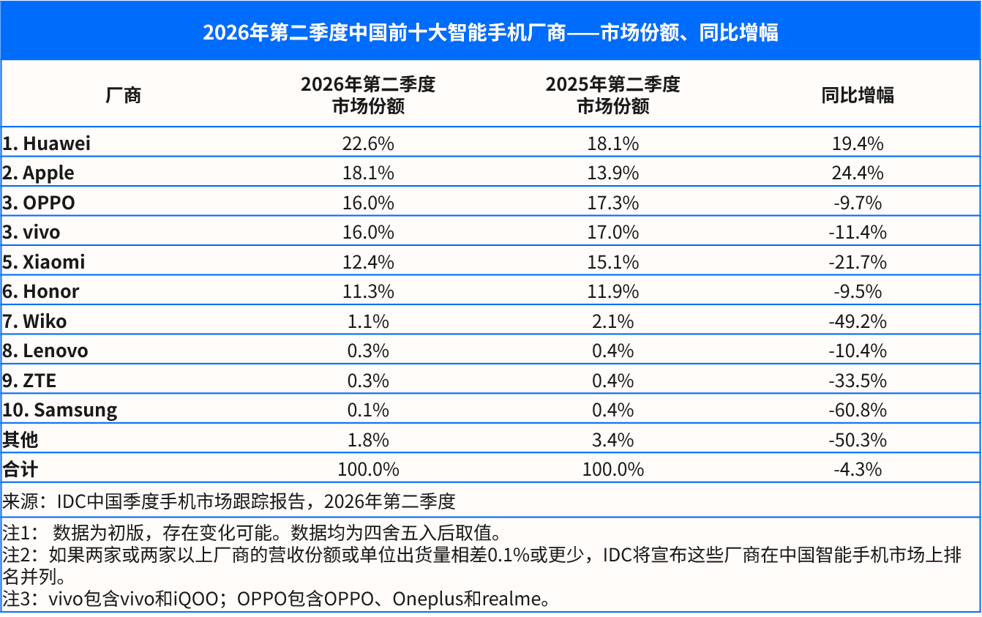
What does 0.1% mean? During the same period, approximately 66.01 million smartphones were shipped in the Chinese market, with Huawei, Apple, OPPO, vivo, and two other manufacturers accounting for about 96% of the domestic market. Samsung has been pushed into the "Others" category.
Interestingly, while Samsung has lost ground in China, it remains the "king of phones" overseas.
Omdia data shows that in the second quarter of 2026, Samsung's global smartphone shipments reached 60.5 million units, up 5% year-on-year, maintaining its global leadership with a 22% market share.
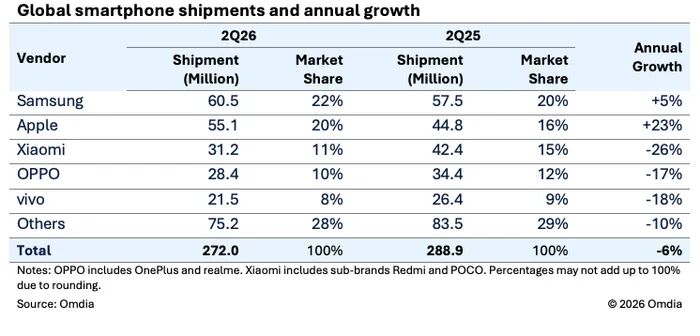
The same brand performs vastly differently in the Chinese and overseas markets—this contrast suggests that Samsung's struggles in China cannot be simply attributed to product issues.
So, how did Samsung lose the Chinese market?
First, there's pressure from competitors. A decade ago, Samsung was the undisputed "king of phones" in the domestic market, with its Galaxy flagship models synonymous with high-end quality and durability, peaking at nearly 20% domestic market share.
However, in recent years, consumer demand has gradually returned to rationality, while domestic phone brands have accelerated their innovation cycles, bombarding consumers with a relentless stream of new features, specs, and imaging technologies, broadening their choices.
Yet, Samsung phones have maintained an "arrogant" image. Compared to domestic brands, they are more expensive, yet not necessarily superior in specs.
Take Samsung's Galaxy S26 Ultra, released in February this year, as an example. The 12+256GB configuration is priced at RMB 9,999 on the official website, while the Honor Magic8 Pro, also equipped with the fifth-generation Snapdragon 8 Elite chip, costs just RMB 5,699 for the same configuration.
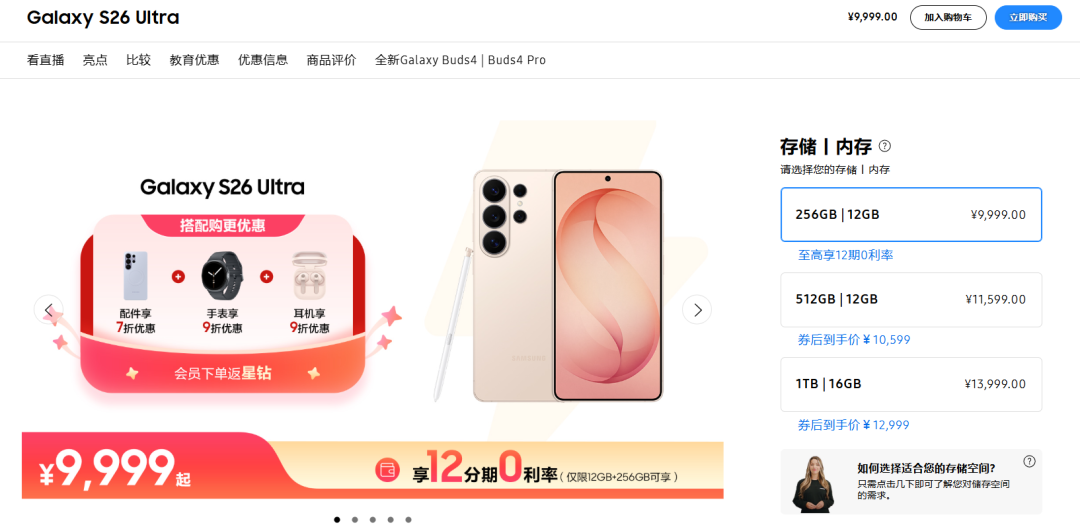
Moreover, Samsung phones have been surpassed by domestic brands in core experiences like imaging, AI, and battery life. For instance, the Galaxy S26 Ultra supports 80W fast charging, while domestic flagship models now offer 90W or even 100W fast charging.
On social media, many users complain that Samsung phones produce "dull" photos and have battery life of less than four hours, requiring a power bank for daily use...
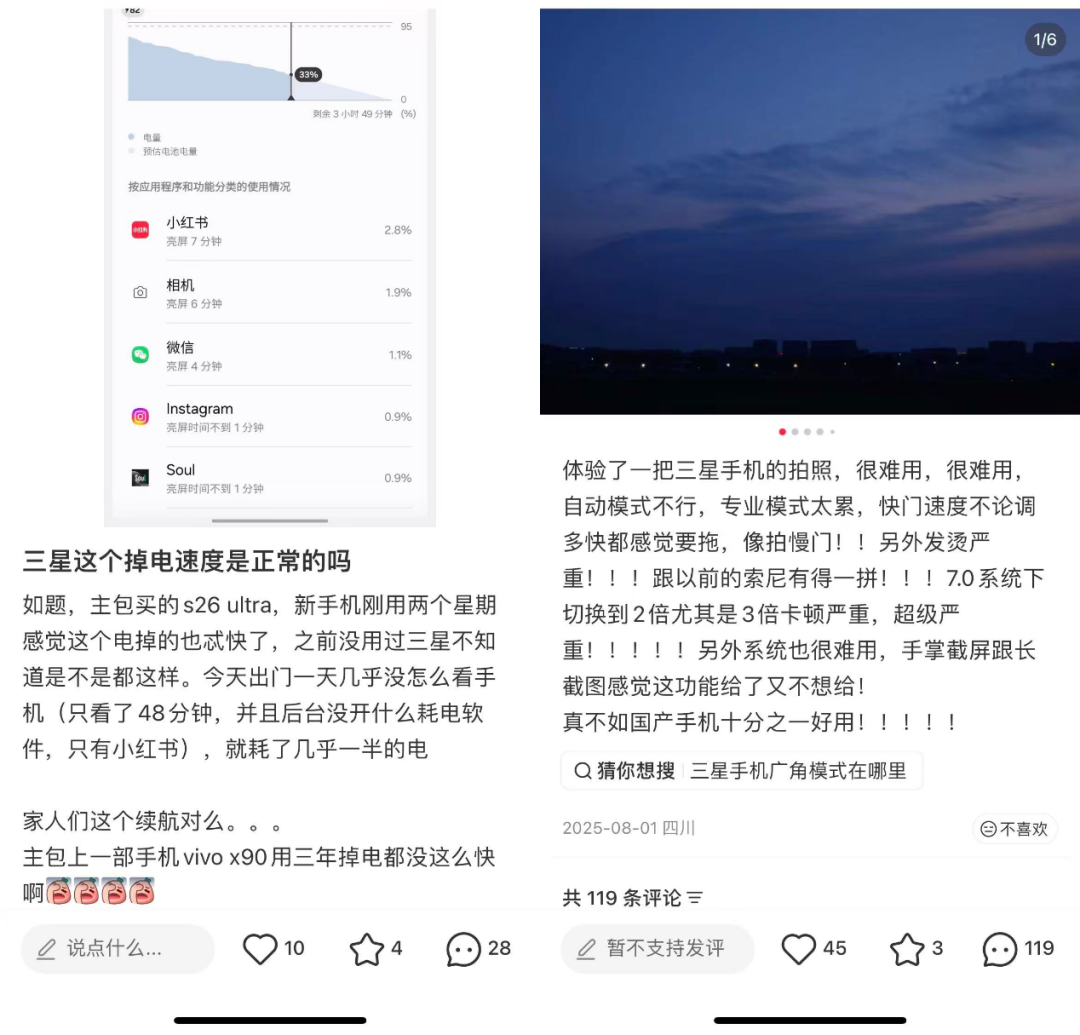
Consumers are doing the math: why pay twice as much for similar performance, or even worse Take a photo (photography) and slower charging, when Samsung's brand halo is no longer justification for a premium?
Second, there's the issue of a " climate sickness " (cultural mismatch) product ecosystem.
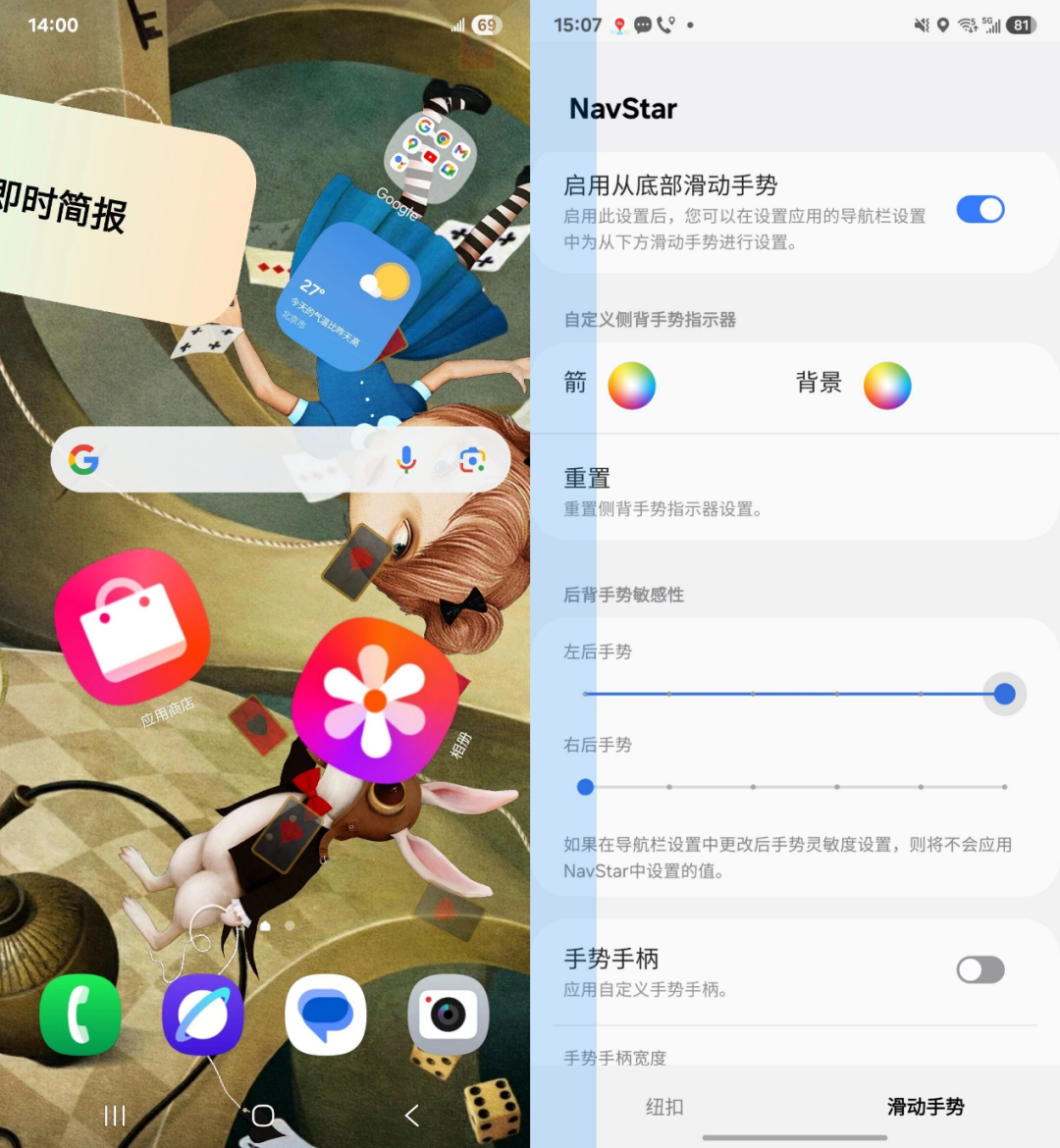
Samsung's ONE UI system resembles a "global template," with its features, ecosystem services, and interaction logic failing to truly integrate into the lifestyles and cultural habits of local users.
For example, its NFC transit cards support only a few cities; Samsung Pay lags in deep integration with WeChat and Alipay, lacking convenient features like HarmonyOS's "one-tap payment code" access. Consumers accustomed to domestic phone systems may find Samsung's offerings cumbersome.
Finally, Sino-Korean relations also play a subtle role, directly influencing the popularity of Korean brands in the Chinese market. As Korean stars and variety shows lose their domestic appeal, Korean brands' heat (popularity) has also waned.
Rome wasn't built in a day, and Samsung's decline in the Chinese market has been a slow, decade-long process.
2
Stronger Chips, Greater Pressure on Phones
However, what may have prompted Samsung to decide to withdraw from the Chinese market could be another set of figures.
Recently, Samsung Electronics released its Q2 2026 financial report, revealing revenues of KRW 171.5 trillion (approximately RMB 804.975 billion), up 130% year-on-year; operating profit reached KRW 89.5 trillion (approximately RMB 420.1 billion), surging over 1800% year-on-year, setting a new quarterly profit record for the third consecutive quarter.
This impressive performance was driven by the AI-fueled semiconductor boom, with the Device Solutions (DS) division, responsible for semiconductors, contributing 99.7% of the company's operating profit.
How profitable is Samsung Semiconductor? In Q2, the group earned KRW 89.4 trillion, more than double its full-year profit of KRW 43.6 trillion in 2025, even exceeding the combined profits of 2023-2025.
These figures have reshaped perceptions of Samsung's "money-making power," but they also highlight an awkward reality in Samsung's business structure—the stronger the storage business, the greater the pressure on consumer electronics.
In Q2, Samsung's Device eXperience (DX) division, which includes phones and home appliances, reported revenues of KRW 48 trillion, down 9% quarter-on-quarter; operating losses reached KRW 0.8 trillion, marking the first loss for Samsung's phone business since its inception.
However, considering Samsung's global phone shipments grew 5% year-on-year in Q2, the decline in profits cannot be attributed to sales volume but rather to costs.
Late last year, Korean media reported that Samsung's DS division (responsible for semiconductors) refused to sign DRAM supply agreements with the MX division (responsible for phones and other businesses) for periods exceeding 12 months, further driving up costs for smart devices like phones.
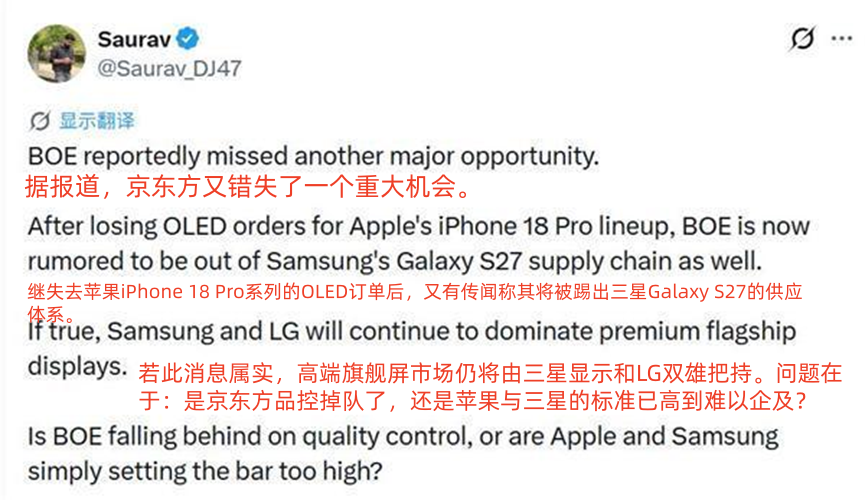
In January, media reported that Samsung's Galaxy S27 intended to introduce BOE as a second OLED panel supplier, hoping to reduce screen procurement costs through supplier competition.
However, this plan has since been scrapped, with foreign media reporting that the core resistance came from Samsung Display, which had been the exclusive supplier of panels for Samsung phones and was reluctant to see its flagship products adopt competitors' panels.
Historically, the fortunes of Samsung's storage and phone businesses have often been inversely related: when storage thrives, phones face pressure; when storage slumps, phones become the profit core sustaining the company through cycles.
However, with the AI-driven semiconductor boom, this mutually supportive relationship is now "teetering."
Among current leading phone manufacturers, few achieve self-sufficiency in chips and displays. Huawei and Apple adopt a "self-developed chips, externally sourced screens" strategy; Xiaomi, OPPO, and vivo are also developing chips but have yet to fully succeed.
Samsung holds the most "aces," but this internally coordinated industrial ecosystem has become a liability in the face of conflicting interests.
Different departments within Samsung have their own interest game theory (games), each seeking to maximize its own gains. However, when departments within the same company work against each other for their own interests, the entire group suffers.
3
Doubling Down on Ultra-High-End Phones
The cost pressures on the phone business have also triggered Samsung's retreat from the Chinese market.
According to Sina Finance, Samsung phone stores in multiple Chinese cities are closing, with employees revealing that the group has set a strict performance metric: stores and staff with monthly sales below RMB 300,000 will face gradual phase-out.
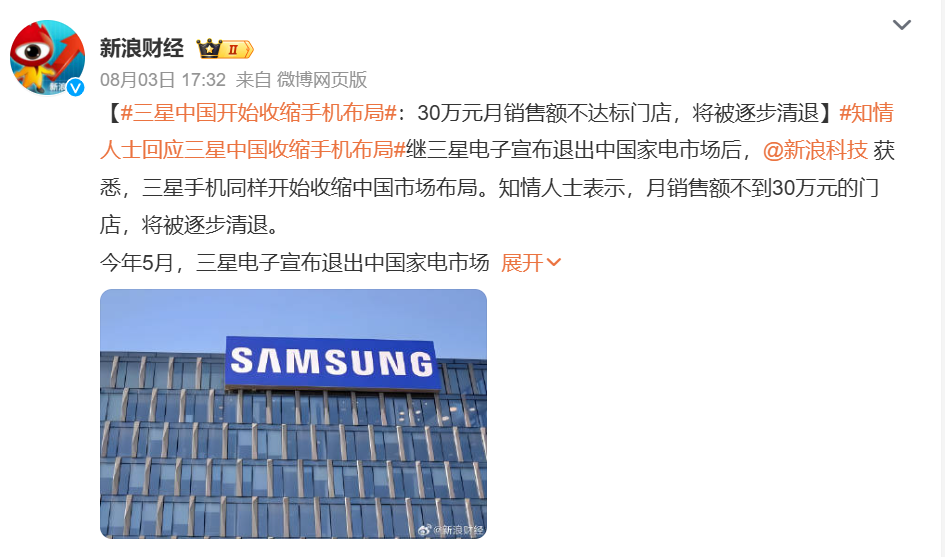
Samsung has not yet responded. However, considering its withdrawal from the Chinese home appliance market and the semiconductor division's financials, the RMB 300,000 sales target is not unfounded.
Samsung's intentions are clear: it is actively narrowing its product lineup, shifting group resources toward high-end products, such as exiting the hyper-competitive Chinese home appliance market and outsourcing entry-level home appliance production.
Samsung is likely adopting the same strategy for its phone business. Last month, Samsung released the Galaxy Z Fold8 series, a Wide folding screen (wide foldable) phone similar to Huawei's Pura X Max, starting at RMB 12,999.
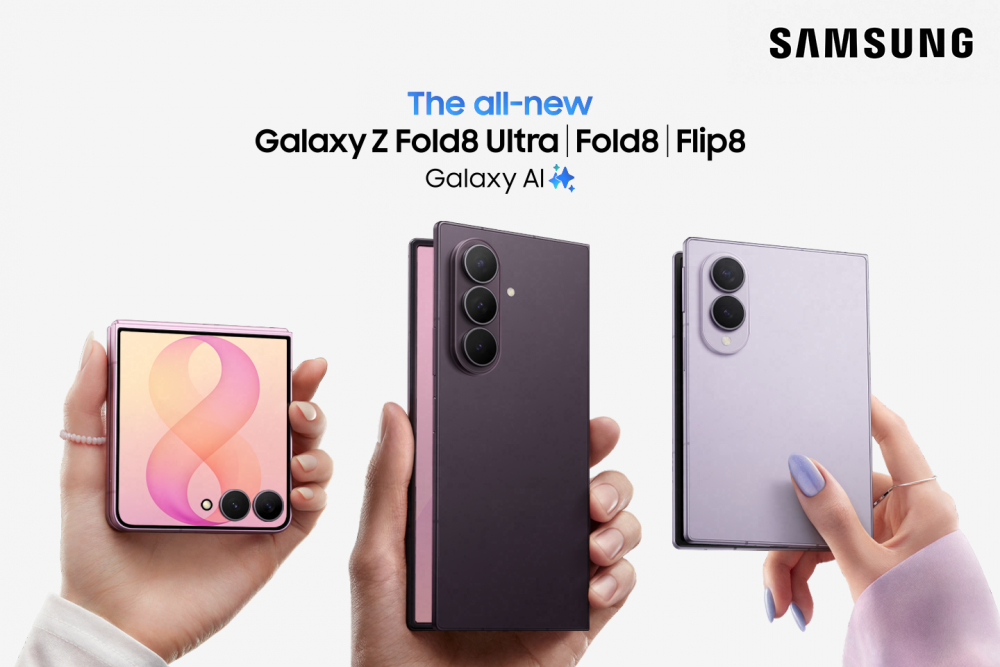
Despite its high price, media reports indicate that the Galaxy Z Fold8 series achieved 1.44 million pre-orders in South Korea, breaking Galaxy's all-time pre-order record; in India, it surpassed 271,000 pre-orders in 72 hours.
Originally, Samsung planned for an initial flexible screen production capacity of about 2.8 million units for the Z Fold8, but it has now placed additional orders with core suppliers for screens, hinges, and batteries, adding tens of thousands of units in capacity.
Previously, the wide foldable phone category was pioneered by Huawei, which also holds strong consumer mindshare in the domestic market. However, with Samsung and Apple (expected to release its first wide foldable in September) entering the fray, this market share will inevitably be divided.
Counterpoint predicts that in the global wide foldable phone market in 2026, Samsung, Apple, and Huawei will hold 32%, 25%, and 24% shares, respectively.
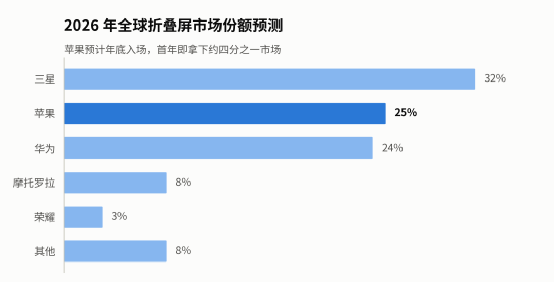
Even with just a 0.1% share in the Chinese market, Samsung remains the global leader in phones. For Samsung, fighting more focused battles, whether domestically or abroad, is the wiser strategy.
Thus, Samsung's channel shrink (contraction) in the Chinese market may just be beginning.
Ultra-high-end phone products inevitably target mid-to-high-end consumers, so Samsung only needs to retain a small number of stores in core cities to cover its target demographic—minimizing channel investment while preserving its brand presence.
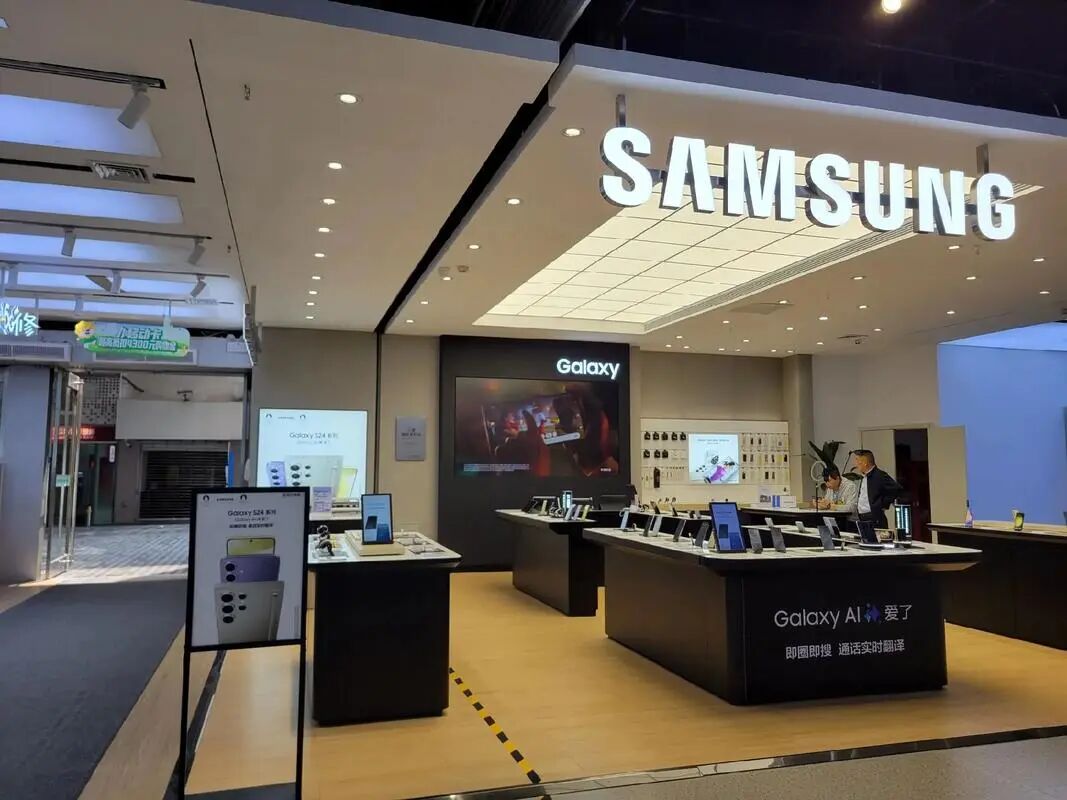
The trend of the times has changed, but Samsung is undoubtedly lucky. This giant, which has delved deeply into fields such as semiconductors, panels, and storage for decades, holds a substantial foundation of technology and capital, still having room to maneuver in this major transformation.
However, on the flip side of the coin, while Samsung is further surging towards its semiconductor business, the corporate resilience that was once supported by businesses such as home appliances and mobile phones may be continuously eroded unconsciously.
Once storage chips encounter a cyclical downturn, Samsung will lack sufficient cushioning. When eggs are increasingly concentrated in one basket, the weight of the basket itself becomes the greatest risk.
Currently, Samsung's focus on high-end businesses is a more pragmatic and rational choice.
But in the business world, there's never such a thing as a 'clean getaway.' When you voluntarily retreat from one market, it means surrendering territory to others; when you choose to serve only a small group of high-end users, it means abandoning economies of scale and brand influence.
Samsung's high-end narrative may unfold differently, but Samsung will no longer be the Samsung it once was.
-
![]()
4.6 Billion Yuan! 301382 Clinches Major Computing Power Deal
-
![]()
Ruide Intelligence and Gudong Intelligence Forge Ahead in Strategic Partnership, Eyeing Trial Production at Intelligent Optics Base in Second Half of the Year!
-
![]()
Thriving Beyond Family Succession: An Optical Pioneer Blazes a Trail for Private Firms
-
![]()
Samsung China Takes Another Step Back
-
![]()
Samsung China Takes Another Strategic Retreat
-
![]()
Xpeng Unveils New Large Five-Seater G9L, He Xiaopeng Claims It Outperforms 99% of Vehicles in the 300,000 RMB Price Range
-
Anthropic’s $10 Billion Multi-Year Compute Deal Unveiled
-
![]()
Bidding Adieu to the 'Wild West' Phase: What is the Competitive Edge of Lightning Warehouses?