Growing a Moving 'Head': Can Honor’s Robot Phone Revolutionize AI Smartphones?
 08/13 2026
 470
470
YiYan Business Observer
Is the 9,999-Yuan Robot Phone a Gimbal in Disguise, or the Dawn of Next-Gen Interaction?
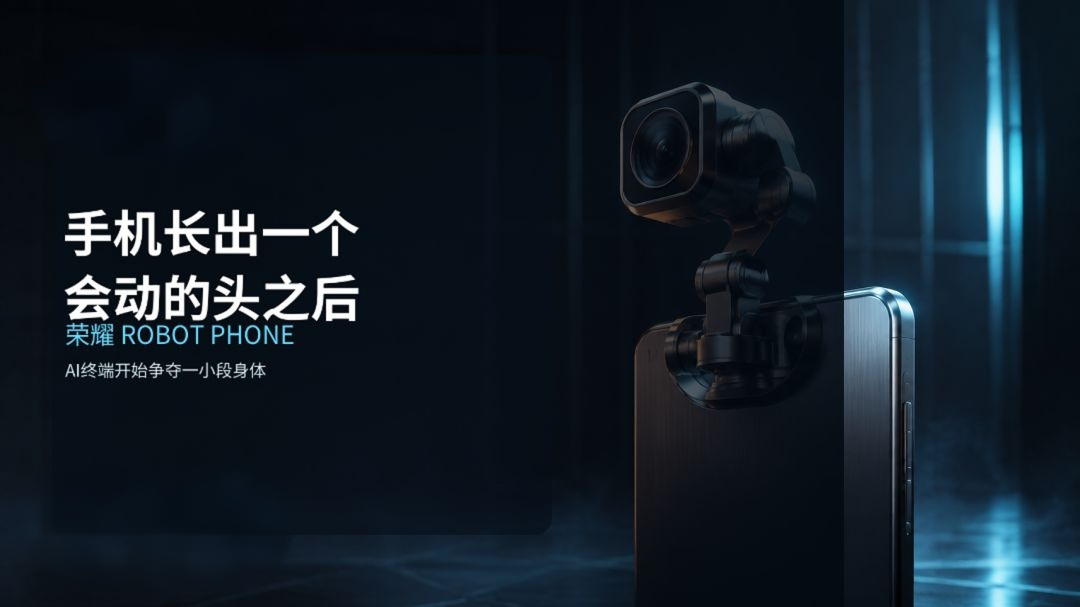
A typical smartphone boasts multiple 'eyes' but lacks a 'neck.' Its camera can peer ahead, yet its field of view is confined by the user’s grip; AI may interpret the scene but cannot autonomously reposition the lens.
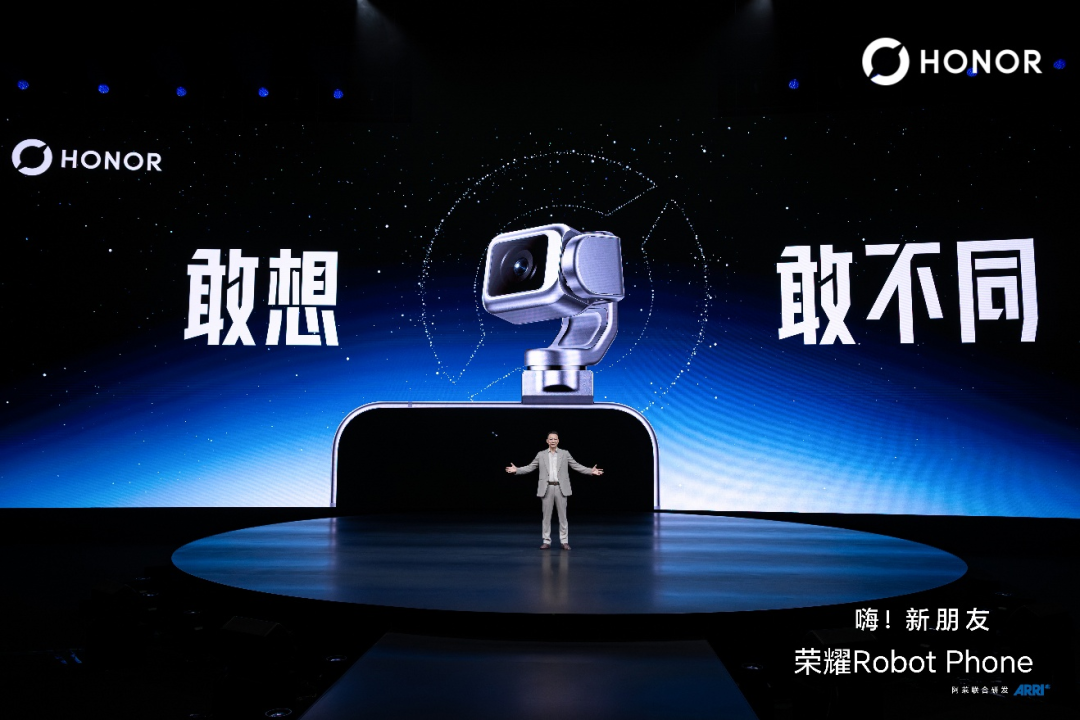
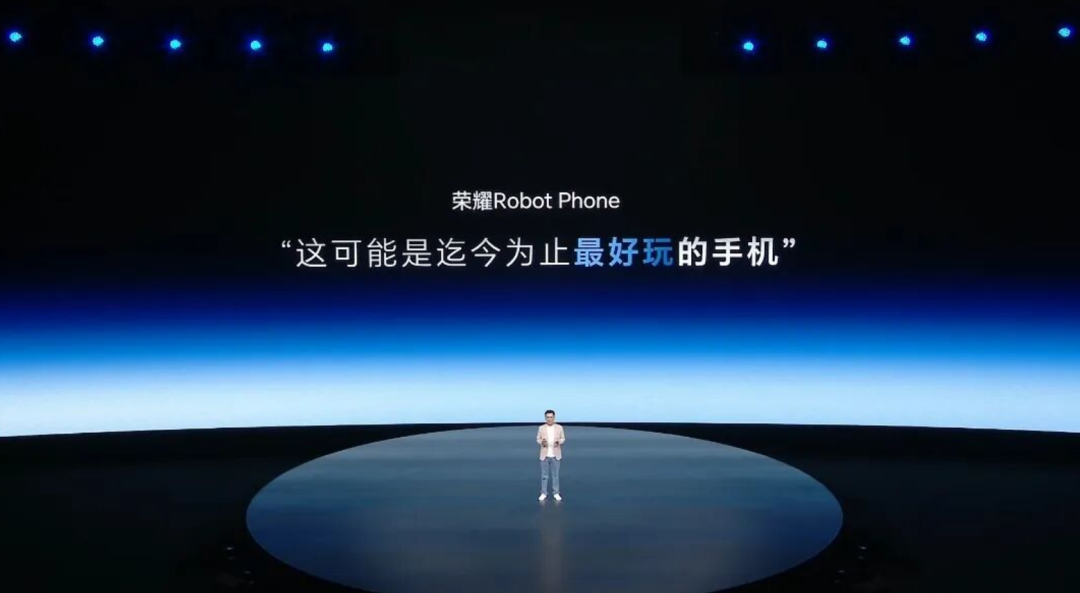
On August 12, Honor unveiled its Robot Phone, aiming to equip this familiar gadget with a 'body'—a four-degree-of-freedom titanium alloy gimbal. According to Honor, three axes deliver mechanical stabilization, while the camera can actively pivot, track subjects, execute 90-degree or 180-degree panning shots, follow users during video calls, and respond with nods or shakes. Priced at 9,999 yuan for the 12GB+512GB variant and 12,999 yuan for the 16GB+1TB model in China, pre-sales commenced on August 12, with official availability starting August 18. The device measures 9.59mm in thickness, weighs 248 grams, and houses a 7060mAh battery.
Smartphone makers have previously dabbled with flipping, pop-up, and rotating cameras, primarily to resolve structural challenges—using a single lens for both selfies and a more immersive screen experience. The Robot Phone, however, pursues a different vision. Honor integrates the gimbal into Agentic OS, transforming camera movements into a system-callable output. It’s not merely about 'the lens turning,' but 'the software dictating when and where to turn, continuously reassessing based on the new view.'
This is where the discussion truly begins: For the first time, a mass-market AI terminal in smartphone form gains a sliver of programmable physicality.
Is It 'Embodied AI?'
The answer hinges on definitions.
In robotics research, embodied AI typically refers to agents that perceive their environment via sensors, act through actuators, and refine their next moves based on outcomes. The Robot Phone features cameras, microphones, and attitude sensors, paired with a gimbal actuator capable of altering its field of view. By the minimalist 'perception-action-feedback' standard, it forms a closed loop. Yet its physical capabilities are constrained: it cannot relocate, grasp objects, or execute complex tasks in open environments. Comparing it directly to humanoid robots overstates its scope.
From YiYan’s perspective, a more precise description is: this is a smartphone with an active vision actuator, marking a consumer-grade leap for AI to transition from purely software outputs to limited physical actions.
'Limited' does not imply insignificant. Many product evolutions begin not with omnipotent machines but with a clearly defined degree of freedom. Smart speakers gained persistent listening; smart glasses placed cameras in a first-person view; watches transformed physiological signals into long-term data—the Robot Phone adds the ability to 'actively shift its field of view.'
Previously, what a smartphone’s AI 'saw' depended on the user’s grip angle. Now, theoretically, the model can detect a person exiting the frame, pivot the gimbal to recapture them, and resume tracking. This doesn’t require mechanical legs but renders perception no longer entirely passive.
The First Validated Use Case: Filming, Not Companionship
Honor’s announcement leaned on narratives of partnership, emotion, and body language, but the more pragmatic commercial entry point remains imaging.
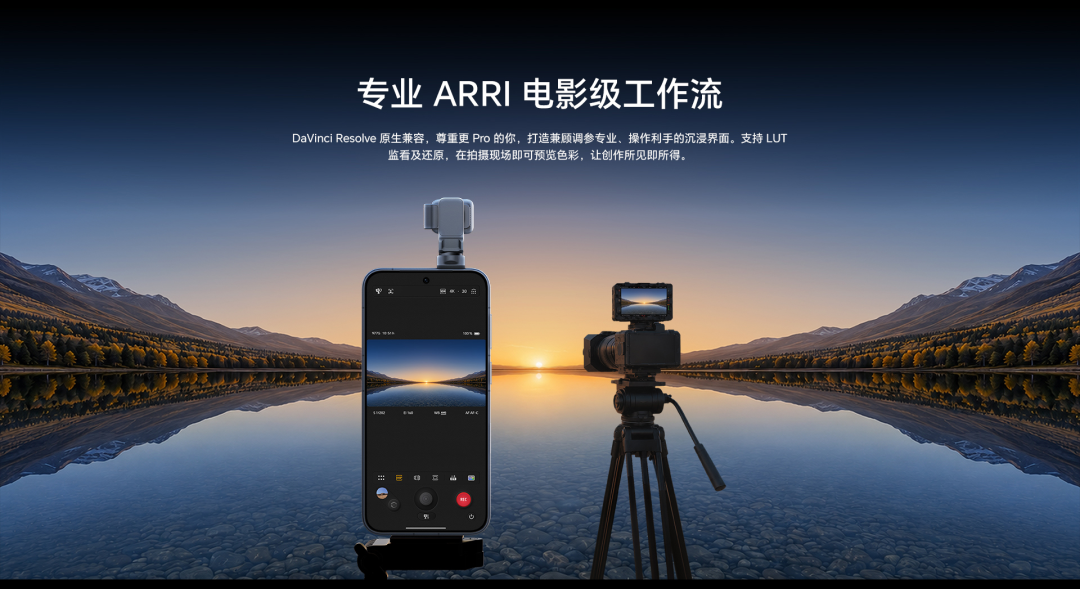
Solo filming is a proven need with clear willingness to pay. Creators demand tracking, stabilization, automatic composition, and repeated panning shots, often relying on external gimbals, tracking mounts, or additional photographers. The Robot Phone embeds three-axis mechanical stabilization and person tracking directly into the device, eliminating at least one accessory. Honor also collaborates technically with ARRI, aiming to bring professional imaging calibration and panning language to smartphones.
This value chain is shorter than 'a phone that keeps you company': capabilities can be instantly verified through video; user benefit measured by final footage and workflow efficiency. Can it track in low light? Re-identify after brief occlusion? Maintain stability while running? Avoid distortion during lens rotation? Clear answers emerge within minutes.
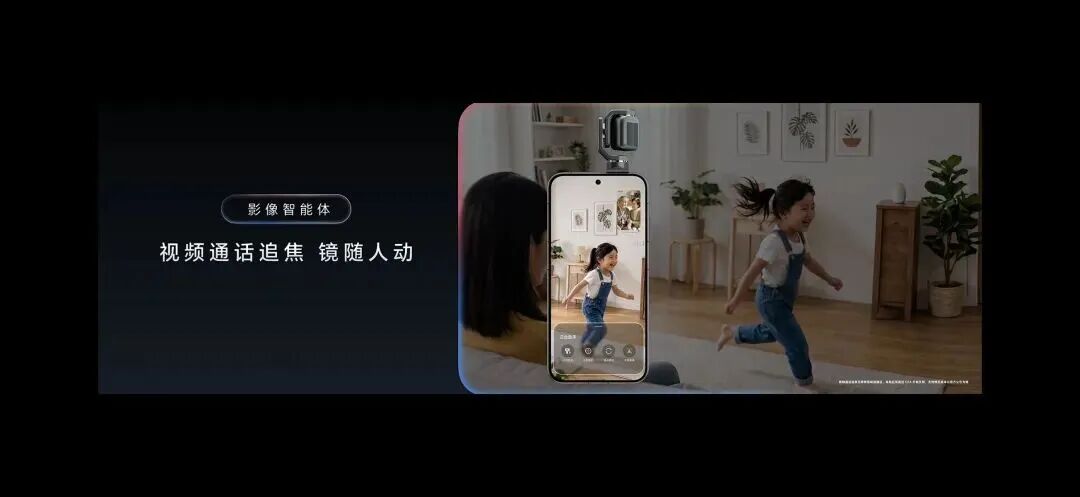
Video calls might be the second frontier. Fixed phones force users to adjust to the lens; a turning camera enables natural movement in kitchens, offices, or family spaces. Here, competitors aren’t other robotic phones but tablets, smart displays, and external gimbals with person-centering features. The Robot Phone must prove that mechanical perspective shifts feel more organic than digital cropping while justifying its extra weight and price.
As for nodding, shaking, or swaying to music, these may enhance emotional expression but lack proven unit economics. A cute action doesn’t guarantee sustained user demand. The hardware industry has repeatedly shown that personalized launch moments spread easily but rarely translate to high-frequency use.
The Hidden Costs of a Mechanical Skeleton
Mechanical structures aren’t free in smartphones.
Weighing 248 grams and measuring 9.59mm thick, the Robot Phone remains portable but teeters on the edge of user sensitivity regarding weight and bulk. The gimbal consumes internal space, adding motors, cables, structural components, and controllers, while introducing risks like drops, dust, wear, noise, and repairs. The 7060mAh battery ensures endurance but cannot automatically quantify power consumption during prolonged tracking.
For ordinary phones, a camera failure might only disrupt photography; for the Robot Phone, a stuck gimbal could compromise structural safety and daily usability. The industry must evaluate not just lab-tested lifespan figures but failure modes after dust exposure, cold temperatures, drops, pocket squeezes, and child misuse. So-called 'robot-grade motion control' must ultimately deliver smartphone-grade reliability: hundreds of daily start-stops over two to three years, with actions remaining precise and quiet.
Software equally determines whether a product evolves from a feature into a platform. Can third-party video apps invoke person tracking? Can developers define custom actions, or are they limited to Honor’s built-in scenarios? When the system agent decides to turn toward someone, can users preview, block, or undo it? If interfaces remain closed, the Robot Phone resembles a high-end imaging flagship with an advanced gimbal; if open, it could spawn a new app ecosystem.
Furthermore, when cameras can turn, privacy alerts must follow. Traditional smartphone filming usually involves holding up the device, making the intent relatively obvious. Smart glasses have sparked controversy precisely because lenses hide in everyday forms, making it hard for bystanders to discern recording status. On August 12, the German digital rights group HateAid filed a criminal complaint against Ray-Ban Meta smart glasses with prosecutors; the German Federal Network Agency simultaneously emphasized that smart glasses aren’t universally banned as long as recording status is clearly visible via optical signals.
The Robot Phone isn’t glasses, but it actively pivots toward people. Bystanders need clarity: is it merely framing, performing visual understanding, or already recording and uploading? Whether indicator lights remain always visible, can be disabled by apps, and whether data is processed locally or in the cloud shouldn’t be buried in privacy policies.
Interestingly, another AI hardware category is actively reducing perception. The voice ring Stream adopts a 'press-to-listen, release-to-send' approach instead of continuous recording, sacrificing passive memory for clearer control boundaries.
Together, these approaches illustrate: more perception capabilities aren’t always better. Next-gen terminals must simultaneously design 'what machines can perceive' and 'whether people around know.'
An Exploratory Product or the Start of a Next-Gen Interface?
On the same day, Google announced the Pixel 11 series. Tensor G6, auto-shooting, real-time media translation, teleprompters, and a more proactive Gemini further embed AI into phones, watches, and item trackers. The Pixel 11 starts at $899, while the Pixel 11 Pro Fold reaches $1,900.
Google’s strategy enhances existing hardware with stronger systemic intelligence; Honor adds a new physical degree of freedom to smartphones. The former relies on models, accounts, services, and cross-device data; the latter must simultaneously tackle mechanical engineering, motion control, and software ecosystems. The two aren’t mutually exclusive. Mature AI terminals might need both Google-style systemic capabilities and Honor-style new actuators. But their commercial rhythms differ: software features can update older devices, while mechanical structures demand new purchases. The Robot Phone must thus offer irreplaceable experiences to justify its 9,999-yuan starting price beyond novelty for a moving lens.
After August 18, Honor faces a rigorous real-world testing checklist: heat and battery drain after 30 minutes of continuous tracking; loss rates in solo, multi-person, occluded, backlit, and low-light scenarios; comparisons between mechanical and electronic stabilization; drop protection and retraction mechanisms; third-party app permissions; recording status alerts; and whether the phone remains usable if the gimbal malfunctions.
In the short term, the Robot Phone resembles a high-priced, imaging-focused, highly publicized exploratory flagship. Its price, weight, and mechanical complexity don’t support hasty conclusions about 'fully robotic smartphones.' The market might also prove that external gimbals are cheaper, digital cropping sufficient, and most users unwilling to pay for mechanical movements.
However, the questions it raises are genuine. As model capabilities plateau, AI terminal differentiation cannot forever rely on button arrangements on the same screen. New sensors, actuators, and wearing positions will determine what models 'see,' what they can 'do,' and how people perceive their presence.
Honor hasn’t equipped smartphones with a full body—just a turning 'neck.' Precisely because it’s limited, we can more clearly test: whether active vision creates high-frequency value, whether mechanical actions can become an interaction language, and whether users will pay for an AI terminal that truly alters its physical form.
The next smartphone upgrade might not be another model gateway. It could be the first action—and bearing the engineering and social consequences of that action.
END
-
Hot Topic | SpaceX Partners with NVIDIA AI Architecture, Paving the Way for New Growth in Space Computing
-
Bilibili's Capital Narrative: Meeting Market Expectations but Losing Its Own Identity
-
![]()
China Mobile Reports 538 Billion Yuan in Revenue for First Half of the Year, with 5G Subscribers Surpassing 687 Million
-
![]()
Domestic Wi-Fi Chips Usher in Prime Era
-
![]()
HONOR Unveils Robot Phone, Yet AI-Driven Smartphones Still Await Market Breakthrough
-
![]()
Jiemei Technology Splurges 915 Million Yuan, Making a Bold Move into Optical Ultra-Precision Equipment
-
![]()
Intensifying Investment in Advanced Coating Equipment: Landun Optoelectronics Aims to Secure Majority Stake in Lanchuang Technology
-
![]()
Honor’s Ambition Demands More Than a Gimbal-Equipped Phone