Stock Price Surges 20.18% to Hit Record High! Lenovo Finally Becomes an AI Company: AI Revenue Soars to 63.4 Billion Yuan
 08/14 2026
 463
463
At noon on August 13, Lenovo delivered its strongest-ever financial results.
In the first-quarter financial report for FY 2026/27, Lenovo's revenue reached 183.4 billion yuan, up 43% year-on-year, setting a new record for the first fiscal quarter. Adjusted net profit was $1.075 billion (over 7.3 billion yuan), a 176% year-on-year increase, surpassing the $1 billion mark for the first time, with the adjusted net profit margin nearly doubling to 4%.
AI-related revenue reached 63.4 billion yuan, a 60% year-on-year increase, accounting for about 35% of total revenue. AI service revenue surged by 141% year-on-year, with both revenue and profit setting new records.
Judging from these results, Lenovo has successfully completed its AI transformation.
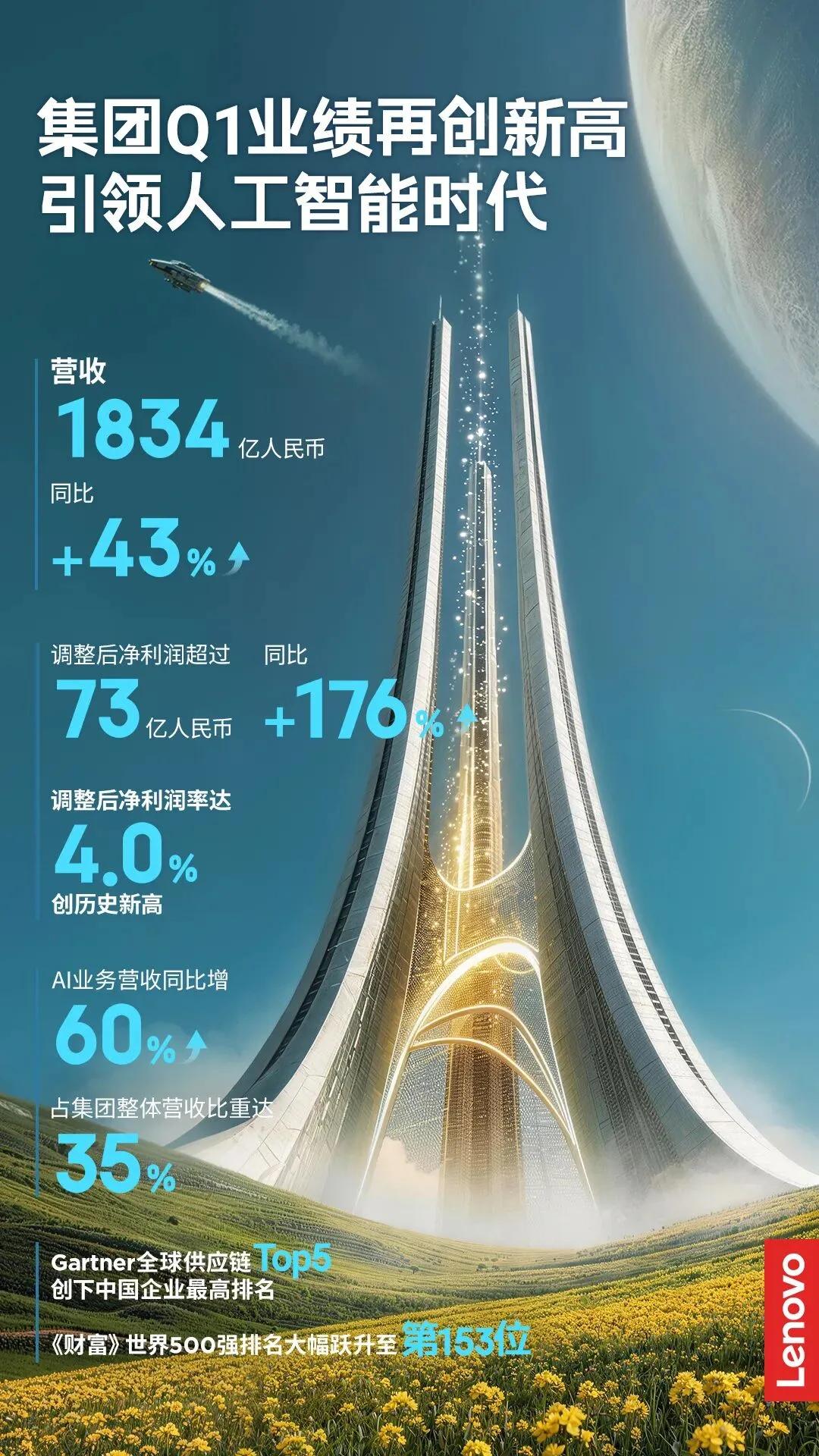
Image Source: Lenovo Group
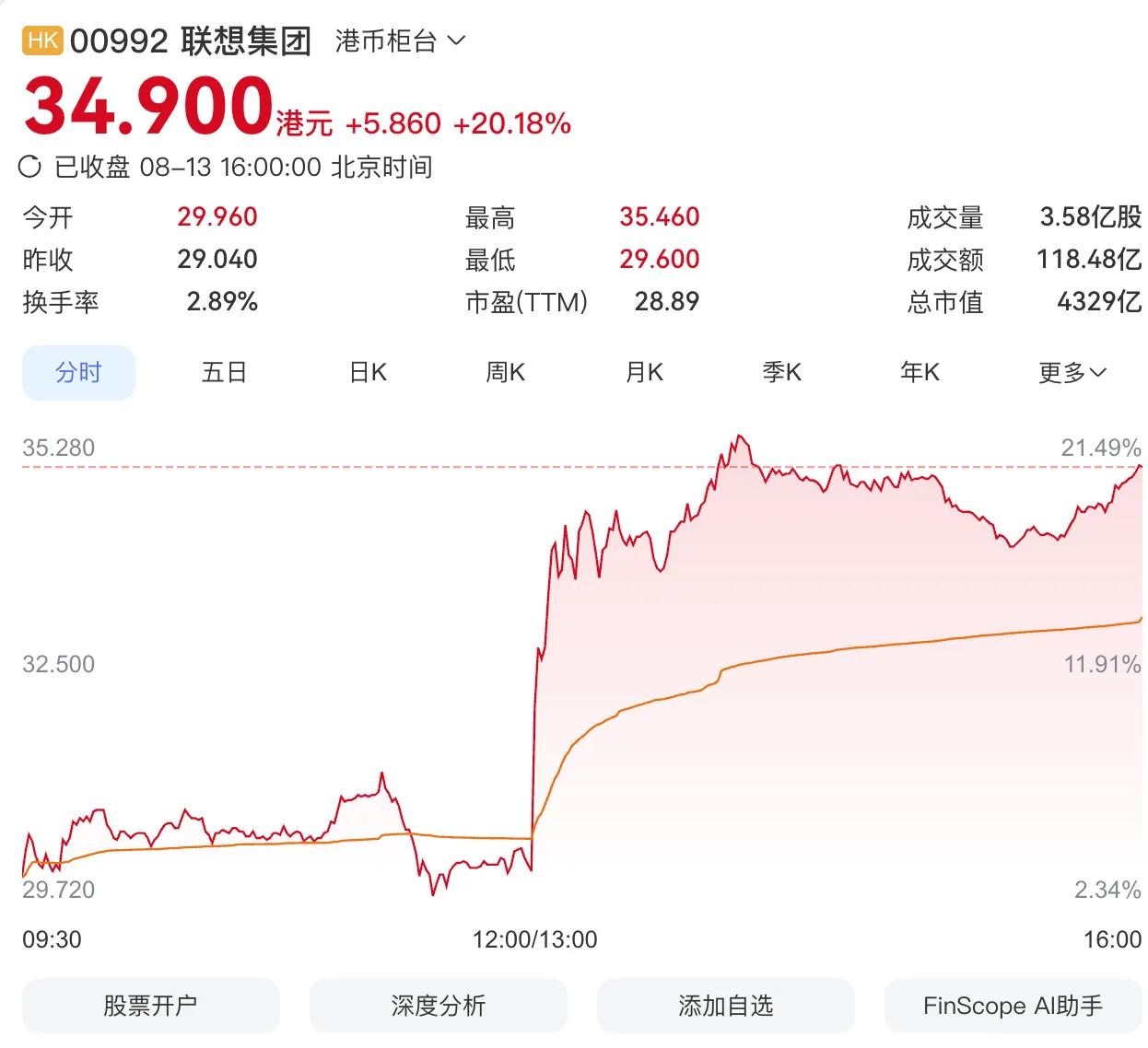
Buoyed by strong performance, Lenovo's stock price soared 20.14% at close, with a total market cap of 432.9 billion Hong Kong dollars, hitting a record high. In addition to Lenovo's stock surge, U.S.-listed stocks such as HP (and HPE Huiyu Technology), Dell, and other data center and AI PC concept stocks also rallied in pre-market trading.
Over the past 20 years, Lenovo has been best known for selling computers, a business that has been written off for nearly a decade. Smartphones have taken over a significant portion of the computer market, and with rising prices for chips, graphics cards, and storage in recent years, most people are content with computers that simply work, without pursuing the latest models.
As a result, PC shipments have declined year after year. Omdia data shows that PC shipments in mainland China fell by 2% in the first quarter of 2026, with a full-year decline of 14% expected.
Although Lenovo is the world's largest computer seller by volume and has consistently held the top market share, the title of "champion of a sunset industry" still means earning hard-earned money without commanding high valuations. However, with Lenovo's recent push into AI, it is no longer accurate to describe Lenovo as just a computer seller.
Official data shows that in the first fiscal quarter, Lenovo Group's AI-related business revenue grew by 60% year-on-year to reach 63.4 billion yuan, a record high, accounting for about 35% of the group's total revenue. AI service revenue surged by 141% year-on-year.
Clearly, Lenovo has fully completed its AI transformation. However, completing AI transformation is not Lenovo's absolute advantage. Lenovo's strength lies in the fact that while it has excelled in AI, it has not neglected its hardware business.
When looking at the entire Hong Kong stock market, there are few companies like Lenovo. In the U.S., there are pure AI computing power companies like NVIDIA and Supermicro. In the Hong Kong market, Lenovo stands out as one of the few hardware companies that dominates both AI servers and PCs, highlighting its rarity.
Servers represent the cloud, while PCs represent the edge. Lenovo's advantage is that it has a presence in both areas, serving both B2B and B2C markets. The current AI wave requires both cloud and edge capabilities, as AI does not just run in the cloud but also on everyone's computers.
From a data perspective, while overall PC shipments are declining, Lenovo has increased its market share to a record high of 24.2%, expanding its lead over the second-place competitor for ten consecutive quarters. This can be attributed to Lenovo's other main focus: AIPC.
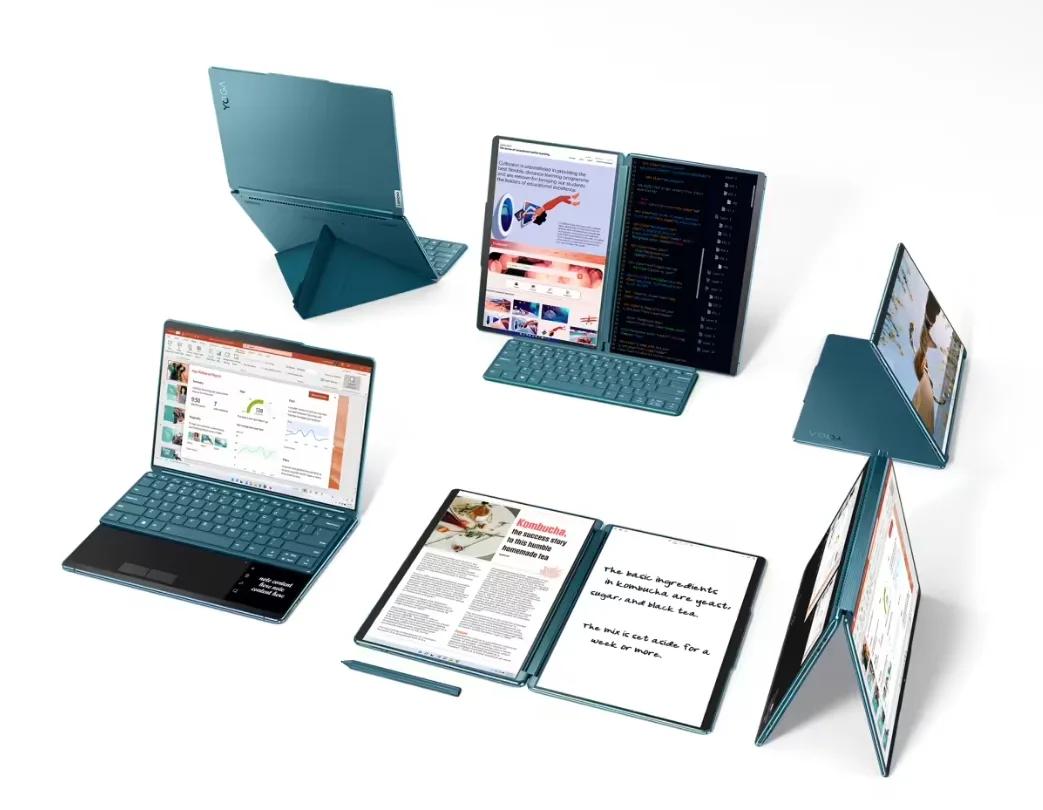
This year is seen as the first year when AI PC penetration will exceed 50%, with research firms estimating global AI PC shipments to surpass 140 million units. Lenovo has already integrated AI capabilities into its major product lines, with commercial models like the ThinkPad X1 Carbon AI Yuanqi Edition and consumer models like the YOGA Air and Xiaoxin Pro 14 all featuring AI. The pre-installed Tianxi AI agent can run large models locally, even without an internet connection.
As of January this year, Lenovo has sold over 3 million AI PCs, accounting for about 30% of the Windows AI PC market. For every three AI PCs sold, one is a Lenovo.
On the other hand, Lenovo's service business has maintained double-digit growth for 21 consecutive quarters, with AI-related service revenue surging by 141%. In addition to remaining the world's second-largest supplier of x86 servers, Lenovo's AI server order backlog has more than tripled from the previous quarter, exceeding 360 billion yuan.
Lenovo is also accelerating the deployment of next-generation AI infrastructure products, advancing the GB300 platform deployment and the development of Vera Rubin 200 whole-cabinet solutions. Its Neptune liquid cooling technology continues to lead the industry, fully supporting direct liquid cooling deployment for next-generation platforms like GB300 NVL72.
With rising server profits and stable high margins in services, the overall profitability of the group has reached a new level compared to a few years ago.
Looking back at Lenovo's efforts in AI over the past few years, it becomes clear that its current success cannot be simply attributed to riding the AI wave.
Lenovo recognized the importance of AI early on. In 2017, Yang Yuanqing stated at a conference that Lenovo was betting its future on AI. At that time, Lenovo introduced a "three-wave" strategy: the first wave was to defend its PC business, the second wave was to expand into smartphones and data centers, and the third wave was to bet on natural language interaction and artificial intelligence.
To demonstrate its commitment, Yang Yuanqing even warned the market in advance that upcoming financial results might not look good, as investments in these areas could have been avoided to present better numbers, but the company chose to change without hesitation.
Subsequent adjustments have consistently aligned with this direction. In 2019, the "three-wave" strategy was upgraded to the "three S" strategy, focusing on smart IoT, smart infrastructure, and industry intelligence. In 2023, Lenovo proposed "Hybrid AI," connecting personal, enterprise, and public intelligence layers, with sensitive data processed locally and compute-intensive tasks offloaded to the cloud.
Most recently, Yang Yuanqing announced Lenovo's transformation into an "AI-native company," stating that AI is not just an add-on but a fundamental rethinking of how a company should be built and operated.
Fortunately, after years of strategic planning, Lenovo has finally entered the golden age of AI.

Image Source: Lenovo Group
From late 2024 to 2025, as the hype around large model training subsides and inference demand explodes, Lenovo's early layout (layout) in AI infrastructure proves advantageous. Its server business has been helping clients build computing power foundations, and as the inference era arrives, this ecosystem is well-positioned to capitalize.
Today, Lenovo can deploy AI supercomputing systems with tens of thousands of GPUs running stably, featuring its sixth-generation self-developed "Neptune" liquid cooling technology that covers everything from chips to power supplies with minimal mechanical failures. Leveraging these capabilities and its status as one of the few local giants with global supply chains and cross-border compliance, Lenovo became one of NVIDIA's global launch partners for the latest Vera Rubin platform, delivering all-liquid-cooled, whole-cabinet-grade AI systems.
Interestingly, the AI server business was once an unprofitable segment for Lenovo Group, only turning a profit for the first time last fiscal quarter. This quarter, Lenovo's AI server order backlog exceeded 360 billion yuan, more than doubling from the previous quarter, with customers spanning three categories: hyperscale cloud providers, AI cloud companies, and traditional enterprises. Revenue from two of these customer segments nearly doubled.
Lenovo's accumulated strengths in AI are finally beginning to pay off.
From a positioning perspective, Lenovo is consciously becoming a "shovel seller." Indeed, selling shovels is currently the most profitable segment in the AI world. NVIDIA, the largest shovel seller, achieved a 75% gross margin and a 55.85% net profit margin in FY 2025.
However, unlike NVIDIA, Lenovo sells shovels to both enterprises and individuals—AI servers for enterprises and AIPC for consumers.
A similar positioning is shared by Dell. Although Dell's PC business lags behind Lenovo's, its AI business growth is undeniable.
Dell's Q1 FY 2027 financial results showed revenue and profit significantly exceeding market expectations, with revenue reaching $43.84 billion, an 88% year-on-year increase, and net profit attributable to shareholders reaching $3.438 billion, a 256% year-on-year increase.
Among these, AI server business revenue surged 757% year-on-year to $16.1 billion, with new AI-related orders reaching $24.4 billion in the quarter and AI server backlog hitting a record $51.3 billion.
Based on strong order momentum, Dell raised its FY 2027 AI server revenue forecast to $60 billion, a 144% year-on-year increase. Dell COO Jeff Clarke even publicly stated, "The AI opportunity shows no signs of slowing down."
Dell's AI server business boom validates that this market's ceiling is far from being reached. When a company's AI server revenue can grow 757% in a year, it indicates that market demand is far from saturated.
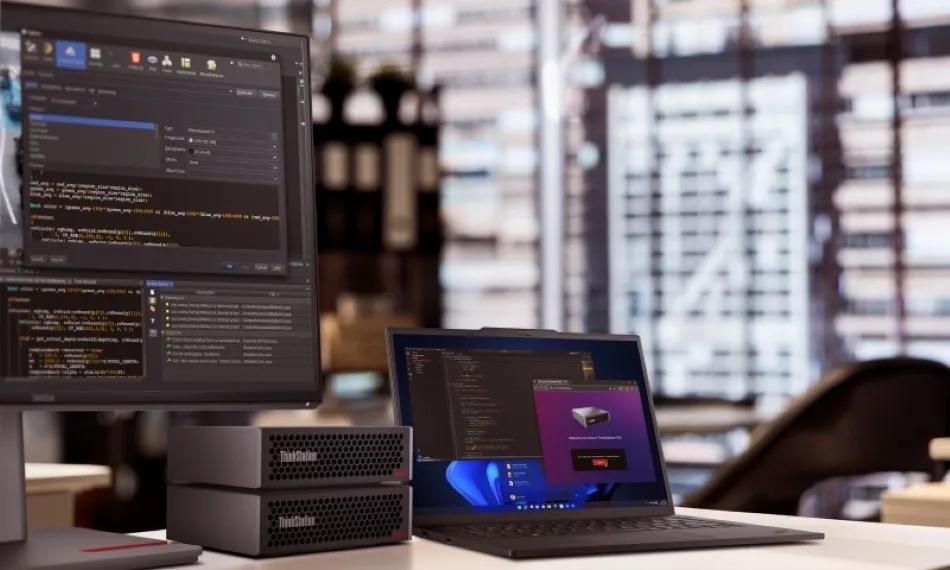
Image Source: Lenovo Group
In terms of scale, Lenovo ISG (Infrastructure Solutions Group) generated 57.9 billion yuan (~$8.5 billion) in revenue this quarter, still trailing Dell's $16.1 billion in AI server revenue. However, Lenovo's 98% year-on-year growth and 360 billion yuan in order backlog indicate rapid catch-up.
Nevertheless, becoming a "shovel seller" is no easy feat. There's the ideal scenario, and then there's reality.
On the ideal side, NVIDIA has proven that in the AI supply chain, shovel sellers can achieve astronomical profit margins. Lenovo aspires to move in this direction, and while it's still far from NVIDIA, it has crossed from losses into profitability with amazing (astonishing) speed. If this trend continues, ISG could become one of Lenovo's most profitable divisions.
On the reality side, Lenovo is not NVIDIA. NVIDIA sells the ultimate shovel—GPU chips—with extremely high technical barriers and virtually no global alternatives. Dell and Lenovo sell server systems, which are essentially system integration businesses with inherent profit margin ceilings. A 9.1% operating margin is already respectable in the server industry, but breaking through this ceiling will become exponentially more difficult.
Moreover, the AI server market is becoming crowded. Besides Dell, HPE, Supermicro, and Inspur Information are all ramping up production, not to mention local players like Huawei and New H3C in China.
The concern isn't a lack of shovels but that everyone is making them. As shovel supply increases, prices will be driven down.
In conclusion, for Lenovo, becoming an "AI shovel seller" is far from the finish line. NVIDIA became the world's most valuable company by selling irreplaceable shovels. Lenovo must prove that its shovels—whether AI servers or AI PCs—are irreplaceable, or at least difficult to replace.
-
![]()
Pix Exclusive丨EXEED Adjusts Reporting Line Again, Chery's 'Overseas Leader' Zhang Guibing Takes Over from Li Xueyong
-
![]()
Pinduoduo Excels in Marketing! Is ‘Fastest Arrival by Tomorrow’ Just a Play on Words?
-
![]()
Integrating DJI Pocket Tech into a Phone: Who Is Honor’s Target Audience?
-
![]()
Xiaomi’s New Patent for a Retractable Car Emblem Sparks Speculation: Is Lei Jun Launching a 'Mi-eslaus'?
-
![]()
Final Verdict: Chinese Automobiles Grow More Dependent on Overseas Markets
-
![]()
Stock Price Surges 20.18% to Hit Record High! Lenovo Finally Becomes an AI Company: AI Revenue Soars to 63.4 Billion Yuan
-
![]()
Starting at 3299 yuan! DJI Osmo 360II Released: Not Just 8K Upgrade, But Also 'Shoot and Share Instantly'
-
![]()
VOYAH's Lu Fang Clarifies Misconceptions on 'Rapidly Developed Cars': The Key Lies in Verification Completeness, Not Speed