Pinduoduo Excels in Marketing! Is ‘Fastest Arrival by Tomorrow’ Just a Play on Words?
 08/14 2026
 331
331
Pinduoduo is pulling out all the stops! The intense competition among e-commerce platforms is set to escalate once again.
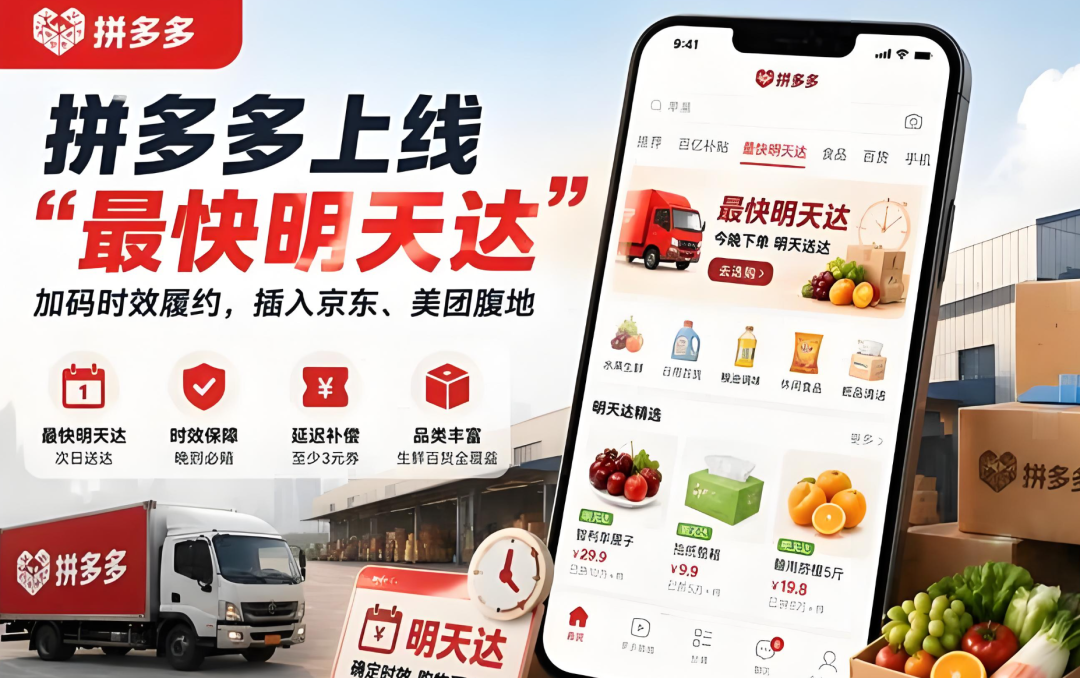
On August 10th, Pinduoduo introduced a prominent ‘Fastest Arrival by Tomorrow’ section on its app homepage, featuring high-frequency essentials such as fresh produce and daily necessities.
Previously, ‘Arrival by Tomorrow’ was mainly displayed dynamically on product detail pages and search results. Its new prominent placement on the homepage highlights its importance. This move is not just a product update but a clear signal from Pinduoduo to the market: the platform, which once relied on low prices to lower user decision thresholds, now aims to shorten waiting times by providing more certainty.
However, the name might be a bit misleading. ‘Fastest Arrival by Tomorrow’ does not guarantee that all products will arrive the next day, nor does it mean that Pinduoduo has established its own logistics network.
According to tests by a reporter from Beijing Business Today, some products indicate ‘Arrival the Day After Tomorrow.’ If a product fails to arrive as promised after a successful group purchase, consumers are entitled to at least a 3 RMB voucher with no minimum purchase requirement, except for special orders, force majeure, and abnormal orders. Some merchants noted that their ‘Arrival the Day After Tomorrow’ orders are handled by SF Express.
Thus, more accurately, this is a time-sensitive product zone offering ‘next-day and over-two-day delivery options,’ representing a fulfillment upgrade that leverages shared warehouses and socialized express delivery services.


How Does Pinduoduo Compress Three to Five Days into One or Two?
The secret to faster delivery often lies not in how fast delivery vehicles travel, but in how close products are to consumers.
In January this year, Pinduoduo partnered with large warehousing and distribution service providers to launch shared warehouse services. These services offer integrated capabilities including warehousing, picking, packing, and delivery. Merchants no longer need to establish warehouses nationwide and can instead pre-position high-frequency, standardized, and relatively stable-selling products in partner warehouses. After consumers place orders, the system ships from the nearest warehouse, with third-party logistics like SF Express handling trunk and last-mile delivery.
This model hinges on three key aspects.
First is pre-positioning goods. Previously, merchants in Yiwu would ship to Northeast or Northwest China only after receiving orders, with time primarily spent on cross-regional transportation. Now, products are pre-stocked in regional warehouses, enabling direct local dispatch upon order placement.
Second is algorithmic selection. Not all products are suitable for next-day delivery. The platform must determine which products display ‘Arrival by Tomorrow’ or ‘Arrival the Day After Tomorrow’ based on inventory levels, sales forecasts, warehouse distances, and carrier capabilities.
Third is responsibility allocation. Merchants handle stocking, warehousing and distribution enterprises manage in-warehouse fulfillment, express companies handle transportation, and the platform oversees rules, traffic, and compensation mechanisms. This allows Pinduoduo to achieve timely delivery capabilities without replicating JD.com's years of heavy investment in logistics infrastructure.
The trade-offs are evident. The more participants in the chain, the harder it is to control service quality. Delays may stem from inaccurate merchant inventory, warehouse backlogs, trunk line delays, or last-mile delivery issues, yet consumers hold Pinduoduo accountable.
Why Now?
This year has been tumultuous for Pinduoduo, with constant negative publicity.
In January, its operating entity was fined 100,000 RMB for failing to report tax-related information as required and was reported to have clashed physically with regulatory authorities, leading to a hundred-person investigation team.
In April, the State Administration for Market Regulation imposed fines totaling 3.597 billion RMB, with Pinduoduo alone fined 1.522 billion RMB—a record for food safety fines on e-commerce platforms. The penalty wording was rare, accusing the platform of ‘unreasonably refusing to provide materials’ and ‘using violence and soft resistance to obstruct regulatory enforcement,’ and ordered a nine-month suspension on new cake store approvals.
In June, the Beijing Municipal Market Supervision Bureau summoned Pinduoduo again, citing its ‘billion-dollar subsidy’ program's failure to provide proof of actual investment amounts and unilateral exemption of platform legal responsibilities in activity rules. That same month, Decathlon responded to reports of counterfeit goods sold by numerous unofficial stores on the platform, with regulatory authorities launching an investigation. Meanwhile, Pinduoduo's overseas business faced significant trouble, with its international shopping platform Temu heavily fined by the EU.
In July, the official Xufu Ji flagship store was forced to close after massive malicious orders and ‘refund-only’ attacks, reflecting long-simmering merchant frustrations with ‘refund-only’ rules.
In August, bullfrogs sold on the platform tested positive for excessive antibiotics, reigniting food safety concerns. Complaints on platforms like Heimao Tousu (Black Cat Complaints) about ‘products not matching descriptions’ and ‘personal information leaks’ persisted. Starting in August, Pinduoduo adjusted its ‘refund-only’ rules, providing merchants a 36-hour negotiation window—a response to long-standing controversies.
Meanwhile, secondary market performance added pressure.
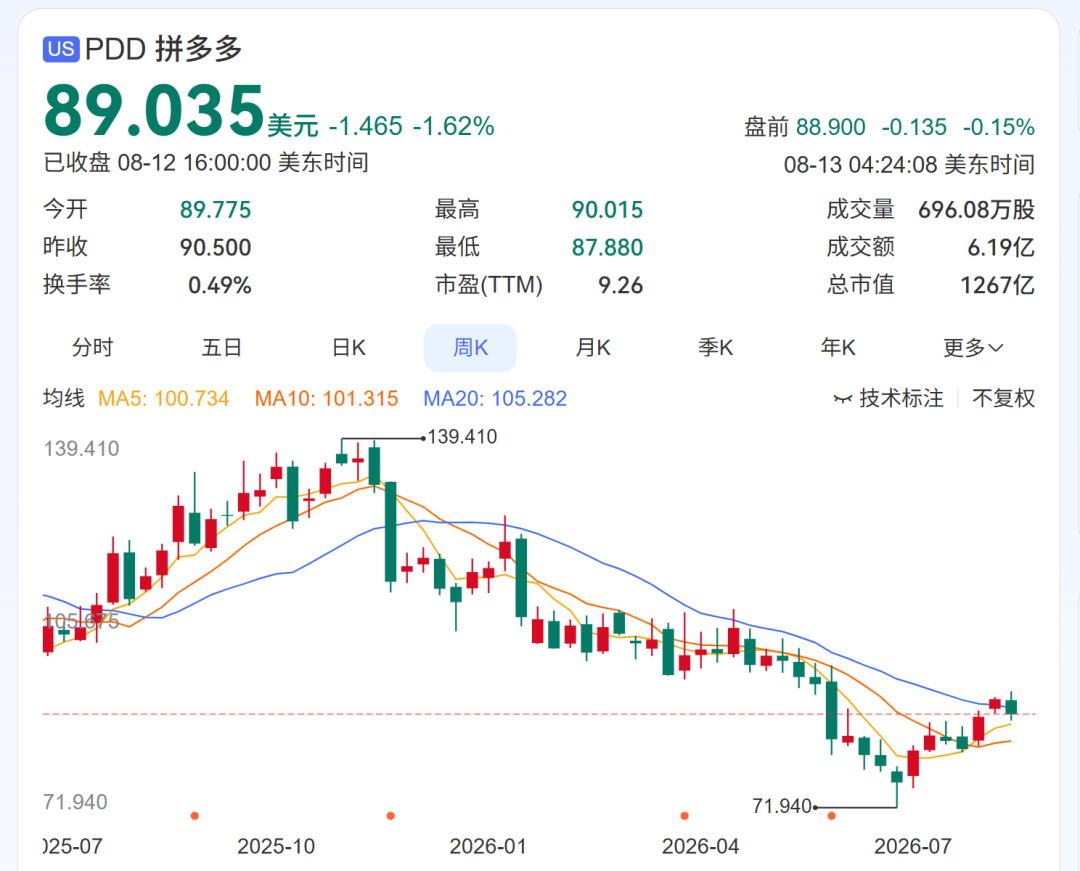
Facing a complex competitive landscape, Pinduoduo hopes this business segment will enhance its e-commerce competitiveness and set higher expectations for capital markets.
On the surface, Pinduoduo is chasing logistics speed. Deeper down, it is vying for user shopping habits.
Traditional e-commerce excels in ‘cheap, can wait’; instant retail thrives on ‘urgent, slightly more expensive.’ Pinduoduo is not attempting 30-minute delivery but positioning itself in between, covering planned restocking with ‘order tonight, receive tomorrow or the day after.’
Tissues, milk, fruits, snacks, and maternal and infant products do not necessarily need 30-minute delivery, but consumers are increasingly unwilling to wait three to four days. For such products, low prices plus next-day delivery may offer better value than pursuing minute-level speed alone.
The author analyzes at least four business motivations behind this.
First, to increase repurchase frequency. Apparel, home appliances, and digital products have limited purchase frequencies, whereas daily necessities and fresh produce can convert monthly users into weekly ones. The homepage entry essentially consolidates high-frequency demands.
Second, to address experience gaps. Pinduoduo has a strong price perception but logistics efficiency has not been its strongest tag. As e-commerce competition enters a mature phase, low prices only attract initial clicks; stable fulfillment secures repeat orders.
Third, to offset competitive pressures. A report by the Chinese Academy of International Trade and Economic Cooperation revealed that China's instant retail market reached 781 billion RMB in 2024, up 20.15% year-on-year, and is expected to exceed 1 trillion RMB by 2026. Meituan, JD.com, and Taobao are all doubling down on high-frequency retail, making it impossible for Pinduoduo to cede the fastest-growing consumer segment to rivals.
Fourth, to find landing points for supply chain investments. Pinduoduo's management repeatedly emphasized in its 2025 and Q1 2026 earnings reports that supply chain investments would become a core strategic priority. ‘Fastest Arrival by Tomorrow’ represents the translation of supply chain investments from financial reporting language into user experience.
Pinduoduo is not suddenly becoming a logistics company but realizing that merely allocating traffic is insufficient. The platform must delve deeper into inventory placement, warehouse scheduling, and fulfillment standards to continuously improve transaction efficiency.
Behind the Earnings Reports
In 2025, Pinduoduo Group reported revenue of 431.85 billion RMB, up 10% year-on-year; transaction service revenue reached 214.06 billion RMB, up 9%. Meanwhile, operating profit fell 13% to 94.62 billion RMB, net profit attributable to parents declined 12% to 99.36 billion RMB, and operating costs surged 23%—faster than revenue growth. The company attributed the cost increase to rising fulfillment fees, bandwidth and server expenses, and payment processing fees.
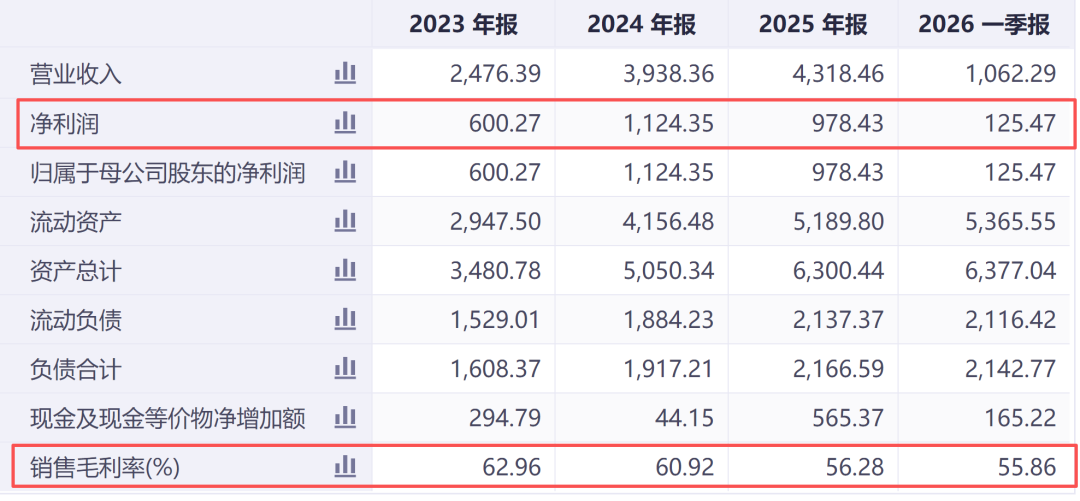
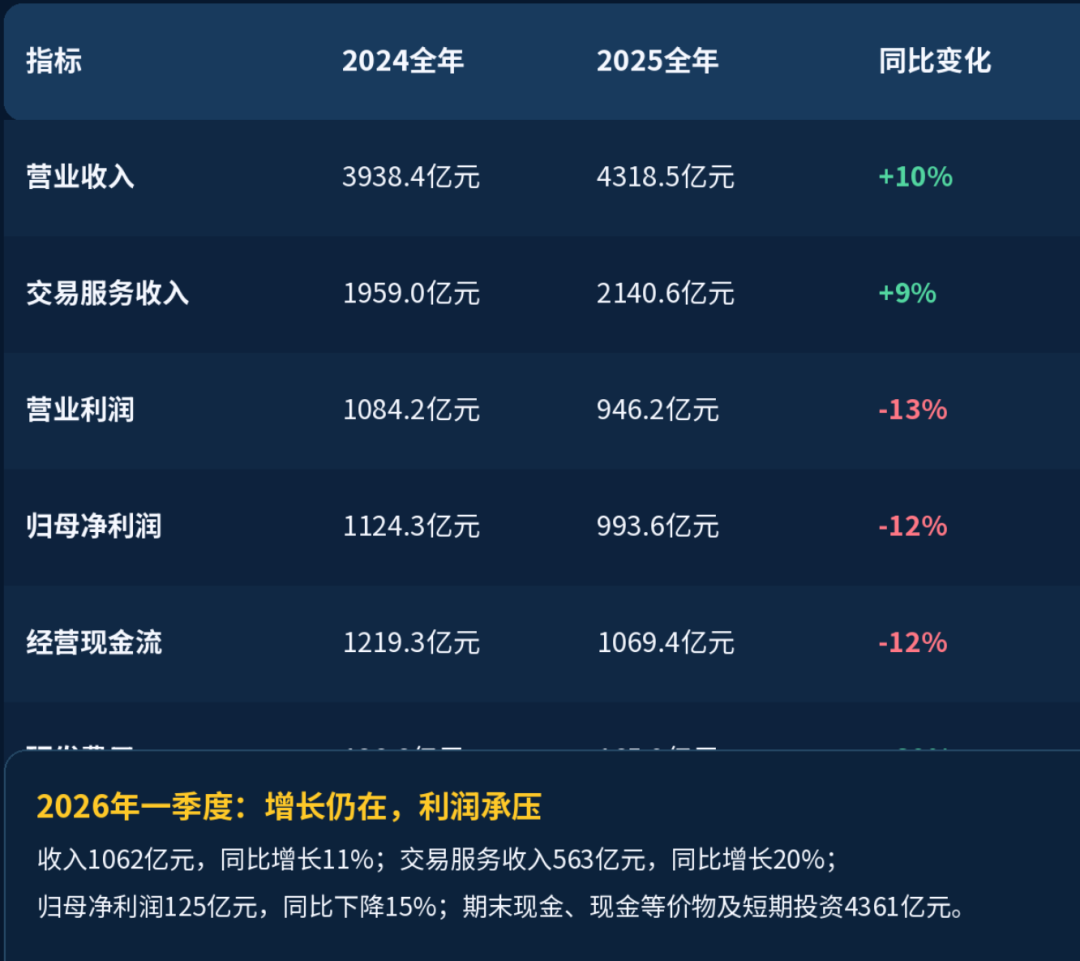
In Q1 2026, group revenue hit 106.2 billion RMB, up 11% year-on-year, with transaction service revenue reaching 56.3 billion RMB, up 20%. Operating profit grew 22%, but net profit attributable to parents dropped 15% to 12.5 billion RMB. Cash, cash equivalents, and short-term investments reached 436.1 billion RMB by period-end.
These figures demonstrate Pinduoduo's ability to wage this battle. Over 430 billion RMB in cash, equivalents, and short-term investments provide ample buffers for warehousing subsidies, merchant support, technological systems, and compensation mechanisms.
However, this battle is costly. In 2025, revenue grew 10% while operating costs surged 23%, straining profits. Rapid expansion of next-day delivery will add warehousing, allocation, express, after-sales, and overtime compensation costs. Scale does not automatically equate to profit growth; only sufficiently high order density and rapid inventory turnover can lower unit fulfillment costs.
It should be noted that Pinduoduo Group's disclosed data includes both domestic Pinduoduo operations and cross-border business Temu, without separate disclosures for ‘Fastest Arrival by Tomorrow’ order volumes, revenue, and costs. Thus, the group's overall growth cannot directly prove the business's success.
Strengths Are Prominent, Weaknesses Are Not Hidden
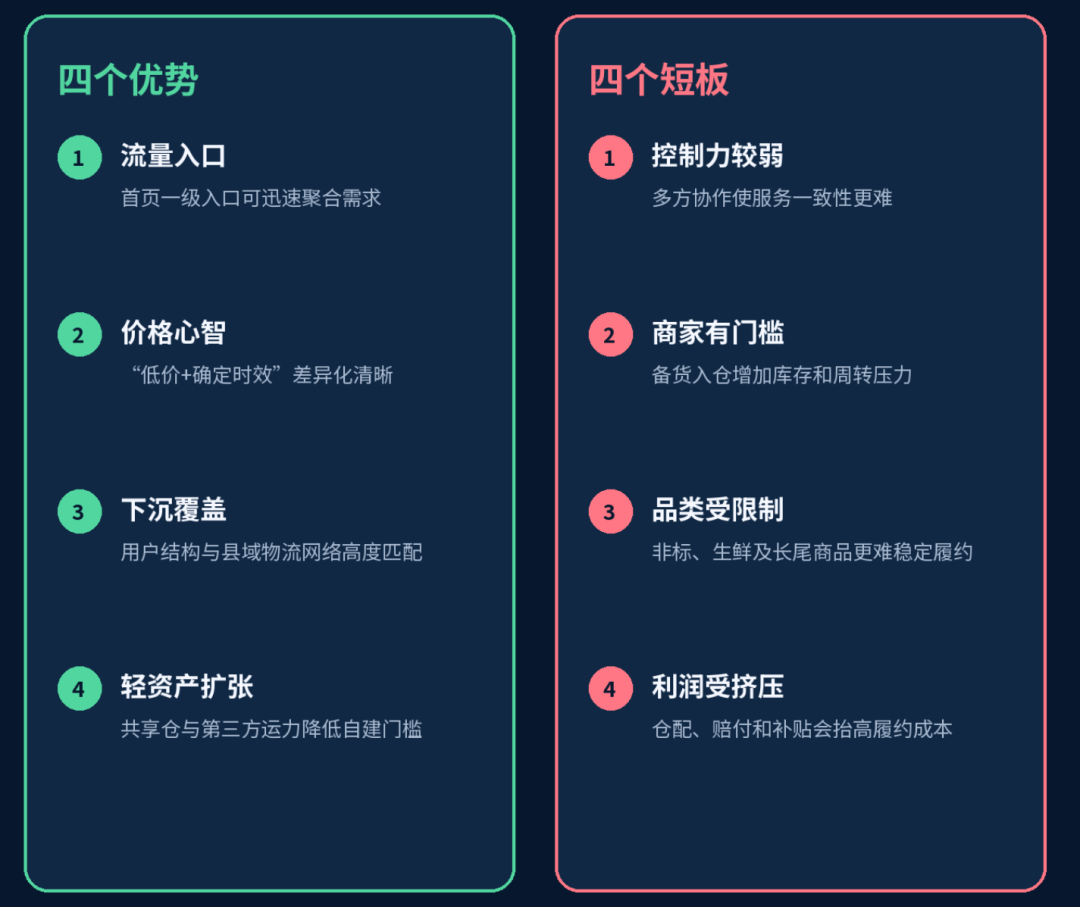
Pinduoduo's greatest strength lies in its existing user base. It already boasts strong low-price perception, a vast merchant supply, and extensive lower-tier market users. The combination of ‘low prices and guaranteed delivery times’ could rapidly amplify high-frequency consumption.
The asset-light model is also a practical choice. National Post Bureau data shows that China's express delivery volume reached 198.95 billion pieces in 2025, up 13.6% year-on-year, with express enterprises operating tens of thousands of outlets and 430,000 village-level logistics service stations. China already has a socialized logistics network covering urban and rural areas, eliminating the need for Pinduoduo to replicate all assets.
Yet its weaknesses are equally notable.
Fulfillment control lags behind self-operated systems. Shared warehouses and third-party express services enable rapid expansion but introduce regional and carrier-specific experience fluctuations.
Delivery capacity remains out of its hands. SF Express, however excellent, belongs to others. Pinduoduo has minimal control over last-mile delivery. Can SF's capacity keep pace with surging order volumes? Can delivery experiences remain consistent? These remain unknowns.
Shared warehouses shift pressure to merchants. Pre-stocking for speed increases inventory occupation. Inaccurate sales forecasts lead to overstocking, cross-warehouse transfers, and returns, eroding profits. For merchants with low margins, a 3 RMB compensation represents more than just 3 RMB—it may compound warehousing fees, express fees, and traffic losses.
Category expansion has limits. Standardized products like tissues and snacks are easy to pre-position, but non-standard, long-tail, and high-perishability fresh produce demand greater forecasting and cold chain capabilities.
Merchant cooperation remains uncertain. Shared warehouse models require merchants to pre-stock goods, imposing capital occupation and inventory risks. Not all merchants, especially small and medium-sized sellers accustomed to ‘dropshipping,’ are willing to comply.
The word ‘fastest’ raises expectations. If the homepage emphasizes ‘Arrival by Tomorrow’ but most products arrive the day after or experiences vary by region, the marketing-driven clicks may backfire into disappointment. For time-sensitive businesses, underpromising and overdelivering often matters more than claiming to be the fastest.

The Final Verdict
This time around, Pinduoduo isn't attempting a ground-up reconstruction of Meituan's fleet of delivery riders, JD.com's extensive warehouses, or SF Express's sophisticated logistics network. Rather, it has opted for a strategy that resonates more deeply with its core strengths: harnessing its platform's traffic and sophisticated algorithms to efficiently organize orders, utilizing shared warehouses to minimize the distance between consumers and products, relying on a network of socialized courier services for order fulfillment, and setting clear user expectations through well-defined compensation rules.
This approach embodies a clever blend of pragmatism, yet it's far from a straightforward upgrade.
Historically, Pinduoduo has excelled at answering the question of whether identical products could be offered at lower prices. Now, it's shifting its focus to whether affordable products can also be delivered with greater speed and precision. The former was largely a function of scale and traffic, whereas the latter hinges on the discipline of the supply chain. Traffic can be redirected swiftly, but constructing a warehousing network, ensuring inventory accuracy, and building service credibility are tasks that can only be accomplished one order at a time, with meticulous attention to detail.
While the promise of 'fastest next-day delivery' may not immediately revolutionize the instant retail landscape—given that next-day and 30-minute delivery services cater to distinct consumer needs—it has the potential to redefine the minimum service standards expected from traditional e-commerce platforms. Once consumers become accustomed to receiving their orders within a day or two on a platform known for its low prices, the once-standard three-to-five-day delivery times will transition from being 'normal' to 'lagging behind the curve.'
What Pinduoduo is truly competing for extends beyond just food delivery orders; it's aiming to capture a share of consumers' household shopping lists. What it genuinely needs to enhance is not merely a one-day difference in delivery times but the long-standing issue of fulfillment reliability on its platform.
Should this model successfully strike a balance between low prices, merchant profitability, and consistent delivery times, it will serve as a vital piece of infrastructure for Pinduoduo's second phase of growth. However, if speed is merely leveraged as a marketing ploy through access, subsidies, and compensation, the associated costs will ultimately burden the platform and its merchants.
In the forthcoming phase of e-commerce competition, affordability will remain a critical factor, but it will no longer suffice as a standalone competitive advantage.
Only those platforms capable of delivering on price, quality, and reliable fulfillment simultaneously will secure the next order from users.
When low prices cease to be the sole competitive barrier, the 'help me Cut one knife (cut a price)' tactic will become obsolete, and service quality will emerge as the new key differentiator. Whether Pinduoduo can emerge victorious in this battle is a question we will continue to monitor with keen interest.
-
![]()
Pix Exclusive丨EXEED Adjusts Reporting Line Again, Chery's 'Overseas Leader' Zhang Guibing Takes Over from Li Xueyong
-
![]()
Pinduoduo Excels in Marketing! Is ‘Fastest Arrival by Tomorrow’ Just a Play on Words?
-
![]()
Integrating DJI Pocket Tech into a Phone: Who Is Honor’s Target Audience?
-
![]()
Xiaomi’s New Patent for a Retractable Car Emblem Sparks Speculation: Is Lei Jun Launching a 'Mi-eslaus'?
-
![]()
Final Verdict: Chinese Automobiles Grow More Dependent on Overseas Markets
-
![]()
Stock Price Surges 20.18% to Hit Record High! Lenovo Finally Becomes an AI Company: AI Revenue Soars to 63.4 Billion Yuan
-
![]()
Starting at 3299 yuan! DJI Osmo 360II Released: Not Just 8K Upgrade, But Also 'Shoot and Share Instantly'
-
![]()
VOYAH's Lu Fang Clarifies Misconceptions on 'Rapidly Developed Cars': The Key Lies in Verification Completeness, Not Speed