Breaking the Mold: LG, Haier, and Hisense Redefine Online and Offline Home Appliance Sales Strategies in India
 08/15 2026
 467
467
The Indian home appliance market is witnessing a clear divergence in sales channels.
Traditionally, home appliance companies have distributed identical products across various channels. Whether in shopping malls, appliance stores, e-commerce platforms, or brand-owned online stores, the same models were sold, with competition focusing solely on price, promotions, and service. However, this paradigm is shifting as consumers increasingly engage in price comparisons. If physical stores offer the same models as online platforms, brick-and-mortar retailers risk falling into a passive position.
Online platforms frequently launch promotions, while physical stores grapple with costs such as rent, labor, display models, warehousing, and after-sales service. When consumers use their phones to check online prices while browsing in physical stores, the profit margins of offline dealers can be significantly eroded.
Manufacturers, in fact, find themselves in a quandary. On one hand, they hope e-commerce will drive sales volume; on the other, they cannot overlook the sales networks and service capabilities that physical channels have built over the years, especially since high-end users still value the in-store experience.
Against this backdrop, some Indian home appliance brands are adopting a novel approach: selling products exclusive to online channels online and products tailored for offline stores in physical locations.
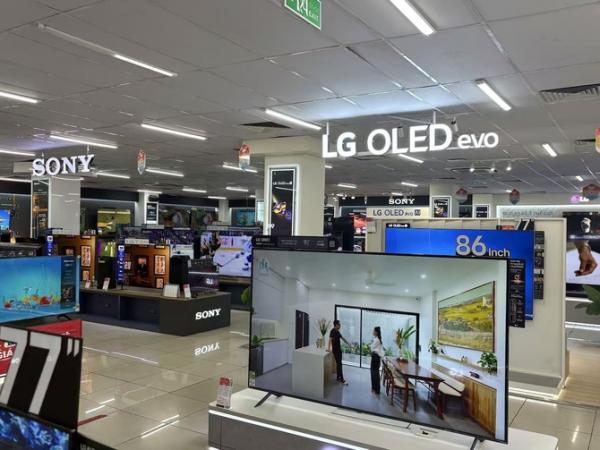
"There will be a clear demarcation between physical store and online sales. Without this, physical stores would face significant challenges, and companies cannot afford to abandon brick-and-mortar stores entirely. In reality, the differentiation between online and offline products reflects user segmentation and creates opportunities for offline experiential scenarios and services," remarked an Indian home appliance industry salesperson during a WhatsApp conversation on August 11.
Coincidentally, on August 12, India's Economic Times reported that home appliance companies such as LG, Haier, Hisense, and Godrej are differentiating their online and offline products through distinct models, configurations, and features to mitigate price competition between the two channels.
This trend sends a clear message: online and offline channels in the Indian home appliance market are evolving from mere sales conduits into two distinct environments catering to different consumer needs.
The "separation" of online and offline channels extends beyond price protection.
From the salesperson's perspective, some consumers prioritize price and are accustomed to comparing brands and models on e-commerce platforms, while others value the product experience and prefer to inspect physical products and receive salesperson guidance in stores before making a purchase.
One of e-commerce's greatest strengths is price transparency. Consumers can compare prices across multiple platforms simultaneously, but physical stores must absorb costs such as rent, labor, display models, warehousing, logistics, and after-sales service. If consumers experience a TV in a store only to discover it is significantly cheaper online, salespeople will struggle to retain them.
Therefore, offering different SKUs (Stock Keeping Units) online and offline can minimize direct price comparisons. However, if this strategy is solely implemented to "avoid price comparisons," it is unlikely to succeed in the long run.
A more valuable approach is to differentiate the products themselves between the two channels, with online products emphasizing price and core features, while offline products offer added value in terms of materials, design, experience, and service.
SKUs are transforming into a channel management tool.
According to the Economic Times, some brands are tailoring product configurations to meet the distinct needs of online and offline consumers. This shift is particularly evident in LG, Haier, and Hisense.
LG India currently offers different products and services across channels. For instance, TVs sold in physical stores come with a warranty one to two years longer than those sold online. Sanjay Chitkara, Director of LG India, stated that while e-commerce is the fastest way to reach consumers, LG's extensive network of over 35,000 dealer stores in India enables both channels to coexist through distinct models, features, or warranty plans.
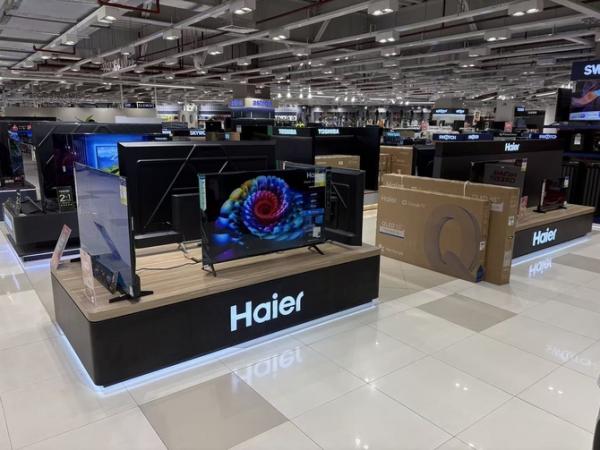
Haier India's strategy is more straightforward. Some of its high-end refrigerators sold online include water dispensers, while offline models feature glass doors or mirror designs, with some products adopting different door structures. Satish NS, CEO of Haier India, said this approach helps prevent channel conflict but requires additional R&D investment.
Hisense is also adjusting product configurations. Washing machines sold online feature plastic tops, while offline models use glass tops; offline air conditioners include enhanced filtration and Wi-Fi connectivity. Pankaj Rana, CEO of Hisense India, stated bluntly: "Online consumers focus more on 'value,' while offline consumers typically purchase higher-priced products."
These changes indicate that SKUs are evolving from mere product management tools into an integral part of channel management. By sharing a core platform across a product series and adjusting appearance, features, capacity, intelligence level, and even service plans for different channels, manufacturers can control costs while minimizing direct price comparisons between channels.
It's also a form of "protection" for dealers.
While e-commerce drives sales, it cannot fully replace offline dealers. Especially for major appliances like refrigerators, washing machines, and air conditioners, post-purchase delivery, installation, maintenance, and long-term after-sales service remain the responsibility of local dealers and retailers. If brands consistently allow online channels to undercut offline orders through lower prices, dealers may eventually lose their sales enthusiasm. Therefore, differentiating online and offline products is not solely about "protecting prices" but also about ensuring dealers remain viable.
Another critical data point cannot be overlooked. The Economic Times, citing industry estimates, reported that e-commerce now accounts for 40% to 45% of TV and microwave sales in India, with air conditioners and washing machines reaching around 22% online.
Godrej stated that online sales currently account for approximately 18% of the Indian air conditioner market, 22% of the washing machine market, and 15% to 16% of the refrigerator market.
This means manufacturers can no longer treat online channels as insignificant. At the same time, offline channels will not disappear rapidly due to e-commerce growth; instead, the two are likely to coexist long-term, with products and consumers gradually segmenting.
However, manufacturers cannot treat consumers as "unable to discern model differences."
If companies simply rebrand the same product with a different model number and make minor configuration changes, consumers will eventually catch on. Especially in India, where e-commerce platforms, social media, and consumer reviews are making product information increasingly transparent, deepening consumer understanding.
Therefore, effective channel differentiation cannot rely on information opacity. Manufacturers should focus on product differentiation rather than price differentiation. The former offers consumers distinct choices, while the latter risks leaving consumers feeling they "overpaid."
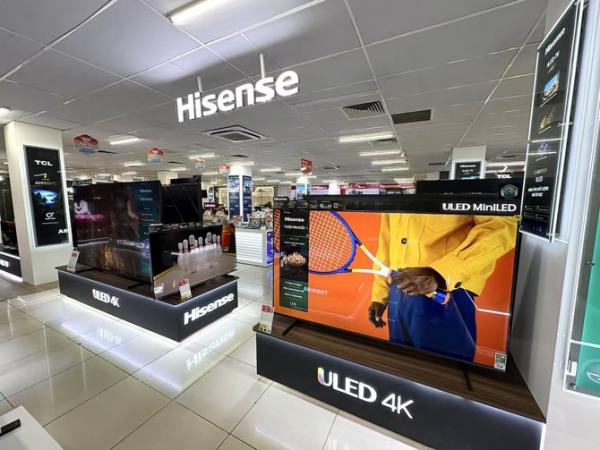
If online and offline products genuinely differ in functionality, materials, design, or warranty, consumers will perceive not just two different prices but two distinct products. This is what makes the current approaches of LG, Haier, and Hisense noteworthy.
Home appliance competition may shift from "channels" to "consumers."
Judging by changes in the Indian market, the differentiation of online and offline SKUs is not an isolated phenomenon. It reflects the home appliance industry's transition from "mass-producing identical products" to "designing distinct products for different consumer groups."
While manufacturing still requires scale, product definition and channel strategies can become more segmented. For brands, online channels can drive sales volume, while offline channels provide experience and trust.
With consumers accustomed to price comparisons, can brands maintain reasonable profit margins across channels? The answer may not lie in restricting consumer comparisons but in offering distinct product values through different channels.
Online channels prioritize efficiency, while offline channels emphasize experience and trust. Manufacturers can bridge these two consumer needs through different SKUs.
This is not about home appliance companies simply erecting a barrier between online and offline channels but about redefining the relationships among consumers, products, and channels. For globally expanding home appliance companies, the future may require distinguishing not just between "online consumers" and "offline consumers" but among groups with varying purchasing power, habits, and product needs.
The changes underway in the Indian market may be just the beginning.
-
![]()
Breaking the Mold: LG, Haier, and Hisense Redefine Online and Offline Home Appliance Sales Strategies in India
-
Lenovo's AI Goldmine: How Long Can Yang Yuanqing Keep 'Feasting'?
-
![]()
Samsung Galaxy Z Fold 8 Review: Ultra-Slim Dual Design Shines, but Telephoto Absence is a Bummer
-
![]()
Dongfeng VOYAH’s New Car Makes a Splash, Targeting More Than Just the 30s and 40s Crowd
-
![]()
Annual Salary of 700 Million Fails to Retain Him! AI Genius Jiahui Yu Departs Meta to Launch His Own Startup
-
Qianwen Seeks to Move Beyond Its 'Alibaba Identity'
-
![]()
How Can We Comprehensively Resolve Ctrip's Monopoly Issue?
-
![]()
From Computing Power Supply-Demand Dynamics to Capital Integration: Jin Jing New Energy Embarks on a New Business Phase