HONOR Robot Phone: Telling the Lightest AI Story with the Heaviest Hardware
 08/21 2026
 409
409
Produced by | RoboIsland
With a starting price of 9,999 yuan, 400,000 pre-ordered units, and first-sale data selling out in one minute, there is no doubt that HONOR's launch event this time was a success, judging from the sales figures.
In fact, as early as during the 2026 WAIC, HONOR CEO Li Jian had already announced on-site that the world's first robotic smartphone, the Robot Phone, was open for pre-orders across all channels.
From pre-ordering, release, official sales, to mass production, the market has at least given positive feedback, indicating that consumers are interested in an AI smartphone that is not just seen as a substitute for Huawei and are willing to pay real money for it.
However, the sales frenzy cannot conceal a harsh reality: throughout 2025, HONOR has fallen out of the top five in China's smartphone market and is now categorized under 'Others.' Can the Robot Phone help HONOR pull itself out of the 'Others' list?
An even more critical question is: Is HONOR still content with being just a smartphone manufacturer?
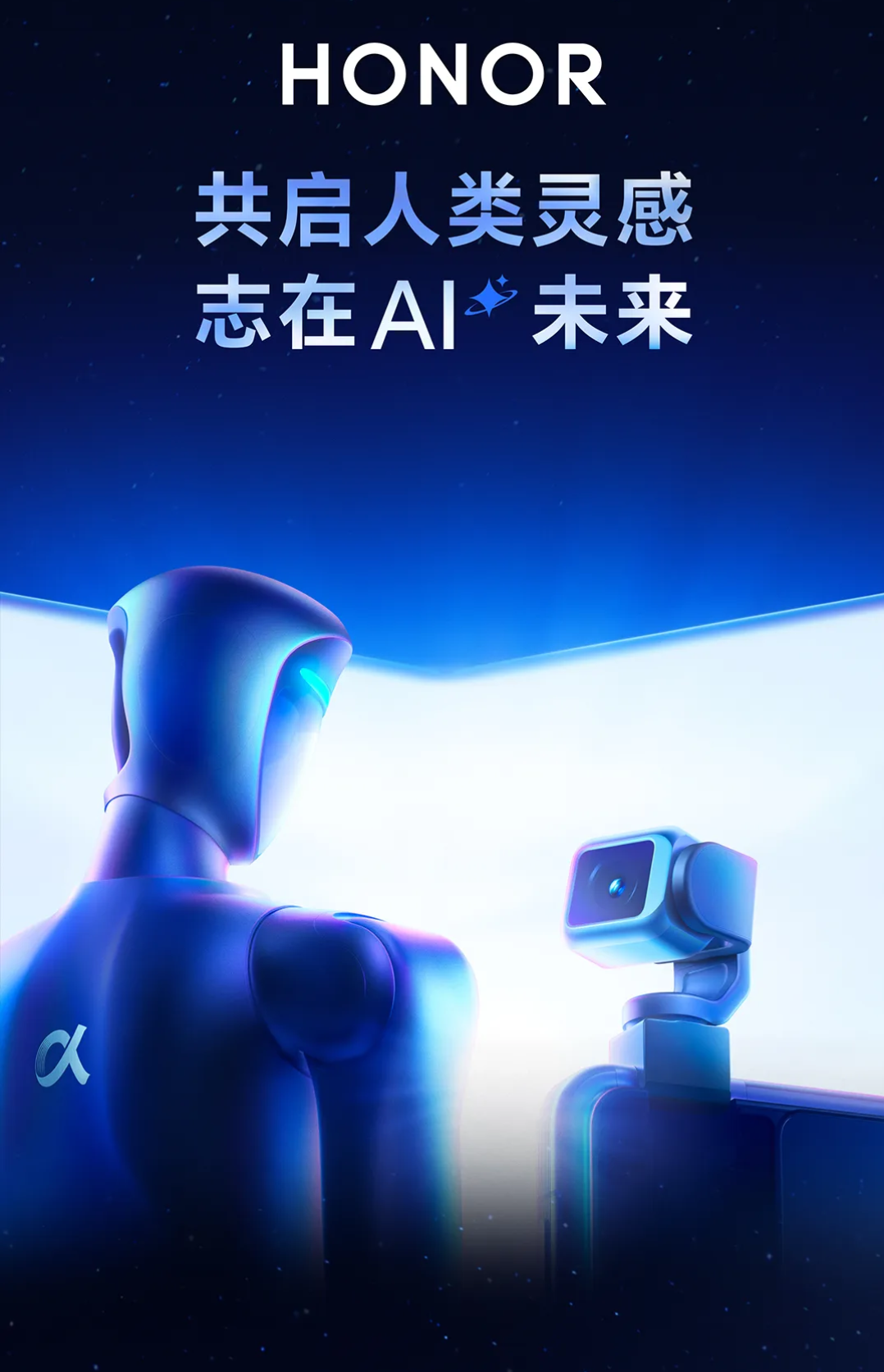
Image Source: HONOR
If we connect the dots of HONOR's moves this year, we will find that the company has been creating buzz almost every month, trying to convince the market of one thing: it is no longer just a smartphone company.
In early March, on the main stage of MWC Barcelona, Li Jian proposed the AHI (Human-Centric Intelligence) concept, with the Robot Phone seen as a breakthrough technological exploration by HONOR to materialize this concept. In late April, at the finish line of the Beijing Yizhuang Humanoid Robot Half Marathon, HONOR's self-developed humanoid robot, Lightning, won the championship in 50 minutes and 26 seconds, making HONOR the first brand among smartphone manufacturers to win this event.
On July 18, during WAIC, the Robot Phone was open for pre-orders across all channels. On the 23rd of the same month, HONOR unveiled its new brand identity, the 'HONOR Ring,' and the brand proposition 'Dare to Imagine, Dare to Be Different.' On August 12, the Robot Phone officially went into mass production and hit the market.
Facing pressure on its core smartphone business, HONOR has decided to take a different path, viewing AI, embodied intelligence, and humanoid robots as its second growth curve, with the Robot Phone marking the starting point of this new curve.
However, in stark contrast to this buzz is HONOR's unavoidable IPO delay Tutoring Report (tutoring report). In June 2025, HONOR completed its listing tutoring registration with the Shenzhen Securities Regulatory Bureau, planning to proceed in three stages and aiming to complete the tutoring acceptance by March 2026 at the latest. However, the March deadline did not materialize.
On July 30, the China Securities Regulatory Commission (CSRC) website published HONOR's fourth IPO tutoring report, marking the fourth report since HONOR initiated its IPO tutoring process more than a year ago.
The core issue listed in the report is that the direction for investing the raised funds has not yet been determined. A super unicorn with a registered capital of 32.2 billion yuan and a shareholder lineup including local state-owned assets, supply chain suppliers, and operators has not yet figured out where to spend its money more than a year after initiating the IPO process.
Hurun Research valued HONOR at 180 billion yuan in June this year, up from 170 billion yuan in the previous period. But is this 180 billion yuan valuation based on HONOR as a smartphone company or as an AI company?
If based on a smartphone company, with declining market share, falling rankings, and obstacles in high-end market penetration, this valuation may not hold water. If based on an AI company, then a more fundamental question needs to be answered: to what extent has HONOR truly transformed into an AI company?
I. The Birth of Defensive Innovation
The Robot Phone was born during a difficult time for HONOR.
In the second quarter of 2024, HONOR still held a 14.5% market share in China. By the second quarter of 2026, this figure had dropped to 11.3%, ranking sixth.
Over two years, a 3.2 percentage point loss in market share corresponds to a shipment gap of over 2 million units per quarter. During the same period, Huawei and Apple achieved year-on-year growth of 19.4% and 24.4%, respectively.
Meanwhile, with the IPO tutoring process extended, employee share reduction and exit channels opened, and the direction for investing raised funds still undecided, the pressure HONOR faces has spread from the product side to the capital side.
Faced with this situation, HONOR chose an unconventional path: neither reducing prices to maintain market share nor stacking specifications to be the first to market. Instead, it invested heavily in R&D resources over more than a year to fit a titanium alloy gimbal system containing over 100 precision components into a smartphone.
This gimbal system integrates four custom micro-motors, supporting four degrees of freedom movement, and can extend or retract within 0.8 seconds. According to Fang Fei, President of HONOR's Product Line, 'just the refinement of the ID design and architectural design collaboration went through more than ten versions, and we spent over half a year just on this.'
By actively creating a track that others would find difficult to replicate in the short term, thereby winning time and space for itself, HONOR calls this defensive innovation.
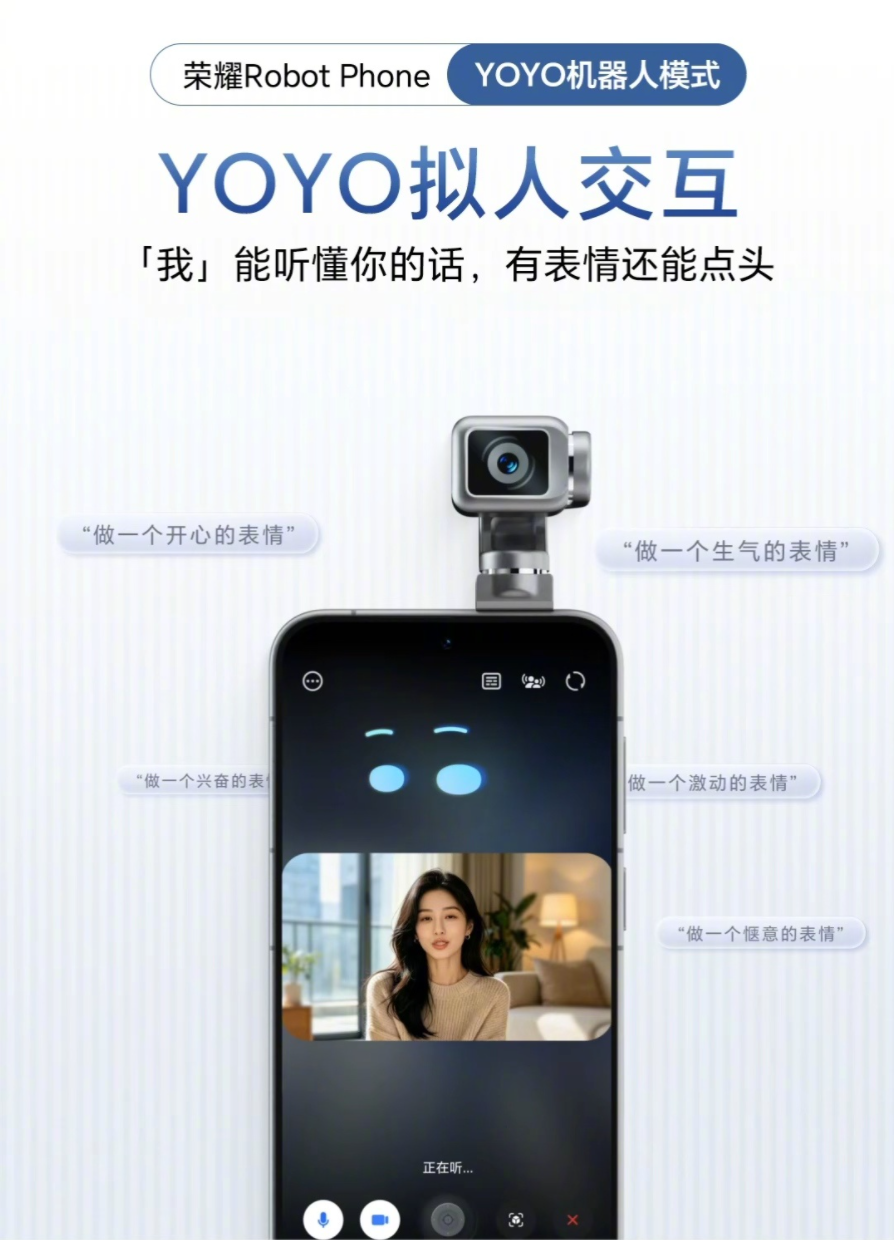
Image Source: HONOR Smartphone
If we take apart the Robot Phone, we will find that its Agentic OS is built in collaboration with Alibaba's QianWen large model, its imaging capabilities are developed in partnership with ARRI, and its operating system is still based on Android. In other words, the most core 'brain' and 'eyes' of the Robot Phone come from external sources.
Competitors like Apple, Huawei, OPPO, vivo, and Xiaomi have already completed on-device AI filings and developed different AI routes at the system and application layers. In comparison, HONOR's differentiation remains more at the physical form level.
In the short term, HONOR is unlikely to achieve a fundamental gap in AI software capabilities compared to leading players. After Huawei returned to the market with its Kirin chip, the label of being a Huawei alternative, which HONOR had relied on for survival in the past, became obsolete, breaking the original market logic.
HONOR simply chose a visible and tangible hardware structure, creating a highly recognizable label. After all, the mechanical gimbal does not rely on any third-party models or protocols—it is purely physical, self-developed, and manufactured.
When the window for differentiation at the software and algorithm levels becomes increasingly short, innovation in physical form becomes the heaviest yet most solid barrier. This is one of the few things HONOR possesses that others cannot take away, and it also serves as a short-term moat that HONOR has built against its competitors.
However, the dilemma is equally apparent. Although HONOR uses hardware form innovation to offset the mediocrity of its technological core, it has also made many compromises in physical form.
To accommodate the mechanical structure, the Robot Phone had to compromise on thickness, weight, and potential durability. With a thickness of 9.59mm and a weight of 248g, it far exceeds mainstream flagship smartphones on the market. For comparison, the iPhone 17 Pro Max weighs 231g, and the Huawei Mate 80 Pro Max weighs approximately 239g. The Robot Phone is nearly 10g heavier than the heaviest slab-style flagship.
Moreover, smartphones with any moving parts typically face issues such as reduced dust and water resistance, increased vulnerability to damage from drops, and wear and tear on mechanical structures over long-term use. Some reviews have pointed out that the Robot Phone may also experience overheating and body resonance during prolonged recording sessions. These sacrifices in user experience due to innovation could be fatal for a smartphone intended for daily use.
Nevertheless, the Robot Phone at least proves that HONOR still has cards to play at the hardware innovation level. For a company that has not yet established core competitiveness in AI software, having a hardware card is better than having nothing at all.
Ultimately, the fundamental contradiction HONOR faces is the need to convince the capital market that it is an AI company.
II. Why Make Unprofitable Smartphones?
'This decision was difficult, and the pressure was enormous. We had intense internal discussions. If we only considered costs and investments, we could not have achieved this price,' Li Jian said in a media interview, referring to the exceptionally challenging decision to set the Robot Phone's starting price below 10,000 yuan.
Why did Li Jian feel such significant cost pressure? Although HONOR has not disclosed specific cost data, RoboIsland estimated based on industry benchmarks and insights from supply chain professionals that the comprehensive landed cost per unit could reach 9,000–11,000 yuan.
Breaking down the cost components of the Robot Phone, the pure hardware BOM cost for the top-spec 1TB version is approximately 7,200–7,800 yuan. Among these, the Snapdragon flagship chip plus the 1TB memory and storage suite, affected by rising storage prices, cost 2,300 yuan. High-quality screens, Qinghai Lake batteries, and fast charging contribute approximately 1,200 yuan. RF components, acoustics, motherboards, and other miscellaneous parts cost around 600 yuan, similar to conventional flagships.
The major cost lies in the gimbal mechanical module. Four custom 6mm micro-motors, paired with exclusive multi-pole magnetization processes, cost 450–600 yuan for the motors and drive circuits. The entire support structure is made of aerospace titanium alloy, with raw material and precision CNC machining costs three times those of ordinary aluminum alloy, bringing the structural component cost to 700–850 yuan.
Adding in transmission gears, high-precision sensors, flexible cables, and the 200-megapixel primary camera module, the comprehensive cost of a single gimbal module approaches 4,800 yuan, with the gimbal alone accounting for nearly 60% of the hardware cost of a conventional flagship.
Hidden costs must also be considered. Over 60 precision assembly processes, stringent assembly tolerances, and relatively low yield rates result in scrap material losses averaged per unit, adding an extra 800–1,000 yuan. Factoring in substantial R&D amortization, quality inspection, marketing, channel distribution, and taxes, the comprehensive landed cost per unit could reach 9,000–11,000 yuan.
With a starting price of 9,999 yuan, HONOR is essentially selling the Robot Phone at or near cost. Meanwhile, HONOR's original intention in mass-producing the Robot Phone, according to Li Jian, was simply to allow more users to experience it.
So, why is HONOR engaging in this unprofitable venture?
Because behind this smartphone stands a top-tier Chinese supply chain matrix, vividly demonstrating HONOR's supply chain integration capabilities.
HONOR did not use off-the-shelf supply chain solutions but instead collaborated with multiple precision manufacturers to redefine tolerance standards. For example, Tianma Microelectronics exclusively supplies the screens, Luxshare Precision is the exclusive OEM assembler, completing the gimbal mechanical arm, micro-motors, connectors, and final assembly. LY International provides structural components and participates in assembly.
HONOR aims to use the Robot Phone as an extreme case study to push China's precision manufacturing supply chain toward higher precision and higher-cost directions.
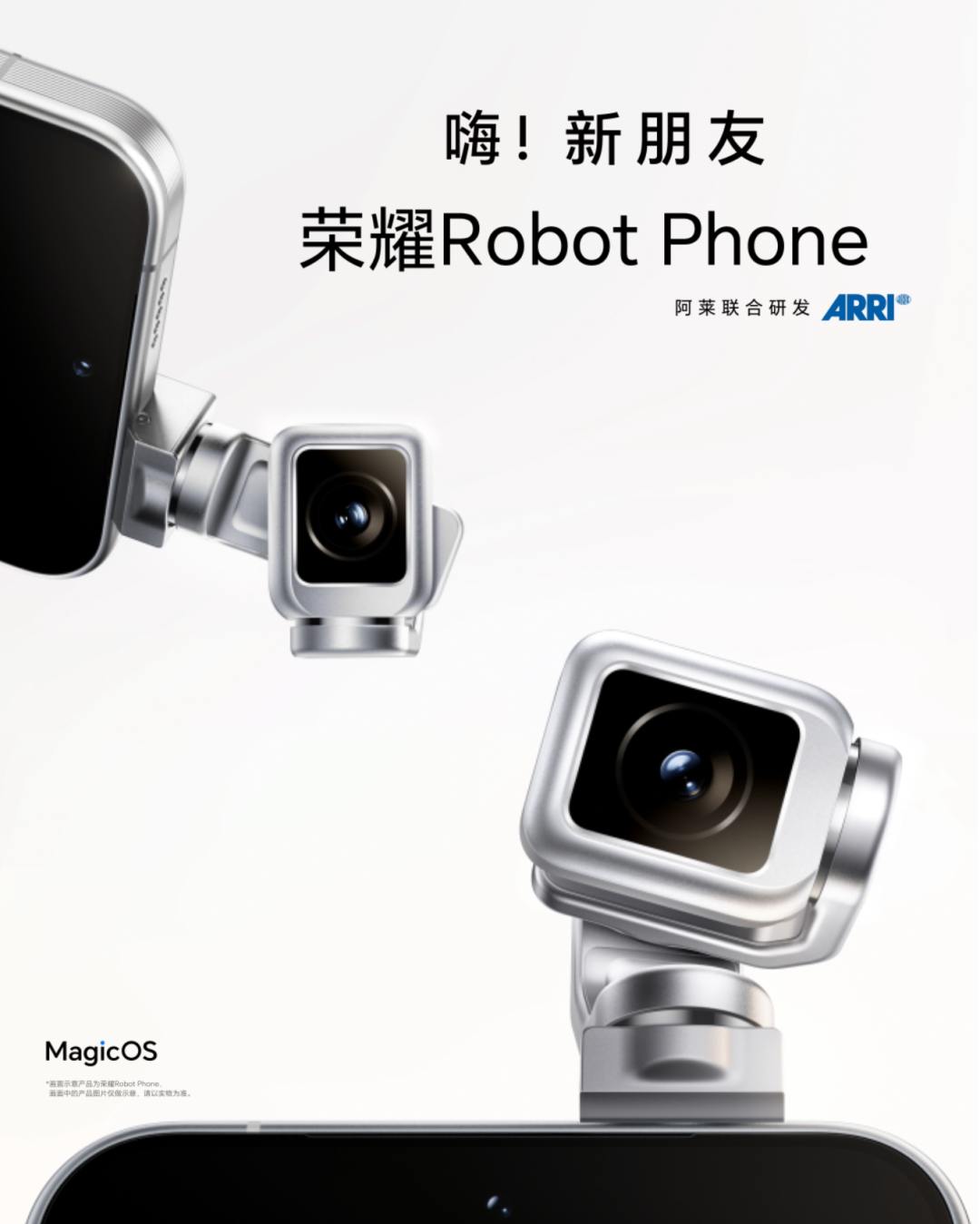
Image Source: HONOR
The true KPI of the Robot Phone may not be how many units it sells but how many people's minds it implants with the equation 'HONOR = robotic smartphone = AI terminal innovator.'
By using a visible and tangible product to forcibly carve out a new, exclusive space in the minds of consumers and the capital market, HONOR is essentially waging an expensive perception war. The goal is to secure the innovator position before the next generation of AI terminal competition truly erupts.
The 9,999 yuan price tag is less a market-driven price and more a high-value anchor point, declaring to the capital market: HONOR has the capability to enter the 10,000 yuan-plus premium market, to create products that others cannot, and to integrate an entirely new supply chain system. The value of this anchor point far exceeds the revenue generated by selling a few tens of thousands of smartphones.
Furthermore, the Robot Phone serves an even more practical role: as a pathfinder. The technologies it validates and the market attention it generates will eventually trickle down to higher-volume flagship products, such as the upcoming Magic9 series. Therefore, it functions more as market education and brand momentum accumulation than as a true high-volume flagship.
Only by understanding the cost logic and strategic intent can one grasp who the Robot Phone's true 'customers' are. However, whether the capital market buys into this depends on a more fundamental assessment:
In the 2026 AI smartphone competitive landscape, where does HONOR's path, taken at the heaviest cost, stand compared to its competitors' choices?
III. HONOR Has Chosen the Heaviest Path
At the 2026 WAIC exhibition, three AI Agent smartphones debuted, representing three distinct routes. Nubia broke through barriers at the application layer, StepFun restructured scheduling at the system layer, and HONOR expanded perceptual form.
First, let's examine Nubia's AI agent smartphone developed in collaboration with Doubao. The core logic is to enable direct intercommunication between the phone system's AI and intelligent agents embedded in apps like Meituan and Alipay at the underlying level.
Since the essence of AI handling tasks on behalf of users reduces the frequency and duration of users opening apps, it affects app open-screen ad click-through rates and ad revenue. Therefore, although the first-generation Doubao phone M153 quickly sold out 30,000 units, it soon hit a reality wall and faced bans from Alibaba-affiliated and Tencent-affiliated apps.
The second-generation NaviX Ultra took a different approach. Instead of allowing AI to peek at the screen, it had apps proactively open up their capabilities, with AI directly invoking them through standard interfaces, shifting from GUI to MCP (Model Context Protocol) and A2A (Agent-to-Agent) protocols.
Currently, only dozens of apps within the ByteDance ecosystem have opened their interfaces, while WeChat and Taobao remain closed. How far this route can go depends on whether smartphone manufacturers and internet giants can negotiate a mutually satisfactory profit-sharing scheme.
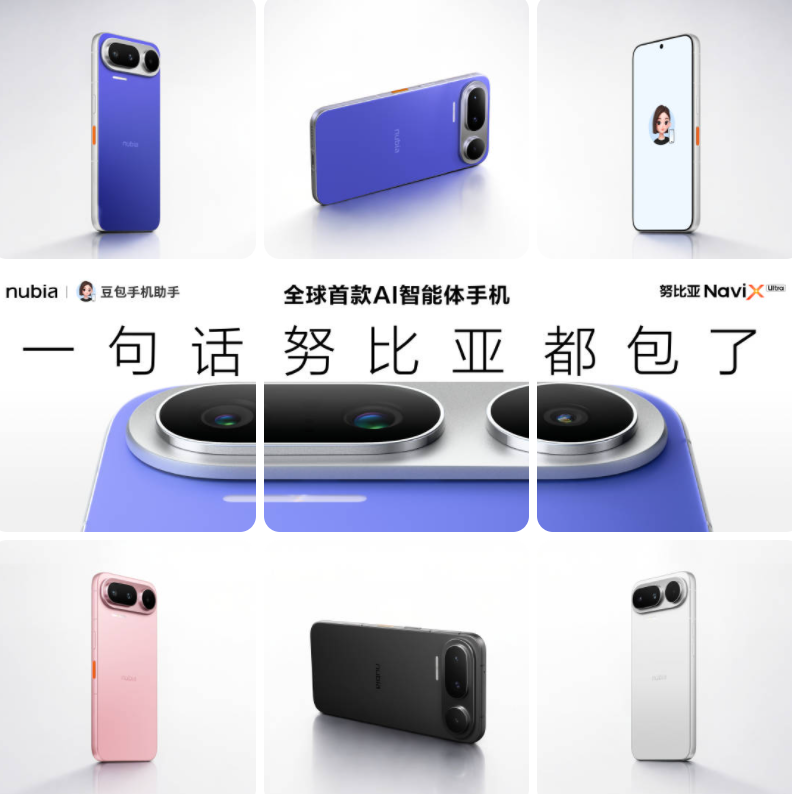
Image source: Nubia Mobile
Step-by-Step Starry Sky takes a more radical approach by rebuilding the entire ecosystem from scratch, creating an independent operating system called Step AOS. It reconstructs the operating environment for AI from the ground up, integrating model capabilities directly into the system.
This approach has a unique advantage: Step-by-Step Starry Sky is backed by an entire mobile phone supply chain eager to switch tables. This was previously elaborated in the article 'Why Do Companies Like Huaqin Follow Step-by-Step Starry Sky to Switch Tables?' on Zhixie Island.
Although Step-by-Step has already established partnerships with platforms like Ctrip, Alipay, Didi, Meituan, and WPS, the market's most anticipated apps—WeChat, Taobao, and Douyin—are not on the list. Additionally, Step-by-Step is not included in the first batch of AI filings for on-device systems. The actual release of this phone is scheduled for late October, nearly two months later than the Robot Phone.
Honor's horizontal breakthrough at the hardware level represents the most challenging path. Honor's supply chain system involves substantial capital investment, with every dollar going into tangible production lines, relying solely on Honor's continuous financial support.
If Nubia fails to secure a deal, it can simply move on to the next negotiation. Step-by-Step's supply chain partners willingly follow suit. However, if the market rejects Honor's mechanical gimbal, it may require recalibrating the entire production line, reopening molds, retesting, and ramping up yield rates again. Not only are the sunk costs significant, but in the rapidly evolving AI landscape measured in months, hardware iteration becomes a structural disadvantage.
Who is more likely to succeed? In reality, a true AI Agent phone requires capabilities across the application, system, and perception layers. At this stage, each of the three companies mentioned only holds one piece of the complete AI phone puzzle.
IV. Conclusion
From the Zhao Ming era to the Li Jian era, Honor has experienced many 'new beginnings,' becoming a unique inertia (inertia) of starting anew for the brand. This repeated declaration of new beginnings reflects a lack of strategic continuity within Honor.
Furthermore, Honor's previous concept products, such as the Honor 7i with its rotating camera and the AI-native Magic8 series, failed to ignite the market.
Now, the Robot Phone is defined as the starting point for the brand's premiumization (premiumization). During the launch event, Li Jian stated, 'I hope everyone can set aside past impressions of Honor and turn to a new page.'
However, the capital market never believes in starting over from scratch. It values consistent delivery, verifiable growth, and irreplaceable barriers.
The Robot Phone has turned this page, but how long it remains open depends on whether Honor can use its subsequent products to prove that this is not just a one-time fireworks display.
If the Magic9, a mass-market flagship product set to inherit the AI, imaging, and underlying computing power technologies from the Robot Phone, can establish itself in the mainstream premium market, then the Robot Phone's exploration will have commercial value.
Cover image source: Hail the Judge
Featured image source: Honor Official
Disclaimer: The content of this article is for reference only and does not constitute investment advice. Investors act at their own risk.
All rights reserved by Zhixie Island. Unauthorized reproduction is prohibited.
-
![]()
HONOR Robot Phone: Telling the Lightest AI Story with the Heaviest Hardware
-
![]()
Yu Chengdong's Harmony Intelligent Travel Achieves 'First in New Force Deliveries', Netizens: Unbeatable Win
-
![]()
Six Entities Invest 8.2 Billion to Launch Shenlong Technology
-
![]()
Give BMW X3 a Chance?
-
![]()
Chengdu: Leading in New Car Sales, Yet Losing the Favor of Rolls-Royce and Its Luxury Peers
-
![]()
Shenzhen Speed: The New Era
-
![]()
Shenzhen Speed Gets a New Version
-
When AI Becomes Too Powerful to Ignore: OpenAI Hits the Brakes for the First Time in History